Cairns Foods Refreshes Spuds Brand as Zimbabwe’s Food Processing Sector Drives Manufacturing Growth

HARARE – Cairns Foods Limited has unveiled a refreshed packaging design for its flagship Spuds potato chips brand, with the new-look product already being rolled out across retail outlets nationwide as the company seeks to strengthen its position in Zimbabwe’s increasingly competitive snack foods market. The rebranding initiative comes at a time when Zimbabwe’s food […]

The post Cairns Foods Refreshes Spuds Brand as Zimbabwe’s Food Processing Sector Drives Manufacturing Growth appeared first on The Zimbabwe Mail.

HARARE – Cairns Foods Limited has unveiled a refreshed packaging design for its flagship Spuds potato chips brand, with the new-look product already being rolled out across retail outlets nationwide as the company seeks to strengthen its position in Zimbabwe’s increasingly competitive snack foods market.

The rebranding initiative comes at a time when Zimbabwe’s food processing industry is emerging as one of the country’s strongest manufacturing sectors, contributing significantly to industrial growth, value addition and employment creation.

According to the latest Confederation of Zimbabwe Industries (CZI) Manufacturing Sector Survey 2025, the food production sector recorded the highest net employment growth among all manufacturing subsectors, expanding employment by 16% during the year. The sector also registered an 18% increase in output and a 19% rise in revenues, highlighting its growing importance within Zimbabwe’s industrial landscape.

Industry analysts say Cairns Foods’ investment in brand modernisation reflects broader trends reshaping the global snack food industry, where consumer preferences are rapidly evolving beyond traditional convenience products towards healthier, functional and premium snack offerings.

“The snacking industry is undergoing significant transformation globally. Consumers increasingly seek products that combine convenience, taste and nutritional value,” said a food industry analyst.

The trend, often described as “intentional grazing,” is driving demand for high-protein snacks, plant-based products, functional foods and healthier indulgences. International brands have successfully capitalised on these shifts by introducing protein-enriched snacks, probiotic-infused products and fortified foods that deliver added health benefits without compromising taste.

For Zimbabwean food manufacturers, these changing consumer preferences present opportunities for product diversification and innovation.

Market researchers note that future growth opportunities could include high-protein snack products, fortified breakfast bars, plant-based alternatives, trail mixes and premium snack kits tailored to changing consumer lifestyles. Interactive food concepts such as grazing boxes, tasting packs and premium snack combinations are also gaining traction globally.

Image

The development comes as locally manufactured products continue to strengthen their presence on Zimbabwean retail shelves. Previous industry assessments indicated that approximately 70% of products sold in local supermarkets are manufactured domestically, reflecting the growing contribution of local industry to national consumption patterns.

However, manufacturers continue to face significant operational challenges.

Zimbabwe’s food processors operate in an environment characterised by rising energy costs, foreign currency constraints, logistics challenges, fluctuating raw material prices and increasing competition from imports. Industry experts argue that maintaining competitiveness requires more than traditional cost-cutting measures.

Increasingly, manufacturers are turning towards technology, advanced analytics, artificial intelligence and integrated supply-chain management to improve efficiency and profitability.

Food processors that embrace data-driven production planning, predictive maintenance systems, energy optimisation and advanced market intelligence are expected to gain significant competitive advantages in the coming years.

Packaging innovation is also becoming a key differentiator.

Beyond product quality, consumers are paying increasing attention to packaging design, sustainability credentials and brand messaging. Trends such as recyclable packaging, biodegradable materials and environmentally conscious product presentation are influencing purchasing decisions across global food markets.

Industry specialists say companies seeking sustainable growth must invest heavily in market intelligence, competitor analysis and consumer sentiment monitoring to identify emerging opportunities and changing preferences.

“Understanding consumer behaviour has become as important as manufacturing capability itself. The most successful food brands are those that continuously adapt to changing market conditions and consumer expectations,” a market analyst noted.

The launch of the redesigned Spuds packaging therefore represents more than a cosmetic refresh. It reflects the growing sophistication of Zimbabwe’s food manufacturing sector and the increasing emphasis on brand positioning, product innovation and consumer engagement.

As Zimbabwe pursues industrialisation and import-substitution strategies, food processing remains one of the country’s most promising manufacturing segments. Strong linkages with agriculture, packaging, transport, retail and exports mean continued investment in the sector has the potential to generate employment, strengthen local supply chains and improve national economic resilience.

With consumer tastes evolving and competition intensifying, companies such as Cairns Foods are positioning themselves to capture growth opportunities in a market where innovation, efficiency and brand differentiation are becoming increasingly critical to long-term success.

The post Cairns Foods Refreshes Spuds Brand as Zimbabwe’s Food Processing Sector Drives Manufacturing Growth appeared first on The Zimbabwe Mail.
Lake Kariba boundary buoys to curb cross-border disputes

Source: Lake Kariba boundary buoys to curb cross-border disputes – herald Ivan Zhakata Herald Correspondent The installation of floating buoys on Lake Kariba to mark the existing international boundary between Zimbabwe and Zambia is expected to reduce cross-border disputes, improve safety and strengthen cooperation among communities that depend on the shared water body. The development […]

The post Lake Kariba boundary buoys to curb cross-border disputes appeared first on Zimbabwe Situation.

Source: Lake Kariba boundary buoys to curb cross-border disputes – herald

Ivan Zhakata

Herald Correspondent

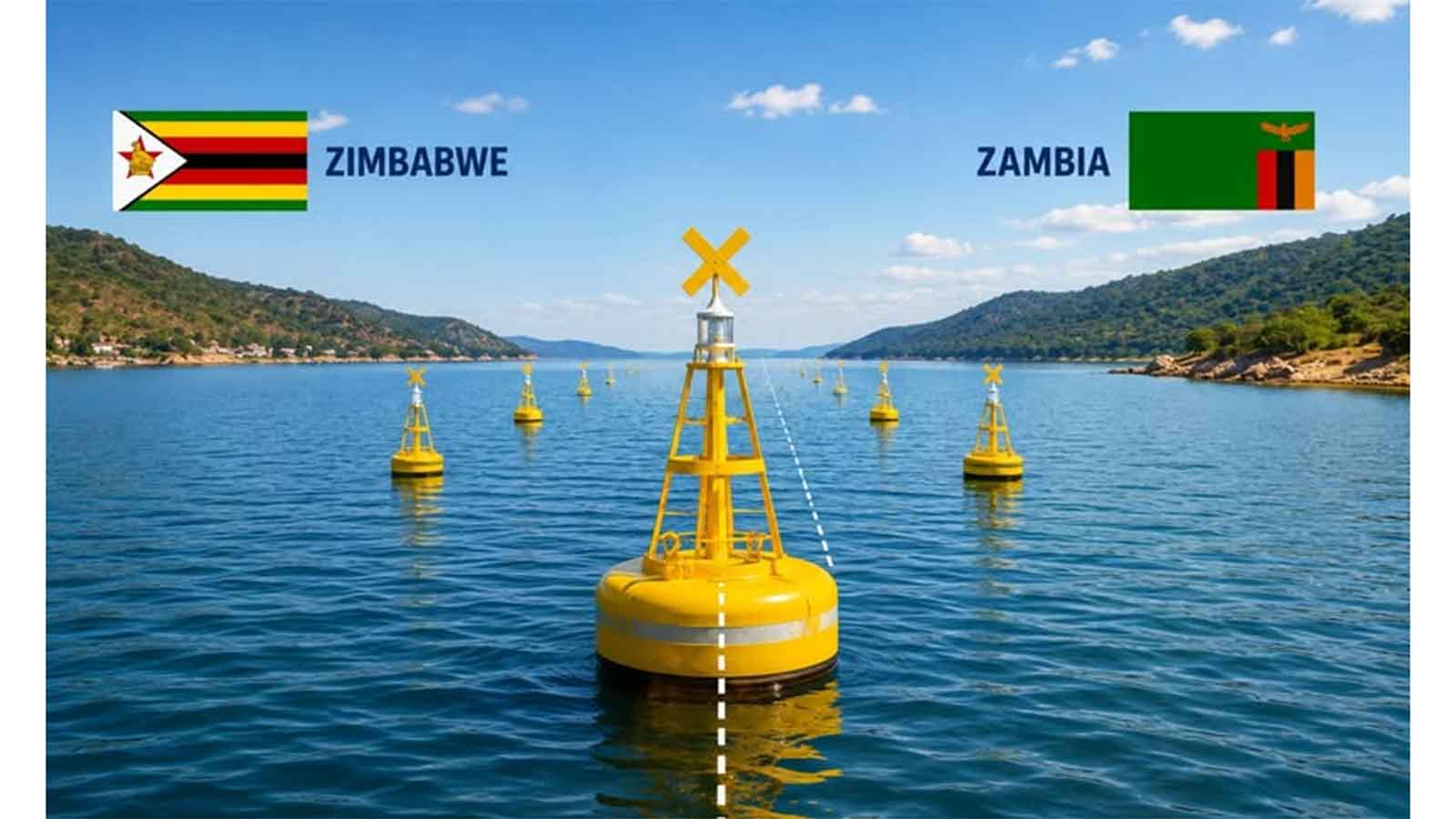
The installation of floating buoys on Lake Kariba to mark the existing international boundary between Zimbabwe and Zambia is expected to reduce cross-border disputes, improve safety and strengthen cooperation among communities that depend on the shared water body.

The development follows the successful completion of community sensitisation workshops held in Siavonga, Zambia, and Kariba on June 4 and 5 ahead of the commencement of the project.

The workshops brought together fishermen, boat operators, traditional leaders, local authorities and women traders from both sides of the lake and were organised by the Governments of Zimbabwe and Zambia through the Zambezi River Authority (ZRA), with support from the African union Border Programme (AUBP) and Germany’s Deutsche Gesellschaft fuer Internationale Zusammenarbeit (GIZ) GmbH.

Speaking during the workshops, Zimbabwe Surveyor-General Mr Edwin Guvaza said the project was not intended to create barriers between the two neighbouring countries.

“We want to assure you that as the two Surveyor Generals, we are not putting up barriers between the two countries on the lake as we establish these floating buoys. Rather, we are enhancing the visibility of the boundary to facilitate bilateral cooperation and peaceful co-existence between our two sister republics,” he said.

Zambia’s Assistant Surveyor-General, Mr Kelvin Chibangula, said the initiative was designed to address challenges arising from the invisible nature of the boundary on the lake.

“Unclear boundaries on the lake have led to challenges such as unintentional crossing, arrests in some cases, vessel seizures, and disputes,” he said.

“To address this, the two Governments, with support from AUBP and GIZ, agreed to pilot the installation of these floating beacons along the first 10 kilometres from the dam wall going upstream.

“These markers will make the boundary visible and allow fishing activities to continue without fear of conflict.”

The officials told participants that the floating buoys would only mark the existing international boundary and would not alter territorial rights, fishing grounds or access to resources on either side of the lake.

The stakeholders were also briefed on navigation procedures, emergency protocols for accidental crossings and community responsibilities in safeguarding the buoys and reporting incidents through designated focal points.

The workshops included interactive discussions on challenges faced by lake users and focused on establishing communication mechanisms and standard operating procedures for handling cross-border incidents.

The authorities said the project would be the first instance in the region where an agreed international lake boundary has been physically marked, setting a precedent for enhanced border governance and cooperation in the management of shared natural resources.

The post Lake Kariba boundary buoys to curb cross-border disputes appeared first on Zimbabwe Situation.

Notable progress on Melfort Bridge construction 

Source: Notable progress on Melfort Bridge construction – herald Victor Maphosa Mashonaland East Bureau CONSTRUCTION of the new Melfort Bridge along the Harare-Mutare Highway has surpassed the 40 percent completion mark, signalling steady progress on a key infrastructure project expected to enhance traffic flow and strengthen regional trade along one of Zimbabwe’s busiest transport corridors. […]

The post Notable progress on Melfort Bridge construction  appeared first on Zimbabwe Situation.

Source: Notable progress on Melfort Bridge construction – herald

Victor Maphosa

Mashonaland East Bureau

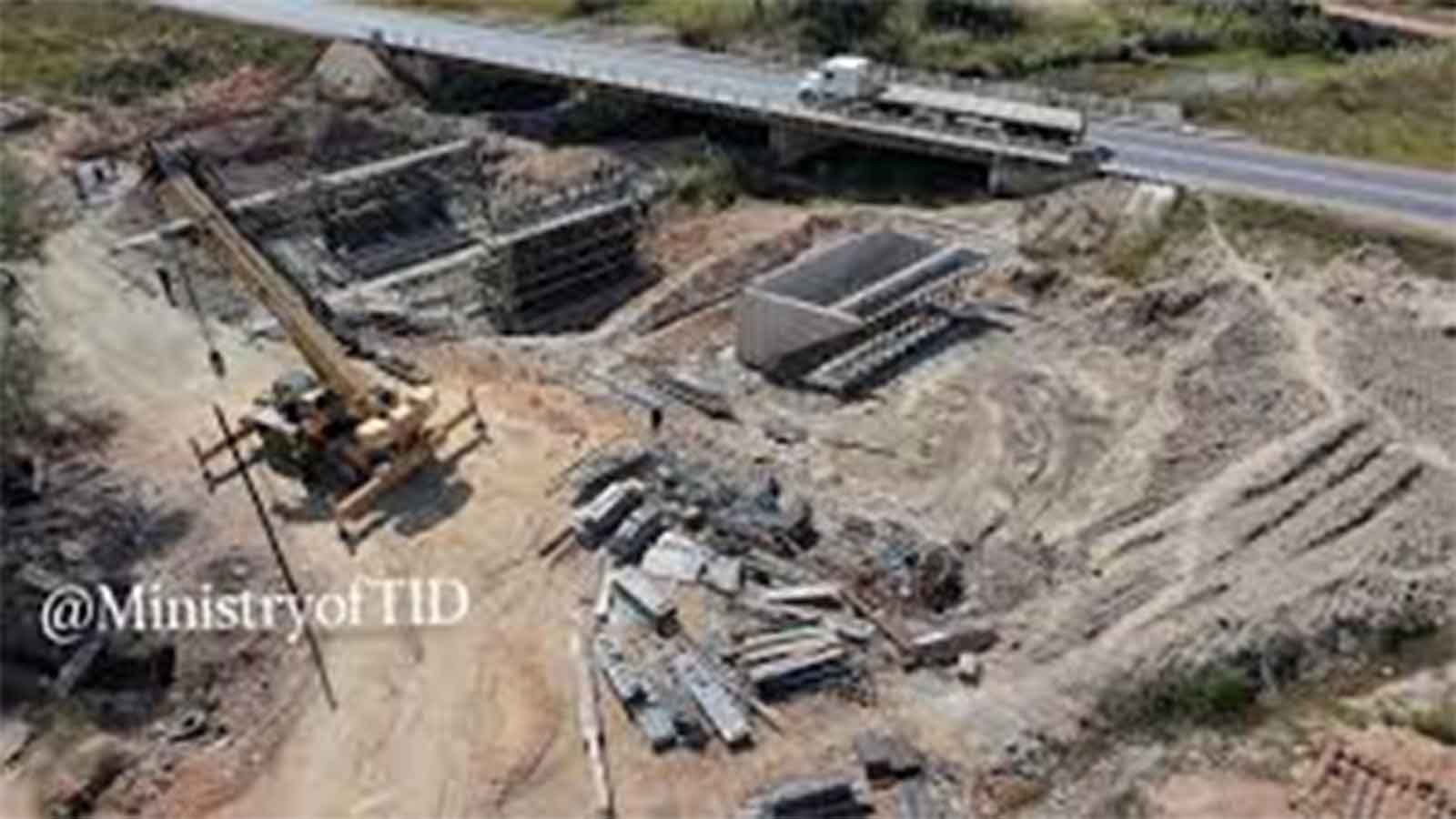
CONSTRUCTION of the new Melfort Bridge along the Harare-Mutare Highway has surpassed the 40 percent completion mark, signalling steady progress on a key infrastructure project expected to enhance traffic flow and strengthen regional trade along one of Zimbabwe’s busiest transport corridors.

The bridge forms part of the Government’s ongoing dualisation of the Harare-Marondera section of the highway, a strategic route linking Zimbabwe to the Port of Beira in Mozambique and facilitating the movement of goods and people between the two countries.

Tensor Systems is undertaking the construction of the bridge across the Musitwe River near Melfort Business Centre.

Speaking in an interview with Zimpapers, Mashonaland East provincial roads engineer in the Ministry of Transport and Infrastructure Development, Engineer Tatenda Pasipamire, said works were progressing according to schedule and were expected to be completed by August 31 this year.

“Construction progress is now above 40 percent and the whole project is expected to be complete by August 31, 2026,” Engineer Pasipamire said.

“This development will eliminate bottlenecks caused by the absence of a second bridge on a dualised road. Motorists had to move to one carriageway to cross the Musitwe River.

“This bridge will allow for uninterrupted traffic flow, thereby reducing congestion and improving travel times.

“Also, a second bridge on this highway enhances road safety by reducing vehicle collisions, enhances the reliability of the Beira Corridor trade route by reducing transit periods and it enhances access to markets, healthcare, education and other services.”

Meanwhile, upgrading of the Hwedza-Mushandirapamwe Road in Mashonaland East is progressing well, with only 11 km out of the 47.5 km targeted left to be completed.

Hwedza-Mushandirapamwe Road is being upgraded under the Emergency Road Rehabilitation Programme 2 (ERRP).

Masimba Holdings was tasked with all road works along the targeted stretch, which is now about 77 percent complete, with the remaining 11 km expected to be completed and opened to traffic this year.

“We are working on the 47 km stretch along the Hwedza-Mushandirapamwe road and to date we have worked on 34.5 km and we are now left with 11 km between Chop Chop and Mushandirapamwe business centres,” Eng Pasipamire said.

“Currently, the contractor, which is Masimba Holdings, has started clearing the detour. They have also stockpiled some gravel and very soon, we will be taking traffic off the main road so that work can start.”

“The project is progressing well, and with the necessary support, we will be able to complete this project by December 2026. This is a US$14,1 million project, which will cover all required works on these 11 km.”

The Hwedza-Mushandirapamwe project is one of the critical infrastructural projects which are ongoing in the Second Republic under the leadership of President Mnangagwa

It is a critical link road because it connects the district capital of Hwedza and the Provincial capital of Marondera.

It also connects Hwedza and Harare as well as connecting Mashonaland East and Manicaland provinces.

This road again links Hwedza and Chikomba districts. Eng Pasipamire said the Government is also working on the Nhekairo-Chigondo road in Hwedza, then the Hwedza Sadza road, Murehwa-Madicheche as well as the Nhakiwa-Manyika roads.

The post Notable progress on Melfort Bridge construction  appeared first on Zimbabwe Situation.

Catholic Church breaks ground for Mashonaland West’s first teachers’ college

Source: Catholic Church breaks ground for Mashonaland West’s first teachers’ college – herald Walter Nyamukondiwa Mashonaland West Bureau Chief The Roman Catholic Church has broken ground for the construction of Karoi College of Education, the first dedicated teacher-training institution for Mashonaland West Province. Karoi College of Education becomes the 20th teacher training centre in the […]

The post Catholic Church breaks ground for Mashonaland West’s first teachers’ college appeared first on Zimbabwe Situation.

Source: Catholic Church breaks ground for Mashonaland West’s first teachers’ college – herald

Walter Nyamukondiwa

Mashonaland West Bureau Chief

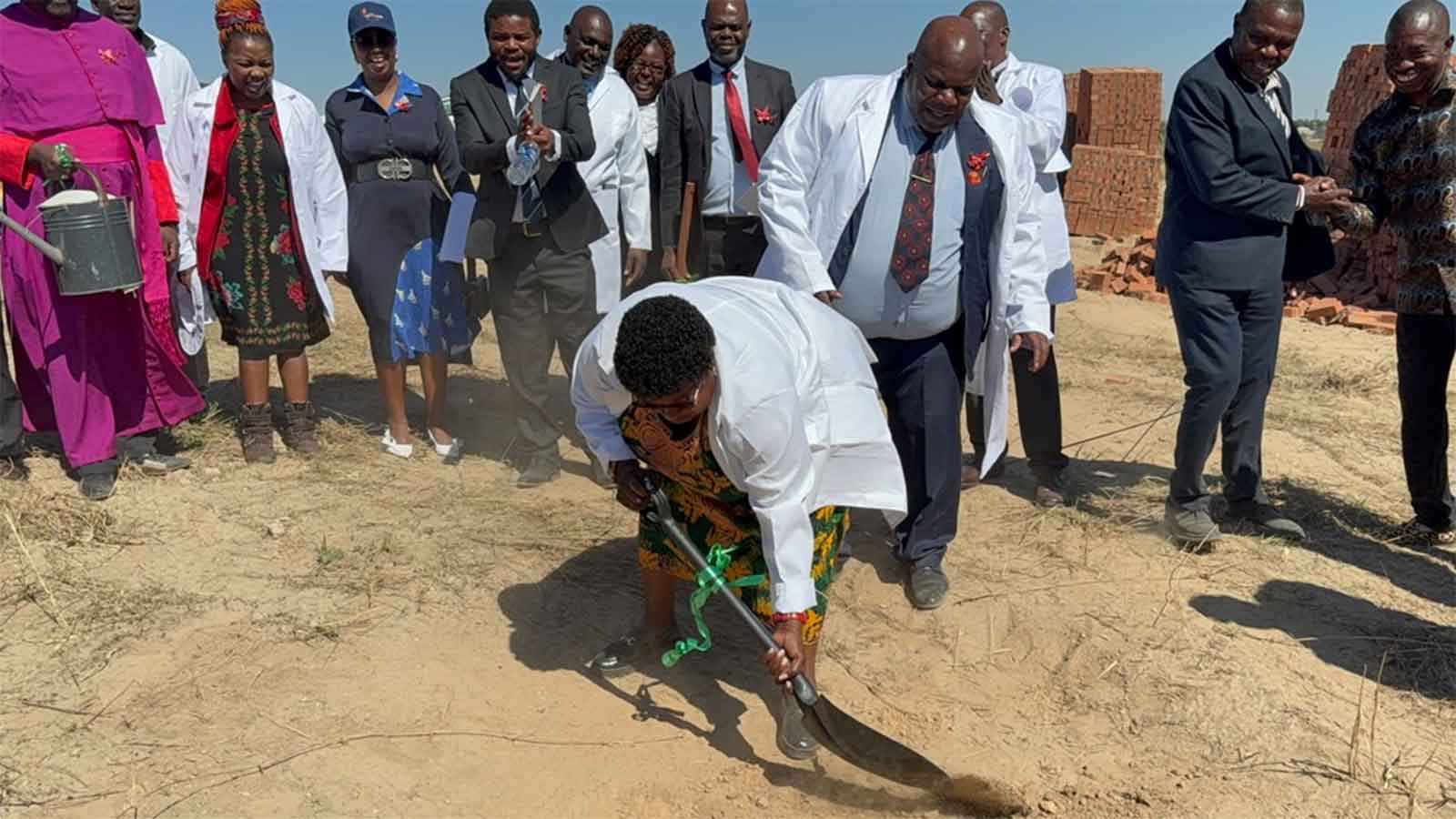
The Roman Catholic Church has broken ground for the construction of Karoi College of Education, the first dedicated teacher-training institution for Mashonaland West Province.

Karoi College of Education becomes the 20th teacher training centre in the country and will significantly expand access to tertiary education in the province.

Construction commenced after the commissioning and is expected to be completed next year.

The college will help address the country’s demand for qualified educators while stimulating economic growth in Hurungwe District.

The groundbreaking ceremony was attended by Government officials, church leaders, councillors and community members, who hailed the development as a major milestone for both education and local development.

Apostolic Administrator of the Diocese of Chinhoyi, Bishop Raymond Mupandasekwa, said preparations for construction were already underway and expressed confidence that the institution would open its doors next year.

“This institution will help shape future generations, nurture innovation and equip students with the skills required to contribute meaningfully to national development,” he said.

Mashonaland West Provincial Affairs and Devolution Minister Marian Chombo welcomed the initiative as a demonstration of the effectiveness of partnerships between faith-based organisations, government and communities in accelerating development.

“We commend the Roman Catholic Church and all stakeholders involved for investing in the future of our young people and contributing towards the attainment of national development goals,” she said.

The Ministry of Higher and Tertiary Education, Innovation, Science and Technology Development’s Director, Mr Darlington Damba, said the project dovetailed with the Government’s thrust of expanding access to quality tertiary education and producing a skilled workforce capable of driving economic transformation.

Karoi Town Council Mayor, Councillor Kudakwashe Chigomo, said the institution would not only enhance educational opportunities but also bring significant economic benefits to the town.

“Beyond improving access to education, the project will create employment opportunities, increase business activity and broaden the town’s revenue base as Karoi continues to grow into a key education hub,” he said.

Residents and local leaders welcomed the development, saying it would spare many students the burden of travelling long distances to pursue teacher training.

Councillor Tichaona Mungwariri said Hurungwe District, one of the country’s largest administrative districts, had waited many years for such an institution.

“This college is long overdue. It will create opportunities for our young people while attracting investment and business activity that directly benefits local communities,” he said.

ZANU PF Mashonaland West Provincial Youth Chairperson, Cde Tapiwa Masenda, said the institution would provide new opportunities for young people and contribute to efforts to address social challenges affecting youth.

The college is expected to become a catalyst for growth in Karoi, boosting demand for accommodation, transport, retail services and other supporting industries while strengthening the province’s contribution to Zimbabwe’s education sector.

The project also advances the Government’s National Development Strategy 2, which prioritises human capital development as a key driver of sustainable economic growth and industrialisation.

The post Catholic Church breaks ground for Mashonaland West’s first teachers’ college appeared first on Zimbabwe Situation.

Govt calls for inclusive insurance and pensions sector …over 2 000 rural schools set to benefit from textbooks initiative 

Source: Govt calls for inclusive insurance and pensions sector …over 2 000 rural schools set to benefit from textbooks initiative – herald Tawanda Musarurwa FINANCE, Economic Development and Investment Promotion Minister Professor Mthuli Ncube has called on Zimbabwe’s insurance and pensions industry to extend its reach to underserved communities, warning that financial protection must not […]

The post Govt calls for inclusive insurance and pensions sector …over 2 000 rural schools set to benefit from textbooks initiative  appeared first on Zimbabwe Situation.

Source: Govt calls for inclusive insurance and pensions sector …over 2 000 rural schools set to benefit from textbooks initiative – herald

Tawanda Musarurwa

FINANCE, Economic Development and Investment Promotion Minister Professor Mthuli Ncube has called on Zimbabwe’s insurance and pensions industry to extend its reach to underserved communities, warning that financial protection must not remain the preserve of a privileged few, as the Insurance and Pensions Commission (IPEC) marked its 20th anniversary with a gala dinner and charity ball in Harare on Friday.

Speaking as guest of honour at the event, Prof Ncube said the sector’s future depended on its ability to serve informal sector workers, women, youth, farmers and small businesses – groups historically locked out of formal financial protection systems.

“Financial protection must not remain the privilege of a few,” he said. “It must become accessible to all Zimbabweans.”

The scale of that challenge is laid bare in the latest industry data. As of the end of 2025, roughly 90 percent of all short-term insurance policies in Zimbabwe were motor insurance policies – a figure that underscores the sector’s deep dependence on compulsory cover and the distance still to travel before meaningful financial protection reaches underserved communities.

Prof Ncube’s remarks came as IPEC announced a landmark education initiative: the donation of insurance and pensions textbooks to more than 2 000 rural schools across the country. The move follows IPEC’s successful lobbying to have insurance and pensions incorporated into Zimbabwe’s new schools curriculum.

Following the 2024 school curricula review, insurance was included as a topic in commerce (Forms One to Four) and commercial studies (Forms Three to Four).

Proceeds from Thursday’s Charity Ball will be directed toward procuring textbooks aligned with that curriculum, specifically covering insurance concepts for secondary school learners.

IPEC is targeting distribution to 2 485 secondary schools in rural areas, aiming to bridge knowledge gaps and equip young Zimbabweans with essential financial literacy from an early age.

IPEC Commissioner Dr Grace Muradzikwa described the initiative as foundational.

“The commission believes that financial education must begin early if we are to build a financially resilient and inclusive society,” she said.

The milestone celebrations were tempered by candid acknowledgement of unresolved grievances. Prof Ncube addressed directly the politically charged issue of pre-2009 insurance and pension value erosion, calling it “one of the most difficult chapters in Zimbabwe’s financial history.”

Millions of Zimbabweans lost the value of long-term savings during the hyperinflation era and subsequent currency transitions — a loss the minister said was not merely financial but had fundamentally corroded public confidence in savings institutions, confidence the sector is still working to rebuild.

He called on IPEC, pension funds, insurers and industry stakeholders to work collaboratively toward implementing a compensation framework once the amended Statutory Instrument 162 of 2023 is gazetted, framing the exercise less as a technical financial correction and more as a matter of dignity and restored trust.

“The compensation exercise is not merely about financial compensation,” Prof Ncube said. “It is fundamentally about restoring public trust and confidence in insurance and pensions as reliable instruments for long-term financial security.”

IPEC’s expanded mandate

Prof Ncube also acknowledged a significant broadening of IPEC’s regulatory authority. Under amendments to the Insurance and Pensions Commission Act, the regulator has been granted oversight of the National Social Security Authority (NSSA) and Medical Aid Schemes, bringing a wider segment of Zimbabwe’s social protection architecture under unified supervision.

The minister pushed back firmly against any reading of tighter regulation as a constraint on institutional growth.

“Strong regulation is not an obstacle to institutional growth,” he said. “On the contrary, strong regulation builds credibility, strengthens confidence and promotes long-term sustainability.”

Both speeches also foregrounded the sector’s strategic weight in Zimbabwe’s broader economic architecture.

Prof Ncube argued that insurance and pensions collectively mobilise the long-term, patient capital required to finance infrastructure, housing, energy, agriculture and industrial development — a role explicitly recognised under Vision 2030 and the National Development Strategy 2.

“Without insurance, economic activity becomes vulnerable,” he said. “Without pensions, long-term savings weaken.

“And without long-term savings, sustainable national development becomes significantly more difficult.”

Dr Muradzikwa noted that IPEC had navigated its two decades alongside some of the most turbulent episodes in Zimbabwe’s economic history, among them hyperinflation, currency transitions and repeated market disruptions.

Those pressures, she said, had paradoxically hardened the Commission’s regulatory resolve rather than diminished it.

IPEC was established in 2006 under the Insurance and Pensions Commission Act, beginning operations with limited resources and a narrow mandate.

It now regulates the country’s insurance, pension and provident fund sectors and, under its expanded remit, will extend oversight to NSSA and medical aid schemes.

Friday’s gala marked the conclusion of a series of anniversary commemorations held throughout the first half of this year.

The post Govt calls for inclusive insurance and pensions sector …over 2 000 rural schools set to benefit from textbooks initiative  appeared first on Zimbabwe Situation.