Zimbabwe’s Capital Formation Dilemma and the Case for Investment Banking: The Missing Middle in Zimbabwe’s Financial Architecture

Zimbabwe’s economic challenge has never been a shortage of ideas or even natural endowments; it has been the persistent absence of a functional capital intermediation structure capable of transforming long-term development ambitions into bankable, funded projects. At the centre of this gap lies a structural weakness: the over-reliance on retail and commercial banking institutions to […]

The post Zimbabwe’s Capital Formation Dilemma and the Case for Investment Banking: The Missing Middle in Zimbabwe’s Financial Architecture appeared first on The Zimbabwe Mail.

Zimbabwe’s economic challenge has never been a shortage of ideas or even natural endowments; it has been the persistent absence of a functional capital intermediation structure capable of transforming long-term development ambitions into bankable, funded projects. At the centre of this gap lies a structural weakness: the over-reliance on retail and commercial banking institutions to perform a role they were never designed to fulfil.

By Brighton Musonza

Retail banks are deposit-taking institutions optimised for liquidity management, short-term credit allocation, and transactional finance. They are not engineered to fund multi-decade infrastructure, industrial expansion, energy megaprojects, or urban redevelopment at scale. This is precisely why economies that have successfully industrialised or restructured have historically relied on investment banks and development finance institutions as capital wholesalers, rather than intermediating long-term national investment through fragmented retail balance sheets.

Zimbabwe’s situation, therefore, raises a fundamental question: where is the institutional equivalent of a capital wholesale bank capable of aggregating long-term savings, sovereign banking, and international capital into structured investment pipelines?

The Historical Architecture: Rhodesian Merchant Banking and the RAL Legacy

To understand Zimbabwe’s present constraints, it is necessary to revisit the financial architecture of the Rhodesian era, when merchant banking played a significantly more structural role in capital allocation.

Institutions such as RAL Merchant Bank operated in a financial ecosystem that blended colonial capital inflows, industrial financing, and structured lending for mining, agriculture, and infrastructure. While the system was exclusionary and politically unequal, it was structurally sophisticated in one critical sense: it separated commercial banking from long-term capital structuring.

Merchant banks during that period functioned as proto-investment banks. They did not primarily mobilise deposits from households for short-term lending; instead, they structured syndicated finance, underwrote capital projects, and acted as intermediaries between external capital markets and domestic productive sectors.

Alongside institutions such as the United Dominions Corporation, represented locally through its developmental financing role, exemplified by United Dominions Corporation, there existed a coherent system for financing municipalities, utilities, and large-scale public infrastructure.

One of the most critical but often underappreciated roles of UDC was its involvement in financing local authorities. Municipal water systems, urban expansion projects, housing schemes, and infrastructure bonds were structured through long-term credit arrangements that were insulated from the liquidity constraints of retail banking. This allowed cities to undertake capital projects that would otherwise have been impossible under a purely deposit-driven banking system.

The Structural Limitations of Retail Banking in Capital Formation

Modern Zimbabwean banking is dominated by commercial institutions whose liability structures are overwhelmingly short-term. Deposits are callable or short-tenured, interbank funding is volatile, and risk appetites are constrained by macroeconomic uncertainty and currency instability.

Expecting such institutions to finance long-duration infrastructure projects is structurally inconsistent with their balance sheet design. A 25-year railway expansion, a national power generation facility, or a large-scale irrigation scheme requires patient capital with maturity matching, something retail banks cannot sustainably provide.

Globally, even the most advanced retail banking systems do not perform this function alone. In South Africa, institutions such as the Industrial Development Corporation and the Development Bank of Southern Africa exist precisely to fill this gap. They operate alongside commercial banks, not as competitors but as structural complements.

In Brazil, the BNDES has historically been the backbone of industrial expansion, providing long-term credit lines for infrastructure, manufacturing, and energy projects. In Germany, KfW plays a similar role, channelling state-backed capital into strategic sectors, often at concessional rates and extended maturities.

These institutions exist because every advanced economy recognises a fundamental truth: retail banking intermediates consumption; investment banking and development finance intermediates transformation.

Zimbabwe’s Capital Deficit and the Case for a Sovereign Investment Bank

Zimbabwe’s developmental stagnation is therefore not merely a fiscal issue but an institutional one. The absence of a robust investment banking layer means that capital formation is fragmented, reactive, and highly dependent on external donor cycles or short-term banking liquidity.

A dedicated investment bank would function as a capital wholesaler, aggregating sovereign guarantees, pension fund assets, diaspora remittances, and structured international finance into project-specific funding vehicles. It would underwrite infrastructure bonds, syndicate industrial financing, and act as the bridge between long-term national development strategy and capital markets.

Such an institution would not replace commercial banks but would elevate them. Retail banks would continue to manage deposits, payments, and short-term credit, while the investment bank would structure long-term capital deployment.

Monetary Sovereignty, Currency Fragmentation, and the Role of the RBZ

No discussion of capital formation in Zimbabwe is complete without addressing the currency question. The prolonged reliance on the US dollar has created a paradox: while it has stabilised transactions, it has simultaneously constrained domestic monetary sovereignty and limited the capacity of the state to direct long-term credit expansion.

A multi-currency regime inherently reduces the effectiveness of the Reserve Bank of Zimbabwe as a developmental financing institution. Without control over a sovereign currency, the central bank cannot meaningfully act as a lender of last resort to investment banks or anchor long-term liquidity creation.

The argument for a single currency regime, therefore, is not ideological but structural. A sovereign currency allows the central bank to coordinate development finance, provide liquidity backstops to investment banks, and stabilise long-term credit markets through monetary policy alignment.

However, this is not without risk. Currency sovereignty requires disciplined fiscal governance, credible institutions, and strict inflation management frameworks. Without these, monetary expansion becomes destabilising rather than developmental.

The Role of Financial Data and Technology in Modern Capital Systems

Modern investment banking systems are no longer purely balance sheet-driven; they are increasingly data-driven ecosystems. Global financial infrastructure firms now operate at the intersection of finance, analytics, and technology, providing risk modelling, credit analytics, and capital structuring tools that enable large-scale investment coordination.

In advanced financial systems, institutions function as platforms rather than traditional intermediaries. They integrate data infrastructure, risk modelling systems, and digital capital marketplaces to improve allocation efficiency. This is increasingly the direction in which global financial architecture is moving, where technology firms support exchanges, clearing systems, and banking platforms through integrated data ecosystems.

For Zimbabwe, this implies that an investment bank cannot be conceived as a purely analogue institution. It must be embedded within a financial data and technology architecture capable of real-time risk assessment, project monitoring, and capital allocation transparency.

Recommendations and Policy Directions

Zimbabwe’s structural financing constraints point less to a shortage of capital in the abstract and more to the absence of a coherent institutional mechanism for transforming fragmented savings into long-term productive investment. The central recommendation that emerges is the establishment of a dedicated sovereign-backed investment banking institution functioning as a capital wholesaler, positioned between the Reserve Bank of Zimbabwe, commercial banks, pension funds, and international capital markets.

Such an institution should not operate as a conventional profit-maximising bank, but rather as a hybrid development finance and investment structuring platform. Its mandate would be to originate, structure, syndicate, and manage long-duration capital projects in infrastructure, energy, mining beneficiation, housing, logistics, and industrialisation corridors. In effect, it would restore the missing “capital orchestration layer” that currently does not exist within Zimbabwe’s financial system.

A second recommendation is the deliberate rebalancing of the financial system away from over-reliance on retail banks for developmental finance. Commercial banks should be ring-fenced to short-term credit intermediation, trade finance, and working capital provision. Regulatory architecture under the Reserve Bank of Zimbabwe should explicitly prohibit maturity mismatch in infrastructure lending and instead channel long-term development funding through the proposed investment bank and allied development finance institutions.

Third, Zimbabwe requires a unified and credible monetary framework that restores policy coherence. While the use of the US dollar has provided transactional stability, it has significantly constrained domestic monetary sovereignty and limited the central bank’s capacity to act as a developmental anchor. A carefully managed transition toward a single domestic currency regime would be necessary to restore the RBZ’s ability to function as a true lender-of-last-resort to investment institutions. However, such a transition must be gradual, credibility-driven, and anchored in strict fiscal discipline, inflation targeting, and institutional transparency.

Fourth, the proposed investment bank must be embedded within a modern financial data and technology architecture. Capital allocation in the contemporary global economy is increasingly driven by data intelligence, risk analytics, and digital infrastructure. Zimbabwe’s capital formation system would therefore require integration of project monitoring systems, digital bond markets, credit risk modelling platforms, and transparent public investment dashboards. This would ensure accountability while improving investor confidence.

Fifth, Zimbabwe should institutionalise a structured role for pension funds, insurance companies, and diaspora capital within long-term national development financing. These pools of capital are naturally suited to long-duration investment horizons and, if properly mobilised, can provide a stable domestic funding base that reduces dependence on external sovereign lending cycles.

Strategic Role of Municipal and Local Authority Financing

A critical but often underdeveloped dimension of capital formation is sub-national financing. The historical precedent set by institutions such as United Dominions Corporation demonstrates that cities and local authorities can be powerful drivers of infrastructure-led growth when properly financed.

Zimbabwe’s urban councils require structured access to capital markets through municipal bonds, infrastructure funds, and blended finance mechanisms. The proposed investment bank should therefore establish a dedicated municipal finance window, enabling local authorities to fund water systems, housing expansion, road networks, and urban energy systems through long-term structured finance rather than fragmented budget allocations.

This would not only improve service delivery but also create a disciplined framework for municipal creditworthiness, where cities are evaluated on revenue efficiency, asset management, and fiscal governance.

Regional and Global Benchmark Alignment

Zimbabwe’s reform agenda must be benchmarked against successful international models rather than isolated domestic experimentation. The experience of institutions such as the Industrial Development Corporation and Development Bank of Southern Africa demonstrates the effectiveness of dual-layer banking systems where commercial banks coexist with development finance institutions.

Similarly, the Brazilian model under BNDES illustrates how state-backed long-term credit can drive industrial transformation, while Germany’s KfW shows how disciplined, technocratic development banking can operate sustainably within a strong fiscal framework.

The key lesson from these systems is not merely institutional design, but policy coherence: development banks succeed when they are insulated from short-term political pressures while remaining aligned with long-term national development strategy.

Final Conclusions: From Fragmented Banking to Structured Capital Wholesaling

Zimbabwe’s economic trajectory is constrained not primarily by lack of banking institutions, but by the absence of a functional capital wholesaling system capable of transforming savings into long-term productive investment at scale.

Retail banking, by its very design, cannot fulfil this role. It is structurally oriented toward liquidity, consumption smoothing, and short-term credit cycles. Expecting it to deliver industrial transformation is not only inefficient but systemically unsustainable.

The creation of a sovereign-backed investment bank, supported by a coherent monetary framework and a disciplined fiscal environment, represents the most viable pathway toward resolving Zimbabwe’s long-standing capital formation deficit. This institution would reconnect savings to investment, align monetary policy with development objectives, and provide the structural bridge between financial markets and real economic transformation.

At a deeper level, the challenge is institutional maturity. Economies that successfully industrialise do so not only through policy reform, but through the deliberate construction of financial architecture that supports long-term thinking. Zimbabwe’s next stage of development will depend on whether it can transition from a fragmented, retail-bank-led system to a coordinated, investment-bank-led capital formation model capable of sustaining growth across decades rather than quarters.

The post Zimbabwe’s Capital Formation Dilemma and the Case for Investment Banking: The Missing Middle in Zimbabwe’s Financial Architecture appeared first on The Zimbabwe Mail.

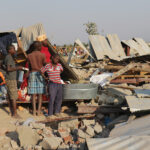
Massive Demolition Blitz for Harare: 5,000 Houses Targeted in Ruthless Crackdown, Backed by 37 High Court Orders!

HARARE – The low rumble of a bulldozer engine is a sound that has come to define the mornings in Harare’s sprawling outskirts. It is a mechanical growl that signals the end of a decade of saving, a lifetime of dreaming, and the literal collapse o…

HARARE – The low rumble of a bulldozer engine is a sound that has come to define the mornings in Harare’s sprawling outskirts. It is a mechanical growl that signals the end of a decade of saving, a lifetime of dreaming, and the literal collapse of a family’s future. In the high-density suburb of Budiriro, […]

The post Massive Demolition Blitz for Harare: 5,000 Houses Targeted in Ruthless Crackdown, Backed by 37 High Court Orders! first appeared on My Zimbabwe News.

Juju suspected: Mysterious cat halts murder trial in Bulawayo High Court…. bees ruthlessly attack people at Mbale High Court (VIDEO)

Juju Suspected as Mysterious Cat Halts Murder Trial in Bulawayo High Court BULAWAYO – The hallowed halls of the Bulawayo High Court, usually a bastion of sober legal deliberation and stern judicial decree, were transformed into a theatre of the superna…

Juju Suspected as Mysterious Cat Halts Murder Trial in Bulawayo High Court BULAWAYO – The hallowed halls of the Bulawayo High Court, usually a bastion of sober legal deliberation and stern judicial decree, were transformed into a theatre of the supernatural this week. In an incident that has left seasoned legal practitioners crossing themselves and […]

The post Juju suspected: Mysterious cat halts murder trial in Bulawayo High Court…. bees ruthlessly attack people at Mbale High Court (VIDEO) first appeared on My Zimbabwe News.

Seh Calaz speaks out after suffering from the deadly sickness that almost killed him: “I thought I was about to die”

HARARE – In the high-octane world of Zimdancehall, where the rhythm of the streets often masks the personal tribulations of its stars, Tawanda Mumanyi — known to his legion of fans as Seh Calaz — has finally broken his silence on a harrowing orde…

HARARE – In the high-octane world of Zimdancehall, where the rhythm of the streets often masks the personal tribulations of its stars, Tawanda Mumanyi — known to his legion of fans as Seh Calaz — has finally broken his silence on a harrowing ordeal that nearly cost him his life. The “Bhanditi Re-Nyika” recently revealed […]

The post Seh Calaz speaks out after suffering from the deadly sickness that almost killed him: “I thought I was about to die” first appeared on My Zimbabwe News.

The difference between life and death is the sky

Source: The difference between life and death is the sky – herald Theseus Mauruki Shambare in VICTORIA FALLS THE helicopter appears before it is seen. First comes the sound — a violent chopping of air above Victoria Falls District Hospital that sends nurses rushing toward the helipad and security guards lifting their heads toward the […]

The post The difference between life and death is the sky appeared first on Zimbabwe Situation.

Source: The difference between life and death is the sky – herald

Theseus Mauruki Shambare in VICTORIA FALLS

THE helicopter appears before it is seen.

First comes the sound — a violent chopping of air above Victoria Falls District Hospital that sends nurses rushing toward the helipad and security guards lifting their heads toward the pale afternoon sky.

Tourists standing near the hospital perimeter instinctively look up.

In Victoria Falls, helicopters usually mean sightseeing. A slow flight above the waterfall.

A luxury aerial view of the Zambezi River.

Another adventure added to somebody’s holiday album. But not this one.

As the aircraft descends sharply onto the newly refurbished helipad, no cameras are pointing upward, no excited passengers waiting to disembark.

Inside, a patient lies sedated beside humming medical equipment.

Sometimes it is a child struggling to breathe, or a road accident victim, or even a mother losing blood faster than doctors can replace it.

Here, the helicopter does not carry tourists.

It carries time itself.

And in some cases, the difference between life and death is measured by how quickly its rotor blades begin turning again.

At the controls is 53-year-old Lasley Makoni, a former Air Force of Zimbabwe pilot who once flew military missions during Zimbabwe’s involvement in the Democratic Republic of Congo conflict.

Today, his war is against distance.

Born in Rusape, Makoni says becoming a pilot was never accidental.

“It has always been my dream,” he said moments after stepping out of the aircraft from Bulawayo. “It was my first job.”

He became a pilot in 1993 and spent a decade in the Air Force before eventually joining HeliDrive Zimbabwe National Air Ambulance Service — the country’s government-subsidised emergency aeromedical evacuation programme now expanding its footprint across Zimbabwe.

The opening of the Victoria Falls operational base follows similar emergency air ambulance service launches in Harare and Bulawayo.

But here in Zimbabwe’s tourism capital, the significance feels different.

Victoria Falls is internationally known for adrenaline, luxury tourism and one of the Seven Natural Wonders of the World.

Now it is quietly becoming something else too — a frontline centre for emergency medicine in the sky.

“When we receive a flight request for a critically ill patient, sense of duty calls,” said Makoni.

“There is excitement because you know you are going to help someone reach the next best medical facility in the shortest possible time.”

The missions are not always easy.

Thunderstorms build suddenly during the rainy season.

Strong headwinds increase fuel consumption. Remote locations often test visibility and endurance. But Makoni said the emotional burden of the work weighs more heavily than the weather.

“There have been many memorable missions,” he said slowly in an interview moments after stepping out of the aircraft from Bulawayo.

“But one I will never forget involved a mother and her baby after a Caesarean section. Both were in critical condition.”

For much of the journey, uncertainty sat heavily inside the aircraft.

“We were worried whether they would still be alive by the time we reached the hospital,” he recalls.

“But they made it alive and received the medical attention they needed.”

For Makoni, every landing represents another race against time.

“Sense of duty calls. You know that somebody’s life depends on how quickly you can get them to the next medical facility.”

That single flight captures a growing reality in Zimbabwe’s healthcare system: for many critically ill patients, survival depends not only on medicine, but on geography.

And geography can be cruel.

Across remote parts of Matabeleland North Province, patients requiring specialised intensive care often face journeys stretching hundreds of kilometres to Bulawayo or Harare.

By road, those journeys can consume half a day or more.

For patients in respiratory failure, severe trauma or postpartum haemorrhage, time becomes a luxury the body cannot afford.

Young general practitioner Dr Tapiwa Kandemiiri sees this reality almost daily.

The 32-year-old doctor from Hwedza works with the Helidrive Zimbabwe National Air Ambulance Service stationed at Victoria Falls District Hospital.

Soft-spoken but confident, he has been practising medicine since 2019 and believes the air ambulance system is transforming emergency outcomes in remote communities.

“By road, some patients would take almost 12 hours to reach Bulawayo because of the distance and road conditions,” he said. “In critical emergencies, that is simply too long.”

He remembers a recent maternity emergency that still lingers vividly in his mind.

“There was a patient who developed postpartum haemorrhage after complications in theatre,” he explained.

“She went into disseminated intravascular coagulation and urgently needed blood transfusion and ICU care.”

The nearest intensive care facilities were in Bulawayo. Without rapid evacuation, the odds would have narrowed dangerously.

“Because of the air service, we managed to quickly evacuate the patient,” said Dr Kandemiiri.

“The helicopter itself functions like a flying ICU. There was a ventilator on board and the patient remained sedated throughout the journey.”

The patient survived.

“As we speak right now, she is getting better,” he said.

For Dr Kandemiiri, the emotional reward of emergency medicine comes not from heroism, but from witnessing life continue.

“It is satisfying when things go well because not all situations end positively,” he said.

“But when someone survives because of your intervention, you feel you have done something meaningful.”

That meaning now stretches far beyond medicine. The arrival of the HeliDrive base in Victoria Falls represents a quiet but important shift in how tourism destinations increasingly intersect with public health systems.

Traditionally, emergency healthcare infrastructure in many tourism centres across Africa has focused largely on visitors.

But Victoria Falls is evolving into something broader — a system where tourism investment and local healthcare survival are beginning to reinforce each other.

The regional air ambulance base includes three operational helipads, dispatch infrastructure and maintenance facilities capable of handling rapid emergency deployments.

The helicopters themselves operate as flying intensive care units equipped to stabilise critically ill patients during transfer.

For tourists engaging in high-risk adventure activities such as white-water rafting, bungee jumping and helicopter excursions above the Falls, rapid trauma response can become lifesaving.

Yet perhaps the most remarkable aspect of the service is that the same aircraft reassuring international tourists is also rescuing ordinary Zimbabweans from some of the country’s most isolated communities.

The helicopter carrying a tourist injured during an adventure activity may later transport a rural mother suffering childbirth complications. Inside the aircraft, economic status disappears. What remains is urgency.

Helidrive Zimbabwe chief medical officer Dr Freddy Mhondiwa said the Victoria Falls operational base significantly strengthens emergency response capacity in the region.

“As Helidrive Zimbabwe National Air Ambulance Service, we are proud to mark the opening of our new operational base in Victoria Falls,” he said.

“This positions us to deliver timely, high-quality aeromedical services to both tourists visiting one of Africa’s premier destinations and surrounding local communities requiring urgent access to advanced medical care.”

Statistics released by Helidrive Zimbabwe reveal the growing national dependence on emergency air evacuation services.

Since the launch of operations in August 2024 up to May 19 this year, the service has handled 1 462 emergency cases across its Harare, Bulawayo and Victoria Falls bases.

The Harare base accounted for the highest number with 944 evacuations, while Bulawayo handled 504 cases.

Although still in its infancy, the newly established Victoria Falls base has already responded to 14 emergencies.

The figures also reveal the quiet human complexity behind the flights.

Nationally, adults aged 13 years and above accounted for 710 evacuations, while 473 children between zero and 12 years required emergency transfers. Of those children, 271 were infants under the age of one.

In Victoria Falls alone, six children have already required emergency evacuation, including five infants. Behind every statistic is a family waiting beside a hospital bed. A mother. A child. A survivor.

With Victoria Falls preparing to host upcoming international Cricket World Cup events, emergency preparedness is expected to become even more critical.

Thousands of athletes, officials and visitors are anticipated to descend on the resort city.

“Our teams are fully prepared and operational,” said Dr Mhondiwa.

“We are strengthening rapid response systems, trauma care and critical care transfers across the region.”

Tourism stakeholders have welcomed the expansion, describing it as a major confidence boost for destination safety and emergency readiness.

Globally, tourism destinations are increasingly judged not only by the quality of hotels and attractions, but by the strength of their emergency response systems.

In many ways, Victoria Falls is now attempting to redefine itself through both hospitality and healthcare resilience.  But perhaps the deepest transformation happening here is less visible. For decades, distance has silently shaped survival in Zimbabwe.

Distance between rural clinics and urban hospitals; between emergencies and intensive care units; between life and specialised treatment.

Now aviation is beginning to compress that distance. A journey once measured in exhausting road hours can now take less than two hours by air.

For many families in Matabeleland North, that difference has begun to reshape how communities think about survival itself.

“Before this helicopter service, when someone became critically ill, families here would first pray for the road,” said Clemence Mudimba, a Victoria Falls resident who has witnessed emergency evacuations from the district hospital.

“Now, at least, we know the sky can also bring help.”

It is a simple observation, but one that captures the quiet transformation unfolding in Victoria Falls — a tourism destination increasingly becoming a lifeline for both visitors and ordinary Zimbabweans living far from specialist medical care.

And for critically ill patients, those saved hours can become saved lives.

As evening settles over Victoria Falls, sunset helicopters continue carrying tourists above the mist rising from the Zambezi gorge.

From the air, the city still looks like a postcard destination.

But on another section of the tarmac, a different helicopter waits silently on standby.

Its next mission is unknown. Perhaps another infant struggling for oxygen, or a road accident victim.

Makoni walks slowly across the helipad as fading sunlight reflects against the aircraft behind him. Three decades after first entering a cockpit, he still flies missions shaped by urgency.  Only now, the enemy is no longer war.

It is time itself. And in a country where geography has too often determined who lives and who dies, the last road between life and death is increasingly becoming the sky.

The post The difference between life and death is the sky appeared first on Zimbabwe Situation.