‘180 were on board Kariba ferry’

Source: ‘180 were on board Kariba ferry’ – herald Mashudu Netsianda mashudu.netsianda@chronicle.co.zw PRELIMINARY investigations into the Lake Kariba ferry disaster, which has claimed at least 94 lives, have revealed that the Rural Infrastructure Development Agency (RIDA)’s Mbuya Nehanda was carrying an estimated 180 passengers and assorted goods, apparently exceeding its carrying capacity when it capsized last […]

The post ‘180 were on board Kariba ferry’ appeared first on Zimbabwe Situation.

Source: ‘180 were on board Kariba ferry’ – herald

Mashudu Netsianda mashudu.netsianda@chronicle.co.zw

PRELIMINARY investigations into the Lake Kariba ferry disaster, which has claimed at least 94 lives, have revealed that the Rural Infrastructure Development Agency (RIDA)’s Mbuya Nehanda was carrying an estimated 180 passengers and assorted goods, apparently exceeding its carrying capacity when it capsized last week. Government has since launched a full-scale investigation into the tragedy.

The probe is expected to examine possible overloading, navigational decisions and compliance with weather advisories as authorities seek to establish the cause of one of Zimbabwe’s worst maritime disasters. The ferry capsized last Tuesday while carrying passengers and goods to remote fishing communities along the Lake Kariba-Chalala route.
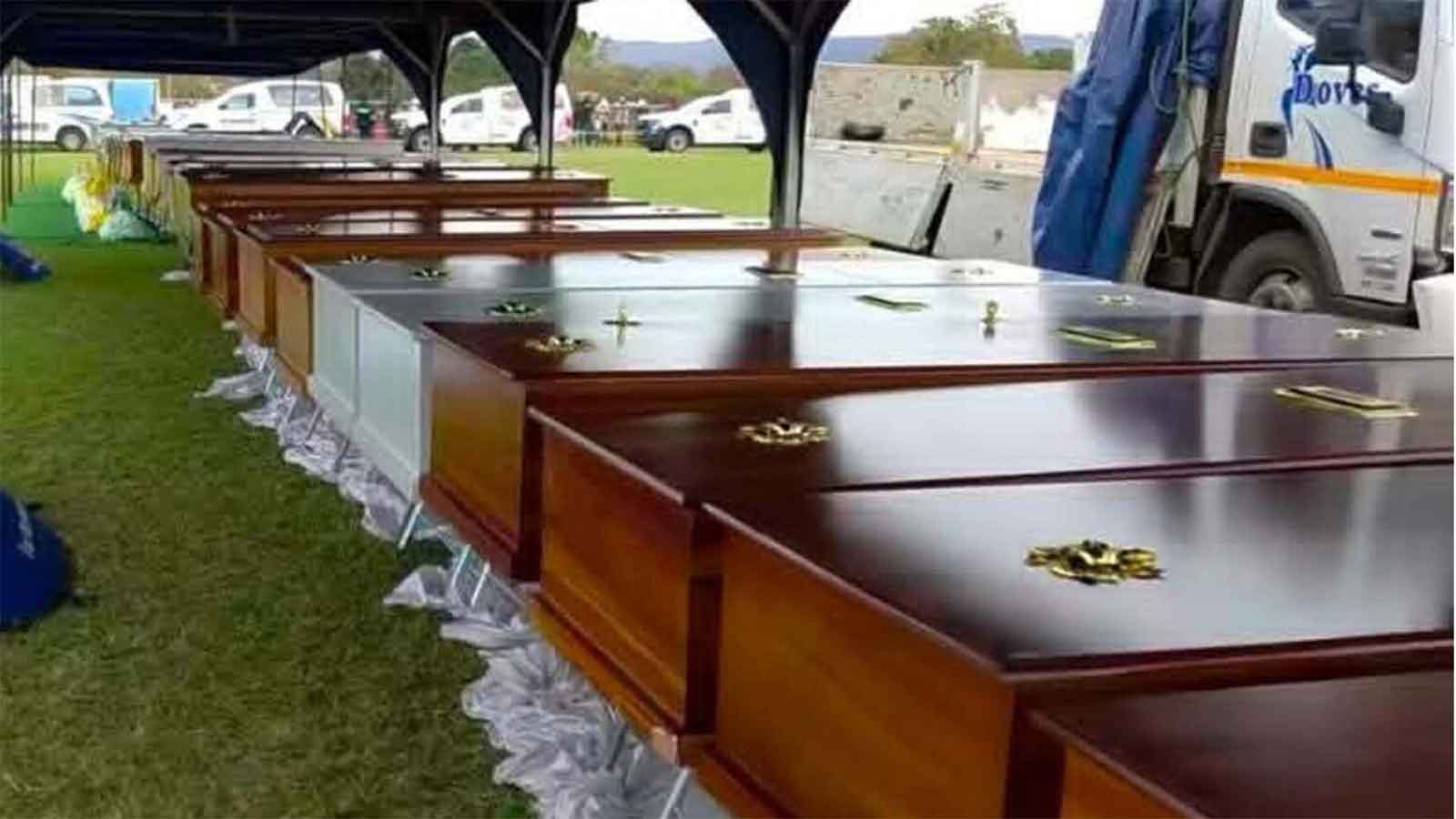
President Mnangagwa has since declared the incident a National Disaster, triggering the mobilisation of national resources to support search, rescue and recovery efforts.

As of yesterday, 94 bodies had been recovered and 77 passengers rescued, although authorities have warned that the death toll could rise as search teams continue combing the vast lake.

Addressing journalists during a post-Cabinet briefing in Harare yesterday, Minister of Women Affairs, Community, Small and Medium Enterprises Development Senator Monica Mutsvangwa said preliminary investigations had revealed that the ferry was carrying approximately 180 passengers and assorted goods, apparently exceeding its approved capacity.

“Cabinet received the Report on the Lake Kariba Passenger Ferry Disaster, which was presented by the Minister of Local Government and Public Works, Honourable Daniel Garwe, as Chairperson of the Cabinet Committee on Environment, Emergency Preparedness, Disaster Prevention and Management.

“The nation is advised that preliminary investigations indicate that the Rural Infrastructure Development Agency (RIDA)’s Mbuya Nehanda ferry, which capsized on Lake Kariba on 11 August, 2026, was ferrying about 180 passengers and goods, thus exceeding its carrying capacity,” she said.

The ferry reportedly overturned after encountering strong waves, but investigators are now expected to determine whether overloading, navigational decisions and compliance with safety regulations played a role in the disaster.

Particular attention is also being directed towards reports that the Meteorological Services Department had issued an alert advising lake users against sailing due to adverse weather conditions.

Minister Mutsvangwa said Government had initiated formal investigations covering both the physical condition of the vessel and adherence to operational requirements.

“Government notes that the Meteorological Services Department had issued an early warning advising all lake users against sailing. Meanwhile, Government has commenced formal investigations which include examining the structural remains of the vessel and probing operational and compliance issues,” she said.

The outcome of the investigation is expected to determine whether the disaster could have been avoided and whether existing safety regulations governing passenger transport on Lake Kariba were sufficiently enforced.

The tragedy has devastated communities that rely on the ferry as a critical and affordable transport link connecting remote settlements to the rest of the country.

Passengers on board included parents transporting children to their rural homes for the school holidays, traders travelling to fishing camps to restock goods and fish buyers sourcing produce for resale in other parts of Zimbabwe.

The vessel’s relatively low cost made it an essential mode of transport for many communities along the route, particularly those with limited access to alternative transport options.

Search and recovery operations remain ongoing, with teams from the Zimbabwe Republic Police Sub-Aqua Unit and the Zimbabwe National Army Boat Squadron working alongside the

Department of Civil Protection, local authorities and other stakeholders.

The operation has also received support from a privately owned helicopter provided by the Matusadona Conservation Trust.

Authorities have recovered bodies at locations far from the accident site, including around Long Island and King’s Camp, with some reportedly drifting towards the Zambian border.

Investigators are therefore still working to establish the exact number of people who were on board at the time of the accident, fuelling fears that the final death toll may be significantly higher.

“All Lake Kariba users are urged to remain vigilant and urgently report any floating objects. Further updates will be provided as the search and rescue operation continues,” said Minister Mutsvangwa.

The disaster has also intensified scrutiny of safety standards on Lake Kariba and questions around the enforcement of passenger and vessel regulations, particularly on routes serving isolated communities.

Meanwhile, Pope Leo XIV has conveyed his condolences to the families of the victims, saying he was “deeply saddened” by the tragedy.

In a telegram signed by Cardinal Secretary of State Pietro Parolin and issued yesterday, the Pope expressed his “heartfelt condolences” to those grieving the loss of family members and said he was entrusting the souls of the deceased “to the loving mercy of Almighty God”.

He also offered prayers for civil authorities and emergency personnel involved in the rescue and recovery operation.

“Upon all those affected,” the Pope said, he invoked divine blessings of “consolation, healing and strength”.

Lake Kariba, one of the world’s largest man-made reservoirs by volume, straddles the border between Zimbabwe and Zambia and serves as a vital transport, fishing and economic hub for communities living along its shores.

Created following the construction of the Kariba Dam on the Zambezi River between the late 1950s and early 1960s, the lake stretches for more than 200 kilometres and plays a critical role in fishing, tourism, power generation and transport.

Particular attention is also being directed towards reports that the Meteorological Services Department had issued an alert advising lake users against sailing due to adverse weather conditions.

Minister Mutsvangwa said Government had initiated formal investigations covering both the physical condition of the vessel and adherence to operational requirements.

“Government notes that the Meteorological Services Department had issued an early warning advising all lake users against sailing. Meanwhile, Government has commenced formal investigations which include examining the structural remains of the vessel and probing operational and compliance issues,” she said.

The outcome of the investigation is expected to determine whether the disaster could have been avoided and whether existing safety regulations governing passenger transport on Lake Kariba were sufficiently enforced.

The tragedy has devastated communities that rely on the ferry as a critical and affordable transport link connecting remote settlements to the rest of the country.

Passengers on board included parents transporting children to their rural homes for the school holidays, traders travelling to fishing camps to restock goods and fish buyers sourcing produce for resale in other parts of Zimbabwe.

The vessel’s relatively low cost made it an essential mode of transport for many communities along the route, particularly those with limited access to alternative transport options.
Search and recovery operations remain ongoing, with teams from the Zimbabwe Republic Police Sub-Aqua Unit and the Zimbabwe National Army Boat Squadron working alongside the

Department of Civil Protection, local authorities and other stakeholders.

The operation has also received support from a privately owned helicopter provided by the Matusadona Conservation Trust.

Authorities have recovered bodies at locations far from the accident site, including around Long Island and King’s Camp, with some reportedly drifting towards the Zambian border.

Investigators are therefore still working to establish the exact number of people who were on board at the time of the accident, fuelling fears that the final death toll may be significantly higher.

“All Lake Kariba users are urged to remain vigilant and urgently report any floating objects. Further updates will be provided as the search and rescue operation continues,” said Minister Mutsvangwa.

The disaster has also intensified scrutiny of safety standards on Lake Kariba and questions around the enforcement of passenger and vessel regulations, particularly on routes serving isolated communities.

Meanwhile, Pope Leo XIV has conveyed his condolences to the families of the victims, saying he was “deeply saddened” by the tragedy.

In a telegram signed by Cardinal Secretary of State Pietro Parolin and issued yesterday, the Pope expressed his “heartfelt condolences” to those grieving the loss of family members and said he was entrusting the souls of the deceased “to the loving mercy of Almighty God”.

He also offered prayers for civil authorities and emergency personnel involved in the rescue and recovery operation.

“Upon all those affected,” the Pope said, he invoked divine blessings of “consolation, healing and strength”.

Lake Kariba, one of the world’s largest man-made reservoirs by volume, straddles the border between Zimbabwe and Zambia and serves as a vital transport, fishing and economic hub for communities living along its shores.

Created following the construction of the Kariba Dam on the Zambezi River between the late 1950s and early 1960s, the lake stretches for more than 200 kilometres and plays a critical role in fishing, tourism, power generation and transport.

The post ‘180 were on board Kariba ferry’ appeared first on Zimbabwe Situation.

Kariba route open to private players

Source: Kariba route open to private players – herald Walter Nyamukondiwa in KARIBA THE Government is moving to open the Kariba-Chalala route to private operators to restore the movement of people and supplies following the loss of the Mbuya Nehanda ferry, which has left communities around the vast lake facing transport challenges. The move comes […]

The post Kariba route open to private players appeared first on Zimbabwe Situation.

Source: Kariba route open to private players – herald

Walter Nyamukondiwa in KARIBA

THE Government is moving to open the Kariba-Chalala route to private operators to restore the movement of people and supplies following the loss of the Mbuya Nehanda ferry, which has left communities around the vast lake facing transport challenges.

The move comes as the death toll from the ferry disaster rose to 94 after another body was recovered on Monday night.

National police spokesperson Commissioner Paul Nyathi confirmed the latest development.

“The death toll is now 94. The ZRP’s deployment of search teams will continue as efforts to locate any missing persons or bodies continue,” he said.

With the Mbuya Nehanda ferry out of service, Government is now considering alternative vessels to ensure communities that depend heavily on lake transport are not cut off from essential services and economic activities.

Transport and Infrastructural Development Minister Felix Mhona said private operators could be allowed to operate on the route, subject to rigorous safety inspections and regulatory approvals.

“We do not want to create another problem in trying to solve the current challenge. We have to make sure that the alternative transport is suitable and safe for passengers,” he said.

Private operators have already offered vessels to help bridge the gap, with the Silverstone ferry among those being considered.

The post Kariba route open to private players appeared first on Zimbabwe Situation.

Transfer of voters roll to RG Office in progress

Source: Transfer of voters roll to RG Office in progress – herald Trust Freddy Herald Correspondent A JOINT inter-agency transition to transfer voter registration and voters’ roll management from the Zimbabwe Electoral Commission back to the Office of the Registrar-General has begun, with officials saying the process will be completed this month. This follows President […]

The post Transfer of voters roll to RG Office in progress appeared first on Zimbabwe Situation.

Source: Transfer of voters roll to RG Office in progress – herald

Trust Freddy

Herald Correspondent

A JOINT inter-agency transition to transfer voter registration and voters’ roll management from the Zimbabwe Electoral Commission back to the Office of the Registrar-General has begun, with officials saying the process will be completed this month.

This follows President Mnangagwa’s assent to Constitution of Zimbabwe Amendment (No. 3) Bill in July, which returned the voter registration mandate to the Civil Registry and established an independent Delimitation Commission.

ZEC has managed the voters’ roll since 2013. Leadership teams from both electoral bodies met in Harare yesterday to operationalise the administrative handover, bringing together Provincial Electoral Officers, Provincial Registrars, District Electoral Officers, and District Registrars to align decentralised operations across all administrative tiers.

Speaking at the joint engagement, Registrar-General Mr Henry Machiri said the operational transition commenced immediately after the legislation was signed into law, targeting completion by the end of August.

“Our structure runs from the national level down to sub-office level, so this transfer is not limited to head office only,” Mr Machiri said.

“The purpose of bringing our teams together is to get everyone to work as one team. It is not just about transferring equipment, but also transferring the mindset of our people so that they understand what they are supposed to do when we take over.”

Mr Machiri reassured the public that the Civil Registry Department possesses the requisite technical capacity, systems and expertise to manage the voters’ roll, having executed the role before 2013.

ZEC chief elections officer Mr Simbarashe Tongayi said the transition involves physical assets, network infrastructure and human capital through a Whole-of-Government approach.

“The transfer involves equipment and infrastructure related to voter registration, including Biometric Voter Registration (BVR) kits and related network infrastructure,” Mr Tongayi said.

“We are ensuring that not only equipment is transferred, but also the expertise and experience from ZEC. We will have attachments and secondments to ensure there is no gap.”

Mr Tongayi added that ongoing public exercises, such as Continuous Voter Registration, will continue seamlessly alongside joint electoral planning.

Under the updated framework, the Civil Registry Department will also participate directly in Multi-Party Liaison Committees to address stakeholder matters regarding voter registration.

The operational synergy between the two institutions is already underway ahead of three municipal by-elections scheduled for Ward 1 in Bulawayo, Ward 18 in Hwange, and Ward 3 in Victoria Falls.

Deputy Chief Secretary for Finance, Administration, and Human Resources in the Office of the President and Cabinet (OPC), Mr Zvinechimwe Churu said consolidating voter registration into the national civil registration system aligns Zimbabwe with international best practices.

“By integrating voter registration into the national civil registration framework, the nation establishes a reliable synergy between identity and the franchise of the citizen,” Mr Churu said in a speech read on his behalf by Mr Causemore Maringa, the Permanent Secretary for Public Sector Reforms and Performance Management in the Office of the President.

“This ensures that singular citizen data captured at the Registrar-General’s office finds expression in the right to vote, thereby reducing duplication, eliminating discrepancies, and promoting a clean and up-to-date register of voters.”

The post Transfer of voters roll to RG Office in progress appeared first on Zimbabwe Situation.

Agric Show preps advanced

Source: Agric Show preps advanced – herald Wallace Ruzvidzo Herald Reporter PREPARATIONS for the hosting of the 116th Zimbabwe Agricultural Show, which opens in Harare next week, are at an advanced stage. Speaking after a Cabinet meeting in the capital yesterday, the Minister of Women Affairs, Community, Small and Medium Enterprises Development, Senator Monica Mutsvangwa, […]

The post Agric Show preps advanced appeared first on Zimbabwe Situation.

Source: Agric Show preps advanced – herald

Wallace Ruzvidzo

Herald Reporter

PREPARATIONS for the hosting of the 116th Zimbabwe Agricultural Show, which opens in Harare next week, are at an advanced stage.

Speaking after a Cabinet meeting in the capital yesterday, the Minister of Women Affairs, Community, Small and Medium Enterprises Development, Senator Monica Mutsvangwa, said Cabinet noted the update report on the show as presented by the Minister of Agriculture, Mechanisation and Water Resources Development, Dr Anxious Masuka.

“Preparations are well on course for a successful 116th Zimbabwe Agricultural Show, which will be held from August 24 to 29 under the theme: ‘Powering growth: Where agriculture, technology and commerce converge.’

“The show will provide a platform for policy dialogue and showcase modern technologies, promote climate-smart practices, and strengthen linkages across value chains while deepening regional and international collaboration,” she said.

The Zimbabwe Agricultural Society was consolidating its position as the largest exhibition platform in Zimbabwe and SADC at large.

“The current space uptake for commercial exhibits covers 78 000 square metres of the targeted 89 000 square metres, with 550 exhibitors having registered compared to 505 exhibitors as at the same time in 2025,” she said.

The post Agric Show preps advanced appeared first on Zimbabwe Situation.

1 500 home seekers in limbo . . . Bulawayo housing projects stall

Source: 1 500 home seekers in limbo . . . Bulawayo housing projects stall – herald Peter Matika peter.matika@chronicle.co.zw SCORES of Bulawayo home seekers face growing uncertainty after housing projects expected to deliver more than 1 500 residential stands stalled due to funding shortages, contractual disputes and escalating infrastructure servicing costs. The delays have dealt a […]

The post 1 500 home seekers in limbo . . . Bulawayo housing projects stall appeared first on Zimbabwe Situation.

Source: 1 500 home seekers in limbo . . . Bulawayo housing projects stall – herald

Peter Matika peter.matika@chronicle.co.zw

SCORES of Bulawayo home seekers face growing uncertainty after housing projects expected to deliver more than 1 500 residential stands stalled due to funding shortages, contractual disputes and escalating infrastructure servicing costs.

The delays have dealt a significant setback to efforts to address the city’s persistent housing backlog, with seven Bulawayo City Council (BCC) contracts now classified as non-performing and several major housing developments effectively at a standstill.

The affected projects include 288 high-density stands in Magwegwe Extension, 390 in Magwegwe West, 365 in Emganwini and 502 medium-density stands in Emhlangeni Phase II.

The combined total of 1 545 stands would have substantially increased Bulawayo’s housing stock at a time when thousands of residents remain on the municipal housing waiting list.

The stalled developments have also heightened concern among beneficiaries who have already paid significant sums towards the purchase of stands but are still waiting for fully serviced properties.

According to the latest Bulawayo City Council report, the local authority had 89 active contracts at various stages of implementation at the beginning of June.

Of these, 56 were progressing according to schedule, while 21 had fallen behind programme. Seven contracts, however, were classified as non-performing.

Projects identified as stalled or non-performing include the rehabilitation of the Deep Section tunnel sewer, servicing of residential stands in Magwegwe Extension, Emhlangeni Phase II,

Emganwini, Magwegwe West, Woodville and Paddonhurst, as well as the refurbishment of Beit Hall.

The housing developments have been hampered by a combination of funding constraints, disputes between council and contractors, and rising costs associated with construction materials and infrastructure provision.

Some of the projects have also entered arbitration following disagreements between the local authority and contractors.

The Magwegwe West housing project and the Deep Section tunnel sewer rehabilitation are under arbitration after prolonged contractual disputes.

The refurbishment of Beit Hall has also stalled following disagreements over price variation claims, resulting in the contractor abandoning the site. Council is pursuing formal takeover procedures before work on the project can resume.

For the Magwegwe Extension, Emhlangeni Phase II, Woodville and Paddonhurst developments, beneficiaries have been asked to pay additional top-up fees to cover increased servicing costs.

Council said procurement of materials would commence once sufficient funds had been raised.

Bulawayo mayor Councillor David Coltart said the delays were particularly worrying given the financial sacrifices already made by beneficiaries.

“These delays are deeply concerning because many beneficiaries have invested their life savings in these housing schemes and have waited for years to receive their stands. Council appreciates the frustration being experienced by residents,” he said.

“We are working tirelessly to ensure that these developments are completed and handed over as soon as possible.”

Clr Coltart said changing economic conditions had significantly affected the viability of projects that were initiated several years ago.

“The reality is that the economic environment has changed substantially since some of these projects were initiated. The cost of servicing land and providing infrastructure has increased dramatically, creating funding gaps that must be addressed if we are to successfully complete these developments,” he said.

Town clerk Mr Christopher Dube said the local authority was pursuing a number of financing options to revive the stalled projects.

“We are actively exploring various financing mechanisms, including seeking borrowing powers amounting to US$13 million, which will assist in completing outstanding housing projects and providing the critical off-site infrastructure required for these developments,” he said.

Mr Dube said council would continue addressing contractual disputes through the appropriate legal processes while seeking practical ways to get projects back on site.

“Council remains committed to resolving contractual disputes through the appropriate legal channels while simultaneously pursuing practical solutions that will allow work to resume,” he said.

Mr Dube said the council’s priority remained ensuring that beneficiaries ultimately received serviced stands as the city continues to grow.

The latest setbacks come against the backdrop of a severe housing shortage in Bulawayo, driven by population growth, urbanisation and a limited supply of serviced land.

Many residents have remained on the council’s housing waiting list for years, while some housing projects have reportedly taken more than a decade to reach completion.

Councillors have previously expressed concern over stalled developments, particularly in Magwegwe and Magwegwe West, where beneficiaries have endured lengthy waits for their stands.

Urban planning expert Dr Nicholas Muleya warned that prolonged delays in servicing residential land could have far-reaching implications for the city.

He said a continued shortage of serviced land could force desperate home seekers to seek alternative accommodation in informal settlements.

“The stalled projects represent more than delayed construction schedules. They have a direct bearing on Bulawayo’s ability to expand its formal housing stock, manage urban growth and provide residents with secure and serviced places to live,” said Dr Muleya.

The post 1 500 home seekers in limbo . . . Bulawayo housing projects stall appeared first on Zimbabwe Situation.