When a leader doesn’t sympathize with his own people’s tragedy, no one else in the region does

Source: When a leader doesn’t sympathize with his own people’s tragedy, no one else in the region does If you don’t love your own, no one else will. ​There is a profound, aching betrayal in watching regional diplomacy play out while a nation bleeds. To directly receive my articles please join my WhatsApp Channel on: https://whatsapp.com/channel/0029VaqprWCIyPtRnKpkHe08Yesterday in […]

The post When a leader doesn’t sympathize with his own people’s tragedy, no one else in the region does appeared first on Zimbabwe Situation.

Source: When a leader doesn’t sympathize with his own people’s tragedy, no one else in the region does

If you don’t love your own, no one else will.

​There is a profound, aching betrayal in watching regional diplomacy play out while a nation bleeds. 
To directly receive my articles please join my WhatsApp Channel on: https://whatsapp.com/channel/0029VaqprWCIyPtRnKpkHe08
Yesterday in Durban, as the SADC Heads of State and Government Summit convened, the silence surrounding the Lake Kariba ferry disaster was deafening. 

A tragedy of catastrophic proportions—which has so far claimed 93 lives—was met with an astonishing lack of formal acknowledgment from the region’s highest gathering. 
A disaster of this magnitude naturally should have stopped proceedings in their tracks. 
It should have compelled gathered leaders to observe at least a minute of silence to honor those innocent lives lost. 
As the people of Zimbabwe, we expected the incoming SADC chairman, South African President Cyril Ramaphosa, to utter words of comfort during his opening address. 
Instead, he chose to congratulate Zimbabwe on its election to a non-permanent seat on the UN Security Council.
​This total detachment exposes a painful reality about regional governance. 
Those in power remain obsessed with the trappings of political prestige—applauding diplomatic seats and summit handovers—while turning a blind eye to the horrific deaths of poor, rural citizens drowning in the waters of Kariba. 
But we cannot simply place the blame on neighboring heads of state. 
Charity, after all, begins at home.
What did our own leader say about this national catastrophe when given the regional platform in Durban? 
Handing over the SADC chairmanship, he offered nothing. 
Nowhere in his speech was there a single mention of the disaster unfolding in his own country. 
While Zimbabwe was plunged into deep mourning, our head of state opted to stick to well-worn scripts on regional economic development, mineral value-addition, and raw export transitions—lofty concepts that rarely bring tangible comfort to everyday citizens struggling to survive.
Even back home, the response spoke volumes. 
Immediately following the accident, our leader did not travel to the shores of Kariba to console the grieving families or assess the rescue and recovery efforts firsthand—as is the custom the world over.
Instead, he prioritized attending a Johane Masowe Chishanu apostolic gathering at the Gwanzura Shrine in Harare, before flying off to Durban for the SADC Summit.
When a leader demonstrates such apparent indifference toward a tragedy striking his own household, it is hardly surprising that foreign leaders follow suit. 
If, during my mother’s passing last October, I had chosen to attend business meetings and go partying instead, I could hardly expect anyone else to treat my loss with the gravity it deserved.
​When a leader doesn’t sympathize with his own people’s tragedy, no one else in the region does. 
The silence in Durban was not just an omission; it was a mirror reflecting our own government’s priorities. 
When statecraft completely detached from human suffering becomes the norm, the ordinary citizen is left entirely alone. 
Pain belongs to the vulnerable.
Tendai Ruben Mbofana is a social justice advocate and writer. Please feel free to contact him on +263715667700 or mbofana.tendairuben73@gmail.com

The post When a leader doesn’t sympathize with his own people’s tragedy, no one else in the region does appeared first on Zimbabwe Situation.

Zambia President reelected for a second term in a vote marred by rigging and violence

LUSAKA, Zambia — Zambian President Hakainde Hichilema has been reelected for a second five-year term, the Electoral Commission of Zambia announced early Tuesday. He was declared the outright winner of last Thursday’s presidential election without the need for a run-off, having secured 61.4% of the 5 million votes cast. According to the commission, Hichilema won […]

The post Zambia President reelected for a second term in a vote marred by rigging and violence appeared first on The Zimbabwe Mail.

LUSAKA, Zambia — Zambian President Hakainde Hichilema has been reelected for a second five-year term, the Electoral Commission of Zambia announced early Tuesday.

He was declared the outright winner of last Thursday’s presidential election without the need for a run-off, having secured 61.4% of the 5 million votes cast.

According to the commission, Hichilema won with 2,965,326 votes and his closest competitor was opposition leader Brian Mundubile, who won 1,856,217 votes.

“I therefore declare, Hichilema Hakainde S, to be president-elect of the Republic of Zambia this 18th day of August, 2026,” commission chairperson Mwangala Zaloumis said.

Hichilema’s victory follows a closely watched election which saw the vote counting suspended last Friday and then restarted hours later under heightened security after the commission said there had been attacks against some polling station officials and some ballot papers had been stolen.

The government also confirmed that several leading opposition figures were arrested on the night of the elections, with the police accusing them of posing a threat to state security.

Mundubile said his home was raided by the police in what he called an attack on his life.

Thursday’s election was seen as a test of Hichilema’s economic recovery plan after the copper-rich nation was plunged into a debt crisis in 2020. Hichilema was elected in 2021 and oversaw the restructuring of Zambia’s sovereign debt while reining in inflation and stabilizing the currency.

International observers, including the European Union, said the election was largely peaceful, but said the “broader electoral process took place in an environment that limited fundamental freedoms.”

“Late legal changes, legal uncertainty, and unequal campaign conditions distorted the playing field,” said Michael McNamara, chief of the EU observation mission.

In a pastoral statement, the Zambia Conference of Catholic Bishops expressed concern over the deployment of the army during the vote counting

“The maintenance of order during elections is constitutionally and statutorily the responsibility of the Zambia Police Service,” the bishops said.

The post Zambia President reelected for a second term in a vote marred by rigging and violence appeared first on The Zimbabwe Mail.

US$10 per passenger, then 92 people died: Kariba ferry accident overtakes Nyanga bus disaster which killed 89 people

The death toll from the Rida Mbuya Nehanda ferry disaster has risen to 92, making it Zimbabwe’s deadliest transport tragedy and placing the country’s most painful memories of mass death alongside a fresh lake disaster that has devastated families acros…

The death toll from the Rida Mbuya Nehanda ferry disaster has risen to 92, making it Zimbabwe’s deadliest transport tragedy and placing the country’s most painful memories of mass death alongside a fresh lake disaster that has devastated families across Nyaminyami. Eight more bodies were recovered yesterday as divers and rescue teams widened the search […]

The post US$10 per passenger, then 92 people died: Kariba ferry accident overtakes Nyanga bus disaster which killed 89 people first appeared on My Zimbabwe News.

Lula lula with wife’s daughter in lodge ends in murder and attempted suicide: How ex-cop killed police sergeant

Police sergeant shot dead after confronting husband over alleged abuse of teenage daughter HARARE — A Hatfield traffic officer, Sergeant Portia Dzanwa, was shot dead inside a parked vehicle in Harare on Sunday night after confronting her husband over a…

Police sergeant shot dead after confronting husband over alleged abuse of teenage daughter HARARE — A Hatfield traffic officer, Sergeant Portia Dzanwa, was shot dead inside a parked vehicle in Harare on Sunday night after confronting her husband over allegations involving her 16-year-old daughter, according to police. Her husband, 52-year-old Pharaoh Dombodzvuku, survived after suffering […]

The post Lula lula with wife’s daughter in lodge ends in murder and attempted suicide: How ex-cop killed police sergeant first appeared on My Zimbabwe News.

Lake Kariba disaster becomes Zimbabwe’s deadliest public transport tragedy

Police say search for more bodies continues Source: Lake Kariba disaster becomes Zimbabwe’s deadliest public transport tragedy – Zimbabwe News Now HARARE – The Lake Kariba boat disaster is now the worst public transportation accident in Zimbabwe’s history, eclipsing the Nyanga bus disaster, after the death toll rose to 92 on Monday. Police said eight […]

The post Lake Kariba disaster becomes Zimbabwe’s deadliest public transport tragedy appeared first on Zimbabwe Situation.

Police say search for more bodies continues

Source: Lake Kariba disaster becomes Zimbabwe’s deadliest public transport tragedy – Zimbabwe News Now

HARARE – The Lake Kariba boat disaster is now the worst public transportation accident in Zimbabwe’s history, eclipsing the Nyanga bus disaster, after the death toll rose to 92 on Monday.

Police said eight more bodies had been recovered, as divers continue their grim search still with no certainty over how many people were onboard the Rural Infrastructure Development Agency (RIDA) passenger ferry that capsized on August 11.

Confirmation of 92 dead and 77 survivors places the number of people on the doomed vessel at 169 – well more than the boat’s reported capacity of 90. The death toll could still rise.

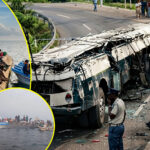
Not since August 3, 1991, when a bus carrying students and teachers from Regina Coeli High School crashed on the winding Nyanga-Ruwangwe road, resulting in 89 fatalities, has the country mourned so many people from a single public transport accident.

The rickety boat which went into service in 1985 was on a five-hour journey from Kariba urban to rural communities across the world’s biggest man-made lake when it sank during a high tide.

Survivors said the boat’s captain who died in the incident refused several requests to abort the trip due to bad weather.

President Emmerson Mnangagwa has declared a national disaster and demanded an upgrade to what he called “maritime deficiencies.”

Demands for a commission of inquiry into the Lake Kariba incident have grown as the government also faces criticism for failing to declare days of mourning.

The post Lake Kariba disaster becomes Zimbabwe’s deadliest public transport tragedy appeared first on Zimbabwe Situation.