Source: Cutting red tape supports private sector jobs in Zimbabwe

Ask a small business owner in Zimbabwe what slows them down, and regulation often comes up among the first answers. There are permits to renew, inspections to arrange, levies to pay—sometimes repeatedly and through different agencies. These demands absorb time and resources that could otherwise go toward growth, posing a challenge for Zimbabwe’s National Development Strategy 2 (2026–2030), which targets private investment as a lever to achieve middle-income status. With World Bank support, the Government of Zimbabwe (GoZ) has begun addressing these bottlenecks in sectors with high potential for job creation, starting with three priority sectors: tourism, agro-processing, and agriculture.
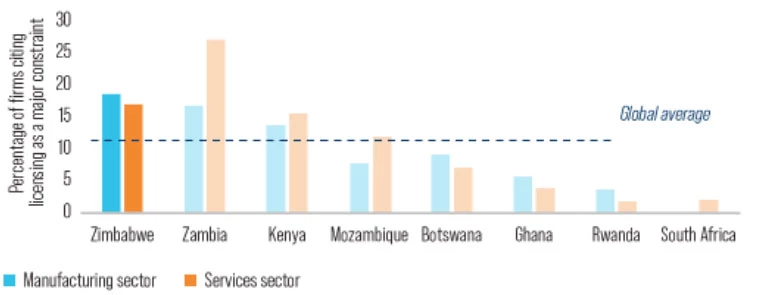
Licensing is a major constraint for firms in Zimbabwe. Source: World Bank Enterprise Surveys Database
Why Regulatory Reform Is Necessary
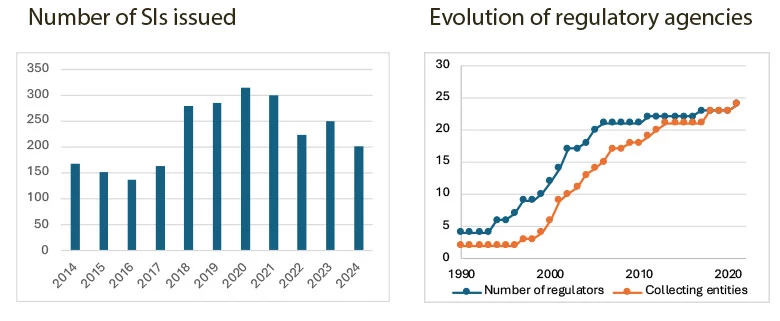
Zimbabwe’s regulatory system did not become this complex overnight. New statutory instruments (SIs) were introduced over time, mandates were expanded, and additional authorities became involved in overseeing business activity. Many requirements were layered on incrementally, often to generate revenue for agencies (see more information in the World Bank’s latest Zimbabwe Economic Update) rather than to address clear public protection risks. This has resulted in a heavy burden on firms.
Firm-level data bear this out. World Bank Enterprise Surveys show that licensing is among the most frequently cited constraints by Zimbabwean firms, at rates well above those found in peer countries, and that 70% of informal firms mention the time and cost of registration as barriers to formalizing—the highest share in Sub-Saharan Africa. For many small businesses, remaining informal is a commercial calculation rather than a preference, as compliance costs outweigh uncertain benefits. The same pressures shape decisions among formal firms: during early consultations with the World Bank, some businesses reported postponing hiring or delaying equipment upgrades because recurring levies and permit requirements made scaling operations risky.
Using Evidence to Target Regulatory Bottlenecks
The World Bank worked closely with the Ministry of Finance and the Office of the President and Cabinet to support a targeted approach to regulatory reform by focusing on the circumstances in which firms actually operate. They mapped all regulatory requirements along value chains, from market entry to day-to-day operations, linking each to its legal basis, implementation authority, frequency, and cost. These stocktaking exercises were validated through workshops with public and private stakeholders, grounding the analysis in a practical understanding of local rules and helping build awareness within the GoZ on the heavy regulatory weight that firms are expected to shoulder.
A World Bank Workshop on Livestock with Representatives from the Public and Private Sectors
In the livestock sector, for example, a typical small beef farmer faced regulatory costs exceeding 400% of annual revenue, making full compliance economically unviable. Operating a formal hotel meant having to abide by nearly 30 separate regulatory requirements spread across 12 government touchpoints, i.e., spending heavy amounts of time and money on administrative activities.

Conducting workshops with local stakeholders allowed the World Bank team to better understand firms’ actual regulatory constraints. Photo: World Bank
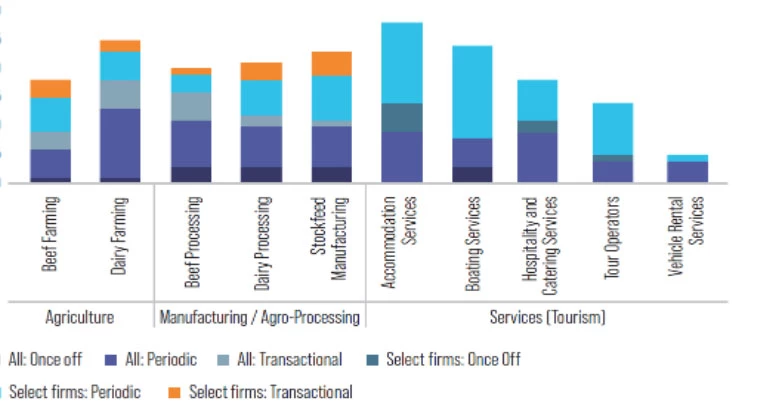
Firms in many sectors face high numbers of regulatory requirements. Source: World Bank analysis based on Zimbabwean laws and regulations
Impact: Lower Compliance Costs and Stronger Incentives
Guided by this evidence, stakeholder consultations, and international good practice, the GoZ began implementing concrete reforms in 2025 in the three priority sectors. These reforms led to the reduction or elimination of several requirements that imposed high costs without commensurate public benefits, including Agricultural Marketing Authority levies on livestock transactions, repetitive inspections for accommodation establishments, and consignment-based conformity assessment obligations for selected equipment imports. Taken together, these reductions in regulatory requirements for businesses are projected to cut compliance costs by 20% to 90% across Zimbabwe, depending on firm size and activity, while shifting regulation toward a risk-based approach that reduces repetitive inspections and conformity checks for low-risk, compliant firms, and allows oversight to focus where risks are highest.
To help sustain these gains and prevent regulatory creep, Zimbabwe has also taken steps to strengthen institutions and transparency. A 2025 Cabinet decision now requires all new regulatory fees and processes to undergo a Regulatory Impact Assessment before approval. In parallel, the Zimbabwe Investment and Development Agency launched a new eRegulations portal, giving firms public access to consolidated information on regulatory requirements.
Encouraged by early results, the GoZ is now applying this same evidence-based, value-chain approach to a wider range of sectors, including transport, energy, retail, and selected manufacturing and agriculture subsectors. Taken together, these initiatives underscore an important lesson: regulatory reform is most effective when it is aligned with government priorities and focuses on actionable, implementable changes, rather than broad diagnostic exercises.
Moreover, when there is strong government ownership and willingness to act, meaningful regulatory reform does not need to be tied to World Bank lending. It can move ahead through dialogue and sustained engagement, delivering tangible benefits for firms and the broader economy.
The post Cutting red tape supports private sector jobs in Zimbabwe appeared first on Zimbabwe Situation.