Source: Does Trump Matter?
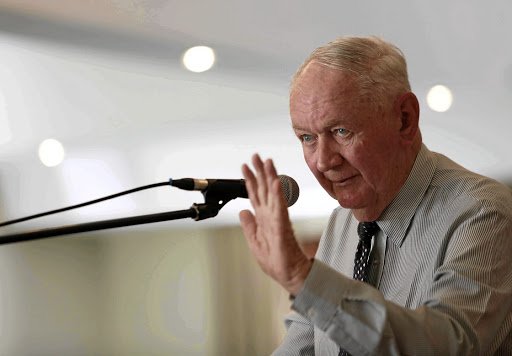
Eddie Cross
In this country when we faced near total collapse of our economy in 2005, USAID, led by a small team of experts in Harare recognised that if the people were not fed, the country would slide into anarchy and the efforts by South Africa to impose on Zimbabwe a political solution to the crisis, would fail. They quietly organised thousands of tonnes of basic foods to come from the one country in the world that had the capacity, the USA. By 2006 75 per cent of our population were receiving their basic needs without cost.
It was not only basic foods; under President Bush the decision was taken to supply the drugs that would mitigate the impact of the Aids epidemic. We had 1,5 million adults with HIV – they have all been receiving their basic drug needs free of charge since then. Across the world the impact of these programs has been the difference between life and an early death.
But these consequences of the Trump ascension to power in the USA, are dwarfed by the impact, short and long term, of the extreme policies he has been implementing since November 2024. In 1945, in the immediate post war era the USA emerged from the War with Germany and Japan as the only global power with its economy intact and in fact boosted by its massive contribution to the conflicts. In addition, the USA led by visionary military leaders – Eisenhower, Marshall and MacArthur, led the immediate post war reconstruction of the global economy and the creation of the multilateral agencies that were to dominate the global economy for the next 75 years.
In many ways the world economy of the 21st Century, is an American construct. The World Bank, the International Monetary Fund, the World Trade Organisation, even the United Nations, were all largely the product of post war American initiative. The one element that it had no influence over was the creation of the Soviet Union is the areas where the Russians with US help had beaten back the German forces. This became an empire all on its own controlled and managed by the Russian Communist Party. Globalization and free trade became bywords of US policy abroad. The US, with over 40 per cent of global GDP and the strongest Armed Forces on the globe were able to pretty much dictate world affairs. For most of the 75 years that followed 1945, world trade spurred by US policies grew at an average of 15 per cent per annum.
In Europe the post war reconstruction process was led by the Marshall Plan but the new leadership of Europe, determined never to go to war with each other after two World Wars, started to put together a United Europe, based on trade and free movement. The European Union was created and when in 1989, the Soviet Union collapsed under extreme pressure from the USA under Reagan, European leaders, led by Germany, took the initiative to dismember the Soviet Union and allow the States involved become independent. In addition, Germany was reunited at huge cost.
In the Far East, at the end of the Second World War, China descended into civil war between the Communists and the Nationalists. This was concluded in 1949 when the Nationalist Army retreated to Taiwan and the Communist Party assumed total control of the Peoples Republic of China. Over the next 26 years, the leadership of the CCP under Mao Zedong consolidated their grip on this vast country and attempted to enforce a radical, Soviet style regime. This degenerated into the Red Revolution which attempted to enforce these radical ideas and the country slid into a form of anarchy led by the Youth Brigades. The Red Army kept its head above water through this period even though their leadership was subjected to purges led by Mao.
Mao became increasingly less able to govern and died in early 1976. The “Gang of Four” who had been plotting to take control after Mao were swiftly dealt with by the Red Army whose leadership had recognised the chaos could not be allowed to continue. They released many of the leadership of the Army and the Party who had been purged and jailed by the radicals among them Deng Xiaoping. Deng was installed as the leader of the Party and began to implement his now famous reforms – pragmatism and meritocracy. He asked the question “does it work”. He argued that China could no longer remain isolated from the rest of the world. He called for China to learn from the West and to make use of the policies of global integration and free trade.
The consequences have changed the world. China was able to grow its industrial economy based on access to Western technology and low cost finance. At low interest rates they were able to build their infrastructure and services. The transformation has been astonishing. They have overtaken the older super powers of Japan, Germany and now are rapidly overtaking the USA.
We are now living in a multi polar world, after a century of US dominance, the economy of the USA is now smaller than the GDP of the EU. The largest exporter in the world is still Germany and Japan is now number three after the USA and China. The starkness of these changes is that the USA now controls about 25 per cent pf global GDP but only 5 per cent of global trade. The core of the old Soviet Union, Russia has an economy smaller than several individual EU countries, still important as a source of energy, but little else.
Enter Donald Trump; he has effectively dismantled the post war systems created by his predecessors. The WTO is now virtually dysfunctional, he has withdrawn from NATO – possibly the greatest military alliance in history, the long-standing alliance with post war Europe no longer exists. His efforts are focused on taking the USA back to an era pre the Second World War when they pursued isolationist policies and concentrated on their own economy and self-sufficiency.
However, it seems that these radical policies have taken place in a world very different to what existed in 1949. Europe has moved swiftly and with unexpected urgency, to form a new military alliance to secure their own ability to maintain peace in Europe. They have also moved to fill the gap left by the withdrawal of the USA from the region. Ukraine is now receiving more support and advanced military weapons, and Russia is about to face a situation where the main costs of the war are being funded by their own reserves. The weaknesses of the Russian economy will become evident in the new year.
More changes are emerging in response to the USA posture. The world economy is adjusting to the effective closure of US markets and revealing the relative insignificance of US trade. The role of the US dollar, long the currency of choice and an international reserve currency will now weaken and slide down a slope of their own making. The Euro will increasingly take its place along with other currencies that will benefit from the new dispensation. One critical element that has yet to be taken into account by the US itself is the deterioration in the market and confidence in US Treasury bonds. This will increase the cost of debt in the US and make it more difficult to raise money to meet the US fiscal deficits.
The post Does Trump Matter? appeared first on Zimbabwe Situation.