Agrowing network of recruiters operating in Zimbabwe and across southern Africa is drawing young men into Russia’s war in Ukraine through promises of civilian jobs and financial security, only for ‘many’ to find themselves on an active, deadly frontline war zone after minimal training.
Investigations by CITE, conducted as part of broader research into the ‘deceptive’ recruitment of African nationals into foreign conflicts, reveal a system that is increasingly organised, locally rooted and expanding.
The recruitment appears to take two main forms.
First, civilians with no military background are typically not interviewed, instead, they are added to WhatsApp groups and issued with invitation letters from Russia under the false pretext of visiting to experience Russian culture, often receiving a 30-day visa. Usually this group is lured with civilian jobs or attracted by opportunities.
Instead, Zimbabwean civilians, here in the country and others based in South Africa, some who were unemployed men, are recruited and fast-tracked into frontline roles.
“Some of those who have been recruited were mostly Uber drivers recruited in South Africa with no army experience and are trained for seven days then deployed,” said a source who is now in Donbas, fighting for Russia.
Donbas is the main centre of conflict between Ukraine and Russia.
Once deployed, the situation becomes difficult for the recruits to escape.
“When they reach the front line, they take their passport and only promise to give it back after a year,” he said.
The recruits are made to sign one-year contracts in Russian.
“The contract is one year. So you come back after one year if you don’t want to renew. You only leave after your contract has expired.”
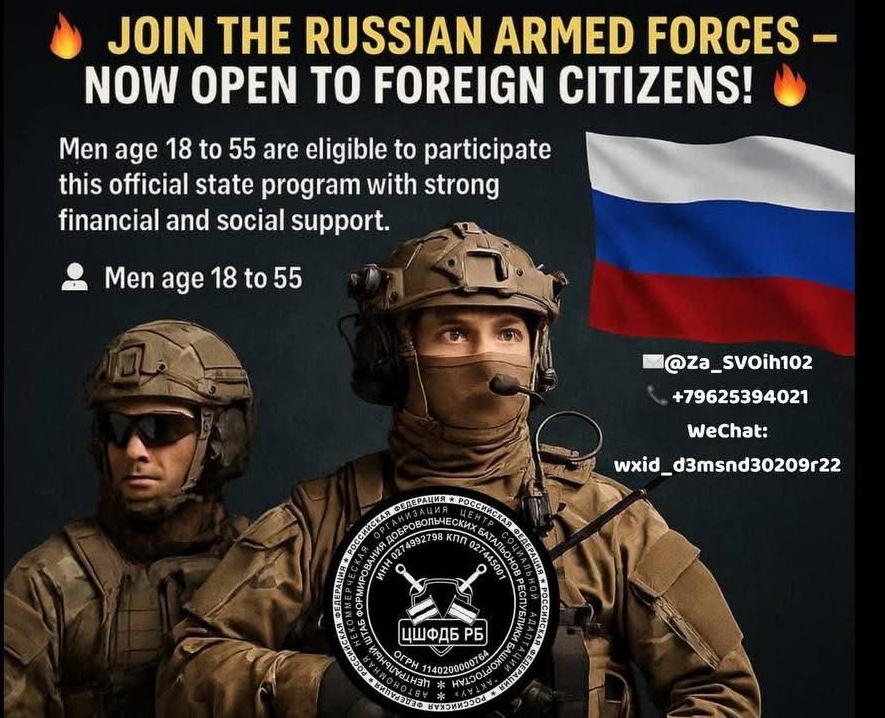
Second, then those with military backgrounds, however, undergo a more formal process that includes interviews and medical examinations. The process often begins with posters advertising an “official state programme” inviting men aged 18 to 55 to participate in the Russian armed forces with “strong financial and social support”.
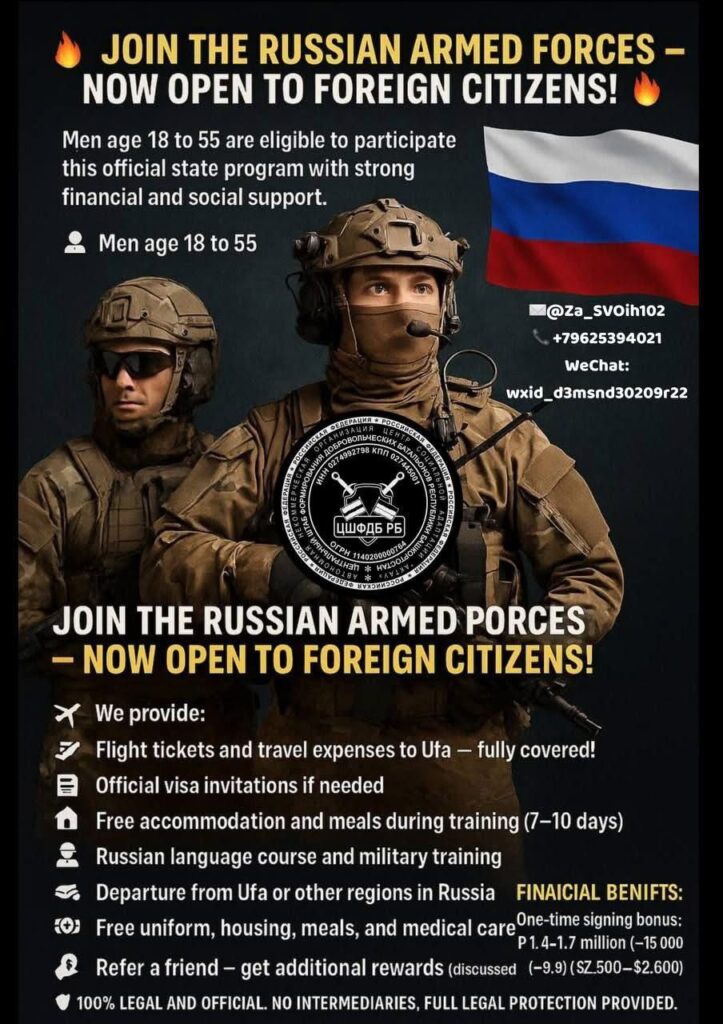
This group is recruited as quasi-mercenaries, however under opaque and questionable conditions.
Investigations point to a clear difference between structured military enlistment and mercenary-style recruitment, as concerns raised by some recruits suggest gaps in training preparation, protections and oversight.
During the course of this investigation, CITE established communication with Zimbabweans and several South Africans operating in the Donbas and Luhansk regions, although responses were frequently delayed.
They asked for anonymity, fearing reprisal, as they were under strict instructions not to share information about the war. They also feared that if it was discovered they had cell phones, they would be taken away.
Recruitment networks expanding in Zimbabwe
CITE has established that local recruiters are now actively operating in both Harare and Bulawayo. In addition to the cities, recruits have also been taken from areas such as Kezi, Esigodini, Plumtree, and Tsholotsho.
However, the real effective mode of recruitment is word of mouth or private referrals and in WhatsApp groups, of which the messaging is consistent that once recruited, one will be paid handsomely.
Once they express interest, recruits are linked to intermediaries through WhatsApp groups and online interviews, where they are briefed on the hiring process.
“They are desperate and take anyone, they don’t verify whether you know how to shoot a gun,” said one source familiar with the process.
“The connection is in Harare.”
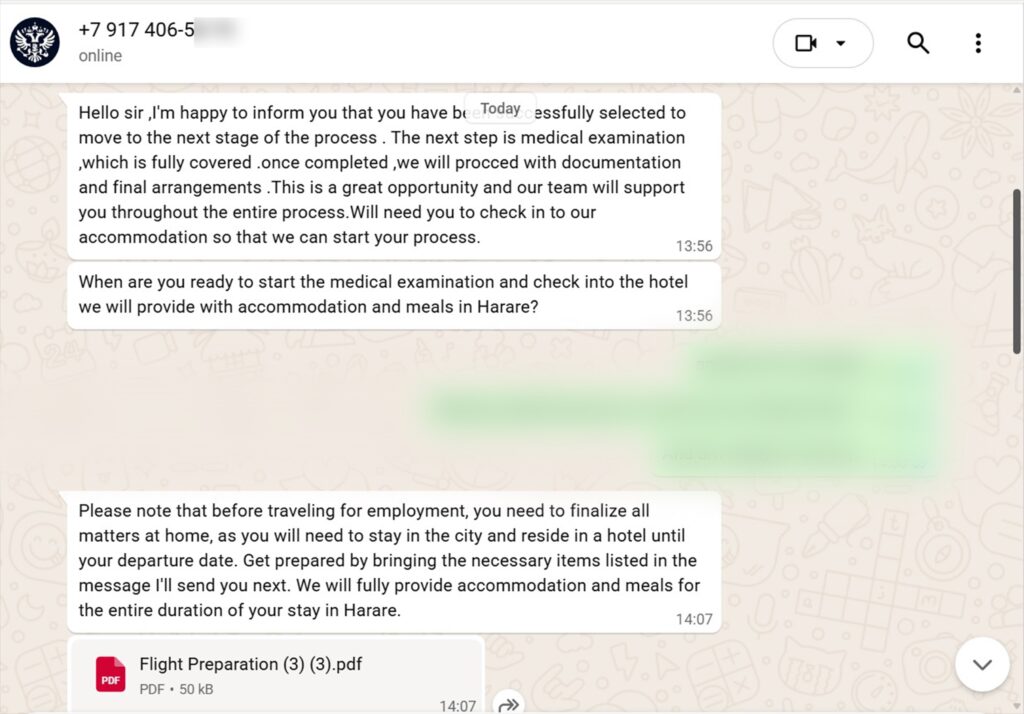
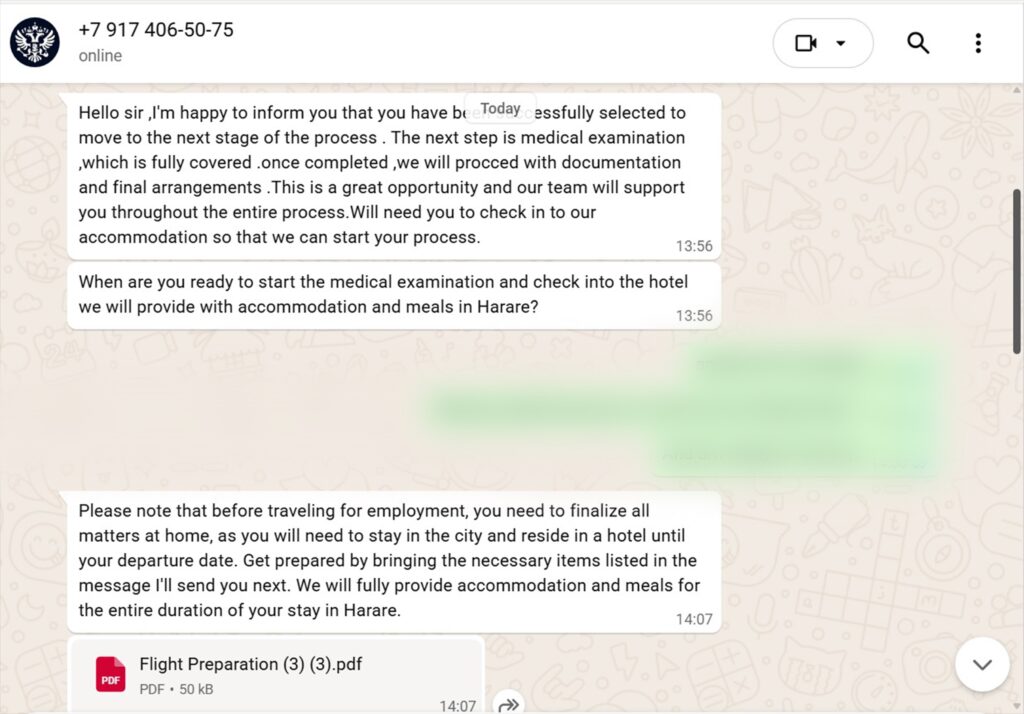
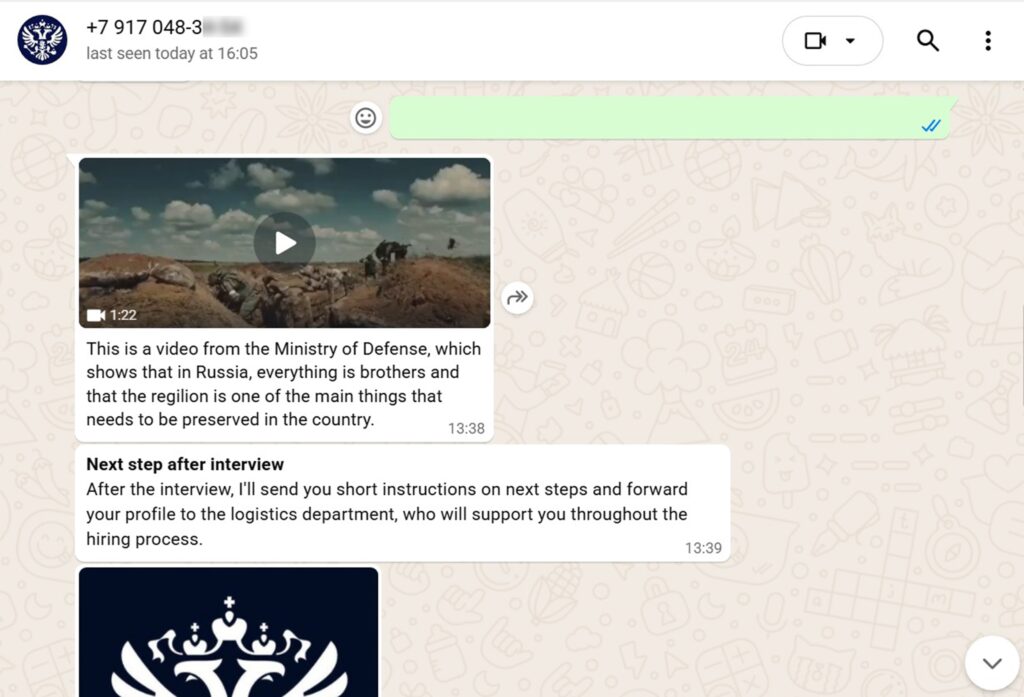
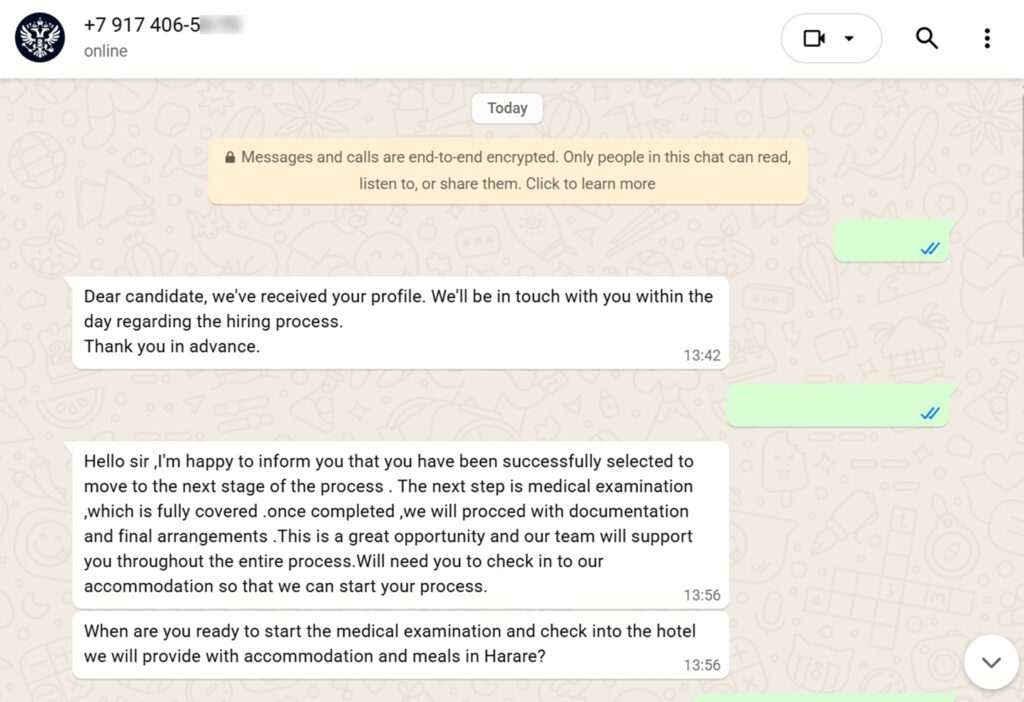
CITE obtained contacts of local recruiters (which are being withheld for ethical reasons).
Those who pass or are selected to move to the next stage, while those with a military background are instructed to undergo medical tests, which are fully covered.
In Zimbabwe, recruits are instructed to undergo tests at a private health facility (name also withheld) in Harare.
“When you are ready to start the medical examination and check into the hotel, we will provide accommodation and meals in Harare,” the recruiter said, also informing candidates that they would be collected after the tests and taken to a hotel where they would stay while awaiting their flight to Russia.
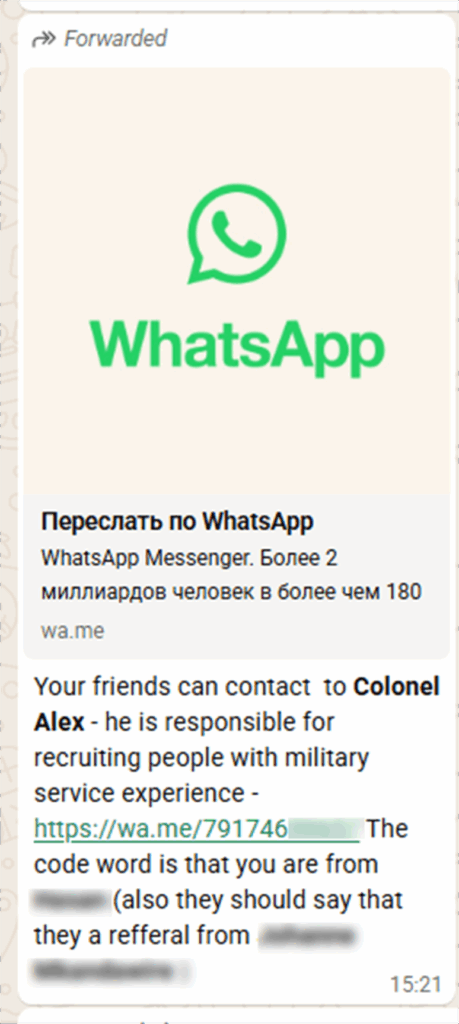
Once completed, the next step involves documentation and final arrangements in preparation for travel.
“This is a great opportunity and our team will support you throughout the entire process,” the recruiters say, adding that they will also book hotel accommodation while recruits wait for their flights.
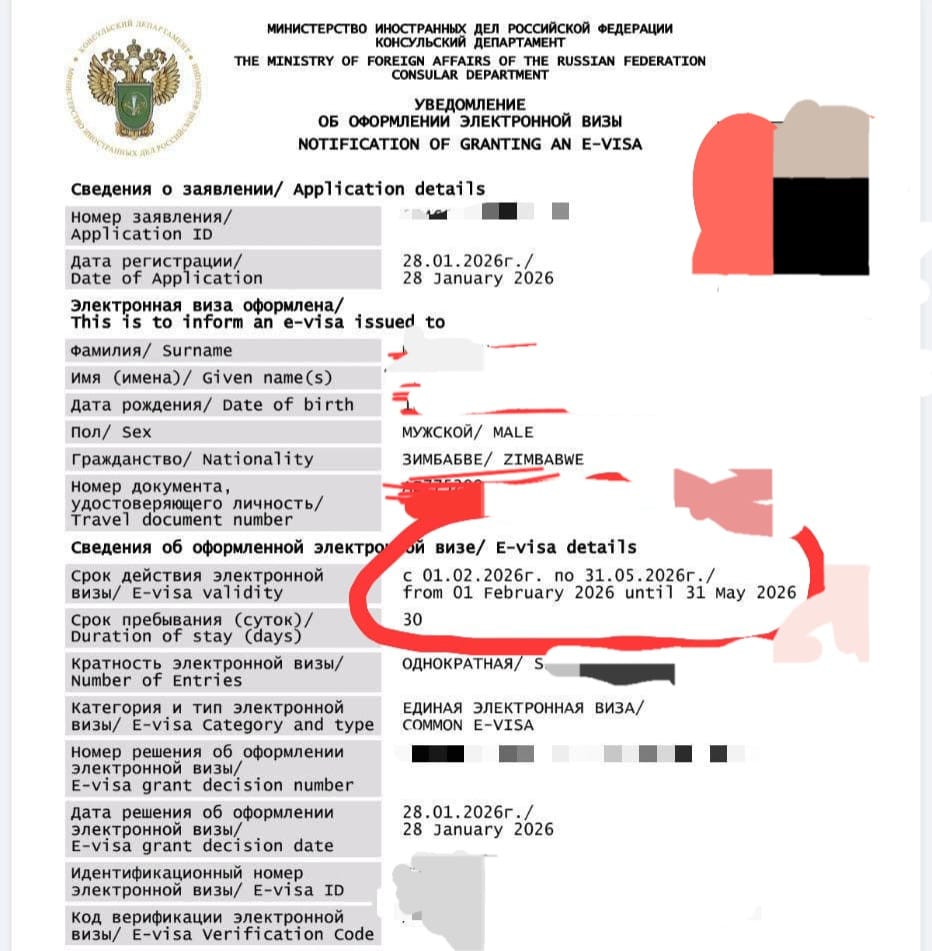
In the communication, recruiters make it clear that: “you need to finalise matters at home, as you will need to stay in the city and reside in a hotel until your departure date.”
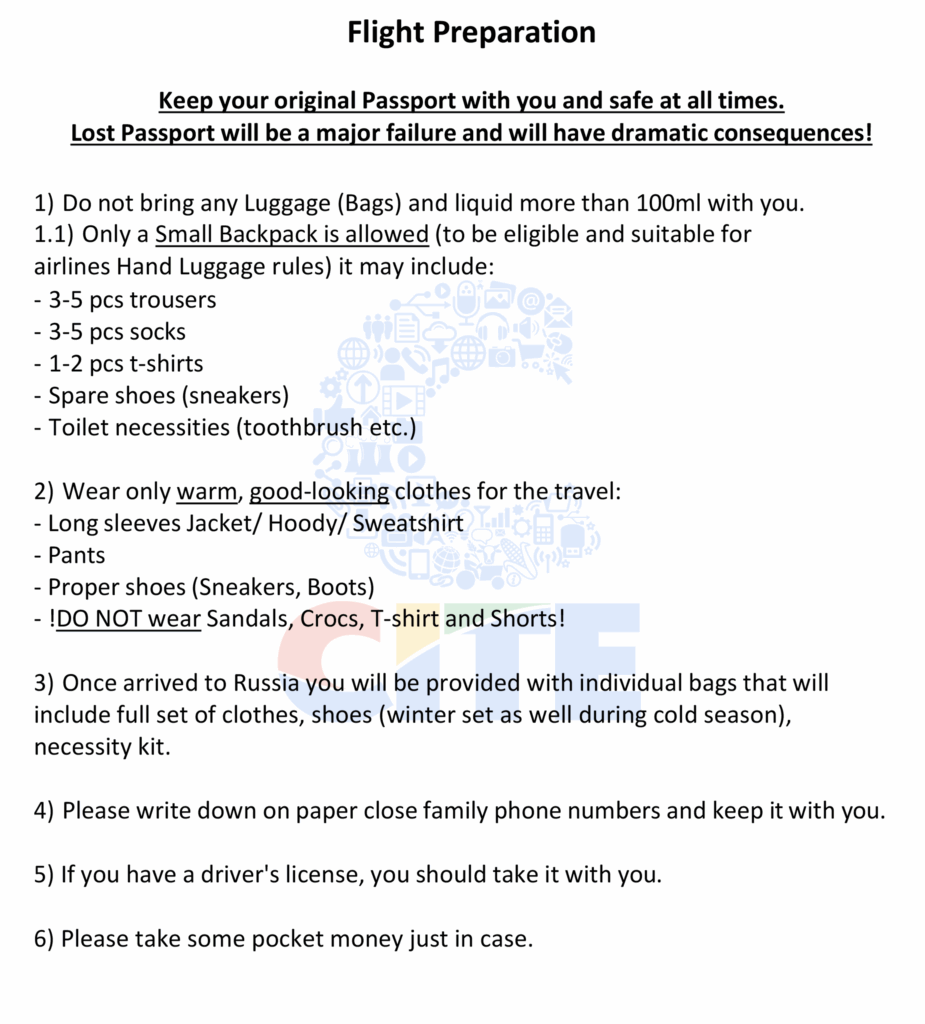
Instructions obtained by CITE show recruits are told “not to bring any luggage… Only a small backpack is allowed.”
“Wear only warm, good-looking clothes. Once arrived to Russia you will be provided with individual bags.”
They are also urged to write down family phone numbers on paper.
From job promises to battlefield
What is particularly worrying about this recruitment is that many African recruits reportedly have no military background, yet are deployed into active conflict zones. According to some accounts, they receive as little as seven to 14 days of training before they are sent into combat
Once deployed in the combat zone, the reality of war descends, the recruits are inexperienced, unprepared and are expected to fight the Ukrainian army or die.
In addition to combat roles, some recruits are assigned logistical support duties, which still place them in significant danger.
Some Zimbabweans currently there in the front described their roles as “suppliers,” transporting provisions to the front lines on foot.
“We are not soldiers. We were trained how to carry supplies and heavy duty things while climbing mountains. Our job is dangerous because we carry stuff like benzines, bombs, and equipment that is needed in the front on foot. Vehicles don’t move because they will be shot by drones, so it is easier to send suppliers on foot” he said.
However, evading drones is not easy, as one Zimbabwean explained: “We were taught how to shoot at drones for just one hour before being sent to the front. Unlike our White counterparts who already know how to shoot, we can fire at a drone until we empty an entire magazine and still miss.”
The risks are severe because “the drones are killing people,” said another soldier who spoke from the front. “I don’t want to go back to the front.”
Payment for recruits has also fallen short of promises.
“They said I will be paid R55 000 per month but in January I received R11 000 and in February R31 000,” said another recruit.
Others have been fortunate enough to send some money home and are now improving their homes. For some, however, it is alleged they die before sending anything, or struggle to do so due to lack of network coverage to process transfers from the war zone.
Casualties are mounting as some have reportedly suffered amputations or hearing loss, others have metals stuck in their bodies .
Another Zimbabwean currently in Russia pleaded: “We need help urgently to come back home. The way we went to come here was not what we were told.”
“Our brothers are dying, others are injured… they are losing their limbs and want to return home.”
One parent from Plumtree, confirmed his son died shortly after deployment.
“I blessed my son when we were in Kempton Park and five of them left together. Last week (some weeks ago), we received information that he had died. It seems he and his comrades were killed by a drone.”
The repatriation of this deceased son remains uncertain, said the parent after visiting the Russian embassy in Pretoria.
“The process will take months to complete,” the father said.
Families left in the dark
Recruitment is increasingly secretive, as one mother found out her 25-year-old son had left without telling the family.
“He arrived in Russia and signed contracts. He now has a Russian number,” said the mother, who added he told her they had trained “for two months.”
“He said on his team they are 11. From the 11, others come from Kezi, Esigodini, Plumtree, Tsholotsho and are put in groups from their country. They are not allowed to send pictures. If they send pictures, you can only view it once,” said the mother, who also claimed “someone is heavily recruiting in Bulawayo.”
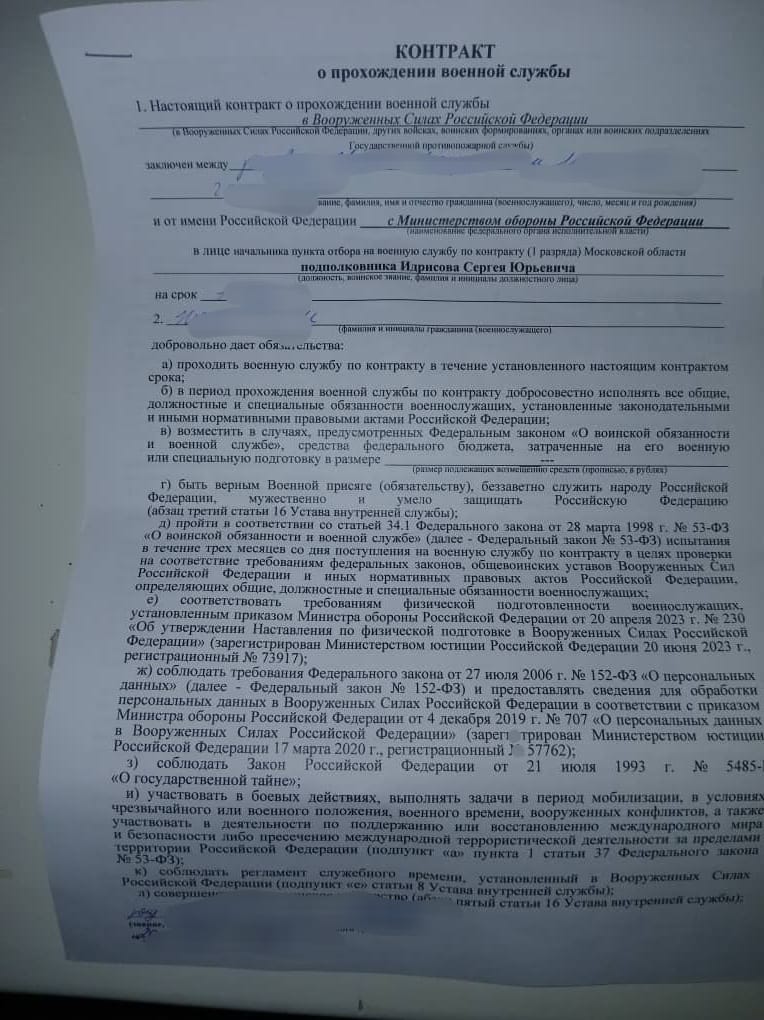
The mother said her son told her they have opened bank accounts and travelling to the war zone would take two to three days.
“I could tell the fear in his voice as he said they were being taught how to assemble an AK-47, shoot and carry out drills. He told me they would stay for a while before communicating again, maybe a month. There are official channels of communication and he said I was listed as his next of kin.”
Other families often learn of deaths informally through WhatsApp groups. Some are unaware their relatives have died.
Some fellow recruits have confirmed fatalities to CITE, about seven or more who have died since the course of the year, but cannot inform families about their death, while many others are injured.

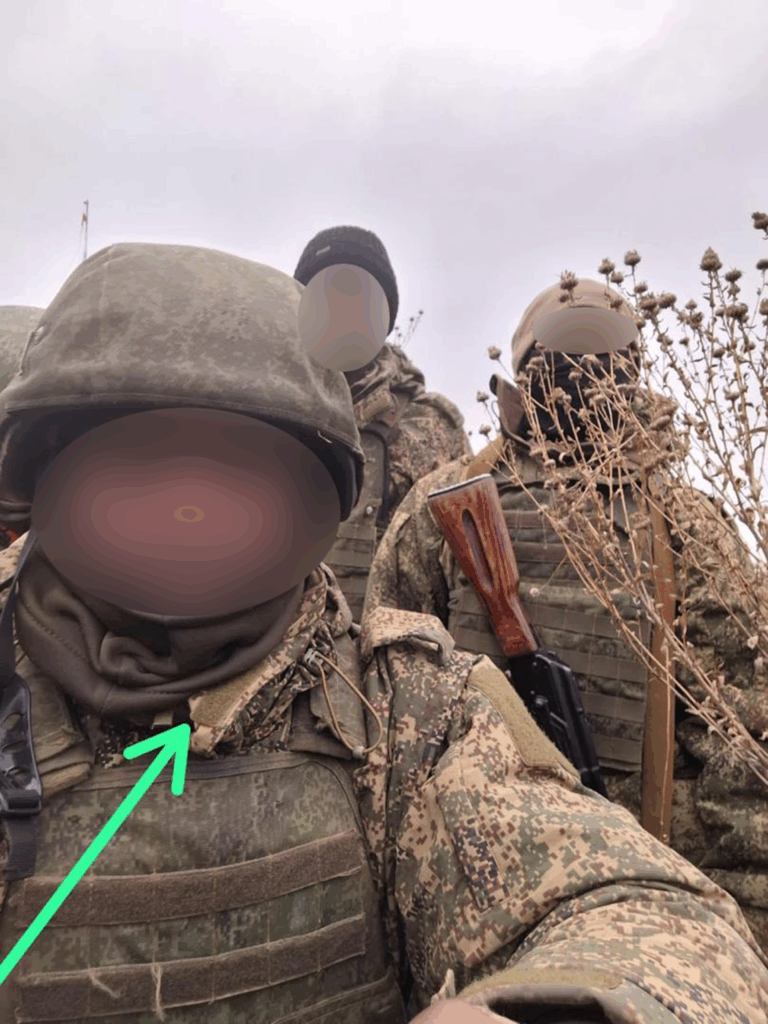
Other recruits told CITE they have seen bodies left in combat zones.
One Zimbabwean soldier reported:
“I have seen dead bodies rotting in the war zone and we just leave them there. How can you carry a dead person when you are also trying to stay alive?”
Some families, upon learning that CITE was working on this investigation, have even approached us to ask for its help in bringing their relatives home.
Calls for help from the front
Distress messages from Zimbabweans currently deployed in Donbas paint a grim picture.
“We need help urgently to come back home,” one group said, noting among them was a man who was related to one Bulawayo senator.
“The way we went to come here (to Russia) and what we found was not what we were told.”
Another Zimbabwean recruit admitted considering self-injury to avoid redeployment.
“I am going to shoot myself in the leg,” he said, noting that was better than being killed by drones.
Some alleged deaths are concealed, as they were told “not to tell relatives when someone dies.”
“It could be because these third parties want to claim compensation from the Russian government. The contract mentions compensation in case of death or injury.”


Economic desperation driving risk
Public debate around this matter has reflected the complex motivations behind recruitment, with opinions centering on history, poverty and geopolitics.
There is nothing as terrible as failing to pay rent, buy food, take kids to school,” said one Mthulisi Mukwa Moyo in a Facebook comment.
“Men from Matabeleland who are going there know it’s not a holiday and they know there is a 90 percent chance they will die there. But what do you do? You have no home, no hope and abantu bakhuluma abakufunayo ngawe left right and centre? You go to Ukraine and take a chance. Perhaps you will come back home with a few thousand dollars that will purchase the dignity of your life. It’s a terrible position of life that many Matabeleland men are finding themselves in.”
Another commentator, Bernard Dube said people must be honest because economic hardship was a driving factor behind migration.
“Why are so many of our people flocking to Europe, the UK, and America? What do we call that? It is an economic hardship caused by the conditions in our own country. Russia supported us during the liberation struggle, which gave us independence, an independence that, sadly, is still enjoyed by only a few today,” he said.
However, Dube also warned people must also learn not to take part in dangerous wars for money.
“No one forced them, but history shows that Africans have been used repeatedly in proxy wars for foreign interests since World War”
Dube also framed the issue historically, stating “Africans have often been recruited, manipulated, or economically pressured into wars that protected foreign interests. ”
Another commentator, Zie Bheki Ndlovu, spoke about the reality of geopolitics saying “…Western countries are supporting Ukraine. Then for Russia, it is Africans, who are going there even as mercenaries. There is politics as well because Africa hates the West and loves Russia, yilo iqiniso elikhona.”
Familiar Historical Pattern
African involvement in externally driven wars is not new. From colonial conscription during World Wars I and II to Cold War proxy conflicts, Africans have repeatedly been drawn into battles shaped by global power interests.
Investigations show that today’s recruitment networks, which are informal, digitally enabled, and economically driven, reflect a modern repetition of that pattern. While participation is now often contractual rather than conscripted, the underlying vulnerability remains economic desperation.
Zimbabweans continue to sign up, drawn by promises of US$3 000 monthly salaries or death compensation of up to US$300 000.
For many Zimbabwean families, the warning has already come too late, including pleas from those now at the front.
“Please don’t go to Russia,” one Zimbabwean recruit urged. “The situation there is very bad.”
However, recruitment appears to be accelerating, with reports suggesting that more than 20 Zimbabweans are leaving each week.

Legal Grey Zones
Looking at the deceptive recruitment and foreign exploitation of Zimbabweans and other African nationals into Russia’s war with Ukraine, Zimbabwe’s legal framework further complicates the issue.
According to the Suppression of Foreign and International Terrorism Act (Chapter 11:21), mercenary activity is a criminal offence.
However, if such activity is undertaken in support of a government with which Zimbabwe has diplomatic relations, it is not considered a crime.
“In simple terms, the legal position under Sections 2 and 3(1) is that mercenary activity is a criminal offence. But if you look at Section 3(2), it allows individuals or citizens of Zimbabwe to provide private military services or activities, which would ordinarily be regarded as mercenary or criminal to states with which Zimbabwe has diplomatic relations,” said legal expert Nqobizitha Ndlovu.
“If the service is provided in support of a government with which Zimbabwe has diplomatic relations, then it is not criminal. Since Zimbabwe has diplomatic relations with Russia, as long as those involved are operating under the authority and discipline of the Russian army, it would not be considered a crime. One is only regarded as a mercenary when providing services to organisations or countries with which Zimbabwe does not share diplomatic relations.”
Ndlovu explained that as long as the Zimbabwean government does not classify mercenarism as an act of terrorism, it is unlikely to actively condemn it.
“For instance, if Zimbabweans go to Russia and fight in support of the Russian government, and Zimbabwe maintains cordial relations with Russia, the government is unlikely to condemn the recruitment of its citizens for that purpose,” he said.
He noted that some of these issues are political rather than purely legal.
“There are political solutions and considerations that are often placed ahead of legal ones. That is why this legal exception exists, as long as there are strong government-to-government relations, the likelihood of the state challenging mercenary activity is low,” Ndlovu said.
However, in South Africa, working as a mercenary or fighting on behalf of another government has been a criminal offence since 1998.
Reports indicate the South African presidency has also ordered a probe into how its citizens were recruited to fight as mercenaries in Russia’s war against Ukraine.
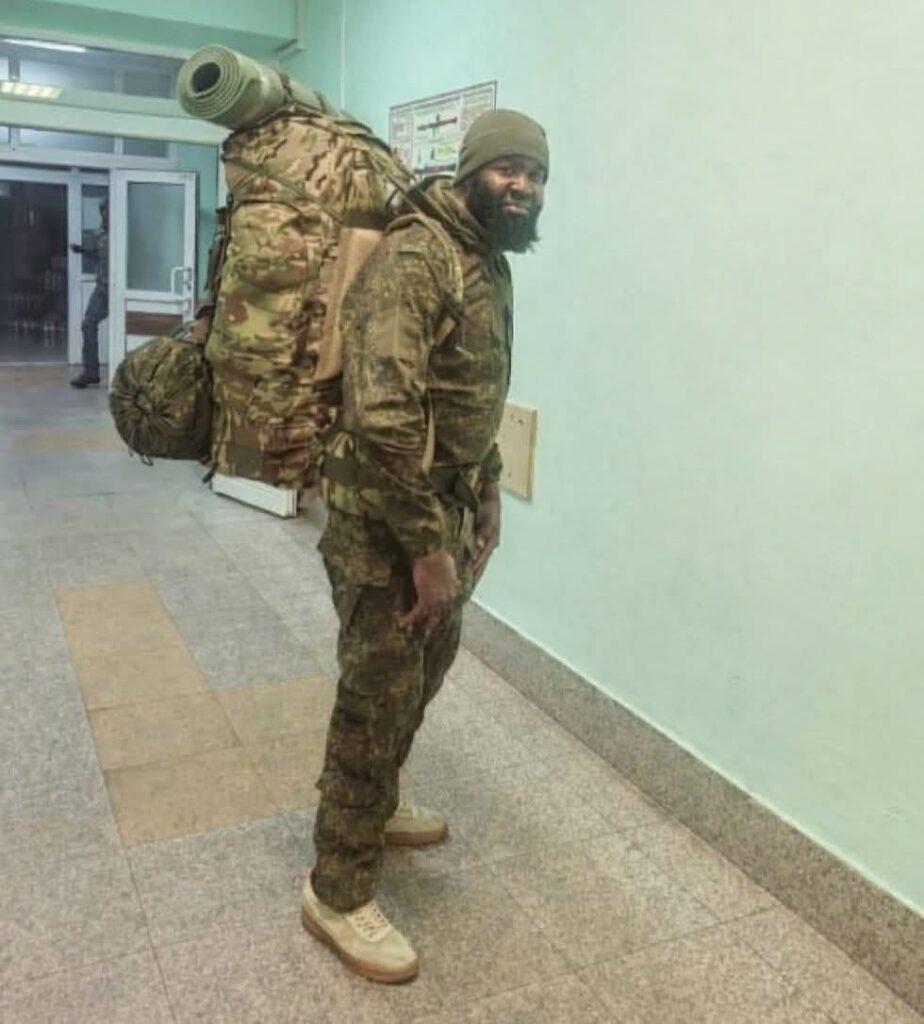
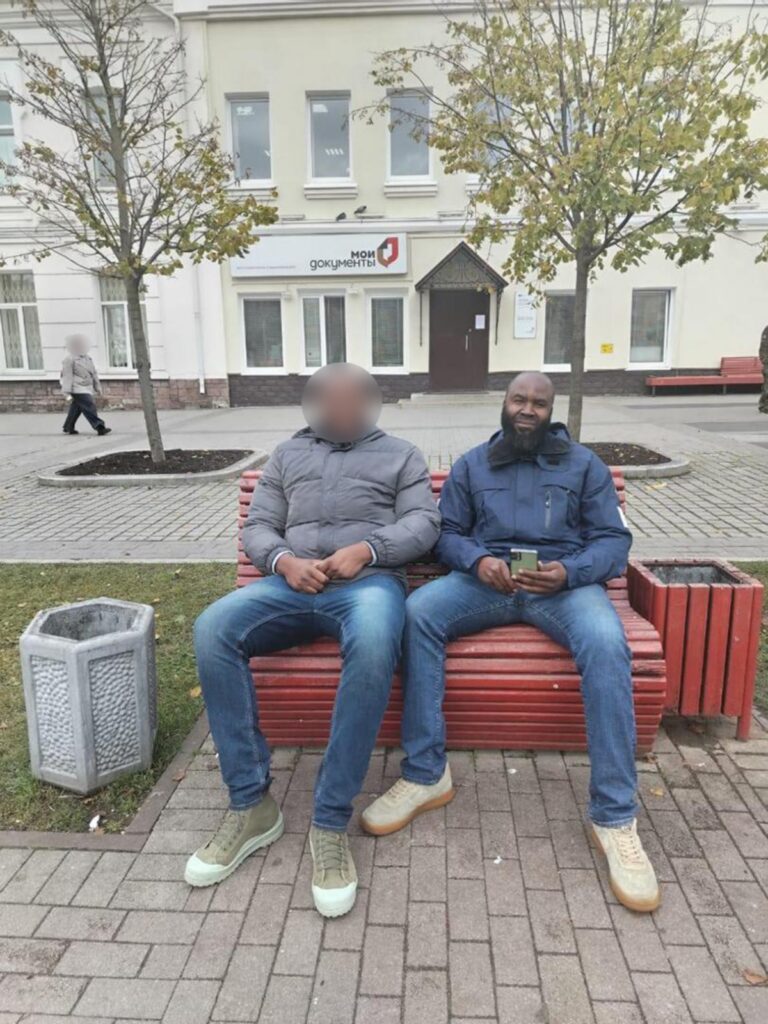
South Africa has also taken a firmer stance, with President Cyril Ramaphosa recently thanking Russian President, Vladimir Putin, for assisting in the return of 17 South Africans allegedly misled into joining the war.
Among the group, some are said to be Zimbabweans.
Zimbabwean Government Response
While Zimbabwe’s Ministry of Foreign Affairs is still formulating its response to the matter, the Ministry of Public Service, Labour and Social Welfare, which deals with human trafficking victims, has acknowledged awareness of the issue.
“The Government of Zimbabwe is indeed aware of reports and concerns regarding Zimbabwean citizens who may have been misled into travelling to Russia under the guise of lucrative employment opportunities, only to find themselves in precarious situations, including potential involvement in conflict zones,” said Minister of Public Service, Labour and Social Welfare, Edgar Moyo.
“We treat these reports with the utmost gravity. Our diplomatic missions are constantly monitoring these developments to verify the scale and nature of these incidents, and appropriate action will be taken to safeguard the safety of our citizens.”
On whether these recruitment activities fall under human trafficking, labour exploitation, or related offences under Zimbabwean law, the minister said inspections are ongoing to identify unlicensed recruitment agencies.
“As you may be aware, the Ministry of Public Service, Labour and Social Welfare regulates private employment agencies. These agencies are governed under the Labour Act (Chapter 28:01) and Statutory Instrument 223 of 2023 for Private Employment Agencies. Our employment officers carry out inspections to identify unlicensed recruitment agencies that bypass official channels,” Moyo said.
“We also work with the Anti-Trafficking Committee to make sure that unregistered agencies are brought before the law.”
He added that awareness campaigns are underway to highlight “red flags of trafficking, such as promises of high salaries with no clear job descriptions.”
“We are also advising citizens to exercise extreme caution when considering job offers in countries currently involved in armed conflicts, emphasizing the risk of being coerced into military-related activities.”
The minister also confirmed receiving complaints from some affected families.
“Each case is recorded and shared with relevant security and diplomatic agencies to facilitate tracking and possible intervention.”
Moyo added that the ministry has Migrant Resource Centres in Harare and Bulawayo available to assist affected families.
“The Ministry reminds all citizens that it is a criminal offence for any individual or agency to recruit Zimbabweans for work abroad without a valid licence from the Ministry of Public Service, Labour and Social Welfare. We publish the list of all registered private employment agencies on our Ministry’s social media platforms, and citizens can also visit any Provincial Employment Office across all 10 provinces to verify whether an agency is registered,” he said.
Silence, Incentives and the Cost of Inaction
Despite mounting warnings about leaving for Russia, the investigation confirms that political, economic and diplomatic considerations may be shaping the muted response from authorities, even as recruitment networks continue to expand.
The question is no longer whether Zimbabweans are being drawn into a foreign war, but how many more will leave before meaningful, coordinated action is taken.
The post Zimbabweans lured to Russia’s War: Inside the deceptive recruitment network drawing civilians to the frontlines appeared first on Zimbabwe Situation.