NetOne positions itself at the centre of Zimbabwe’s digital transformation push

HARARE – State-owned telecommunications operator NetOne says it is playing a central role in Zimbabwe’s digital transformation agenda, as the country accelerates efforts to build a technology-driven economy anchored on connectivity, innovation and infrastructure expansion. Group chief executive officer Engineer Raphael Mushanawani said the telecoms operator has evolved beyond traditional voice and data services to […]

The post NetOne positions itself at the centre of Zimbabwe’s digital transformation push appeared first on The Zimbabwe Mail.

HARARE – State-owned telecommunications operator NetOne says it is playing a central role in Zimbabwe’s digital transformation agenda, as the country accelerates efforts to build a technology-driven economy anchored on connectivity, innovation and infrastructure expansion.

Group chief executive officer Engineer Raphael Mushanawani said the telecoms operator has evolved beyond traditional voice and data services to become a strategic enabler of national development, supporting sectors ranging from agriculture and mining to education, healthcare and financial services.

Speaking after being named Overall Platinum Winner and Best CEO at the Zimbabwe CEOs Network Awards, Mushanawani said digital infrastructure had become a foundational pillar of economic competitiveness.

“NetOne is more than a telecommunications operator. We are a strategic enabler of Zimbabwe’s digital future,” he said.

“Connectivity today underpins every sector of the economy, from agriculture and mining to education, healthcare, tourism and financial services. Our responsibility is to build the digital infrastructure that supports productivity, innovation and competitiveness.”

The remarks come as Zimbabwe intensifies its push towards Vision 2030, which targets upper-middle-income status driven in part by accelerated digitalisation, industrialisation and innovation-led growth.

NetOne said its investments are focused on expanding network coverage, modernising infrastructure and deepening digital inclusion, particularly in rural and underserved communities where connectivity gaps remain a barrier to economic participation.

Mushanawani said the impact of telecommunications infrastructure should be measured not only in technical performance but also in social and economic outcomes.

“What makes me proud is not only the infrastructure we have deployed or the technologies we have introduced, but the impact those investments are having on people’s lives,” he said.

“Every connected school, every digitally empowered entrepreneur, every rural community brought into the digital ecosystem represents meaningful progress.”

He added that the telecoms sector has become a key driver of financial inclusion and entrepreneurship, with mobile connectivity enabling new business models, digital payments and access to information services across the economy.

Industry observers note that Zimbabwe’s telecommunications sector is increasingly intertwined with broader economic transformation efforts, particularly as government and private players invest in e-government platforms, digital financial services and smart infrastructure systems.

NetOne also acknowledged the role of government policy in shaping the sector’s growth trajectory, crediting the national digitalisation agenda for creating an enabling environment for innovation and investment.

Mushanawani said the state’s emphasis on technology-led development had strengthened the operational environment for telecoms operators.

“Government’s commitment to digitalisation has created an enabling environment for institutions such as NetOne to innovate and grow,” he said.

He further noted the influence of the Mutapa Investment Fund in improving governance and performance within state-owned enterprises, describing it as a key institutional reform driver.

“The Mutapa Investment Fund has played an important strategic role in strengthening governance, accountability and value creation across State-Owned Enterprises,” he said.

Analysts say improved oversight of public enterprises could enhance efficiency and unlock capital for infrastructure expansion, particularly in strategic sectors such as telecommunications, energy and transport.

Looking ahead, NetOne says emerging technologies such as artificial intelligence, cloud computing, and the Internet of Things will play a defining role in shaping Zimbabwe’s digital economy.

“The future is incredibly exciting,” Mushanawani said.

“Emerging technologies such as Artificial Intelligence, the Internet of Things, cloud computing and advanced digital services are reshaping economies around the world. Our focus is to ensure that Zimbabwe is not merely a consumer of technology but an active participant in the digital economy.”

The company says it is prioritising “future-ready” infrastructure investments designed to support next-generation digital services, improve network resilience and expand broadband access.

As competition intensifies within Zimbabwe’s telecoms market, operators are increasingly positioning themselves not just as service providers, but as critical infrastructure partners in national development.

For NetOne, the strategic challenge lies in balancing commercial sustainability with its broader mandate of supporting inclusive digital access.

Still, the company insists that its long-term success will be defined less by financial metrics alone and more by its contribution to economic empowerment and social transformation.

“Success is measured by impact,” Mushanawani said. “It is about the institutions we strengthen, the opportunities we create, the people we empower and the legacy we leave behind.”

The post NetOne positions itself at the centre of Zimbabwe’s digital transformation push appeared first on The Zimbabwe Mail.

Chivayo and Sonja Madzikanda were never ‘married’, says Court

The long-running legal dispute between businessman Wicknell Chivayo and his estranged partner Sonja Madzikanda took a dramatic turn on Monday after Madzikanda announced that the High Court had ruled that the pair were never legally married. Although the court’s written judgment had not been released at the time of publication, Madzikanda revealed the outcome in […]

The post Chivayo and Sonja Madzikanda were never ‘married’, says Court appeared first on The Zimbabwe Mail.

The long-running legal dispute between businessman Wicknell Chivayo and his estranged partner Sonja Madzikanda took a dramatic turn on Monday after Madzikanda announced that the High Court had ruled that the pair were never legally married.

Although the court’s written judgment had not been released at the time of publication, Madzikanda revealed the outcome in a video posted on her Instagram page, describing the ruling as the culmination of a difficult and emotional legal battle.

“Today, the judgment was made final. The court decided that I have never been married … but that’s okay,” she said.

The judgment follows months of litigation between the former couple, whose dispute has drawn significant public attention due to the high-profile nature of the parties involved and the substantial assets at the centre of the case.

Chivayo had argued before the High Court that any customary union that may have existed between the two had effectively ended in 2024 and that Madzikanda’s claims for spousal maintenance, dissolution of marriage and a share of assets lacked a legal foundation.

The dispute also spilled into South Africa earlier this year when Madzikanda successfully obtained an anti-dissipation order aimed at preserving assets allegedly linked to Chivayo and several associated companies. The order reportedly affected a number of assets, including restrictions involving a private jet.

Reacting to the outcome, Madzikanda said she intended to share her personal experiences publicly in an effort to warn other women about the potential legal consequences of relationships that may not be formally recognised.

“My hope is to warn women: don’t do it. Don’t put yourself through this nonsense just to be told it never existed,” she said.

She questioned how a relationship involving children, family participation and traditional ceremonies could ultimately be declared legally nonexistent.

“Why have the kids? Why involve your relatives? Why have the ceremonies? Why do all of that when someone can later say it never happened?” she asked.

Madzikanda described the ruling as a setback for customary relationships and expressed concern that the decision could have broader implications for other women in similar circumstances.

“There are women in relationships who could end up facing the same judgment because any judgment made in the courts can be referenced in future cases,” she said.

She further characterised the outcome as “a sad day for our culture and our history.”

The matter was heard by Amy Tsanga, although the court had not yet published the official written judgment by the time of publication.

Legal analysts are expected to closely examine the ruling once the written reasons are released, particularly given the potential implications for customary unions, property rights and maintenance claims under Zimbabwean law.

For now, the decision marks a significant development in one of Zimbabwe’s most closely watched domestic legal disputes, while leaving many questions unanswered until the full judgment becomes available.

Source – NewZimbabwe

The post Chivayo and Sonja Madzikanda were never ‘married’, says Court appeared first on The Zimbabwe Mail.

Zimbabweans shun supermarkets as the street pavement economy overwhelms under the weight of the US dollar

HARARE – Zimbabwe’s economy may be on track to grow by 5% this year, but for millions of consumers the reality on the ground tells a different story, with households increasingly abandoning formal supermarkets in favour of tuckshops where basic goods are significantly cheaper. The shift highlights a growing disconnect between positive macroeconomic indicators and […]

The post Zimbabweans shun supermarkets as the street pavement economy overwhelms under the weight of the US dollar appeared first on The Zimbabwe Mail.

HARARE – Zimbabwe’s economy may be on track to grow by 5% this year, but for millions of consumers the reality on the ground tells a different story, with households increasingly abandoning formal supermarkets in favour of tuckshops where basic goods are significantly cheaper.

The shift highlights a growing disconnect between positive macroeconomic indicators and the lived experiences of ordinary Zimbabweans, many of whom continue to grapple with weak incomes, high unemployment and rising living costs.

According to a new 2026 Consumer Report by IH Securities, a basket of 16 staple household products costs approximately 12% less in tuckshops than in formal retail outlets, making the informal sector the preferred shopping destination for cash-strapped consumers.

The findings come as Government points to improving economic fundamentals, including a revised 7.5% growth rate for 2025, up from 1.8% the previous year, and relatively stable inflation levels.

Image

Official figures show Zimbabwe’s ZiG-denominated annual inflation averaged 4.3% between January and May, while US dollar inflation averaged 1.64% over the same period. Monthly inflation averaged 0.44% in both currencies, resulting in cumulative price increases of around 2.2%.

Despite these improvements, many households say they are yet to feel meaningful relief.

“The consumer environment is divided,” IH Securities noted in its report.

“Single-digit official inflation masks accelerating real shelf prices in formal retail, where rentals, utilities and compliance costs force through-the-till hikes even as the informal sector emerges as the more resilient engine of spending.”

The brokerage estimates that broad unemployment stands at 37.1%, rising sharply to 58.2% among young people aged between 15 and 24 years.

As a result, many households are increasingly relying on informal trading, artisanal mining, gig work and remittances estimated to exceed US$2 billion annually.

According to the report, the 16-item basket costs US$27.45 in tuckshops, offering savings that become substantial over the course of a month for low-income families.

The largest price differences are found in processed and import-dependent products.

Petroleum jelly is reportedly 50% cheaper in tuckshops, toothpaste 45% cheaper, mayonnaise 40% cheaper, washing powder 35% cheaper, sugar 26% cheaper and soft drinks 20% cheaper.

The report attributes much of the price disparity to the additional costs borne by formal retailers, including value-added tax, the Intermediated Money Transfer Tax (IMTT), compliance costs and import-related charges.

However, supermarkets retain an advantage in certain categories where economies of scale and local production help reduce prices.

IH Securities found that a 10-box pack of matches costs half as much in formal retail outlets, while margarine and flour are about 13% cheaper than in tuckshops.

The growing preference for informal retail is also reflected in consumer spending patterns beyond basic groceries.

Earlier this year, listed retailer Axia Corporation reported record sales during Black Friday and Christmas promotions, suggesting consumers are increasingly postponing discretionary purchases until discounts and favourable credit terms become available.

Economist Chenayi Mutambasere said the divergence between economic growth figures and household experiences highlights a longstanding challenge in measuring economic wellbeing.

“GDP tells us how the economy is performing; it does not tell us how citizens are performing,” she said.

“The key question is not whether the economy is growing, but whether that growth is creating jobs, raising incomes and improving the quality of life of ordinary Zimbabweans.”

Mutambasere noted that while macroeconomic indicators have improved, many Zimbabweans remain trapped in the informal sector, wages continue to lag behind living costs and access to quality public services remains constrained.

“The disconnect arises because GDP measures the size of economic activity, not how the benefits of that activity are distributed,” she said.

“If growth is not inclusive, if formal employment is not expanding and if real household incomes are not rising, people may not feel the benefits even when the macroeconomic indicators are positive.”

She added that the ultimate test of economic success is whether growth translates into better jobs, stronger purchasing power, improved public services and reduced poverty.

For now, the growing migration of consumers from supermarkets to tuckshops suggests that many households remain focused on one priority above all else: finding the cheapest way to make ends meet.

As Zimbabwe pursues ambitious growth targets, the challenge for policymakers will be ensuring that economic gains are reflected not only in national statistics but also in the everyday lives of citizens.

Source – The Standard

The post Zimbabweans shun supermarkets as the street pavement economy overwhelms under the weight of the US dollar appeared first on The Zimbabwe Mail.

Proplastics bets on infrastructure boom and regional expansion to drive growth

HARARE – Zimbabwe Stock Exchange-listed Proplastics Limited is positioning itself for another year of growth as rising infrastructure investment, mining expansion and agricultural development continue to stimulate demand for plastic piping and related products across key sectors of the economy. The plastics manufacturer says improving market conditions, ongoing capacity investments and operational efficiency initiatives are […]

The post Proplastics bets on infrastructure boom and regional expansion to drive growth appeared first on The Zimbabwe Mail.

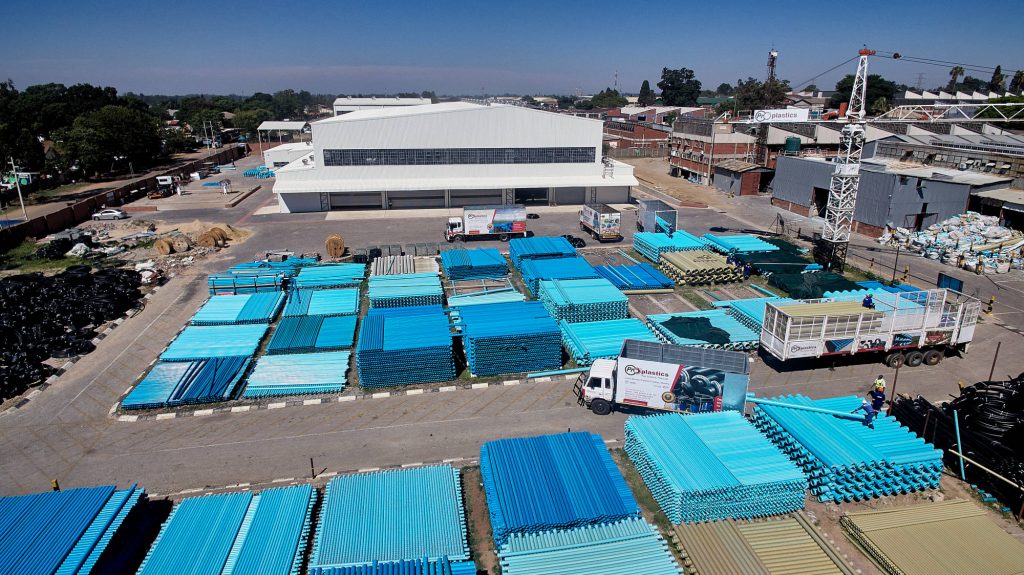
HARARE – Zimbabwe Stock Exchange-listed Proplastics Limited is positioning itself for another year of growth as rising infrastructure investment, mining expansion and agricultural development continue to stimulate demand for plastic piping and related products across key sectors of the economy.

The plastics manufacturer says improving market conditions, ongoing capacity investments and operational efficiency initiatives are expected to support growth across its business divisions despite persistent global and domestic economic challenges.

The company, one of Zimbabwe’s leading producers of plastic pipes, fittings and irrigation products, expects infrastructure-led demand to remain a key growth driver as both public and private sector investment gathers momentum.

Demand for Proplastics products is closely linked to construction, water reticulation projects, housing developments, mining operations, irrigation schemes and industrial infrastructure, sectors that are increasingly benefiting from renewed capital spending.

In a trading update for the quarter ended March 2026, Proplastics chairman Gregory Sebborn said the company was well positioned to capitalise on changing market dynamics and emerging opportunities.

“Strategic market positioning, coupled with investments in capacity expansion and improved production efficiencies, will enable Proplastics to meet the challenges of a changing and growing market with confidence,” Sebborn said.

“The market-driven momentum experienced in the latter part of the year is expected to carry through into the new year, providing further opportunities for growth in operations.”

The optimistic outlook comes as Zimbabwe experiences increased investment in infrastructure projects, including road rehabilitation, water and sanitation systems, mining developments and agricultural irrigation programmes, all of which require significant volumes of piping and plastic engineering products.

Industry analysts note that mining investment alone is creating substantial opportunities for suppliers of industrial plastics as operators expand underground infrastructure, processing facilities and water management systems.

The company also highlighted changing consumer and business purchasing patterns within the domestic market.

According to Proplastics, purchasing power has become increasingly decentralised in recent years, creating a more fragmented marketplace that requires greater product differentiation and targeted market strategies.

As customer preferences become more specialised, manufacturers are increasingly focusing on customised product offerings and improved distribution networks to maintain market share.

Beyond Zimbabwe, Proplastics sees regional export markets as an important growth frontier.

The company said opportunities exist to increase exports into neighbouring countries, particularly as infrastructure development accelerates across Southern Africa. However, management cautioned that export competitiveness remains constrained by Zimbabwe’s foreign currency retention framework, which requires exporters to surrender a portion of their foreign currency earnings.

Business groups have long argued that the 30 percent foreign currency surrender requirement reduces the competitiveness of Zimbabwean manufacturers relative to regional peers by limiting access to export-generated foreign exchange needed for raw material imports and capital expenditure.

Despite these constraints, Proplastics indicated that it will continue pursuing selective export opportunities where margins remain attractive and market conditions justify expansion.

The company’s growth plans are being pursued against a backdrop of heightened geopolitical uncertainty that threatens global supply chains and commodity markets.

Management warned that escalating tensions in the Middle East could disrupt the supply of raw materials used in plastics manufacturing, many of which are derived from petrochemical feedstocks linked to global energy markets.

Any prolonged disruption to oil supply routes or sustained increases in crude oil prices could raise input costs, increase freight charges and place additional pressure on manufacturing margins.

“The resultant ripple effect on all input costs will increase pressure on the group’s margins, and management is already focused on strategies to ensure sustainability and continuity of operations,” Sebborn said.

The company noted that it has secured adequate raw material supplies in the short term and is actively working with suppliers to minimise potential disruptions.

Rising energy costs are also emerging as a key concern for manufacturers globally. Higher fuel prices typically translate into increased transportation, logistics and production costs, factors that can affect profitability unless passed on to customers.

Nevertheless, Proplastics remains confident that its production capacity, operational flexibility and market position will enable it to navigate potential headwinds while capturing opportunities arising from Zimbabwe’s infrastructure and industrial development agenda.

Analysts say the company’s outlook reflects broader trends within Zimbabwe’s manufacturing sector, where firms tied to infrastructure, mining and agriculture are increasingly benefiting from investment-led demand growth.

With government prioritising infrastructure modernisation and the mining sector targeting export growth of more than US$7 billion annually, suppliers of industrial materials and construction inputs are expected to remain among the key beneficiaries of the country’s economic expansion efforts.

For Proplastics, the challenge will be balancing growth ambitions with rising input costs and external market risks. However, with infrastructure spending accelerating and demand from productive sectors strengthening, the company believes the foundations are in place for sustained expansion in both domestic and regional markets.

The post Proplastics bets on infrastructure boom and regional expansion to drive growth appeared first on The Zimbabwe Mail.

Zimbabwe’s mining investment surge signals industrial shift as machinery imports hit record highs

HARARE – Zimbabwe is experiencing one of its most significant mining investment cycles in recent years, with record-breaking imports of underground mining equipment and growing exports of processed lithium products providing fresh evidence that the country’s push towards mineral beneficiation is beginning to reshape its industrial landscape. Analysis by Equity Axis of Zimbabwe’s April 2026 […]

The post Zimbabwe’s mining investment surge signals industrial shift as machinery imports hit record highs appeared first on The Zimbabwe Mail.

HARARE – Zimbabwe is experiencing one of its most significant mining investment cycles in recent years, with record-breaking imports of underground mining equipment and growing exports of processed lithium products providing fresh evidence that the country’s push towards mineral beneficiation is beginning to reshape its industrial landscape.

Analysis by Equity Axis of Zimbabwe’s April 2026 merchandise trade data shows that while headline figures reflected a widening trade deficit and softer earnings from some traditional exports, the underlying data points to a powerful capital expenditure boom driven by mining expansion projects, processing plant construction and critical minerals development.

The most striking indicator was a historic surge in imports of self-propelled coal and rock-cutting machinery as well as underground tunnelling equipment, which reached US$23.2 million in April, compared to just US$604,000 in March.

According to Equity Axis, the April figure represents the largest single-month importation of underground mining equipment ever recorded in Zimbabwe’s trade statistics and is approximately fourteen times larger than any previous monthly record.

“The import and export signatures visible in April’s trade data point to a mining capital expenditure cycle that was initiated between 2022 and 2024 and is now translating into physical industrial activity, processing infrastructure and export production,” Equity Axis said in its assessment.

The investment trend was further reinforced by rising imports of bulldozers, excavators and other earthmoving machinery, which climbed to a historic high of US$17.2 million in April from US$16.6 million the previous month.

Industry analysts say the figures reflect simultaneous expansion across multiple mining projects rather than isolated investments by a single operator.

The development comes as Zimbabwe seeks to leverage its vast reserves of lithium, platinum group metals (PGMs), gold and other critical minerals to drive industrialisation and attract foreign direct investment.

A parallel increase in diesel imports has provided further evidence of accelerating mining and processing activity.

Zimbabwe’s diesel import bill rose sharply from US$91.6 million in March to US$132.5 million in April, an increase of nearly 45% within a single month.

Economists note that such increases typically accompany periods of intensive mine development, plant commissioning, earthmoving operations and increased industrial power demand.

“Diesel consumption is often one of the clearest indicators of expanding mining and construction activity because it powers everything from underground development equipment to haulage fleets and processing facilities,” a Harare-based mining analyst said.

Perhaps the most significant milestone in April’s trade figures was the emergence of Zimbabwe’s first substantial lithium sulphate export shipment.

The country exported approximately US$12.6 million worth of lithium sulphate during the month, marking a breakthrough in efforts to move beyond raw mineral exports and into higher-value processing activities.

The shipment is widely linked to production from the Arcadia Lithium Project in Goromonzi, one of Zimbabwe’s flagship lithium investments.

Operated by Prospect Lithium Zimbabwe, a subsidiary of Chinese battery materials giant Zhejiang Huayou Cobalt, Arcadia recently commissioned a US$400 million processing facility designed to produce lithium sulphate for global battery supply chains.

The development is being viewed as an early test of Zimbabwe’s beneficiation strategy, which aims to increase local processing and capture more value from the country’s critical mineral resources.

Government policy has increasingly focused on moving Zimbabwe up the mineral value chain.

Earlier this year, authorities introduced a Critical Minerals Declaration that classified lithium, platinum, cobalt, nickel, graphite, copper, rare earths and chrome as strategic resources requiring increased domestic beneficiation and state participation.

The policy framework builds on previous restrictions on the export of raw lithium concentrates and seeks to encourage investment in downstream processing facilities.

At the same time, Cabinet approved the Integrated Provincial Special Economic Zones framework, which designates specific provinces for targeted industrial activities. Mashonaland East, home to Arcadia, has been earmarked as a lithium processing hub, while the Midlands has been designated for steel and iron beneficiation.

Several major mining projects appear to be driving the current wave of capital expenditure.

These include underground expansion work at the Renco Gold Mine in Masvingo Province, Zimplats’ Phase Three expansion programme on the Great Dyke, the continued development of Arcadia Lithium Mine, and preparations for the commissioning of Sinomine’s lithium sulphate processing facility at Bikita Minerals.

Collectively, these projects represent billions of dollars in long-term mining and processing investments.

However, analysts caution that while the shift from raw ore exports to lithium sulphate production represents progress, Zimbabwe still captures only a fraction of the value available within global battery supply chains.

Current lithium sulphate prices command a significant premium over raw spodumene concentrate, but battery-grade lithium carbonate and lithium hydroxide remain substantially more valuable products.

Equity Axis argues that the country’s next industrial challenge lies in moving beyond intermediate processing into battery-grade chemical production.

“The April lithium sulphate exports confirm that beneficiation policies are beginning to generate commercial output. However, the higher-value conversion stages remain largely outside Zimbabwe, meaning substantial value addition continues to be captured in Asia,” the research firm noted.

The report suggests that future investments in lithium carbonate and hydroxide conversion facilities could significantly increase export earnings while supporting broader industrial development.

Financing for such projects could potentially be supported through Zimbabwe’s ongoing engagement with the New Development Bank, the African Development Bank and the Mutapa Investment Fund.

The latest trade data also arrives against the backdrop of findings from the African Development Bank’s industrialisation assessments, which indicate that Zimbabwe has achieved strong manufacturing value-added growth over the past decade but remains heavily concentrated in basic metals and primary mineral processing.

For policymakers, the record machinery imports and emerging processed mineral exports offer evidence that mining-led industrialisation is gaining momentum. The key question now is whether Zimbabwe can leverage the current investment cycle to develop higher-value manufacturing capabilities that extend beyond extraction and intermediate processing.

As global demand for battery minerals continues to grow, the country appears increasingly determined to position itself not merely as a supplier of raw resources but as a participant in the industrial value chains underpinning the global energy transition.

The post Zimbabwe’s mining investment surge signals industrial shift as machinery imports hit record highs appeared first on The Zimbabwe Mail.