HARARE – Zimbabwe Stock Exchange-listed Proplastics Limited is positioning itself for another year of growth as rising infrastructure investment, mining expansion and agricultural development continue to stimulate demand for plastic piping and related products across key sectors of the economy.
The plastics manufacturer says improving market conditions, ongoing capacity investments and operational efficiency initiatives are expected to support growth across its business divisions despite persistent global and domestic economic challenges.
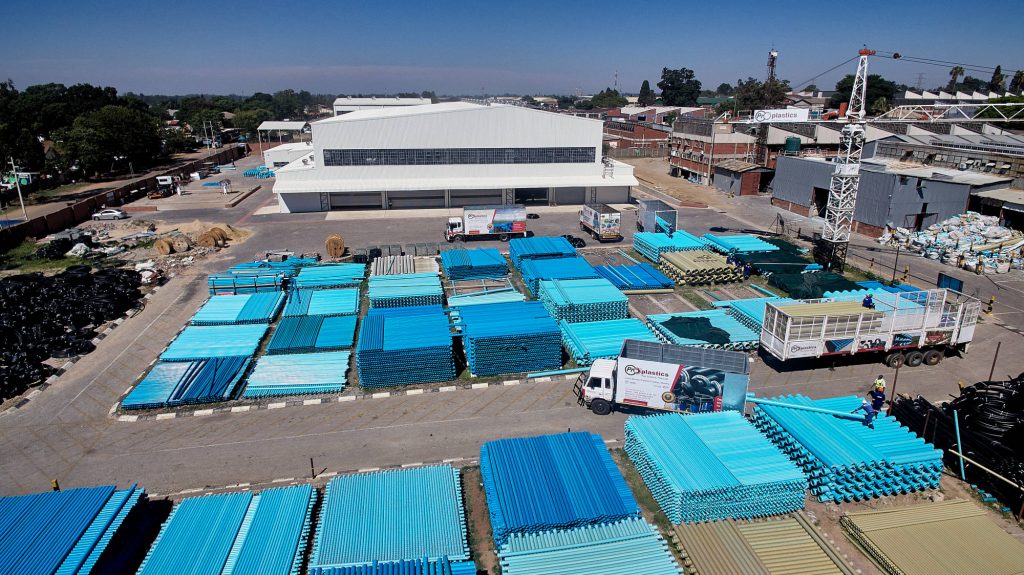
The company, one of Zimbabwe’s leading producers of plastic pipes, fittings and irrigation products, expects infrastructure-led demand to remain a key growth driver as both public and private sector investment gathers momentum.
Demand for Proplastics products is closely linked to construction, water reticulation projects, housing developments, mining operations, irrigation schemes and industrial infrastructure, sectors that are increasingly benefiting from renewed capital spending.
In a trading update for the quarter ended March 2026, Proplastics chairman Gregory Sebborn said the company was well positioned to capitalise on changing market dynamics and emerging opportunities.
“Strategic market positioning, coupled with investments in capacity expansion and improved production efficiencies, will enable Proplastics to meet the challenges of a changing and growing market with confidence,” Sebborn said.
“The market-driven momentum experienced in the latter part of the year is expected to carry through into the new year, providing further opportunities for growth in operations.”
The optimistic outlook comes as Zimbabwe experiences increased investment in infrastructure projects, including road rehabilitation, water and sanitation systems, mining developments and agricultural irrigation programmes, all of which require significant volumes of piping and plastic engineering products.
Industry analysts note that mining investment alone is creating substantial opportunities for suppliers of industrial plastics as operators expand underground infrastructure, processing facilities and water management systems.
The company also highlighted changing consumer and business purchasing patterns within the domestic market.
According to Proplastics, purchasing power has become increasingly decentralised in recent years, creating a more fragmented marketplace that requires greater product differentiation and targeted market strategies.
As customer preferences become more specialised, manufacturers are increasingly focusing on customised product offerings and improved distribution networks to maintain market share.
Beyond Zimbabwe, Proplastics sees regional export markets as an important growth frontier.
The company said opportunities exist to increase exports into neighbouring countries, particularly as infrastructure development accelerates across Southern Africa. However, management cautioned that export competitiveness remains constrained by Zimbabwe’s foreign currency retention framework, which requires exporters to surrender a portion of their foreign currency earnings.
Business groups have long argued that the 30 percent foreign currency surrender requirement reduces the competitiveness of Zimbabwean manufacturers relative to regional peers by limiting access to export-generated foreign exchange needed for raw material imports and capital expenditure.
Despite these constraints, Proplastics indicated that it will continue pursuing selective export opportunities where margins remain attractive and market conditions justify expansion.
The company’s growth plans are being pursued against a backdrop of heightened geopolitical uncertainty that threatens global supply chains and commodity markets.
Management warned that escalating tensions in the Middle East could disrupt the supply of raw materials used in plastics manufacturing, many of which are derived from petrochemical feedstocks linked to global energy markets.
Any prolonged disruption to oil supply routes or sustained increases in crude oil prices could raise input costs, increase freight charges and place additional pressure on manufacturing margins.
“The resultant ripple effect on all input costs will increase pressure on the group’s margins, and management is already focused on strategies to ensure sustainability and continuity of operations,” Sebborn said.
The company noted that it has secured adequate raw material supplies in the short term and is actively working with suppliers to minimise potential disruptions.
Rising energy costs are also emerging as a key concern for manufacturers globally. Higher fuel prices typically translate into increased transportation, logistics and production costs, factors that can affect profitability unless passed on to customers.
Nevertheless, Proplastics remains confident that its production capacity, operational flexibility and market position will enable it to navigate potential headwinds while capturing opportunities arising from Zimbabwe’s infrastructure and industrial development agenda.
Analysts say the company’s outlook reflects broader trends within Zimbabwe’s manufacturing sector, where firms tied to infrastructure, mining and agriculture are increasingly benefiting from investment-led demand growth.
With government prioritising infrastructure modernisation and the mining sector targeting export growth of more than US$7 billion annually, suppliers of industrial materials and construction inputs are expected to remain among the key beneficiaries of the country’s economic expansion efforts.
For Proplastics, the challenge will be balancing growth ambitions with rising input costs and external market risks. However, with infrastructure spending accelerating and demand from productive sectors strengthening, the company believes the foundations are in place for sustained expansion in both domestic and regional markets.
The post Proplastics bets on infrastructure boom and regional expansion to drive growth appeared first on The Zimbabwe Mail.