Schools opening put on hold

Source: Schools opening put on hold | Sunday Mail (Top Stories) Lincoln Towindo PREPARATIONS for the second school term have begun but opening will now be delayed as authorities roll out changes to how the academic institutions will operate in view of the Covid-19 scourge. They were scheduled to open on May 5. Zimbabwe’s lockdown […]

The post Schools opening put on hold appeared first on Zimbabwe Situation.

Source: Schools opening put on hold | Sunday Mail (Top Stories)

Lincoln Towindo

PREPARATIONS for the second school term have begun but opening will now be delayed as authorities roll out changes to how the academic institutions will operate in view of the Covid-19 scourge.

They were scheduled to open on May 5. Zimbabwe’s lockdown was last week extended by a fortnight to May 3.

But with Government planning to overhaul the learning environment through a raft of changes that include reducing class sizes to enforce social distancing, this is no longer possible.

The reorientation, necessitated by the coronavirus pandemic, will also involve provision of protective wear for educators and regular disinfection of schools.

Further, Government is mobilising a budget to procure sanitisers for all schools and new single-student desks.

Authorities told The Sunday Mail that schools will only open when the Covid-19 outbreak has been sufficiently contained and a safe learning environment for pupils has been fashioned.

Plans being considered include provisionally allowing pupils sitting for public examinations this year to return to school while measures are put in place to allow for the rest to resume classes.

Grade 7, Form 4 and 6 classes sit for public examinations towards the end of the third term.

Primary and Secondary Education Deputy Minister Edgar Moyo said only President Mnangagwa would issue a proclamation to reopen schools.

“In terms of the school opening calendar we are still looking at the dates,” said Deputy Minister Moyo.

“We will stand guided by any pronouncement made by His Excellency the President after consultations with his team and advisors. We will look at the progression of the disease in terms of how well we manage to contain it.

“We are preparing at the moment, but we cannot anticipate when schools will be opened because this is a function of reading how well we manage the disease.”

He said the school calendar will most likely be altered as a result of the disruption occasioned by Covid-19. Social distancing will be enforced at all schools once they reopen.

“We are looking at how, when schools eventually open, we will deal with things like enforcing social distancing at the schools especially in classes. We are looking at things like reducing class sizes, school furniture for single student sitting and how this can be used to enforce social distancing.

“We are also looking at how we can provide the relevant protective equipment for our teachers and school staff, and how we can also protect our children. Provision of sanitisers is also important as well as disinfecting schools which will be prioritised,” he said.

Deputy Minister Moyo said Government is consulting stakeholders so that in the event that the President makes a pronouncement, they are not caught off guard.

“Right now we are working on budgeting for procurement of the requisite stuff we need, this includes sanitisers, furniture and disinfectants.

“We are working with our partners as well as looking at what contribution Treasury can make. What is certain is that our schools will never be the same when they reopen.”

“We are not yet there and we cannot speculate on the position that will be taken (regarding partial opening of schools) and that may turn out to be the way.

“It is one of the options that we are considering but it is only as part of preparations, we cannot discount any option now. In short, we are developing a plan in anticipation of the pronouncement.”

Zimbabwe Schools Development Associations/Committees secretary-general Mr Everisto Jongwe said schools should be the last institutions to open after the lockdown.

“It’s a Catch-22 situation,” he said.

“For a start enforcing social distancing is very tricky in schools. We have schools that have up to 4 000 pupils and to ask them to enforce social distancing is impossible, worse still if it is a boarding school.

“Then you look at the issue of providing protective equipment, and asking Government to provide that for teachers, support staff and pupils is a huge ask.

“We have to be very careful about what we do before we can reopen schools. Reopening schools should be the last issue on the table after we have reopened the rest of the country.”

Progressive Teachers Union of Zimbabwe president Dr Takavafira Zhou urged Government to consult widely before reopening schools.

“The most important lesson we have is that schools cannot reopen for the second term but can open for the third term this year. It is noble that Government is considering all these options but as you know saying one thing and doing it are two very different things,” said Dr Zhou.

“What Government needs to do is engage us as teachers unions so that we can agree on the way forward together and this is so that we can also share our concerns.

“The idea of opening schools later in the year is very noble but it has to be supported by all because the security of teachers and pupils is paramount.”

All schools and tertiary institutions closed on March 24.

Announcing the closure, President Mnangagwa said Government “will advise on dates for the reopening of all teaching institutions in the country once the threat of the virus is adjudged to have receded”.


The post Schools opening put on hold appeared first on Zimbabwe Situation.

SAD NEWS: ZNA soldier dies, 24 others injured as army truck overturns (PICTURES)

AN OFFICER with the Zimbabwe National Army (ZNA) died Sunday afternoon while 24 of his colleagues were injured when the army truck they were travelling in was involved in an accident while on way to Harare from Kariba. According to Information, Publici…

AN OFFICER with the Zimbabwe National Army (ZNA) died Sunday afternoon while 24 of his colleagues were injured when the army truck they were travelling in was involved in an accident while on way to Harare from Kariba. According to Information, Publicity and Broadcasting Services Permanent Secretary Mr. Nick Mangwana, the army truck was on […]

Calls grow to reopen parts of Zimbabwe’s crisis-ridden economy

Source: Calls grow to reopen parts of Zimbabwe’s crisis-ridden economy | Zimbabwe News | Al Jazeera Despite health risks from coronavirus, economists say Zimbabwe cannot afford to idle crucial industries. Zimbabwe’s lockdown could have ‘disastrous consequences’ for the economy, say experts, but others warn against the potential human toll of reopening the economy too soon […]

The post Calls grow to reopen parts of Zimbabwe’s crisis-ridden economy appeared first on Zimbabwe Situation.
Source: Calls grow to reopen parts of Zimbabwe’s crisis-ridden economy | Zimbabwe News | Al Jazeera

Despite health risks from coronavirus, economists say Zimbabwe cannot afford to idle crucial industries.

Zimbabwe's lockdown could have 'disastrous consequences' for the economy, say experts, but others warn against the potential human toll of reopening the economy too soon [File: Philimon Bulawayo/Reuters]
Zimbabwe’s lockdown could have ‘disastrous consequences’ for the economy, say experts, but others warn against the potential human toll of reopening the economy too soon [File: Philimon Bulawayo/Reuters]

Harare, Zimbabwe- A tall, medium build security guard stands behind a large steel gate at Boka Tobacco Auction Floors on the outskirts of Harare, his face partially covered by a white surgical mask and his hands encased in white surgical gloves.

Al Jazeera observes from the safety of a car as he dispenses sanitising gel on the palms of people seeking entry to the premises he is watching over. After diligent vetting, he allows two people and a white land rover pick-up truck to pass through the gate.

Zimbabwe is still in the midst of lockdown to stem the spread of coronavirus. Though the country has confirmed only 28 cases of COVID-19 and four deaths from the disease, according to Johns Hopkins University, a ravaged economy and crippled healthcare system make it woefully ill-equipped to gauge, let alone manage the healthcare crisis.

The government of President Emmerson Mnangagwa has extended stay-at-home measures until at least May 3. But the virus causing untold suffering and death around the world is not the government’s only fear.

With an economic crisis characterised by foreign currency shortages, deeply eroded disposable incomes, dwindling exports, high unemployment, low manufacturing output and a currency that is rapidly losing value, some economists say Zimbabwe simply cannot afford to idle some of its money-making industries.

“The economy is coming from a background of economic decline in the prior year of around 7 percent by government estimates and above 10 percent by other estimates and general low production,” Harare-based independent economist Victor Bhoroma told Al Jazeera by phone.

“Against such a background, the lockdown will have disastrous consequences for the economy.”

Despite the health risks, Mnangagwa is extending lockdown exemptions to key foreign exchange earning industries, including tobacco and mining.

Modifications to manage health risks

Zimbabwe exported $507m worth of tobacco and $2.8bn worth of minerals in 2019, according to government figures.

To allow this crucial trade to continue in the age of COVID-19, some modifications are being introduced in an attempt to limit public health risks.

Boka Tobacco, one of the few companies in the country allowed to open for business, is being made to follow strict World Health Organization’s COVID-19 guidelines.

“We are open to minimal staff only for preparation purposes. No visitors or farmers allowed at this stage,” Chido Nyakudya, the chief executive of Boka Tobacco Auction told Al Jazeera.

Farmers are also being forced to change routines as well. Rather than travel to Harare with their harvests, tobacco growers are being instructed to deliver their yields to provincial depots where they are asked to observe stringent social distancing rules.

Still, auctions to sell tobacco, which were scheduled to resume on Wednesday, have yet to commence.

“They [the government] said we should be ready to start selling on short notice,” Tobacco Industry Marketing Board chairman Pat Devenish told Al Jazeera by phone. “All the tobacco auctions are ready. The industry has also put in place measures to limit transmission such as hand sanitising and social distancing. This is what we have been working on for the past three weeks.”

Zimbabwe Tobacco Association agriculture manager Casper Mlambo told Al Jazeera farmers are also anxious to get business moving again.

“We welcome the plan to open the auctions,” said Mlambo. “Farmers obviously want money to cover various costs associated with the business and to survive.”

Economic and health risks

Zimbabwe was already in the throes of a deep economic crisis that had sorely compromised its healthcare system before the coronavirus pandemic struck – a back footing that will make it that much harder for sectors of the economy to recover once the crisis ebbs.

Bhoroma says the hardest hit industries will be tourism – which is customer-facing – and manufacturing, which relies on imported raw materials that cannot get through due to COVID-19 border closures.

The Zimbabwe National Chamber of Commerce (ZNCC) estimates that 25 percent of the country’s formal jobs and 75 percent of informal jobs are at risk from COVID-19 containment measures.

“Workforce will be made redundant as some businesses will not be able to adapt to the effects of Covid-19,” the ZNCC wrote. “If the total lockdown is extended without resorting to partial lockdown, some of the leisure and tourism operators might completely collapse.”

The Confederation of Zimbabwe Industries (CZI), a trade body that represents manufacturers, has warned that 82 percent of the country’s companies can only fund salaries for a month under lockdown, and is calling on the government to relax stay-at-home orders to allow firms to resume limited operations.

“In Europe, they have allowed production to continue including that of non-essential goods except in Italy and Spain,” the CZI said.

President Mnangagwa has tried to assure Zimbabwean businesses that he hears their concerns.

“Government is acutely aware of the need to keep the economy running albeit at subdued levels,” he said in a televised speech on Sunday.

But Zimbabwe still faces deep structural challenges, including a 90 percent unemployment rate that has driven most people into the informal economy, leaving many bereft of income during the lockdown.

“Zimbabwe cannot afford to lock down even for a week,” Bhoroma said.

But some analysts are warning against reopening even parts of the economy too soon.

“Zimbabwe’s is just a big tragedy,” political analyst and human rights activist Rashwheat Mukundu told Al Jazeera. “Our economy was already on its knees. Our health sector was also a mess. It’s a double tragedy.”

Should COVID-19 infections rise, Mukundu warned that Zimbabwe’s cash-strapped government simply cannot count on wealthier foreign countries to help.

“Government will not be able to deal with an outbreak should cases rise,” he said. “The begging bowl will not fill up anytime soon. This is because everyone is dealing with the same problem in their own countries.”

The post Calls grow to reopen parts of Zimbabwe’s crisis-ridden economy appeared first on Zimbabwe Situation.

Murambatsvina 2? Council threatening to demolish illegal structures

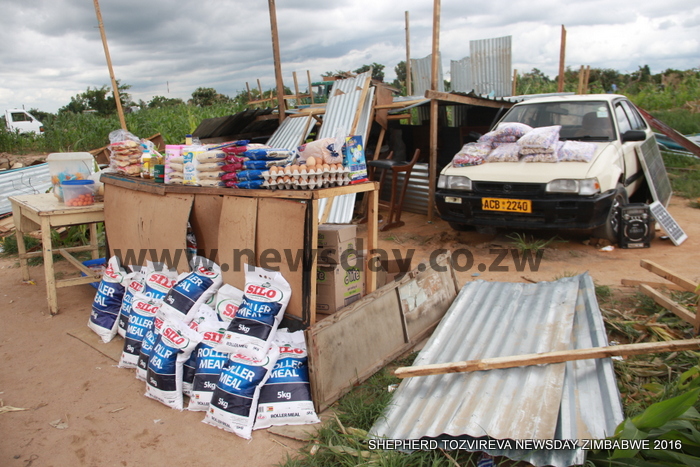
Source: Murambatsvina 2? Council threatening to demolish illegal structures – NewsDay Zimbabwe The Harare City Council has issued a warning to owners of illegal structures that if they do not remove the structures voluntarily, the council will step in and demolish them. By Cecilia Kamuputa In a statement issued on their official Facebook account, the […]

The post Murambatsvina 2? Council threatening to demolish illegal structures appeared first on Zimbabwe Situation.

Source: Murambatsvina 2? Council threatening to demolish illegal structures – NewsDay Zimbabwe

The Harare City Council has issued a warning to owners of illegal structures that if they do not remove the structures voluntarily, the council will step in and demolish them.

By Cecilia Kamuputa

In a statement issued on their official Facebook account, the council advised the illegal tuckshop operators not to pay money to individuals claiming to have the authority to save their structures from removal.

In a joint statement by the Minister of State for Provincial Affairs and Devolution for the Harare Metropolitan Province, Oliver Chidawu, and Harare Mayor, Herbert Gomba, government justified the demolitions that have taken place in Mbare, Highfields and other areas in Harare, stating that they were paving way for an orderly post COVID-19 period where optimum revenue collection by the local councils would be realised.

“Government and other local authorities are not insensitive to the plight of informal traders and fully realize the need to maintain their sources of income,” read the statement.

The statement added that the Harare City Council and other local authorities were already in the process of identifying and preparing alternate work spaces for informal traders, which are expected to be ready for use by the end of the extended lockdown.

First preference to these spaces shall be given to traders affected by the current demolitions.

Following the breakdown of the COVID-19 pandemic, the government promulgated Statutory Instrument 77 of 2020, which authorises local authorities to destroy any premises “the occupation or use of which is considered likely to favour the spread or render more difficult the eradication of such disease”.

The demolition of these structures have raised the ire of vendors, who questioned the local authority’s timing, saying there was something sinister in destroying their tuckshops during the lockdown.

Fifteen years ago, the government embarked on Operation Murambatsvina, a much condemned operation, where it claimed it was ridding cities of slums.

Hundreds of thousands of people were displaced and plans to resettle them have often been half hearted and piecemeal.

The post Murambatsvina 2? Council threatening to demolish illegal structures appeared first on Zimbabwe Situation.

Why do health workers need to fight for PPE?

Source: Why do health workers need to fight for PPE? – NewsDay Zimbabwe Frontline health workers in Zimbabwe continue to be exposed to COVID-19 infection as they still do not have adequate personal protective equipment (PPE). This is despite a High Court order which compelled government to provide equipment that meets international standards. NewsDay Comment […]

The post Why do health workers need to fight for PPE? appeared first on Zimbabwe Situation.

Source: Why do health workers need to fight for PPE? – NewsDay Zimbabwe

Frontline health workers in Zimbabwe continue to be exposed to COVID-19 infection as they still do not have adequate personal protective equipment (PPE). This is despite a High Court order which compelled government to provide equipment that meets international standards.

NewsDay Comment

The order was made by the High Court on April 14, in response to a petition filed by Zimbabwe Lawyers for Human Rights (ZLHR) on behalf of the Zimbabwe Association of Doctors for Human Rights (ZADHR) on April 5, over lack of proper equipment to deal with the spread of the virus.

But to date, government has not honoured this ruling.

What makes the Zimbabwean situation worse is the fact that the health employees are not being remunerated for the risks they are taking.

It is bad enough that they are exposed along with their families, but to be made to go hungry is an affront to human dignity.

We implore the government to adhere to the High Court order which stipulates that all health workers should be given PPE in order to avoid exposure to COVID-19.

Why do health workers need to fight to get PPE to help the country through the COVID-19 crisis? This is downright incompetence on the part of the Health minister and his Finance counterpart. Or perhaps this crisis has opened doors for more corruption? It is a ridiculous situation.

Neighbouring countries such as South Africa have taken aggressive measures to ensure that their health workers are appropriately clothed.

Provision of basics such as masks, gowns and gloves should be a consistent measure that can never be compromised.

To date, two health workers have already been infected in the line of duty and if no drastic and deliberate strategies are put in place many will be exposed. This is the reason we hear nurses that are shunning suspected COVID-19 patients. Yes, they have sworn to the Hippocratic oath, but under the prevailing situation we are unfairly sacrificing them.

Government has a duty to protect the people it relies upon in times of emergency. They have an obligation to ensure that no matter what, the hospital staff is safeguarded.

Imagining facilities without these people should be a very scary and sobbering thought.

Let us spare a thought for these heroes who each morning leave their homes unsure if they will last the day without being infected.

How are they supposed to give their best when fear is a very present feature in their day-to-day duties?

If we are to win the fight against this disease, we need to equip our frontline team and also incentivise them, that way their families can also benefit. The tendency to ignore the plight of health workers should be discarded, we are dealing with a disease which has the potential to wipe out the whole universe. The way health workers are treated elsewhere is in stark contrast to what is obtaining in Zimbabwe.

To the brave men and women who risk their lives everyday with little or no protection, we say we honour you and applaud your efforts. Your safety is our concern as a nation because without you our chances of surviving dwindle.

The post Why do health workers need to fight for PPE? appeared first on Zimbabwe Situation.