The season of deaths

Source: The season of deaths – NewsDay Zimbabwe THE eerie funeral wailing is loud, disturbing and most likely stays with one for the rest of their lives. African funerals are full of the above. Pain of death is soothed by shedding a bucketful of tears. However, the real grieving is long, sometimes sending one into […]

The post The season of deaths appeared first on Zimbabwe Situation.

Source: The season of deaths – NewsDay Zimbabwe
THE eerie funeral wailing is loud, disturbing and most likely stays with one for the rest of their lives.

African funerals are full of the above. Pain of death is soothed by shedding a bucketful of tears.

However, the real grieving is long, sometimes sending one into depression and life upside down or a spiral into the abyss with no hope of coming back.

Zimbabwe is in the middle of a myriad of travails. The COVID-19 pandemic may not have so far killed dozens of people, but many surely will die in more than one way.

When President Emmerson Mnangagwa on March 27 decreed the national lockdown to combat the ferocious COVID-19 epidemic, in many ways it signalled the death of a country more than the symbolic death of Zororo Makamba the first casualty of COVID-19.

Many poured their hearts out on social media, but the family and close friends never had time to decently mourn, grieve for him or send him to the other side of life in a dignified manner. Dignified in our African tradition.

Many families are wailing, grieving after their lives were killed by COVID-19 and the attendant economic collapse the lockdown has caused.

In one full swoop on independence weekend, many poor people who survived on informal trade had their livelihoods killed, sparking the silent wails in homes that will not be muted for good.

After the lockdown fatwa, many had not foreseen the death of informal trade in Mbare or any other high-density suburb.

The front-end loaders ploughing into the vending stalls heralded the deaths of many – poor working class.

In a blink of a moment, their sources of income were razed to the ground and most likely never to rise again in the short-to medium-term.

The stench of death from that action will be fully felt in the African summer heat after the lockdown.

Many will not be able to pay rentals at their lodgings, send their kids back to school for the second term and others will struggle to put a hot meal on the table.

This death cannot be quantified like the COVID-19 deaths. It is more than that. It is the death of a generation. A generation that will most likely never get a job to sustain its livelihoods or give hope to their children to dream of a future.

This informal category includes many in the public transport sector.

Many kombi drivers and their conductors after the lockdown will come to the realisation that their jobs ended the day the lockdown was proclaimed.

These are not the only casualties. Many thousands of people in the formal sector too are going to be laid off as struggling companies fail to absorb the losses of the COVID-19-induced lockdown.

It is not only the workers who suffer this anguish, but also some of the business owners will be left in deep debt and their companies liquidated.

These companies range from media, manufacturing, finance and banking, information technology and tourism sector, among others.

The new norm after lockdown will be a life of despair.

People will not be able to pick up the pieces.

The government will be watching hopelessly, waiting for capital to show the way as has been its clarion call since assuming power via a coup in November 2017.

The regime has no fiscal space to bail out the economy. It has an unsustainable public debt to gross domestic production of 135%. This is more than twice the regional average of 60%.

To further compound the woes, Zimbabwe is regarded a bad debtor by many international financial institutions and, therefore, cannot access any new lines of credit.

The country is at deep sea on its own on makeshift raft.

The sad economic scenario is the blank slate that Friedman economists were waiting for to introduce disaster capitalism.

A capitalism without a human face. A capitalism built on privatisation, deregulation of foreign exchange and limited government control on economics.

The crudest form of free market economics and profit is the only imperative.

The earliest signs of disaster capitalism are the privatisation of health services and education.

Private capital, Sakunda Holdings, has found its way into the health sector under the guise of helping tame the COVID-19 pandemic.

On the other hand, conglomerate behemoth Econet has carved itself market shares in financial sector (EcoCash), health sector (Maisha), cleaning services (Clean City), water provision and most of all the education sector.

In handing over the education sector to Econet, the Cabinet said: “Authorisation of an online education programme, Ruzivo Platform, by the Ministry of Primary and Secondary Education to offer learning to pupils and ensure they do not regress while observing the COVID-19 lockdown.”

And Econet is smiling all the way to the bank. There was no consideration of the poor who cannot afford to purchase tablets or smartphones let alone have the means to buy data.

These are the silent deaths that no one talks about as the country fights COVID-19, the novel flue like epidemic that has brought the world somewhat to a standstill.

This is a funeral dirge to all these deaths that will occur, and a lot of healing is needed. The country needs a lot of financial and psychological healing or else the citizens will be scarred for good. What a death, the eerie wailing will be around for a while.

Paidamoyo Muzulu is a journalist and writes here in his personal capacity.

The post The season of deaths appeared first on Zimbabwe Situation.

Special Allocation Committee for informal traders

Source: Special Allocation Committee for informal traders | The Herald Minister Chidawu Municipal Correspondent A Special Allocation Committee including members of the Provincial Joint Operations Command (JOC) will be set up to curb partisan allocation of stalls by councils and ensure that informal traders affected by recent demolitions will not be displaced. While local authorities […]

The post Special Allocation Committee for informal traders appeared first on Zimbabwe Situation.

Source: Special Allocation Committee for informal traders | The Herald

Special Allocation Committee for informal traders
Minister Chidawu

Municipal Correspondent

A Special Allocation Committee including members of the Provincial Joint Operations Command (JOC) will be set up to curb partisan allocation of stalls by councils and ensure that informal traders affected by recent demolitions will not be displaced.

While local authorities are currently identifying and preparing suitable workspaces for informal traders, the committee will be responsible for making sure stalls are clean, orderly and well managed to ensure maximum revenue collection.

This was announced in a joint statement dated April 22, 2020 issued by Minister of State for Provincial Affairs and Devolution for Harare Metropolitan Province Engineer Oliver Chidawu and Harare Mayor Councillor Herbert Gomba.

Minister Chidawu and Mayor Gomba said the new stalls were expected to be ready before the expiry of the extended national lockdown as they had noted with concern the anxiety that gripped players in the informal sector since councils began removing illegal structures in the province.

“The exercise has indeed affected the livelihoods of residents in Harare,” they said.

“However, Government and local authorities are not insensitive to the plight of informal traders and fully realise the need to maintain their sources of income. To this end, the City of Harare and other local authorities are already in the process of identifying and preparing alternative workspaces for informal traders.”

Minister Chidawu and Mayor Gomba said the overriding objective of removing illegal structures was to ensure sanity prevailed.

“In order to allay fears of displacement, safeguard livelihoods and avoid partisanship in the allocation of stalls, we have today (Wednesday) agreed that there shall be a Special Allocation Committee to oversee the allocation of officially designated vending stalls and spaces to the affected informal traders,” they said.

“The committee shall be chaired by director of Housing and Community Services and shall include members of the Provincial Joint Operations Command (JOC) and a member from Ministry in addition to other members chosen by the committee. First preference shall be given to traders who have been affected by the current exercise and Government shall endeavour to ensure that no one is prejudiced.”

The post Special Allocation Committee for informal traders appeared first on Zimbabwe Situation.
7 detectives put on self-isolation

Source: 7 detectives put on self-isolation | Newsday (News) SEVEN police detectives have been put on self-isolation after they came into contact with an accused person believed to be infected with the deadly coronavirus. By Richard Muponde Court officials, prison guards and prison inmates are also feared to have been infected after interacting with the […]

The post 7 detectives put on self-isolation appeared first on Zimbabwe Situation.

Source: 7 detectives put on self-isolation | Newsday (News)

SEVEN police detectives have been put on self-isolation after they came into contact with an accused person believed to be infected with the deadly coronavirus.

By Richard Muponde

Court officials, prison guards and prison inmates are also feared to have been infected after interacting with the accused person.

The accused (37) and his female accomplice (26) whose names were supplied to Glen View and Glen Norah police stations, respectively were arrested on April 11 for theft of a firearm and attempting to sell it.

They were arrested by the detectives who have since been advised to go on self-isolation.

The pair appeared at Harare Magistrates Courts last week where they reportedly came into contact with other suspects and prison guards during court appearance and on the way to remand prison after they were denied bail.

Their presence in remand prison has raised fears that they could spread the disease to other inmates and guards, if indeed they have the virus.

Details on whether they were tested for the virus or isolated at the remand prison were not readily available.

However, the national Criminal Investigation Department (CID) spokesperson, Portia Chinho would not comment on the matter saying she was not at work and referred questions to Assistant Commissioner Paul Nyathi whose mobile phone was unreachable.

Efforts to get a comment from Zimbabwe Prison and Correctional Services spokesperson Meya Khanyezi were futile as her mobile phone was also unreachable.

“There is an accused dealt with by Police Homicide Section who is suspected to be COVID-19 positive,” a police source said.

“The accused was put in remand prison for a case of theft of a firearm. He was denied bail and his next remand date is May 5.

“We don’t know if this accused has been tested at prison, but the detectives who dealt with them have been self-isolated for now.”

The source added that they feared that the accused could have spread the virus to a lot of people they came into contact with.

“They came into contact with court officials, prison guards, and other suspects at court and inmates at prison. If this matter is not handled well we could see a lot of people contracting the dreaded virus,” the source said.

According to the accused’s charge sheet under CRB 4701/20, seen by the publication, the detectives received information on April 11 that the man was selling an unidentified pistol.

The detectives arrested him and he implicated his female accomplice.

The detectives recovered a MAB Bravette pistol serial numbers 22495 with six rounds of ammunition under a shoe rack in her bedroom.

The post 7 detectives put on self-isolation appeared first on NewsDay Zimbabwe.

The post 7 detectives put on self-isolation appeared first on Zimbabwe Situation.

‘Mwonzora, Komichi and Zanu PF plot evil against Chamisa as MDC MPs refuse to join Mwonzora’s camp’

Douglas Mwonzora and Morgen Komichi are reportedly planning to recall six MDC Alliance MPs as soon Parliament reopens, according to academic and political commentator Pedzisai Ruhanya. Mwonzora and his MDC-T colleagues are contemplating the “daring” mo…

Douglas Mwonzora and Morgen Komichi are reportedly planning to recall six MDC Alliance MPs as soon Parliament reopens, according to academic and political commentator Pedzisai Ruhanya. Mwonzora and his MDC-T colleagues are contemplating the "daring" move to shock and awe other MPs to make them submit to the Thokozani Khupe-led opposition party. The six legislators […]

NRZ loses copper cables worth $130 000

Source: NRZ loses copper cables worth $130 000 – NewsDay Zimbabwe THE National Railways of Zimbabwe (NRZ) has this year alone lost copper cables worth $130 000 to vandalism. BY SILAS NKALA Seven incidents of vandalism have so far been reported, resulting in the arrests of nine people who have been sentenced to mandatory 10 […]

The post NRZ loses copper cables worth $130 000 appeared first on Zimbabwe Situation.

Source: NRZ loses copper cables worth $130 000 – NewsDay Zimbabwe

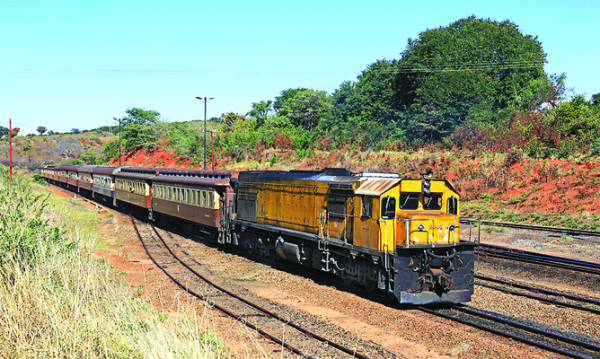
THE National Railways of Zimbabwe (NRZ) has this year alone lost copper cables worth $130 000 to vandalism.

BY SILAS NKALA

Seven incidents of vandalism have so far been reported, resulting in the arrests of nine people who have been sentenced to mandatory 10 years in jail each.

This was revealed by the NRZ spokesperson Nyasha Maravanyika yesterday.

He said NRZ was pleased with the prison sentences being meted out to people convicted of stealing its cables, but the rail entity felt more could be done.

“Since the beginning of 2020, there has been an upsurge in cases of people stealing these cables, which are buried underground. The NRZ security branch, working together with other State security agents, is stepping up patrols to account for people stealing railways property,” Maravanyika said.

“Efforts by the NRZ security branch are bearing fruit as several arrests have been made with some leading to convictions.

“So far this year, seven cases have been reported in which cables worth more than $130 000 were stolen. Three people have been convicted and sentenced to the mandatory 10 years in prison each. Six others have their cases pending at the courts.”

Maravanyika said while NRZ is happy with the support from the judiciary, more needs to be done in order to deal with the scourge of cable thefts.

He said judging from the increase in the number of cases over the years, the 10-year mandatory jail term was no longer deterrent.

“We urge the legislature to review the law and increase the mandatory jail term as cable thieves are risking lives and the economy of the country with their actions.

“There is need for parastatals and other organisations also suffering from the scourge of theft of vital infrastructure to pool resources together for a co-ordinated response to the problem,” he said.

“NRZ urges the public to report cases where they see people tampering with its equipment. Cases can be reported to the NRZ or the police. The NRZ has a number of campaigns it is running to try and curtail this scourge.”

Maravanyika said the whistleblowing programme rewards people who report cases of vandalism of infrastructure and those who help protect railway assets.

In January this year, Maravanyika said the NRZ had lost US$3 663 725 to theft and vandalism of rail infrastructure between 2018 and 2019. He complained that despite the arrest of some criminals, it was disappointing that they were given short sentences which were not deterrent.

He said some of the infrastructure that have been vandalised include Saw Mills along the Victoria Falls-Bulawayo rail line, Mpopoma, Masasa in Harare, Kwekwe, Gweru, Shamwari and Dabuka.

The post NRZ loses copper cables worth $130 000 appeared first on Zimbabwe Situation.