Covid-19 lockdown daily situation update – day 24 

Zimbabwe COVID-19 Lockdown Monitoring Report: 22 April 2020 – Day 24 Source: Covid-19 lockdown daily situation update – day 24 – The Zimbabwean 1.         Introduction On 27 March 2020, President Mnangagwa declared a 21-day national lockdown which he then extended for another 14 days to 3 May 2020. The extension of the lockdown was […]

The post Covid-19 lockdown daily situation update – day 24  appeared first on Zimbabwe Situation.

Zimbabwe COVID-19 Lockdown Monitoring Report: 22 April 2020 – Day 24

Source: Covid-19 lockdown daily situation update – day 24 – The Zimbabwean

1.         Introduction
On 27 March 2020, President Mnangagwa declared a 21-day national lockdown which he then extended for another 14 days to 3 May 2020. The extension of the lockdown was followed by the gazetting of Statutory Instrument (SI) 2020-094 Public Health (COVID-19 Prevention, Containment and Treatment) (National Lockdown) (Amendment) Order, 2020 on 21 April 2020.On day 23 of the lockdown, official statistics by the Ministry of Health and Child Care indicated that COVID-19 confirmed cases remained at twenty-eight (28), whilst the number of deaths relating to COVID-19 had increased to four (4) following the death of an 82-year-old Mhondoro woman who passed away at Westend Hospital which has now been closed.The Ministry of Health and Child Care decentralised COVID-19 testing to provincial and district level, leading to an increase in daily tests of suspected cases. Thus as of 22 April 2020, cumulative tests of suspected COVID-19 cases had increased to four thousand nine hundred and ninety (4 990), of which four thousand nine hundred and sixty-two (4 962) were negative.2.         Methodology

This report encompasses reports covering the 10 provinces of the country through reports received from the following Forum Members:
  • Zimbabwe Peace Project (ZPP)
  • Media Institute of Southern Africa (MISA)
  • Zimbabwe Lawyers for Human Rights (ZLHR)
  • Counselling Services Unit (CSU)
  • Zimbabwe Association of Doctors for Human Rights, (ZADHR)
  • Zimbabwe Human Rights Association (ZimRights)
3.         General Atmosphere 
The Zimbabwe Human Rights Commission (HRC) issued a statement in which, while welcoming the government’s efforts in upscaling response measures, it notes physical and economic violence being perpetrated on citizens. The Commission highlighted the destruction of market stalls by local government authorities, and also queried the denial of passage for employees in essential services and journalists at police checkpoints. The Commission recommended for the Government of Zimbabwe to, among other things, provide a social safety net for vulnerable groups, and for the Commissioner-General of police to direct all officers to avoid and desist from excessive use of force as well as unwarranted deprivation of the rights to personal security and liberty.On 22 April, through a statement, Vice President Kembo Mohadi who is the chairperson of the interministerial taskforce on COVID-19 response announced that prices of basic commodities should be pegged at prices which obtained on 25 March 2020. He indicated that the escalating prices were speculative and unjustified. According to the statement, the moratorium took effect on 21 April 2020.Harare City Council released a schedule of the areas that they are going to demolish vending stalls and informal traders markets. This comes after Harare Mayor Obert Gomba issued a statement on 21 April indicating that he had engaged the Town Clerk to stop the demolitions until a comprehensive policy has been devised to approach the issue. The scheduled entailed that the council will demolish vending structures in Budiriro on the 23rd, Mufakosi, Marimba and Kambuzuma on the 24th, Warren Park and Westlea on the 25th, Kuwadzana on the 27th, Dzivarasekwa on the 28th, Mabelreign, Tynwald, Madokero and Westgate on the 29th,  Malborough, Greencroft, Avonlea and Strathaven on the 30th, Hatcliff and Borrowdale on the 1st of May and lastly Tafara and Mabvuku on the 2nd of May.In Hatfield, it was reported that soldiers and anti-riot police raided shops at Chiremba shopping centre where scores of people were gathered on the pavements. Some of the people were in queues for food whilst others were selling various commodities on the pavements. The soldiers and anti-riot police allegedly confiscated alcohol which was being sold through the backdoor at Chans shopping centre.

In Epworth, it was business as usual as youths were playing soccer on the streets, vending, and moving around in groups. At Solani shopping centre, it was reported that police officers were receiving bribes of at least ZWL20 from vendors to allow to continue selling their products. Those who did not pay the bribes were chased away from their vending sites.

At Dombotombo library in Marondera, the Ministry of Public Service, Labour and Social Welfare intended to register beneficiaries to benefit from the food distributions which shall take place in due course. Reports indicated that the exercise was chaotic as people were jostling to be registered, such that the police ended up dispersing people.

In Beitbridge, MDC councillor for Swereki, Philemon Ndou reported that MDC supporters are being sidelined in social welfare food distributions that are being spearheaded by ZANU PF councillors. He highlighted that MDC members in his ward are being sidelined as it is the only ward in Beitbridge which was won by the opposition party. On another note, CARITAS Zimbabwe was also distributing food community members in the area.

In Nyanga South, it was reported that army trucks ferrying soldiers and anti-riot police were seen patrolling in the area. It was reported that soldiers and anti-riot police were allegedly asking shop owners to pay a USD5 fine for operating whilst the country is on lockdown.

In Mwenezi, it was reported that Lundi district council destroyed vending stalls around Mwenezi. It was reported that only vendors who were selling vegetables were excluded from the operation.

In an article published in the Newsday of 22 April 2020, it was reported that Bulawayo residents in Pumula South, Old Magwegwe and Emganwini high-density suburbs are sleeping in queues at community boreholes and bowser delivery points due to the lack of potable water. The erratic water supply is a result of the implementation of a 108-hour water-rationing programme resulting from the dwindling levels at supply dams. Other community members who cannot endure long nights in the open have turned to unprotected water sources such as unreclaimed pits dug by the council along Ntemba Road.

4. Arrests
In Makoni, it was reported that ZRP officers arrested a shop owner at Chiendambuya shopping centre for opening his grinding meal after the stipulated time. It was reported that police officers caught him grinding some maize after 3 pm. He was taken to Chiendambuya police station were he paid admission of guilt fine of ZWL500.

In Mutare, police officers arrested Mutasa South Member of Parliament, Regai Tsungai for distributing food in Palmerston area. It was reported that he was taken to Mutare central police station where he was charged with contravening SI 83 of 2020 relating to unnecessary movements and he was fined ZWL500. In other reported cases, individuals arrested for defying the lockdown paid an admission of guilt fine of ZWL200. However, there was no explanation why Honorable Tsunga was fined ZWL500. The government is therefore urged to standardise the enforcement of the COVID-19 lockdown.

5.         Summary of Violations
The table below summarises human rights violations documented by the Forum Secretariat and Forum Members from 30 March 2020 to 22 April 2020.

Nature of Violation Number of Victims Location
Assault 181 Harare, Zvishavane, Masvingo, Bulawayo, Wedza, Chinhoyi, Zaka, Gweru, Chitungwiza, Bindura, Nembudziya, Chiredzi, Marondera, Mutoko, Chivi, Bikita, Zvishavane
Attack on Journalists 12 Mutare, Gweru, Chinhoyi, Harare, Chiredzi, Masvingo
Arrests 209 Masvingo, Gokwe, Gweru, Bulawayo, Chinhoyi, Hwange, Harare, Magunje, Lupane, Norton, Bikita, Mutasa, Chitungwiza, Nkayi, Makoni
Malicious Damage to Property 1 Harare
7. Litigation update
Lawyers representing Lovemore Zvokusekwa who was arrested for allegedly circulating a fake message about the President’s  intention to extend its 21-day lockdown, filed a High Court bail application seeking to overturn a lower court order to detain him. This was after the Magistrat had denied him bail. Zvokusekwa appeared at Harare Magistrates Court on 20 April on charges of publishing or communicating false statements prejudicial to the state as defined in section 31(a)(i) of the Criminal Law (Codification and Reform) Act. Lawyers representing Zvokusekwa indicated that they are considering taking the matter to the Constitutional Court to challenge the constitutionality of section 31 of the Criminal Code.
8. Conclusion
There is growing concern over the increasing human rights violations by police officers and soldiers enforcing the lockdown. Issues of concern include corruption, human rights violations and unlawful confiscation of products and goods. The Forum, therefore, implores the government to monitor and urgently regulate the conduct of security services in relation to the enforcement of SI 2020-094.Partisan politics in the distribution of social welfare food aid continues unabated. This has affected vulnerable groups including women, the elderly and child-headed families at a time when most economic activities have been suspended due to the national lockdown. The Forum, therefore, calls upon the government to investigate and intervene to allow the fair distribution of aid without distinction of race, age, religion and political affiliation.

The post Covid-19 lockdown daily situation update – day 24  appeared first on Zimbabwe Situation.
Post-COVID-19: Zim economy’s death?

Source: Post-COVID-19: Zim economy’s death? | Newsday (News) PRESIDENT Emmerson Mnangagwa on Saturday extended the 21-day national lockdown to control COVID-19 spread by a further two weeks to May 3, but in his statement acknowledged that the fragile Zimbabwean economy had taken a hit – a big hit and recovery was going to be slow […]

The post Post-COVID-19: Zim economy’s death? appeared first on Zimbabwe Situation.

Source: Post-COVID-19: Zim economy’s death? | Newsday (News)

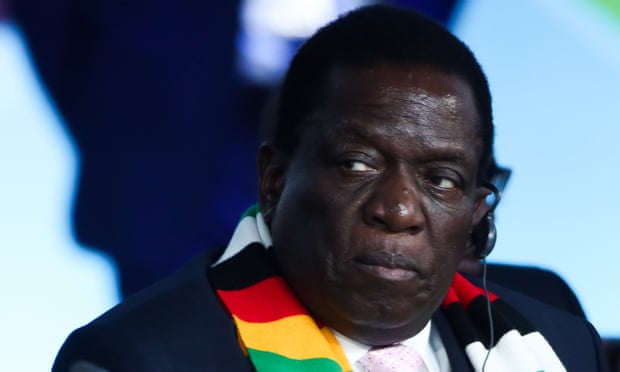
PRESIDENT Emmerson Mnangagwa on Saturday extended the 21-day national lockdown to control COVID-19 spread by a further two weeks to May 3, but in his statement acknowledged that the fragile Zimbabwean economy had taken a hit – a big hit and recovery was going to be slow and painful.

Many countries across the globe introduced lockdowns to flatten the curve of COVID-19 pandemic infections. The pandemic to date has infected over 2,5 million people and caused nearly 180 000 deaths worldwide (mostly the poor working class and blacks disproportionately) as of yesterday afternoon.

Mnangagwa said: “Government is acutely aware of the need to keep the economy running, albe-it at subdued levels.

With this objective in mind, government has decided to allow the mining sector to resume or scale-up operations within the parameters set by the World Health Organisation … In respect to our manufacturing sector, I have further directed that limited operations resume in the national interest, but mindful of the public health safeguards.”
The pandemic, besides stretching health budgets and resources, has had a devastating effect on the world economy, particularly aviation, tourism, manufacturing and commodity markets.

The International Monetary Fund (IMF) in its latest report says the world economy may contract by as much as 5% and sub-Saharan Africa for the first time in two decades will record -1,6% economic growth.

Many governments across the globe have passed bailout budgets running into billions of dollars to cushion their industries and avoid massive job losses. The US administration has passed a US$2 trillion bailout package for its companies and vulnerable citizens, the European Central Bank has provided a ₧500-billion bailout for EU member States in addition to individual countries’ bailout packages. In Sadc, South Africa has provided a US$26,3 billion bailout to struggling companies.

In January, the European Intelligence Unit projected that Zimbabwe’s economy was to contract by a massive 12,5% in 2020 and this was before the COVID-19 pandemic. Conservative estimates after COVID-19 put Zimbabwe 2020 growth at between -20% and -25%. This is extremely bad for an economy that is 90% informal and has no access to funding from multilateral financial institutions such as IMF, World Bank and the African Development Bank because of the US economic sanctions.

Zimbabwe’s perilous state was further exposed in a leaked Reserve Bank of Zimbabwe paper on de-dollarisation. The paper’s data has not been disputed, except that the person who released the document was not authorised. The paper revealed that Zimbabwe’s public debt to GDP ratio was at a staggering 135%, twice more than the acceptable rate in Sadc.

Zimbabwe’s debt overhang and failure to have access to international financial institutions concessionary loans means the country has no fiscal space to bail out struggling companies that have been exacerbated by the COVID-19 lockdown. It is, therefore, a grim reality that ailing companies will go into administration or complete shutdown with thousands of workers retrenched.

The Confederation of Zimbabwe Industries in a position paper released last week said 80% of its members did not have the capacity to pay more than a month’s salary without doing any production. This means many companies will have to restructure their labour whenever the national lockdown is completely lifted.

Zimbabwe’s economic position is further made untenable by dwindling foreign currency inflows. The country’s foreign currency mainly comes from commodities (gold, chrome, platinum, diamonds and tobacco) and diaspora remittances.

However, these two main streams of forex have been hit hard by COVID-19 as commodity prices have tumbled on the international markets and remittances waned as those who used to send on average US$1,7 billion are also feeling the pandemic’s effects in their foreign bases.

If Zimbabwe has to avert falling into the abyss then it has to start looking at internal models of raising revenues. These include a massive drive at tax compliance by registered companies, improving the public procurement process, aggressive combating of corruption and reviewing the tax regime to make big companies carry a fair share of their tax burden that is currently disproportionately borne by individual taxpayers.

Mnangagwa, however, does not seem to have the political will to robustly fight corruption. His brinkmanship tactics soon after assuming power via a coup in November 2017 have been exposed. The President then promised to name and shame forex externalisers and to pursue properties and bank balances in offshore accounts. His administration has failed to live up to the image of transparency and accountable poster-boy he seeks, as it has concluded some murky procurement deals particularly in the disgraced command agriculture programme that was fronted by Kudakwashe Tagwirei’s Sakunda Holdings.

The regime can only find succour by reviewing the tax regime and have big companies paying a fair share of taxes instead of hiding behind tax deferments, tax holidays, tax avoidance or even outright tax evasion. The super wealthy and big companies have to come to the party and stop hiding behind community social responsibility programmes.

It is not far-fetched or prophecy to say the deteriorating economic conditions are a recipe for social disaster and political instability.

Mnangagwa, therefore, has to bite the bullet and act decisively on the economy and offer no excuses be they natural disasters or the late former President Robert Mugabe’s ruinous economic policies.

Paidamoyo Muzulu is a journalist and writes here in his personal capacity.

The post Post-COVID-19: Zim economy’s death? appeared first on NewsDay Zimbabwe.

The post Post-COVID-19: Zim economy’s death? appeared first on Zimbabwe Situation.

WOMAN IN TROUBLE OVER RAMAPHOSA APE SLUR

The KwaZulu-Natal woman who referred to President Cyril
Ramaphosa as an “ape trying to act like a first-world president” has apologised
and said the incident was “blown out of proportion”.

The woman, from the upper Highway region west of Durban,
b…

The KwaZulu-Natal woman who referred to President Cyril Ramaphosa as an “ape trying to act like a first-world president” has apologised and said the incident was “blown out of proportion”. The woman, from the upper Highway region west of Durban, briefly spoke to TimesLIVE on Friday. “It was blown out of proportion and I apologise profusely, but I cannot talk to you right now,” said the

Govt orders price controls

Source: Govt orders price controls | Newsday (News) GOVERNMENT yesterday reintroduced price controls on basic commodities, raising fears of shortages as industry remains under lockdown due to the coronavirus outbreak with supplies running out. BY BLESSED MHLANGA Prices have more than doubled since President Emmerson Mnangagwa put the country under lockdown on March 30, which […]

The post Govt orders price controls appeared first on Zimbabwe Situation.

Source: Govt orders price controls | Newsday (News)

GOVERNMENT yesterday reintroduced price controls on basic commodities, raising fears of shortages as industry remains under lockdown due to the coronavirus outbreak with supplies running out.

BY BLESSED MHLANGA

Prices have more than doubled since President Emmerson Mnangagwa put the country under lockdown on March 30, which he extended by a further two weeks to May 3 at the weekend, with long queues now an early morning feature at supermarkets and shops around Harare and major cities as shoppers hunt for basic commodities such as sugar and cooking oil that are already in short supply.

Shops are allowed to operate for four hours daily during the lockdown and the latest move by government could
spark panic buying.

Vice-President Kembo Mohadi yesterday ordered retailers to revert to the prices of basic commodities obtaining on March 25 and accused businesses of profiteering by taking advantage of the lockdown despite inflation rising to a post-dollarisation high of 676,39% in March.

“There is a general agreement among the multi-sectorial partners that the price increase, particularly during the lockdown was speculative and unjustified,” Mohadi told journalists at a Press conference.

“The multi-sectoral stakeholders committed to a price moratorium to operate based on the prices which were applicable on March 25. The moratorium will also apply to all value-chain players. This was supported by a Cabinet decision of April 21 and will take effect immediately.”

Mohadi ordered a freeze on price increases for goods such as sugar, cooking oil, bread, mealie-meal and flour until further notice.

“When His Excellency President Emmerson Mnangagwa announced the lockdown, prices skyrocketed, generating increasing difficulties for the general public to access food items such as bread, sugar, cooking oil, mealie-meal and flour.

“In a survey done by the Ministry of Industry and Commerce, the value of the consumer basket as at February 7, was $4 656 but by April 11, the same amounted to $6 660,84,” he said.

Consumer Council of Zimbabwe chairperson Philip Bvumbe, however, said shops could run dry because of the latest move by government, causing serious shortages of basics in the market and, therefore, called on collective monitoring between government and the private sector to nip the potential of shortages in the bud.

“What needs to be done is close monitoring with government and manufacturers to ensure that there are no shortages of basic commodities. We have to see to it that we have a collective responsibility,” Bvumbe said.

Confederation of Retailers Association president Denford Mutashu said while they were going to be implementation challenges, business was committed to working with government to find lasting solutions on the economy.

“We are prepared to work with government on this and since this was a product of consultation, we will address implementation challenges through consultations. For instance, there are stocks that are being held right now which were purchased using the increased prices by retailers and that is an issue that has to be discussed to see how the price reduction can be implemented,” he said.

Government introduced price controls for roller meal through subsidies, triggering shortages of the staple food.

Sources close to the deal, told NewsDay that government had promised to ensure that manufacturers and retailers access foreign currency at the bank rate in an effort to keep prices low.

“There will be a meeting between industry and banks tomorrow (toady) at Munhumutapa (Building) where government is set to dangle foreign currency availability as a sweetener to the deal. If that support does not come in a significant way, then the deal won’t work,” said the source.

Grain Millers Association of Zimbabwe chairperson Tafadzwa Musarara defended the price hikes saying they were not effected out of greed but factoring in replacement costs and the movement of the local currency against major currencies.

“Those price increases were not motivated by greed, I would like to believe. But when businesses operate individually, they tend to act individually, but in this instance, government and business have come together and something positive has come out of it, price reductions,” he said.

Previous attempts at enforcing price controls in 2007-8 led to shortages of basic commodities as the country battled hyperinflation which forced it to abandon its currency in February 2009.

The post Govt orders price controls appeared first on NewsDay Zimbabwe.

The post Govt orders price controls appeared first on Zimbabwe Situation.

Chamisa berates govt over COVID-19 resources

Source: Chamisa berates govt over COVID-19 resources | Newsday (News) OPPOSITION MDC Alliance leader, Nelson Chamisa has hit out at government for its failure to dedicate more resources from the national purse towards the fight against coronavirus. By Nkululeko Sibanda Since last year, Finance minister Mthuli Ncube has been bragging about recording budget surpluses on […]

The post Chamisa berates govt over COVID-19 resources appeared first on Zimbabwe Situation.

Source: Chamisa berates govt over COVID-19 resources | Newsday (News)

OPPOSITION MDC Alliance leader, Nelson Chamisa has hit out at government for its failure to dedicate more resources from the national purse towards the fight against coronavirus.

By Nkululeko Sibanda

Since last year, Finance minister Mthuli Ncube has been bragging about recording budget surpluses on a monthly basis, a development he has attributed to the government’s fiscal consolidation programme the Harare administration embarked on.

Reports have indicated that under Ncube, Treasury has witnessed financial inflows to the tune of US$437 million during the 2019 financial year.

It is these resources that the MDC Alliance leader, through his spokesperson, Nkululeko Sibanda, argues should be devoted to the fight against the novel virus.

Sibanda told NewsDay that government should prioritise the fight against coronavirus in the allocation of resources if Zimbabwe is to win the war against the pandemic.

“The government cannot say it does not have the resources. People are being taxed every now and then through the 2% (intermediated electronic transaction) tax which government is collecting on financial transactions. We want to state that these are the revenues that should be dedicated to programmes such as the COVID-19 pandemic,” he said.

Sibanda added that government was doling out huge sums of money in lucrative deals that have so far benefited acolytes of those in the corridors of power.

“We can’t say there is no money when contracts worth millions of dollars in most of our spheres are being given to people who do not deserve. We know there are national reserves. Any government worth its salt has reserves that are always in place. These are the reserves that should be brought into play at this point in time,” he said.

Sibanda implored Zimbabweans to hold government to account and to also ensure that it plays its part in ensuring a successful fight against the coronavirus.

Zimbabwe has recorded 29 cases of COVID-19, with four fatalities.

Over 2,5 million people are infected with the virus worldwide while over 180 000 have died.

“The government must have the resources to look after its citizens during these times,” Sibanda said.

“If at any point the government says it does not have the resources, it then ceases to be a government.

“We cannot have a situation where these people in government feed the nation with these stories that there is no money to take care of the people and those citizens in difficult circumstances.

“If the government does not have that money, let them resign and leave and those that are able to handle such situations will come on board and rescue the country.”

The post Chamisa berates govt over COVID-19 resources appeared first on NewsDay Zimbabwe.

The post Chamisa berates govt over COVID-19 resources appeared first on Zimbabwe Situation.