Masiyiwa urges African governments to prioritise health workers

Source: Masiyiwa urges African governments to prioritise health workers – NewsDay Zimbabwe Businessman Strive Masiyiwa has urged African governments to prioritise healthcare workers, particularly now in the wake of the COVID-19 pandemic, where medical practitioners are in the front line. One way of doing this, Masiyiwa said, was the setting up of a 12-month emergency […]

The post Masiyiwa urges African governments to prioritise health workers appeared first on Zimbabwe Situation.

Source: Masiyiwa urges African governments to prioritise health workers – NewsDay Zimbabwe

Businessman Strive Masiyiwa has urged African governments to prioritise healthcare workers, particularly now in the wake of the COVID-19 pandemic, where medical practitioners are in the front line.

One way of doing this, Masiyiwa said, was the setting up of a 12-month emergency fund for health workers.

“The fund should pay all healthcare workers a special allowance of not less than 100% their current salary, until this crisis is over,” he explained.

“This has nothing to do with salaries.

“Business and citizens should be encouraged to donate to this fund, provided governments first make their contribution to it.”

Masiyiwa, the Econet group chairman, said it was imperative that health workers be properly remunerated.

“We are asking these people to put their lives on the line,” he said.

“And, as we have seen in China, Europe, and America, many may indeed succumb to this highly infectious disease.

“There is no amount of money which we can put on life.

“But out of appreciation we should pay them their due.”

Masiyiwa urged African governments, non-governmental organisations (NGOs), businesses and ordinary citizens to rush now to ensure that health workers are properly equipped to combat the coronavirus.

“They must each have adequate personal protection equipment (PPE),” he said.

“They should not have to beg for it.”

In addition, Masiyiwa pleaded with retired health workers to return to work and they will be paid from the 12-month fund that the government sets up.

He reiterated that he will pay school fees for life for the children of health workers who die due to coronavirus in Zimbabwe.

To help combat the spread of the coronavirus, particularly among health workers, Masiyiwa said they must be provided with PPE, be regularly tested and that health facilities be equipped with ventilators.

“Africa needs a coordinated approach to securing ventilators.

“We cannot just go out and buy ad hoc whilst powerful nations leave us to the opportunists selling substandard equipment

“Let’s increase testing and make it as easy as getting a pregnancy test.

“It was great to see Jack Ma send us some (testing equipment), but we need, as Africans, to get our own mass testing.

“Each African country must get a million test kits, if we are serious,” he said.

President Emmerson Mnangagwa has declared a 21-day lockdown to help combat the spread of the virus, but while this could work in Europe and Asia, Masiyiwa was wary that this could prove difficult in Africa.

He said half of Africa’s urban population lived in conditions that made self isolation impractical.

Furthermore, he urged the need to scale up home based care, as the continent did not have enough hospital beds.

EcoSure, a subsidiary of Masiyiwa’s Econet, has announced that it is equipping medical staff with PPE, providing them with life and health insurance and offering them safe transport to and from work daily, for the coming 12 months.

Higherlife Foundation – which is funded by the Econet group of companies and by Delta Philanthropies, Masiyiwa and his family’s social impact vehicle  – has already been supporting hundreds of doctors who signed up to a fellowship scholarship launched late last year.

The fellowship, worth over $100 million, was offered amid a crippling nationwide strike by doctors that had left thousands of patients desperate and stranded.

The post Masiyiwa urges African governments to prioritise health workers appeared first on Zimbabwe Situation.

Death penalty should be abolished completely 

Source: Death penalty should be abolished completely – NewsDay Zimbabwe MDC legislator Dorcas Sibanda says while President Emmerson Mnangagwa has done well to commute death sentences to life imprisonment, he should have completely abolished the death sentence as stipulated in the national Constitution. Sibanda recently moved a motion in Parliament on the abolition of the […]

The post Death penalty should be abolished completely  appeared first on Zimbabwe Situation.

Source: Death penalty should be abolished completely – NewsDay Zimbabwe
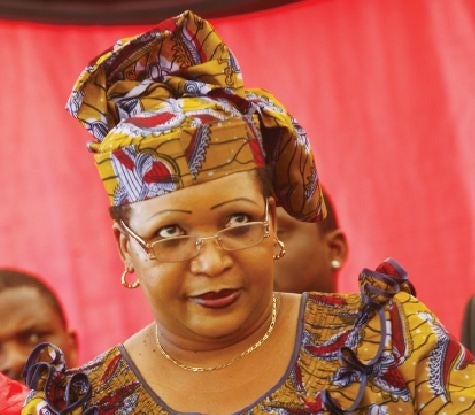
MDC legislator Dorcas Sibanda says while President Emmerson Mnangagwa has done well to commute death sentences to life imprisonment, he should have completely abolished the death sentence as stipulated in the national Constitution. Sibanda recently moved a motion in Parliament on the abolition of the death sentence which attracted mixed views from MPs, but she says she will not tire from advocating for complete removal of the death sentence. The following are excerpts from an interview between Sibanda (DS) and NewsDay (ND) senior parliamentary reporter Veneranda Langa on issues to do with her campaign for the complete removal of the death sentence.

ND: President Emmerson Mnangagwa last week issued Clemency Order number 1 of 2020 which will commute death sentences to life sentences for death row inmates who have served 10 years or more. What is your comment on that?

DS: While this is a welcome move, I feel he could have removed every death row prisoner from the death sentence in line with the Constitution which has done away with the death sentence. I agree that there are some prisoners who have committed grievous crimes, but they should get very stiff penalties like life imprisonment instead of the death penalty as the Constitution gives right to life.

ND: Why does Zimbabwe now need to do away with the death penalty?

Ad by Valueimpression

DS: I believe the death penalty is, to put it simply, wrong. The State should not have the power to take a citizen’s life, ever. It denies the capacity of every one of us to rehabilitate themselves and contribute meaningfully to society. But more concretely, it is important for our citizens to realise that capital punishment is fundamentally unfair. It is applied disproportionately to the most vulnerable of us — the poor and disenfranchised, the mentally ill, those who do not have the means to defend themselves – and often after mistreatments, torture and unfair trials. Mnangagwa himself was sentenced to death (during the liberation struggle) after being tortured into confessing to a crime he had not committed by the Rhodesia Special Branch. That is why we need to remove it from our statutes and ensure that no individual is sentenced to death.

ND: You moved a motion last month in the National Assembly on the death penalty, what do you seek to achieve?

DS: Through my motion, I call for a moratorium on executions for the 84 people who are currently on death row in Zimbabwe. This is a necessary first step that would provide relief to their relatives.

Ad by Valueimpression

It is also essential that we tackle the issue of capital punishment and move away from it. I call on the Executive to make good on their statements in favour of abolition and to introduce a Bill that would remove this cruel punishment from Zimbabwean laws.

ND: During debate on the motion, some MPs narrated how they had been affected by murder cases on their family members and were against removal of the death penalty. What is your comment?

DS: My heart goes out to everyone who has been affected by such crimes. Grief often comes with anger and a feeling of injustice. Every victim has a right to see the person responsible held to account in a court of law; but the death penalty is not justice, it is revenge. Executing the murderer does not bring back the victim, it cannot make whole what has been broken. We often say “one eye for an eye makes the whole world blind” and it is very true. We must support victims, but the death penalty creates new victims.

I think it is also important to underline that there are many families of victims around the world who do not support the death penalty and refuse to be used to justify the killing by the State of another human being. Some of them may even promote abolition like my colleague (Robert) “Renny” Cushing (Democratic member of the New Hampshire House of Representatives) whose father and brother-in-law were murdered and spearheaded the abolition Bill in New Hampshire. Their voice matters too.

ND: Have you ever spoken to persons on death row before moving this motion? What were their experiences?

DS: I have been fortunate enough to meet individuals who have been wrongfully sentenced to death and later freed at abolitionist meetings and summits. It is a very humbling experience to hear them share the difficult conditions and despair they have experienced. It is something I would not wish on my worst enemies, and it is a good reminder that it could happen to any of us because no justice system is perfect.

It is also very moving to see how resilient these people are, despite the cruel injustice they have suffered. For example, I met Susan Kigula who was convicted for murder in Uganda. During her 15 years in prison, she organised a choir and worked hard to get a law degree from London University. She was released in 2016 and has now created an organisation which supports women and children. Executing her would have been an immense loss for her community and her country.

I think more parliamentarians should take the step to visit prisons, including death row, and to see with their own eyes what those people endure, and hear with their own ears what they live through. We should make full use of it to make more informed decisions when we discuss criminal justice reform.

ND: How will removal of the death penalty assist the country in curbing crime or promoting human rights?

DS: One of the most common misconceptions on death penalty is that it deters people from committing crimes, which would thus help curb crime, but that is simply not supported by studies or research.

It is of course a difficult issue to analyse, but, for example, studies made in the United States have demonstrated that the homicide rate in States using the death penalty does not differ from that in abolitionist States. There is, however, evidence showing that what does deter people from committing crimes is the certainty of the sanction, not the severity of said sanction: it is thus more important to strengthen the judicial system and ensure that citizens feel comfortable reporting crimes, that all crimes can be investigated effectively and that courts have the resources to address all crimes adequately, than to increase the severity of punishment.

ND: Do you think that those advocating for the continuity of death penalty in Zimbabwe want to just fix political opponents?

DS: I would not presume that all proponents of the death penalty have such intentions. However, it is true that the death penalty can be used – and in many countries it is used – against political opponents. I myself have been to several countries where the justice system is manipulated to target people who oppose those in power.

As Africans, we should know that the death penalty can be used as a tool of political oppression, as it most definitely was for the Rhodesian government. Retaining capital punishment in our books — even if executions are no longer carried out — represents a huge risk to our democratic principles because nobody knows what might happen and who could be in power tomorrow.

ND: What kind of campaigns are you engaged in as you fight for removal of the death penalty?

DS: As a member of Parliamentarians for Global Action (PGA), I am very active within the Campaign for the Abolition of the Death Penalty. With fellow parliamentarians from across the world, we strive to reduce the scope of capital punishment and ultimately to abolish it by working together and supporting each other.
For example, last year I attended the 7th World Congress against the Death Penalty in Brussels (Belgium) and with a colleague from Chad I delivered an abolitionist message on behalf of parliamentarians across the world to an audience of hundreds of people – diplomats, lawyers, judges, activists, victims, etc.

I think it is also important for parliamentarians to work closely with local civil society representatives, such as Veritas who co-published a very important report on the death penalty in Zimbabwe in 2018.

ND: What is the international view on removal of the death penalty?

DS: Today, over 100 countries have legally abolished the death penalty for all crimes. In addition, about 50 other countries are abolitionist in practice. That means that more than two thirds of countries across the world have moved away from capital punishment. In 2018, 121 of the 193 United Nations member states voted in favour of a General Assembly resolution calling for a moratorium on executions, and only 35 voted against it.

From these numbers, we clearly see that there is a growing consensus in the international community for abolition of the death penalty. Of course, some countries still support and apply capital punishment, but the march of history is steadily moving away from it, and so should Zimbabwe.

The post Death penalty should be abolished completely  appeared first on Zimbabwe Situation.

Calls to implement devolution grow louder

Source: Calls to implement devolution grow louder | Newsday (News) THE distribution of resources to fight the COVID-19 outbreak has exposed the need for government to fully implement devolution of power to allow provinces to map their own action plans to handle such disasters, a Gwanda-based civic group has said. BY NQOBANI NDLOVU The Community […]

The post Calls to implement devolution grow louder appeared first on Zimbabwe Situation.

Source: Calls to implement devolution grow louder | Newsday (News)

THE distribution of resources to fight the COVID-19 outbreak has exposed the need for government to fully implement devolution of power to allow provinces to map their own action plans to handle such disasters, a Gwanda-based civic group has said.

BY NQOBANI NDLOVU

The Community Youth Development Trust (CYDT) made the call after noting that government appeared more preoccupied with fighting coronavirus in Harare, ignoring other provinces.

The country today enters day one of the 21-day national lockdown to combat the spread of the disease, which has killed over 30 000 people worldwide while over 665 000 infections have been confirmed in at least 170 countries. To date, Zimbabwe has recorded seven confirmed cases and one fatality.

CYDT argued centralisation of the governance system had left outlying communities on their own with no provincial action plans or budgetary support to fight the disease.

“The government should consider devolving power in such trying times as a measure of combating COVID-19 through strengthening local institutions to make decisions that will assist them to collectively fundraise and ensure that local communities are well informed on this pandemic,” CYDT co-ordinator Sichasisile Ndlovu said.

“There is also need for contingency or disaster attached funds entrusted to the provincial council so that they can facilitate swift response during such times.

“Rural communities lack trust in their health institutions because they have been rendered fragile due to a number of factors including their weak capacity to respond to such pandemics owing to underfunding, poor infrastructure and shortage of skilled personnel.”

Devolution is provided for under Chapter 12 of the 2013 Constitution, with section 268 of the charter providing for the establishment of provincial councillors in the country’s provinces.

However, to date, there is no enabling Act to operationalise devolution despite government approving principles of the Provincial Councils and Administration (Amendment) Bill.

Gwanda Residents Association spokesperson Bekezela Maduma Fuzwayo added: “If our government had fully implemented the devolution of power, our provincial council would have come up with a purely Matabeleland South plan to handle this issue and set up our own facilities, certainly with the help of all our mines and other corporates in the province.”

Meanwhile, Lupane residents have expressed concern over water shortages facing the Matabeleland North provincial capital, saying this presented a fertile breeding ground for coronavirus.

Lupane Residents and Ratepayers Association (Lurra) secretary for administration Thulani Moyo said residents were forced to endure a fortnight long water crisis.

“Lurra observes with concern and sadness that while provision of water for washing hands is critical, residents have resorted to using boreholes. At these boreholes, hordes of women, men and children queue for long hours of up to 10pm daily to get the precious liquid,” Moyo said.

“This is a potential breeding environment for the rapid spread of COVID-19. Strangely, there has been little or no communication on why water supplies have been erratic: In a town where a huge dam with immeasurable water supply in the form of Lupane Dam, it certainly is a huge disappointment to be subjected to an unpredictable water supply.”

Lurra said failure by authorities to ensure a steady supply of water was a violation of sections 44 and 77 of the Constitution guaranteeing the right to safe and clean water.

The post Calls to implement devolution grow louder appeared first on NewsDay Zimbabwe.

The post Calls to implement devolution grow louder appeared first on Zimbabwe Situation.