Former gang leader accused of ordering Tupac Shakur’s killing goes on trial. Here’s what to know

LAS VEGAS — The trial of a man accused of orchestrating the killing of Tupac Shakur started this week with jury selection, almost 30 years after the rap legend was gunned down near the Las Vegas Strip. Attorneys began vetting potential jurors Monday for the case, which centres on one of the hip-hop world’s defining […]

The post Former gang leader accused of ordering Tupac Shakur’s killing goes on trial. Here’s what to know appeared first on The Zimbabwe Mail.

LAS VEGAS — The trial of a man accused of orchestrating the killing of Tupac Shakur started this week with jury selection, almost 30 years after the rap legend was gunned down near the Las Vegas Strip.

Attorneys began vetting potential jurors Monday for the case, which centres on one of the hip-hop world’s defining moments and enduring mysteries. Seven potential jurors were asked to return Thursday afternoon as attorneys continue the selection process Tuesday and Wednesday. A total of 16 jurors will be selected for the monthlong trial.

Duane “Keffe D” Davis, 63, has pleaded not guilty to murder with a deadly weapon with the intent to promote, further or assist a criminal gang in the rapper’s death. At the time, Davis was a leader of the South Side Compton Crips in California.

Family members of Shakur were among those who gathered at a Las Vegas courthouse for the beginning of jury selection, which could continue through much of this week.

“Whoever had anything to do with it, whoever set it up, whoever had any hand in it should be locked up in prison,” said Shakur’s cousin, Kendrick Lesane.

Thirty years after his death, Shakur remains a cultural icon and is considered one of the most influential and versatile rappers of all time.

Shakur’s death at age 25 came as his fourth solo album had sold 5 million copies.

He was in a BMW on Sept. 7, 1996, with music mogul Marion “Suge” Knight when a white Cadillac pulled up at a red light. Shakur, who was in the passenger seat, was shot multiple times and died six days later, while Knight survived.

The case went cold until recent years, when public statements and a tell-all memoir from Davis in 2019 revived it. He was arrested in 2023.

Trial is unlikely to answer who killed Tupac Shakur

Davis sat next to his attorney during the trial in Clark County District Court while Nevada Judge Carli Kierny asked a group of 75 potential jurors whether they have any medical issues, language barriers or conflicts with serving in a trial scheduled to last about a month.

Binu Palal, the county’s chief deputy district attorney, listed names of people involved in the case to see if potential jurors were familiar with them, including Knight and Sean “Diddy” Combs.

Questions posed to the potential jurors included their favourite books and movies, if they had any connections to a gang, and whether they had listened to Shakur’s music. One man said he used to.

Meanwhile, Davis sat quietly and appeared calm, occasionally whispering to his defence attorney, Michael Sanft, as jurors responded to questions.

Davis said that if he’s convicted, he wants the judge to decide his sentence, not the jury.

Prosecutors are not accusing Davis of pulling the trigger that night, and the trial likely won’t confirm who did. Instead, prosecutors plan to show that Davis made the calls that led to Shakur’s death and provided the gun.

Davis co-wrote the memoir “Compton Street Legends,” which vividly describes the shooting. The book says Davis obtained a handgun from an associate and tossed it into the back seat of the Cadillac but did not say who fired the fatal shots.

Orlando “Baby Lane” Anderson, Davis’ nephew, has long been considered the suspect who pulled the trigger, but charges were never brought against him. He died two years after Shakur in an unrelated gang shootout in Compton.

Two others — Deandrae “Freaky” Smith and Terry “Bubble Up” Brown — were in the car with Davis and Anderson, but they have since died as well.

A three-decade wait for answers about Tupac’s killing

Fans of the rapper expressed relief in social media posts that the trial was finally underway.

“This case been hanging over hip hop for so long, feels strange to see it actually moving,” said one commenter on a Reddit forum for Tupac fans.

“He’d only be 55 if he was alive now,” another Reddit user wrote. “Brings it home how young he was, imagine how much music he would have made by now, how many movies.”

Who is expected to testify in Las Vegas trial

Prosecutors expect to call between 35 and 45 witnesses, ranging from people who saw Shakur moments before he was shot to those who were in both Shakur and Davis’ orbits at the time.

The witness list includes former Las Vegas Mayor Oscar Goodman and members of Shakur’s family. However, not everyone on the list will testify.

Prosecutors expect to call Denvonta Lee, who was affiliated with the South Side Crips.

In grand jury testimony, Lee said that rival gangs, the Crips and Mob Piru, were tied to dueling record labels Death Row Records and Bad Boy Records.

Though he wasn’t there that night, Lee also testified that Anderson didn’t have a clear shot, so Smith took the gun and did the shooting. He also said Davis was in charge and gave the gun to Anderson, who then gave it to Smith.

Davis’ defense attorney is expected to call a handful of witnesses, including one expert in the area of false confessions and coercive interrogation techniques.

Celebrities could be at the Tupac trial

One of the potential witnesses is in a California prison. Knight is serving a 28-year sentence for running over and killing a Compton businessman in January 2015. He previously said he would not testify in Davis’ case.

As the only other living eyewitness who was in one of the two vehicles that night, Knight’s testimony could be key.

Sanft, Davis’ defense attorney, told The Associated Press that Knight would be a good witness for Davis’ defense if he testifies.

Fans have also speculated whether Combs will testify, but his name isn’t on any witness lists. He is serving a four-year prison sentence in New Jersey following his conviction of prostitution-related charges.

In his book, Davis alleged Combs wanted Knight and Shakur dead and offered Davis money to kill them. Combs has long denied any involvement.

The post Former gang leader accused of ordering Tupac Shakur’s killing goes on trial. Here’s what to know appeared first on The Zimbabwe Mail.

Cristiano Ronaldo and Georgina Rodriguez tie the knot after 10 years

Cristiano Ronaldo and Georgina Rodriguez are husband and wife. They married Tuesday in a civil ceremony described by the public relations team that represents the Portuguese soccer star as “a private and intimate moment attended by their five children.” The ceremony took place in Cascais, a coastal town in western Portugal near the capital Lisbon, […]

The post Cristiano Ronaldo and Georgina Rodriguez tie the knot after 10 years appeared first on The Zimbabwe Mail.

Cristiano Ronaldo and Georgina Rodriguez are husband and wife.

They married Tuesday in a civil ceremony described by the public relations team that represents the Portuguese soccer star as “a private and intimate moment attended by their five children.”

The ceremony took place in Cascais, a coastal town in western Portugal near the capital Lisbon, the Brunswick Group said in the announcement.

The couple posted a picture on their Instagram accounts showing their rings.

They have been together for the past decade after meeting in Madrid.

The 41-year-old Ronaldo, a five-time world player of the year and one of the most high-profile sports stars, is coming off playing in his record-tying sixth World Cup for Portugal.

His Saudi team, Al Nassr, starts its domestic season on Saturday.

Image

The post Cristiano Ronaldo and Georgina Rodriguez tie the knot after 10 years appeared first on The Zimbabwe Mail.

IMF Urges Zimbabwe to Build US$275 Million Fiscal Buffer Ahead of Drought Risk

HARARE — The International Monetary Fund has urged Zimbabwe to set aside at least US$275 million from stronger-than-expected government revenues as a fiscal safeguard against a potential El Niño-induced drought and worsening food-security pressures in 2027. The recommendation comes as the IMF welcomed a stronger fiscal performance by Zimbabwe during the first quarter of 2026 […]

The post IMF Urges Zimbabwe to Build US$275 Million Fiscal Buffer Ahead of Drought Risk appeared first on The Zimbabwe Mail.

HARARE — The International Monetary Fund has urged Zimbabwe to set aside at least US$275 million from stronger-than-expected government revenues as a fiscal safeguard against a potential El Niño-induced drought and worsening food-security pressures in 2027.

The recommendation comes as the IMF welcomed a stronger fiscal performance by Zimbabwe during the first quarter of 2026 but cautioned authorities against using the additional revenue to finance higher expenditure.

Under its latest review of Zimbabwe’s Staff Monitored Programme, the Fund said the Government should maintain spending within the parameters of the approved 2026 Budget and save the revenue windfall to create room for an emergency response should climatic conditions deteriorate.

Revenue performance provides room for savings

Zimbabwe recorded a US$371 million primary cash surplus during the first quarter, significantly outperforming the IMF programme target by approximately US$320 million.

Government revenue was also about US$560 million above target, supported by stronger economic activity, improved VAT and customs collections, higher personal income tax receipts and gains in tax administration.

The IMF expects Zimbabwe’s total revenue for 2026 to reach approximately US$10.3 billion, equivalent to about 16% of GDP, while projecting a cash primary surplus of roughly 1.7% of GDP.

Rather than translating the stronger revenue performance into additional spending, the Fund is urging authorities to preserve part of the windfall.

The proposed US$275 million buffer would give Treasury the capacity to respond to an agricultural and food-security shock without accumulating new domestic arrears or diverting funding from essential social programmes.

El Niño raises food-security concerns

The IMF’s warning comes amid heightened concerns over the possibility of a significant El Niño weather event towards the end of 2026 and into early 2027.

A severe drought could weaken agricultural output, reduce household incomes and place additional pressure on food prices and imports.

The Fund warned that a major climate shock could simultaneously reduce government revenues and increase public expenditure, particularly if authorities are forced to purchase grain and provide assistance to vulnerable households.

For Zimbabwe, where agriculture remains highly exposed to rainfall variability, such a shock could place considerable pressure on both the fiscal position and foreign-currency resources.

Government pushes economic resilience

Finance Minister Mthuli Ncube has similarly identified climate and commodity shocks as key risks to Zimbabwe’s economic outlook, arguing that resilience must be built into the country’s broader economic strategy.

In the 2026 Budget Strategy Paper, Ncube said Zimbabwe needed to accelerate economic diversification, increase value addition and beneficiation and expand targeted irrigation development.

The strategy reflects a growing recognition within Government that fiscal reserves alone cannot provide a long-term solution to recurring agricultural shocks.

Greater irrigation capacity, agricultural productivity and economic diversification would reduce the economy’s dependence on rainfall while also strengthening domestic food production and export capacity.

IMF flags social spending shortfall

While praising Zimbabwe’s overall fiscal performance, the IMF raised concerns about the execution of protected social and priority spending.

Government fell US$84 million short of its first-quarter target for protected social and priority expenditure, with under-spending affecting programmes including the Basic Education Assistance Module (BEAM), Pfumvudza and the Social Protection Management Information System.

The IMF is therefore calling for improved execution of social-protection programmes at a time when the potential drought could increase pressure on vulnerable households.

The challenge for Treasury will be to preserve fiscal discipline while ensuring that budgeted social programmes are actually implemented.

Wider policy reforms remain on the agenda

Beyond the proposed drought buffer, the IMF is pressing Zimbabwe to maintain a broader package of fiscal, monetary and structural reforms.

These include limiting gold incentives to US$300 million in 2026, accelerating the clearance of domestic arrears and maintaining tight monetary policy.

The Fund is also urging authorities to move towards a more liberalised foreign-exchange market while continuing efforts to restructure external debt and clear longstanding arrears.

The recommendations highlight a central policy dilemma facing Zimbabwe: the Government has improved its fiscal position, but the stronger revenue performance needs to be converted into greater resilience rather than higher recurrent expenditure.

For Treasury, the proposed US$275 million reserve could therefore become an important test of fiscal discipline. If accumulated, it would provide Zimbabwe with a financial cushion before a potential drought hits agricultural output, food supplies and public finances.

The IMF’s message is consequently straightforward: use today’s revenue strength to prepare for tomorrow’s shock rather than spend the windfall before the risks materialise.

The post IMF Urges Zimbabwe to Build US$275 Million Fiscal Buffer Ahead of Drought Risk appeared first on The Zimbabwe Mail.

IMF Urges Zimbabwe to Build US$275 Million Fiscal Buffer Ahead of Drought Risk

HARARE — The International Monetary Fund has urged Zimbabwe to set aside at least US$275 million from stronger-than-expected government revenues as a fiscal safeguard against a potential El Niño-induced drought and worsening food-security pressures in 2027. The recommendation comes as the IMF welcomed a stronger fiscal performance by Zimbabwe during the first quarter of 2026 […]

The post IMF Urges Zimbabwe to Build US$275 Million Fiscal Buffer Ahead of Drought Risk appeared first on The Zimbabwe Mail.

HARARE — The International Monetary Fund has urged Zimbabwe to set aside at least US$275 million from stronger-than-expected government revenues as a fiscal safeguard against a potential El Niño-induced drought and worsening food-security pressures in 2027.

The recommendation comes as the IMF welcomed a stronger fiscal performance by Zimbabwe during the first quarter of 2026 but cautioned authorities against using the additional revenue to finance higher expenditure.

Under its latest review of Zimbabwe’s Staff Monitored Programme, the Fund said the Government should maintain spending within the parameters of the approved 2026 Budget and save the revenue windfall to create room for an emergency response should climatic conditions deteriorate.

Revenue performance provides room for savings

Zimbabwe recorded a US$371 million primary cash surplus during the first quarter, significantly outperforming the IMF programme target by approximately US$320 million.

Government revenue was also about US$560 million above target, supported by stronger economic activity, improved VAT and customs collections, higher personal income tax receipts and gains in tax administration.

The IMF expects Zimbabwe’s total revenue for 2026 to reach approximately US$10.3 billion, equivalent to about 16% of GDP, while projecting a cash primary surplus of roughly 1.7% of GDP.

Rather than translating the stronger revenue performance into additional spending, the Fund is urging authorities to preserve part of the windfall.

The proposed US$275 million buffer would give Treasury the capacity to respond to an agricultural and food-security shock without accumulating new domestic arrears or diverting funding from essential social programmes.

El Niño raises food-security concerns

The IMF’s warning comes amid heightened concerns over the possibility of a significant El Niño weather event towards the end of 2026 and into early 2027.

A severe drought could weaken agricultural output, reduce household incomes and place additional pressure on food prices and imports.

The Fund warned that a major climate shock could simultaneously reduce government revenues and increase public expenditure, particularly if authorities are forced to purchase grain and provide assistance to vulnerable households.

For Zimbabwe, where agriculture remains highly exposed to rainfall variability, such a shock could place considerable pressure on both the fiscal position and foreign-currency resources.

Government pushes economic resilience

Finance Minister Mthuli Ncube has similarly identified climate and commodity shocks as key risks to Zimbabwe’s economic outlook, arguing that resilience must be built into the country’s broader economic strategy.

In the 2026 Budget Strategy Paper, Ncube said Zimbabwe needed to accelerate economic diversification, increase value addition and beneficiation and expand targeted irrigation development.

The strategy reflects a growing recognition within Government that fiscal reserves alone cannot provide a long-term solution to recurring agricultural shocks.

Greater irrigation capacity, agricultural productivity and economic diversification would reduce the economy’s dependence on rainfall while also strengthening domestic food production and export capacity.

IMF flags social spending shortfall

While praising Zimbabwe’s overall fiscal performance, the IMF raised concerns about the execution of protected social and priority spending.

Government fell US$84 million short of its first-quarter target for protected social and priority expenditure, with under-spending affecting programmes including the Basic Education Assistance Module (BEAM), Pfumvudza and the Social Protection Management Information System.

The IMF is therefore calling for improved execution of social-protection programmes at a time when the potential drought could increase pressure on vulnerable households.

The challenge for Treasury will be to preserve fiscal discipline while ensuring that budgeted social programmes are actually implemented.

Wider policy reforms remain on the agenda

Beyond the proposed drought buffer, the IMF is pressing Zimbabwe to maintain a broader package of fiscal, monetary and structural reforms.

These include limiting gold incentives to US$300 million in 2026, accelerating the clearance of domestic arrears and maintaining tight monetary policy.

The Fund is also urging authorities to move towards a more liberalised foreign-exchange market while continuing efforts to restructure external debt and clear longstanding arrears.

The recommendations highlight a central policy dilemma facing Zimbabwe: the Government has improved its fiscal position, but the stronger revenue performance needs to be converted into greater resilience rather than higher recurrent expenditure.

For Treasury, the proposed US$275 million reserve could therefore become an important test of fiscal discipline. If accumulated, it would provide Zimbabwe with a financial cushion before a potential drought hits agricultural output, food supplies and public finances.

The IMF’s message is consequently straightforward: use today’s revenue strength to prepare for tomorrow’s shock rather than spend the windfall before the risks materialise.

The post IMF Urges Zimbabwe to Build US$275 Million Fiscal Buffer Ahead of Drought Risk appeared first on The Zimbabwe Mail.

Kuwadzana Faces Fresh Demolitions: Who Approved the Stands, and Who Will Pay When They Go?

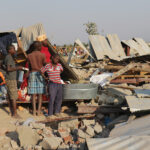
HARARE – In the bustling high-density suburb of Kuwadzana in Harare, thousands of livelihoods hang in a precarious balance. For over three decades, the open spaces and service industry stands designated as stands 1 to 101 have served as the econo…

HARARE – In the bustling high-density suburb of Kuwadzana in Harare, thousands of livelihoods hang in a precarious balance. For over three decades, the open spaces and service industry stands designated as stands 1 to 101 have served as the economic heartbeat for hundreds of artisans, carpenters, metal fabricators, mechanics, and small-scale traders. Yet, an […]

The post Kuwadzana Faces Fresh Demolitions: Who Approved the Stands, and Who Will Pay When They Go? first appeared on My Zimbabwe News.