Is Zimbabwe’s economic boom reserved only for the politically connected while ordinary citizens suffer?

Source: Is Zimbabwe’s economic boom reserved only for the politically connected while ordinary citizens suffer? “A tale of two cities”, as Charles Dickens wrote. No one in their right mind can deny the impressive economic figures and macroeconomic strides witnessed in Zimbabwe over the past few years under the so-called Second Republic.  To directly receive […]

The post Is Zimbabwe’s economic boom reserved only for the politically connected while ordinary citizens suffer? appeared first on Zimbabwe Situation.

Source: Is Zimbabwe’s economic boom reserved only for the politically connected while ordinary citizens suffer?

“A tale of two cities”, as Charles Dickens wrote.

No one in their right mind can deny the impressive economic figures and macroeconomic strides witnessed in Zimbabwe over the past few years under the so-called Second Republic.

 
To directly receive my articles please join my WhatsApp Channel on: https://whatsapp.com/channel/0029VaqprWCIyPtRnKpkHe08


State media and official releases paint a picture of an economy firing on all cylinders. 

For the first time this year, monthly export earnings exceeded the $1 billion mark in June, jumping by 63 percent from $884 million in May, driven by semi-manufactured gold, nickel mattes, and other valuable minerals. 
Across the first half of 2026, total export receipts reached an unprecedented $5.89 billion, up from $3.87 billion during the same period last year. 
Backed by booming mineral exports, resilient diaspora remittances, and a move toward domestic lithium beneficiation, the International Monetary Fund confirmed a $2.1 billion current-account surplus in 2025 alongside a 58 percent year-on-year surge in exports.
These figures are accompanied by headline milestones that any treasury would boast about. 
For the first time in decades, annual inflation has stabilized into single-digit territory, while the country recorded one of the fastest-growing Gross Domestic Products in the region. 
Real GDP growth reached 8.3 percent in 2025 and is projected to expand between 4.6 and 5 percent this year. 
The economy has consistently maintained this upward trajectory over the past few years.
Given these stellar statistics, one would naturally expect the daily livelihoods of ordinary Zimbabweans to simultaneously improve. 
In any normal functioning economy, sustained GDP expansion, soaring export earnings, and balance-of-payment surpluses trickle down to improve basic living conditions, raise wages, and upgrade public infrastructure. 
However, the reality on the ground in Zimbabwe is completely divorced from these celebrated macroeconomic achievements. 
What citizens are witnessing daily are shocking, escalating levels of poverty. 
The bitter truth is that ordinary Zimbabweans are significantly poorer today than they were nine years ago when the Second Republic assumed power in 2017.
Just as the government’s statistics on export growth do not lie, the figures tracking human suffering and poverty in Zimbabwe do not lie either. 
According to IMF international poverty metrics, extreme poverty—defined as those surviving on less than $2.15 a day or earning under $65 a month—rose from 30.4 percent of the population in 2017 to an appalling 42 percent in 2025. 
Similarly, general poverty, encompassing those living on less than $3.65 a day or earning under $110 a month, climbed from 61.6 percent in 2017 to 64.5 percent today. 
When examining upper poverty—those living on less than $6.85 a day or under $200 a month—the figure rose from 83 percent in 2017 to 85 percent in 2025.
These numbers represent a profound social tragedy. 
How can a nation where over two-thirds of the population takes home less than $200 per month boast of phenomenal economic growth and billion-dollar export earnings? 
The endless government-sponsored “empowerment projects” touted in state media are clearly not empowering anyone in a meaningful way. 
They are designed merely to keep citizens barely afloat and prevent outright starvation. 
Even among formal workers, the distress is severe. 
While the lowest-paid civil servant earns around $375 on paper, their actual take-home pay after taxes and mandatory deductions often drops as low as $150, placing state employees firmly within the poverty bracket.
This systemic decay is not felt only in empty pockets; it is measured in lost human lives across underfunded public hospitals where thousands die each year simply because there are no basic medications, functional machines, or working theater equipment. 
Children’s futures are repeatedly stolen in schools—particularly in rural areas—that lack proper building infrastructure, textbooks, and science laboratories. 
Roads across the country are in shambles and barely navigable, while major urban centers have gone years without reliable running tap water.
The natural question to ask is simple: who then is reaping the fruits of this lauded economic development?
It is certainly not ordinary Zimbabweans. 
Instead, this is a country where an individual with close ties to the corridors of power can casually splash over $70 million in just a few years on lavish gifts for religious groups and celebrities. 
It is a country where, within a mere 18 months, a romantic partner of a political elite can purchase at least ten luxury properties valued at an estimated $7 million. 
One can only imagine the sheer volume of wealth possessed or spent by the political elite themselves.
Meanwhile, the overwhelming majority of hard-working Zimbabweans cannot afford to give even $10 to a family member in desperate need. 
Where is all this private wealth coming from? 
Even the world’s wealthiest individual, Elon Musk, does not hand out millions of dollars in liquid cash to private individuals on a personal whim.
It is undeniably clear that two separate economies operate in Zimbabwe today: one exclusive economy for the ruling elite and their cronies, and a subsistence economy for everyone else. 
Transparency International’s Corruption Perceptions Index ranks Zimbabwe among the most corrupt nations globally, placing it at a dismal 157 out of 182 countries. 
That ranking explains the structural disconnect. 
In a country blessed with vast natural wealth and surging mineral revenues, millions remain among the poorest people on earth because the gains are systematically siphoned off at the top. 
The economic development under the Second Republic is not designed for the general public—it is built by and for those in power. 
If current trajectory holds, by 2030, ordinary Zimbabweans will remain just as poor, if not worse off.
Tendai Ruben Mbofana is a social justice advocate and writer. Please feel free to contact him on +263715667700 or mbofana.tendairuben73@gmail.com

The post Is Zimbabwe’s economic boom reserved only for the politically connected while ordinary citizens suffer? appeared first on Zimbabwe Situation.
1.1 million traffic fines as AI cameras now detect speeding, red-robot violations, illegal turns, mobile-phone use & missing seatbelts

HARARE – For thousands of motorists navigating the bustling streets of Harare, a quiet technological revolution is unfolding above intersections and highway junctions. Since going live earlier this year, the Government’s newly installed net…

HARARE – For thousands of motorists navigating the bustling streets of Harare, a quiet technological revolution is unfolding above intersections and highway junctions. Since going live earlier this year, the Government’s newly installed network of artificial intelligence-driven surveillance cameras has flagged more than 1.1 million suspected traffic violations. For ordinary drivers, however, the headline figure […]

The post 1.1 million traffic fines as AI cameras now detect speeding, red-robot violations, illegal turns, mobile-phone use & missing seatbelts first appeared on My Zimbabwe News.

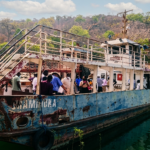
90-Seat Mbuya Nehanda vessel capsizes in Lake Kariba: It was carrying 119 adults, 15 DEAD, 27 people nowhere to be found!

Lake Kariba ferry disaster: 15 dead as passenger count raises urgent questions over a 90-seat vessel KARIBA – Fifteen people have been confirmed dead after the Mbuya Nehanda ferry capsized on Zimbabwe’s Lake Kariba, while 77 people were rescued a…

Lake Kariba ferry disaster: 15 dead as passenger count raises urgent questions over a 90-seat vessel KARIBA – Fifteen people have been confirmed dead after the Mbuya Nehanda ferry capsized on Zimbabwe’s Lake Kariba, while 77 people were rescued and at least 27 remained unaccounted for as search teams prepared to continue work beneath the […]

The post 90-Seat Mbuya Nehanda vessel capsizes in Lake Kariba: It was carrying 119 adults, 15 DEAD, 27 people nowhere to be found! first appeared on My Zimbabwe News.

ZRP officer collapses and dies soon after entertaining guest at Heroes Acre on Heroes Day

A Zimbabwe Republic Police constabulary died after collapsing shortly after performing for guests at the Harare Provincial Heroes Acre during Heroes Day commemorations on Monday. Shem Ganda, aged 57, was seated behind the Police Junior Call team when h…

A Zimbabwe Republic Police constabulary died after collapsing shortly after performing for guests at the Harare Provincial Heroes Acre during Heroes Day commemorations on Monday. Shem Ganda, aged 57, was seated behind the Police Junior Call team when he collapsed. He was rushed to Parirenyatwa Hospital, where he was pronounced dead on arrival, according to […]

The post ZRP officer collapses and dies soon after entertaining guest at Heroes Acre on Heroes Day first appeared on My Zimbabwe News.

Kariba ferry disaster: 15 perish, 27 missing

Source: Kariba ferry disaster: 15 perish, 27 missing – herald Walter Nyamukondiwa-Mash West Bureau Chief SEVENTY-SEVEN people were rescued while 15 bodies were retrieved after a passenger ferry owned by the Rural Infrastructure Development Authority capsized near Long Island on Lake Kariba yesterday afternoon, but 27 others plus an unknown number of young children were […]

The post Kariba ferry disaster: 15 perish, 27 missing appeared first on Zimbabwe Situation.

Source: Kariba ferry disaster: 15 perish, 27 missing – herald

Walter Nyamukondiwa-Mash West Bureau Chief

SEVENTY-SEVEN people were rescued while 15 bodies were retrieved after a passenger ferry owned by the Rural Infrastructure Development Authority capsized near Long Island on Lake Kariba yesterday afternoon, but 27 others plus an unknown number of young children were still unaccounted for last night.

Among the dead was the captain of Mbuya Nehanda ferry.

Total numbers aboard the ferry when it capsized were still unknown last night. Besides the crew and passengers with tickets, there would probably have been young children who do not need a ticket when with a parent.

The vessel, formerly under the Department of District Development Fund and now run by RIDA, was caught by strong winds locally known as the Binga Wave during the leg from Kariba town to Chalala Fishing Camp, taking on water through the cabin as the crew battled to keep it afloat.

Video footage taken when it moved off on this leg of its voyage shows the boat already labouring in choppy waters moments before it went under, passengers watching helplessly as the water rose around them.

The localised weather bulletin for the lake had pointed largely to calm conditions and light breezes with the high-pressure ridge extending from South Africa up into Zimbabwe and Zambia.

That same bulletin, however, had flagged a strengthening South Indian Ocean anticyclone bringing a moderate gradient and light-to-moderate north-easterly to south-easterly airflow, with winds expected to touch Force 1 to Force 2 and occasionally Force 3 in the afternoon.

Mariners had been cautioned to watch for localised choppy conditions as the afternoon winds speeded up over exposed sections of the lake, precisely the conditions in which the ferry capsized.

Mashonaland West provincial Director of Local Government Services Mrs Cecilia Chitiyo confirmed the disaster while reporting to provincial authorities yesterday, giving the first detailed account of the scale of the tragedy and the response under way.

She said the rescued passengers had been ferried to safety by Matusadonha rescue teams and other responders and were being held on Long Island in the lake while the Civil Protection Unit worked to bring them ashore.

“The CPU has mobilised boats to bring them on land and this is currently happening,” she said.

On the fatalities, Mrs Chitiyo said 15 bodies had so far been retrieved from the water, with Nyaradzo and Doves funeral parlours engaged to collect the remains.

The confirmed figures left about 27 people still unaccounted for, and she cautioned that the number could shift once the undisclosed number of young children below ticketing age was added in.

The Police Sub-Aqua Unit has since been airlifted to the scene to reinforce the search and rescue effort, joining the Civil Protection Unit, Matusadonha teams, boat owners, an African Parks helicopter and members of the surrounding community already on the water.

“This is the report to date, but you will be continuously updated as the search and rescue unfolds,” Mrs Chitiyo said.

Government has moved swiftly to respond to the disaster. RIDA director-general Mr Christopher Shumba and Mashonaland West provincial secretary Mr Josphat Jaji were among senior officials who headed to Kariba yesterday to oversee the rescue and recovery operation. Minister of State for Masonaland West Marian Chombo is expected in Kariba this morning to assess the situation on the ground and engage affected families.

In her report, Mrs Chitiyo recommended that the accident be declared a state of disaster, a call that, if adopted, would open the door to additional national resources and coordinated support for survivors and the families of those still missing.

Search and rescue operations were continuing at the time of going to print, with authorities warning that both the death toll and the number of accounted-for survivors would change as verification continues.

Mr Shumba confirmed that the Mbuya Nehanda ferry captain had died in the disaster, with children likely among those that could not be accounted for.

“This is a tragedy of major proportion and we have lost several people so far while others are still to be accounted for,” said Mr Shumba.

“The boat had enough life jackets and we suspect that women with children could have lost their children when disaster struck.”

He said search efforts would be suspended overnight owing to challenges with lighting.

The search and rescue mission is expected to continue this morning.

The post Kariba ferry disaster: 15 perish, 27 missing appeared first on Zimbabwe Situation.