What will Makandiwa do when Chivayo’s house of cards comes crushing down?

Source: What will Makandiwa do when Chivayo’s house of cards comes crushing down? When greed and lust take hold, sanity and reason disappear. In Zimbabwe, proximity to power has long functioned as an unwritten immunity shield, protecting a favored few from any meaningful scrutiny regarding their sudden and unexplained sources of wealth.To directly receive my […]

The post What will Makandiwa do when Chivayo’s house of cards comes crushing down? appeared first on Zimbabwe Situation.
Source: What will Makandiwa do when Chivayo’s house of cards comes crushing down?

When greed and lust take hold, sanity and reason disappear.

In Zimbabwe, proximity to power has long functioned as an unwritten immunity shield, protecting a favored few from any meaningful scrutiny regarding their sudden and unexplained sources of wealth.
To directly receive my articles please join my WhatsApp Channel on: https://whatsapp.com/channel/0029VaqprWCIyPtRnKpkHe08
For as long as one remains politically aligned or useful to the ruling elite, anti-corruption authorities routinely turn a blind eye, allowing individuals to acquire astronomical fortunes without ever having to account for a single dollar.

A clear case in point is that of 22-year-old Kelsea Tafirenyika. 
Despite having no identifiable or legitimate source of income, she managed to procure multiple high-end properties across Harare’s most exclusive suburbs within a strikingly short period. 
For years, state authorities paid no attention—a silence undoubtedly bought by her proximity to the corridors of power. 
Yet the moment her political shield crumbled and a fallout with the ruling elite occurred, she suddenly found herself under intense state scrutiny and official investigation. 
Her trajectory serves as a stark reminder of a fundamental truth in Zimbabwean politics: state protection is transient, and impunity lasts only as long as one remains politically useful.
This dynamic raises critical questions about the current spectacle surrounding flamboyant tenderpreneur Wicknell Chivayo. 
On one hand, Wicknell Chivayo uses his wealth to acquire luxury assets for his own personal use, including Gulfstream private jets, high-end timepieces, mansions, and elite vehicles.
On the other hand, he distributes his funds outward through hundreds of luxury vehicles, substantial cash grants, and high-value financial offers. 
His beneficiaries range from legendary musicians like Thomas Mapfumo to prominent religious leaders and entities, including United Family International Church’s Emmanuel Makandiwa, Zion Christian Church’s Nehemiah Mutendi, and various apostolic groups.
All of this unfolds while Chivayo remains inextricably linked to severe, unresolved scandals—from the multi-million-dollar advance payment for the non-existent Gwanda Solar Power Plant to the R800 million payment flagged by South African authorities coming from Ren-Form CC following inflated state tender contracts.
Chivayo is not known for running any tangible manufacturing or value-adding production entities. 
His business footprint consists largely of shelf companies designed to capture lucrative government tenders. 
Yet, much like Tafirenyika before her downfall, law enforcement and anti-corruption agencies have displayed an astounding reluctance to question the origins of his wealth. 
The public is treated to continuous displays of staggering extravagance, complete with Gulfstream jets, multi-million-dollar mansions, and custom timepieces, all shielded by his overt allegiance to the ruling establishment.
The most troubling dimension of this phenomenon is not Chivayo’s grandstanding, but the eager participation of religious leaders who claim to represent moral authority. 
Why have these self-proclaimed spiritual leaders failed to raise concerns or reject these lavish offerings, despite the obvious possibility of them being tainted? 
As the supposed light of the world, should these spiritual leaders not understand the nature of political patronage in Zimbabwe, and thus keep a wide berth from such questionable figures? 
Or has greed and lust completely taken over? 
Have they been blinded by the love of money—which the Bible explicitly describes as the root of all evil?
​This spectacle exposes these religious leaders for who they really are—people who use the cover of religion to exploit the poor through the “prosperity gospel” to enrich themselves. 
Long before Chivayo showed up with suitcases of hard cash, these leaders were already constructing mansions, buying expensive car fleets, and flying in private jets amid grinding poverty within their own congregations. 
They are cut from the exact same cloth as the politically aligned tenderpreneurs they associate with, operating on the very same predatory logic.
In any standard ethical framework, accepting massive cash gifts from an individual whose financial background is heavily clouded by tender corruption should invite deep soul-searching. 
Yet, instead of keeping a wide berth, leaders like Makandiwa have embraced these gifts, publicly validating and spiritualizing questionable riches.
The crucial question remains: what will happen when the political tide inevitably turns? 
If Chivayo suffers the same fate as Tafirenyika and falls out of favor with the ruling elite, his entire financial empire will come under the microscope. 
When that shield is removed and investigations commence, what will Makandiwa, Mutendi, and their peers say to their congregations? 
How will they explain accepting millions in hard cash that may ultimately be traced back to public funds meant for national development, healthcare, and infrastructure?
It exposes a troubling reality within the prosperity gospel movement: the line between tenderpreneurship and religious leadership has blurred completely. 
Both models rely on convincing the public to invest in promises of quick returns while those at the top build mansions, buy luxury fleets, and fly in private jets amid widespread economic distress.
Congregations must wake up to these realities and refuse to let their faith be weaponized as cover for dubious financial networks. 
Churches built on the patronage of politically aligned tenderpreneurs are ultimately houses of cards. 
When the foundation collapses, those who partook in the spoils will find themselves complicit in the eyes of both the law and history.
Tendai Ruben Mbofana is a social justice advocate and writer. Please feel free to contact him on +263715667700 or mbofana.tendairuben73@gmail.com

The post What will Makandiwa do when Chivayo’s house of cards comes crushing down? appeared first on Zimbabwe Situation.

Met Department Forecasts Cold, Windy And Wet Spell From 11 To 13 August

Source: Met Department Forecasts Cold, Windy And Wet Spell From 11 To 13 August ⋆ Pindula News Meteorological Services Department, in conjunction with the Department of Civil Protection, has warned of a drop in temperatures for large parts of the country this week. In an advisory issued on Sunday, 9 August, the MSD said the […]

The post Met Department Forecasts Cold, Windy And Wet Spell From 11 To 13 August appeared first on Zimbabwe Situation.

Source: Met Department Forecasts Cold, Windy And Wet Spell From 11 To 13 August ⋆ Pindula News

Meteorological Services Department, in conjunction with the Department of Civil Protection, has warned of a drop in temperatures for large parts of the country this week.

In an advisory issued on Sunday, 9 August, the MSD said the country should expect reduced daytime and night-time temperatures accompanied by light rain and windy conditions.

The areas set to be most affected are Matabeleland South, parts of Matabeleland North, Bulawayo Metropolitan, Midlands, Manicaland, Harare Metropolitan and Mashonaland East provinces.

The department forecast cloudy and cold conditions, adding that there is also a slight chance of light rain and drizzle in a few specific places, including Chipinge, Chiredzi, Chimanimani and Nyanga.

The system is expected to affect the nation from Tuesday 11 August through to Thursday 13 August 2026.

“Beginning Tuesday, 11 August through Thursday, 13 August 2026, weather conditions are expected to change as cool, moist south-easterly winds interact with a mid-level atmospheric system,” the MSD said.

“The southern and eastern parts of the country are expected to experience generally cloudy, windy and cold conditions, with a slight chance of light rain and drizzle in a few places, including Chipinge, Chiredzi, Chimanimani and Nyanga.

“The public is advised to take necessary precautions against the cold, windy and wet conditions, particularly farmers and vulnerable groups.”

The department has urged the public and farmers in particular to be on the lookout for several hazards.

Strong winds are also forecast, which may damage crops, plants and other structures, cause soil erosion and lead to stress and injuries to livestock.

There is also a risk of grain quality reduction, as rain during the grain filling and maturity stages can lower quality, while high moisture levels can increase the risk of fungal diseases.

On protective measures, the MSD has advised members of the public to dress warmly, including wearing warm clothing, hats, gloves and socks, and to stay indoors as much as possible, especially during the early morning and at night when it will be coldest.

People are encouraged to keep warm and hydrated by drinking warm fluids and eating warm, nutritious food.

For the farming community, the department recommends protecting crops by using mulching, row covers, or wind breaks to shield them from the cold, ensuring good drainage and continuing to monitor and manage crop diseases.

Livestock farmers are advised to provide shelter, bedding and adequate feed and to keep young animals warm.

The public is advised to take all necessary precautions against the cold, windy and wet conditions, with particular attention to farmers and vulnerable groups.

The post Met Department Forecasts Cold, Windy And Wet Spell From 11 To 13 August appeared first on Zimbabwe Situation.

Met Department Forecasts Cold, Windy And Wet Spell From 11 To 13 August

Source: Met Department Forecasts Cold, Windy And Wet Spell From 11 To 13 August ⋆ Pindula News Meteorological Services Department, in conjunction with the Department of Civil Protection, has warned of a drop in temperatures for large parts of the country this week. In an advisory issued on Sunday, 9 August, the MSD said the […]

The post Met Department Forecasts Cold, Windy And Wet Spell From 11 To 13 August appeared first on Zimbabwe Situation.

Source: Met Department Forecasts Cold, Windy And Wet Spell From 11 To 13 August ⋆ Pindula News

Meteorological Services Department, in conjunction with the Department of Civil Protection, has warned of a drop in temperatures for large parts of the country this week.

In an advisory issued on Sunday, 9 August, the MSD said the country should expect reduced daytime and night-time temperatures accompanied by light rain and windy conditions.

The areas set to be most affected are Matabeleland South, parts of Matabeleland North, Bulawayo Metropolitan, Midlands, Manicaland, Harare Metropolitan and Mashonaland East provinces.

The department forecast cloudy and cold conditions, adding that there is also a slight chance of light rain and drizzle in a few specific places, including Chipinge, Chiredzi, Chimanimani and Nyanga.

The system is expected to affect the nation from Tuesday 11 August through to Thursday 13 August 2026.

“Beginning Tuesday, 11 August through Thursday, 13 August 2026, weather conditions are expected to change as cool, moist south-easterly winds interact with a mid-level atmospheric system,” the MSD said.

“The southern and eastern parts of the country are expected to experience generally cloudy, windy and cold conditions, with a slight chance of light rain and drizzle in a few places, including Chipinge, Chiredzi, Chimanimani and Nyanga.

“The public is advised to take necessary precautions against the cold, windy and wet conditions, particularly farmers and vulnerable groups.”

The department has urged the public and farmers in particular to be on the lookout for several hazards.

Strong winds are also forecast, which may damage crops, plants and other structures, cause soil erosion and lead to stress and injuries to livestock.

There is also a risk of grain quality reduction, as rain during the grain filling and maturity stages can lower quality, while high moisture levels can increase the risk of fungal diseases.

On protective measures, the MSD has advised members of the public to dress warmly, including wearing warm clothing, hats, gloves and socks, and to stay indoors as much as possible, especially during the early morning and at night when it will be coldest.

People are encouraged to keep warm and hydrated by drinking warm fluids and eating warm, nutritious food.

For the farming community, the department recommends protecting crops by using mulching, row covers, or wind breaks to shield them from the cold, ensuring good drainage and continuing to monitor and manage crop diseases.

Livestock farmers are advised to provide shelter, bedding and adequate feed and to keep young animals warm.

The public is advised to take all necessary precautions against the cold, windy and wet conditions, with particular attention to farmers and vulnerable groups.

The post Met Department Forecasts Cold, Windy And Wet Spell From 11 To 13 August appeared first on Zimbabwe Situation.

Makandiwa displays US$1 million cash gift from Chivayo before cheering congregation

Makandiwa tells his followers he expects more millions from them Source: Makandiwa displays US$1 million cash gift from Chivayo before cheering congregation – Zimbabwe News Now HARARE – United Family International Church founder Emmanuel Makandiwa on Sunday displayed US$1 million in cash that he received as a gift from businessman Wicknell Chivayo. Makandiwa had initially […]

The post Makandiwa displays US$1 million cash gift from Chivayo before cheering congregation appeared first on Zimbabwe Situation.

Makandiwa tells his followers he expects more millions from them

Source: Makandiwa displays US$1 million cash gift from Chivayo before cheering congregation – Zimbabwe News Now

HARARE – United Family International Church founder Emmanuel Makandiwa on Sunday displayed US$1 million in cash that he received as a gift from businessman Wicknell Chivayo.

Makandiwa had initially declined the money before making a volte-face.

Twenty plastic-wrapped bundles of US$100 notes were laid out before a packed congregation, which erupted into cheers, whistles and applause.

“This is actually a prophecy. The next bag is coming from you to the altar,” Makandiwa told congregants.

“It cannot be that you go to your grave without delivering a million dollars here.”

Makandiwa, 48, who was born Shingirai Chirume, is also set to receive a brand new 2026 Rolls-Royce Cullinan from Chivayo, while his wife Ruth will get a new Mercedes-Benz G-Wagon.

Chivayo said the cash donation was “not about a man but it’s about the work of God.”

“You spoke about construction so I will gladly donate US$1 million for the development of this church and for the vision you shared of building God’s house,” Chivayo wrote on X when announcing the gift on August 2.

Makandiwa is not the first church leader to receive a gift from Chivayo. Zion Christian Church leader Nehemiah Mutendi has received over US$4 million from him, while Spirit Embassy founder Uebert Angel has also been given more than US$1 million.

Eunor Guti, widow of the late ZAOGA founder Ezekiel Guti, previously turned down Chivayo’s US$2 million cash offer and a top-of-the-range Toyota valued at over US$300,000.

An analysis of Chivayo’s publicised donations published on July 13 showed he had given at least US$43.9 million to more than 120 individuals and organisations since March 2024 — an average of about US$52,000 a day. With some donations undisclosed, the total could be significantly higher, according to estimates.

Since then, Chivayo has continued his high-profile giving, including multimillion-dollar donations to religious groups and prominent figures.

Chivayo, a close associate of President Emmerson Mnangagwa, made his fortune through state contracts.

He frequently cites scripture to explain his philanthropy, although critics argue the donations are part of a broader effort to court influential figures in support of Mnangagwa and his policies.

Quoting Proverbs 11 on X on July 26, Chivayo wrote: “There is one who scatters, yet increases more; And there is one who withholds more than is right, But it leads to poverty. The generous soul will be made rich, And he who waters will also be watered himself.”

The post Makandiwa displays US$1 million cash gift from Chivayo before cheering congregation appeared first on Zimbabwe Situation.

‘Farm owners are crying now’: SA migrant exodus leaves employers short-handed

Ripe fruit stands unpicked, sugarcane is uncut, and clothing factories are struggling to meet orders after skilled machinists fled anti-foreigner protests in June and July. Source: ‘Farm owners are crying now’: SA migrant exodus leaves employers short-handed | News24 Fringe anti-foreigner groups set 30 June as an unofficial deadline for undocumented migrants to go home.Rodger […]
The post ‘Farm owners are crying now’: SA migrant exodus leaves employers short-handed appeared first on Zimbabwe Situation.

Ripe fruit stands unpicked, sugarcane is uncut, and clothing factories are struggling to meet orders after skilled machinists fled anti-foreigner protests in June and July.

Source: ‘Farm owners are crying now’: SA migrant exodus leaves employers short-handed | News24

Fringe anti-foreigner groups set 30 June as an unofficial deadline for undocumented migrants to go home.Fringe anti-foreigner groups set 30 June as an unofficial deadline for undocumented migrants to go home.
Rodger Bosch/AFP
Thousands of foreign workers left South Africa after fringe anti-foreigner groups set 30 June as an unofficial deadline for undocumented migrants to leave, triggering the exodus of more than 160 000 people and leaving farms, factories and households scrambling for labour.
Labour unions argue there is no shortage of South Africans willing to work and that employers favour migrant workers because they are cheaper and less likely to demand formal contracts.
Industry groups are urging the government to create legal pathways for seasonal foreign labour.
For more financial news, visit News24 Business.

Zimbabwean farmworker Aaron Majatamhe was heading home at sunset after a shift in one of South Africa’s top fruit-producing regions, where bushes laden with bright unpicked citrus stood in rows.
“I see a lot of farm owners who are crying now … People have to harvest those naartjies, but there is no one,” the 33-year-old told AFP.
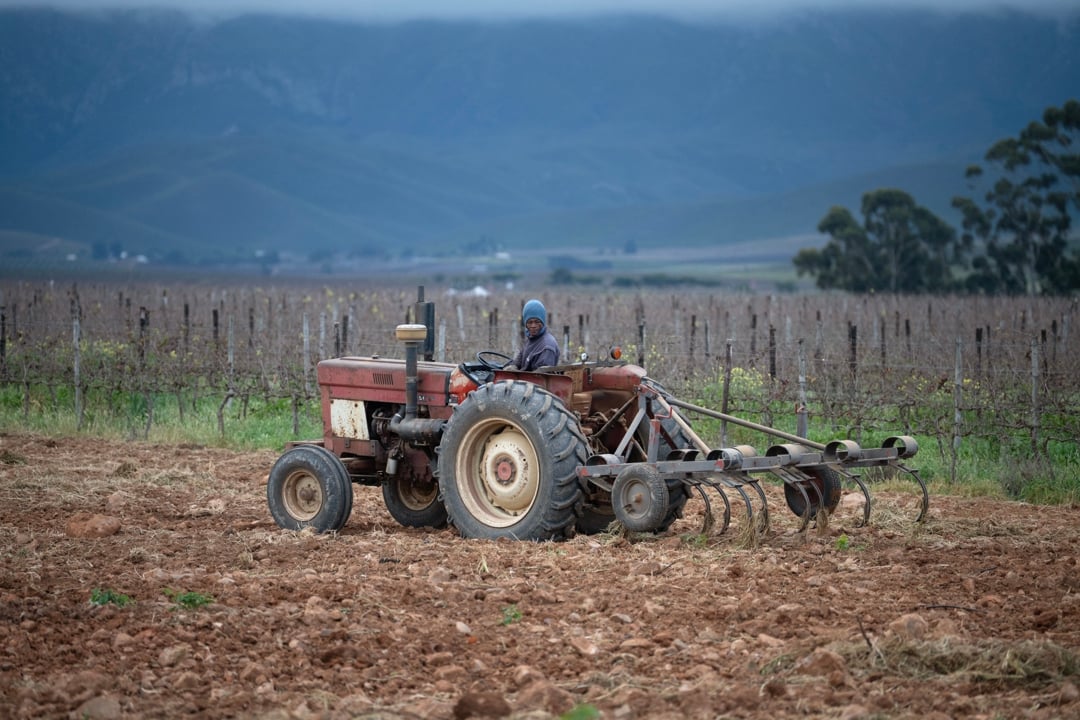
The same labour shortage, he said, is looming in the vineyards. “It’s time to cut off the grapes, and there is no one.”
Similar scenes are playing out across South Africa as factories, farms and even ordinary households scramble for labour after thousands of foreign workers left in a matter of weeks to escape fatal anti-migrant protests and intensified immigration enforcement.
 
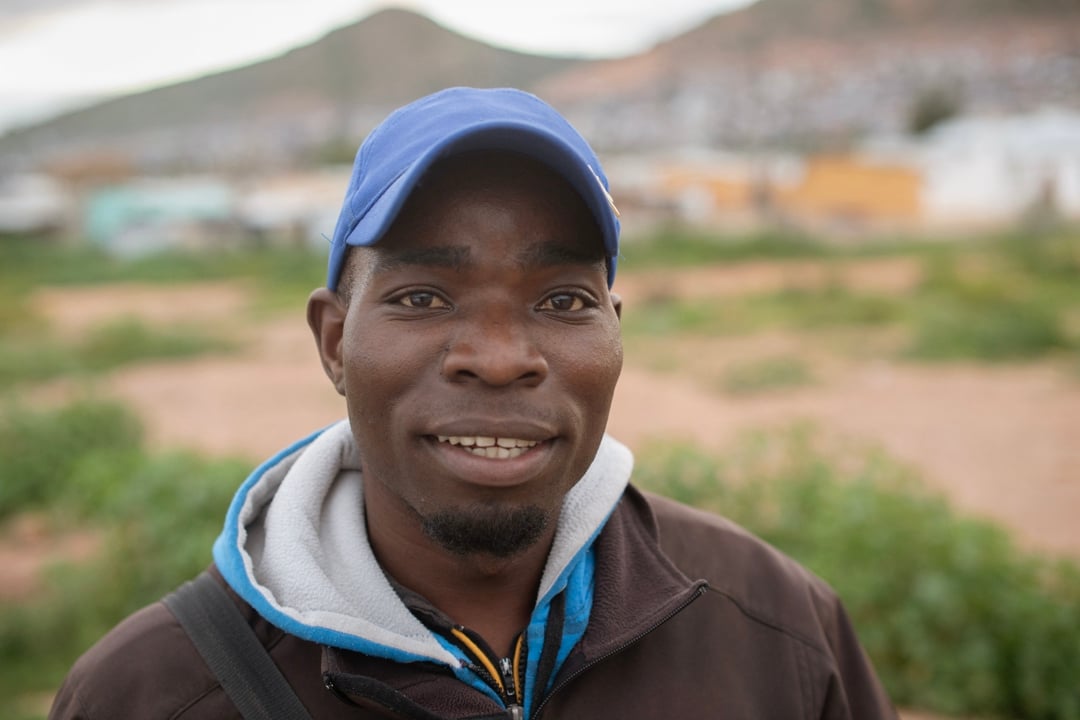
Zimbabwean farmworker Aaron Majatambe
Rodger Bosch/AFP
Fringe anti-foreigner groups had set 30 June as an unofficial deadline for undocumented migrants to leave, triggering the exodus of more than 160 000 people, according to an AFP tally based on figures from African governments repatriating their citizens.
 
READ | Fact-checking March and March’s false claims of school, hospital, and crime ‘wins’
 
 
Zimbabwe, which accounted for the largest share of those returning, said many had worked in South Africa’s farming, domestic work and construction sectors.
The first cracks were felt almost immediately in KwaZulu-Natal’s sugar belt.
One farmer on the North Coast said he lost up to 80% of his cane-cutting workforce virtually overnight.
“Production and supply have deteriorated to the point where it is going to be difficult for the mills to stay open,” he said, speaking anonymously because he feared retaliation.
 
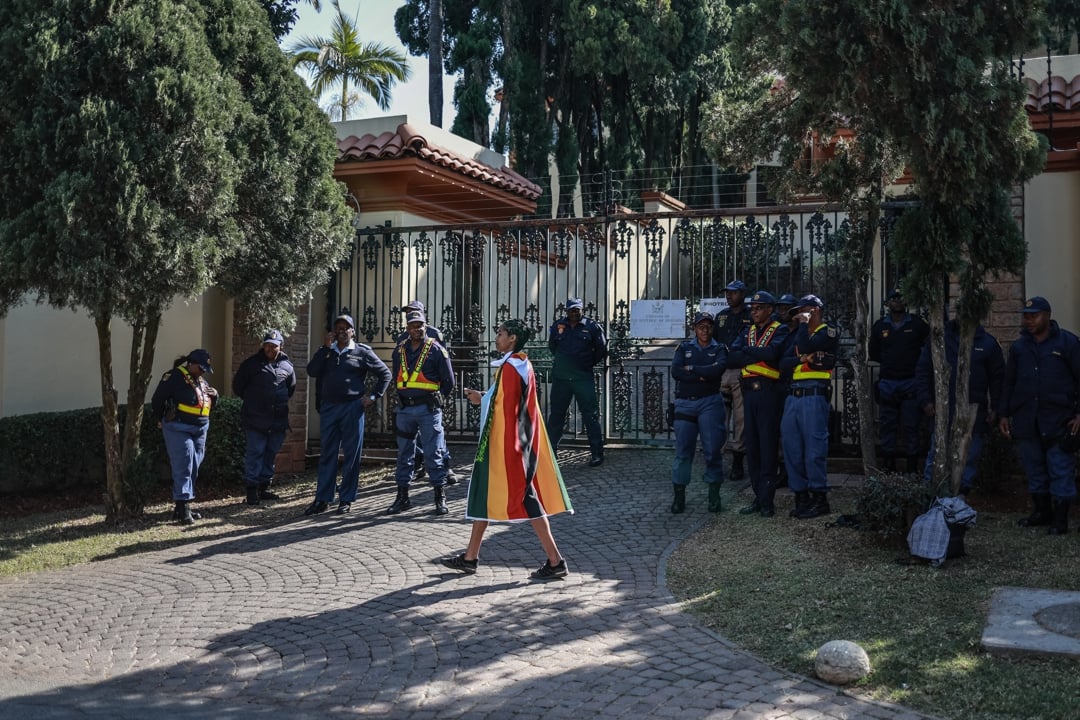
A woman wearing a Zimbabwean flag walks past South African Police Service officers guarding the entrance to the Zimbabwean Embassy during the 31 July demonstration in Pretoria.
Phill Magakoe/AFP
 
Back-breaking’ work
Another grower near Mid-Illovo, a region of rolling hills south of Durban, said most cane cutters in his area came from Lesotho, the tiny kingdom encircled by South Africa.
“There are fields we are supposed to be cutting, but there are just not enough people. Local people don’t like this job because it is back‑breaking and physical,” he said.
That argument is fiercely disputed.
With unemployment above 33% – and far higher when discouraged job seekers are included – labour unions and researchers argue there is no shortage of South Africans willing to work.
Instead, they say, many employers favour migrant workers because they are cheaper, more flexible and less likely to demand formal contracts, benefits or legal protections.
“They are making a profit out of foreign nationals,” said Patrick Williams, a local organiser with the Commercial, Stevedoring, Agricultural and Allied Workers Union.
Foreign farmworkers, he said, routinely worked seven days a week, skipped lunch breaks to maximise piece-rate earnings and were often paid below the national minimum wage.
 
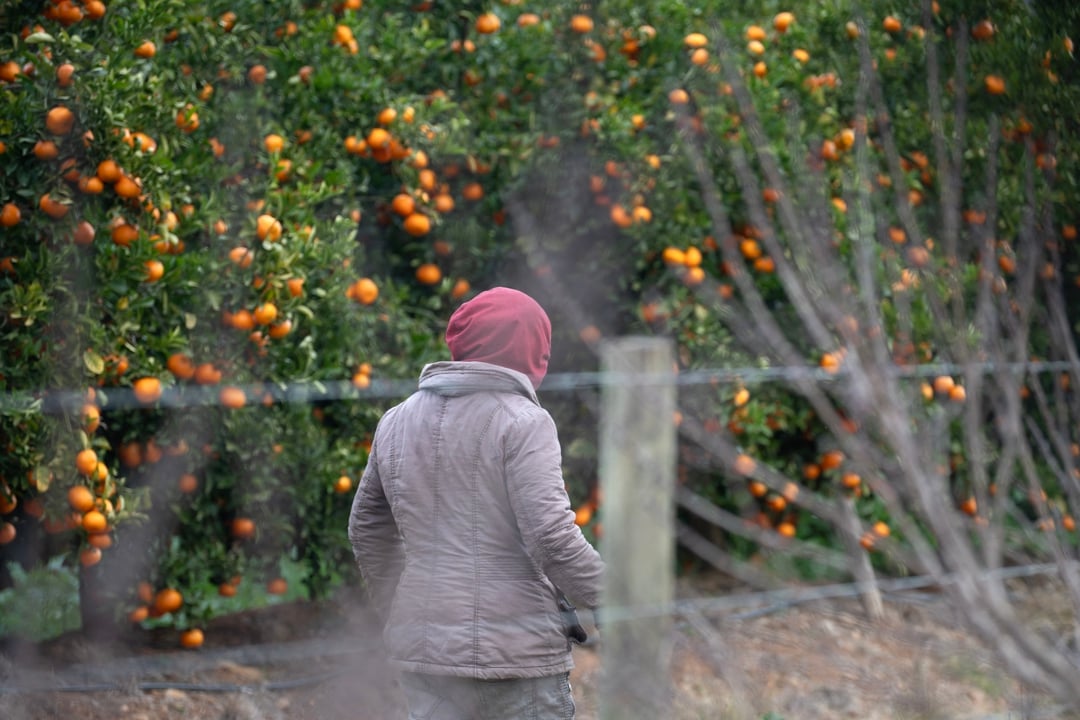
A Malawian farmworker walks in a citrus orchard on a farm close to the town of Robertson
AFP
 
Locals first’ 
For employers, the challenge is not only finding workers but replacing years of experience.
In Durban’s Chatsworth industrial area, a manager at a clothing factory said the departure of skilled machinists from Malawi and Mozambique had left factories struggling to meet orders.
 
“We can barely meet our targets because most were forced to go,” she said on condition of anonymity, adding that it would take time for local workers to master the job.
 
READ| Immigrants contribute 9% of GDP but blamed for SA’s failures – ISS report
 
The government has sought to respond to public anger whipped up over migration by promoting a “locals-first” approach, while acknowledging that some industries rely on foreign skills and labour.
Last week, it expanded its Trusted Employer Scheme, which fast-tracks worker visas for companies that meet Department of Home Affairs requirements, including predominantly employing South Africans, investing in skills development and operating in priority sectors.
Industry groups, meanwhile, are urging the government to create legal pathways for seasonal foreign labour, arguing that sectors such as agriculture have become dependent on migrant workers and cannot replace them overnight.
Siyabonga Madlala, CEO of the South African Farmers Development Association, says South Africa should consider a regulated seasonal worker programme similar to one in the US.
“There may be a need for a special dispensation allowing seasonal labour from SADC countries where local supply is insufficient,” he told Newsroom Afrika, referring to the 16-member Southern African Development Community bloc.
More than 60% of South Africa’s immigrants are estimated to come from SADC.
Yet for many who left, the debate over labour policy has been eclipsed by fears for their safety after at least four foreigners were killed, according to police data.
 
READ| Natjoints: Nearly 60 000 undocumented foreign nationals arrested this year
 
Wayne Chimbadzwa Mutasa, a Zimbabwean national who had lived in Robertson, in the Western Cape, since 2014, said he left after foreign workers were targeted in door-to-door raids.
 
“The people who came into the houses of Zimbabweans were police officers saying that you are living here illegally,” he told AFP as he prepared for repatriation.
His fellow national Majatamhe has decided to remain for now.
“We are afraid to stay even in this place, but the problem is we don’t have enough money to go home,” he said.

The post ‘Farm owners are crying now’: SA migrant exodus leaves employers short-handed appeared first on Zimbabwe Situation.