Prof Mthuli Ncube Path to Prosperity
What is inflation and why must we get it under control? What has been going wrong, and how are we putting things right?
As an Economics Professor, its important I first explain the basics.
In Zimbabwe, like any other economy, goods and services are exchanged or sold at given monetary values; what we call prices.
The levels of prices are on the whole determined on account of production and trading costs, as well as the basic rules of supply and demand.
When there is a period of time, an occurrence or a trend whereby prices of goods and services continue to rise in the economy, it is referred to as inflation. We have all heard about it, but it’s important we all understand it.
High levels of inflation have been eroding the incomes of Zimbabwean workers for too long, directly harming their standards of living.
It has been eating away at our savings and our pensions, risking greater poverty. With inflation, long-term planning for companies becomes impossible as prices keep on changing.
In the same vein, fiscal forecasts become distorted in an inflationary environment. This is why as Minister of Finance, I have vowed to get inflation under control immediately. And we are already seeing results.
In order to understand the progress, we must first look at the means of inflation measurement.
Inflation is the rate at which prices rise over a given period of time. Economists tend to measure it either by year, or by month. The price measurement itself is calculated from surveys done on a given basket of goods and services.
In Zimbabwe’s unique situation, it is important that those measurements are conducted carefully and correctly.
When fiscal management is finally being done right, consumer and investor confidence is crucial, and it would be both dangerous and distorting if these measurements were misreported.
Despite experiencing single digit inflation for the past eight years, Zimbabwe’s year-on-year inflation suddenly rose to 20,9 percent in October 2018 and a rising trend was maintained in the month of November and December, reaching 56,9 percent by January 2019.
The people of Zimbabwe, and the economists of the world, were rightly worried.
However, we acted quickly, and this month-on-month inflation, despite shooting, has been controlled and slowed down to 9,2 percent and 9,0 percent in November and December, respectively, slightly increasing to 10,75 percent in January 2019.
There is, therefore, a real manageable trend in month-on-month inflation; an encouraging development.
So as we move forward, we must get the measurements right.
The sudden rise in prices, that aforementioned shock in October 2018 — relative to the same period in 2017 — has raised the base drastically for comparing year- on-year inflation.
Therefore, higher annual inflation rates are likely to be noted between now and September 2019 on this yearly measurement.
We must be clear to investors that this is the wrong measuring stick.
The policies of restructuring and reforming our economy are beginning to be felt with the month-on-month inflation expected to maintain downward trend from March 2019, a crucial marker of our economic stability and a direct result of these reforms.
Things, therefore, are getting better. It is vital that economic agents, investors, consumers, and indeed policy makers focus their attention on month-on-month inflation developments rather than year-on-year.
Moving forward, there are a number of reasons which cause the prices of goods and services to increase and we must keep our fingers on the economic pulse at all times.
In the case of Zimbabwe, the sudden rise in inflation throughout our history has been linked to fiscal indiscipline and a high import bill relative to export receipts. Wasteful government expenditure in particular created excess money supply, which triggered high demand for US dollars to pay for imports and store value.
Towards the end of last year, what we saw was a sudden rise in the alternative market premium driving upward the pricing of goods, particularly those that can be tradable across countries.
Some importers, manufacturers and retailers were also marking up their prices of goods based on speculation and perceptions of the higher exchange premiums.
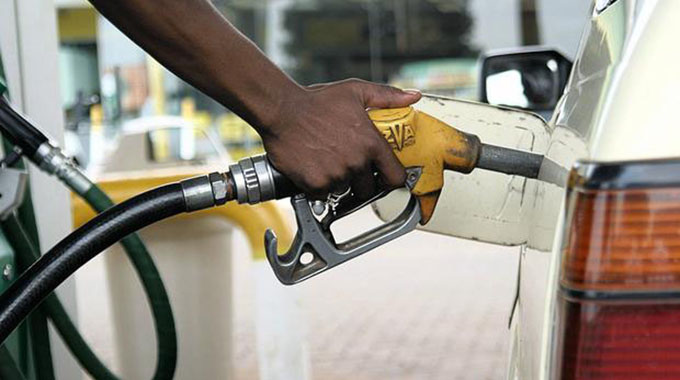
The decision taken by Government to adjust taxes on fuel was designed to bring a long overdue reform to correct a structural misalignment.
It was not an easy decision to make. It was not a popular decision. But it was the right decision for our economy.
Inevitably, the overall price of fuel has risen since 13 January 2019, so Government has put in rebate mechanisms to eliminate the automatic pass-on effect of the rise in cost of fuel to all goods and services.
As we continue to battle to lower inflation, month-on-month, to maintain single digit inflation, Government is implementing fiscal consolidation measures aimed at reducing wasteful expenditure and to narrow the import-export gap.
Fiscal consolidation measures are already helping to balance the budget.
On the other hand, the income from 2 percent tax will also be used to rejuvenate and improve the new Zimbabwe; building schools, roads and making sure our nurses, doctors and teachers receive the wages they deserve. We can already see that shelves are full and fuel lines have petered out.
Successes are being noted across our economy following the few months we have had to implement these new consolidation measures.
The alternative market exchange premiums have relatively stabilised and the month-on-month inflation, as noted, has been brought down to sustainable levels incredibly quickly.
With further implementation month-on-month inflation could even reach close to zero by year end.
Fixing the Zimbabwean economy was never going to be easy.
In fact, with the situation we inherited, it was also going to be a tough struggle.
However, with these sensible fiscal measures, we can continue to keep inflation under control, we can continue to increase the foreign currency reserves, and we can continue to create an environment of affordable living for all Zimbabweans.
The process of restructuring, reforming and rebuilding our economy is just beginning. But the train has left the station and we are moving firmly in the right direction.
The writer is the Minister of Finance and Economic Development. This is his latest instalment of his weekly column in The Herald