Top cop jailed 4 years

Source: Top cop jailed 4 years | Daily News HARARE – Borrowdale Police Station officer-in-charge Simbarashe Sibanda was yesterday slapped with four years’ imprisonment for scalding his lover with boiling water. Harare regional magistrate Jesse Kufa convicted Sibanda of attempted murder charges and sentenced him to four years before suspending one year on condition of good […]

The post Top cop jailed 4 years appeared first on Zimbabwe Situation.

Source: Top cop jailed 4 years | Daily News

HARARE – Borrowdale Police Station officer-in-charge Simbarashe Sibanda was yesterday slapped with four years’ imprisonment for scalding his lover with boiling water.

Harare regional magistrate Jesse Kufa convicted Sibanda of attempted murder charges and sentenced him to four years before suspending one year on condition of good behaviour.

The complainant was Stella Ruswa, a police officer, who was recently attached to the prosecution department at the Harare Magistrate’s Courts.

Sibanda pleaded with the court to consider that he was a married man with five children and his ailing mother who depends on him.

Kufa considered Sibanda’s personal circumstances but noted there was need to curb incidences of domestic violence cases on the rise.

“Attempted murder is a serious offence and the accused person used a lethal weapon which is boiling water to assault the complainant. The medical expert who testified during trial said there was high likelihood that the complainant will sustain a conjecture neck and keloids,” Kufa said.

“This offence also borders on domestic violence and the accused person was having an adulterous relationship with the complainant in violation of moral and legal standards considering he is a married man. Human life is sacred and offences of this nature can result in bad consequences leading to death.”

Prosecutor Chipo Matambo proved on June 8, last year Sibanda visited Ruswa’s residence and realised that she had not prepared supper.

There was a pot with boiling water on the stove and Sibanda confronted Ruswa about the issue. Ruswa told Sibanda that there was no relish to prepare the meal and this did not go down well with him.

A misunderstanding ensued between the two and Sibanda reached for the boiling water and poured it over Ruswa.

She sustained severe burns and was admitted at West End Hospital for 11 days.

The post Top cop jailed 4 years appeared first on Zimbabwe Situation.

Govt moves to kill black market

Source: Govt moves to kill black market | Daily News HARARE – The government yesterday introduced a battery of measures aimed at bringing down the high prices of goods in the country, as well as growing the economy — including opening up foreign currency trading by banks and bureaux de change. Presenting his monetary policy statement […]

The post Govt moves to kill black market appeared first on Zimbabwe Situation.

Source: Govt moves to kill black market | Daily News

HARARE – The government yesterday introduced a battery of measures aimed at bringing down the high prices of goods in the country, as well as growing the economy — including opening up foreign currency trading by banks and bureaux de change.

Presenting his monetary policy statement (MPS) in Harare, Reserve Bank of Zimbabwe (RBZ) governor — John Mangudya — said the new monetary policies that he effected would stabilise both exchange rates and the prices of goods and services.

Both consumers and business immediately welcomed the new measures saying these should have been introduced much earlier to stem the country’s deepening economic crisis and the thriving foreign currency black market which has wreaked havoc on prices.

Contacted by the Daily News last night, the president of the Confederation of Zimbabwe Industries (CZI), Sifelani Jabangwe, said business was very happy with the new measures.

“This is very much welcome and it is more of what we have been calling for … people will start going to the banks and buy foreign currency all round, getting fair value for their money, instead of being cheated in the distorted market.

“People were also not remitting their forex into banks because they preferred the parallel market, where there was value for US dollars, but now we will see people taking their money to banks.

“It will also help with liquidity relating to Diaspora remittances as people can now take the forex to the bank and not parallel markets,” Jabangwe said.

“Prices are thus likely to go down. Businesses and local manufacturers will be export competitive as the RBZ has cleared the air on currency exchange rates.

“Investment will also start trickling in because there is a defined exchange rate now. Before, investors would ask us the rate of their investments and we could not clarify what the national exchange rate was relative to the value of their investment,” he added.

Mangudya said the central bank had put in place measures to maintain stability in the market through the establishment of an inter-bank foreign exchange market with immediate effect — to formalise the trading of real time gross settlement (RTGS) balances and bond notes with hard currencies on a willing-buyer willing-seller basis, through banks and bureaux de change.

“This is essential in order to bring sanity in the foreign currency market, whilst at the same time promoting exports, Diaspora remittances and investments for the good of our national economy,” he said.

In this regard too, existing RTGS balances, bond notes and coins in circulation would now be denominated as RTGS dollars “in order to establish an exchange rate between the current monetary balances and foreign currency”.

This means that RTGS dollars have now formally become part of the country’s multi-currency system — with the legal instrument to give effect to this having already been prepared.

“The RTGS dollars shall be used by all entities (including the government) and individuals in Zimbabwe for the purposes of pricing of goods, services, debts, accounting and settlement of domestic transactions.

“The use of RTGS dollars for domestic transactions will eliminate the existence of the multi-pricing system and charging of goods and services in foreign currency within the domestic economy.

“In this regard, prices should remain at their current levels and or to start to decline in sympathy with the stability in the exchange rate given that the current monetary balances have not been changed,” Mangudya said.

“In this respect, the RBZ will commit all its efforts to use the instruments at its disposal to maintain stability of the exchange rate,” he also warned.

Mangudya also revealed that the central bank had arranged sufficient lines of credit to enable it to maintain adequate foreign currency to underpin the exchange market.

This was essential to restore the purchasing power of RTGS balances through the safeguarding of the stability of prices “emanating from the pass-through effects of exchange rate movements”.

All the foreign currency from the inter-bank market would be utilised for bonafide foreign payment invoices except for education fees.

All foreign liabilities or legacy debts due to suppliers and service providers such as the International Air Transport Association (IATA) and declared dividends would be treated separately after such transactions had been registered with authorities “to determine the roadmap for orderly expunging the legacy debt”.

All other foreign currency requirements for government expenditure and other essential commodities that include fuel, cooking oil, electricity, medicines and water chemicals would continue to be made available through the existing letters of credit facilities or the country’s Foreign Exchange Allocations Committee.

“Banks shall report activities of the inter-bank foreign currency market to the Bank that shall closely monitor the foreign currency trades on a daily basis using the form and format stipulated by the Bank.

“Bureaux de change shall be authorised to purchase foreign currency without limits but shall be limited to sell foreign currency for small transactions such as subscription, business and personal travel up to a maximum aggregate daily limit of US$10 000 per bureau de change.

“Like with banks, bureaux de change and their agents shall report their activities of the inter-bank on a daily basis as required by the Bank,” Mangudya said.

Earlier on, the central bank chief admitted candidly that the economic situation in the country had deteriorated significantly since his last MPS in September last year.

“The significant shift in the economic fundamentals during the last quarter of 2018 also increased the practice by retailers of charging goods and services on the basis of a multi-tier pricing system, where a single product has different prices depending on the mode of payment.

“The current monetary arrangement, if maintained, could pose the risk of costly re-dollarisation of the economy which will move the economy into a recession,” Mangudya said.

This comes after Finance minister Mthuli Ncube, in a desperate bid to balance the government’s shambolic books, moved to raise the State’s revenue late last year through the unpopular two cents per dollar transaction tax.

However, this caused the economy to go into a tailspin, leading to panic buying of commodities and shortages of basic consumer goods.

The minister was later compelled by his bosses to review the tax, although this still failed to completely douse the raging fires, as the economy remained in dire straits.

The post Govt moves to kill black market appeared first on Zimbabwe Situation.

UPDATED: RBZ floats US$ exchange rate

Source: UPDATED: RBZ floats US$ exchange rate | The Herald February 21, 2019 Dr Mangudya Martin Kadzere and Golden Sibanda The Reserve Bank of Zimbabwe (RBZ) has liberalised the US dollar exchange rate against Real Time Gross Settlement (RTGS) balances, bond notes and all currencies in the multi-currency basket as it seeks to formalise trade […]

The post UPDATED: RBZ floats US$ exchange rate appeared first on Zimbabwe Situation.

Source: UPDATED: RBZ floats US$ exchange rate | The Herald February 21, 2019

UPDATED: RBZ floats US$ exchange rate
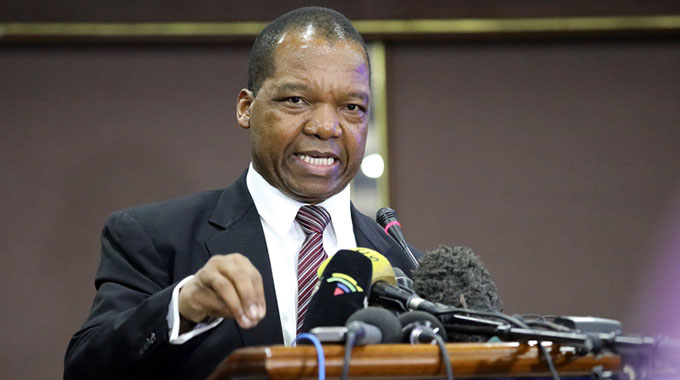
Dr Mangudya

Martin Kadzere and Golden Sibanda
The Reserve Bank of Zimbabwe (RBZ) has liberalised the US dollar exchange rate against Real Time Gross Settlement (RTGS) balances, bond notes and all currencies in the multi-currency basket as it seeks to formalise trade in foreign currency.

The US dollars in the new market will be retained export earnings, with the remainder continued to be allocated by the Reserve Bank for essential goods and services.

Delivering the 2019 Monetary Policy Statement (MPS) yesterday, RBZ Governor Dr John Mangudya said the move would bring sanity in the foreign currency market, promote exports, boost Diaspora remittances and investments, eliminate multi-tier pricing, as well as preserve the value of local forms of money.

The RBZ had pegged RTGS balances at one-to-one with the US dollar, but shortages resulted in high premiums for US dollars outside RBZ control.

Wild swings in parallel market exchange rates in the last quarter of last year spawned a spike in prices of goods and services, propelling monthly and annual inflation rates to record levels since dollarisation of the economy in February 2009.

As such, the central bank will, with immediate effect, establish an interbank foreign exchange market to formalise trade in foreign and local currencies through banks and bureaux de change on a willing-buyer, willing-seller basis.

This entails denominating the existing RTGS balances, bond notes and coins in circulation as RTGS dollars to establish an exchange between current monetary balances and foreign currency.

Dr Mangudya said to get the US dollar equivalent of current RTGS or electronic balances, the prevailing market determined exchange rate will apply.

Click here for the full statement

“This will bring fairness and transparency in the distribution of foreign currency,” Dr Mangudya said, adding that the policy measures sought to formalise what was already happening on the parallel market, which the bank had no control over.

To anchor exchange rate stability, Dr Mangudya said the RBZ will aggressively intervene in the market to sterilise liquidity so as to help contain inflationary and exchange rate pressures.

Zimbabwe has $1,8 billion usable RTGS balances out of a total of about $10 billion.

Highlights . . .

  • Foreign exchange rate liberalised.
  • Interbank market to be established.
  • RTGS dollars now part of multi-currency basket.
  • Currency trade on willing buyer/willing seller basis.
  • Lines of credit to support foreign exchange regime.
  • RBZ to support importation of critical goods.
  • Retained export receipts to be used within 30 days.
  • Nostro FCA settlement platform established.
  • Prices to remain stable.
  • New exchange regime to preserve values.
  • Nostro balances increase 88 percent to $451 million.

The remainder is tied up in Treasury Bills, RBZ savings bonds and loans to public sector and private borrowers.

The RTGS dollars will become part of the multi-currency system and a legal instrument which amends the Finance Act of 2009 which pegged the US dollar at par with bond notes and RTGS balances, has already been prepared and will be gazetted soon.

Dr Mangudya said the bank had arranged sufficient lines of credit to maintain adequate foreign currency to underpin the foreign exchange market.

He said foreign currency from the interbank market shall be utilised for current bona fide foreign payment invoices, except education.

“All foreign liabilities or legacy debts due to suppliers such as International Air Transporters Association (and) declared dividends shall be treated separately after registering such transactions with the exchange control for the purposes of providing the bank sufficient information that will allow it to determine the roadmap for orderly expunging of the legacy debt,” Dr Mangudya said.

The RBZ will continue to provide foreign currency for the importation of critical commodities such as fuel, electricity, medicines and water chemicals through existing letters of credit facilities and the foreign exchange allocation committee.

Dr Mangudya said significant shifts in economic fundamentals during the last quarter of last year saw parallel market foreign currency premiums increasing from between 1,4 and 1,8 to the US dollar to current levels of 3 and 4.

This increase in foreign currency premiums had negative pass through effects on annual inflation, which rose from 5,4 percent in September last year to 56,09 percent in January this year, Zimbabwe’s highest inflation rate in nearly a decade.

“In this respect, continuing to use the US dollar as a unit of account, when its value has drifted away from the value of the RTGS dominated money supply has brought forth a number of challenges,” said Dr Mangudya.

“The challenges include multi-tier pricing by business, speculative pricing, loss of Government revenue, valuation and accounting difficulties, asset liability mismatches and negative investor confidence.

“The current monetary arrangements if maintained could pose the risk of costly redollarisation of the economy, which will move the economy into recession. This is evidenced by the fact that some businesses are already gradually reducing prices due to low demand in the economy.

“Moreover, some of those charging in foreign currency have also been experiencing reduced demand for their products and are thus reverting to pricing in RTGS and bond notes.”

Dr Mangudya said exporters on the other hand were fast becoming uncompetitive, as the export incentive scheme had been eroded by the forex premiums induced inflation.

Bureau de change will be allowed to purchase foreign currency without limits, but will be limited to sell hard currency for small transactions up to a maximum daily limit of US$10 000 per institution.

To allow exporters to benefit from the interbank foreign currency market and to promote uninterrupted supply of forex in the economy, the central bank increased foreign currency retention thresholds for some of the exporters.

Retained export receipts shall be utilised within 30 days, after which the unutilised export earnings will be offloaded into the market at the prevailing market exchange rate or critical imports and external payments.

Dr Mangudya said the measures were also aimed at increasing demand for domestic forms of payment and to preserve foreign currency for external payments that include essential imports.


The post UPDATED: RBZ floats US$ exchange rate appeared first on Zimbabwe Situation.

JUST IN: President launches India-Africa Incubation Centre 

Source: JUST IN: President launches India-Africa Incubation Centre | The Herald February 21, 2019 President Mnangagwa Herald Reporter President Mnangagwa today launched the India-Africa Incubation Centre in Harare which he described as a key conduit that will drive the modernisation and industrialisation of the economy. The centre specialises in equipping young people with entrepreneurial skills […]

The post JUST IN: President launches India-Africa Incubation Centre  appeared first on Zimbabwe Situation.

Source: JUST IN: President launches India-Africa Incubation Centre | The Herald February 21, 2019

JUST IN: President launches India-Africa Incubation CentrePresident Mnangagwa

Herald Reporter
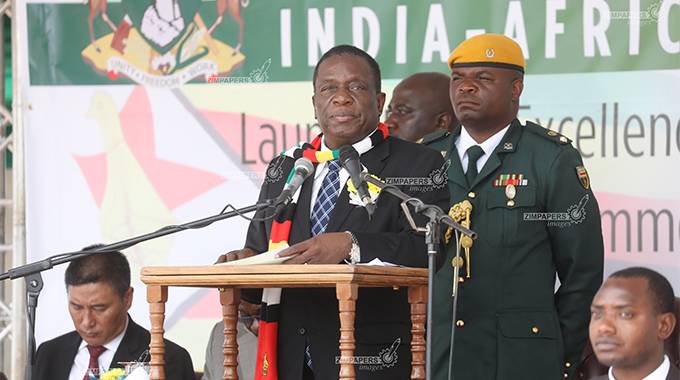
President Mnangagwa today launched the India-Africa Incubation Centre in Harare which he described as a key conduit that will drive the modernisation and industrialisation of the economy.

The centre specialises in equipping young people with entrepreneurial skills to start their own businesses and dovetails with the President’s Vision of transforming the economy into an upper middle income status by 2030.

More to follow…

The post JUST IN: President launches India-Africa Incubation Centre  appeared first on Zimbabwe Situation.

Masvingo gets $33 million for devolution programmes

Source: Masvingo gets $33 million for devolution programmes | The Herald February 21, 2019 Minister Moyo Walter Mswazie Masvingo Correspondent MASVINGO has received the US$33 million that was allocated in the 2019 National Budget for its devolution programmes amid indications that it wants to achieve Gross Domestic Product (GDP) of at least US$ 8 billion […]

The post Masvingo gets $33 million for devolution programmes appeared first on Zimbabwe Situation.

Source: Masvingo gets $33 million for devolution programmes | The Herald February 21, 2019

Masvingo gets $33 million for devolution programmes
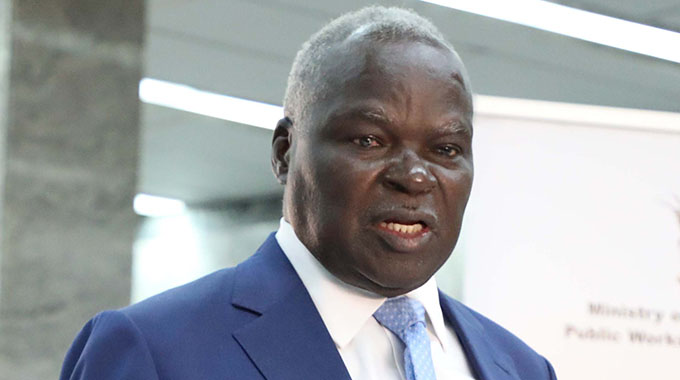
Minister Moyo

Walter Mswazie Masvingo Correspondent
MASVINGO has received the US$33 million that was allocated in the 2019 National Budget for its devolution programmes amid indications that it wants to achieve Gross Domestic Product (GDP) of at least US$ 8 billion by the year 2023.

Addressing stakeholders during the inaugural Masvingo devolution conference at a local hotel on Monday, Local Government, Public Works and National Housing Minister July Moyo said the new dispensation had seen it fit to follow the provisions of the 2013 constitution which provided for the decentralisation of the country’s wealth in each

province with the community actively participating in the development matrix.

“The money for devolution amounting to US$33 million for Masvingo province is now available. We expect the Minister of State for Masvingo Provincial Affairs Ezra Chadzamira to work with the elected provincial councillors to see how the money will be used,” said Minister Moyo.

“Secondly the money I said will be released to assist local authorities in addressing marginalisation is now available.

“Bikita will get $3,2 million, Chiredzi $5,6 million, Chivi $3 million, Gutu $3,8 million, Masvingo RDC $4,6 million, Mwenezi RDC $3,9 million, Zaka RDC $3,3 million, Masvingo City $893 000 and Chiredzi Town Council $394 000.

“We will write to local authorities and provincial administrator so that they give use breakdown on how they want to use the money.

“Remember you will get 5 percent which will only be increased as and when the national budget increases,” he said.

He said in devolution local authorities had the right to raise their own funds and it was meant to strengthen their governance systems.

“Local authorities operations are informed by constitutional provisions and they can approach the courts if such operations are violated.

“It is ultra-vies to interfere with the local authority’s operations, especially on raising funds although the government would give guidance given that we are a unitary state.

“The local authorities are empowered by the constitution to approach the Constitutional Court if they feel their rights are violated,” he said.

He said devolution gives these local authorities an opportunity to ascertain how much they can contribute to the national GDP.

Masvingo province, he said, should account for injections from the central government, as part of its income and be able to create its own.

“The province should be able to achieve at least $3500 per capita, as envisaged by President Mnangagwa.”

Speaking earlier Minister Chadzamira said Masvingo had potential to achieve a GDP of $8 billion by 2023 because it was endowed with a lot of resources.

“Masvingo is endowed with both human and economic resources and because of that we have the pedigree to achieve a provincial GDP of $8 billion by 2023.

“We have mining, agriculture, tourism, manufacturing, wildlife and service sectors which can help us achieve per capita of $3500,” said Minister Chadzamira.

He reiterated that Masvingo did not take part in the recent shutdown protests which occurred in other centres and claimed the life of a policeman, saw the destruction of property, looting of shops and barricading of roads.

“We are a peaceful province as shown by not taking part in the violent protests last month, which saw the destruction of property and killing of a policeman.

“This demonstrates that we are a safe destination for investment. I therefore call upon all citizens in this province to embrace love instead of hate.

“Let us do away with petty political differences, as I also urge our media to be supportive in its reportage.”

The meeting was attended by Higher and Tertiary Education, Science and Technology Development Minister Professor Amon Murwira, Mines and Mining development Minister Winston Chitando, among others.

The post Masvingo gets $33 million for devolution programmes appeared first on Zimbabwe Situation.