Editorial Comment: Why did it take long, pain for RBZ to see sense? 

Source: Editorial Comment: Why did it take long, pain for RBZ to see sense? – NewsDay Zimbabwe February 21, 2019 Editorial Comment Finally, the Reserve Bank of Zimbabwe (RBZ) saw the sense of devaluing the local bond note currency and the fallacy of the 1:1 exchange rate parity with the United States dollar after doggedly […]

The post Editorial Comment: Why did it take long, pain for RBZ to see sense?  appeared first on Zimbabwe Situation.

Source: Editorial Comment: Why did it take long, pain for RBZ to see sense? – NewsDay Zimbabwe February 21, 2019

Editorial Comment

Finally, the Reserve Bank of Zimbabwe (RBZ) saw the sense of devaluing the local bond note currency and the fallacy of the 1:1 exchange rate parity with the United States dollar after doggedly keeping a policy it well knew was disastrous for the economy, especially considering a public and business suspicious of anything this administration does.

Zimbabwe has struggled to earn the US$, the currency it adopted after ditching its hyperinflation-ravaged currency back in 2009, but a local currency was not envisaged until it has enough supporting fundamentals.

But bit by bit, starting with the introduction of bond coins in 2014 as a way of providing smaller denominations for change in its multi-currency regime, the central bank brought back the local currency.

As the US$ shortages became more severe, the bond notes were introduced in 2017, disguised as an incentive to encourage more exports, while also providing relief to an unrelenting cash crunch.

Prices spiked, shortages of fuel, and medicines, among other critical supplies, intensified. Finally, a sharp increase in the price of fuel in a bid to address the shortages and other economic struggles finally pushed the public into violent demonstrations, which were brutally put down by security forces, leaving 17 dead, according to human rights groups.

So the authorities finally did the sensible thing, potentially leaving the official currency exchange rate to rise sharply to match the rate value on the streets.

The government appears wary of saying that it has devalued the local currency, which is what it has effectively done. As a result, whatever money is in people’s accounts, its value will now be determined by the interbank market, which starts trading on Monday, February 25.

It also appears not keen to spook the market by admitting that it has reintroduced a local currency through the back door, even though that is what it has effectively done.

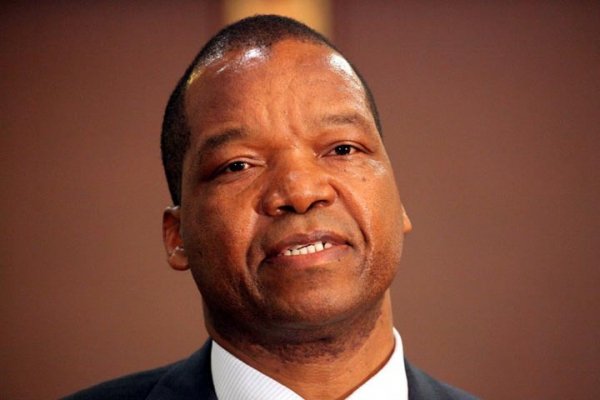
According to RBZ governor John Mangudya, all the existing electronic balances, bond notes and coins in circulation will now be RTGS dollars, effectively making them the official local currency. Zimbabwe’s 2019 budget is also in that currency.

Just how much confidence the central bank’s move infuses in the market, time will tell because confidence in the governor and the Zanu PF government’s economic management, in general, has been sinking over the past few years, not helped by policy mishaps and political developments in recent months.

Yes, the central bank may have finally followed the market direction, but regaining market confidence will be Mangudya and the government’s latest and biggest test.

The post Editorial Comment: Why did it take long, pain for RBZ to see sense?  appeared first on Zimbabwe Situation.

Back to the future dollar

The Reserve Bank’s devaluation of its bond notes and surrogate currencies lays the ground for a new national currency As food imports dwindle and oppositionists gear up for a fresh round of protests, the government […]

The Reserve Bank’s devaluation of its bond notes and surrogate currencies lays the ground for a new national currency As food imports dwindle and oppositionists gear up for a fresh round of protests, the government [...]

Cabinet secures $30m for drugs

Source: Cabinet secures $30m for drugs | The Herald February 21, 2019 Minister Mutsvangwa Zvamaida Murwira Senior Reporter Government has secured about $30 million from development partners to procure essential drugs, Information, Publicity and Broadcasting Services Minister Monica Mutsvangwa has said. Briefing the media on Cabinet deliberations on Tuesday, she said Government will also establish […]

The post Cabinet secures $30m for drugs appeared first on Zimbabwe Situation.

Source: Cabinet secures $30m for drugs | The Herald February 21, 2019

Cabinet secures $30m for drugs
Minister Mutsvangwa

Zvamaida Murwira Senior Reporter
Government has secured about $30 million from development partners to procure essential drugs, Information, Publicity and Broadcasting Services Minister Monica Mutsvangwa has said.

Briefing the media on Cabinet deliberations on Tuesday, she said Government will also establish a Centre of Excellence in the form of a super specialist hospital at Parirenyatwa Group of Hospitals.

Three companies have already shown interest in the project.

Minister Mutsvangwa said Cabinet had been briefed on progress on the implementation of the 100-day cycle by Health and Child Care Minister Dr Obadiah Moyo.

“The minister reported on the following programmes undertaken to improve the availability of medicines: Procurement of medicines worth US$2 million from Denmark, securing of US$25 million of medicines from Germcorp, which is currently underway, donation of US$2 million worth of drugs secured by China Polaris and procurement of medicines under a commodity exchange programme involving the Russian Federation National Security, which is already under discussion.

“Based on the results of the medicines availability tracer study by the ministry, 53 percent of the health institutions have two months of stock of at least 65 percent of the tracer medicines available.”

Minister Mutsvangwa said efforts were underway to set up the Centre of Excellence.

“To address the prevailing situation where patients in need of specialist services are forced to seek treatment outside the country, often at costs beyond the reach of many of our citizens, Government is now working towards the establishment of a specialist hospital wing under the Parirenyatwa Group of Hospitals,” she said.

“Already, three companies have shown interest in partnering with Parirenyatwa Group of Hospitals following approval of the Public Private Partnership proposal.” This comes amid revelations that the National Pharmaceutical Company (NatPharm) is sitting on US$77 million worth of drug tenders.

Speaking to parliamentarians recently, NatPharm head of IT Mr Zealous Nyabadza said because of the country’s risk perception, most drug manufacturers demanded cash upfront.

“We are currently sitting on US$77 million worth of tenders owing to the foreign currency shortages. Our usual suppliers require cash upfront because the country’s risk perception is high,” said Mr Nyabadza.

He said efforts by NatPharm to open their own retail pharmacies were at an advanced stage.

Mr Nyabadza said the retail pharmacies were meant to address current challenges in the pharmaceutical sector, where pricing of commodities were heavily distorted.

The post Cabinet secures $30m for drugs appeared first on Zimbabwe Situation.

Top cop jailed 4 years

Source: Top cop jailed 4 years | Daily News HARARE – Borrowdale Police Station officer-in-charge Simbarashe Sibanda was yesterday slapped with four years’ imprisonment for scalding his lover with boiling water. Harare regional magistrate Jesse Kufa convicted Sibanda of attempted murder charges and sentenced him to four years before suspending one year on condition of good […]

The post Top cop jailed 4 years appeared first on Zimbabwe Situation.

Source: Top cop jailed 4 years | Daily News

HARARE – Borrowdale Police Station officer-in-charge Simbarashe Sibanda was yesterday slapped with four years’ imprisonment for scalding his lover with boiling water.

Harare regional magistrate Jesse Kufa convicted Sibanda of attempted murder charges and sentenced him to four years before suspending one year on condition of good behaviour.

The complainant was Stella Ruswa, a police officer, who was recently attached to the prosecution department at the Harare Magistrate’s Courts.

Sibanda pleaded with the court to consider that he was a married man with five children and his ailing mother who depends on him.

Kufa considered Sibanda’s personal circumstances but noted there was need to curb incidences of domestic violence cases on the rise.

“Attempted murder is a serious offence and the accused person used a lethal weapon which is boiling water to assault the complainant. The medical expert who testified during trial said there was high likelihood that the complainant will sustain a conjecture neck and keloids,” Kufa said.

“This offence also borders on domestic violence and the accused person was having an adulterous relationship with the complainant in violation of moral and legal standards considering he is a married man. Human life is sacred and offences of this nature can result in bad consequences leading to death.”

Prosecutor Chipo Matambo proved on June 8, last year Sibanda visited Ruswa’s residence and realised that she had not prepared supper.

There was a pot with boiling water on the stove and Sibanda confronted Ruswa about the issue. Ruswa told Sibanda that there was no relish to prepare the meal and this did not go down well with him.

A misunderstanding ensued between the two and Sibanda reached for the boiling water and poured it over Ruswa.

She sustained severe burns and was admitted at West End Hospital for 11 days.

The post Top cop jailed 4 years appeared first on Zimbabwe Situation.

Govt moves to kill black market

Source: Govt moves to kill black market | Daily News HARARE – The government yesterday introduced a battery of measures aimed at bringing down the high prices of goods in the country, as well as growing the economy — including opening up foreign currency trading by banks and bureaux de change. Presenting his monetary policy statement […]

The post Govt moves to kill black market appeared first on Zimbabwe Situation.

Source: Govt moves to kill black market | Daily News

HARARE – The government yesterday introduced a battery of measures aimed at bringing down the high prices of goods in the country, as well as growing the economy — including opening up foreign currency trading by banks and bureaux de change.

Presenting his monetary policy statement (MPS) in Harare, Reserve Bank of Zimbabwe (RBZ) governor — John Mangudya — said the new monetary policies that he effected would stabilise both exchange rates and the prices of goods and services.

Both consumers and business immediately welcomed the new measures saying these should have been introduced much earlier to stem the country’s deepening economic crisis and the thriving foreign currency black market which has wreaked havoc on prices.

Contacted by the Daily News last night, the president of the Confederation of Zimbabwe Industries (CZI), Sifelani Jabangwe, said business was very happy with the new measures.

“This is very much welcome and it is more of what we have been calling for … people will start going to the banks and buy foreign currency all round, getting fair value for their money, instead of being cheated in the distorted market.

“People were also not remitting their forex into banks because they preferred the parallel market, where there was value for US dollars, but now we will see people taking their money to banks.

“It will also help with liquidity relating to Diaspora remittances as people can now take the forex to the bank and not parallel markets,” Jabangwe said.

“Prices are thus likely to go down. Businesses and local manufacturers will be export competitive as the RBZ has cleared the air on currency exchange rates.

“Investment will also start trickling in because there is a defined exchange rate now. Before, investors would ask us the rate of their investments and we could not clarify what the national exchange rate was relative to the value of their investment,” he added.

Mangudya said the central bank had put in place measures to maintain stability in the market through the establishment of an inter-bank foreign exchange market with immediate effect — to formalise the trading of real time gross settlement (RTGS) balances and bond notes with hard currencies on a willing-buyer willing-seller basis, through banks and bureaux de change.

“This is essential in order to bring sanity in the foreign currency market, whilst at the same time promoting exports, Diaspora remittances and investments for the good of our national economy,” he said.

In this regard too, existing RTGS balances, bond notes and coins in circulation would now be denominated as RTGS dollars “in order to establish an exchange rate between the current monetary balances and foreign currency”.

This means that RTGS dollars have now formally become part of the country’s multi-currency system — with the legal instrument to give effect to this having already been prepared.

“The RTGS dollars shall be used by all entities (including the government) and individuals in Zimbabwe for the purposes of pricing of goods, services, debts, accounting and settlement of domestic transactions.

“The use of RTGS dollars for domestic transactions will eliminate the existence of the multi-pricing system and charging of goods and services in foreign currency within the domestic economy.

“In this regard, prices should remain at their current levels and or to start to decline in sympathy with the stability in the exchange rate given that the current monetary balances have not been changed,” Mangudya said.

“In this respect, the RBZ will commit all its efforts to use the instruments at its disposal to maintain stability of the exchange rate,” he also warned.

Mangudya also revealed that the central bank had arranged sufficient lines of credit to enable it to maintain adequate foreign currency to underpin the exchange market.

This was essential to restore the purchasing power of RTGS balances through the safeguarding of the stability of prices “emanating from the pass-through effects of exchange rate movements”.

All the foreign currency from the inter-bank market would be utilised for bonafide foreign payment invoices except for education fees.

All foreign liabilities or legacy debts due to suppliers and service providers such as the International Air Transport Association (IATA) and declared dividends would be treated separately after such transactions had been registered with authorities “to determine the roadmap for orderly expunging the legacy debt”.

All other foreign currency requirements for government expenditure and other essential commodities that include fuel, cooking oil, electricity, medicines and water chemicals would continue to be made available through the existing letters of credit facilities or the country’s Foreign Exchange Allocations Committee.

“Banks shall report activities of the inter-bank foreign currency market to the Bank that shall closely monitor the foreign currency trades on a daily basis using the form and format stipulated by the Bank.

“Bureaux de change shall be authorised to purchase foreign currency without limits but shall be limited to sell foreign currency for small transactions such as subscription, business and personal travel up to a maximum aggregate daily limit of US$10 000 per bureau de change.

“Like with banks, bureaux de change and their agents shall report their activities of the inter-bank on a daily basis as required by the Bank,” Mangudya said.

Earlier on, the central bank chief admitted candidly that the economic situation in the country had deteriorated significantly since his last MPS in September last year.

“The significant shift in the economic fundamentals during the last quarter of 2018 also increased the practice by retailers of charging goods and services on the basis of a multi-tier pricing system, where a single product has different prices depending on the mode of payment.

“The current monetary arrangement, if maintained, could pose the risk of costly re-dollarisation of the economy which will move the economy into a recession,” Mangudya said.

This comes after Finance minister Mthuli Ncube, in a desperate bid to balance the government’s shambolic books, moved to raise the State’s revenue late last year through the unpopular two cents per dollar transaction tax.

However, this caused the economy to go into a tailspin, leading to panic buying of commodities and shortages of basic consumer goods.

The minister was later compelled by his bosses to review the tax, although this still failed to completely douse the raging fires, as the economy remained in dire straits.

The post Govt moves to kill black market appeared first on Zimbabwe Situation.