Zimbabwe’s army to conduct door-to-door searches for camouflage clothing

The Zimbabwe Defence Forces (ZDF) are set to conduct door–to-door searches countrywide to look for army regalia allegedly used by “rogue elements” in society to commit crimes. Source: Zimbabwe’s army to conduct door-to-door searches for camouflage clothing – Times Live A soldier fires shots towards demonstrators in Harare during protests that erupted over alleged fraud […]

The post Zimbabwe’s army to conduct door-to-door searches for camouflage clothing appeared first on Zimbabwe Situation.
The Zimbabwe Defence Forces (ZDF) are set to conduct door–to-door searches countrywide to look for army regalia allegedly used by “rogue elements” in society to commit crimes.

Source: Zimbabwe’s army to conduct door-to-door searches for camouflage clothing – Times Live

A soldier fires shots towards demonstrators in Harare during protests that erupted over alleged fraud in the 2018 elections.

A soldier fires shots towards demonstrators in Harare during protests that erupted over alleged fraud in the 2018 elections. 
Image: Zinyange AUNTONY / AFP

The Zimbabwe Defence Forces (ZDF) are set to conduct door–to-door searches countrywide to look for army regalia allegedly used by “rogue elements” in society to commit crimes.

In a notice to the public, the army’s communications department said they would conduct “snap searches” that would include confiscating camouflage fashion apparel.

According to section 99 (2) (c) of the Defence Act, civilians are barred from wearing anything resembling military gear.

“Members of the public are urged to voluntarily surrender these clothing items to the search teams before the searches are conducted or surrender them to the nearest police station or camp. Please be warned and comply accordingly to avoid any inconveniences that might be caused by the exercise,” reads the notice.

During the riots from January 14 to 16 that led to thousands being arrested – and left at least 12 dead and hundreds wounded – the army blamed rogue soldiers and deserters for causing mayhem.

Human rights groups shared videos online of soldiers and police moving door-to-door in urban areas, beating up and shooting people suspected to have participated in protests. In some footage, uniformed forces led from the front in looting sprees.

“Some of these uniforms worn by criminals were seized by rogue elements during the recent riots in Epworth and Chegutu. A case in point is a recent arrest of five armed robbers in Epworth, Harare, on January 14 2019, who were using police and military regalia to commit armed robberies after hiring vehicles from car rental companies,” said senior police assistant commissioner Charity Charamba at the time.

But the opposition MDC Alliance rejected the “stolen uniforms” narrative as a mere cover-up.

“They can’t expect us to believe that as state security agents they were robbed of their own uniforms and stuff,” said Nkululeko Sibanda, spokesman for MDC leader Nelson Chamisa.

“We were given the uniform at the party office,” he told the Harare magistrate’s court as he answered questions from prosecutor Shepherd Makonde.

A serving soldier, Norest Sosera, appeared in the same court for committing robbery during the January disturbances while he was wearing a uniform.

The army, the police and the Central Intelligence Organisation (CIO) have a long history of aiding Zanu-PF politics.

Civil-military relations have been strained since the August 1 2018 protests that erupted to dispute Emmerson Mnangagwa’s narrow election victory.

Last month, soldiers were advised to leave their uniforms at work because of the general anger towards them from the public.

Prior to these strained relations, however, the army had created a conducive environment for the public to protest as it led plans to remove former president Robert Mugabe from power in November 2017.

It also took over policing duties from the Zimbabwe Republic Police, which had become unpopular during Mugabe’s reign because of rampant corruption, illegal detentions and the growing number of roadblocks that functioned like tollgates.

The post Zimbabwe’s army to conduct door-to-door searches for camouflage clothing appeared first on Zimbabwe Situation.

Zimbabwe to run out of bread in one week as flour stocks dwindle – millers

Zimbabwe imports wheat, which it blends with its local crop to make flour for bread, the country’s second major staple after maize meal. Source: Zimbabwe to run out of bread in one week as flour stocks dwindle – millers – EyeWitness Zimbabwe imports wheat, which it blends with its local crop to make flour for […]

The post Zimbabwe to run out of bread in one week as flour stocks dwindle – millers appeared first on Zimbabwe Situation.

Zimbabwe imports wheat, which it blends with its local crop to make flour for bread, the country’s second major staple after maize meal.

Source: Zimbabwe to run out of bread in one week as flour stocks dwindlemillers – EyeWitness

Zimbabwe imports wheat, which it blends with its local crop to make flour for bread, the country’s second major staple after maize meal.

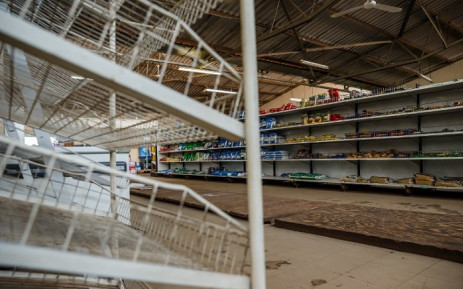
A picture shows empty shelves, including those for bread, in a groceries store in Harare on 9 October 2018, as Zimbabwe is experiencing renewed shortages. Picture: AFP.

HARARE – Zimbabwe could run out of bread in a week after flour stocks dwindled due to the country’s failure to pay for imported wheat, according to a confidential letter written to bakers by the country’s grain millers’ group on Monday.

The southern African nation is in the grip of a severe shortage of US dollars that has sapped supplies of fuel and drugs, as President Emmerson Mnangagwa struggles to live up to pre-election promises to quickly revive the troubled economy.

Zimbabwe imports wheat, which it blends with its local crop to make flour for bread, the country’s second major staple after maize meal.

The Grain Millers Association (GMAZ) general manager Lynette Veremu wrote to the National Bakers Association of Zimbabwe (NBAZ) to tell them not to pay for 55,000 tonnes of wheat in bonded warehouses in Mozambique and Harare.

“We regret to advise that the current stocks for foreign wheat for bread flour have depleted to 5,800 tonnes and … we are left with less than eight days of national bread flour supplies,” the letter said.

GMAZ spokesman Garikai Chaunza confirmed the letter, saying “this is the situation we are faced with”.

Ngoni Mazango, the president of the bakers’ group, was not immediately available to comment.

The central bank lists wheat among priority imports like fuel and drugs, but has struggled to pay suppliers in the past. GMAZ said in December it owed foreign suppliers $80 million for past wheat imports.

Reserve Bank of Zimbabwe governor John Mangudya did not answer calls to his mobile phone.

The post Zimbabwe to run out of bread in one week as flour stocks dwindle – millers appeared first on Zimbabwe Situation.

Former President Sekuru Robert Gabriel Mugabe turns 95! Here’s his SECRET to a long life

Robert Mugabe is turning 95 and his birthday has been declared a holiday in Zimbabwe. The holiday was mooted by the ruling ZANU-PF youth league to honor their then icon, whose birthday had since the 1980s been celebrated as the 21st February Movement. …

Robert Mugabe is turning 95 and his birthday has been declared a holiday in Zimbabwe. The holiday was mooted by the ruling ZANU-PF youth league to honor their then icon, whose birthday had since the 1980s been celebrated as the 21st February Movement. While it’s unlikely that many Zimbabweans yearn for former ruler Robert Mugabe’s […]

Wheat a minute: Zimbabwe faces bread shortage 

Zimbabwe is on the brink of running out of bread in the coming weeks as flour stocks diminish, according to media reports. Source: Wheat a minute: Zimbabwe faces bread shortage | News24   This is largely due to the government’s failure to pay for imported wheat, Reuters reported. Earlier this month, the bread price increased by a […]

The post Wheat a minute: Zimbabwe faces bread shortage  appeared first on Zimbabwe Situation.

Zimbabwe is on the brink of running out of bread in the coming weeks as flour stocks diminish, according to media reports.

Source: Wheat a minute: Zimbabwe faces bread shortage | News24


This is largely due to the government’s failure to pay for imported wheat, Reuters reported.

Earlier this month, the bread price increased by a whopping 66%, while the government tried to lessen the blow on basic commodities by introducing price controls and subsidising healthcare and public transport.

This increase, however, did not have anything to do with the price of wheat from suppliers.

In December 2018 and January 2019, the bread price increased at least thrice.

Earlier this week, the Grain Millers Association of Zimbabwe’s (GMAZ) general manager Lynette Veremu wrote a letter to the National Bakers Association of Zimbabwe (NBAZ) instructing it not to pay for 55 000 tons of wheat in warehouses in Mozambique and Harare, according to NewsDay.

The letter read: “We regret to advise that the current stocks for foreign wheat for bread flour have depleted to 5 800 tonnes and … we are left with less than eight days of national bread flour supplies.”

The letter was dated February 18.

Zimbabwe is also in the middle of a severe shortage of US dollars, which has dwindled fuel and medical supplies, as President Emmerson Mnangagwa struggles to uplift the economy. This was his pre-election promise to the country, ZwNews reported.

The post Wheat a minute: Zimbabwe faces bread shortage  appeared first on Zimbabwe Situation.

COPS RAIDED MY GROCERIES : ACCUSED LOOTER

 An Advanced Level student who is part of eight suspects arrested for looting at Choppies Supermarket in Luveve suburb yesterday claimed that police raided groceries that had been sent by his mother from South Africa.

Desmond Pendamazuva, 22, testifie…

 An Advanced Level student who is part of eight suspects arrested for looting at Choppies Supermarket in Luveve suburb yesterday claimed that police raided groceries that had been sent by his mother from South Africa. Desmond Pendamazuva, 22, testified before magistrate Ngoni Nduna at the Bulawayo Magistrates’ Courts yesterday. Pendamazuva and his seven co-accused, who are all in custody are