RTGS$ to devalue further: RBZ

Source: RTGS$ to devalue further: RBZ | Newsday (News) BY VENERANDA LANGA RESERVE Bank of Zimbabwe (RBZ) governor John Mangudya yesterday told Parliament that the real time gross settlement (RTGS) dollar will likely be devalued further by the time the tobacco auction floors open next week. Addressing the Public Accounts Committee (PAC) and the Parliamentary […]

The post RTGS$ to devalue further: RBZ appeared first on Zimbabwe Situation.

Source: RTGS$ to devalue further: RBZ | Newsday (News)
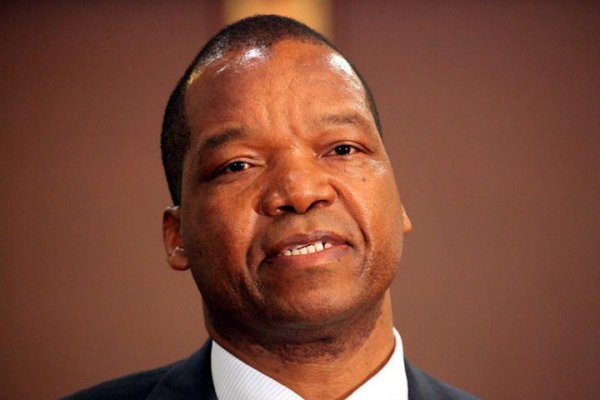
BY VENERANDA LANGA

RESERVE Bank of Zimbabwe (RBZ) governor John Mangudya yesterday told Parliament that the real time gross settlement (RTGS) dollar will likely be devalued further by the time the tobacco auction floors open next week.

Addressing the Public Accounts Committee (PAC) and the Parliamentary Portfolio Committee on Finance, Mangudya said the economic environment was not conducive for the huge salary increments being demanded by workers, which he said would destroy companies and push the country into recession.

PAC chairperson Tendai Biti asked him to explain if the economy could take salary increases given the devaluation of the RTGS dollar to the United States dollar.

“When you put in the 2% transaction tax, you were not accounting for inevitable wage increases that are coming because unions are now demanding a wage increase of $3 000. At what rate will the US dollar finally settle in the market because the 2,5% is not selling and last week you even gave gold producers a rate of 3,5%,” Biti said.

Public sector workers have been demanding a minimum salary of $3 000 from around $400 after government abandoned its 1:1 peg of the local currency and the US$ last month, the introduction of a 2% tax in October last year and the separation of local accounts and the US$ accounts which led to sharp price hikes of goods, including fuel, bread and medicines, have also made matters worse for workers.

But Mangudya said such high wage increments would push the country into recession.

“I see shops now trying to promote their products and in my Monetary Policy Statement (MPS), I stated that I was more worried about going into recession and when that happens, it will be very difficult to get out of it and an example is that you were not seeing Mazoe Orange Crush, but nowadays you see it,” Mangudya said.

“I do not see the economy having capacity to carry huge wage increases. We need a balance. I am not against salary increases, but we need to consider the quantum where we need to be reasonable because at the end of the day, we might end up in a recession where we are not going to be able to get out,” he said.

The RBZ chief said currently wage inflation was dangerous for the country, adding that his major concern was that the demand for goods and services had gone down.

“Because of that reason there is no capacity for this economy to provide higher salaries. There is no capacity for companies or firms to be able to increase their prices. Right now there is resistance in terms of purchases. I now hear that there will be promotions for cement, for example,” he said.

The governor said it will be easier to come up with the right levels of wage increments when prices stabilise.

“We think that inflation should be the one used to determine wages and, therefore, it means that going forward, we need to look at the right levels of inflation. We need to attack that animal called inflation so that at the end of the day when people talk about wage increases they are linked to inflation,” he said, adding that in October, the inflation base was at 20%, but that the figures will be lower by 15% to 10% by year end.

Mangudya also denied manipulating the exchange rate, which he said was expected to change when the tobacco selling season starts on March 20. Tobacco is Zimbabwe’s second-largest foreign currency earner after mining.

“We believe that before or on that date the rate will have reached its equilibrium. We don’t believe it will still be 2,5 (to the US$),” Mangudya said.

Analysts think the central bank would move the rate to around 3,5 to the US$ after the governor recently pegged a similar rate for miners, which would still be lower than the parallel market rate of 3,8.

Mangudya was also grilled over the loss of value of pensions.

Shurugwi South MP Edmond Mkaratigwa (Zanu PF) asked: “On preservation of value in relation to pensioners, I feel that you have preserved pension and insurance houses at the expense of pensioners because when we dollarised in 2009 up to February 2019 insurance companies were converting funds into assets on a one to one basis, but now bank balances are in RTGS divided by 2,5,and we are losing at least more than 60% of value, whereas insurance companies if they bought bricks for investment in buildings they preserved that 1:1 value.”

Mangudya denied that the exchange rate of 2,5% was responsible for eroding value, insisting that pensions were being eroded by inflation.

“Inflation in Zimbabwe has been going up because of the pass through effects of the exchange rates. By opening up the economy we do believe that the rate of exchange will remain in bands that are acceptable, which means that we can now tame inflation. All inflation is caused by increased money supply. We will preserve value for pensioners and all Zimbabweans by ensuring that inflation does not go through the roof,” he said.

The governor said the best way of managing inflation was to provide insurance companies and pensioners with inflation-linked products.

“Inflation is the one that erodes value and it means that we should deal with inflation. Pension funds need to preserve value for money by having inflation-linked products and increase the money they pay to pensioners on a monthly basis,” Mangudya said.

But MPs felt that pensioners were robbed and that Mangudya must come up with concrete plans to preserve value of pensions. Mangudya noted that failure to preserve foreign currency was due to Zimbabwe not producing to earn forex.

“All I am saying is that we need to understand the macro-economic context, and what we did with the MPS is that we started at 2,5 rate and we need to reduce inflation. The 1:1 value was being consumed by high inflation and now we are trying to ensure the economy stabilises. The willing buyer, willing seller policy will continue to be there and we are saying we are not breathing more money into the virtual currency. As we go to September and October inflation will go down and by the end of the year it will be lower by 15% to 18%,” Mangudya said.

On the exchange rate, he said very soon the country will come to equilibrium as inflation stabilised.

The post RTGS$ to devalue further: RBZ appeared first on NewsDay Zimbabwe.

The post RTGS$ to devalue further: RBZ appeared first on Zimbabwe Situation.
CHAMISA ALLIES GO INTO BATTLE

Opposition leader Nelson Chamisa’s staunchest allies are set to lock horns in the battle to lead the party’s youth assembly at the forthcoming elective congress in May after more than four threw their hats into the ring.

The death of MDC founding pres…

Opposition leader Nelson Chamisa’s staunchest allies are set to lock horns in the battle to lead the party’s youth assembly at the forthcoming elective congress in May after more than four threw their hats into the ring. The death of MDC founding president Morgan Tsvangirai in February and the subsequent rise of Chamisa as his successor have seen the party’s youth assembly emerging as power

ED TO OPEN OPTIC FIBRE NETWORK

Zimbabwe will secure its latest fibre optic connection to the outside world tomorrow, with the official launch of the Harare-Chivhu-Masvingo-Beitbridge Internet link completing the connection of the country to all the major borders.

The $98 million…

Zimbabwe will secure its latest fibre optic connection to the outside world tomorrow, with the official launch of the Harare-Chivhu-Masvingo-Beitbridge Internet link completing the connection of the country to all the major borders. The $98 million project, to be officially launched by President Emmerson Mnangagwa tomorrow in Beitbridge, caps the latest laying of a fibre optic network across

CHURCH SHOULD LEAD DIALOGUE : CHAMISA

MDC leader Nelson Chamisa says the Church must lead the way in initiating dialogue between him and President Emmerson Mnangagwa so as to rescue long-suffering Zimbabweans who are staring at a bleak future.

However, well-placed sources in government sa…

MDC leader Nelson Chamisa says the Church must lead the way in initiating dialogue between him and President Emmerson Mnangagwa so as to rescue long-suffering Zimbabweans who are staring at a bleak future. However, well-placed sources in government say Mnangagwa is unlikely to be swayed by the Church which is reportedly getting its funding from foreign countries that are deemed hostile to

Zim politics anchored on leaders’ persona

Source: Zim politics anchored on leaders’ persona – NewsDay Zimbabwe March 12, 2019 Guest column: Learnmore Zuze There is a stubborn truth that stands majestically at the centre of opposition politics since time immemorial that one wonders why many do not see the lesson and continue to fall headlong into the same pit as others […]

The post Zim politics anchored on leaders’ persona appeared first on Zimbabwe Situation.

Source: Zim politics anchored on leaders’ persona – NewsDay Zimbabwe March 12, 2019

Guest column: Learnmore Zuze

There is a stubborn truth that stands majestically at the centre of opposition politics since time immemorial that one wonders why many do not see the lesson and continue to fall headlong into the same pit as others that came before them.

There is no known opposition political party in Zimbabwe that changed its leader and went on to garner the same rapport and perform well afterwards. Zimbabwean politics (sad to say) is not about ideas, but about personalities. This truth was learnt the hard way by many senior opposition politicians, especially secretary-generals who served under and thought they could outstrip the late MDC leader Morgan Tsvangirai, who had a modest educational background.

Ahead of its elective congress in May this year the opposition MDC continues to experience rising tensions with people angling themselves for power. It is currently rumoured that almost 12 names, so far, are expected to vie for the party’s vice presidency.

The congress slated for May 24 to 26 will focus on choosing a new leadership for the party. The congress will be instrumental in proving whether the party left by founder leader, Tsvangirai, will adhere to the basic tenets of democracy.

Perhaps of all the jostling for positions taking place, none is as eyebrow-raising as the probable challenge to the presidency of the party by current secretary-general, Douglas Mwonzora. Mwonzora’s name continues to be attributed to some fiery and controversial comments furtively aimed at current party president, Nelson Chamisa. Although Mwonzora has gone tactful about it, his statements that Chamisa had fallen short of 4, 5 million votes in the MDC strategic plan are pregnant. Mwonzora’s comments betray a thinly (but not so thinly) disguised dig on Chamisa‘s suitability to continue at the helm of the party.

It is a wonder how anyone would, in their right frame of mind, think Chamisa could win 94% of the votes in tandem with meeting the party’s set target. Even Tsvangirai wouldn’t have managed that.

Only 4 775 568 people cast their votes in the last election. Mwonzora’s comments are laden and give a peak into his version of politics ahead of the congress; he said: “A person who is contesting is in fact holding himself or herself to be saying that they can score more and there is no reason to underestimate them because you have never seen them in a presidential election…” Surely the gist in not to malign the current secretary-general, but if truth be told the man is apparently fiddling with the idea of some political figure other than the incumbent leading the party and amassing the same goodwill and rapport that Chamisa had built with the electorate.

It is exactly here that I make the case that it remains some sort of political conundrum that has endured over decades in Zimbabwean politics that opposition politicians never seem to learn. It would appear the secretary-general’s position currently held by Douglas Mwonzora does certain things to the office holder. It seems that they give themselves a delusionary colossal stature such that they cannot see things in their prospective.

With all due respect to the principles of democracy, many in opposition politics held the same post and saw for themselves the futility of battling for the top job (party presidency) before the party has even assumed power.

Tsvangirai, deemed the beacon of opposition democracy, remains the most loved opposition figure to emerge from this country. On his part, Tsvangirayi lacked the highly rated A-class academic status that other politicians held. Tsvangirai was human and had those periods of lapse where he would, like anyone else, misfire in a speech.

Even more, Tsvangirai had a weaker side as a human being which played out loudly after the death of his wife as he sought to reengage in marriage. What is the point here? The point is this, for all his failings with women, a modest education and poor political showing at times, he remained the top most popular politician to the electorate.

Tsvangirai, up to the point of death, could not be defeated by anyone within the party. He had to cede power to Chamisa in the face of failing health. The first secretary-general Welshman Ncube was miles ahead in education and decorum as compared to Tsvangirai, but still wondered in the political wilderness after leaving the party. The same happened to Tendai Biti.

Zimbabwean politics has not yet reached that point where politicians are looked at in the capacity of their ability. We must be honest enough to admit that it’s not yet about a contest of ideas in African politics; it is so much about connectivity with the grassroots. If a politician has no grassroots connectivity the education and decorum don’t count an inch.

Tsvangirai presided over a party with professors, decorated lawyers and refined academics, yet he never held a degree. It’s never about one’s history within whatever political party or something else. Mwonzora needs to eventually learn this sooner than later. It is unfortunate that the man continues to be embarrassed by unruly party supporters each time he comes to the fore.Party structures and processes must be followed, but honestly I think we should not try to hide behind a façade of democracy.

Zimbabwean politics is still anchored in the persona of the party leader and changing party leaders as an opposition party intending to get into power is irrational, to be polite. History doesn’t seem to be on Mwonzora’s side.

Learnmore Zuze is a legal officer and writes in his personal capacity

The post Zim politics anchored on leaders’ persona appeared first on Zimbabwe Situation.