VIDEO: Why David Coltart supports Chami

Source: Why David Coltart supports Chamisa over Mwonzora for MDC president – CNBC Africa Two days ago- US President Donald Trump extended sanctions on more than a hundred individuals and companies in Zimbabwe over human rights abuses. South Africa has led the call to lift sanction in Zimbabwe which seemingly fell on deaf ears. So […]

The post VIDEO: Why David Coltart supports Chami appeared first on Zimbabwe Situation.

Source: Why David Coltart supports Chamisa over Mwonzora for MDC president – CNBC Africa

Two days ago- US President Donald Trump extended sanctions on more than a hundred individuals and companies in Zimbabwe over human rights abuses. South Africa has led the call to lift sanction in Zimbabwe which seemingly fell on deaf ears. So what does Zimbabwe have to do to get them lifted and what’s the role of South Africa in stabilising Zimbabwe. CNBC Africa’s Karabo Letlhatlha sat down with David Coltart, former minister and founding member of the official opposition- Movement for Democratic Change.https://www.cnbcafrica.com/videos/

The post VIDEO: Why David Coltart supports Chami appeared first on Zimbabwe Situation.

PIC: Popular Zimdancehall musician fingered in CBD armed robberies

POPULAR Bulawayo-based dancehall chanter, Njanji, real name Noah Wambe (30) has been linked to armed robberies targeting illegal foreign currency dealers in the city. A gang armed with guns, machetes and iron bars that allegedly worked with Njanji, tra…

POPULAR Bulawayo-based dancehall chanter, Njanji, real name Noah Wambe (30) has been linked to armed robberies targeting illegal foreign currency dealers in the city. A gang armed with guns, machetes and iron bars that allegedly worked with Njanji, trailed osiphatheleni to their homes and robbed them of household property that includes television sets, cellphones and […]

Zim Airways: The untold story

Source: Zim Airways: The untold story | The Herald March 11, 2019 Simba Chikore Tichaona Zindoga Acting Editor Former president Robert Mugabe’s son-in-law, Mr Simba Chikore used his family ties to manipulate processes, corrupt people and enter into shady deals involving several stakeholders during his time at the national airliner, Air Zimbabwe, The Herald reveals […]

The post Zim Airways: The untold story appeared first on Zimbabwe Situation.

Source: Zim Airways: The untold story | The Herald March 11, 2019

Zim Airways: The untold storySimba Chikore

Tichaona Zindoga Acting Editor
Former president Robert Mugabe’s son-in-law, Mr Simba Chikore used his family ties to manipulate processes, corrupt people and enter into shady deals involving several stakeholders during his time at the national airliner, Air Zimbabwe, The Herald reveals today.

Mr Chikore, married to Bona Mugabe, was chief operating officer of the flag carrier between October 2016 and November 2017.
During the time, Mr Chikore controversially incorporated Zimbabwe Airways as an alternative, debt-free entity funded by Treasury. The new airline would be owned by an outfit known as Aeronautics Africa Trust registered on November 13, 2017.

The controversial new airline project was consummated by the undertaking to purchase four Boeing 777-200ER aircraft from the Malaysian government and six Embraer-145 aircraft from the United States of America but was saddled from the start with regulatory and technical issues that have seen the planes not flying the country’s flag aloft to this day, with efforts presently underway to salvage the situation.

Operationalisation of Zimbabwe Airways was equally murky, with millions being splurged to conduct daily business, including hiring of staff, without due process while service providers were engaged without going to tender.

The Herald is in possession of unimpeachable evidence of the rot at the national airline in the period between 2016 and 2017 with Mr Chikore, who was the de facto chief executive officer of the new airline.

Throughout his ill-fated tenure, Mr Chikore misrepresented himself as a captain while he was a first officer, which disqualified him from flying, which he did.

He resigned as the Chief Operating Officer following Operation Restore Legacy that swept aside his father-in-law’s lengthy rule.
Sources close to the developments catalogued the malfeasance and how Mr Chikore could have been involved in criminal enterprise. It has also emerged that he, in fact, did not have a contract with Zimbabwe Airways despite the fact that he called himself Chief Executive Officer.

Uncannily, he did not draw a salary from the entity.
“On the 17th of August 2017, Zimbabwe Airways received $1 million from the RBZ (Reserve Bank of Zimbabwe) which, according to the business plan prepared by Baker, Tilly Chartered Accountants, was supposed to help set up the business for six months after which we were to start flying commercially and earning our revenue and the amount of $1 million would be paid back to the RBZ,” said one source.

“With the funds the company purchased furniture and office supplies, desktops, laptops, printers and televisions. The company also used the funds to pay salaries, rentals, security, construction of the airport offices as well as other operational costs. None of the services we engaged went to tender,” the source said.

According to information available, Zimbabwe Airways hired personnel and engaged service providers in the industry outside of Zimbabwe. Some of these service providers were Seabury Solutions Systems (a software company), SITA (a ticketing system vendor), Sigma Aviation Recruitment (to recruit expatriate post holders), Evers Consulting (to do the manuals required to apply for the Air Operators Certificate [AOC]).

Under unclear circumstances, Mr Chikore failed to register the airline for the AOC, which is conducted by the Civil Aviation Authority of Zimbabwe, and the failure resulted in future losses as the airline was barred from flying to China and India where it had cargo.

“As the months went on, and we had hired personnel and expatriates, we still did not engage in the process of getting the AOC from the Civil Aviation Authority. The application process has five phases, and phase one states that the entity was to provide the name and credentials of the accountable officer.

“Simba was reluctant to do this. Firstly, he did not have a contract of employment from the company, and, secondly, his credentials stated that he was a first officer, not a captain as he had led all and sundry to believe. Therefore, months went by and he would not initiate the AOC application process.”

According to the source, when Zimbabwe Airways engaged airline insurer Gulf Regent for aircraft handling, health insurance and loss of licence insurance, he allegedly instructed the insurer to open an offshore account, in his name, for him in which any excess amounts would be paid into.

However, the company did not render the services, says their source.
“The employees never received health insurance despite the RBZ paying around $157 000 per quarter for health.
“In addition, the company did not employ any pilots so the Loss of Licence Insurance paid by the RBZ was merely another way in which Simba was externalising Government funds.”

The acquisition and subsequent return of the Malaysian planes underlines everything that was wrong with Mr Chikore’s mis-captaining of the airline as Zimbabwe simply did not have the resources, skills and other necessary infrastructure to operate the B777.

Zimbabwe lacked the necessary capabilities, namely trained engineers to maintain the 777, tooling, spares, hangar space and, of course, the Air Operator’s Certificate required to operate commercially.

Additionally, the 777 needed to have 100 hours of flying time a month to stay maintained, and also that it need to fly every seven days if it wasn’t operating, to keep up with its maintenance. A number of problems presented themselves.
Our sources said: “Zimbabwe did not have any engineers trained to maintain the 777, which meant that we would need to import engineers for this were the aircraft to be delivered to Zimbabwe.

“We did not have any trained pilots to fly the 777 in Zimbabwe, which would mean that we need to import pilots rated on the 777 to fly the aircraft every seven days.

“We did not have any hangar space, the only hangar that would fit the 777 was occupied by Air Zimbabwe’s 767 which is currently undergoing its C-check (a specialised maintenance system).

“We did not have any tools or spares for the 777 (and) we did not have an AOC that would allow for the requirement of the 100 hours a month of flight time required to keep the 777 in good condition.”

However, Mr Chikore reportedly disregarded wise counsel from engineers and, in fact, had not made enough preparations to receive the planes from Malaysia.

Eventually, a decision was made to return the aircraft following consultations between the Ministry of Transport and its legal team, CAAZ and Zimbabwe Airways.

“The minister conceded that he had been ill-advised regarding the aircraft and agreed that we return Z-RGM. The aircraft was returned on May 25,” said the source, adding that Mr Chikore was not consulted as he had travelled abroad.
Repeated efforts to get a comment from Mr Chikore were fruitless by last night.

Government is in the process of cleaning up the mess of Mr Chikore’s controversial tenure and has since disbanded Zim Airways.

Minister of Transport and Infrastructural Development Joel Biggie Matiza last night confirmed that Government was regularising acquisition of the planes.
“The Embrear is on its way, as we speak and will arrive in the next two weeks,” he said.

“Government has also authorised payments of the outstanding amounts,” he added.
Last month, Cabinet approved the regularisation of the acquisition of aircraft bought from Malaysia and make outstanding payments for the Embrear planes acquired in the US are brought to Zimbabwe.

The post Zim Airways: The untold story appeared first on Zimbabwe Situation.

SA ministers arrive for BNC talks 

Source: SA ministers arrive for BNC talks | The Herald March 11, 2019 Foreign Affairs and International Trade Minister Dr Sibusiso Moyo (second from right) welcomes his South African counterpart, International Relations and Cooperation Minister Lindiwe Sisulu, at Robert Gabriel Mugabe International Airport last night. Looking on is South Africa’s Ambassador to Zimbabwe, Mr Mphakama […]

The post SA ministers arrive for BNC talks  appeared first on Zimbabwe Situation.

Source: SA ministers arrive for BNC talks | The Herald March 11, 2019

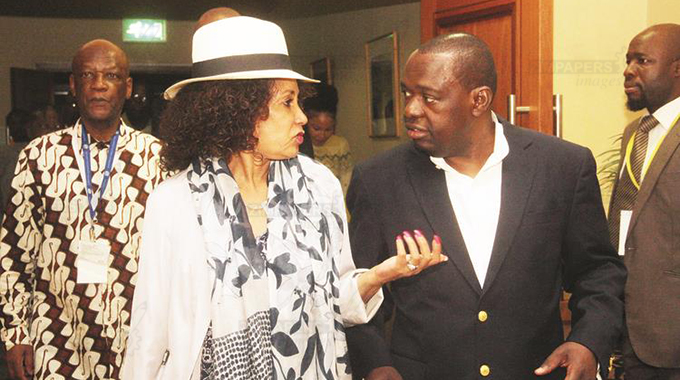
SA ministers arrive for BNC talksForeign Affairs and International Trade Minister Dr Sibusiso Moyo (second from right) welcomes his South African counterpart, International Relations and Cooperation Minister Lindiwe Sisulu, at Robert Gabriel Mugabe International Airport last night. Looking on is South Africa’s Ambassador to Zimbabwe, Mr Mphakama Mbete (left). — Picture by Kudakwashe Hunda

Innocent Ruwende and Zvamaida Murwira
Three South African ministers arrived in the country last night for the third session of the Zimbabwe-South Africa Bi-National Commission, with president Cyril Ramaphosa expected to jet in today. The three are Lindiwe Sisulu (International Relations and Cooperation), Siyabonga Cwele (Home Affairs) and Blade Nzimande (Transport).

Deputy Minister of Social Development Hendrietta Bogopane-Zulu arrived earlier during the day.
The South African ministers were received by Foreign Affairs Minister Sibusiso Moyo, Home Affairs Minister Cain Mathema and SA Ambassador to Zimbabwe Mr Mphakama Mbete.

The BNC is expected to deepen bilateral relations and broaden mutually beneficial areas of cooperation in several sectors, making a busy couple of days for the high-level engagement between Zimbabwe and South Africa.

The weekly Cabinet meeting, usually held on Tuesday, will this week take place on Thursday due to commitments by the President and Cabinet regarding the BNC.
This was confirmed by the Office of the President and Cabinet last night.

President Ramaphosa will take part in the BNC Heads of State Summit which he will attend together with his counterpart, President Mnangagwa, tomorrow.

Speaking at the Robert Mugabe International Airport, were the ministers from the two countries had as brief meeting, Minister Moyo said: “This is the third Bi-National Commission between South Africa and Zimbabwe and therefore we have been meeting our colleagues here and I have met my colleague Minister Sisulu. We are expecting to discuss issue of bilateral mutual concern between the two nations’ primarily economic issues and these are the matters of the heart which particularly affect the two nations. It is what we agree that is important, not signing MOUs. You may not sign an MOU but you make serious progress.”

In an ealier interview, Ministry of Foreign Affairs and International Trade spokesperson Mr Gideon Gapare had said preparations for the high level meeting were at an advanced stage.

“The ministers from South Africa are coming today, this evening. Other officials from South Africa arrived last week while others landed here in the afternoon. All is now set for the BNC with President Ramaphosa set to come tomorrow (today),” said Mr Gapare.

More South African ministers are expected to arrive in Harare with President Ramaphosa.
Zimbabwe is South Africa’s biggest trading partner.

President Ramaphosa’s spokesperson, Ms Khusela Diko, told The Sunday Mail that the relations between the two countries were gaining ground.

“Trade cooperation between the two countries is at a high level to the extent that South African exports to Zimbabwe in 2018 amounted to approximately R30,8 billion (about US$2,1 billion), while imports from Zimbabwe amounted to approximately R3,6 billion (US$250 million), thus placing Zimbabwe among South Africa’s top trading partners on the continent.

“South Africa and Zimbabwe have good bilateral political, economic and social relations underpinned by strong historical ties dating back from the years of the liberation struggle,” she said.

Several agreements covering political, economic, social and cultural relations will be signed this week.
There are expectations the upgrade of Beitbridge Border Post and the revival of the National Railways of Zimbabwe (NRZ) will get fresh impetus through bilateral engagements between the two sister republics.

Senior officials from the two countries concluded their two-day marathon discussions on Friday, paving the way for the ministerial session.

During a meeting of senior officials from the two countries on Thursday, Secretary for Foreign Affairs and International Trade Ambassador James Manzou said the BNC would commit the two countries to urgently implement the 45 agreements that have been signed in the previous bilateral engagements.

“The success of our cooperation will not be measured by the number of agreements we sign or the number of decisions that we take. It will be measured by the action we take and the concrete results that can be attributed to it. This means implementation of those agreements and decisions,” he said.

In addition to signing agreements on arts, culture and heritage, women empowerment and youth affairs, the two countries will also zero in on establishing a database for Zimbabwean teachers based in South Africa, compensation of Wenela (Witwatersrand Native Labour Association) claimants as well as cooperation in education, media and information communication technology (ICT).

The post SA ministers arrive for BNC talks  appeared first on Zimbabwe Situation.

MPs at sixes and sevens over age of consent 

Source: MPs at sixes and sevens over age of consent | The Herald March 11, 2019 Dr Labode Phyliss Kachere Deputy News Editor Over the past few days Zimbabwe’s social media has been on fire. Debate has been raging on various social media platforms after news filtered from a workshop held last week by the […]

The post MPs at sixes and sevens over age of consent  appeared first on Zimbabwe Situation.

Source: MPs at sixes and sevens over age of consent | The Herald March 11, 2019

MPs at sixes and sevens over age of consentDr Labode

Phyliss Kachere Deputy News Editor
Over the past few days Zimbabwe’s social media has been on fire.
Debate has been raging on various social media platforms after news filtered from a workshop held last week by the Parliamentary Portfolio Committee on Health and Child Care in Kadoma that during debate, parliamentarians were pushing for the reduction of the age of sexual consent from 16 to 12 years.

Age of sexual consent is the stage at which an individual is considered legally old enough to consent to participation in sexual activity.

During the Eighth Parliament some legislators that included former member Ms Jessie Majome, Mr Innocent Gonese and Ms Priscilla Misihairabwi, during the Committee Stage of the Criminal Codification Reform Amendment Bill fought for the consent age to be raised from 14 to 18, before it was eventually set at 16 years.

Section 61 of Criminal Law Codification & Reform Act, unlawful sexual conduct means any act, the commission of which constitutes the crime of rape, aggravated indecent assault, indecent assault, sexual intercourse, or performing an indecent act with a young person or sodomy. The young person is described as anyone under the age of 16.

While Section 70 of the Criminal Code talks of sexual intercourse or performing indecent acts with young persons and maintains that a young person is a person below 16 years of age in relation to the crime of rape, Section 78 of the Constitution states 18 years as the age at which a person has the right to start a family.

Section 22(1) of the Marriage Act allows girls to marry at 16, and legal experts say this predates the Constitution which defines a child as anyone under 18. The question then becomes, is Zimbabwe marrying off its children?

According to the Zimbabwe National Statistics Agency’s (ZimStats) Multiple Indicator Cluster Survey (MICS) 2014:
“Child marriage (before 18 years) is deteriorating although ‘very early’ child marriage (before 15 years) is improving (getting lower). The MICS 2014 data show that one in three women married before age 18, and also depict huge differences between urban (18 percent) and rural (43 percent) areas.”

Section 22(1) of the Marriage Act states that no girl under the age of 16 years and no boy under the age of 18 years shall contract a valid marriage without the consent of the minister.

This was challenged by Loveness Mudzuru and Ruvimbo Tsopodzi, who complained that the provision violated the Constitution by setting the age of marriage for girls below the age permitted by the Constitution which is 18 years.

The Africa Legal Information Institute said the applicants, young women of 18 and 19 years of age, applied to the Constitutional Court for a declaratory order that the effect of s 78(1), as read with s 81(1), of the Constitution of Zimbabwe 2013 is to set 18 as the minimum age for marriage; that no person under that age may enter a marriage union; and that the Customary Marriages Act [Chapter 5:07] is unconstitutional, in that it does not provide for a minimum age limit of 18 years.

The Constitutional Court granted the order but to date, the Marriages Act is yet to be amended to reflect that.
With such contradictions in the law, shouldn’t parliamentarians be seized with harmonising and synchorinising such?
Outraged by suggestions that the committee’s members were pushing for the reduction of the 16 years set during the Eighth Parliament and hailed as a milestone in the fight against child marriages, angry citizens took to social media platforms Twitter and Facebook to vent their anger, calling them paedophiles for harbouring such thoughts.

@Chris_Muyeye wrote:
“There must be perverts in this committee. I am disgusted. Is this how we are using taxpayers’ funds to come up with such warped policies?”

@Gracia Gwati voiced her concern:
“You mean grown up men & women spent taxpayers’ money for lunch & all to propose such bilious nonsense. Aewa, they need to be secluded from society, they exhibit criminal behaviour.”

@Taasha wrote: “As a young lady who is proudly Zimbabwean, I am greatly disappointed and disheartened by this matter. This is going to cause a lot of problems for us. I am thinking of a 12-year-old getting raped. When she/he is taken to court and his/her rapist’s hides behind, ‘he/she said yes’’.”

Prominent women’s rights campaigner Ms Everjoice Win could not hide her disgust:
“My question is: So all these years of advocacy against child marriage have led us here? What did I miss? Help me understand. So they have been seemingly condemning child marriage, only for them to end up at ‘ok we will just f*** the little kids but not marry them?”

The committee’s chairperson, Dr Ruth Labode, confirmed that the issue of the reduction of the age of consent from 16 to 12 had come out in deliberations following presentations by the Ministry of Health and Child Welfare on amendments made to the Public Health Act.

She said she was more concerned about young persons’ access to reproductive health services than anything else.
She added it had come to her committee’s attention that the seeming contradictions between the age of sexual consent set at 16 and the legal majority age of 18 presented challenges in the administration of the amended Public Health Act.

“For example, we know that young persons under the age of 16 are having sex and may get a sexually transmitted infections. This will force them to go to the clinic or hospital to seek treatment. Provisions of the amended Public Health Act will not allow a minor to be treated without the consent of the parent or guardian. Will that child get their parent to accompany them to the hospital? Is that practical? Do we have a clause in the amended Act to allow for their treatment?” queried Dr Labode.

After all the lobbying and campaigns done as the nation fights rampant child marriages, the question that Zimbabwe should be preoccupied with is how to synchronise.

Former Harare West legislator Ms Majome accused society of exposing children under the age of 18 to explicit sexual content only to turn back and accuse the same children of being delinquent.

“We have children getting sexual exposure through popular culture and the media. We accuse the young girls of engaging in sexual activity. But we are not doing anything about this exposure. Who is making these school girls pregnant? In most cases, it’s the adult men.

“Why not address that? The Constitution wants to serve the best interests of the child. Is lowering the age of consent in the best interest of the children?” said Ms Majome.

In Kenya the age of consent is 18 years. Shouldn’t we be looking at increasing our 16 to match the 18 years legal age of majority, instead of taking these five steps back by lowering it to 16 years?
South Africa is in a similar predicament with Zimbabwe.

In that country, a person is considered to be a child, when he or she is under the age of 18, however the Sexual Offences Act does allow consensual sex for persons 16 and older. This creates a problem where the parents of a child between 16 and 18 do not consent to their child having sex.

The post MPs at sixes and sevens over age of consent  appeared first on Zimbabwe Situation.