Govt to spend $1bn on roads

Source: Govt to spend $1bn on roads | The Herald March 11, 2019 Joel Biggie Matiza Innocent Ruwende Senior Reporter Government has committed over $1 billion for road construction and rehabilitation with various projects underway across the country under the 2019 Road Development Programme. Funding for this flagship project, which is the biggest road project […]

The post Govt to spend $1bn on roads appeared first on Zimbabwe Situation.

Source: Govt to spend $1bn on roads | The Herald March 11, 2019

Govt to spend $1bn on roadsJoel Biggie Matiza

Innocent Ruwende Senior Reporter
Government has committed over $1 billion for road construction and rehabilitation with various projects underway across the country under the 2019 Road Development Programme. Funding for this flagship project, which is the biggest road project in 20 years, is being mobilised from the two percent Intermediated Money Transfer Tax as well as the Zimbabwe National Road Administration Infrastructure Bond, as President Mnangagwa’s administration pursues its development trajectory.

According to the 2019 Infrastructure Plan released by Treasury last year, the rehabilitation of the roads through private-public-partnerships has been difficult, hence the switch to seek financing from the domestic market.

Transport and Infrastructural Development Minister Joel Biggie Matiza, who is carrying out a nationwide tour to assess progress of the various roadworks, said Government’s thrust was to refurbish existing roads and construct new roads which befit an upper middle income economy.

“As we embark on our 2030 vision, which aims to transform Zimbabwe into an upper middle income economy, we must construct roads which befit that status. There is quite a lot of work going on some of the projects which have been pending for a while without work going on,” he said.

“We are coming of a recessionary situation. Our roads need to be revamped to a situation where we have a national standard or even SADC standards of roads so that we are able to ply there and do our economic deliverables easily.”

The road dualisation programme for State roads and upgrading of gravel roads is in line with Government’s Transitional Stabilisation Programme, which outlines that “the road, rail and air sub-sectors are critical in rapid industrialisation and agricultural advancement as they facilitate trade and movement of goods and people, hence, the need to rehabilitate and upgrade the current stock of assets”.

The TSP document further states that the comprehensive Roads Development Programme, with support from the fiscus, is targeting upgrades from gravel to bituminous surfacing at an average cost of US$500 000 per kilometre. The target is to complete 20km for each gravel road every year until completion.

Through the fiscus, over US$250 million has been released for roadworks.
Minister Matiza said the roads should be done properly and there is need for quality control as Government was not interested in “seeing just black tar”.

He said tenders were being drawn up for consultants to come and assist road authorities to ensure that roads can last up to 20 years.

“We are introducing the project management programme in the ministry. As I speak, tenders are being prepared to get other consultants to come and assist provincial road engineers to make sure there is quality in the roads. We know we have challenges of manpower in some areas in terms of experience,” he said.

“We have experience out there in the private sector and we want them to participate in this national programme which have seen us doing a lot of work over a short time. Before the coming in of the new dispensation there was no activity taking place but now 1km a day or more.”

He said the new dispensation was geared to revamping the country’s roads.
Writing for The Herald last week, Finance and Economic Development Minister Professor Mthuli Ncube said construction was at the heart of Government’s agenda.

“Indeed, building is at the heart of our agenda, in particular road building. This essential infrastructure is arguably the most important of all our public assets, contributing to economic development and growth whilst providing access to economic opportunities, employment, health and education services,” he said.

“It connects Zimbabweans and levels the playing field. All Zimbabweans have the basic and fundamental right to access healthcare, access markets, and the freedom of movement. Roads, therefore, are key. Drawing from the short-term Transitional Stabilisation Programme, the 2019 Infrastructure Investment Plan, with an allocation of over US$900 million, targets to more than double our investment in the road sector.”

He said Government was upgrading 781km of Zimbabwe’s road network, re-gravelling 483km and constructing 22 bridges.
Minister Ncube said each of the targeted roads has been identified including specific works for the year, which provides an opportunity for citizens to monitor progress in implementing planned works.

The District Development Fund is gravelling and regrading at least three feeder roads per province, while urban and rural local authorities are up-scaling the road rehabilitation exercise for roads under their purview.
The post Govt to spend $1bn on roads appeared first on Zimbabwe Situation.
Mugabe must face Gukurahundi trial: Matemadanda 

Source: Mugabe must face Gukurahundi trial: Matemadanda – NewsDay Zimbabwe BY REX MPHISA DEFENCE deputy minister Victor Matemadanda has said former President Robert Mugabe must be tried for the 1980s Gukurahundi massacres. In a video uploaded on SMTV on Saturday, Matemadanda also said Mugabe was solely responsible for the economic hardships the country is facing […]

The post Mugabe must face Gukurahundi trial: Matemadanda  appeared first on Zimbabwe Situation.

Source: Mugabe must face Gukurahundi trial: Matemadanda – NewsDay Zimbabwe

BY REX MPHISA

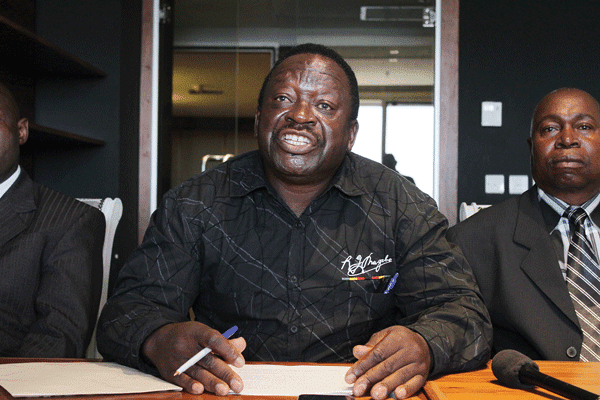
DEFENCE deputy minister Victor Matemadanda has said former President Robert Mugabe must be tried for the 1980s Gukurahundi massacres.

In a video uploaded on SMTV on Saturday, Matemadanda also said Mugabe was solely responsible for the economic hardships the country is facing following 37 years of misrule, during which he travelled across the globe inviting sanctions by insulting world leaders.

Mugabe, between 1983 and 1987, presided over the killing of between 8 000 and 20 000 defenceless Zimbabweans of mostly Ndebele ethnic tribe by the North Korea and British military-trained Fifth Brigade of the Zimbabwe National Army.

The Fifth Brigade had been deployed to extinguish what Mugabe said was insurgency from the Joshua Nkomo-led Zimbabwe African People Union military wing called the Zimbabwe People’s Revolutionary Army.

“He must be tried for the people he killed through Gukurahundi. Chiefs must take him and try him and make him pay for his sins. He has plenty of cattle at his Gushungo Dairy and that is how he can exorcise ngozi [avenging spirit]. He is old, but still coherent and must be tried,” Matemadanda said.

He spoke to SMTV in an apparent reaction to Mugabe’s recent attack on President Emmerson Mnangagwa over the extra-judicial killings carried out by members of the security forces in January this year.

“When we talk about the old man — the Mugabe mythology. You may want to forgive the old man, but I don’t think he deserves forgiveness, because surely, surely Mugabe tells Mnangagwa not to kill people … it’s unheard of. Mugabe, telling people not to kill each other. Who is the specialist?” Matemadanda asked.

“Some of us survived because of our speed to run away. Even Mnangagwa he is talking to … he forgets that he escaped death from him. Maybe he (Mugabe) is the known and approved hangman or killer. I think he (Mugabe) wanted to say you are taking away my job (of killing people) because that’s his job.

“I went to Matabeleland and Midlands. I come from the Midlands and I said this man is old, but still coherent. Chiefs, take this man, he has cattle at Gushungo Dairy. Because avenging spirits are settled by paying cattle and he must be tried for Gukurahundi massacres so that we can close this case.”

He said because Mugabe has not been tried in a court of law, so he is presumed innocent.

“So, as of now, we cannot call him a mass murderer. We can only say people got killed during his rule until the court finds him guilty,” Matemadanda said, hinting at the direction the Mnangagwa administration could be taking to solve the Gukurahundi issue.

The massacres, which have been a source of pain and rift between the Ndebeles and the predominantly Shona tribe, with some of the former calling for separate a Ndebele State, have been used by opposition leaders to garner votes in mostly Bulawayo and other pockets of Matabeleland, where Zanu PF has not won seats in parliamentary elections since independence.

Mnangagwa and his deputy, Constantino Chiwenga, after seizing power through a coup in November 2017, were asked by people of Matabeleland to explain their roles in the Gukurahundi massacres.

The government, in response, set up a department to probe and seek to heal the wounds, but this has been met by resistance from political parties and pressure groups in Matabeleland.

They even frowned upon the setting up of the post-election violence commission led by former South Africa President Kgalema Motlanthe for failing to probe the Gukurahundi massacres.

Matemadanda fell out with Mugabe for openly backing Mnangagwa’s ascendance.

“We can just say people disappeared … maybe they just sunk we don’t know … and then he accuses Mnangagwa saying don’t try to be God as if he (Mugabe) is a god bigger than God himself,” Matemadanda said.

He asked why Mnangagwa was being asked to explain the disappearance of people during the Mugabe era.

“In our culture, if you are a witch and you come crying more than the bereaved, we give you the deceased to eat,” Matemadanda says in the video clip.

He said it was entirely up to Mnangagwa to “put him [Mugabe] in order”.

“Mugabe not only killed people, but destroyed the economy. These problems that we have are a result of Mugabe’s rule. Even the sanctions; he enjoyed going all over insulting people over there and yonder. He became famous for insulting,” Matemadanda said.

Mugabe, at one time hijacked a Johannesburg earth summit to denounce then British Premier Tony Blair, telling him, “So Blair, keep your England and let me keep my Zimbabwe”, while defending the seizures of white-owned farms.

Mugabe, who also used international forums to attack former United States President George Bush, turned his back on the Commonwealth, worsening the country’s economic woes.

The post Mugabe must face Gukurahundi trial: Matemadanda  appeared first on Zimbabwe Situation.
Ethanol blending saves Zim millions: Mangudya

Source: Ethanol blending saves Zim millions: Mangudya | Newsday (News) BY VENERANDA LANGA RESERVE Bank of Zimbabwe governor John Mangudya on Thursday told Parliament that blending of ethanol with fuel has been saving the country millions of dollars. Mangudya had appeared before the Joel Gabbuza-led Parliamentary Portfolio Committee on Energy, together with Energy minister Joram […]

The post Ethanol blending saves Zim millions: Mangudya appeared first on Zimbabwe Situation.

Source: Ethanol blending saves Zim millions: Mangudya | Newsday (News)

BY VENERANDA LANGA

RESERVE Bank of Zimbabwe governor John Mangudya on Thursday told Parliament that blending of ethanol with fuel has been saving the country millions of dollars.

Mangudya had appeared before the Joel Gabbuza-led Parliamentary Portfolio Committee on Energy, together with Energy minister Joram Gumbo, to speak on the fuel situation in the country when MPs asked him to explain if there was enough ethanol in the country to supplement fuel imports.

Last year, government increased the mandatory blending ratio of unleaded petrol from 15% ethanol to 20% following a significant improvement in the supply of ethanol from GreenFuel.

“Our fuel consumption patterns have been such that if we were to consume 50 million litres of fuel, we would mix it with ethanol and, therefore, make savings of about $10 million because we have 20% ethanol going into fuel,” Mangudya said.

Energy ministry secretary Gloria Magombo, who also appeared before the committee, was asked to explain if ethanol production will in any way alleviate fuel shortages in the country.

Magombo said, while ethanol gave substitution for the amount of petrol consumed in the country, there was, however, a shortage of sugarcane during this season which also affected fuel supplies.

“We have import substitution for petrol when we blend it with ethanol, but during this time of the season we are constrained in terms of supplies of ethanol which gives us substitution of the amount of petrol consumed because sugar plantations from December to May experience very low production.

“However, to allow for constant supplies, we are building additional storage tanks for supplies of sufficient ethanol so that we continue blending. We also have a flat blending rate where government buys extra stock of ethanol, and once we have improved the production it will assist us to ensure energy security in the country,” she said.

MPs from the Energy committee, however, felt that the ministry was supporting GreenFuel more, on ethanol production, than other sugar producers like Tongaat Hulett.

“Ethanol from Chisumbanje is very expensive. Why is it that it is the only supplier supported when there are other players that have better capacity to produce ethanol?” asked Dangamvura Chikanga MP Prosper Mutseyami.

Magombo said they got ethanol from Chisumbanje (GreenFuel) as well as other sugar producers like Triangle through Fuel Ethanol Company of Zimbabwe.

Chipinge South MP Enock Porusingazi also blasted government for initiating jatropha projects and later failing to sustain them, to assist in fuel production.

He said the projects were a waste of money and were now white elephants.

The post Ethanol blending saves Zim millions: Mangudya appeared first on NewsDay Zimbabwe.

The post Ethanol blending saves Zim millions: Mangudya appeared first on Zimbabwe Situation.

EcoCash loses bid to block search 

Source: EcoCash loses bid to block search – NewsDay Zimbabwe March 11, 2019 BY CHARLES LAITON Strive Masiyiwa’s EcoCash (Pvt) Ltd, whose computers had been targeted for search and seizure by Dr Dish (Pvt) Ltd in the on-going $1, 7 million debt dispute, has lost its bid to interdict and restrain the latter from executing […]

The post EcoCash loses bid to block search  appeared first on Zimbabwe Situation.

Source: EcoCash loses bid to block search – NewsDay Zimbabwe March 11, 2019

BY CHARLES LAITON

Strive Masiyiwa’s EcoCash (Pvt) Ltd, whose computers had been targeted for search and seizure by Dr Dish (Pvt) Ltd in the on-going $1, 7 million debt dispute, has lost its bid to interdict and restrain the latter from executing a court order after its application was dismissed with costs.

Late last month, executive director and chairman of Dr Dish, Nyasha Muzavazi, petitioned the High Court seeking a court order to search Masiyiwa’s business premises in Borrowdale, but his efforts were thwarted by EcoCash (Pvt) Ltd chief executive officer, Natalie Jabangwe.

It was Jabangwe’s contention that Dr Dish was intending to execute the search on a wrong property arguing that her firm had nothing to do with issues concerning the business agreement that was entered between Dr Dish and Econet Media Limited, Econet Kwese Television (Pvt) Ltd and Cassava Smartech Zimbabwe.

However, Muzavazi opposed EcoCash’s application insisting that his company had carried out investigations and established that EcoCash (Pvt) Ltd was not in any way different from Cassava Smartech Zimbabwe.

“The applicant (EcoCash) avers that it is wholly owned by Cassava Smartech Zimbabwe Limited. They further aver that Cassava and the applicant are housed in the same building that is at Number 1906 Borrowdale Road. I wish further to state that I noticed, when we visited the premises that, other than EcoCash activities, apparent in the business, there is no sign, billboard or banner suggesting that the premises house a company by the first applicant’s name,” Muzavazi had argued.

On February 26, 2019 High Court judge Justice Clement Phiri deliberated on the matter and ruled in Dr Dish’s favour before slapping EcoCash with costs on a high scale.

“This application is dismissed with costs on a legal practitioner and client scale,” Justice Phiri ruled.

Meanwhile, Dr Dish has also filed an urgent chamber application for temporal stay of proceedings in another matter involving itself and Econet Kwese Television (Pvt) Ltd in which the latter issued summons claiming $634 400 against it.

“The respondent (Econet Kwese TV) has since filed and served a notice to plead with intention to bar in case number HC11018/18 against the applicant (Dr Dish),” Dr Dish said.

“The applicant faces the risk of being barred in case number HC11018/18 and yet it is convenient for the court and the parties to be joined and both the applicant’s and the respondent’s claims be heard at the same time.

The matter is pending.

The post EcoCash loses bid to block search  appeared first on Zimbabwe Situation.

Ordinary Zimbabweans Cannot Access PayPal Because Of Sanctions – Government

Source: Ordinary Zimbabweans Cannot Access PayPal Because Of Sanctions – Government – Techzim Posted Sat 09 Mar 2019 by Tinashe Nyahasha (@tnyahasha) On the 4th of March, the United States President, Donald J. Trump extended US sanctions against Zimbabwe or against individuals in Zimbabwe. The real truth lies somewhere in the middle and is an issue of political debate. Of […]

The post Ordinary Zimbabweans Cannot Access PayPal Because Of Sanctions – Government appeared first on Zimbabwe Situation.

Source: Ordinary Zimbabweans Cannot Access PayPal Because Of Sanctions – Government – Techzim

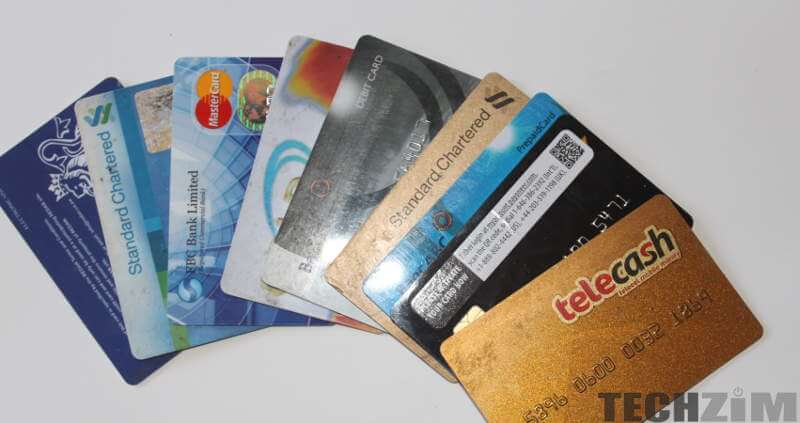
Bank Cards, Debit cards and credit cards

On the 4th of March, the United States President, Donald J. Trump extended US sanctions against Zimbabwe or against individuals in Zimbabwe. The real truth lies somewhere in the middle and is an issue of political debate.

Of course all kinds of reactions have resulted from this decision by the United States government. Our government has responded by hiring a lobbyist firm that is charging them half a million United States dollars per year. Well maybe they are worth it, they are the same guys who were part of the team that won a victory for Trump into White House.

The government has also been issuing statements especially through the ministry of information describing how the sanctions are affecting ordinary Zimbabweans. One such statement is this one:

US sanctions are targeted at Zimbabwe and all its citizens. The sanctions are so comprehensive that any lines of credit to the country are blocked by OFAC. Citizens who are not on the sanctions list cannot access US-linked financial services such as PayPal

Is it true?

Well PayPal became accessible to Zimbabweans in 2014. There was even a time before then when someone who was travelling to Zimbabwe from anywhere else could not access their PayPal account just because they were in Zimbabwe, the PayPal website would not even load.

Even when they made it possible for the website to load, as long as you had a Zimbabwean VISA or MasterCard, you could not open an account; the error message would say something about sanctions. Then in June 2014, PayPal expanded into Zimbabwe but…

Zimbabwe is a designated consumer

The PayPal accounts available to Zimbabweans cannot receive money. That means you can only fund your wallet yourself by using the card linked to it. The account is basically for you to spend money (most likely outside Zimbabwe) but you can’t use it to receive payments as an online entrepreneur for example.

PayPal no longer says these restrictions are explicitly about sanctions and it’s difficult to confidently say that’s what they are about because there are other countries like Zambia that are not under US sanctions that have the same restrictions imposed.

Sanctions are real though

Recently the story broke that South African banks cannot supply Zimbabwean banks with US dollar notes anymore because they fear penalties from the US government for basting sanctions. Those penalties are hefty and a real scare to anyone and could very well be the reason for PayPal’s long pole handshake. CBZ Bank right here in Zimbabwe was fined USD 385 million by the US government for dealing with ZB Bank which was on the sanctions list.

So yea, PayPal is happy for you to spend and send money out of Zimbabwe but they don’t want you to earn into it. It’s very possible that you have sanctions to thank for that.


The post Ordinary Zimbabweans Cannot Access PayPal Because Of Sanctions – Government appeared first on Zimbabwe Situation.