Cyril Ramaphosa to meet Zimbabwe’s Emmerson Mnangagwa on Tuesday

Source: Cyril Ramaphosa to meet Zimbabwe’s Emmerson Mnangagwa on Tuesday – Times Live Zimbabwe – described as one of SA’s top trading partners on the continent – will host a meeting between presidents Cyril Ramaphosa and Emmerson Mnangagwa on Tuesday. The SA president’s office said Ramaphosa will travel to Harare to co-chair the third session of […]

The post Cyril Ramaphosa to meet Zimbabwe’s Emmerson Mnangagwa on Tuesday appeared first on Zimbabwe Situation.

Source: Cyril Ramaphosa to meet Zimbabwe’s Emmerson Mnangagwa on Tuesday – Times Live

Zimbabwe's president Emmerson Mnangagwa delivers a speech as he visits the Russian diamond producer Alrosa in Moscow, Russia, on January 14 2019. President Cyril Ramaphosa will meet his Zimbabwean counterpart on Tuesday.

Zimbabwe’s president Emmerson Mnangagwa delivers a speech as he visits the Russian diamond producer Alrosa in Moscow, Russia, on January 14 2019. President Cyril Ramaphosa will meet his Zimbabwean counterpart on Tuesday. Image: REUTERS/Maxim Shemetov

Zimbabwe – described as one of SA’s top trading partners on the continent – will host a meeting between presidents Cyril Ramaphosa and Emmerson Mnangagwa on Tuesday.

The SA president’s office said Ramaphosa will travel to Harare to co-chair the third session of the Bi-National Commission, following a meeting between senior officials from both countries last week.

The two countries conduct their bilateral relations through the Bi-National Commission, established in 2015. Both heads of state will review progress made with the implementation of the 45 bilateral agreements signed so far spanning trade and investment, health, labour, migration, defence, taxation, tourism, water and environment.

The presidency said: “Trade co-operation between the two countries is at a high level to the extent that SA exports to Zimbabwe in 2018 amounted to approximately R30.8bn, while imports from Zimbabwe amounted to approximately R3.6bn, thus placing Zimbabwe among SA’s top trading partners on the continent.”

“SA and Zimbabwe have good bilateral political, economic and social relations underpinned by strong historical ties dating back from the years of the liberation struggle.”

Ramaphosa will be accompanied by the international relations and cooperation minister Lindiwe Sisulu, defence and military veterans minister Nosiviwe Mapisa-Nqakula, trade and industry minister Rob Davies, home affairs minister Siyabonga Cwele, and transport minister Blade Nzimande.

The post Cyril Ramaphosa to meet Zimbabwe’s Emmerson Mnangagwa on Tuesday appeared first on Zimbabwe Situation.

‘Expanding economy driving fuel demand’

Source: ‘Expanding economy driving fuel demand’ | The Herald March 11, 2019 Dr Mangudya Golden Sibanda Senior Business Reporter The huge demand for fuel, which has caused supply challenges and spawned fuel queues across the country, is testimony that economic activity has expanded significantly over the past year or so, Reserve Bank of Zimbabwe (RBZ) […]

The post ‘Expanding economy driving fuel demand’ appeared first on Zimbabwe Situation.

Source: ‘Expanding economy driving fuel demand’ | The Herald March 11, 2019

‘Expanding economy driving fuel demand’Dr Mangudya

Golden Sibanda Senior Business Reporter
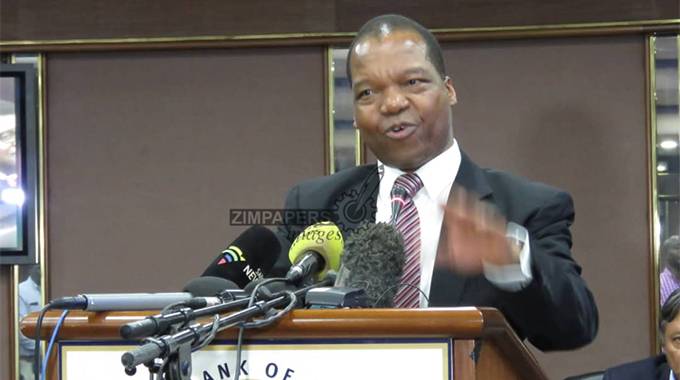
The huge demand for fuel, which has caused supply challenges and spawned fuel queues across the country, is testimony that economic activity has expanded significantly over the past year or so, Reserve Bank of Zimbabwe (RBZ) governor Dr John Mangudya said last week.

Dr Mangudya, however, allayed fears of continued widespread fuel shortages in the country saying the situation should start improving before end of this month on the back of interventions the bank and Government had put in place.

The Reserve Bank, Dr Mangudya said, had released funding for fuel imports through letters of credit over the last two months, which are enough to import required amounts of fuel into Zimbabwe. He said the fuel shortages reflected time lags between bank processes and actual deliveries.

This is because the process of establishing a letter of credit (LC) with a local bank, getting confirmation from the international bank (Afreximbank, which guarantees LCs) through to getting confirmation from the foreign bank, which advises the fuel supplier up until the supplier gives notification for release of fuel, takes two weeks on average.

The fuel is usually already in the country at NOIC’s Msasa storage facilities, but needs to be paid for first prior to release.
All fuel imports into Zimbabwe are now paid for through LCs, which are financial instruments used to securitise and finance imports, due to challenges around hard currency.

LCs need to be guaranteed by an international bank to be acceptable as value for money and in Zimbabwe’s case this is done by Afreximbank.

The central bank chief made the comments when he appeared before the Parliamentary Portfolio Committee on Energy and Power on Thursday last week, which is chaired by Uzumba Member of Parliament Simbaneuta Mudarikwa.

Responding to an enquiry by Magwegwe MP, Anele Ndebele, on whether Zimbabwe was now in a lurch regarding the fuel situation, Dr Mangudya dismissed the notion that the country was between “a rock and a hard surface”.

Dr Mangudya said shortages of fuel being witnessed in the country — driven by increased demand due to the growing economy — were only transitory and not due to shortage of foreign currency needed to import the precious commodity.
“The demand for fuel in Zimbabwe has increased because the economy has been expanding.

“So, an expanding economy requires more fuel.
“Let us look at the other side of the story, the other side of the story is that the economy has been expanding and that is why the demand (for fuel) has been going up,” he said.

Finance Minister Mthuli Ncube said in his Transitional Stabilisation Programme (TSP) policy blue print (2019-2020) that Zimbabwe could soon be joining the six fastest growing economies in the world (from 2020), which are all in Africa.
Last year, the Treasury chief said Zimbabwe was much bigger than “we think” and re-based (establish a new base level) the country’s gross domestic product (GDP) from US$18 billion to US$25,8 billion.

“We used to spend about US$60 million or so per month to US$80 million per month, but now we are on US$90 million to US$100 million per month. So, where is all this fuel going to? The fuel is going into the economy, and this economy is expanding,” Dr Mangudya said.

Dr Mangudya said most of the firms that were closed prior to 2016 had reopened, activity in town was high and “you can even see it by these traffic jams, which were never there at some point in Zimbabwe”.
This justifies the high demand for fuel in Zimbabwe.

“So the evidence on the ground suggests to us that the demand is genuine and it’s fair to say that the economy has expanded and all we are saying is that let us not lose hope because of what we are seeing on the ground,” he said.

Dr Mangudya said the shortage of fuel was a transitory issue the apex bank and other arms of Government were working on to resolve, adding he expects “the fuel situation to improve starting this month”.

“We are going to make sure that we improve the lag between payment and supply; we are promising that we will do all we can so that we go into a better season. We need to clear the fuel queues in our country.”

The RBZ governor said while the bank had spent a cumulative US$170 million to import fuel amounting to 285 million litres in January and February, only 208 million had been released into the market while some of the balance was starting to be released now.

Consumption of fuel in Zimbabwe has, however, decline due to prize elasticity, from about between 160 million litres and 165 million per month in December last year to between 120 million litres and 120 million litres per month after the recent price hike.

Zimbabwe’s economy is estimated to have grown by 4 percent last year while finance and economic development Minister Mthuli Ncube projected in his 2019 national budget that the economy will grow by 3,1 percent this year.

Zimbabwe registered faster economic growth in 2018 compared to the average growth for the rest of Sub-Saharan Africa, despite battling a myriad of challenges besetting the economy, chief among them critical shortage of foreign currency.
While the domestic economy is expected to have grown by 4 percent last year the average annual economic growth for the rest of the sub-region, generally considered to have relatively more stable economic jurisdictions, came in at an average 3,2 percent.

The post ‘Expanding economy driving fuel demand’ appeared first on Zimbabwe Situation.

LATEST: Zanu PF speaks on President Mnangagwa and Vice President Chiwenga fight reports

Zanu-PF has dismissed reports of a purported rift between President Mnangagwa and his deputy, Vice-President Constantino Chiwenga peddled in yesterday’s issue of The Standard newspaper saying “such fiction and fertile imagination was a clear manifestat…

Zanu-PF has dismissed reports of a purported rift between President Mnangagwa and his deputy, Vice-President Constantino Chiwenga peddled in yesterday’s issue of The Standard newspaper saying “such fiction and fertile imagination was a clear manifestation of yellow journalism”. The Standard report claimed that a feud between President Mnangagwa and VP Chiwenga is escalating following the […]

Pitfalls of hydropower at a time of climate change

Source: Pitfalls of hydropower at a time of climate change | The Herald March 11, 2019 Zimbabwe’s main hydropower dam, Kariba, is running out of water due to the current drought. The dam is only 41 percent full, according to the Zambezi River Authority, which oversees the dam. This time last year, Kariba was 48 […]

The post Pitfalls of hydropower at a time of climate change appeared first on Zimbabwe Situation.

Source: Pitfalls of hydropower at a time of climate change | The Herald March 11, 2019

Pitfalls of hydropower at a time of climate change

Zimbabwe’s main hydropower dam, Kariba, is running out of water due to the current drought. The dam is only 41 percent full, according to the Zambezi River Authority, which oversees the dam. This time last year, Kariba was 48 percent full.

Now, the implications for a drying up Kariba on Zimbabwe’s electricity sector are too ghastly to contemplate. During 2015-2016, as a drought triggered by El Nino hit hydro-power production at Kariba, internal electricity generation fell sharply, resulting in rolling power cuts that left households in the dark for up to 18 hours a day.

At the time, water capacity at Kariba fell to as low as 33 percent. Today, the Kariba hydro electric power plant accounts for 67 percent of Zimbabwe’s electricity supply. But it is evident that as the year wears on, and the water levels in the dam drop due to a lack of rain and evaporation, electricity generation will also drop.

The threat of excessive power cuts in 2019 look very real.
The intensity of the existing and impending energy crisis demonstrate not only the threat climate change poses on future financial investments into hydro power, but also that hydro can no longer be relied upon to make Zimbabwe energy secure. With power shortages, electricity prices will also likely go up.

At a time, the country is seeking to boost power generation, the option to invest into hydro-power provides little guarantee for reliable power supplies now and in the future. And in a vicious ecological cycle, the rising domestic and global climate risks will only exacerbate the water shortages at Kariba.

Zesa has issued no warning of potential increased power cuts later in the year — perhaps only yet — as a result of water-induced low generation capacity at Kariba. But the risk remains real all the same. Meteorologists have spoken unkindly about the current rainy season, which has been mostly without adequate rain.

Targeting to increase the share of renewable energies in the national energy mix to 10 percent by 2020, Zimbabwe is going to need an integrated suite of energy alternatives combining thermal, hydro and solar, complemented by cleaner energies like biogas and others.

According to the National Energy Policy, Zimbabwe had been targeting a combined 1 500MW of hydro power from the expansion of Kariba by 2016 (obviously not met, even though 300MW was added to the dam recently) and a new plant at the Batoka Gorge four years later, funds permitting.

There are plans also to build hydro stations within inland dams and rivers at Pungwe providing a cumulative 24MW in two phases, Tokwe-Mukosi 12MW, Gairezi 30MW and Kondo 100MW. These projects face climate threats similar to those that have seen Kariba teeter on the brink of closure in 2015.

Due to climate change, water in dams like Kariba, rivers, lakes and streams is expected to decline by as much as 50 percent by 2050, according to a 2012 World Bank report, “Turn Down The Heat.” Just how much security can be drawn from large-scale hydro energy investments remains a matter of conjecture.

Investments into hydro energy will now need to be carefully weighted against the anticipated future changes in the climate, changes that will undoubtedly impact water availability.

The scales are rapidly tipping against countries building their energy future on hydro power just so they meet their emission reduction quotas under global climate agreements.

It goes without saying that hydro power faces significant competition for water from thirsty economic sectors such as agriculture and manufacturing. And we have yet to factor in ballooning household water needs. Clearly, the scale of potential future demand for a receding resource like water weighs heavy on hydro power.

If that is not enough, existing and future large hydro power plants built along the Zambezi River Basin, such as Kariba and Batoka, are ill-prepared for climate change, a 2012 report from International Rivers, a global ecological NGO revealed.

Hydro power projects around the Zambezi are poorly evaluated for the risks from natural hydrological variability, which is very high in that area, much less the risks posed by climate change, the report says.

Further, the Zambezi Basin exhibits the worst potential effects of climate change among 11 major sub-Saharan African river basins, and will experience the most substantial reduction in rainfall and run-off, according to the UN climate science panel.

Warming in this basin will be significant, estimated in the region 0,3-0,6 degrees Celsius within this century while evaporation rates are expected to be higher.

In the context of clean energy development, hydro power presents practical options for neutralising greenhouse gas emissions, which Zimbabwe aims to cut by 33 percent by 2030, but the risks arising from climate change cannot be ignored.

God is faithful.

jeffgogo@gmail.com

The post Pitfalls of hydropower at a time of climate change appeared first on Zimbabwe Situation.

Relief fund for looted businesses to roll out this week 

Source: Relief fund for looted businesses to roll out this week – NewsDay Zimbabwe March 11, 2019 BY MTHANDAZO NYONI GOVERNMENT says the $30 million emergency relief loan fund to assist businesses that were looted and destroyed during the January protests will be operational by this week. Addressing Bulawayo businesses that were affected, Industry and […]

The post Relief fund for looted businesses to roll out this week  appeared first on Zimbabwe Situation.

Source: Relief fund for looted businesses to roll out this week – NewsDay Zimbabwe March 11, 2019

BY MTHANDAZO NYONI

GOVERNMENT says the $30 million emergency relief loan fund to assist businesses that were looted and destroyed during the January protests will be operational by this week.

Addressing Bulawayo businesses that were affected, Industry and Commerce minister, Nqobizitha Mangaliso Ndlovu last week said government decided to come up with a facility that would ensure that businesses do not suffer huge disruptions.

“As government we came up with a facility of $30 million which we hope would assist businesses to restock, also to purchase the equipment — as well as to reconstruct the premises that were destroyed. We are doing this so as to keep businesses afloat and it is not compensation,” he said.

Zimbabwe, in January witnessed widespread protests against a steep hike in the price of fuel and general economic decay. The protests, however, turned violent when security forces used excessive force in a bid to quell the demonstrations.

The protesters destroyed infrastructure and looted shops.

“We expect this facility to be operational by mid-next week (this week). I have instructed my team to work round the clock to make sure that by mid-next week the beneficiaries begin to access the facility,” Ndlovu said.

“There are issues that are administrative, the loan agreements have to go through peer review systems, including the Attorney-General and I’m told that has been done. The facility will be in form of a loan.”

Ndlovu said those who wish to restock will access the loan at a concessionary interest rate of 4% per annum and would repay within three to six months. Those who wish to replace equipment will be paying an interest rate of 3% per annum and have 12 to 24 months to repay, while those who lost their buildings during the process will access the funding at a concessionary rate of 2% per annum and have 10 to 15 years repayment period.

“Only registered businesses will benefit from the facility,” Ndlovu said.

“But I have advised my team that whoever suffered loss and was unregistered and are willing to register they should be assisted to register their companies within the shortest possible period of time.”

Grain Millers Association of Zimbabwe chairperson Tafadzwa Musarara said the milling sector lost nearly US$3m worth of stock.

“Let me assure you of continued and stable supplies of maize and other related products we produce. Strenuous efforts are being made to normalise flour supplies,” he said.

Confederation of Zimbabwe Retailers president Denford Mutashu urged suppliers to extend favourable trading terms to retailers so that they could have enough time to recapitalise.

He also warned retailers against profiteering, adding that it was anti-development.

The post Relief fund for looted businesses to roll out this week  appeared first on Zimbabwe Situation.