Queen Bees and Red Flags 

Dear Family and Friends, Source: Queen Bees and Red Flags – The Zimbabwean Joana Mamombe When a couple of dozen bees scouted out a route under my roof and into my ceiling this week I fiddled around blocking holes with bits of newspaper and the odd squirt from a tin of fly spray  but then […]
The post Queen Bees and Red Flags  appeared first on Zimbabwe Situation.

Dear Family and Friends,

Source: Queen Bees and Red Flags – The Zimbabwean


Joana Mamombe

When a couple of dozen bees scouted out a route under my roof and into my ceiling this week I fiddled around blocking holes with bits of newspaper and the odd squirt from a tin of fly spray  but then the main swarm of thousands arrived and I knew I had a problem. For a few hours the swarm hung ominously from a branch in a nearby Msasa tree, shivering and quivering. There was no point pretending that the Queen Bee wasn’t under the mass of bodies or that a tin of fly spray would solve the problem and so I faced reality, lit a big black smoky fire and kept it going for hours until they finally moved on.

Pretending is very much on our minds in Zimbabwe this March 2019. For seven months we’ve all been pretending that things are normal but nothing is normal anymore. “How are you?” we ask our friends. “Fine,” they reply but we know that’s not true and they know that we know.  Every day it feels more and more like 2008 in Zimbabwe: people can’t afford enough food, can’t afford transport, are cutting their medicines in half, can’t afford  school fees; the bills are piling up and all the while the government are very busy with their own veil of pretence.

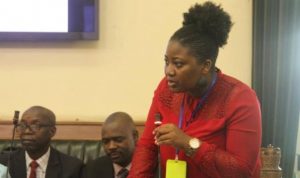
Nothing’s been fine or normal since armed soldiers shot unarmed civilians in broad daylight in the capital city last August. Nothing’s been fine or normal since armed soldiers were again released into our towns and cities in January 2019 resulting in multiple deaths, rapes, abductions, torture, assaults and detentions. The Human Rights NGO Forum say there were 1803 violations attributed to our security forces during January. Numerous MPs and civil society leaders who called for stayaways at that time have been arrested and charged with treason; two more were arrested this week: MP Joana Mamombe and MP Charlton Hwende.

Then there’s the pretence with our money. Three weeks ago the government announced a new currency called the RTGS Dollar and said that all our US dollar bank accounts were now RTGS dollars and their value would ‘float’ at an exchange rate that would be announced every day. Ever since that announcement the rate hasn’t floated at all, it hasn’t even pretended to float, and has stayed at the commencement rate of 2.5 RTGS dollars to 1 US dollar. As we feared, individuals have not been allowed to withdraw their own money from the banks in US dollars (at the non-floating or any other rate) but only in Bond dollars and coins and only in very limited amounts. This week the Governor of the Reserve Bank, speaking at a parliamentary hearing said: “The bond note did not fail… What failed is the economy, due to excess government expenditure.”

Speaking at the same parliamentary hearing, the Reserve Bank Governor said  that the RBZ will “arrest inflation the moment they see any red flags.”  This week the country’s tax authority, ZIMRA, announced a 300% increase in import duty. A red flag surely, considering we import around 80% of all our food?

Maintaining the pretence of price stability, a short news clip by the Harare City Parking PR manager went viral on social media last week. After hiking  parking prices by 50%, the PR manager said: “We have not adjusted the price for parking, what we have simply done is to reduce the time from $1 per hour to $1 per 30 minutes.“

Next is the ongoing pretence with fuel. Two months after the President announced an increase in fuel prices from $1.30 a litre to $3.30 a litre and at the same time insisted that one USD dollar was worth exactly the same as one Bond dollar, we are again sitting in fuel queues. Two months ago government blamed foreigners for fuel shortages saying they were coming in and buying up all our fuel at cheap prices but we all knew that it was actually because they weren’t releasing US dollars for fuel imports. This week the government announced that fuel consumption has gone down by 35 million litres a month, due to reduced consumption. Reduced consumption we ask, shouldn’t that be reduced supply?

Finally there came the news of compensation for commercial farmers, a topic that gets dragged out regularly to help maintain the pretence of  this “New Dispensation”  in Zimbabwe. Finance Minister Mthuli Ncube said last week: “I must say that this is an issue that I am currently seized with and I am very pleased to say that we as Government have made a lot of progress.” The Minister said he expected that valuations of seized farms would be completed by the end of March. The Minister did  not say if the valuations were according to international standards; where the money would come from; if it would be in US dollars, Bond Dollars or RTGS dollars. The big question is: if the Zimbabwe government can’t afford to import fuel, can’t even afford to import paracetemol tablets for its hospitals, how are they going to pay compensation to farmers whose homes, businesses and farms were seized nearly two decades ago.

Until next time, thanks for reading this letter and my books about life in Zimbabwe, love cathy

The post Queen Bees and Red Flags  appeared first on Zimbabwe Situation.
‘Women have big role to play in media’

Source: ‘Women have big role to play in media’ | The Herald March 9, 2019 Minister Mutsvangwa Yesterday Zimbabwe joined other countries in celebrating International Women’s Day, a global celebration of women’s social, political, and cultural achievements from the past to the present, while pushing for progress for future generations. Our Senior Reporter Felex Share […]

The post ‘Women have big role to play in media’ appeared first on Zimbabwe Situation.
Source: ‘Women have big role to play in media’ | The Herald March 9, 2019

‘Women have big role to play in media’
Minister Mutsvangwa

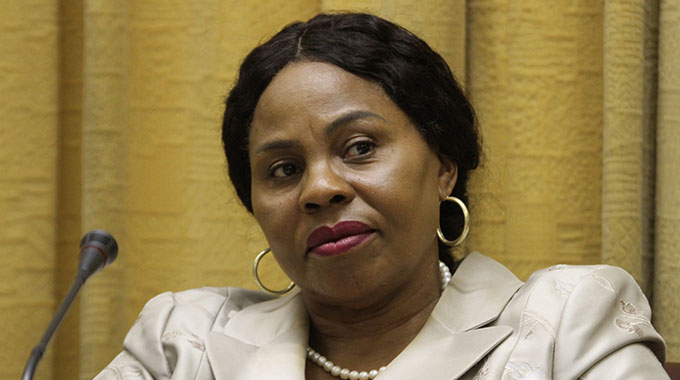
Yesterday Zimbabwe joined other countries in celebrating International Women’s Day, a global celebration of women’s social, political, and cultural achievements from the past to the present, while pushing for progress for future generations. Our Senior Reporter Felex Share spoke to Information, Publicity and Broadcasting Services Minister Monica Mutsvangwa to find out the achievements of women in the media industry, participation of women in leadership positions, measures needed to ensure more women participate in leadership positions among other issues.

FS: Minister let me begin by your assessment of women participation in the media. How is it now as compared to the past years?

MM: I am a woman and the Minister of Information in charge of the media. So, from that point of view you have a woman participating at the highest level in the media sector. Right off the bat, I should say I am the poster child of women participation in the media today. As the Minister of Information, Publicity and Broadcasting Services, I am responsible for steering the ship when it comes to the media, and presently I have the task of introducing media reforms in line with the New Dispensation’s thrust of opening Zimbabwe for business and dialogue.

Still in the media industry, Zimpapers recently appointed the first ever female editor for The Sunday Mail, Victoria Ruzvidzo. In the private sector, there are women such as AB Communications CEO, Susan Makore, and several others who are part of the decision-making matrix in media houses. This is proof that we are headed in the right direction when it comes to women participation in the media.

FS: Do we have enough women in leadership positions?

MM: I believe we have made strides in terms of opening up opportunities for women across the board. Since the coming in of the New Dispensation we have seen the rise of women into key positions in Government and in various commissions. The Zimbabwe Electoral Commission chairperson, Justice Priscilla Chigumba; Procurement Regulatory Authority of Zimbabwe board chairperson Vimbai Nyemba; ZIMRA Commissioner-General Faith Mazani; Women’s Bank CEO Mandas Makarinda and the Auditor-eneral Mildred Chiri are some of the women who are making major moves in the country and they are the trailblazers for all others who aspire to do their part in developing this country. Relatedly, we have seen the appointment of the country’s first ever Minister of Defence, Cde Oppah Muchinguri-Kashiri, who is also my party, Zanu-PF’s first woman chairperson. One could say, the New Dispensation has ushered in a wave of firsts for women and as such we can expect to see more women taking up leadership positions.

FS: There have been concerns such as abuse of female journalists and interns in newsrooms. How have you addressed the issue?

MM: One of the first issues I attended to when I assumed office as Minister of Information was to meet with media organisations and the media houses to tackle various challenges affecting journalists and abuse of female journalists and interns is one issue I have spoken about at length at each of these engagements.

I also plan to take it a step further and meet with deans at universities and colleges in order to hammer the point home that abuse will not be tolerated not just in the workplace, but even in the learning institutions.

Equally, as part of media reforms, we are looking at working conditions in the media industry with a view to increase professionalism and set up structures that will deal with grievances, salaries, employment conditions and a code of conduct. This will go a long way in addressing the issue of abuse.

FS: Are women issues in general finding voice in the media?

MM: Women are an integral part of society and they cannot be left behind by the media. The media is celebrating women’s achievements now more than ever; this is partly thanks to the developmental thrust that the country has adopted. There cannot be development if women who make up more than half of the population are not heard and do not contribute to the national discourse.

As a ministry, we have taken it upon ourselves to ensure that parastatals that fall under our ambit are overseen by boards that are not only gender sensitive, but where there is an odd number of members, female members are the majority. This is part of the process of ensuring that as women we are part of the decision-making processes when it comes to media issues.

The country’s main daily, The Herald, has a Gender Editor, who is responsible for all gender issues reported in that paper. That particular paper also makes sure to give equal voice to sources and subjects in its stories and pictures. It is my intention to engage with other media houses to ensure they have the point persons dealing with gender issues and issues of gender parity.

ZBC has several programmes that highlight women and their stories, these include Women in Farming, Women in Business, Girl Child, and The Scribe.

FS: What should be done in the long term is to ensure women’s participation, ownership and finding a voice in the media?

MM: I encourage women to take advantage of opportunities that Government has availed that include the Women’s Bank, which is an initiative that addresses issues to do with exclusion of women from the financial sector as most do not have savings or collateral. As women we have a whole ministry dedicated to us, the Ministry of Women’s Affairs, SMEs and Community Development which is also breaking ground in capacitating women so that they can set up and successfully run their own projects and businesses.

I am a mentor, and I have seen the benefits and rewards that come through mentoring young women. Initiatives such as mentorship programmes help in not just nurturing talent, but also provide a network which as women we can use to uplift each other. The media plays an important role of not only providing women with information of which opportunities are available for them, but also showcasing the strides women are taking in. Section 56 (2) of the Constitution of Zimbabwe on equality and discrimination clearly states that women and men have the right to equal treatment including to the right to equal opportunities in political, economic, cultural and social spheres. It further states that every person has the right not to be treated in an unfairly discriminatory manner on such grounds as custom, culture, sex, gender, marital status, age, pregnancy, disability among other grounds. In addition, Section 17 of the Constitution calls upon Government to ensure full gender balance and to take measures to promote the full participation of women in all spheres based on equality with men.

This includes 50/50 representation in all institutions, agencies of government, commissions and other elective bodies at all levels. The Government of Zimbabwe also made significant strides in putting in place Laws and Policies that promote gender equality and women empowerment such as the National Gender Policy which provides a guiding framework for mainstreaming gender in all sectors of the economy. The Zimbabwe Gender Commission was also established to deal with gender discrimination. Furthermore, various progressive pieces of legislation have been enacted which promote gender equality and women’s empowerment. These include;

* Equal Pay Regulations (1980)

* Legal Age of Majority Act (LAMA) which was promulgated in 1980

* Public Service Pensions (Amendment) Regulations (1985).

* Matrimonial Causes Act (1987).

* Sexual Offences Act now part of the Criminal Law (Codification and Reform) Act (2001).

* Labour Act (2006).

* Domestic Violence Act (2007).

At the global level, Zimbabwe has ratified a number of International and Regional Instruments that promote gender equality and women’s empowerment like the Convention on the Elimination of all Forms of Discrimination against Women (CEDAW), the Beijing Declaration and Platform for Action, the Protocol to the African Charter on Human and People’s Rights on the Rights of Women in Africa, Solemn Declaration on Gender Equality in Africa and the SADC Protocol on Gender and Development among other instruments.

Government through the Ministry of Women’s Affairs, Communuity, Small and Medium Enterprises Development led by my colleague Hon Sithembiso Nyoni is also developing a National Strategy on Women in Decision Making. The main objective of the Strategy is to increase women’s participation in decision making in public, political and private sectors. The Strategy will also inform the formulation of specific gender equality laws that promote and ensures boardroom diversity paying particular attention to gender. The Ministry has also developed a Girls and Young Women Empowerment Framework, which advocates for the inclusion of girls and young women in decision making and leadership positions. This covers all sectors including the media.

The post ‘Women have big role to play in media’ appeared first on Zimbabwe Situation.
Zimbabwe Govt Defends $500,000 Deal With U.S Company Lobbying for Sanctions Removal

“The current illegal sanctions regime loses Zimbabwe a lot of business, retards development and also comes with other social costs … We will do everything in our power to have them removed.” Source: Zimbabwe Govt Defends $500,000 Deal With U.S Company Lobbying for Sanctions Removal – VOA FILE: Zimbabwe President Emmerson Mnangagwa in New York […]

The post Zimbabwe Govt Defends $500,000 Deal With U.S Company Lobbying for Sanctions Removal appeared first on Zimbabwe Situation.

“The current illegal sanctions regime loses Zimbabwe a lot of business, retards development and also comes with other social costs … We will do everything in our power to have them removed.”

Source: Zimbabwe Govt Defends $500,000 Deal With U.S Company Lobbying for Sanctions Removal – VOA

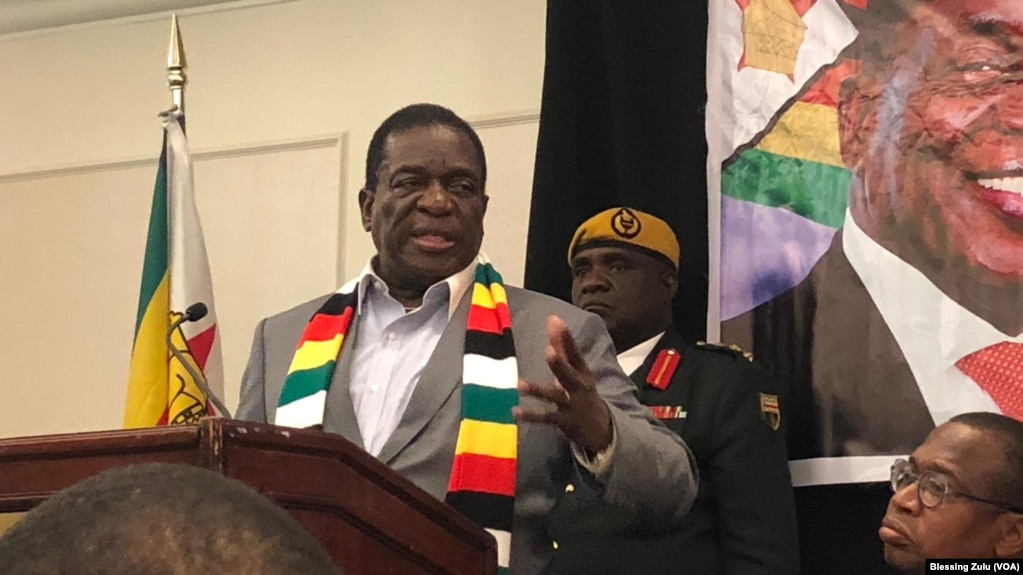
FILE: Zimbabwe President Emmerson Mnangagwa in New York

Zimbabwe’s permanent secretary in the ministry of information Nick Mangwana has defended his government’s US$500,000 deal with a United States-based lobby firm canvassing for the removal of targeted sanctions imposed on top Zanu PF officials to be removed by Washington.But human activists have criticized the deal as a waste of scarce resources in a country where more than 5 million people are food insecure.

Zimbabwe has engaged a man regarded as the most powerful lobbyist in Washington, Brian Ballard, linked to President Donald Trump’s 2016 election campaign and the president’s 2020 re-election bid. His mission is to have targeted sanctions on 141 individuals and entities in Zimbabwe removed.

Mangwana told VOA Studio 7 for Zimbabwe that Zimbabwe prioritizes international engagement.

“What I can only say is that Zimbabwe is leaving no stone unturned in its efforts to ensure that the illegal sanctions imposed upon the nation are removed. So we are doing everything that’s possible, everything that is legal to make sure that the livelihoods of Zimbabweans are improved, and we can only do if we can trade freely, if we can be able to sell our minerals at the appropriate price, on the open market, rather to go using third parties and so forth, losing money. Buying things and selling at a premium. It doesn’t work. So we need sanctions removed.”

U.S-based newspaper Politico reports that former State Department official in the Bill Clinton administration, James Rubin, will be the lead lobbyist for Zimbabwe.

Director of Vanguard Africa Jeff Smith criticized the deal saying it shows everything that is wrong about Washington DC.

“I think in summation, it really is a very apt manifestation of all that is wrong with Washington DC at this point. You have this lobby firm with obvious close links to the administration representing one of the more repressive countries, not only in Africa but the entire world – this is a government that has opened fire on its citizens in the streets, it has brazenly disregarded regional and international norms and standards, for four decades now. People point to the fact that there is a new president at the helm but lest we forget, he’s been there or was there, by the side of president Robert Mugabe for four decades, so this is nothing new in terms of the dispensation in Harare, but definitely a new development in terms of the battleground and their new allies here in Washington DC.”

This is not the first time Zimbabwean President Emmerson Mnangagwa has tried to lobby President Trump to lift sanctions and try to normalize ties with Washington.

In 2018, speaking on the sidelines of his inaugural address to the United Nations in New York, Mnangagwa said he had offered land to President Trump to build a golf course in a national park teeming with wildlife – the resort town of Victoria Falls, on the border with Zambia.

Mnangagwa told journalists that he made the offer to President Trump’s staffers at the 2018 World Economic Forum in Davos. Trump owns about 17 golf courses in America and abroad.

“I had offered President Trump ground to build a state-of-the-art golf course so that as he plays he can be able to see the big five,” Zimbabwe’s president said.

Zimbabwe is home to the so-called big five animals namely lion, rhino, elephant, buffalo and leopard.

Politico describes Ballard as “closer to the president than perhaps any other lobbyist in town.” It adds, “He’s parlayed that relationship into a booming business helping clients get their way with the Trump administration — and his clients and even some of his rivals say his firm has a better grasp of what’s going on in the West Wing than almost anyone else on K Street.

Ballard was one of the top fundraisers in the country for Trump’s campaign and continues to raise millions for his reelection campaign.

AFRICAN CLIENTS

Ballard has also represented Moise Katumbi, the opposition leader in the Democratic Republic of Congo who feared being jailed by former President Joseph Kabila and went into exile in 2016. Katumbi was last year barred from returning to contest the country’s December presidential election. Katumbi is the president of the Congolese soccer outfit, TP Mazembe, the first African side to play in the FIFA Club World Cup in 2010.

The U.S firm also represents Nigerian opposition People’s Democratic Party leader Atiku Abubakar who had previously been barred from traveling to Washington before engaging Ballard and Partners. Atiku allegedly demanded a bribe from former Louisiana Representative, Willian Jefferson.

Jefferson was in 2005 caught in an FBI corruption sting operation and was recorded on wire saying he needed to give Abubakar, then Nigerian vice president a bribe to obtain contracts for iGate and Mody’s company in Nigeria.

In another incident, U.S senate investigators alleged that one of Atiku’s four wives helped him transfer more than $40 million in “suspect funds” into the United States from offshore shell companies.

US CLIENTS

Politico reports that other Ballard clients include financial giants, Amazon, Dish Network, Uber, Pernod Ricard (the makers of Jameson whiskey and Absolut vodka) and Trulieve (a Florida-based medical marijuana company). Efforts to get in touch with Ballard were futile as he was said to be travelling to Florida.

Rubin was said to be out of the office and was yet to respond to an email sent to him by VOA News.

The post Zimbabwe Govt Defends $500,000 Deal With U.S Company Lobbying for Sanctions Removal appeared first on Zimbabwe Situation.
Upper ore breakthrough boosts Implats’ Zimbabwe resource base

Source: Upper ore breakthrough boosts Implats’ Zimbabwe resource base – Mining Weekly JOHANNESBURG (miningweekly.com) – The development of an effective method of mining upper ores, which have in the past been excluded from stoping plans, has increased the resource base of the Bimha and Mupani platinum group metals (PGMs) mines in Zimbabwe, Impala Platinum (Implats) […]

The post Upper ore breakthrough boosts Implats’ Zimbabwe resource base appeared first on Zimbabwe Situation.

Source: Upper ore breakthrough boosts Implats’ Zimbabwe resource base – Mining Weekly

JOHANNESBURG (miningweekly.com) – The development of an effective method of mining upper ores, which have in the past been excluded from stoping plans, has increased the resource base of the Bimha and Mupani platinum group metals (PGMs) mines in Zimbabwe, Impala Platinum (Implats) CEO Nico Muller has disclosed.

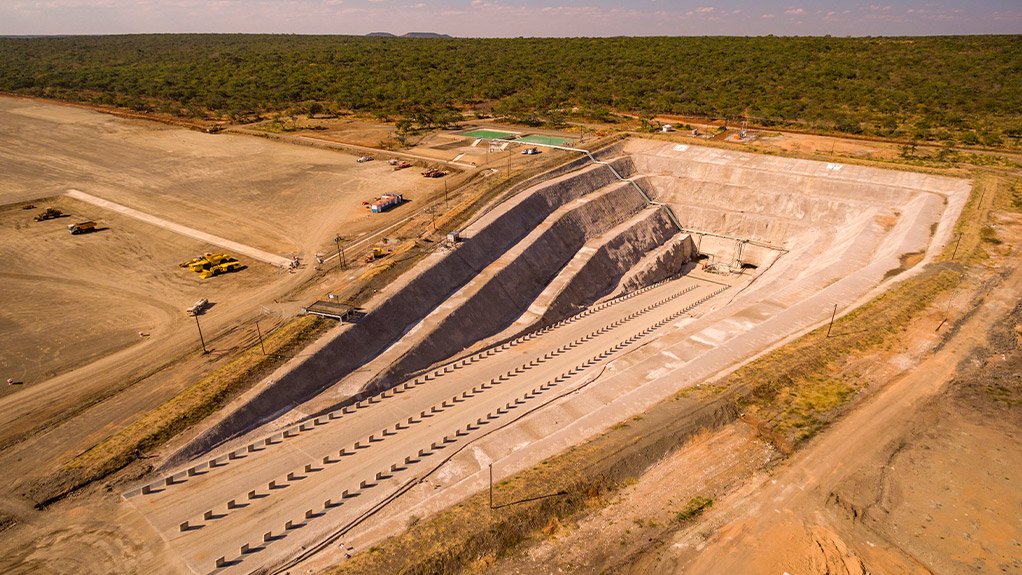
In response to Mining Weekly Online at last week’s media roundtable, Muller said Zimplats had previously only targeted ore inclines of under nine degrees, leaving steep ores unmined. But now it was including the upper ores angled at up to 14 degrees as part of its stoping areas.

That not only enlarges the resource base for Bimha and Mupani but also increases flexibility and improves capital efficiency.

Speaking during the same media roundtable, Zimpats CEO Alex Mhembere divulged to Mining Weekly Online that the Mupani mine project is actually well ahead of schedule.

“We’re expecting to revise our programme in terms of implementation to bring Mupani forward,” Mhembere added.

In terms of the original schedule, Mupani – which is earmarked to replace the Rukodzi mine that depletes in 2022, and the Ngwarati mine that depletes in 2025 – was due to reach full production of 2.2-million tonnes a year by August 2025, at an estimated total project cost of $264-million. By the end of June last year, $37.8-million had been spent on Mupani.

Mining of the upper ore is also providing increased operational flexibility by increasing the number of attack points as well as improving the overall capital efficiency by being able to use the same infrastructure to mine the bigger volume of reserves.

As a consequence, capital per ounce is reduced and the pressure on future capital investment is eased.

“We’ve also got Bimha progressing very well, on schedule on budget,” said Muller.

The successful redevelopment of Bimha, which suffered a partial collapse some time back, is important in delivering the 6.2-million tonnes a year nameplate ore capacity, which Zimplats is currently achieving.

Zimbabwean Finance Minister Mthuli Ncube told Bloomberg News this week that Zimbabwe no longer stipulated that Zimbabweans had to hold a 50% shareholding in platinum mines and that foreigners would henceforth be allowed to own 100% of mining assets.

“We’re removing that indigenisation rule, which is discouraging foreign direct investment,” Bloomberg quoted Ncube as saying.

In South Africa, the turned-around Implats no longer has the vulnerable balance sheet, negative operational cash flow and huge headcount challenge at the formerly loss-making Impala Rustenburg.

Of great assistance has been the palladium-rhodium tailwind, which contributed significantly to the company’s financial performance, with rhodium doubling in price and palladium rising sufficiently to cushion platinum’s fall.

While Implats’ six mining operations in South Africa and Zimbabwe are currently all contributing to cash flow, Zimplats has proven to be the lowest-cost producer in the Implats’ portfolio with the highest free cash flow.

Implats expects the current strength in both palladium and rhodium fundamentals to persist for the foreseeable future, with iridium and ruthenium also improving the outlook.

Operating cost is expected to be between R23 900/oz and R24 800/oz of platinum and group capital expenditure is forecast at R4.1-billion to R4.3-billion.  

The post Upper ore breakthrough boosts Implats’ Zimbabwe resource base appeared first on Zimbabwe Situation.

Govt dissolves NAC board 

Source: Govt dissolves NAC board | The Herald March 9, 2019 Dr Moyo Paidamoyo Chipunza Senior Health Reporter Government has dissolved the National Aids Council (NAC) board with immediate effect, barely a year after its appointment. In a letter dated March 4, Health and Child Care Minister Dr Obadiah Moyo said the dissolution followed concerns […]

The post Govt dissolves NAC board  appeared first on Zimbabwe Situation.

Source: Govt dissolves NAC board | The Herald March 9, 2019

Govt dissolves NAC board
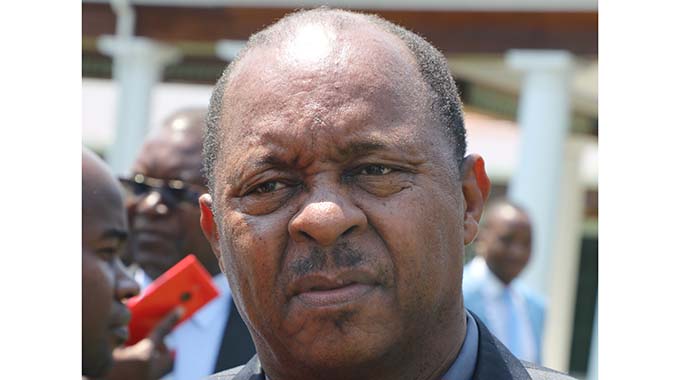
Dr Moyo

Paidamoyo Chipunza Senior Health Reporter
Government has dissolved the National Aids Council (NAC) board with immediate effect, barely a year after its appointment.
In a letter dated March 4, Health and Child Care Minister Dr Obadiah Moyo said the dissolution followed concerns by stakeholders on appointment of the board, which was deemed improper.

“Further to our meeting of the 30th of January 2019, where it was noted that the NAC board was improperly appointed, His Excellency the President of the Republic of Zimbabwe has concurred to the dissolution of the NAC board with immediate effect and ordered that a new board be put in place in line with the provisions of the law,” said Dr Moyo.

NAC acting board chairperson Mrs Virginia Samkange confirmed that the board had indeed been dissolved.
“Communication was received on Monday and besides the reason that the board was not properly appointed, no other reason was given,” she said.

Mrs Samkange was acting chairperson since December last year, a position she assumed following the resignation of Dr Everisto Marowa as chairperson.

Other board members were Dr Josiah Tayi, Mr Chagwiza Togarepi, Mrs Nyasha Sithole, Rev Tanyanyiwa Chinyerere, Mr Stanley Takaona, Mrs Tariro Chikumbirike and Mrs Naume Mazango.

Since last year, NAC has been in the spotlight, with some stakeholders calling for dissolution of the board as well as the secretariat to transform the way of doing things at the national coordinating body for HIV and Aids.

NAC CEO Dr Tapuwa Mugure left the organisation in December last year, shrouded with his own controversies.
Besides the former CEO’s own controversies, NAC as an institution stands accused of maladministration.

Former NAC board chair Dr Marowa, who was once accused of providing consultancy services to the institution, yesterday said the organisation might need an independent forensic audit.

Dr Marowa said this will provide the institution with a solid base on which the board and the new CEO would build on to realise value for the Aids Levy and other resources.

“There is need for bold action for reorganisation and restructuring of senior management so as to foster professionalism, high ethical standards and performance and results-driven way of doing business”.

The post Govt dissolves NAC board  appeared first on Zimbabwe Situation.