Chikore case: Elusive witness worries investigator 

Source: Chikore case: Elusive witness worries investigator | The Herald March 9, 2019 Simba Chikore Geraldine Zaranyika Herald Reporter The trial of former president Robert Mugabe’s son-in-law Simba Chikore, who is accused of kidnapping his employee — Bertha Zakeyo — at Zimbabwe Airways offices, continued yesterday with the investigating officer, Mr Ben Justin, complaining that […]

The post Chikore case: Elusive witness worries investigator  appeared first on Zimbabwe Situation.

Source: Chikore case: Elusive witness worries investigator | The Herald March 9, 2019

Chikore case: Elusive witness worries investigator
Simba Chikore

Geraldine Zaranyika Herald Reporter
The trial of former president Robert Mugabe’s son-in-law Simba Chikore, who is accused of kidnapping his employee — Bertha Zakeyo — at Zimbabwe Airways offices, continued yesterday with the investigating officer, Mr Ben Justin, complaining that he was facing challenges in serving a witness with papers to come and testify.

Mr Justin told the court that he had served other witnesses in this matter except for Ms Phillipa Phillips, who is the fourth witness, whom he said was elusive.

“I served her for court on February 13 for trial, through her receptionist who informed me that Phillips was unable to attend court, and an issue of conflict was informed to me that Chikore was Phillips’ client,” he said.

He stated that he got instructions to subpoena Ms Phillips at her house, but to no avail as he failed to locate her.
He said he even called Ms Phillips and she said she was in South Africa on a business trip.

Prosecutor Mr Gwinyai Shumba called third witness, Alwyn Tichaona Tigere, who is a police officer who attended the scene. The court heard that Tigere and Constable Mpona received an instruction from their superiors to go to Zimbabwe Airways offices were there was suspected violence taking place.

On arrival, they met Nelson Zimunya, the head of security, who escorted them to Chikore’s office.
“Chikore told us that he had fired an employee called Bertha Zakeyo and wanted the police to provide security during the handover-takeover of company property.

“He advised us that there was a dispute between employer and employee because Zakeyo was refusing to hand over a cellphone which she specified that she was going to hand over to the police since it had vital information.’’

The pair later on we went to Zakeyo’s office. “She told us that she had been fired by Chikore and with immediate effect she was to hand over company property.
Zakeyo’s lawyer Ms Phillips came.

Later they decided to leave the premises and indicated that they were going through Highlands Police Station to file a case of unlawful detention.

The matter was postponed to March 27 after the State indicated that they wanted to engage their superiors on the way forward and also to secure the attendance of Phillips at the court.

The post Chikore case: Elusive witness worries investigator  appeared first on Zimbabwe Situation.
Fuel situation to improve: Mangudya

Source: Fuel situation to improve: Mangudya | The Herald March 9, 2019 Dr Mangudya Golden Sibanda Senior Business Reporter RESERVE Bank of Zimbabwe (RBZ) Governor Dr John Mangudya has given the nation assurance that the fuel situation should start improving before the end of this month. He said an improvement in the fuel situation was […]

The post Fuel situation to improve: Mangudya appeared first on Zimbabwe Situation.
Source: Fuel situation to improve: Mangudya | The Herald March 9, 2019

Fuel situation to improve: Mangudya
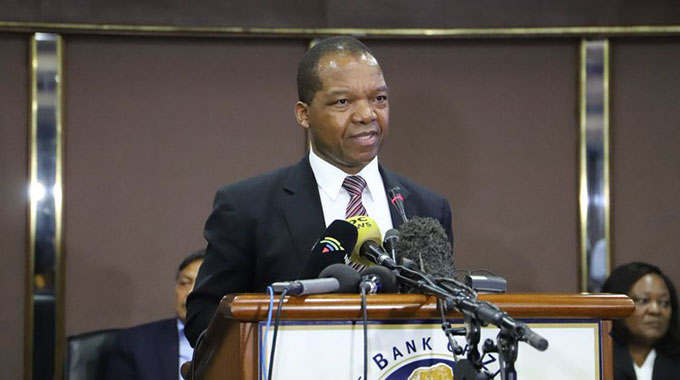
Dr Mangudya

Golden Sibanda Senior Business Reporter
RESERVE Bank of Zimbabwe (RBZ) Governor Dr John Mangudya has given the nation assurance that the fuel situation should start improving before the end of this month. He said an improvement in the fuel situation was anticipated on the back of widespread interventions the central bank and Government have put in place to increase imports.

Dr Mangudya said Zimbabwe had adequate hard currency to import fuel, pointing out that queues that continue to characterise most filling stations across the country reflected the time lag of bank processes and actual deliveries.

The central bank chief also indicated that in some instances, some of the fuel dealers did not have sufficient RTGS dollars to monetise their letters of credit used to finance fuel imports.

This comes as dealers now need more local currency following the liberalisation of the exchange rate to match any amount of foreign currency they may receive for fuel imports.

Previously, fuel importers would get allocations of the hard currency from the central bank at the rate of 1 to 1 between the US dollar against local forms of money (RTGS) and bond notes.

Most of the fuel is now imported into Zimbabwe using letters of credit (LCs) — financial instruments for securitising and financing bulk imports such as fuel. LCs are guaranteed by the African Export and Import Bank.

The governor said it was due to the time lag between establishing an LC, having the LC confirmed by an international bank, evaluated and confirmed by bank advisor of the foreign oil supplier and the time until confirmation by the supplier for release of fuel is received, which caused fuel gaps in supply and availability.

Dr Mangudya said the shortage of fuel in the country, after the introduction of the LC framework for importation of fuel, was no longer a result of foreign currency shortages in the country.

He said this when he appeared before the Parliamentary Portfolio Committee on Energy and Power, chaired by Uzumba Maramba Pfungwe Member of Parliament Cde Simbaneuta Mudarikwa.

Dr Mangudya said the RBZ had established a system enabling dealers to obtain letters of credit in order to import adequate amounts of fuel required by the domestic economy.

Asked what strategy the central bank had in place to bridge the supply gaps caused by the logistical issues that in between the approval and evaluation processes involving LCs, Dr Mangudya said the bank was making further supply interventions, but indicated that they were also persuading various suppliers to expedite their processes.

As such, the central bank chief said some of the fuel for which an amount of US$91 million worth of letters of credit — enough to import 150 million litres  – was made available through various schemes was only being delivered now.

“The bulk of the fuel that is being purchased now is through letters of credit (LC). A letter of credit is an instrument used by banks to securitise and to finance things like fuel and other commodities and give Zimbabwe a time span to pay.

“In the LC (principle), there are things called time lags. The day you establish an LC and the day you get the product, there are some time lags,” he said.

“So the difference between the payment of US$91,94 million (for instance), which was supposed to bring 150 million litres in that month and the day of delivery (is the time lag), (because) not all that fuel came in the same month of January.”

The central bank chief said the decision by Government to increase fuel prices in January had worked magic, with consumption dropping from average of 150 million per month to between 130 million and 120 million litres.

Dr Mangudya said the bank was now making allocations for fuel imports, given the price elasticity of fuel, on the basis of the anticipated amount of fuel needed in the economy.

The post Fuel situation to improve: Mangudya appeared first on Zimbabwe Situation.

ED sets up inter-ministerial political reform committee

Source: ED sets up inter-ministerial political reform committee | Daily News ED sets up inter-ministerial political reform committee President Emmerson Mnangagwa yesterday set up an inter-ministerial committee to lead political, electoral and legislative reforms in line with recommendations of the Motlanthe Commission of Inquiry into the August 1, 2018 post-election violence. Justice, Legal and Parliamentary […]

The post ED sets up inter-ministerial political reform committee appeared first on Zimbabwe Situation.

Source: ED sets up inter-ministerial political reform committee | Daily News

ED sets up inter-ministerial political reform committee President Emmerson Mnangagwa yesterday set up an inter-ministerial committee to lead political, electoral and legislative reforms in line with recommendations of the Motlanthe Commission of Inquiry into the August 1, 2018 post-election violence.

Justice, Legal and Parliamentary Affairs minister Ziyambi Ziyambi said the 8-member inter-ministerial committee has been charged with carrying out the reforms that would provide legal backing to the country’s economic and social opening.

Ziyambi said government was addressing concerns raised by the commission, chaired by former South African president Kgalema Motlanthe, in presentations handed to Mnangagwa after wrapping up public hearings. At least six people were killed in the deadly shootings, while a seventh person died in a stampede, shortly after the landmark elections in Zimbabwe.

The Motlanthe Commission’s summary recommendations included compensation for all victims of violence, and dependants of the deceased; enforcement of Code of Conduct for political parties and candidates; a stop to hate speech, electoral reforms, better law enforcement and national healing and reconciliation that must include a multi-party reconciliation initiative, including youths and with national and international mediation, to be established to address the root causes of the post-election violence.

Ziyambi told a news conference yesterday Mnangagwa had set up the “inter-ministerial special taskforce” to internalise the recommendations. “The special taskforce will be guided by the following terms of reference: to accelerate implementation of political, electoral and legislative reforms aimed at deepening the country’s democratic processes as well as the ease of doing business reforms; and to address the issues arising from the reports by the 2018 election observer missions as well as the findings of the Motlante Commission,” he told reporters.

He said the taskforce has him as chairperson, Foreign Affairs minister Sibusiso Moyo is the deputy chair. It also includes Information minister Monica Mutsvangwa, Finance minister Mthuli Ncube, Home Affairs minister Cain Mathema, Industry and Commerce minister Mangaliso Ndlovu, minister of State for Security in the President’s Office Owen Ncube and Attorney-General Prince Machaya.

“As we move to consolidate our democracy, we would want to thank all the local and foreign observers that gave their reports on the July 30, 2018 harmonised elections.  “Observers act as a form of quality assurance and their recommendations are taken seriously by government.

“We acknowledge and appreciate all positive feedback. Fair criticism and suggested areas of improvement are taken seriously because they can only make us a better democracy,” Ziyambi said.

The post ED sets up inter-ministerial political reform committee appeared first on Zimbabwe Situation.

Chidawu named Harare Minister 

Source: Chidawu named Harare Minister | The Herald March 9, 2019 Oliver Chidawu Columbus Mabika Herald Reporter President Mnangagwa yesterday appointed former Harare mayor, Senator Oliver Chidawu to the post of Minister of State for Provincial Affairs, Harare Metropolitan Province, as Government’s plans on devolving power to provincial councils in line with the Constitution gathers […]

The post Chidawu named Harare Minister  appeared first on Zimbabwe Situation.

Source: Chidawu named Harare Minister | The Herald March 9, 2019

Chidawu named Harare Minister
Oliver Chidawu

Columbus Mabika Herald Reporter
President Mnangagwa yesterday appointed former Harare mayor, Senator Oliver Chidawu to the post of Minister of State for Provincial Affairs, Harare Metropolitan Province, as Government’s plans on devolving power to provincial councils in line with the Constitution gathers momentum.

Section (2) of the Constitution obliges central Government to cede more powers to provincial councils for them to determine local development priorities.

President Mnangagwa has challenged provincial ministers to be economic drivers and move away from the old dispensation where they were merely political commissars.

In a statement, Chief Secretary to the President and Cabinet Dr Misheck Sibanda said the appointment was with effect from yesterday.

“His Excellency President ED Mnangagwa has, in terms of Section 104 of the Constitution of Zimbabwe Amendment No. 20 of 2013, appointed Senator Oliver Chidawu as the Minister of State for Provincial Affairs, Harare Petropolitan Province. The appointment is effective 8 March 2019,” reads part of the statement.

Senator Chidawu was born in 1954 and in 1984 became the youngest mayor in the history of Harare city at the age of 29.
A chartered engineer and entrepreneur, Senator Chidawu is chairman of African Banking Corporation Zimbabwe, non-executive chairman of Manders Group and founder of Kuchi Group of Companies.

Senator Chidawu is also a major shareholder in Bitumen Construction. He was also founding shareholder and director of Heritage Investment Bank that merged with First Merchant Bank in 1997.
He also sits on the board of Bindura Nickel Corporation Ltd.

He was director at starafrica corporation, chairman at Pelhams Ltd and Zimplow Ltd.
The province has not had a Minister of State since September last year when President Mnangagwa appointed his new Cabinet.
Cde Mirriam Chikukwa was the last Minister of State for Harare.

Harare Metropolitan Province is one of the 10 provinces in Zimbabwe. Its administrative capital is Harare. It includes areas such as Mbare, Machipisa, Highfield, Glen View, Mabvuku, Tafara, Epworth, Hatfield, Eastlea, Mabelreign, Marlborough, Warren Park, Kuwadzana, Dzivarasekwa among others.

Last month while addressing a Meet the People rally at Rutenga Business Centre in Mwenezi, President Mnangagwa called on provincial ministers to compete in order develop their economies in line with devolution policy spelt out by the Government.

“I told all the 10 Ministers of State that they should compete. In all these provinces we are saying provinces should no longer look to Harare for everything. We want each and every province to have its economy and its Gross Domestic Product,” said President Mnangagwa.

The post Chidawu named Harare Minister  appeared first on Zimbabwe Situation.

ED acts on Motlanthe, poll reports

Source: ED acts on Motlanthe, poll reports | The Herald March 9, 2019 Justice, Legal and Parliamentary Affairs Minister Ziyambi Ziyambi (left) and Information, Publicity and Broadcasting Services Secretary Mr Nick Mangwana address the media at Munhumutapa offices in Harare yesterday Herald Reporter Government has set up a special inter-ministerial taskforce to address issues arising […]

The post ED acts on Motlanthe, poll reports appeared first on Zimbabwe Situation.

Source: ED acts on Motlanthe, poll reports | The Herald March 9, 2019

ED acts on Motlanthe, poll reports
Justice, Legal and Parliamentary Affairs Minister Ziyambi Ziyambi (left) and Information, Publicity and Broadcasting Services Secretary Mr Nick Mangwana address the media at Munhumutapa offices in Harare yesterday

Herald Reporter
Government has set up a special inter-ministerial taskforce to address issues arising from the findings of the Motlanthe Commission of Inquiry. The Commission was set by President Mnangagwa to investigate the circumstances surrounding the disturbances of August 1 2018 that resulted in the death of six people in Harare.

The taskforce, which is chaired by Justice, Legal and Parliamentary Affairs Minister Ziyambi Ziyambi, is also expected to address issues arising from the reports made by observer missions during last year’s harmonised elections, underscoring President Mnangagwa’s commitment to accountability and openeness in his administration.

This is consistent with Vision 2030 and the Transitional Stabilisation Programme that envisage acceleration of governance reforms, transparency and accountability, equity and inclusivity, consistent with Zimbabwe’s commitments and obligations under SADC, the African Union, and the United Nations.

Minister Ziyambi will be deputised by Foreign Affairs and International Trade Minister Dr Sibusiso Moyo.
Minister Ziyambi told journalists in Harare yesterday that Government acknowledged and appreciated all positive feedback and fair criticism noted by the election observer missions.

“As we move to consolidate our democracy, we would want to thank all the local and foreign observers that gave their reports on the July 30 2018 harmonised elections,” said Minister Ziyambi.

“Observers act as a form of quality assurance and their recommendations are taken seriously by Government. We acknowledge and appreciate all positive feedback. Fair criticism and suggested areas of improvement are taken seriously because they can make us a better democracy.

“Therefore, His Excellency President ED Mnangagwa has set up an inter-ministerial special taskforce. The taskforce will be guided by the following terms of reference:
“To accelerate implementation of political, electoral and legislative reforms aimed at deepening the country’s democratic processes as well as the ease of doing business and to address the issues arising from the reports by the 2018 harmonised election observer missions as well as the findings of the Motlanthe Commission of Inquiry into the 1 August 2018 post-election violence.”

Other members of the taskforce include Minister Monica Mutsvangwa (Information, Publicity and Broadcasting Services), Professor Mthuli Ncube (Finance and Economic Development), Cain Mathema (Home Affairs and Cultural Heritage), Mangaliso Ndlovu (Industry and Commerce), Owen Ncube (Minister of State for Security in the President’s Office) and Attorney-General Mr Prince Machaya.

The post ED acts on Motlanthe, poll reports appeared first on Zimbabwe Situation.