Zim spends millions importing powdered milk’ 

Source: Zim spends millions importing powdered milk’ – DailyNews Live Business Writer      5 March 2019 HARARE – Zimbabwe is spending more than $7 million per month to import powdered milk and butter as raw milk producers continue failing to meet demand, a dairy industry executive has said. The southern African country, which is […]

The post Zim spends millions importing powdered milk’  appeared first on Zimbabwe Situation.

Source: Zim spends millions importing powdered milk’ – DailyNews Live

Business Writer      5 March 2019

HARARE – Zimbabwe is spending more than $7 million per month to import
powdered milk and butter as raw milk producers continue failing to meet
demand, a dairy industry executive has said.

The southern African country, which is currently experiencing acute
foreign currency shortages due to a high annual import bill, used to
produce about 260 million litres of milk in the early 1990s, but the
figure has dropped to 70 million litres of raw milk produced last year
against a national demand of 120 million litters.

Dairibord Holdings chief executive Anthony Mandiwanza said the current
milk deficit is being augmented by powdered milk imported from
neighbouring South Africa. “When you have a deficit of 50 million litres
there ought to be an explanation,” he told parliamentarians during a
familiarisation tour of the company’s Harare operations.

“To us private players, the major development which explains how this gap
if being filled has to be the importation of powder and butter milk.  “As
a country, we are spending more than $7 million per month importing such,”
he said.

Milk processors in the country include Dairibord Zimbabwe Limited, Nestle
Zimbabwe, Dendairy, Alpha and Omega among other small players. The dairy
industry is currently operating at around 50 percent capacity with an
estimated 223 registered dairy operators and a total dairy herd of about
32 000 animals.

Mandiwanza said Zimbabwe has excess processing capacity but the supply
base of milk needs to be addressed. He added that it is important for
government to provide security of tenure to dairy farms as a way of
boosting milk production.

“Dairy farms designated for distribution under the land reform exercise
should revert to dairy production as infrastructure at the farms is still
relatively intact,” he said, adding that government interventions through
investment in extension services, research and infrastructure will also
help bolster milk production.

Meanwhile, Mandiwanza said Dairibord scaled down its Heifer programme
owing to the spiralling costs of importing heifers and had changed tact by
bringing in semen which is then artificially-inseminated. “The deepening
foreign currency had the potential to disrupt operations in the dairy
sector, erase the gains that have been made in the last decade.

“From 2009 to September last year the dairy industry was receiving
necessary allocations from the central and commercial banks hence the
increase in production we witnessed from 38 million litres in 2008 to the
current 70 million litres,” he said.

Mandiwanza also said the company has had to shut down some of its plants
nationally owing to insufficient milk production in the country. “We have
had to mothball our plant in Bulawayo because we are not producing enough
milk, the same applies for our plant in Gweru was shutdown, our plant in
Kadoma which used to make the best cheese in southern Africa is also moth
balled owing to the low milk volumes,” he said.

He added that the company’s Chipinge and Mutare plants are not operating
at full potential.`

The post Zim spends millions importing powdered milk’  appeared first on Zimbabwe Situation.

Fuel queues,  water crisis  persist in Byo

Source: Fuel queues,  water crisis  persist in Byo | Daily News Fuel queues are getting even longer in the second city as government bureaucrats struggle to find a lasting solution to the crisis. Motorists are once again spending long hours in queues at pump stations dotted across the city, waiting to fuel their vehicles. Supplies […]

The post Fuel queues,  water crisis  persist in Byo appeared first on Zimbabwe Situation.
Source: Fuel queues,  water crisis  persist in Byo | Daily News

Fuel queues are getting even longer in the second city as government bureaucrats struggle to find a lasting solution to the crisis. Motorists are once again spending long hours in queues at pump stations dotted across the city, waiting to fuel their vehicles.
Supplies have been erratic, with only a few service stations getting deliveries.

Of the few, some are selling in foreign currency — which most motorists are unable to access. For those selling in hard currency, petrol is fetching US$1,27 or R25 per litre. Diesel is being sold at US$1,20 or R20 per litre.  Forecourts in the second city mainly get their supplies by road from the Msasa gantry in Harare.
In the past when the National Railways of Zimbabwe used to operate an efficient service, rail was their preferred mode of transport.

Contacted for comment yesterday, Energy and Power Development minister Joram Gumbo said petroleum companies were withholding supplies as they are still digesting the impact of the Monetary Policy Statement announced by Reserve Bank of Zimbabwe (RBZ) governor John Mangudya about a fortnight ago.

“The announcement of (floating) exchange rates in the monetary policy resulted in a wait-and-see attitude amongst most companies, and the fuel sector was not spared, and this has created some gaps. This explains the shortages being experienced,” said Gumbo.
The Energy minister also blamed fake news being peddled on social media for contributing to the shortages.
This followed social media posts to the effect that fuel prices were due to go up soon.

“Reports of fuel price hikes to $5,50 per litre that were being churned on social media last week also resulted in panic buying among the public and created these unnecessary shortages; queues started forming again,” he said.

Gumbo said while his ministry has done its part in availing fuel in the country, a number of impediments were making it difficult for motorists to access diesel and petrol.

“We are causing problems for ourselves by spreading the wrong information. Zimbabwe is not dry, there is enough fuel. The ministry of Energy and Power Development has made all necessary arrangements to provide fuel for the country.

The problems that are there are only logistical and the issue of forex (foreign currency). As for foreign currency, it is known that the country’s economy is not performing well – everything is being imported. The RBZ has therefore had to allocate forex on priority basis,” he said.

“If you look around the country there are many cars (on the road) and some of them are unproductive. I do not lie; I report truthfully, I give a weekly report and there is enough fuel supply in the country.”
Owing to the fuel shortages, government is working on a new set of regulations to allow holders of free funds to import fuel in a bid to boost current supplies.

In 2015, government amended Statutory Instrument (SI) 171 to allow members of the public to import up to 2 000 litres of fuel per month for personal use but the legal instrument was repealed two years later through SI 122 of 2017, which stipulated that only companies licensed in terms of Section 29 of the Petroleum Act are allowed to import fuel.

Meanwhile, the second city will run dry for three days this week due to repair works at the Ncema Water Works. Bongiwe Ngwenya, council’s spokesperson, confirmed the development, saying council had been working on the pipeline at Ncema for a while.

Bulawayo has been experiencing erratic water supplies for the past weeks which saw the municipality introducing a 48-hour water shedding regime. This was necessitated by outstanding repair works at the booster stations, located at the dams.

Last month, the city council informed residents that water consumption had remained very high despite the shedding programme. A message circulating on social media is calling on residents to fill up their containers as there would be no water supplies between today and Friday.

According to the message, the Zimbabwe National Water Authority (Zinwa) would only be able to supply some parts of the city.
“Please be advised that there will be a three-day shutdown of water supply from Bulawayo Council Ncema Water Works as from 05/03/19 to 08/03/19. You are urged to fill in your reservoir containers, although we will be having some supply from Zinwa reservoir but is not enough to supply the whole town,” reads part of the message.

Ngwenya has distanced the city from the message saying council has no such arrangement with Zinwa.

The post Fuel queues,  water crisis  persist in Byo appeared first on Zimbabwe Situation.

JUST IN: MDC Alliance deputy treasurer-general Charlton Hwende ARRESTED!

MDC Alliance deputy treasurer-general and Kuwadzana East MP, Charlton Hwende has been arrested. Hwende had been in Namibia since the violent #ShutDown protests of 14 – 17 January. But on arrival at the Robert Gabriel Mugabe International Airport on Tue…

MDC Alliance deputy treasurer-general and Kuwadzana East MP, Charlton Hwende has been arrested. Hwende had been in Namibia since the violent #ShutDown protests of 14 – 17 January. But on arrival at the Robert Gabriel Mugabe International Airport on Tuesday morning, he found the place crawling with law enforcement agents who quickly nabbed him. Hwende’s […]

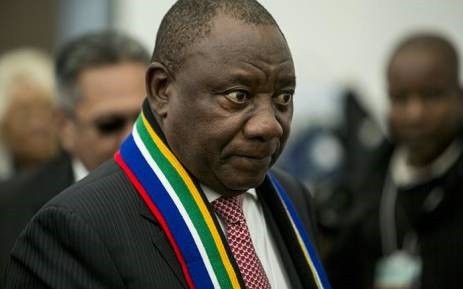
Ramaphosa  expected   on Monday

Source: Ramaphosa  expected   on Monday | Daily News South African president Cyril Ramaphosa, pictured, is expected in the country next week on Monday for the third session of the Zimbabwe-South Africa Bi-National Commission (BNC), which will among other things enhance business relations between the two countries. Deputy Information minister Energy Mutodi confirmed to the Daily […]

The post Ramaphosa  expected   on Monday appeared first on Zimbabwe Situation.

Source: Ramaphosa  expected   on Monday | Daily News

South African president Cyril Ramaphosa, pictured, is expected in the country next week on Monday for the third session of the Zimbabwe-South Africa Bi-National Commission (BNC), which will among other things enhance business relations between the two countries.

Deputy Information minister Energy Mutodi confirmed to the Daily News yesterday that Ramaphosa will be in the country on Monday next week. “The South African President Cyril Ramaphosa is expected in the country 11 March 2019 and will be on a two-day working visit. The two heads of State and government are scheduled to discuss bilateral issues agreed earlier on during the inaugural BNC meeting and the subsequent meetings.

“President Emmerson Mnangagwa is geared to revive the economy through enforcing regional and international cooperation following many years of isolation. South Africa is our biggest trading partner in Africa and we expect discussions to focus around how the two countries can improve their trade ties and grow their economies,” Mutodi said.

According to the Foreign Affairs and International Trade ministry, a team of senior government officials from South Africa will be in the country this week ahead of Ramaphosa’s visit.

“The Third Session of the Zimbabwe-South Africa Bi-National Commission (BNC) will be held on 12 March 2019 at Meikles Hotel in Harare. The meeting will be headed by the two countries’ heads of State and Government…Mnangagwa, and his South African counterpart…Ramaphosa.

“The BNC is the highest bilateral framework of cooperation between Zimbabwe and South Africa. It will be preceded by a Ministerial Meeting on 11 March 2019, and a Senior Officials meeting on 7 and 8 March 2019,” the ministry said.

South Africa has been a crucial business partner to Zimbabwe following years of economic meltdown. Millions of Zimbabweans fleeing the economic pressures at home are living in South Africa where they are working in various sectors of that country’s economy.
World leaders have been pressuring South Africa, which is Africa’s second largest economy, to assist Zimbabwe politically and economically.

Calls for such intervention increased in January following protests that led to the death of at least 17 people at the hands of alleged State security agents. There are claims the opposition leader Nelson Chamisa will likely use Ramaphosa’s visit to approach him over the country’s political environment, which has immensely affected economic growth and the country’s efforts to engage with other countries around the globe.

Chamisa, who challenged Mnangagwa’s last year presidential win, recently rejected the Zanu PF leader’s call for a meeting to discuss the framework for possible dialogue among political actors in the country. He, however, set conditions for that dialogue, which include the release of activists arrested following deadly protests in January and the need for a neutral convener.

The post Ramaphosa  expected   on Monday appeared first on Zimbabwe Situation.

Parly grills  Mangudya

Source: Parly grills  Mangudya | Daily News HARARE – Members of Parliament’s Public Accounts Committee (PAC) yesterday took Reserve Bank of Zimbabwe (RBZ) governor John Mangudya to task over the rising public debt and the activities of a vehicle established by the apex bank in 2014 to manage non-performing loans (NPLs). At yesterday’s PAC hearing that had […]

The post Parly grills  Mangudya appeared first on Zimbabwe Situation.

Source: Parly grills  Mangudya | Daily News

HARARE – Members of Parliament’s Public Accounts Committee (PAC) yesterday took Reserve Bank of Zimbabwe (RBZ) governor John Mangudya to task over the rising public debt and the activities of a vehicle established by the apex bank in 2014 to manage non-performing loans (NPLs).

At yesterday’s PAC hearing that had to be adjourned to a later date, the PAC felt that the way the burgeoning national debt was accrued over the years violated the law. For the past three decades, Zimbabwe has incurred a huge debt that now weighs heavily on the country’s economy.

Much of it, according to critics, went into funding government’s insatiable appetite for consumptive spending. Statistics put the national debt at US$16,9 billion, of which the domestic debt accounts for US$9,5 billion while US$7,4 billion is foreign debt.

In the last two years alone, a significant portion of the domestic debt was incurred through Treasury Bills (TBs) which critics allege were issued outside the RBZ’s precincts. Yesterday, Mangudya was hauled over the coals for continuing to issue the Bills.

The PAC was also not amused by the fact that the RBZ and its parent ministry of Finance did not consult Parliament before assuming external debts that included US$641 million from the Cairo-based Africa Export-Import Bank (Afreximbank); US$152 million from PTA Bank and US$25 million from Bank of Mozambique, among others.

“We, as a committee, are concerned with the issue of compliance and we would like to establish — as a matter of fact — that there was non-compliance which is why we want a breakdown of each year…,” thundered the committee chair, Tendai Biti.

“Our problem is there has been so much non-compliance with the Constitution, people not bothering to come to Parliament thus disrespecting this Parliament…,” he added.
In response, Mangudya said the RBZ Act gives the central bank relief from consulting Parliament.

The committee had also queried why the central bank had allowed government to borrow from it beyond the 20 percent statutory requirement through its overdraft facility. While Mangudya acknowledged the anomaly, amid pledges by the Finance minister Mthuli Ncube to keep the borrowings below five percent, he also took the fight to the PAC by questioning Parliament’s logic in approving a national budget which cannot be funded from the existing revenues.

“Where would Members of Parliament and Senators think the money would come from…I’m just asking because we are all to blame for this,” he said. Mangudya had to clear the air over allegations that the central bank was using the public’s deposits to finance government expenditure, saying this was not the case.

“We used the investments in the bank and not deposits from people. These are service bonds which amount to $2,9 billion.
“The RBZ can borrow funds the way it sees fit and request the minister of Finance, that’s according to the current RBZ Act.

So all the loans that we have acquired from Afreximbank, PTA Bank have all ministerial consent and legal opinion from the Attorney General’s Office …,” he said, adding that the loans were “well-structured facilities”. The committee also claimed that the bond notes introduced by the RBZ in 2016 as an export incentive had failed dismally, daring Mangudya to resign since he had indicated that he would quit if the surrogate currency fails.

Mangudya insisted that the bond notes were a success.
“For starters, people always want to put words into my mouth and I (want to) say this under oath; if the bond notes (as an export incentive scheme) fail to promote exports in this country I will resign,” he said.

He also revealed that Zimbabwe currently sits on US$500 million in foreign currency, enough to take the country for the next three to four weeks. The hearing essentially became a fishing expedition by the senior MDC official, Biti, who presided over the national purse between 2009 and 2013 when the unity government was liquidated,

While Mangudya rose to the occasion in fielding questions from the PAC, Biti, who has been using every forum presented to him to talk down Mangudya and government’s policies, was in a warring mood yesterday. He also grilled Mangudya over the Zimbabwe Asset Management Company (Zamco).

Zamco was set up in July 2014 as part of measures to deal with NPLs. Modelled along similar asset management companies in South Korea, Nigeria, Indonesia and Malaysia, the central bank had to give life to Zamco to prevent moral hazards in the banking sector where systemic vulnerabilities were quite rampant.

These NPLs were to be funded through long-term debt instruments approved by government. PAC members alleged, however, that Zamco was subjective in its acquisition of NPLs, and tended to favour political heavyweights. To the contrary, Mangudya said the vehicle mitigated a disaster that could have plunged the entire banking system and the country’s economy at large into chaos.

At the time, he argued that most companies had found themselves unable to service their loans due to a punitive interest rates regime that obtained when the country dollarised in 2009. “Zamco’s intervention was to make sure that companies become viable, secure and create employment, increase production,” he argued.

Thanks to the RBZ’s efforts, Mangudya revealed that NPLs have come down from a peak of 20 percent to eight percent.
Zamco has so far acquired 1 160 NPLs from banks valued at US$1,13 billion in the form of Treasury Bonds (Bonds), thus adding to the $6,3 domestic debt.

Mangudya said the beneficiaries have since repaid $360 million, leaving an outstanding amount of $770 million.
The committee pressed Zamco chief executive officer Cosmas Kanhai and Mangudya to disclose the names of individuals and companies that have benefited from the NPL relief.

Both declined saying they were bound by client confidentiality clauses not to disclose the names.
The PAC, however, insisted that Zamco was not a bank and that the borrowers housed in that vehicle no longer enjoyed the client-confidentiality clause.

The committee still wants Mangudya to disclose the names on his forthcoming appearance, including a breakdown of debts and TBs issued by government.

The post Parly grills  Mangudya appeared first on Zimbabwe Situation.