MUGABE FUNDING CHAMISA AGAIN

MDC-Alliance leader Mr Nelson Chamisa is being funded by
former president Mr Robert Mugabe to outfox his internal rivals ahead of the
party’s congress scheduled for May, The Herald can reveal.

The Herald is reliably informed that Mr Chamisa’s sojo…

MDC-Alliance leader Mr Nelson Chamisa is being funded by former president Mr Robert Mugabe to outfox his internal rivals ahead of the party’s congress scheduled for May, The Herald can reveal. The Herald is reliably informed that Mr Chamisa’s sojourn to Ghana is also part of a desperate fundraising initiative from some of his college mates there. Mr Chamisa is likely to face the party’s

Commercial courts open countrywide

Source: Commercial courts open countrywide | The Herald March 5, 2019 Daniel Nemukuyu Senior Reporter THE newly-established Magistrates Commercial Courts and small claims courts opened their doors to the public yesterday across the country’s 10 provinces and are mandated with expeditiously resolving commercial disputes and making Zimbabwe a safe investment destination in line with Government’s […]

The post Commercial courts open countrywide appeared first on Zimbabwe Situation.

Source: Commercial courts open countrywide | The Herald March 5, 2019

Commercial courts open countrywide

Daniel Nemukuyu Senior Reporter
THE newly-established Magistrates Commercial Courts and small claims courts opened their doors to the public yesterday across the country’s 10 provinces and are mandated with expeditiously resolving commercial disputes and making Zimbabwe a safe investment destination in line with Government’s Transitional Stabilisation Programme (TSP).

The TSP is underpinned by structural reform measures to mitigate the challenges and risks faced by the economy.

The measures include deepening the ease and cost of doing business, reforms to improve competitiveness and establish a One-Stop Shop Investment Centre, public enterprise reforms and labour law reforms.

The specialised courts are expected to dispense world class justice without delay.

They are a product of the Ease of Doing Business Reforms being spearheaded by the Office of President and Cabinet, in partnership with the World Bank and other stakeholders, including the Judicial Service Commission (JSC).

This comes hard on the heels of a recent World Bank announcement, ranking Zimbabwe 155th out of 190 countries, an improvement from position 159 which the country held in 2017.

Last week 32 magistrates, designated to run the specialised courts, underwent a two-day refresher course on how to preside over commercial disputes.

JSC acting secretary Mr Walter Chikwana confirmed the development saying the courts were now operational.

“On Friday and Saturday, selected judicial officers were training on how to properly deal with commercial disputes.

“Today, they started operating in all the 10 provinces,” said Mr Chikwana.

Officially opening the training workshop on Friday, Deputy Chief Secretary to the President and Cabinet Dr Ray Ndhlukula urged the judicial officers to play their part in boosting the investor confidence through dispensing quality justice within reasonable time.

“JSC comes in to resolve commercial disputes expeditiously. Your role is simply to deliver quality justice with speed.

“Quality decisions and expedience boosts people’s confidence in the justice system and attract investors to Zimbabwe.

“The Judiciary also has to enforce the controls and protect minority investors. There are lots of commercial disputes. For example, a shareholder with 33 percent may want to push around minority shareholders with two percent or less while others have two percent. Laws should be in place to protect those investors,” he said.

Dr Ndhlukula hailed the Judiciary for cooperating in coming up with ease of doing business reforms.

“I am happy to say, we have received maximum cooperation from the Judiciary as far as ease of doing business is concerned.

“I remember as far back as 2016 when we approached the then Judiciary boss, the late retired Chief Justice Godfrey Chidyausiku about the need to establish these commercial law courts.

“He was so enthusiastic and he undertook to establish the courts as per request. Today, as we sit here, that reality is manifesting,” he said.

Speaking at the training workshop, Mr Chikwana said JSC intended to take the commercial courts down to every district in Zimbabwe.

“We are going to introduce small claims at every provincial centre and any other district centres in Zimbabwe. We have started renovating our courts to implement this position.

“We have identified judicial officer to man these courts. I wish to advise you, deputy chief secretary, that the crop of judicial officers you see here, is the first one that we have identified,” he said.

Mr Chikwana said the Judiciary was ready to play its part in achieving the national goal of being an upper middle income economy by 2030.

“While we appreciate Government’s position of improving ease of doing business and to create environment where matters are disposed of as quickly as possible, we as the Judiciary, are also doing this to achieve our own mandates in terms of the Constitution and our strategic planning.

“We train our magistrates to finalise matters as expeditious as possible, then we will be able to meet our constitutional mandate that matters should be finalised expeditiously,” he said.

Expeditious and quality judgments, Mr Chikwana said, also help the Judiciary to meet one of its mandates in terms of the strategic plan.

He urged magistrates to take the new task seriously for the development of the nation.

“I would advise our magistrates here that if you look at the quality of resource persons that we have invited, it speaks to the seriousness to which we are taking this training.

“It also speaks to the journey that we are beginning today, to create a crop of magistrates whom we believe have the capacity to deal with matters of commercial nature and resolve commercial disputes expeditiously with the quality of justice that the people of Zimbabwe want,” he said.

Zimbabwe has so far made strides in making it easier to deal with construction permits by reducing time for processing permit applications.

According to the World Bank, Zimbabwe made dealing with construction permits faster by adopting a one-stop shop for building plan approvals.

The World Bank also acknowledged the country’s efforts on improving the sharing of credit information after it “introduced bureau or registry credit scores as a value added service”.

Zimbabwe according to the World Bank, also made positive strides making it easier to start a business by reducing the time needed to obtain a business licence.

Getting credit information has also improved through increased coverage of the credit registry and providing consumer and commercial credit scores to banks and financial institutions.

Zimbabwe also made enforcing contracts easier by making judgments rendered at the appellate and Supreme Court level in commercial cases available to the general public online.

The post Commercial courts open countrywide appeared first on Zimbabwe Situation.

TYSON CHALLENGES PRIVATE PROSECUTOR APPOINTMENT

FORMER Local Government minister Saviour Kasukuwere, who is
facing charges of abuse of office for allegedly illegally parcelling out of
State land, has filed heads of argument at the High Court challenging
procedures adopted by regional magistrate Ho…

FORMER Local Government minister Saviour Kasukuwere, who is facing charges of abuse of office for allegedly illegally parcelling out of State land, has filed heads of argument at the High Court challenging procedures adopted by regional magistrate Hoseah Mujaya and the appointment of Harare lawyer Zivanai Macharaga to act as prosecutor in his trial. In his heads of argument filed on February

MDC leader Nelson Chamisa’s ‘rape case’ latest: Police Commissioner-General Matanga gives update

THE curious case in which opposition leader Nelson Chamisa has been accused of raping a 39-year-old woman (name withheld for ethical reasons) is floundering after police confirmed yesterday that the complainant may indeed be suffering from mental healt…

THE curious case in which opposition leader Nelson Chamisa has been accused of raping a 39-year-old woman (name withheld for ethical reasons) is floundering after police confirmed yesterday that the complainant may indeed be suffering from mental health problems, the Daily News can report. As a result, authorities are waiting for direction from psychiatric experts, […]

Bond notes a success — Mangudya

Source: Bond notes a success — Mangudya | Herald (Business) Africa Moyo Senior Business Reporter RESERVE Bank of Zimbabwe (RBZ) Governor Dr John Mangudya insists bond notes did not fail as an export incentive, but were a major success as evidenced by the rise in foreign currency receipts since their introduction. Dr Mangudya said this […]

The post Bond notes a success — Mangudya appeared first on Zimbabwe Situation.

Source: Bond notes a success — Mangudya | Herald (Business)

Africa Moyo Senior Business Reporter
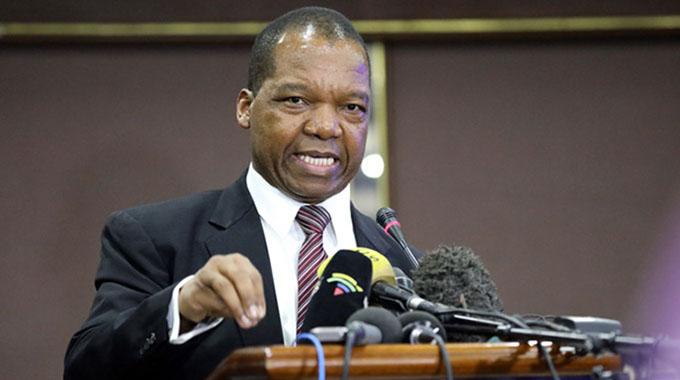
RESERVE Bank of Zimbabwe (RBZ) Governor Dr John Mangudya insists bond notes did not fail as an export incentive, but were a major success as evidenced by the rise in foreign currency receipts since their introduction. Dr Mangudya said this in Parliament yesterday during a tense Public Accounts Committee hearing.

Dzivaresekwa MP Edwin Mushoriwa asked Dr Mangudya why he had not resigned after the bond notes had allegedly failed, as he had “promised” to do.

But the combative central bank boss stood his grounds insisting “bond notes had not failed”.

“For starters people always want to put words in my mouth. What I said and repeat today under oath is, ‘if the bond note, as an export incentive scheme fails to promote exports in this country, I will resign”.

However, PAC chairperson Mr Tendai Biti interjected and read a statement attributed to Dr Mangudya, published on September 16, 2016, which reads: “On this matter (bond notes), the buck stops here. We do not want this idea of giving people problems, which I make myself. Give us a chance to do what is right for this economy, to put it back on track.

“If these policy measures fail, if the bond notes do not work out, I’m willing to resign because I am genuine about getting the economy back on track.”

Dr Mangudya immediately leapt to his defence, saying; “Mr Chairman, that’s what I am saying, ‘if the bond note fails to do its work, which was to promote exports’ (I will resign)”.

“Mr Chairman, on this one we can disagree because for me it was very simple. The export incentive scheme in this country has worked. “We need to go and call companies that are exporting, and bring them here with me and (say) whether (or not) the incentive scheme failed.

“People do not know the genesis of bond notes. The bond note is monetising the export incentive scheme. The reason why we were giving them 5 to 10 percent was to promote exports.”

Dr Mangudya said many companies increased export receipts, hence the forex that the country has been using to import products such as fuel and raw materials.

Bond notes were introduced on November 28, 2016 but the export incentive was back-dated to May 2016.

In the 2018 Mid-Term Monetary Policy Statement presented on October 2, Dr Mangudya said a combined $743,2 million incentive was paid out to exporters who earned US$12,6 billion in forex.

“I can bring them (exporters) here to this committee, one by one and talk about whether this export incentive has failed. It is in the eyes of people who don’t understand what the purpose for the bond note, why it was put in place.

“We went on a media campaign Mr Chairman, and you say it failed to work, but as far as I am concerned; to have the foreign currency that we have got today, I can mention companies who were not even exporting, that have responded very well. So the answer in simple terms is that bond notes did not fail,” said Dr Mangudya.

Mr Biti then rephrased the question to say the 1:1 value of the US dollar and bond notes failed, to which Dr Mangudya insisted it did not fail.

“Mr Chairman, understand some bit of economics,” said Dr Mangudya, drawing an immediate retort from Mr Biti who said, “I do understood economics”.

Dr Mangudya said there is $437 million worth of bond notes and total banking sector deposits of $10 billion, implying that “what has failed is not bond notes, what happened is that the economy expanded much more than the forex generated”.

“It’s a failure of the economy to generate much foreign currency to maintain its (1:1) parity (due to Government expenditure),” said Dr Mangudya. The session was deferred to next Monday, subject to confirmation by RBZ officials.

The post Bond notes a success — Mangudya appeared first on Zimbabwe Situation.