NPLs return to haunt banks

Source: NPLs return to haunt banks | Sunday Mail (Business) Africa Moyo Senior Business Reporter RESERVE Bank of Zimbabwe Governor Dr John Mangudya says the banking sector’s asset quality has deteriorated as demonstrated by the surge in the average non-performing loans (NPLs) to total loans ratio during the period under review. However, the overall banking […]

The post NPLs return to haunt banks appeared first on Zimbabwe Situation.

Source: NPLs return to haunt banks | Sunday Mail (Business)
Africa Moyo
Senior Business Reporter

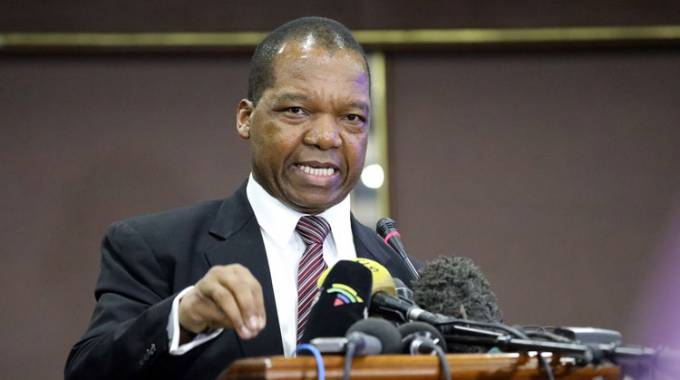
RESERVE Bank of Zimbabwe Governor Dr John Mangudya says the banking sector’s asset quality has deteriorated as demonstrated by the surge in the average non-performing loans (NPLs) to total loans ratio during the period under review.

However, the overall banking sector remains “generally stable” as reflected by adequate capitalisation and an improved earnings performance for the period ended December 31, 2018.

Dr Mangudya said this in the 2019 Monetary Policy Statement pronounced last Wednesday.

Total loans and advances were US$4,22 billion last year compared to US$3,80 billion in 2017.

The jump in loans and advances last year, equally saw a rise in NPLs to 8,30 percent up from 7,08 percent in December 2017. The globally accepted NPLs benchmark is 5 percent and anything above that becomes worrisome.

But considering that the country’s financial services sector hit an NPLs level of 20,5 percent in 2015, market watchers say the current level is not too bad, if it is managed well.

A low NPLs level tends to raise great expectations that the financial services sector would be more stable.

Despite a jump in NPLs, the banking sector remains adequately capitalised, with an average tier 1 and capital adequacy ratios of 23,84 percent and 30,27 percent, respectively.

Dr Mangudya said the banking sector’s aggregate core capital increased by 15,32 percent from US$1,37 billion as at December 31, 2017 to US$1,58 billion as at December 31 last year largely due to organic capital growth.

He added that all banking institutions were compliant in terms of the prescribed minimum capital requirements.

Zimbabwe had 19 operating banking institutions as at December 31, 2018 comprised of 13 commercial banks, five building societies, one savings bank.

Other institutions under the RBZ supervision include credit-only-microfinance institutions (199), deposit taking MFIs (six) and two development finance institutions.

Given the challenging macroeconomic environment, Dr Mangudya rallied banking institutions “to implement capital preservation strategies”.

Banking sector deposits rise

Banking sector deposits were US$10,32 billion as at December 31 last year, up from US$8,48 billion by December 2017.

Dr Mangudya said the banking sector was predominantly funded by demand deposits, which accounted for 64,94 percent of total deposits as at December 31, 2018.

Time deposits were 22,89 percent; call deposits 1,25 percent; foreign deposits (foreign entity deposits) 1,91 percent; savings deposits 5,11 percent; foreign deposits (foreign lines) 2,27 percent and other deposits were1,63 percent.

Meanwhile, by December 31 last year, total Nostro FCA deposits amounted to US$673,81 million, representing 6,53 percent of total deposits.

The Nostro FCA depositors are predominantly constituted by corporate deposits amounting to US$654,77 million, representing 97,17 percent of total Nostro FCA deposits.

As at December 31 last year, the number of corporate RTGS FCA depositors was 214094 valued at US$8,67 billion, while the number of individual RTGS FCA depositors were above three million valued at US$894,54 million.

Of these, individual depositors — representing 95,98 percent — held deposit balances of less than US$1 000 each, with an average balance of US$80, accounting for a total US$213,42 million.

Corporate RTGS FCA depositors (1,884) holding balances in excess of US$500 000, constitute 83,64 percent (US$7,25 billion) of total corporate RTGS deposits of US$8,67 billion as at December 31 last year.

Dr Mangudya believes that going forward, the number of Nostro FCA depositors will increase, driven by increases in tobacco and mineral production, and increased financial inclusion.

The post NPLs return to haunt banks appeared first on Zimbabwe Situation.

MUKANYA DEMANDED $8 500 FEE FOR MARONDERA GIG

After a successful welcome home gig at the Glamis Arena
last year, Chimurenga guru Thomas Mapfumo found the reception irresistible and
made a decision to take part in more gigs. 

The celebrated musician joined with local promoters on a
nationwide …

After a successful welcome home gig at the Glamis Arena last year, Chimurenga guru Thomas Mapfumo found the reception irresistible and made a decision to take part in more gigs.  The celebrated musician joined with local promoters on a nationwide Peace Tour, where he was billed to perform in almost every town. However, the tour was marred by irregularities, poor attendances and deceptions

JAH PRAYZAH DUMPS ARMY GEAR

Jah Prayzah seems to be re-inventing himself and one of the
major changes he has made about his image is dumping the military gear, it has
emerged.

Jah Prayzah’s camp has since roped in prominent designer
Thembani Mubochwa, who has been making ou…

Jah Prayzah seems to be re-inventing himself and one of the major changes he has made about his image is dumping the military gear, it has emerged. Jah Prayzah’s camp has since roped in prominent designer Thembani Mubochwa, who has been making outfits for him and his band. They also now refer to his fans as “Team JP” instead of “masoja”. The Kune Rima hit maker, who is a Zimbabwe

MUGABE SLAMS ED

Former president Robert Mugabe yesterday warned his
successor, Emmerson Mnangagwa, that power does not last forever as he strongly
condemned the deployment of soldiers to quell the January 14 protests.

Mnangagwa on February 16 boasted that he depl…

Former president Robert Mugabe yesterday warned his successor, Emmerson Mnangagwa, that power does not last forever as he strongly condemned the deployment of soldiers to quell the January 14 protests. Mnangagwa on February 16 boasted that he deployed the army to deal with violent protesters despite complaints by human rights groups that soldiers had allegedly killed at least 17 people and

RBZ ring-fences pension values

Source: RBZ ring-fences pension values | Sunday Mail Tawanda Musarurwa Senior Business Reporter The Reserve Bank of Zimbabwe (RBZ) will continue to help pension companies preserve the value of their funds in United States dollars, the bank’s Governor, Dr John Mangudya, said on Friday. As at June 30 last year, the pension industry had six […]

The post RBZ ring-fences pension values appeared first on Zimbabwe Situation.

Source: RBZ ring-fences pension values | Sunday Mail

Tawanda Musarurwa
Senior Business Reporter

The Reserve Bank of Zimbabwe (RBZ) will continue to help pension companies preserve the value of their funds in United States dollars, the bank’s Governor, Dr John Mangudya, said on Friday.

As at June 30 last year, the pension industry had six life offices insuring 860 pension funds.

There have been growing concerns that pension savings would be eroded after central bank liberalised the exchange rate by introducing the inter-bank market last week.

It is believed that removing the 1:1 peg of the US dollar to bond notes and RTGS would devalue some assets.

But the RBZ has since moved in to ring-fence pension values.

“We have assisted some of the pension firms in this country to purchase what we call deposit receipts in foreign currency so as to preserve the value for their funds for the pensioners, and that is at our expense, not their expense,” said Dr Mangudya at a breakfast meeting on Friday.

The issue of maintaining the value of pension funds is particularly relevant, especially after concerns were raised on how pension companies converted pension benefits from the Zimbabwe dollar to the United States dollar following the dollarisation of the economy in early 2009.

Numerous pensioners found their contributions eroded overnight, as pension companies claimed that savings had been wiped out by hyperinflation.

In his contribution at Friday’s meeting, economist Dr Gift Mugano noted that floating the US dollar would have adverse effects on savings.

“It is undeniable that the floating of the exchange rate will result in erosion of savings and pensions of the ordinary Zimbabweans. . .

“Consider one who deposited $100 000 US dollars eight years ago, and now bring in the (hypothetical) liberalised exchange of 1:4 into account, one will see that the real value of the $100 000 today is now US$25 000. The same observation applies to pensioners. This was again one of my reservations on floating.

“This experience, where economic agents have lost their pension twice in a 10-year period, will discourage savings, which are key for driving investment and economic growth,” said Dr Mugano.

While pensioners are being paid pittances, pension companies seem to be in good health.

According to an Insurance and Pensions Commission (IPEC) second-quarter report for last year, the pension industry had an asset base of $4,4 billion as at 30 June 2018, reflecting a 5,3 percent increase from the $4,2 billion reported as at 31 March 2018.

“The growth in the asset base was mainly a result of an increase in the value of quoted equities from $1,4 billion as at 31 March 20 18 to $1,6 billion as at 30 June 2018,” noted IPEC.

“The total assets translated to an industry average capital accumulation per member of $7,487 as at 30 June 2018.

“The average capital accumulation per member was 5,7 percent higher than the $7 081 per member reported as at 31 March 2018. The increase in the average capital accumulation was mainly due to the aforementioned increase in total assets.”

Meanwhile, IPEC is soon expected to announce a compensation framework to policyholders whose claims were eroded during the conversion of values from Zimbabwe dollar to the US dollars during the February 2009 period.

This is after a commission of inquiry into the conversion process found that pensioners and policy holders suffered a significant loss of value and recommended compensation.

It also noted that values were not only lost during the conversion period, but during the 1996-2014 period.

The commission’s investigations covered the 18-year period to 2014 and looked into the operations of life insurance companies, pension fund administrators, stand-alone pension funds, funeral assurance companies, the Guardians Fund, Government’s pension system and the National Social Security Authority.

The post RBZ ring-fences pension values appeared first on Zimbabwe Situation.