Source: From Constitutionalist To Constitutional Coup: The Unravelling Of Mnangagwa’s Promise ⋆ Pindula News In February 2025, President Emmerson Mnangagwa sat with editors at State House and made a promise that resonated across the nation. He said: “I’m very clear that I have two terms, and these terms are very definite, and I am so […]
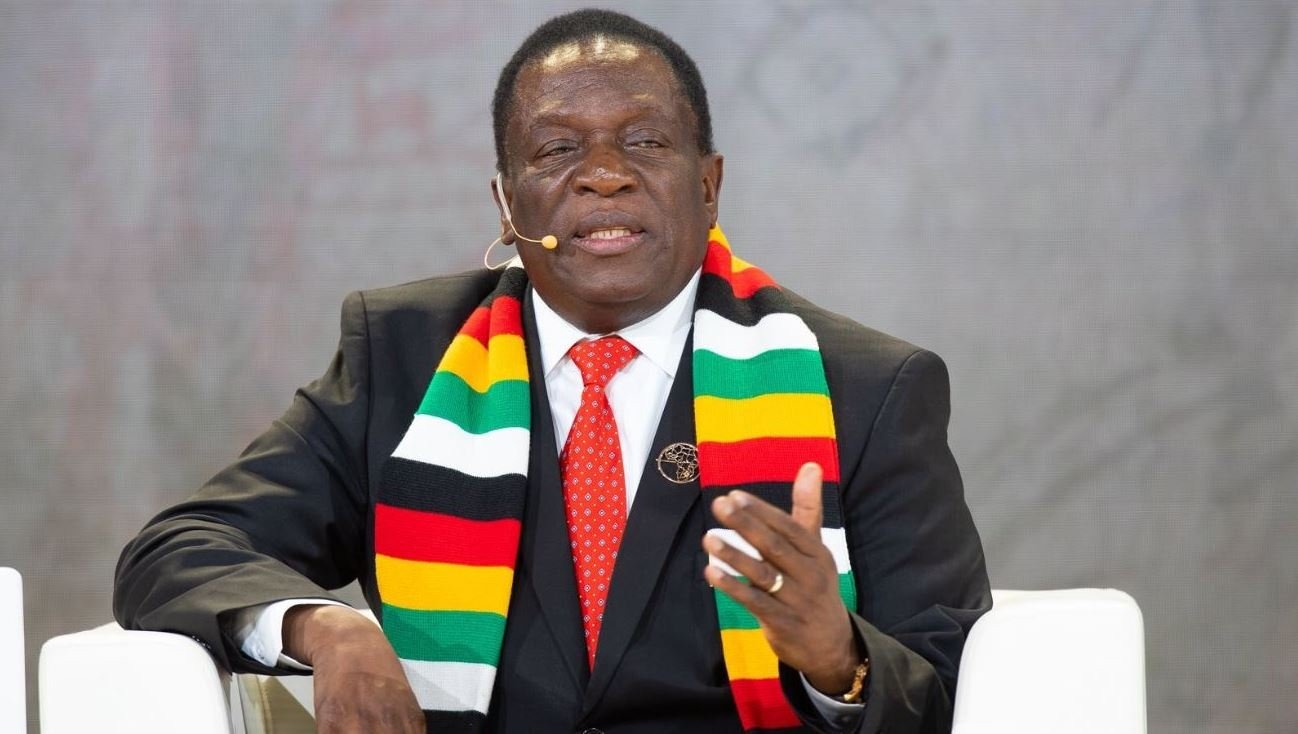
In February 2025, President Emmerson Mnangagwa sat with editors at State House and made a promise that resonated across the nation. He said: “I’m very clear that I have two terms, and these terms are very definite, and I am so democratic. When they come to an end, I will step aside and my party will elect my successor”.
When asked if he could be persuaded to stay beyond 2028, his response was memorable: “I will persuade the persuaders not to persuade me, so that I remain a constitutionalist”.
The message was unambiguous: he would not extend his stay beyond 2028. He would respect the Constitution. He would not be swayed.
That was eighteen months ago. Today, that promise stands in stark contrast to reality.
II. The Reality
On 7 July 2026, President Mnangagwa signed Constitutional Amendment Bill No. 3 (CAB3) into law. The Act extends presidential and parliamentary terms from five to seven years, abolishes direct presidential elections, and pushes the next general election from 2028 to 2030.
A leader who pledged to step down in 2028 will now remain in office until at least 2030.
The sequence of events tells its own story. In February 2025, he rejected calls for a term extension. By February 2026, his Cabinet had approved CAB3. By June 2026, Parliament had passed it with 216 votes in favour in the National Assembly and 75 in the Senate. On 7 July 2026, he signed it into law.
At every step, the President, who promised to remain a constitutionalist, became the chief architect of constitutional change that benefits him directly.
III. The Contradiction
The gap between word and deed is wide.
He said: “I have my two terms. When they come to an end, the country and the party will move on.” Yet he signed a law that ensures no successor will be elected in 2028.
He said: “It’s not imaginable that there is anybody in the country who can push me to seek a term extension.” Yet he was pushed, and he yielded.
He said he would “persuade the persuaders”. The persuaders won.
In June 2026, when retired generals met with him to express their concerns about CAB3, his reported response was: “whoever wins, wins”. That is not the language of a constitutionalist. It is the language of a leader who has moved beyond persuasion to assertion.
IV. The Architecture Beyond 2030
CAB3 is not simply about two extra years. The architecture extends further.
Under the new framework, the next general election moves to 2030. A President elected by Parliament in 2030 would serve a seven-year term until 2037. If re-elected for a second seven-year term, that President could remain in office until 2044.
In effect, Zimbabwe could go sixteen years without a direct presidential election. The presidency would be determined by Parliament, not by the electorate. This is not speculation. It is the mechanical reality of the new constitutional framework.
V. The Warnings He Chose to Ignore
The churches warned him. In February 2026, the Zimbabwe Heads of Christian Denominations wrote, urging him not to be “swayed by those persuading you”. They pleaded with him to allow the country to witness “the first truly smooth leadership transition”.
The retired generals warned him. The Law Society warned him. Civil society warned him. Even his own Vice President is understood to have expressed reservations.
He pressed on.
When the generals met him on 18 and 19 May 2026, his reported response—”whoever wins, wins”—suggested a leader no longer concerned with persuasion or constitutional constraint.
VI. A Question of Trust
A nation relies on the word of its leaders. When that word proves unreliable, the foundation of trust erodes.
President Mnangagwa came to power in November 2017, promising a “new dispensation”—a break from the past. He presented himself as a reformer, a constitutionalist, a leader who would restore faith in governance.
He has now signed into law a set of constitutional amendments that, in his own words, he explicitly ruled out in 2025. The promise to step down in 2028 has been set aside. The commitment to remain a constitutionalist has been overtaken by political calculation.
VII. Conclusion
The question is no longer whether President Mnangagwa can be trusted to keep his word on term limits. He has demonstrated that he will not.
The question now is whether the nation will hold its leaders accountable to the promises they make.
Trust is not given freely. It is earned through consistency between word and deed. When a leader promises one thing and does the opposite, trust is broken. And broken trust is not easily repaired.
History will record that in February 2025, a President promised to step down in 2028. In July 2026, he signed a law that keeps him in power until 2030—and creates a framework that could extend his faction’s control until 2044.
That is the contradiction. That is the record. And that is what Zimbabweans must reckon with.
Regional conference proposed for Victoria Falls to address migration and free trade Source: Zulu king to meet Mnangagwa over SA anti-immigrant tensions – Zimbabwe News Now King Misuzulu ka Zwelithini HARARE – AmaZulu king Misuzulu ka Zwelithini and King Ndamase Ndamase of Western Pondoland are set to travel to Zimbabwe to meet president Emmerson Mnangagwa […]
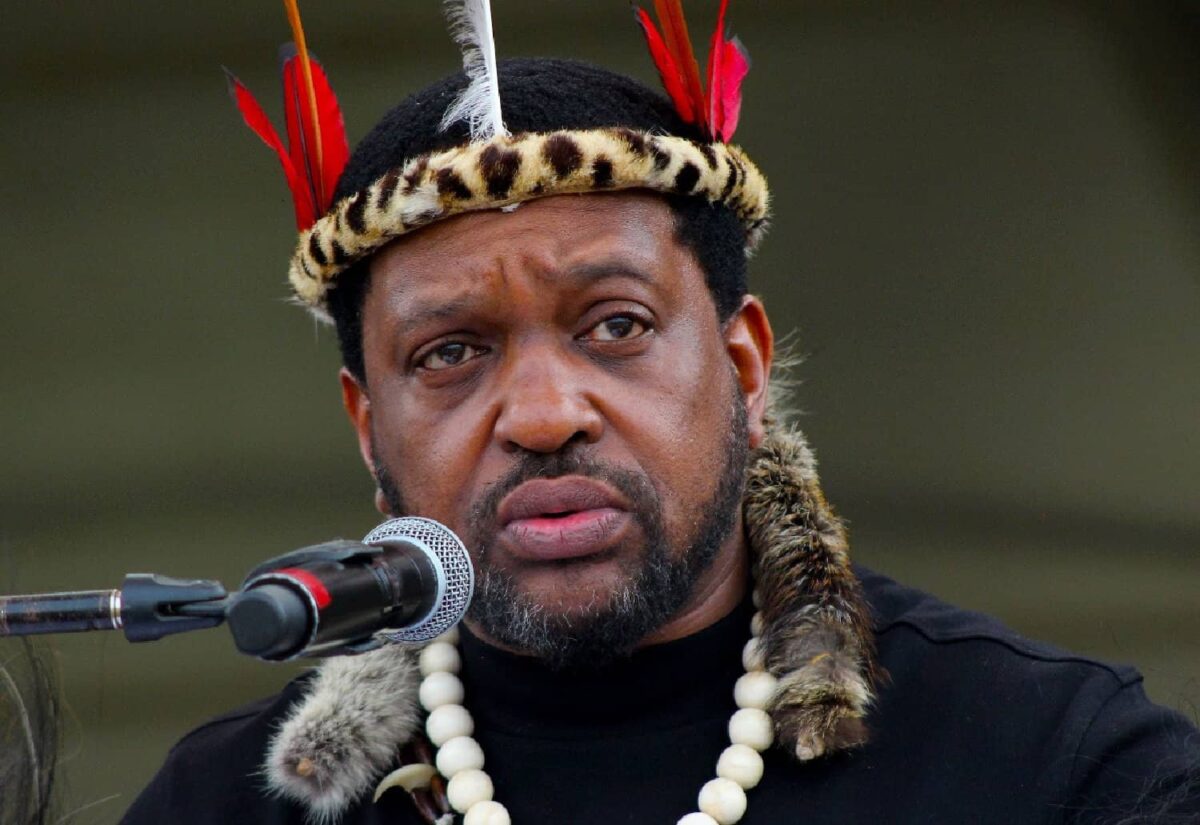
HARARE – AmaZulu king Misuzulu ka Zwelithini and King Ndamase Ndamase of Western Pondoland are set to travel to Zimbabwe to meet president Emmerson Mnangagwa amid rising anti-immigrant tensions in South Africa, reports said on Wednesday.
Ndamase, leader of AmaMpondo aseNyandeni of the Eastern Cape, wrote to South Africa’s minister of international relations and cooperation, Ronald Lamola, on July 3 informing him of the planned visit.
Lamola’s spokesperson, Chrispin Phiri, told News24 that the department had received the correspondence, and said it would engage the traditional leadership on their proposal.
Ndamase said the decision to visit Zimbabwe followed a high-level meeting on June 27 at which South African president Cyril Ramaphosa met traditional leaders to discuss growing anti-immigrant sentiment and the government’s response to it.
That meeting came three days before nationwide demonstrations on June 30 by anti-immigration groups, which had set that date as an ultimatum for undocumented foreign nationals to leave the country.
Ndamase said he and Misuzulu had also met Ramaphosa separately on June 28, where they agreed on the urgency of engaging regional leaders on the matter. He said the two kings intended to discuss southern African xenophobia, migration and the role of minorities within the framework of the African Continental Free Trade Area (AfCFTA), and had proposed hosting a SADC regional minority summit in Victoria Falls to turn migration into what he called a “strategic asset for regional investment.”
In a separate letter to Mnangagwa, also dated July 3, Ndamase requested a meeting between the Zimbabwean head of state and the two kings, citing Mnangagwa’s “Pan-Africanist credentials” and describing him as a leader well placed to guide the dialogue on regional migration tensions.
Zanu PF spokesperson Chris Mutsvangwa confirmed at a press conference on Monday that Mnangagwa would meet the traditional leaders, framing the engagement as part of efforts to address what he termed the “weaponisation of poverty.”
Mutsvangwa said the Zimbabwean leader had been in contact with an intermediary with links to traditional rulers in kwaZulu-Natal and among the amaXhosa and amaMpondo, and that correspondence had been received from the Kingdom of Zululand, the king of amaMpondo and the Xhosa paramount king, with discussions to focus on what could be done at a sub-regional level.
Misuzulu is reported to have played a role in the lead-up to the June 30 protests in calming tensions in KwaZulu-Natal, the epicentre of the planned marches, urging his subjects to avoid destroying property and instructing royal regiments and coordinators to protect foreign nationals from harm during the demonstrations.
Zimbabwe’s information minister Zhemu Soda on Tuesday said 21,291 nationals had been repatriated by the government since May, with a further 56,832 having returned independently fearing violence in South Africa.
He said an inter-ministerial committee had been established to oversee the reception, registration and transportation of returnees, along with reintegration programmes.
Source: Declare Lake Chivero Pollution A National Disaster – CHRA ⋆ Pindula News The Combined Harare Residents Association (CHRA) says the worsening pollution in Lake Chivero should be declared a state of national disaster, warning that the environmental crisis has reached alarming levels. Speaking to journalists in Harare on Tuesday, CHRA programmes manager Mable Murambiwa […]
The Combined Harare Residents Association (CHRA) says the worsening pollution in Lake Chivero should be declared a state of national disaster, warning that the environmental crisis has reached alarming levels.
Speaking to journalists in Harare on Tuesday, CHRA programmes manager Mable Murambiwa said unchecked discharges of industrial effluent and raw sewage into Harare’s water sources were threatening public health, driving up water treatment costs and compromising residents’ constitutional rights.
She described water pollution as the most pressing environmental and public health challenge facing Harare and the Upper Manyame Catchment.
“The continued pollution of water sources continues to violate residents’ constitutionally guaranteed right to a clean environment as well as clean, safe and potable water as espoused under Sections 73 and 77 of the Constitution of Zimbabwe,” said Murambiwa.
She blamed the pollution on industries that continue to discharge untreated effluent into municipal sewer systems without installing the mandatory pre-treatment facilities required under the Environmental Management Act. Persistent sewer failures in Crowborough, Firle and Chitungwiza had made the situation worse.
Murambiwa said CHRA’s research had identified several gaps in Zimbabwe’s water pollution control framework. These include fragmented legislation, weak regulatory oversight, overlapping institutional mandates, poor coordination among stakeholders and inadequate enforcement of environmental laws.
She added that existing pollution permit fees and penalties were too low to deter offenders.
“In Zimbabwe, it is cheaper to pollute rather than comply with the environmental water laws,” she said.
She said an estimated 250 million litres of raw sewage flowed into Lake Chivero each day, further degrading Harare’s main water source.
Murambiwa urged residents not to buy fish caught illegally from Lake Chivero, warning that eating contaminated fish posed serious health risks.
She said CHRA had developed a Model Statutory Instrument based on the “polluter pays” principle to strengthen environmental governance. The draft law seeks to ensure that polluters meet the full costs of environmental remediation and restoration.
The association will also roll out a public awareness campaign targeting councillors, legislators, community leaders, residents and government agencies, she said. The aim is to strengthen compliance with environmental laws and promote accountability.
Murambiwa called on Parliament to expedite amendments to the Environmental Management Act, the Zimbabwe National Water Authority Act and the Water Act to bolster the country’s legal framework for tackling water pollution.
“The situation at Lake Chivero deserves urgent attention and is, in itself, a state of national disaster,” said Mrs Murambiwa.
On a quiet Tuesday of 7 July 2026, while most Zimbabweans were preoccupied with the soaring price of basic commodities and the daily struggle for transport, a single stroke of a pen altered the course of the nation’s history. President Emmerson M…
On a quiet Tuesday of 7 July 2026, while most Zimbabweans were preoccupied with the soaring price of basic commodities and the daily struggle for transport, a single stroke of a pen altered the course of the nation’s history. President Emmerson Mnangagwa, the man who referred to himself as a “constitutionalist” and a “listening leader,” […]
HWANGE — In a chilling investigation that reads like a thriller, Oscar Sifelani Mtshiya, a 48-year-old man from Hwange, recently appeared in court facing human trafficking charges. He didn’t just lie to job seekers; he allegedly sold them into a …
HWANGE — In a chilling investigation that reads like a thriller, Oscar Sifelani Mtshiya, a 48-year-old man from Hwange, recently appeared in court facing human trafficking charges. He didn’t just lie to job seekers; he allegedly sold them into a war zone. Lured with the promise of high-paying firefighting jobs in Moscow, five Zimbabweans found […]