Ipec targets pension defaulters

Zimbabwe’s pensions regulator has threatened to crack down on major State-owned enterprises and other employers that have failed to remit millions of United States dollars in pension contributions deducted from employees, warning that persistent defaulters face garnishee orders. In its first-quarter report, the Insurance and Pensions Commission (Ipec) said total outstanding pension contribution arrears rose […]

The post Ipec targets pension defaulters appeared first on The Zimbabwe Mail.

Zimbabwe’s pensions regulator has threatened to crack down on major State-owned enterprises and other employers that have failed to remit millions of United States dollars in pension contributions deducted from employees, warning that persistent defaulters face garnishee orders.

In its first-quarter report, the Insurance and Pensions Commission (Ipec) said total outstanding pension contribution arrears rose 18 percent to US$148,96 million from US$126,26 million recorded in December 2025.

The regulator said a significant share of the arrears is owed by State-owned enterprises, including subsidiaries of Zesa Holdings, as well as several local authorities and commercial entities.

According to Ipec, the Zimbabwe Electricity Transmission and Distribution Company (ZETDC) was the largest defaulter, owing ZiG733,08 million, equivalent to about US$28,95 million.

The Zimbabwe Power Company, another Zesa Holdings subsidiary, owed ZiG369,05 million (approximately US$14,58 million), while parent company Zesa Holdings had outstanding pension contributions amounting to ZiG179,50 million (about US$7,09 million).

Other major debtors include Harare City Council, which owes ZiG138,76 million (around US$5,48 million), the Civil Aviation Authority of Zimbabwe with ZiG130,73 million (about US$5,16 million), the Zimbabwe National Water Authority with ZiG114,75 million (approximately US$4,53 million), and the National Railways of Zimbabwe, which has arrears of ZiG76,72 million (about US$3,03 million).

Management of several companies named in the report declined to comment, but Ipec said it continued engaging sponsoring employers to recover the outstanding funds.

“The commission continues to engage sponsoring employers to ensure timely remittance of contributions and, in line with the Pensions and Provident Funds Act, will garnish those with long-outstanding balances,” Ipec said.

The regulator noted that pension contributions received during the first quarter totalled US$86,01 million, representing a 13 percent increase from the US$76,26 million collected during the corresponding period last year.

Despite the growth in contributions, arrears continued to rise, reflecting mounting financial pressures across the economy.

Ipec said the 10 biggest defaulters account for about 61,6 percent of the industry’s total pension contribution arrears, highlighting the heavy concentration of debt among a relatively small number of employers, most of them public sector institutions.

The regulator said it was prepared to invoke garnishee orders against employers that continue to ignore regulatory directives, signalling one of its strongest enforcement drives to date.

The increasing arrears come as many sectors of the economy continue to grapple with liquidity constraints under Zimbabwe’s tight monetary policy environment, with several industries experiencing operational challenges and job losses.

Ipec also reported that foreign currency-denominated pension arrears had risen by 15 percent to US$60,52 million by March 31, 2026, compared with US$52,6 million at the end of December 2025.

“By March 31, 2026, foreign currency-denominated contribution arrears had reached US$60,52 million, equivalent to 5% of the sector’s foreign currency-denominated assets,” the commission said.

“To mitigate further accumulation, boards of funds are encouraged to actively engage and work closely with sponsoring employers to address outstanding arrears.”

Despite the growing debt, Zimbabwe’s pensions industry recorded a strong first quarter, with total assets increasing by 10 percent to US$3,41 billion, driven by new investments and gains in property and listed equities.

Ipec said contributions remained the dominant source of pension fund income, accounting for 90 percent of the sector’s US$95,75 million membership-related revenue during the quarter.

Member contributions totalled US$31,37 million, while employers contributed US$46,57 million, resulting in an employer-to-member contribution ratio of 1,49:1.

The regulator also reported a significant improvement in pension records management, with nearly 147 000 Zimbabweans being reunited with their pension records following a major data clean-up undertaken in partnership with the Construction Industries Pension Fund.

The exercise contributed to a 14 percent increase in total pension fund membership, which now exceeds 1,14 million members.

Looking ahead, Ipec said its supervisory efforts would increasingly focus on strengthening compliance, operational discipline and fiduciary accountability across the pensions sector while taking tougher action against employers that fail to safeguard workers’ retirement savings.

Source – The Independent

The post Ipec targets pension defaulters appeared first on The Zimbabwe Mail.

Major Immigration Policy Shift in South Africa, Quietly One of the Biggest in Years

Source: Major Immigration Policy Shift in South Africa, Quietly One of the Biggest in Years Cabinet has now approved the Revised White Paper on Citizenship, Immigration and Refugee Protection for implementation, and the implications are far reaching. Zimbabweans who came to South Africa after the economic collapse of 2008 are facing the threat of having […]

The post Major Immigration Policy Shift in South Africa, Quietly One of the Biggest in Years appeared first on Zimbabwe Situation.

Source: Major Immigration Policy Shift in South Africa, Quietly One of the Biggest in Years

Cabinet has now approved the Revised White Paper on Citizenship, Immigration and Refugee Protection for implementation, and the implications are far reaching.

Zimbabweans who came to South Africa after the economic collapse of 2008 are facing the threat of having to uproot themselves once more as their visas expire.

This is not a routine policy adjustment.
This is a structural redesign of South Africa’s immigration framework.
Here are some of the key approved changes:
1. Universal Digital Birth and Death Registration.
The Department of Home Affairs will implement mandatory digital birth and death registration covering citizens and all foreigners living in South Africa.
This means everyone in South Africa becomes digitally traceable within the population system.
2. Intelligent Population Register (IPR)
A new Intelligent Population Register will capture biometrics of every person living in South Africa, not just citizens.
Currently, the National Population Register only includes South African citizens.
This change expands biometric tracking to foreign nationals, asylum seekers, visa holders, and long term residents.
This is a fundamental shift toward full population monitoring.
3. Hospital Based Biometric Birth Registration
Newborns will be biometrically linked to parents at birth, whether the parents are citizens or foreign nationals.
This will significantly tighten citizenship verification and migration tracking from birth.
4. New Visa Categories Introduced
The government will introduce:
• Remote Work Visa
• Start Up Visa
• Sector Based Work Visa
• Sports and Arts Visa
This signals a more targeted and economically driven immigration system.
5. Critical Skills and General Work Visas Replaced
The current Critical Skills Visa and General Work Visa will be replaced by a Skilled Worker Visa adjudicated through a Points Based System (PBS).
This mirrors immigration systems used in countries like Canada, Australia and the UK.
Translation:
Immigration will become more selective and competitive.
6. Visitor Visa Overhaul
Visitor visas will now strictly prohibit:
• Work
• Study
• Business
Unless specifically authorised.
This will close many grey areas previously relied upon by foreigners.
7. Investment Linked Visa Replacing Financially Independent PR
A new investment linked financially independent visa will replace the existing financially independent permanent residence category.
This suggests higher financial thresholds for wealthy applicants.
But Here Is the Most Significant Policy Shift
The White Paper now empowers South Africa to:
• Deny entry to asylum seekers who passed through a safe third country
• Reserve certain occupations, trades and professions exclusively for South Africans
This is a major tightening of immigration policy.
Implications for Foreigners in South Africa
This affects:
•  ZEP holders
• Asylum seekers
• General work visa holders
• Students
• Permanent residence applicants
• Undocumented migrants
• Business visa holders
1. ZEP Holders
The direction is clear.
Policy is shifting toward skills based, economically justified migration.
This means future regularisation pathways may become:
• More restrictive
• Skills dependent
• Points based
• Time limited
ZEP holders without scarce or critical skills may face increased vulnerability in future policy decisions.
2. Asylum Seekers
The safe third country rule is a major development.
Asylum seekers who passed through countries like:
• Botswana
• Mozambique
• Zambia
• Namibia
may now legally be denied entry or protection.
This significantly tightens asylum access.
3. General Work Visa Holders
The Points Based System means:
• Education matters more
• Income matters more
• Skills scarcity matters more
• Age may matter
• Experience will matter
Immigration becomes merit based, not presence based.
4. Informal Sector Foreign Nationals
The proposal to reserve occupations for South Africans may affect:
• Informal traders
• Small scale business operators such as Spaza shop owners.
• Lowly skilled workers like domestic workers and waiters.
This is potentially one of the most impactful changes for everyday migrants.
Strategic Legal Interpretation
This White Paper signals a policy philosophy shift:
From
Immigration Management
To
Immigration Selection
From
Presence Based Tolerance
To
Skills Based Admission
Calm authority requires clarity.
South Africa is not closing its doors.
It is narrowing the doorway.
Foreign nationals should begin regularising, strengthening qualifications, and securing legal status now.
Because the direction is no longer ambiguous.
It is strategic, structured, and tightening.
Strategic Legal Thinking. Calm Authority. Real Solutions.
Kind regards,
Velempini Ndlovu Lawyer | Principal Immigration Strategist ExploreAll Immigration Consultancy (Pty) Ltd 🌐 www.exploreall.co.za 📧 velempini@exploreall.co.za 📱 WhatsApp: +27 83 879 8114 ☎ Landline: +27 12 883 8962
#ImmigrationSA
#HomeAffairs
#ZEP
#VisaPolicy
#veapclassics
P.S. Please like and share as the people who need this information may be on your timeline.

The post Major Immigration Policy Shift in South Africa, Quietly One of the Biggest in Years appeared first on Zimbabwe Situation.

UPDATE ON THE REPATRIATION AND REINTEGRATION OF ZIMBABWEAN RETURNEES

Source: UPDATE ON THE REPATRIATION AND REINTEGRATION OF ZIMBABWEAN RETURNEES UPDATE ON THE REPATRIATION AND REINTEGRATION OF ZIMBABWEAN RETURNEES FROM THE REPUBLIC OF SOUTH AFRICA, AS AT 2ND JULY, 2026. 1) The cumulative total of returnees facilitated by the Government of Zimbabwe stood at 11 065. 2) The cumulative total of self-repatriations stood at 47 […]

The post UPDATE ON THE REPATRIATION AND REINTEGRATION OF ZIMBABWEAN RETURNEES appeared first on Zimbabwe Situation.

Source: UPDATE ON THE REPATRIATION AND REINTEGRATION OF ZIMBABWEAN RETURNEES

UPDATE ON THE REPATRIATION AND REINTEGRATION OF ZIMBABWEAN RETURNEES FROM THE REPUBLIC OF SOUTH AFRICA, AS AT 2ND JULY, 2026.

1) The cumulative total of returnees facilitated by the Government of Zimbabwe stood at 11 065.
2) The cumulative total of self-repatriations stood at 47 703.
3) The Grand Total of Zimbabweans who have come back home thus stood at 58 768 as of 2nd July, 2026.
4) Zimbabwe Embassy and its Consulates are coordinating movements of Zimbabweans across South Africa to Mussina Temporary Repatriation Centre, including from Cape Town and Durban. They are also moving food, toiletries and buses to the needy, as well as organising temporary shelter for Zimbabweans awaiting clearance by the host country.
5) About 600 Zimbabweans were being processed at Epping Repatriation Centre pending their transfer to Mussina.
6) Buses hired by Government, augmented by buses donated by KUDAKWASHE TAGWIREI’S BRIDGING GAPS FOUNDATION (11), E. MUPFUMI and P. TUNGWARARA (6), continue to facilitate in-country repatriation exercise.
7) Two ambulances hired by HIGHERLIFE FOUNDATION (1) and LIFE FOUNDATION (1) have been deployed to the Beitbridge Reception Centre.
8) Additional support has come from the World Food Programme, UNICEF, NO-ONE SLEEPS HUNGRY and LIFE FOUNDATION in the form of foodstuffs, blankets, child-friendly play centres and other amenities.
9) CITY OF CAPE TOWN has supported the Zimbabwe Consulate in the same city with 16 buses which moved returnees to Mussina on 1st July, 2026.
10) The ADVENTIST RELIEF AND DEVELOPMENT AGENCY, ARDA, donated 8 buses for use in Cape Town.

The post UPDATE ON THE REPATRIATION AND REINTEGRATION OF ZIMBABWEAN RETURNEES appeared first on Zimbabwe Situation.

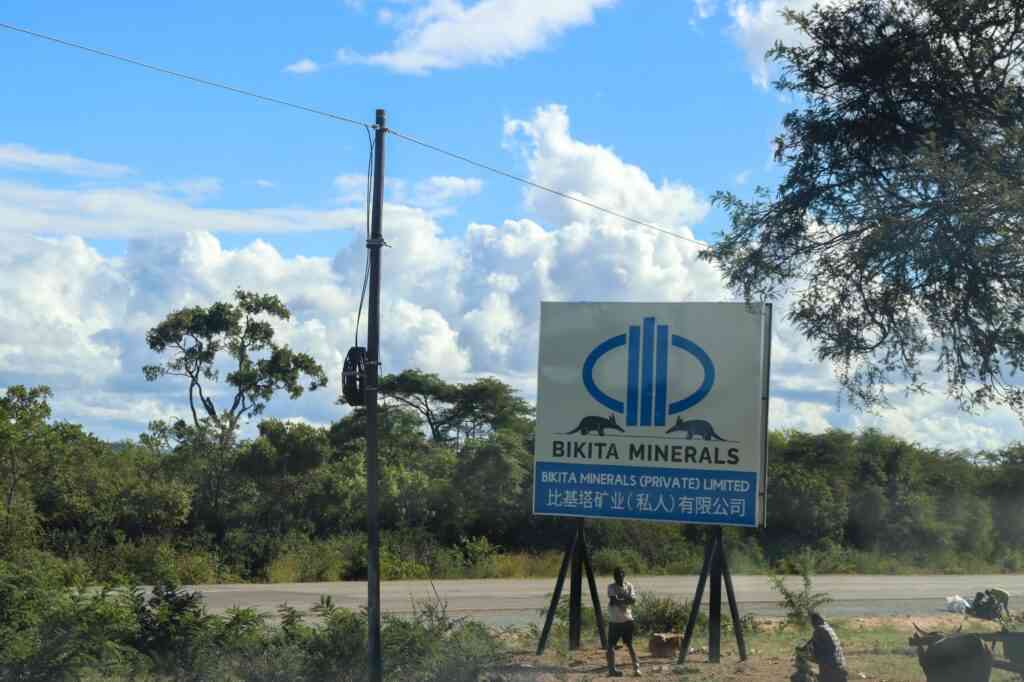
Bikita Minerals expands operations with US$200 mill investment 

Source: Bikita Minerals expands operations with US$200 mill investment -Newsday Zimbabwe BIKITA Minerals situated in Masvingo has invested more than US$300 million to expand production capacity, modernise processing infrastructure and strengthen beneficiation since 2022. This emerged during a media tour attended by the Information, Publicity and Broadcasting Services minister, Zhemu Soda, on Thursday. Soda and […]

The post Bikita Minerals expands operations with US$200 mill investment  appeared first on Zimbabwe Situation.

Source: Bikita Minerals expands operations with US$200 mill investment -Newsday Zimbabwe

BIKITA Minerals situated in Masvingo has invested more than US$300 million to expand production capacity, modernise processing infrastructure and strengthen beneficiation since 2022.

This emerged during a media tour attended by the Information, Publicity and Broadcasting Services minister, Zhemu Soda, on Thursday.

Soda and the media delegation visited the mine’s state-of-the-art processing plant, where they observed lithium ore being processed into concentrates destined for international markets.

“Bikita Minerals is a clear demonstration of the Second Republic’s commitment to ensuring that Zimbabwe derives maximum value from its mineral resources through beneficiation and value addition,” Soda said after the tour.

“Instead of exporting raw minerals, we are promoting local processing that creates jobs, boosts export earnings and drives industrialisation.”

Soda said the continued expansion of the mine demonstrates growing investor confidence in the country’s mining sector and the country’s favourable investment climate.

Mine management briefed the delegation on production performance, operational processes, safety standards and ongoing investments designed to increase production efficiency while expanding value addition and beneficiation.

“Bikita Minerals has continued to expand its operations through significant investments aimed at increasing production capacity and strengthening beneficiation,” mine management said.

“These investments have positioned the mine among the leading lithium producers in the region while creating employment and contributing to national economic growth.”

Bikita Minerals remains one of the country’s leading lithium producers.

The post Bikita Minerals expands operations with US$200 mill investment  appeared first on Zimbabwe Situation.

Fresh legal storm over CAB 3 

Source: Fresh legal storm over CAB 3 -Newsday Zimbabwe THE passing of the controversial Constitution Amendment No. 3 Bill (CAB 3) has cleared the way for numerous court challenges against legislation that seeks to extend President Emmerson Mnangagwa’s tenure beyond constitutionally mandated limits. The Bill cleared its final stage in the National Assembly on Tuesday […]

The post Fresh legal storm over CAB 3  appeared first on Zimbabwe Situation.

Source: Fresh legal storm over CAB 3 -Newsday Zimbabwe

THE passing of the controversial Constitution Amendment No. 3 Bill (CAB 3) has cleared the way for numerous court challenges against legislation that seeks to extend President Emmerson Mnangagwa’s tenure beyond constitutionally mandated limits.

The Bill cleared its final stage in the National Assembly on Tuesday during an extraordinary sitting convened by the President after legislators reconsidered amendments proposed by the Senate.

It was approved by 226 votes, with 41 opposition legislators from the Citizens Coalition for Change (CCC) voting against it.

The Bill now awaits Mnangagwa’s signature.

However, war veteran Reuben Zulu has already launched an urgent High Court application seeking to halt the processing of CAB 3, following the fallout from controversial cash and car gifts given to Members of Parliament by businessman Wicknell Chivayo.

Zulu argued in his application that Parliament’s approval of the proposed constitutional changes was “contaminated” by allegations of corruption and unlawful inducements offered to MPs.

The application was filed on Tuesday, the same day the National Assembly approved the Bill.

Zulu was one of six applicants who previously approached the Constitutional Court seeking to invalidate the process leading to the Bill’s introduction, he is represented by constitutional expert Lovemore Madhuku.

In this latest application, he seeks an interim interdict preventing the Speaker of Parliament, the Clerk of Parliament, and other officials from certifying or presenting the Bill to the President for assent pending the determination of the case.

Madhuku has also filed two additional constitutional applications challenging the Bill — one on behalf of war veterans and another for CCC legislator Prince Dubeko Sibanda — against the Senate amendments adopted by the National Assembly.

Political analyst Blessing Vava stated that the completion of the parliamentary process is likely to trigger a fresh wave of constitutional litigation.

Vava argued there are credible grounds to claim that Parliament failed to comply with mandatory constitutional procedures, particularly those relating to public participation and other safeguards.

He said several legal applications had effectively been put on hold pending the conclusion of Parliament’s deliberations and expected new challenges to be filed now that the legislative process is complete.

Vava further contended that the proposed amendment to Section 328(7), which protects presidential term limits, must be subjected to a national referendum before it can become law.

“In my view, the provisions dealing with the extension of term limits ought to be subjected to a national referendum, as required by the Constitution,” Vava said.

He added that the completion of the parliamentary stage should not necessarily mark the end of the amendment process.

He criticised the positions taken by National Assembly Speaker Jacob Mudenda and Justice minister Ziyambi Ziyambi, who maintain that a referendum is unnecessary.

Vava considers that interpretation inconsistent with the spirit and intent of the Constitution, reflecting an attempt to expedite the amendment without affording citizens the opportunity to vote on a fundamental constitutional question.

He suggested that those opposing the Bill could use “lawful democratic” means to defend constitutionalism through peaceful civic action and public advocacy.

He also called on churches to engage the President to either withhold assent or refer the Bill to a referendum, while encouraging civil society organisations to engage regional bodies such as the southern African Development Community (Sadc) and the diplomatic community.

Opposition politician Jameson Timba argued that a specific Senate amendment — providing that the Vice-President last designated to act under Section 100 would automatically become Acting President in the event of a vacancy — alters political incentives surrounding succession.

Under the 2013 Constitution, the first Vice-President automatically succeeded the President for the remainder of the term.

Constitution Amendment No. 2 replaced that system by allowing the governing party to nominate a successor.

CAB 3 now proposes giving Parliament the power to elect a new President within 30 days, while the Vice-President who last served as Acting President temporarily assumes authority.

According to Timba, this amendment could intensify competition within the Executive, as routine acting appointments may increasingly be viewed as signals for future presidential succession.

CAB 3 has generated intense legal and political debate because, among its key provisions, it seeks to extend the terms of the President, Parliament, and local authorities by two years until 2030.

The post Fresh legal storm over CAB 3  appeared first on Zimbabwe Situation.