UPDATE ON THE REPATRIATION AND REINTEGRATION OF ZIMBABWEAN RETURNEES

Source: UPDATE ON THE REPATRIATION AND REINTEGRATION OF ZIMBABWEAN RETURNEES UPDATE ON THE REPATRIATION AND REINTEGRATION OF ZIMBABWEAN RETURNEES FROM THE REPUBLIC OF SOUTH AFRICA, AS AT 2ND JULY, 2026. 1) The cumulative total of returnees facilitated by the Government of Zimbabwe stood at 11 065. 2) The cumulative total of self-repatriations stood at 47 […]

The post UPDATE ON THE REPATRIATION AND REINTEGRATION OF ZIMBABWEAN RETURNEES appeared first on Zimbabwe Situation.

Source: UPDATE ON THE REPATRIATION AND REINTEGRATION OF ZIMBABWEAN RETURNEES

UPDATE ON THE REPATRIATION AND REINTEGRATION OF ZIMBABWEAN RETURNEES FROM THE REPUBLIC OF SOUTH AFRICA, AS AT 2ND JULY, 2026.

1) The cumulative total of returnees facilitated by the Government of Zimbabwe stood at 11 065.
2) The cumulative total of self-repatriations stood at 47 703.
3) The Grand Total of Zimbabweans who have come back home thus stood at 58 768 as of 2nd July, 2026.
4) Zimbabwe Embassy and its Consulates are coordinating movements of Zimbabweans across South Africa to Mussina Temporary Repatriation Centre, including from Cape Town and Durban. They are also moving food, toiletries and buses to the needy, as well as organising temporary shelter for Zimbabweans awaiting clearance by the host country.
5) About 600 Zimbabweans were being processed at Epping Repatriation Centre pending their transfer to Mussina.
6) Buses hired by Government, augmented by buses donated by KUDAKWASHE TAGWIREI’S BRIDGING GAPS FOUNDATION (11), E. MUPFUMI and P. TUNGWARARA (6), continue to facilitate in-country repatriation exercise.
7) Two ambulances hired by HIGHERLIFE FOUNDATION (1) and LIFE FOUNDATION (1) have been deployed to the Beitbridge Reception Centre.
8) Additional support has come from the World Food Programme, UNICEF, NO-ONE SLEEPS HUNGRY and LIFE FOUNDATION in the form of foodstuffs, blankets, child-friendly play centres and other amenities.
9) CITY OF CAPE TOWN has supported the Zimbabwe Consulate in the same city with 16 buses which moved returnees to Mussina on 1st July, 2026.
10) The ADVENTIST RELIEF AND DEVELOPMENT AGENCY, ARDA, donated 8 buses for use in Cape Town.

The post UPDATE ON THE REPATRIATION AND REINTEGRATION OF ZIMBABWEAN RETURNEES appeared first on Zimbabwe Situation.

Bikita Minerals expands operations with US$200 mill investment 

Source: Bikita Minerals expands operations with US$200 mill investment -Newsday Zimbabwe BIKITA Minerals situated in Masvingo has invested more than US$300 million to expand production capacity, modernise processing infrastructure and strengthen beneficiation since 2022. This emerged during a media tour attended by the Information, Publicity and Broadcasting Services minister, Zhemu Soda, on Thursday. Soda and […]

The post Bikita Minerals expands operations with US$200 mill investment  appeared first on Zimbabwe Situation.

Source: Bikita Minerals expands operations with US$200 mill investment -Newsday Zimbabwe

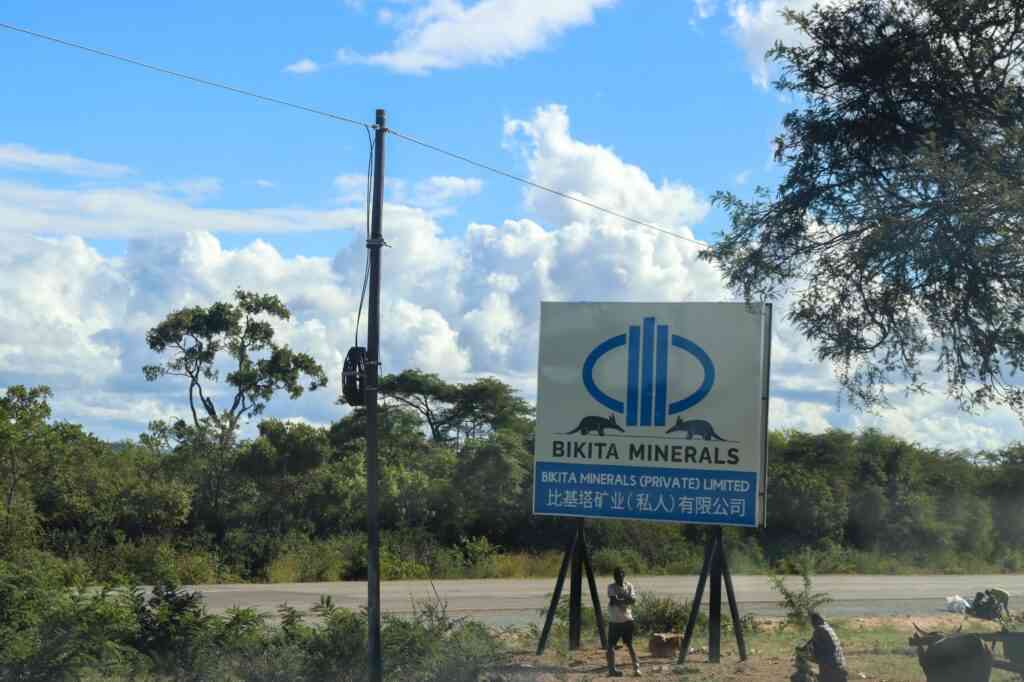
BIKITA Minerals situated in Masvingo has invested more than US$300 million to expand production capacity, modernise processing infrastructure and strengthen beneficiation since 2022.

This emerged during a media tour attended by the Information, Publicity and Broadcasting Services minister, Zhemu Soda, on Thursday.

Soda and the media delegation visited the mine’s state-of-the-art processing plant, where they observed lithium ore being processed into concentrates destined for international markets.

“Bikita Minerals is a clear demonstration of the Second Republic’s commitment to ensuring that Zimbabwe derives maximum value from its mineral resources through beneficiation and value addition,” Soda said after the tour.

“Instead of exporting raw minerals, we are promoting local processing that creates jobs, boosts export earnings and drives industrialisation.”

Soda said the continued expansion of the mine demonstrates growing investor confidence in the country’s mining sector and the country’s favourable investment climate.

Mine management briefed the delegation on production performance, operational processes, safety standards and ongoing investments designed to increase production efficiency while expanding value addition and beneficiation.

“Bikita Minerals has continued to expand its operations through significant investments aimed at increasing production capacity and strengthening beneficiation,” mine management said.

“These investments have positioned the mine among the leading lithium producers in the region while creating employment and contributing to national economic growth.”

Bikita Minerals remains one of the country’s leading lithium producers.

The post Bikita Minerals expands operations with US$200 mill investment  appeared first on Zimbabwe Situation.

Fresh legal storm over CAB 3 

Source: Fresh legal storm over CAB 3 -Newsday Zimbabwe THE passing of the controversial Constitution Amendment No. 3 Bill (CAB 3) has cleared the way for numerous court challenges against legislation that seeks to extend President Emmerson Mnangagwa’s tenure beyond constitutionally mandated limits. The Bill cleared its final stage in the National Assembly on Tuesday […]

The post Fresh legal storm over CAB 3  appeared first on Zimbabwe Situation.

Source: Fresh legal storm over CAB 3 -Newsday Zimbabwe

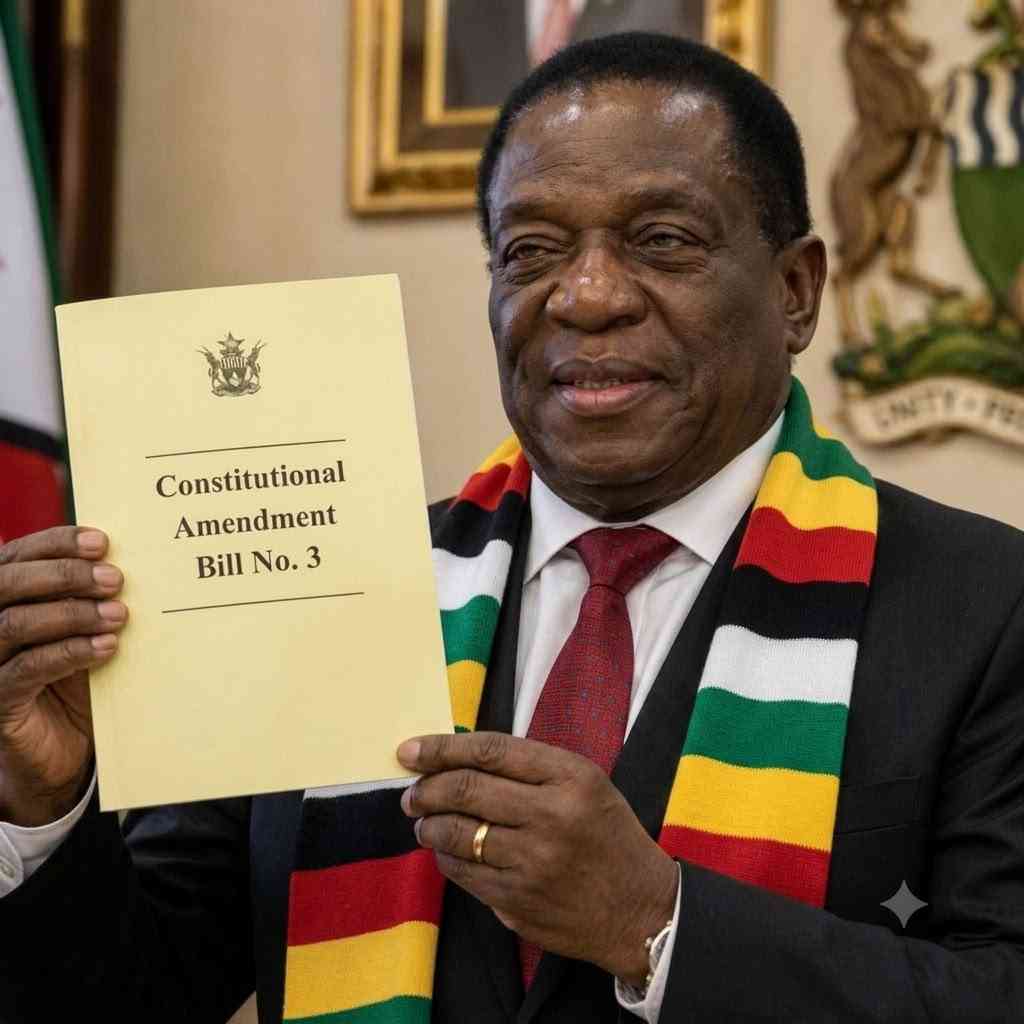
THE passing of the controversial Constitution Amendment No. 3 Bill (CAB 3) has cleared the way for numerous court challenges against legislation that seeks to extend President Emmerson Mnangagwa’s tenure beyond constitutionally mandated limits.

The Bill cleared its final stage in the National Assembly on Tuesday during an extraordinary sitting convened by the President after legislators reconsidered amendments proposed by the Senate.

It was approved by 226 votes, with 41 opposition legislators from the Citizens Coalition for Change (CCC) voting against it.

The Bill now awaits Mnangagwa’s signature.

However, war veteran Reuben Zulu has already launched an urgent High Court application seeking to halt the processing of CAB 3, following the fallout from controversial cash and car gifts given to Members of Parliament by businessman Wicknell Chivayo.

Zulu argued in his application that Parliament’s approval of the proposed constitutional changes was “contaminated” by allegations of corruption and unlawful inducements offered to MPs.

The application was filed on Tuesday, the same day the National Assembly approved the Bill.

Zulu was one of six applicants who previously approached the Constitutional Court seeking to invalidate the process leading to the Bill’s introduction, he is represented by constitutional expert Lovemore Madhuku.

In this latest application, he seeks an interim interdict preventing the Speaker of Parliament, the Clerk of Parliament, and other officials from certifying or presenting the Bill to the President for assent pending the determination of the case.

Madhuku has also filed two additional constitutional applications challenging the Bill — one on behalf of war veterans and another for CCC legislator Prince Dubeko Sibanda — against the Senate amendments adopted by the National Assembly.

Political analyst Blessing Vava stated that the completion of the parliamentary process is likely to trigger a fresh wave of constitutional litigation.

Vava argued there are credible grounds to claim that Parliament failed to comply with mandatory constitutional procedures, particularly those relating to public participation and other safeguards.

He said several legal applications had effectively been put on hold pending the conclusion of Parliament’s deliberations and expected new challenges to be filed now that the legislative process is complete.

Vava further contended that the proposed amendment to Section 328(7), which protects presidential term limits, must be subjected to a national referendum before it can become law.

“In my view, the provisions dealing with the extension of term limits ought to be subjected to a national referendum, as required by the Constitution,” Vava said.

He added that the completion of the parliamentary stage should not necessarily mark the end of the amendment process.

He criticised the positions taken by National Assembly Speaker Jacob Mudenda and Justice minister Ziyambi Ziyambi, who maintain that a referendum is unnecessary.

Vava considers that interpretation inconsistent with the spirit and intent of the Constitution, reflecting an attempt to expedite the amendment without affording citizens the opportunity to vote on a fundamental constitutional question.

He suggested that those opposing the Bill could use “lawful democratic” means to defend constitutionalism through peaceful civic action and public advocacy.

He also called on churches to engage the President to either withhold assent or refer the Bill to a referendum, while encouraging civil society organisations to engage regional bodies such as the southern African Development Community (Sadc) and the diplomatic community.

Opposition politician Jameson Timba argued that a specific Senate amendment — providing that the Vice-President last designated to act under Section 100 would automatically become Acting President in the event of a vacancy — alters political incentives surrounding succession.

Under the 2013 Constitution, the first Vice-President automatically succeeded the President for the remainder of the term.

Constitution Amendment No. 2 replaced that system by allowing the governing party to nominate a successor.

CAB 3 now proposes giving Parliament the power to elect a new President within 30 days, while the Vice-President who last served as Acting President temporarily assumes authority.

According to Timba, this amendment could intensify competition within the Executive, as routine acting appointments may increasingly be viewed as signals for future presidential succession.

CAB 3 has generated intense legal and political debate because, among its key provisions, it seeks to extend the terms of the President, Parliament, and local authorities by two years until 2030.

The post Fresh legal storm over CAB 3  appeared first on Zimbabwe Situation.

Local investors lead rural industrialisation drive 

Source: Local investors lead rural industrialisation drive – herald Dr Soda yesterday said high-impact projects being implemented by locals across the country spoke volumes about the capacity of Zimbabweans to drive the nation’s march towards upper-middle-income status by 2030. George Maponga in Mwenezi INDIGENOUS Zimbabweans have the capacity to undertake transformative projects that add impetus […]

The post Local investors lead rural industrialisation drive  appeared first on Zimbabwe Situation.

Source: Local investors lead rural industrialisation drive – herald
George Maponga in Mwenezi

INDIGENOUS Zimbabweans have the capacity to undertake transformative projects that add impetus to the Second Republic’s rural industrialisation and modernisation drive, helping propel the country towards becoming an upper-middle-income economy, Information, Publicity and Broadcasting Services Minister Dr Zhemu Soda has said.

He was speaking at Nuanetsi Ranch in Mwenezi East, where the Development Trust of Zimbabwe (DTZ) has partnered with eight local private investors to develop a green corridor spanning more than 30 000 hectares.

The green corridor at Nuanetsi is being put under sugar cane production, with future plans to introduce citrus and lucerne cultivation.

Upon completion, the project is expected to create more than 15 000 direct jobs and contribute US$2 billion annually to Zimbabwe’s gross domestic product. Dr Soda toured the fledgling greenbelt project on the second day of his visit to signature projects being implemented under the Second Republic and aligned with Vision 2030.

He toured sugar cane fields being developed by Lyonais Enterprises and Henzero Agro Projects at Nuanetsi, where more than 300 hectares of virgin land have been put under sugar cane production.

This forms part of the DTZ initiative, together with its partners, to establish a massive green corridor at Nuanetsi using water from Tugwi-Mukosi Dam.

At the centre of the greenbelt project, a citrus-processing plant and an ethanol-processing facility will be established, spurring significant rural industrialisation and modernisation in parts of Mwenezi and Chiredzi districts.

The eight local investors partnering with DTZ have so far invested a combined US$70 million in developing the greenbelt.

Minister Soda commended the initiative as an example of local solutions helping to address gaps in the national development matrix.

“We have seen highly mechanised sugar cane fields using the latest irrigation technology, developed by a group of local investors in partnership with DTZ. This project here speaks to the National Development Strategy 2 (NDS2), which feeds into Vision 2030,” he said.

“What we have seen here at Nuanetsi is evidence that indigenous Zimbabweans have the capacity to lead from the front in helping the nation achieve rural industrialisation and modernisation.”

Minister Soda said President Mnangagwa deserved credit for creating the conducive environment for indigenous players to participate in the local economy.

He noted that projects being developed by indigenous Zimbabweans were creating jobs and helping to grow the country’s gross domestic product.

The greenbelt project at Nuanetsi is a product of President Mnangagwa’s visionary leadership, the Minister added.

“The President is the patron of DTZ and the land here is wholly owned by the State. We are pleased that the investors have committed resources to developing sugar cane fields and are now planning to venture into citrus production using water from Tugwi-Mukosi Dam.

“There is also ongoing reorganisation of settlements here in Nuanetsi, where beneficiaries are receiving title deeds and will also benefit from co-existing with these investors through employment opportunities and access to clean potable water, thanks to the ongoing borehole-drilling programme,” he said.

Minister Soda expressed optimism that agriculture would continue to anchor Masvingo Province’s plans to grow into an US$8 billion economy by 2030.

DTZ general manager Mr Emmanuel Jaricha said the partnership between the trust and private investors was bearing fruit.

“All that is happening here is thanks to President Dr ED Mnangagwa and his Government, who created the right conditions for this kind of investment to take place,” he said.

“This green corridor project has already created about 1 200 direct jobs and that figure will rise to more than 15 000 when it reaches full capacity. We will easily become the second-largest employer in Zimbabwe after Government.”

Mr Jaricha also paid tribute to Government for facilitating the orderly relocation of settlers from DTZ land.

“We are working closely with our partners to drill boreholes for families being relocated and receiving title deeds.”

Permanent Secretary for Masvingo Provincial Affairs and Devolution Dr Addmore Pazvakavambwa said the province was on course to grow into an US$8 billion economy by 2030.

He said agriculture had proved to be the province’s trump card in driving transformative development in line with Vision 2030.

After touring Nuanetsi Ranch, the Minister visited the new artificial intelligence-powered silos at Rutenga and a multi-service centre at the growth point that value-adds castor beans, sesame and sunflower seeds to produce cooking oil.

The plant also processes paprika.

Accompanying Dr Soda were the ministry’s Permanent Secretary, Mr Nick Mangwana, and other Government officials.

The post Local investors lead rural industrialisation drive  appeared first on Zimbabwe Situation.

New private school commissioned

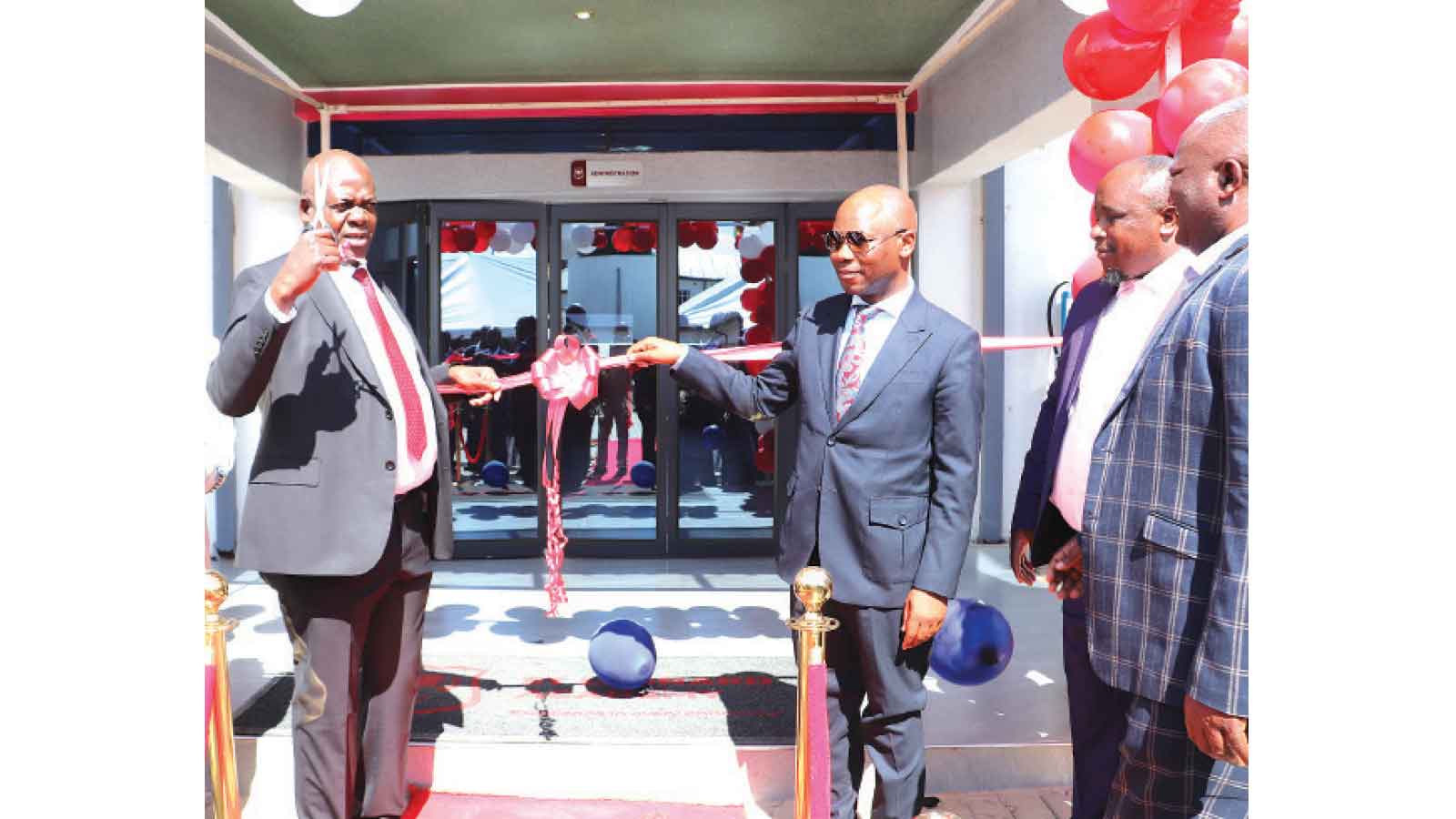
Source: New private school commissioned – herald Primary and Secondary Education Minister Torerayi Moyo (left) cuts a ribbon to officially open St Leonard Academy in Goromonzi District, Mashonaland East Province, while Masvingo Provincial Affairs and Devolution Minister Ezra Chadzamira (right), businessman Dr Leornard Mukumba (second from right) and Mashonaland East Provincial Affairs and Devolution Minister […]

The post New private school commissioned appeared first on Zimbabwe Situation.

Source: New private school commissioned – herald

Takunda Gambiza-Herald Reporter

THE Government is planning to establish 150 primary and secondary schools nationwide to eliminate the country’s education facilities infrastructure deficit, Primary and Secondary Education Dr Torerai Moyo has said.

Speaking at the commissioning of the privately-owned St Leonard Academy in Harare on Wednesday, Dr Moyo said the new school represented a major investment in Zimbabwe’s future and demonstrated the importance of public-private partnerships in expanding access to quality education.

“The official commissioning of this state-of-the-art educational institution is far more than the opening of a new school. It is the fulfilment of a visionary dream, a significant investment in Zimbabwe’s future and a clear demonstration of our collective commitment to expanding access to quality, inclusive and transformative education,” he said.

The event was attended by Government officials, including Mashonaland East Provincial Affairs and Devolution Minister Advocate Itayi Ndudzo, Masvingo Provincial Affairs and Devolution Minister Ezra Chadzamira, Skills Audit and Development Minister Dr Jenfan Muswere, the Treasurer-General of ZANU PF Cde Patrick Chinamasa and other top officials.

Dr Moyo said the Government had reduced the national school deficit from about 3 000 schools in 2020 to 1 800 through sustained infrastructure development.

He said the target for 2026 was to construct at least 150 schools after building 120 last year.

“We are building so many schools because we still have a deficit of 1 800 schools. Government will not tolerate a situation whereby learners travel distances exceeding five kilometres to access education.”

Dr Moyo said the Government had secured a major private sector partner committed to constructing 1 000 schools across Zimbabwe, saying the initiative would eliminate the national school deficit before 2030.

He applauded businessman Dr Leonard Mukumba, founder of St Leonard Academy, for investing in education and constructing two schools under the academy’s name.

Dr Moyo said the project reflected the Second Republic’s emphasis on public-private partnerships, adding that Government alone could not meet all developmental needs.

“Government alone cannot meet every developmental need, but together with committed citizens, communities, churches, development partners and the private sector, we can accelerate the provision of quality education for every Zimbabwean child,” he said.

The post New private school commissioned appeared first on Zimbabwe Situation.