Govt accelerates rural industrialisation

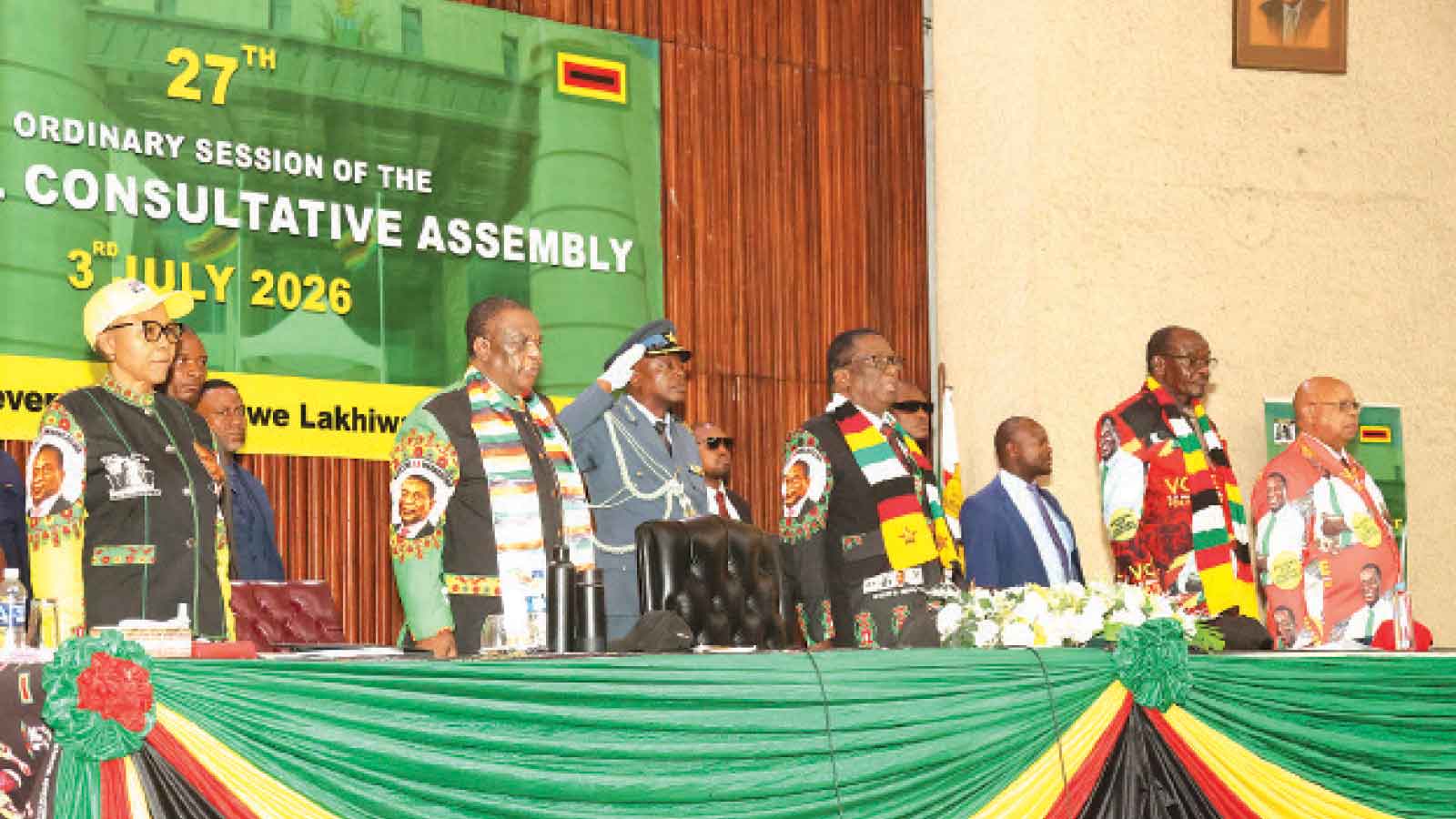
Source: Govt accelerates rural industrialisation – herald Zanu PF First Secretary and President, Cde Mnangagwa, flanked by Vice President Cde Constantino Chiwenga (second from left), Vice President Cde Kembo Mohadi (second from right), national chairman Cde Oppah Muchinguri‑Kashiri (left) and secretary-general Cde Jacob Mudenda (right) at the 27th Ordinary Session of the National Consultative Assembly […]

The post Govt accelerates rural industrialisation appeared first on Zimbabwe Situation.

Source: Govt accelerates rural industrialisation – herald
Zvamaida Murwira-Senior Reporter

GOVERNMENT is scaling up its rural industrialisation agenda as part of the Second Republic’s efforts to uplift the lives of ordinary people so that they participate in the local and wider global economy, President Mnangagwa has said.

The President, who is the ZANU PF First Secretary, said this yesterday while addressing the 27th Ordinary Session of the National Consultative Assembly held at the party headquarters in Harare.

President Mnangagwa said the Second Republic is accelerating the roll-out of the rural industrialisation agenda as a key pillar for inclusive national development.

“Through Village Business Units and promoting the ‘Dam as an economy’ concept, we are taking opportunities, industries and markets directly to our communities,” he said.

“We will continue to implement programmes to equip women and youth with the knowledge and competencies required for them to participate in the modern local and global economy meaningfully”.

President Mnangagwa said the party remained committed to empowering ordinary people through various projects.

“Our colossal revolutionary mass Party remains unwavering in its commitment to the empowerment and an improved quality of life for our people. The modernisation, industrialisation and broader national development agenda of our beloved motherland, Zimbabwe, continues to gain momentum.

“Unity among our people is stronger, peace prevails, and democracy is being consolidated. Our revolutionary party-led Government is realising practical results that impact on the day-to-day lives of the people.”

The President said the party’s empowerment models have resulted in self-reliance for members of the party’s organs.

“The Party’s new empowerment models have seen programmes for the members of the Women, Youth and War Veteran’s Leagues leading to greater self-reliance, economic inclusion and a higher quality of livelihoods.

“ZANU PF is a Party with a history, a Party of the present, and the future. The world is increasingly embracing research, technology and innovation,” said President Mnangagwa.

He said as a mass Party, Zanu PF is, therefore, appropriately responding to new technologies and the possibilities it presents.
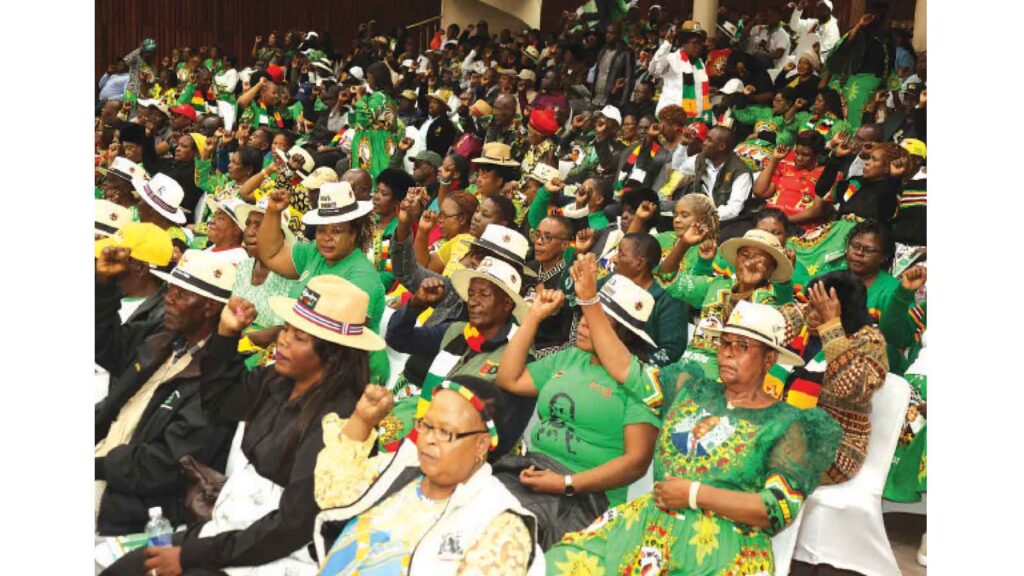
Zanu PF National Consultative Assembly delegates follow proceedings at their 27th Ordinary Session at the party headquarters in Harare yesterday. — Picture: Believe Nyakudjara.

“We are advancing efficiency, communication, data management and service delivery within and across all Party structures. I urge Party members to continue embracing technology and apply it wisely for the betterment of our Party, for humanity and our great country.

“As we build a prosperous and empowered Zimbabwe, our Party-led Government will remain steadfast in advancing policies and programmes which put the people first”.

President Mnangagwa said initiatives that ensure skills development, entrepreneurship, innovation and employment creation will be pursued for young people in both rural and urban areas.

He said the party would focus on uplifting the quality of life and service delivery for all communities with no one and no place left behind.

President Mnangagwa said he was encouraged by the impact various initiatives have had on ordinary people.

“In all areas of the country, projects such as roads, dams, schools, health facilities, irrigation schemes, mining and industrial development are there for all to see,” he said.

President Mnangagwa said the Government had made significant strides in different sectors of the economy.

“So far, the Second Republic is registering achievements across key sectors of the economy. Increased production of wheat, tobacco, cotton and horticultural products has enhanced national food sovereignty and improved household incomes. This winter season, we are expecting another record-breaking winter wheat harvest,” he said.

“These are all results of our Party’s policies and support for the agriculture sector and the economy as a whole. Congratulations. Makorokoto. Amhlophe”.

The President said programmes for irrigation development, mechanisation, and climate-smart agriculture will be intensified in line with a commitment to sustainable agricultural production and productivity.

The mining sector , he said, remains one of the key drivers of economic growth.

“In line with our Party’s Congress and Conference Resolutions, investments in lithium, gold, platinum, coal and other critical minerals are expanding production, with emphasis on local value addition and beneficiation,” President Mnangagwa said.

The post Govt accelerates rural industrialisation appeared first on Zimbabwe Situation.
Botswana keen on joint investments with Zim

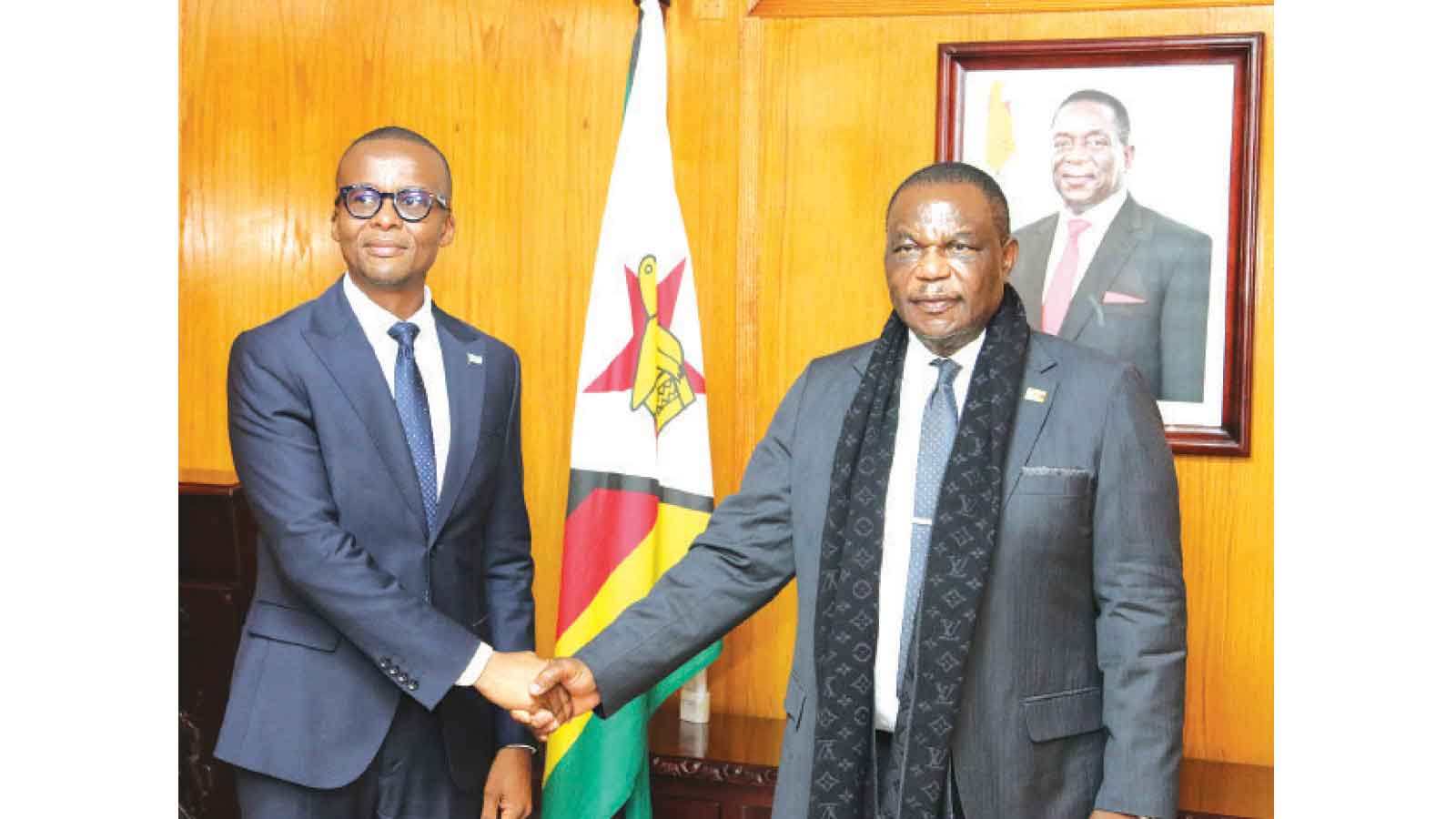
Source: Botswana keen on joint investments with Zim – herald Vice President Dr Constantino Chiwenga (right) welcomes Botswana Vice President Ndaba Nkosinathi Gaolathe who paid a courtesy call on him at his offices in Harare yesterday. — Picture: Charles Muchakagara. Mukudzei Chingwere-Senior Reporter BOTSWANA has reached out for an enhanced economic partnership with Zimbabwe at […]

The post Botswana keen on joint investments with Zim appeared first on Zimbabwe Situation.
Source: Botswana keen on joint investments with Zim – herald

Mukudzei Chingwere-Senior Reporter

BOTSWANA has reached out for an enhanced economic partnership with Zimbabwe at a time when the Tswana nation is undergoing a seismic economic shift away from an over-reliance on diamonds towards new growth pillars, including ranching and value-added industrial capacity.

Botswana Vice President Ndaba Gaolathe is in the country and yesterday paid a courtesy call on Vice President Dr Constantino Chiwenga, where he outlined Botswana’s focus on execution-led transformation, increased cross-border business linkages and joint investment opportunities.

Economic diversification sits at the heart of VP Gaolathe’s message. He said Botswana had long discussed broadening its economy, but recent pressures in the diamond market had forced the country to accelerate reforms from policy discussions to measurable implementation.

He said the transformation programme is designed to build execution capacity at scale, enabling Botswana to translate available opportunities into investable projects, particularly in sectors such as solar energy and technology, while creating space for regional firms to participate.

Zimbabwe can benefit from Botswana’s progress in strengthening cattle ranching and related value chains by adopting proven production, animal health and market-linkage models to improve volumes, quality and profitability in the meat and leather industries.

The country can also draw lessons from Botswana’s investment in vaccine production capacity, using that example to accelerate Zimbabwe’s own manufacturing capability and build a more reliable regional supply of veterinary products.

This has helped Botswana cushion its economy against volatility linked to diamonds while creating a platform for downstream value chains such as meat processing and related services.

“It was a great privilege to be here. We in Botswana believe that Botswana and Zimbabwe are one people; we share a common history and a common destiny,” said VP Gaolathe.

“Both countries are endowed with immense natural and human resources, and the onus is on us as leaders, and on the people of the two countries, to collectively co-create, co-invest and bring out the best.

“We have long admired what Zimbabwe has been able to achieve in building a renowned, high-quality education system. Many may not know that Zimbabwe has also succeeded in creating a manufacturing base that many other countries, particularly African countries, aspire to build.

“Zimbabwe has also nurtured successful entrepreneurs, including those in telecommunications and financial services. This creates a platform and opportunities for Zimbabwe and Botswana to co-create and leverage the base that Zimbabwe has established,” said VP Gaolathe.

He said that, on Botswana’s side, the country had built the Botswana Vaccine Institute, which is a global leader in the manufacture of vaccines for foot-and-mouth disease, anthrax and contagious bovine abortion.

VP Gaolathe said this provides a foundation for vaccine manufacturing not only for Botswana, but for the region as a whole.

“Botswana has for many years spoken about diversifying the economy, but it has remained just that — a conversation,” he said. “But now, with the declining diamond market and the challenges affecting the diamond sector, we can no longer rely on conversation alone. Through what we call the Botswana Economic Transformation Programme, we are moving from conversation to execution.

“This programme is about building execution capacity at scale to harness the opportunities available to Botswana, whether in solar energy, technology or many other areas.

“There is opportunity, and Zimbabwean companies are looking to co-invest with Botswana,” said VP Gaolathe.

Turning to bilateral mechanisms, VP Gaolathe said the Bi-National framework between the two countries contains multiple components aimed at improving trade efficiency and removing obstacles that hinder commerce.

He said this is critical not only for bilateral trade flows, but also for investment decisions, as border delays and administrative bottlenecks can increase operating costs and reduce the attractiveness of joint projects.

“The Bi-National framework has many components. One of these is to remove the man-made barriers that exist between the two countries, including more efficient and enhanced one-stop border facilities and processes,” said VP Gaolathe.

“The bottom line is that what we must do — not only between Botswana and Zimbabwe, but among African countries in general — is spend more time engaging with one another.

“The more time we spend with each other, the more opportunities we will be able to realise.”

The post Botswana keen on joint investments with Zim appeared first on Zimbabwe Situation.
Maj-Gen Dzihwema declared national hero

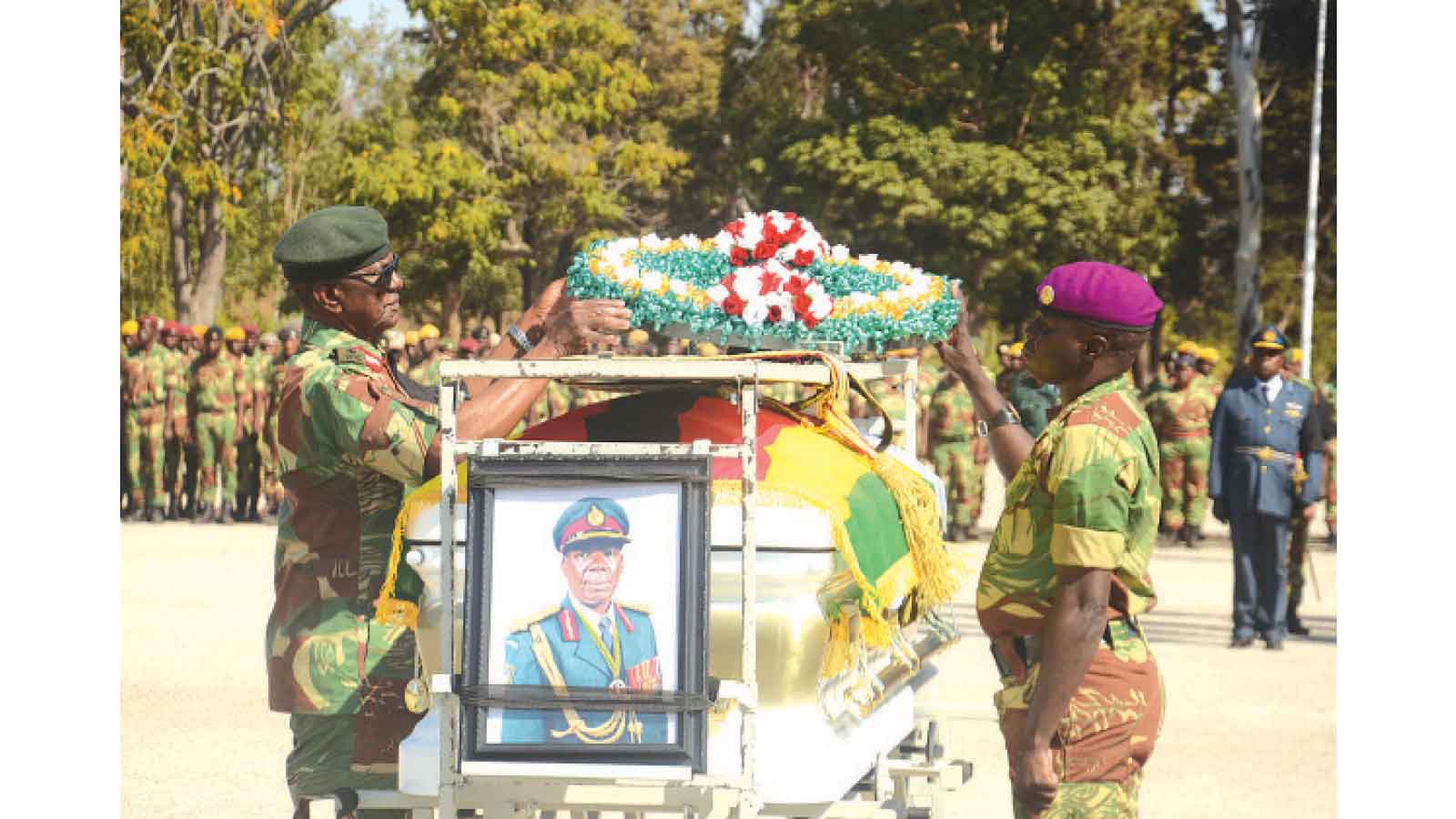
Source: Maj-Gen Dzihwema declared national hero – herald Commander Zimbabwe Defence Forces General Emmanuel Matatu lays a wreath on the casket of Major-General (Retired) Evaristo Dzihwema during a funeral parade at Charles Gumbo Barracks in Harare yesterday. — Picture: Tinashe Chitwanga. Africa Moyo and Remember Deketeke A FORMER senior member of the Zimbabwe National Army, […]

The post Maj-Gen Dzihwema declared national hero appeared first on Zimbabwe Situation.
Source: Maj-Gen Dzihwema declared national hero – herald

Africa Moyo and Remember Deketeke

A FORMER senior member of the Zimbabwe National Army, Major-General (Retired) Evaristo Dzihwema, who died in India last week while receiving medical treatment, has been declared a national hero.

He will be laid to rest at the National Heroes Acre on Monday, with President Mnangagwa expected to preside over the burial proceedings.

The Minister of Defence, Oppah Muchinguri-Kashiri, yesterday visited the Dzihwema family home in Harare to convey President Mnangagwa’s message conferring national hero status on the retired military officer.

Maj-Gen (Rtd) Dzihwema died on June 25.

He was 63.

His body was repatriated to Zimbabwe and arrived at the Robert Gabriel Mugabe International Airport in Harare on July 1.

A military funeral parade was held in his honour at Charles Gumbo Barracks in Harare yesterday.

Speaking at the parade, the Commander of the Zimbabwe Defence Forces, General Emmanuel Matatu, described Maj-Gen Dzihwema as a patriotic, disciplined and highly professional officer who dedicated his entire life to serving Zimbabwe, first as a liberation fighter, then as a senior military commander and later as a public servant.

Gen Matatu said Maj-Gen Dzihwema’s unwavering commitment to national service had left an enduring legacy within the ZDF and civil service.

“We gather here again under a sombre atmosphere as we pay our last military respects to the late Major General (Retired) Evaristo Dzihwema, who passed away on June 25, 2026, in India, where he was undergoing medical treatment,” said Gen Matatu.

“On behalf of the entire Zimbabwe Defence Forces family, I stand before you to pay tribute to a professional military officer whose calling was the career of arms, in which he distinguished himself through exemplary dedication and commitment.”

Gen Matatu said the officer exemplified selfless service throughout his life and remained steadfast in defending the country’s sovereignty and national interests.

He chronicled Maj-Gen Dzihwema’s journey from Chandi Communal Lands in Makoni District, Manicaland Province, to joining the liberation struggle in 1978 after allegedly being assaulted by Rhodesian security forces while travelling to obtain a juvenile registration certificate.

The incident, Gen Matatu said, strengthened the young Dzihwema’s resolve to take up arms and join thousands of other young Zimbabweans fighting for the country’s independence.

After undergoing military training in Mozambique, Maj-Gen Dzihwema was deployed to the operational front, where he served alongside several prominent liberation war commanders before Zimbabwe attained independence in 1980.

Following independence, he joined the Zimbabwe National Army and steadily rose through the ranks to become a Major-General, serving in numerous command and staff appointments.

“He gave his whole life to serving Zimbabwe, from the liberation war to post-independence Zimbabwe, both in the Defence Forces and in the public service,” said Gen Matatu.

He added that the officer occupied several strategic positions, including company Brigade Staff Officer, Director of Procurement, Director of Finance and Director-General responsible for personnel within the ZDF.

Following his retirement from active military service in December 2017, Maj-Gen Dzihwema joined the Ministry of Youth, Indigenisation and Economic Empowerment as principal director before later transferring to the Ministry of Veterans of the Liberation Struggle Affairs, where he served as Chief Director until his death.

Gen Matatu said he had worked closely with Maj-Gen Dzihwema for many years and described him as an intelligent, dependable and solutions-oriented leader.

“I am privileged to have known him very well and worked closely with him for a significant part of our careers.

“We lived close to each other, our families were close and our children grew up together. General Dzihwema had a sharp intellect and a good grasp of operational, administrative and logistical issues.

“He always offered practical ideas to challenges we faced and approached every task methodically,” he said.

Gen Matatu said even after leaving the military, Maj-Gen Dzihwema continued supporting the ZDF by offering professional advice whenever called upon.

“He was indeed a professional with great love for his country. He remained committed and competent. He was not a man who engaged in activities that sought to denigrate or undermine the Zimbabwe Defence Forces or national programmes,” he said.

Gen Matatu added that Maj-Gen Dzihwema possessed rare leadership qualities founded on honesty, integrity, humility, loyalty, unflinching patriotism and enthusiasm.

“That speaks well to your legacy,” he said.

Gen Matatu also highlighted the accolades earned by the retired general during his distinguished career, including the Liberation Medal, Independence Medal, Ten-Year Service Medal, Long and Exemplary Service Medal, Mozambique Campaign Medal, Democratic Republic of Congo Medal and the Commander of the Zimbabwe Order of Merit.

Speaking on behalf of the family, Maj-Gen Dzihwema’s younger brother, Mr Shadreck Dzihwema, described him as a pillar of strength whose humility remained unchanged despite his rise through the military ranks.

“We have lost not only a brother but also a mentor and father figure. He always encouraged us to work hard, remain disciplined and serve our country with honesty,” he said.

Mr Dzihwema said despite occupying senior positions in both the military and Government, Maj-Gen Dzihwema remained closely connected to his roots and regularly visited the family home.

“He never forgot where he came from. Whenever he came home, he would spend time with the family, advise the young generation and encourage unity among relatives.

“He was approachable and always willing to help whenever there was a problem,” he said.

Mr Dzihwema thanked the Government, the ZDF and all citizens who have stood with the family following his brother’s death.

“As a family, we are comforted by the honour that has been accorded to our brother. The outpouring of support from Government, the Defence Forces, friends and the public shows the impact he made during his lifetime.

“We will forever cherish his legacy,” he said.

Maj-Gen Dzihwema is survived by his wife, Alice, and three sons.

The post Maj-Gen Dzihwema declared national hero appeared first on Zimbabwe Situation.

Police chief hails National Committee on Drug and Substance Abuse in the fight against drugs

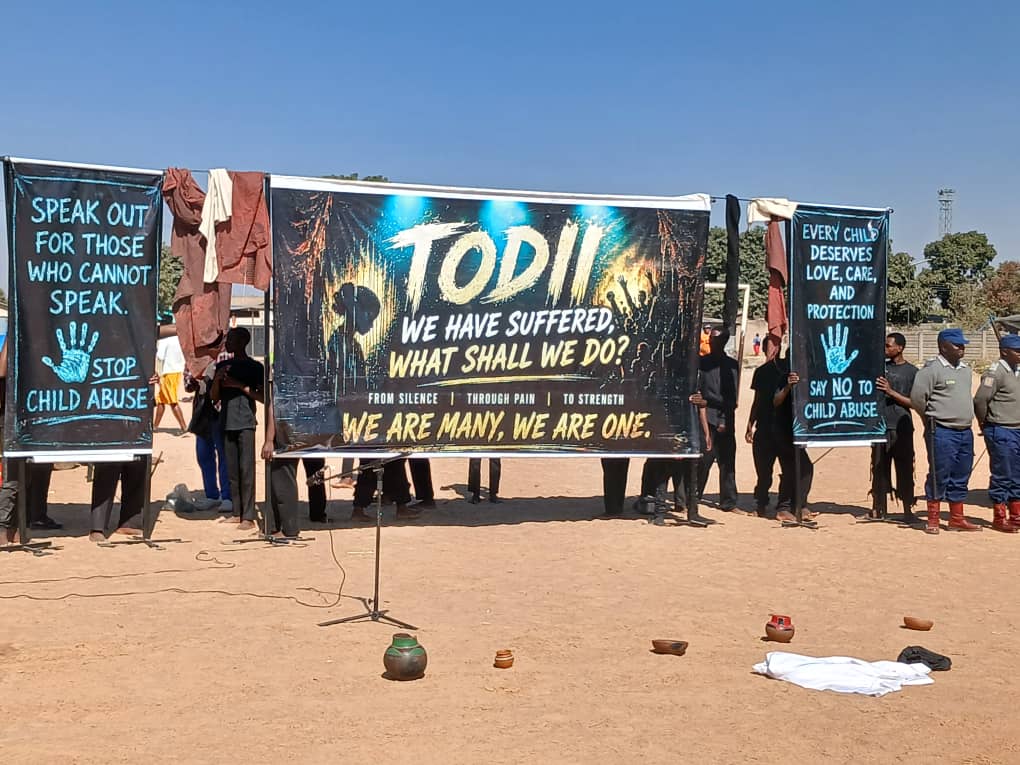
Source: Police chief hails National Committee on Drug and Substance Abuse in the fight against drugs – herald Some of the banners that were on display during the commemorations Freeman Razemba Senior Reporter POLICE Commissioner-General Stephen Mutamba has applauded the National Taskforce on the Elimination of Drugs and Substance Abuse, saying it has been a […]

The post Police chief hails National Committee on Drug and Substance Abuse in the fight against drugs appeared first on Zimbabwe Situation.

Source: Police chief hails National Committee on Drug and Substance Abuse in the fight against drugs – herald

Freeman Razemba

Senior Reporter

POLICE Commissioner-General Stephen Mutamba has applauded the National Taskforce on the Elimination of Drugs and Substance Abuse, saying it has been a game-changer in the fight against drugs as well as enhancing coordination of efforts across ministries.

He said this during commemorations of the International Day Against Drug Abuse and Illicit Trafficking held in Chitungwiza today.

“In the same spirit, today, we join nations worldwide in observing the International Day Against Drug Abuse and Illicit Trafficking,” Comm Gen Mutamba said.

“The theme for 2026, “The World Drug Problem; Persisting Issues, New Challenges, Innovative Responses but a public health imperative that demands a whole-of-government and whole-of-society approach.

“This global commemoration underscores the interconnectedness of our struggle. The drugs that destroy our youths in Chitungwiza are often trafficked across borders, fuelled by international syndicates that prey on our vulnerabilities.

“While our response should also address the international dimension, it must be founded on robust local mechanisms, rooted in our communities, and driven by our determination to protect our children.”

He said that, as the police, they were playing their part towards enhancing the efficacy of the whole-of-government approach.

“We are a key pillar of His Excellency’s Government-wide approach to tackling drug abuse,” Comm Gen Mutamba said.

“The establishment of the National Taskforce on the Elimination of Drugs and Substance Abuse, chaired by the Honourable Minister of Defence OCZ Muchinguri Kashiri, has been a game-changer.

“Through this taskforce, we have seen enhanced coordination of efforts across ministries. The National Drug Testing Programme, spearheaded by the Abused Substances Diagnostics and Management Project, is training health workers to ensure accurate testing and evidence-based interventions are implemented.

“This is not just about arresting drug users it is about early detection, prevention, and rehabilitation.”

He said the taskforce’s blueprint on drug abuse prioritises prevention, early detection, treatment, and harm reduction. Comm Gen Mutamba said as police, they dovetail into this framework by ensuring law enforcement efforts complement the health and social interventions.

Comm Gen Mutamba urged the community to report drug peddlers. Provide information to the police. Our National Complaints Desk is available on (0242) 703631 or WhatsApp on 0712 800 197 or tip offs at your nearest police station.

Officer Commanding Harare Province Commissioner Maxwell Chikunguru said they have put in place adequate measures to arrest all those involved in drug peddling and abuse.

He said notable arrests have been made in and around Harare, with some of the criminals now serving various jail terms while others still have their cases pending before the courts.

CID Drugs and Narcotics Business Against Drug and Substances Abuse Forum Mr Moses Chidindi also said, “Our role is on resource mobilisation towards effort in fighting drug and substance abuse.

“Cooperation with other stakeholders with similar structures to transmit anti drug related information to promote resistance to the uptake of drugs and substances by communities.

“Community engagement in conjunction with CID drugs and Narcotics on sensitaisation,outstretch programs and educational campaigns.”

The post Police chief hails National Committee on Drug and Substance Abuse in the fight against drugs appeared first on Zimbabwe Situation.

Zimbabwe: Building a Stronger birth registration system through community voices

For some, registering a child’s birth is not simply a visit to a government office. It is a journey shaped by distance, uncertainty. Source: Zimbabwe: Building a Stronger birth registration system through community voices | UNICEF Zimbabwe Across Zimbabwe, particularly in remote and border communities, many parents understand why birth registration matters. The challenge is […]

The post Zimbabwe: Building a Stronger birth registration system through community voices appeared first on Zimbabwe Situation.

For some, registering a child’s birth is not simply a visit to a government office. It is a journey shaped by distance, uncertainty.

Source: Zimbabwe: Building a Stronger birth registration system through community voices | UNICEF Zimbabwe

Across Zimbabwe, particularly in remote and border communities, many parents understand why birth registration matters. The challenge is not awareness—it is turning that knowledge into timely action.

By Loveness Chimombe
Birth registration
UNICEFZimbabwe/2026/Shingirai Michelle Nyandoro
02 July 2026

When Sophia Mutema cradles her young child, she sees endless possibility. Like every parent, she dreams of a future where her child can go to school, receive healthcare and one day build a life full of opportunity. But one missing document stands between those dreams and reality.

“When I went to register my baby, they asked for a birth record from the clinic, but I didn’t have one,” Sophia recalls. “I gave birth in Harare and have since moved to Mutasa. I felt stuck and didn’t know what to do next.”

Sophia’s story is shared by many families across Zimbabwe. For some, registering a child’s birth is not simply a visit to a government office. It is a journey shaped by distance, uncertainty, missing documents and competing daily priorities.

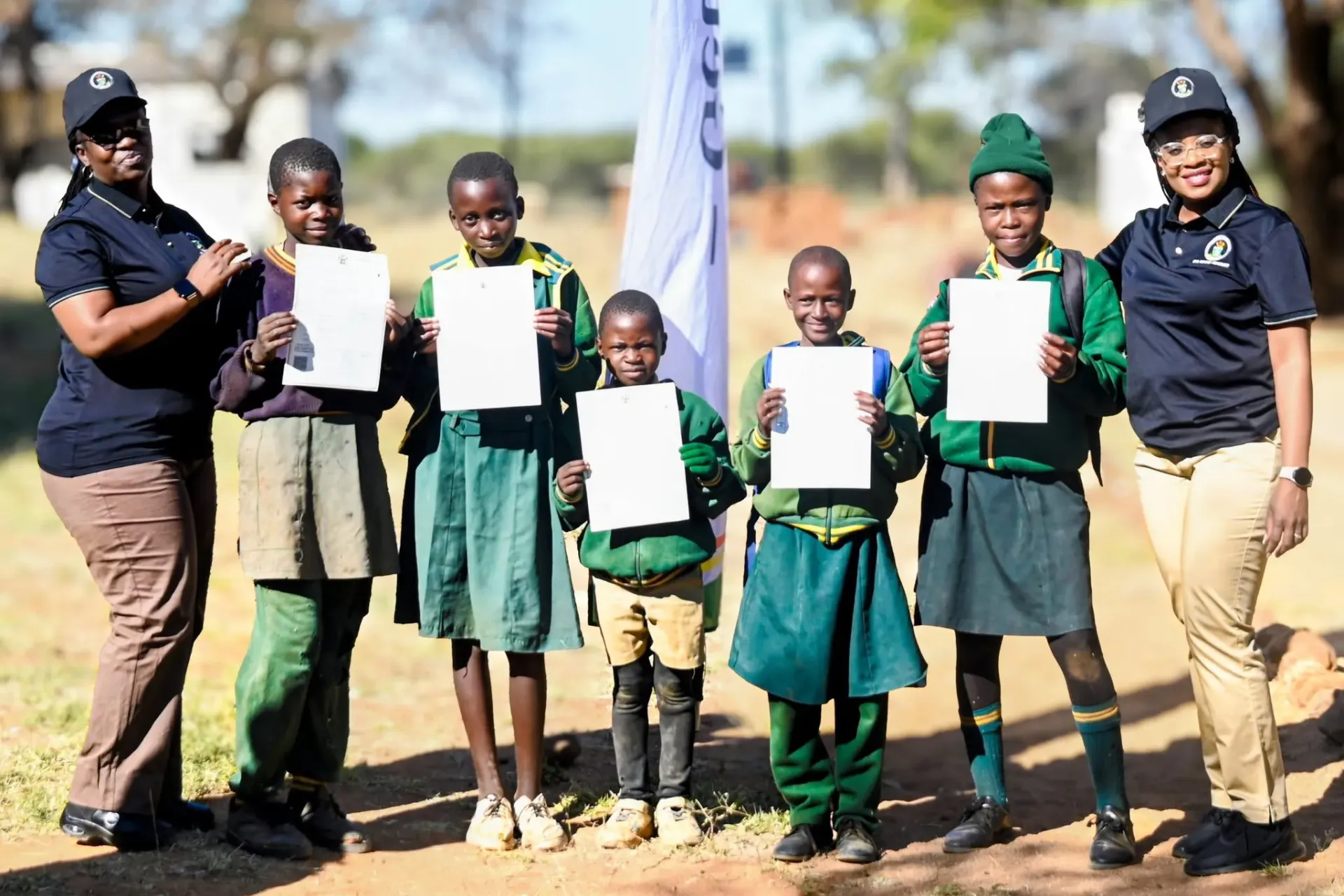
Yet a birth certificate is far more than a piece of paper. It is a child’s first recognition by the state. It confirms nationality, opens doors to healthcare, education and social protection, and ensures every child can be counted in national planning and service delivery.

Across Zimbabwe, particularly in remote and border communities, many parents understand why birth registration matters. The challenge is not awareness—it is turning that knowledge into timely action.

To better understand these barriers, UNICEF, with support from the Government of Sweden, worked alongside the Civil Registration and Vital Statistics (CRVS) Department and the Department of Social Development to listen directly to families. Rather than relying on assumptions, the partners introduced a simple way of routinely collecting behavioural and social insights, helping uncover not only whether children were being registered, but why some families delayed or struggled to complete the process.

The conversations revealed an important insight.

Parents know where birth registration services are available, whether at District Registry Offices, health facilities or through outreach services. But uncertainty about costs, documentation requirements and late registration procedures often creates hesitation.

“Some say it’s free, others mention different fees,” explains Lydia Sithole, a caregiver from Mutasa. “It leaves parents confused and worried.”

For many families, registration becomes something to do later, often when a child is ready to enrol in school or needs travel documents.

“Birth registration matters, but it’s not something people rush to do,” says community influencer Ezekiel Mutumbi from Zindi Village. “Many wait until the child actually needs it.”

That gap between understanding and action is one of the most significant behavioural challenges identified through the community dialogues.

For families living far from registry offices, the challenge becomes even greater.

“The registry office is far from our community, and the last mobile outreach was in 2022,” says Chief Sahumane. “Many parents are still waiting in hope while their children remain without an identity.”

In Mangwe’s border communities, the situation is often even more complex. Families crossing borders without identity documents face additional administrative barriers, increasing the risk that children inherit the same legal invisibility their parents experienced.

“Without intervention, the absence of legal identity doesn’t end—it is passed from parent to child, quietly perpetuating a cycle of invisibility and exclusion,” explains District Social Development Officer Tendai Taruvinga.

Listening to these experiences is already changing how services are delivered.

The behavioural and social insights gathered from communities are helping government and partners refine messaging around registration costs and required documentation, strengthen communication through trusted community structures and better target mobile outreach services to underserved communities.

“We are using these dialogues to continuously adapt our service delivery,” says Mangwe District Registrar Mr Nyoni. “Making it more accessible, more responsive, and ensuring that no child is excluded because of where they are born.”

For Sophia and thousands of parents like her, these changes represent more than improved public services.

The post Zimbabwe: Building a Stronger birth registration system through community voices appeared first on Zimbabwe Situation.