Zimbabwe forex reserves to reach US$2 billion 

Source: Zimbabwe forex reserves to reach US$2 billion – herald Dr Innocent Matshe Business Reporter The Reserve Bank of Zimbabwe (RBZ) has forecast the country’s foreign exchange reserves to reach US$2 billion by the end of the year, while the exchange rate is expected to remain stable, which will anchor the prevailing single-digit inflation. Speaking […]

The post Zimbabwe forex reserves to reach US$2 billion  appeared first on Zimbabwe Situation.

Source: Zimbabwe forex reserves to reach US$2 billion – herald
Business Reporter

The Reserve Bank of Zimbabwe (RBZ) has forecast the country’s foreign exchange reserves to reach US$2 billion by the end of the year, while the exchange rate is expected to remain stable, which will anchor the prevailing single-digit inflation.

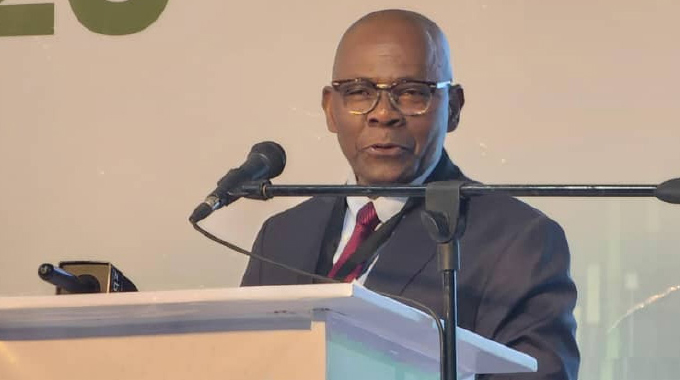
Speaking at the Africa Economic Development Strategies (AEDS) Mid-Term Economic Review High-Level Policy Dialogue in Harare, RBZ deputy governor Dr Innocent Matshe declared that the “era of speculating on currency is over,” pointing to robust macroeconomic fundamentals and a tightening grip on monetary policy.

Dr Matshe revealed that Zimbabwe’s economy is projected to grow by five percent this year. While lower than the 8.3 percent growth rate recorded in 2025, he emphasised that Zimbabwe remains one of the fastest-growing economies in the region, making it a prime destination for foreign investment.

A key anchor for the local currency, ZiG, has been the aggressive accumulation of strategic reserves over the past 12 months.
Dr Matshe reported that foreign currency reserves reached US$1,6 billion last week, providing roughly 1,5 months of import cover.

“Import cover should ideally be between three and six months. We are halfway there,” Dr Matshe said, adding that the central bank expects to achieve a “two times cover” by the end of the year.

He further noted that the RBZ holds six times the stock of ZiG reserve money and double the cover for all local currency deposits.

To improve market transparency and eliminate the perception that the central bank fixes the exchange rate, Dr Matshe announced that the RBZ is transitioning to a digital trading platform.

The system will allow economic agents to interact freely using real-time data under the current willing-buyer-willing-seller framework.

The deputy governor highlighted that the parallel market premium has narrowed, with the official exchange rate stabilising between 25 and 27 ZiG per US dollar.

Addressing economic agents who may be betting on a sudden devaluation to erode their local currency debts, Dr Matshe issued a clear warning:

“A lot of us wish for the exchange rate to depreciate so that those loans that we took will be expensed, but it’s not going to happen . . . The era of speculating on currency is over.”

On inflation, Dr Matshe expressed confidence that annual figures will remain well below double digits.
Annual inflation for May stood at 4,7 per cent, from 4,4 percent previously.

While a slight uptick was noted in US dollar-denominated components — driven by global inflationary pressures imported into the country — local month-on-month inflation has remained flat.

Dr Matshe compared managing a national economy to driving a heavy vehicle.
“A national economy is a big truck, it’s not a small car. It turns slowly, and therefore the turning curve may sometimes be much larger than you expect,” he explained.

Following signs of sustained economic stability, the RBZ lowered its policy rate by 5 percent in June to support growth, moving away from 35 percent.

However, Dr Matshe stressed that the central bank will keep its guard up to ensure the country does not drift backward.
“Monetary policy has been very patient,” Dr Matshe said.

“The low levels of annual and month-on-month inflation confirm our policy thrust has effectively eased inflationary pressures and anchored expectations.”

The post Zimbabwe forex reserves to reach US$2 billion  appeared first on Zimbabwe Situation.
Wealth creation policies to stay, says President . . . communities need impactful results

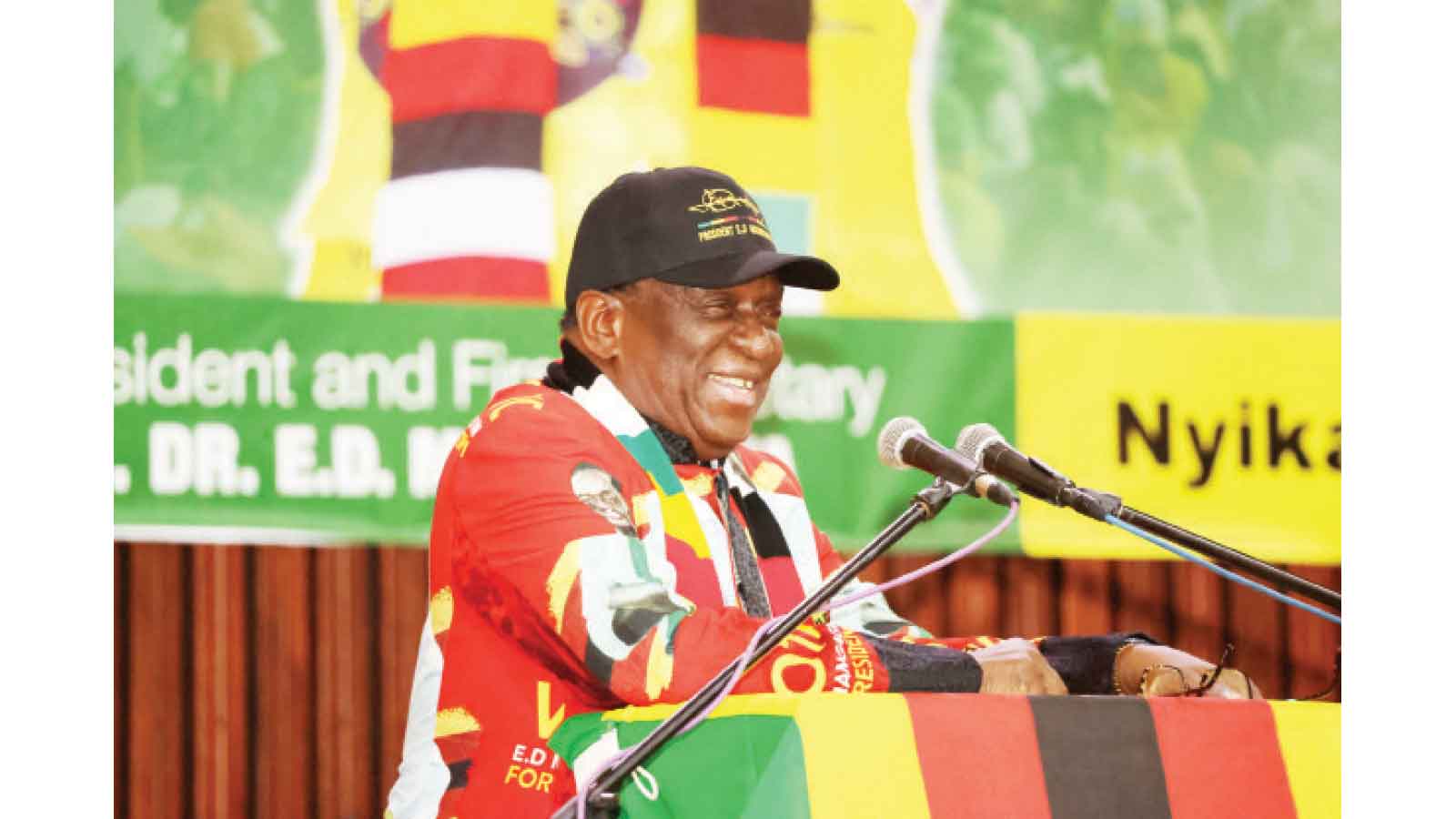
Source: Wealth creation policies to stay, says President . . . communities need impactful results – herald Zanu PF First Secretary and President, Cde Mnangagwa, addresses the 131st Ordinary Session of the revolutionary party’s Central Committee at the party headquarters in Harare yesterday. — Picture: Believe Nyakudjara. Zvamaida Murwira-Senior Reporter EMPOWERMENT and wealth-creation initiatives launched […]

The post Wealth creation policies to stay, says President . . . communities need impactful results appeared first on Zimbabwe Situation.
Source: Wealth creation policies to stay, says President . . . communities need impactful results – herald

Zvamaida Murwira-Senior Reporter

EMPOWERMENT and wealth-creation initiatives launched in recent years are rooted in the conviction that political independence is incomplete without economic emancipation, President Mnangagwa has said.

The Zanu PF leadership, he said, would continue to craft policies aimed at driving development and fostering economic prosperity for the millions of Zimbabweans who rely on them to improve their living standards.

The President, who is also Zanu PF First Secretary, made the remarks while addressing the 131st Ordinary Session of the revolutionary party’s Central Committee meeting in Harare yesterday.

“As we deliberate at this 131st Ordinary Session, let us remember the millions of Zimbabweans who are looking to us for leadership. Communities look forward to impactful results to improve their livelihoods. Economic prosperity for all must motivate and inform our discussions,” said President Mnangagwa.

“I, therefore, urge us to make policy recommendations and decisions that advance development and prosperity for household by household, village by village; ward by ward; branch by branch; and district by district. This is what rural development, revitalisation and industrialisation entail. Roads, clinics, schools, dip tanks, water and sanitation, including other critical aspects of social services and broader human development, remain our Party’s key deliverables.”

He said the several economic empowerment initiatives that have transformed lives were predicated on the desire to leap forward from political sovereignty to economic independence.

“Under the Second Republic, our empowerment and wealth creation programmes are premised on the principle that ‘political independence without economic independence is incomplete’. We are grateful to friends who partner with us in various fields. However, the burden of development rests on our shoulders; this must be the truth known by every Zimbabwean, from the young to the old. ‘Nyika inovakwa, inotongwa, inonamatirwa nevene vayo/ Ilizwe lakhiwa, libuswe, likhu-le-ke-lwe ngabanikazi balo,” said President Mnangagwa.

“The ongoing journey towards Vision 2030 to become an upper middle-income society is irreversible. We are building our roads using Zimbabwean companies, achieving food security and sovereignty through tilling our land, increasing production and productivity. Record-breaking growth in the agriculture, mining, manufacturing, energy, tourism, and ICT sectors, among others, is being witnessed. This is how we create employment and modernise our economy.”

The party’s new empowerment models, programmes for women, youth and war veterans, President Mnangagwa said, were having transformational impacts.

“The Women’s League is driving programmes that have increased women’s self-reliance. Many are now involved in a wide range of areas of the economy; these include agriculture, aquaculture, horticulture, mining, the construction industry, as well as manufacturing value chains, agro-processing and logistics, among others,” said President Mnangagwa.

“This is over and above the traditional empowerment programmes such as arts, crafts, tailoring and baking. Financial inclusion for women, youth and war veterans is also being scaled up. Under the Presidential Youth Fund, youth now run projects generating revolving funds, which are able to self-generate additional resources for deployment right down to the district and ward levels. Likewise, programmes are underway within the War Veterans’ Leagues to enhance their livelihoods and the quality of life of those who helped to liberate our country from colonial bondage.”

He said that with several such programmes leaving a lasting impact on ordinary persons, the future of the country is bright.

“As we move on with the next cycle of our national development agenda, our Party-led Government is re-invigorating all development projects, while also giving impetus and momentum to policy implementation across all Ministries, Departments and Agencies. Additionally, initiatives for robust and responsive social safety nets are being scaled up. Our elderly, people with disabilities, the vulnerable and child-headed households must continue to feel the compassion of our Zanu PF-led Government,” said President Mnangagwa.

“Quality living standards, housing, water and sanitation are critical aspects of the society we all want by 2030. Hence, results from the local governance systems and service delivery by the Local Authority are non-negotiable. We must be accountable to the people. It is in this spirit and with these issues in mind that I challenge the Party to recalibrate and refocus.”

He said under Zanu PF, people always came first. 

“I am encouraged by the formidable resilient spirit shown by Zanu PF. Detractors spend their time in the wilderness of social media, with its illusory false community. Zanu PF, on the other hand, is on the ground, in villages and wards, winning the hearts and minds of the people,” he said.

The post Wealth creation policies to stay, says President . . . communities need impactful results appeared first on Zimbabwe Situation.
SA crisis: 56 000 troop back home

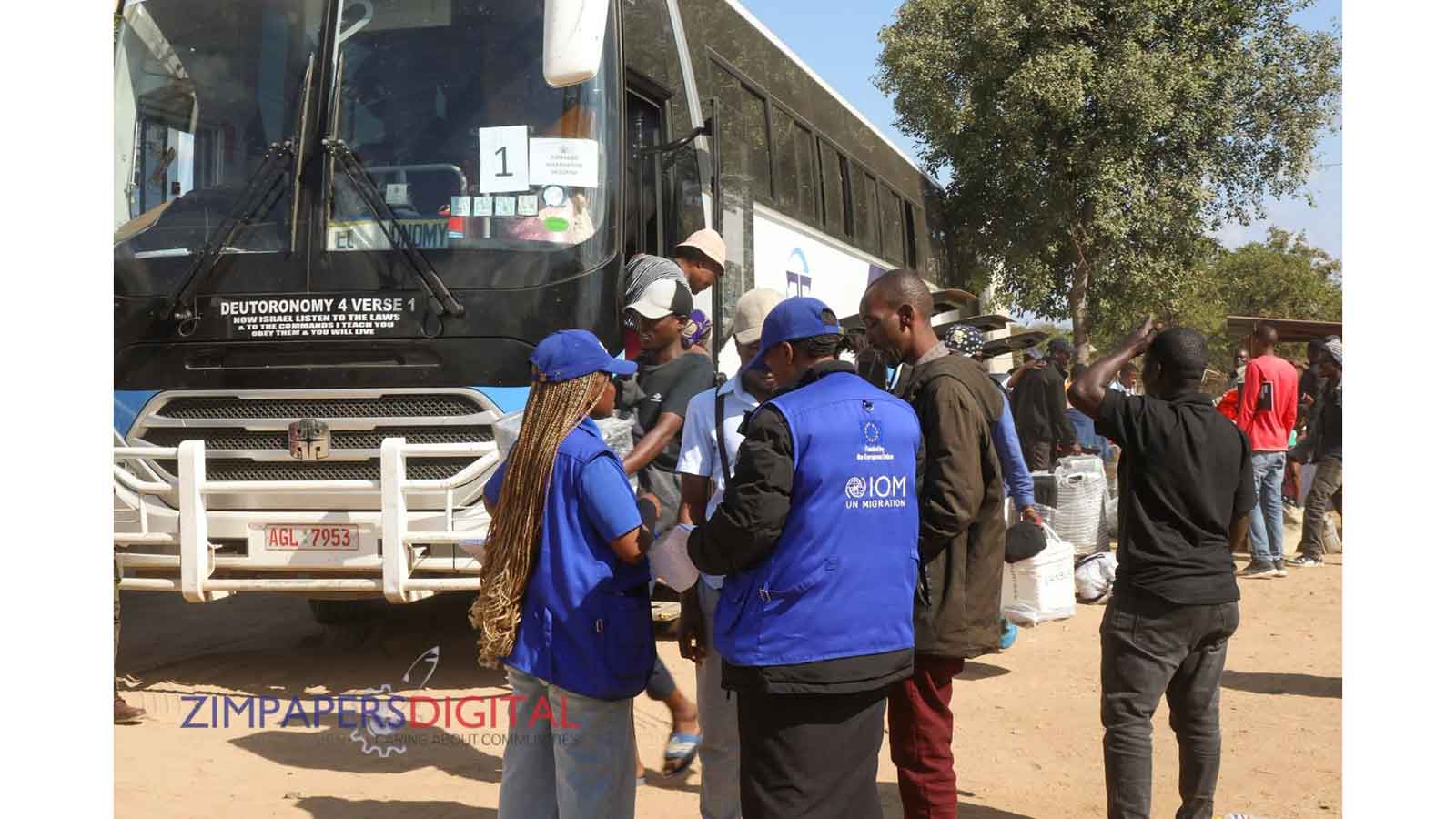
Source: SA crisis: 56 000 troop back home – herald Zimbabwean returnees are being processed at the Government-run reception and support centre in Beitbridge. Most are getting ready to leave for their various destinations. – Picture: Edward Zvemisha. Thupeyo Muleya-Beitbridge Bureau MORE than 56 000 Zimbabweans have returned home through Beitbridge Border Post since late […]

The post SA crisis: 56 000 troop back home appeared first on Zimbabwe Situation.
Source: SA crisis: 56 000 troop back home – herald

Thupeyo Muleya-Beitbridge Bureau

MORE than 56 000 Zimbabweans have returned home through Beitbridge Border Post since late May as anti-migrant protests continue in parts of South Africa.

Government figures show that 56 473 Zimbabweans crossed back into the country between May 28 and June 30.

Of these, 47 252 returned independently, while 9 221 were assisted through the Government’s evacuation programme.

The Regional Immigration Officer for the Southern Region, Mr Joshua Chibundu, said authorities were managing the movement through close co-ordination involving the Zimbabwe Embassy in South Africa, the South African Government and the Department of Civil Protection’s structures.

“The movement is coordinated. We are equal to the task and have enough manpower evenly deployed across shifts and counters,” said Mr Chibundu.

He said the border post was also facilitating Malawian nationals transiting through Zimbabwe on their way home from South Africa.

All returnees are being profiled at Beitbridge to enable Government to maintain accurate records, identify vulnerable cases and facilitate onward travel arrangements to their home districts.

Mr Chibundu added that the increased movement of returnees had not disrupted normal border operations.

“Tourists, truck drivers and other travellers are still being cleared without unnecessary delays, while we give priority attention to returnees,” he said.

South Africa’s Border Management Authority (BMA) said biometric profiling at Beitbridge remains central to ensuring that the repatriation process is conducted safely and in an orderly manner.

Speaking at Beitbridge Border Post yesterday, Acting BMA Commissioner Major General David Chilembe said the border post was now handling most of the repatriation operations following the closure of the Durban processing facility.

“Biometric profiling at the point of exit is to ensure we do not mis-repatriate other nationals, including South Africans,” he said.

“It is also being used to ensure that crime fugitives of all nationalities do not escape under the guise of repatriations.”

Major General Chilembe said every person leaving through the border is screened using fingerprints and facial recognition technology to verify identities, confirm immigration status and identify individuals wanted by law enforcement authorities.

He said the BMA was working closely with South Africa’s National Joint Operational and Intelligence Structure (NATJOINTS), as well as officials from Zimbabwe and Malawi, given Beitbridge’s strategic role as a major regional transit point.

“We are coordinating with our counterparts to verify lists, share information, and ensure a smooth and orderly process.

“We are dealing with three processes that include deportation, repatriation, and normal movement facilitation. So far, we have been able to carry out all these processes successfully,” he said.

Major General Chilembe said additional buses carrying returnees from various parts of South Africa were expected at the border in the coming days, with authorities having strategically deployed personnel to prevent delays while maintaining security and operational efficiency.

He revealed that on Wednesday alone, the BMA processed 2 400 people departing through Beitbridge, composed of 1 700 Malawians and 700 Zimbabweans.

“In addition, since we started here on 7 June when the President (Cyril Ramaphosa) announced the measures on migration, we have dealt with more than 35 000 people in terms of repatriations and deportations at this border,” he said.

Major General Chilembe also confirmed that South Africa’s Inter-Ministerial Committee on Migration would visit various repatriation centres to assess operations on the ground and receive updates from officials.

“The goal is to ensure the process is humane, lawful, and secure for all involved,” he said.

Beitbridge Border Post remains the main gateway for the ongoing repatriation programme.

As anti-African migrant protests continue in parts of South Africa, authorities on both sides of the border say systems have been strengthened to accommodate increasing numbers while ensuring that operations remain secure, efficient and orderly.

The post SA crisis: 56 000 troop back home appeared first on Zimbabwe Situation.

Security, judicial officers sharpen skills in China

Source: Security, judicial officers sharpen skills in China – herald The programme comes as Zimbabwe and China deepen security ties under their comprehensive strategic partnership, with both countries expanding collaboration in policing, judicial affairs and transnational crime. Fidelis Munyoro in SHENYANG, China TWENTY-FOUR  Zimbabwean law enforcement and judicial officers have begun an intensive two-week training programme […]

The post Security, judicial officers sharpen skills in China appeared first on Zimbabwe Situation.

Source: Security, judicial officers sharpen skills in China – herald

Fidelis Munyoro in SHENYANG, China

TWENTY-FOUR  Zimbabwean law enforcement and judicial officers have begun an intensive two-week training programme in China to strengthen the country’s capacity to combat cybercrime, terrorism, organised crime and other emerging security threats.

The delegation, drawn from sectors of the security and judiciary institutions, arrived in  Shenyang this week to participate in a seminar covering modern policing, criminal investigations and judicial cooperation.

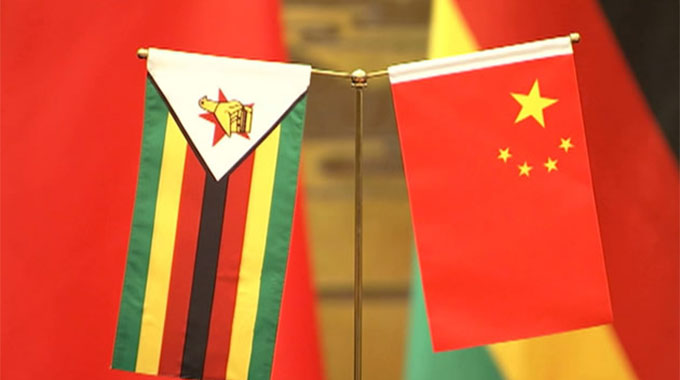
The programme comes as Zimbabwe and China deepen security ties under their comprehensive strategic partnership, with both countries expanding collaboration in policing, judicial affairs and transnational crime.

Participants will receive specialised training in criminal intelligence gathering, cybercrime investigations, counterterrorism operations, electronic data forensics, narcotics control and explosive residue analysis.

Beyond classroom sessions, delegates will observe frontline policing operations under the Shenyang Municipal Public Security Bureau, where they will study China’s operational policing systems and community-based policing initiatives.

A key focus will be the Fengquiao model, China’s community policing approach that emphasises early dispute resolution, public participation and grassroots conflict management to prevent crime before it escalates.

The delegation will visit policing facilities in Beijing and Qingdao, providing exposure to law enforcement operations across different urban and economic environments.

The exchanges are designed to facilitate direct engagement between Zimbabwe and Chinese officers on common security challenges, including cyber threats, organised crime and public security management.

Cultural activities, including Chinese calligraphy and traditional tea ceremonies, have also been incorporated into the programme to foster broader people-to-people engagement alongside professional exchanges.

The training forms part of a broader expansion of Zimbabwe-China cooperation in law enforcement and judicial affairs following the elevation of bilateral relations to comprehensive strategic partnership in September 2024.

Among the agreements signed was a Memorandum of Understanding on police cooperation between the Zimbabwe Republic Police and China’s public security authorities.

The MoU provides for professional training, institutional capacity building, exchanges of policing expertise, intelligence and information sharing within applicable legal frameworks and joint efforts to combat organised and transnational crime.

The post Security, judicial officers sharpen skills in China appeared first on Zimbabwe Situation.

Prisons radio station ready to hit airwaves

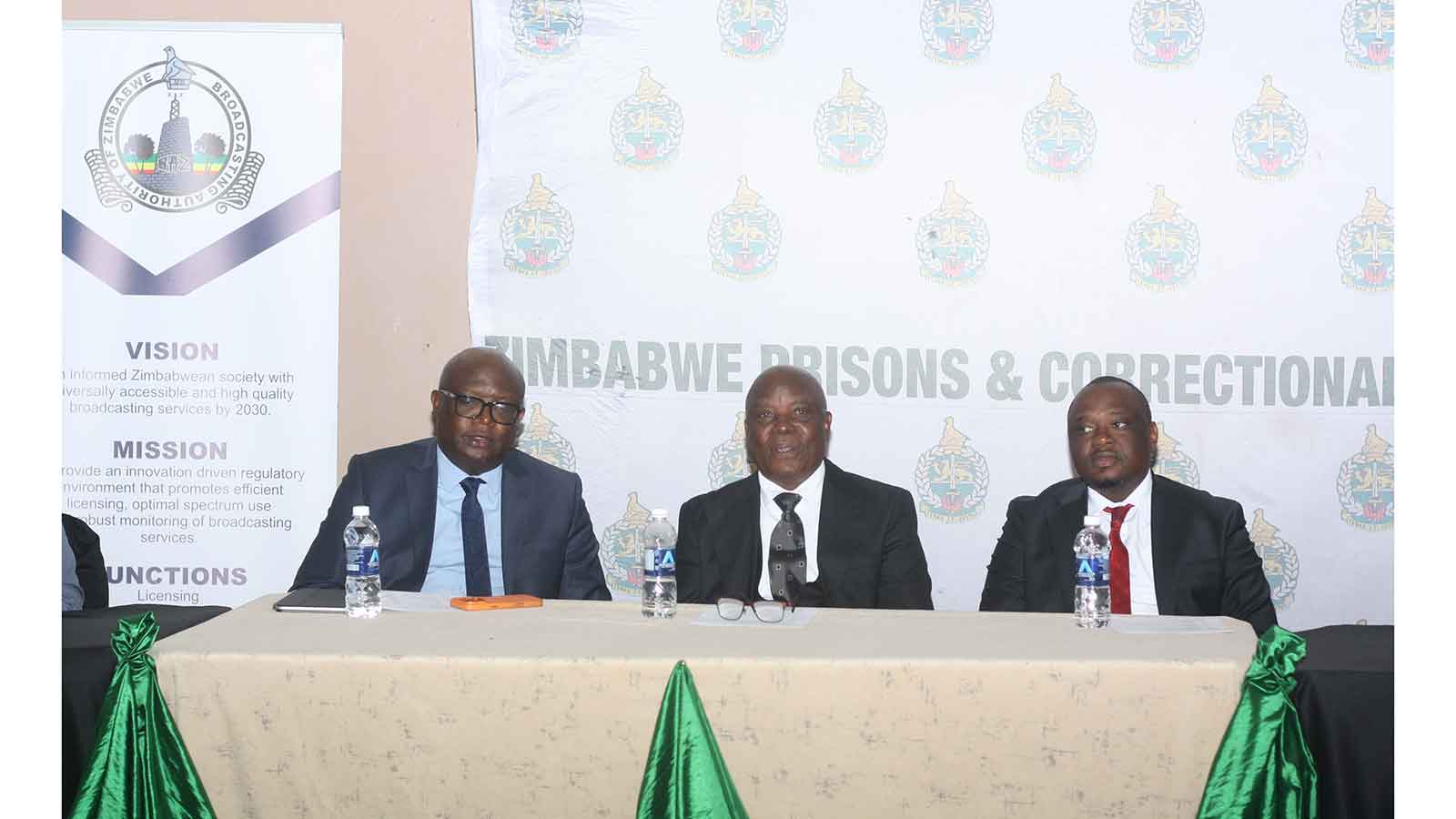
Source: Prisons radio station ready to hit airwaves – herald Addressing the gathering, Comm-Gen Chihobvu (centre) quoted former South African President Nelson Mandela, saying correctional institutions are a true measure of a nation’s commitment to justice, human dignity and transformation. “These profound words remind us that correctional institutions are not merely places of confinement,”  said […]

The post Prisons radio station ready to hit airwaves appeared first on Zimbabwe Situation.

Source: Prisons radio station ready to hit airwaves – herald

Arron Nyamayaro-Herald Reporter

Zimbabwe Prisons and Correctional Service officers and inmates are expected to start presenting radio programmes within the next three weeks on The Bridge FM, a community radio station based at Chikurubi Maximum Security Prison.

ZPCS Commissioner-General Moses Chihobvu disclosed this while opening a training workshop for the station’s radio presenters in Harare yesterday.

The station, expected to be commissioned soon, will provide ZPCS with a platform to tell its rehabilitation and reintegration story to the nation from behind prison walls.

Among the 35 participants attending the workshop are three inmates, reflecting the institution’s commitment to rehabilitation and reintegration.

Addressing the gathering, Comm-Gen Chihobvu quoted former South African President Nelson Mandela, saying correctional institutions are a true measure of a nation’s commitment to justice, human dignity and transformation.

“These profound words remind us that correctional institutions are not merely places of confinement,”  said Comm-Gen Chihobvu.

“They are places where a nation’s commitment to justice, human dignity, rehabilitation and transformation is truly measured.

Situated within Chikurubi Maximum Security Prison, the station stands as one of the most remarkable symbols of institutional transformation.

Comm-Gen Chihobvu said that following the abolition of the death penalty in Zimbabwe, a place once associated with the finality of life, the former gallows were imaginatively and purposefully converted into a broadcasting studio.

The post Prisons radio station ready to hit airwaves appeared first on Zimbabwe Situation.