US$4,7m Sunway City project advances Vision 2030 agenda 

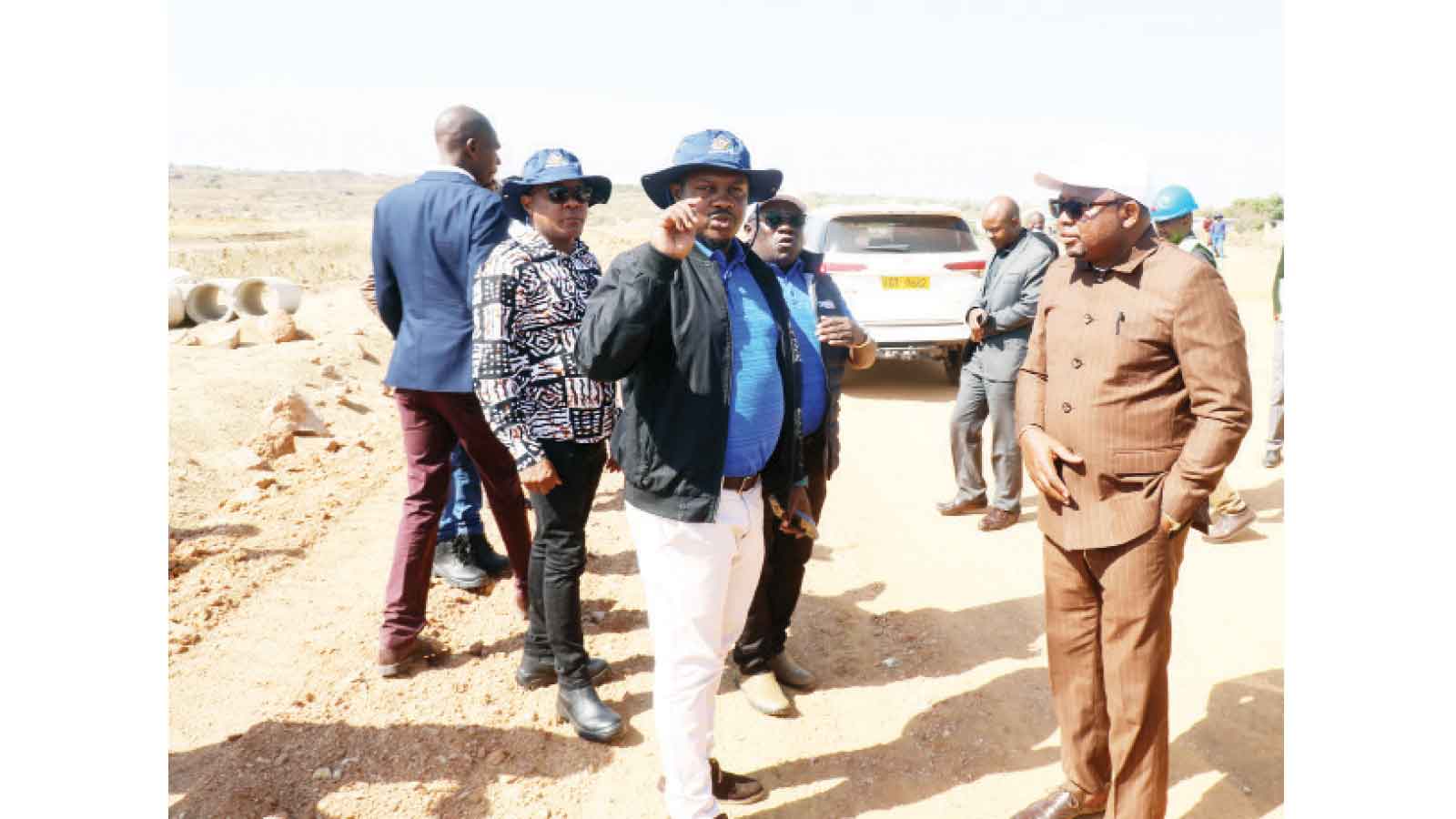
Source: US$4,7m Sunway City project advances Vision 2030 agenda – herald National Housing and Social Amenities Minister Professor Paul Mavima (right) listens as Sunway City Acting Chief Executive Officer Engineer Valentine Zvomuya (second from left) explains the project at a familiarisation tour yesterday. Looking on in the background are Industrial Development Corporation (IDC) Group Resource […]

The post US$4,7m Sunway City project advances Vision 2030 agenda  appeared first on Zimbabwe Situation.

Source: US$4,7m Sunway City project advances Vision 2030 agenda – herald
Theseus Mauruki Shambare-Herald Correspondent

A US$4,7 million housing development in Harare’s Sunway City is expected to accelerate the Government’s drive to deliver one million new housing units by 2030, with authorities expressing confidence that ongoing public and private sector projects will help meet the national target.

The medium- and high-density housing project, being implemented by Sunway City (Pvt) Ltd, a subsidiary of the Industrial Development Corporation of Zimbabwe (IDCZ), has reached 17 percent advanced and is scheduled for completion by March 2027.

Speaking during a familiarisation tour of the project yesterday, National Housing and Social Amenities Minister Professor Paul Mavima said the development demonstrated the Government’s commitment to addressing the country’s housing backlog while creating sustainable human settlements.

“We have set a target to deliver one million houses by 2030. This includes all the developments by the private sector, the Government, provision of stands, as well as the actual construction of houses,” he said.

“We have to hit that target of one million.”

Prof Mavima said the Government was enforcing strict compliance with the National Human Settlements Policy to ensure that all new housing developments are fully serviced before occupation.

“Our human settlements policy is now saying that for every new settlement, we need to make sure that we have compliance in terms of the services that are there in the settlement. Sewer, water and electricity reticulation are preconditions that have to be satisfied before people move in,” he said.

The project, located on a 68-hectare site at Ventersburg Estate, will deliver 254 medium-density residential stands in the current phase, alongside supporting infrastructure that includes roads, stormwater drainage, water and sewer reticulation, a sewage treatment plant and public lighting.

Plans also provide for churches, schools, a college, industrial stands, commercial facilities and a police station, creating an integrated settlement.

Prof Mavima said Sunway City would become a model urban development supporting Zimbabwe’s Special Economic Zone programme.

“This is going to be a city within a city, with proper roads, sewer, water, everything that is associated with it,” he said.

“I am confident that we are going to meet that target in the first quarter of 2027. We want this to demonstrate the new urban settlement model that Zimbabwe is pushing.”

He said Sunway City was only one of several housing developments underway across the country.

“Very soon we will be launching another one in Borrowdale, which is going to be very significant. There are many areas where housing development is taking place throughout the country, and when combined, I am sure we will deliver on the one million,” said Prof Mavima.

Sunway City Acting Chief Executive Officer Engineer Valentine Zvomuya said the project was complementing Government efforts to reduce the national housing backlog while supporting industrialisation.

“We are working towards the development of 254 residential stands, with the target of completion in the first quarter of 2027,” he said.

“As Sunway City, we are complementing the Government’s efforts towards reducing the housing backlog in alignment with the National Development Strategy 2, which is to provide the necessary housing infrastructure where our people can find decent accommodation and a decent living.”

He said the company remained committed to delivering fully serviced residential developments to promote orderly urban growth and improve the quality of life for Zimbabweans.

The post US$4,7m Sunway City project advances Vision 2030 agenda  appeared first on Zimbabwe Situation.
SA crisis: 56 000 troop back home

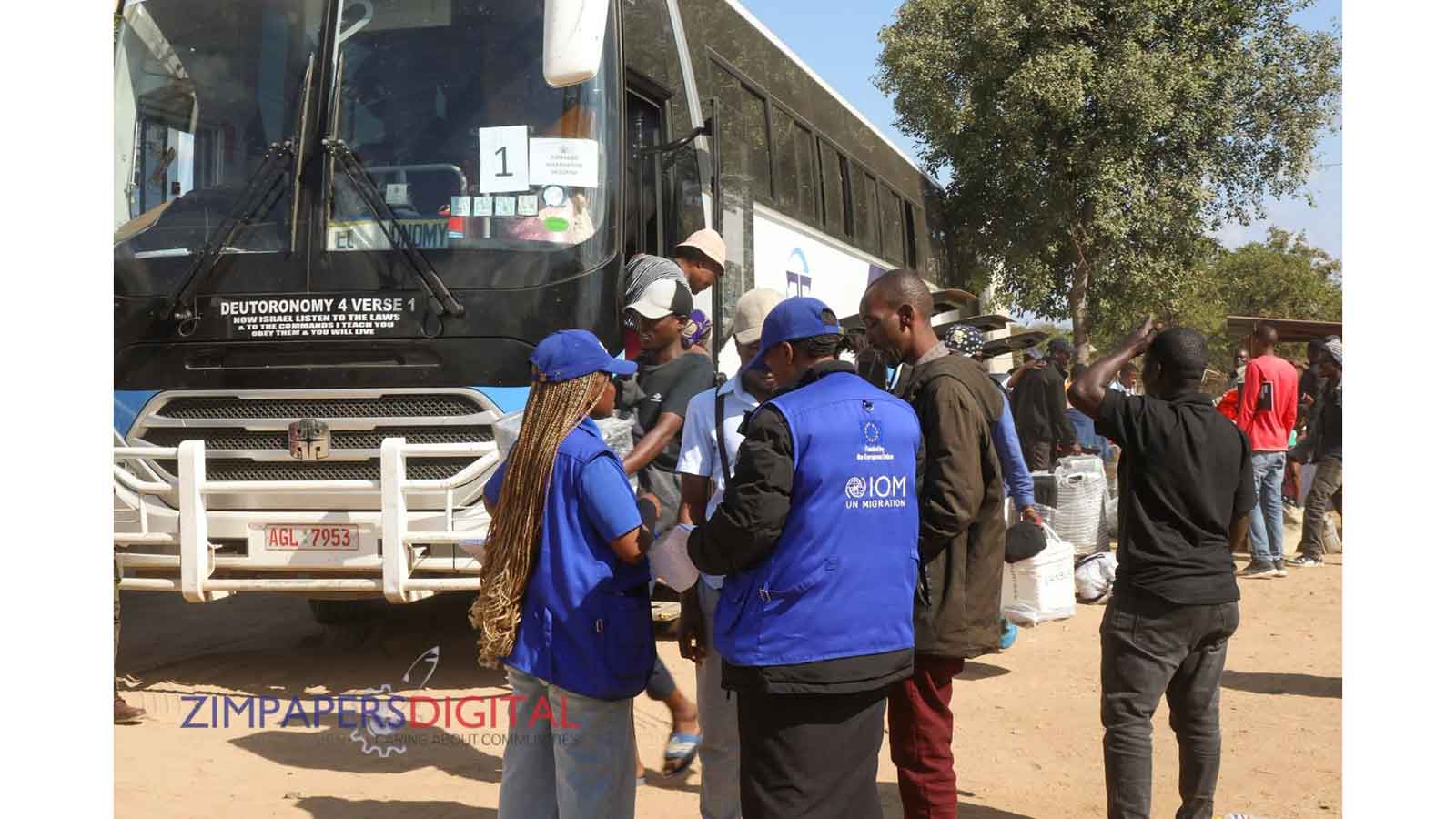
Source: SA crisis: 56 000 troop back home – herald Zimbabwean returnees are being processed at the Government-run reception and support centre in Beitbridge. Most are getting ready to leave for their various destinations. – Picture: Edward Zvemisha. Thupeyo Muleya-Beitbridge Bureau MORE than 56 000 Zimbabweans have returned home through Beitbridge Border Post since late […]

The post SA crisis: 56 000 troop back home appeared first on Zimbabwe Situation.
Source: SA crisis: 56 000 troop back home – herald

Thupeyo Muleya-Beitbridge Bureau

MORE than 56 000 Zimbabweans have returned home through Beitbridge Border Post since late May as anti-migrant protests continue in parts of South Africa.

Government figures show that 56 473 Zimbabweans crossed back into the country between May 28 and June 30.

Of these, 47 252 returned independently, while 9 221 were assisted through the Government’s evacuation programme.

The Regional Immigration Officer for the Southern Region, Mr Joshua Chibundu, said authorities were managing the movement through close co-ordination involving the Zimbabwe Embassy in South Africa, the South African Government and the Department of Civil Protection’s structures.

“The movement is coordinated. We are equal to the task and have enough manpower evenly deployed across shifts and counters,” said Mr Chibundu.

He said the border post was also facilitating Malawian nationals transiting through Zimbabwe on their way home from South Africa.

All returnees are being profiled at Beitbridge to enable Government to maintain accurate records, identify vulnerable cases and facilitate onward travel arrangements to their home districts.

Mr Chibundu added that the increased movement of returnees had not disrupted normal border operations.

“Tourists, truck drivers and other travellers are still being cleared without unnecessary delays, while we give priority attention to returnees,” he said.

South Africa’s Border Management Authority (BMA) said biometric profiling at Beitbridge remains central to ensuring that the repatriation process is conducted safely and in an orderly manner.

Speaking at Beitbridge Border Post yesterday, Acting BMA Commissioner Major General David Chilembe said the border post was now handling most of the repatriation operations following the closure of the Durban processing facility.

“Biometric profiling at the point of exit is to ensure we do not mis-repatriate other nationals, including South Africans,” he said.

“It is also being used to ensure that crime fugitives of all nationalities do not escape under the guise of repatriations.”

Major General Chilembe said every person leaving through the border is screened using fingerprints and facial recognition technology to verify identities, confirm immigration status and identify individuals wanted by law enforcement authorities.

He said the BMA was working closely with South Africa’s National Joint Operational and Intelligence Structure (NATJOINTS), as well as officials from Zimbabwe and Malawi, given Beitbridge’s strategic role as a major regional transit point.

“We are coordinating with our counterparts to verify lists, share information, and ensure a smooth and orderly process.

“We are dealing with three processes that include deportation, repatriation, and normal movement facilitation. So far, we have been able to carry out all these processes successfully,” he said.

Major General Chilembe said additional buses carrying returnees from various parts of South Africa were expected at the border in the coming days, with authorities having strategically deployed personnel to prevent delays while maintaining security and operational efficiency.

He revealed that on Wednesday alone, the BMA processed 2 400 people departing through Beitbridge, composed of 1 700 Malawians and 700 Zimbabweans.

“In addition, since we started here on 7 June when the President (Cyril Ramaphosa) announced the measures on migration, we have dealt with more than 35 000 people in terms of repatriations and deportations at this border,” he said.

Major General Chilembe also confirmed that South Africa’s Inter-Ministerial Committee on Migration would visit various repatriation centres to assess operations on the ground and receive updates from officials.

“The goal is to ensure the process is humane, lawful, and secure for all involved,” he said.

Beitbridge Border Post remains the main gateway for the ongoing repatriation programme.

As anti-African migrant protests continue in parts of South Africa, authorities on both sides of the border say systems have been strengthened to accommodate increasing numbers while ensuring that operations remain secure, efficient and orderly.

The post SA crisis: 56 000 troop back home appeared first on Zimbabwe Situation.
VP Chiwenga turns 70 years 

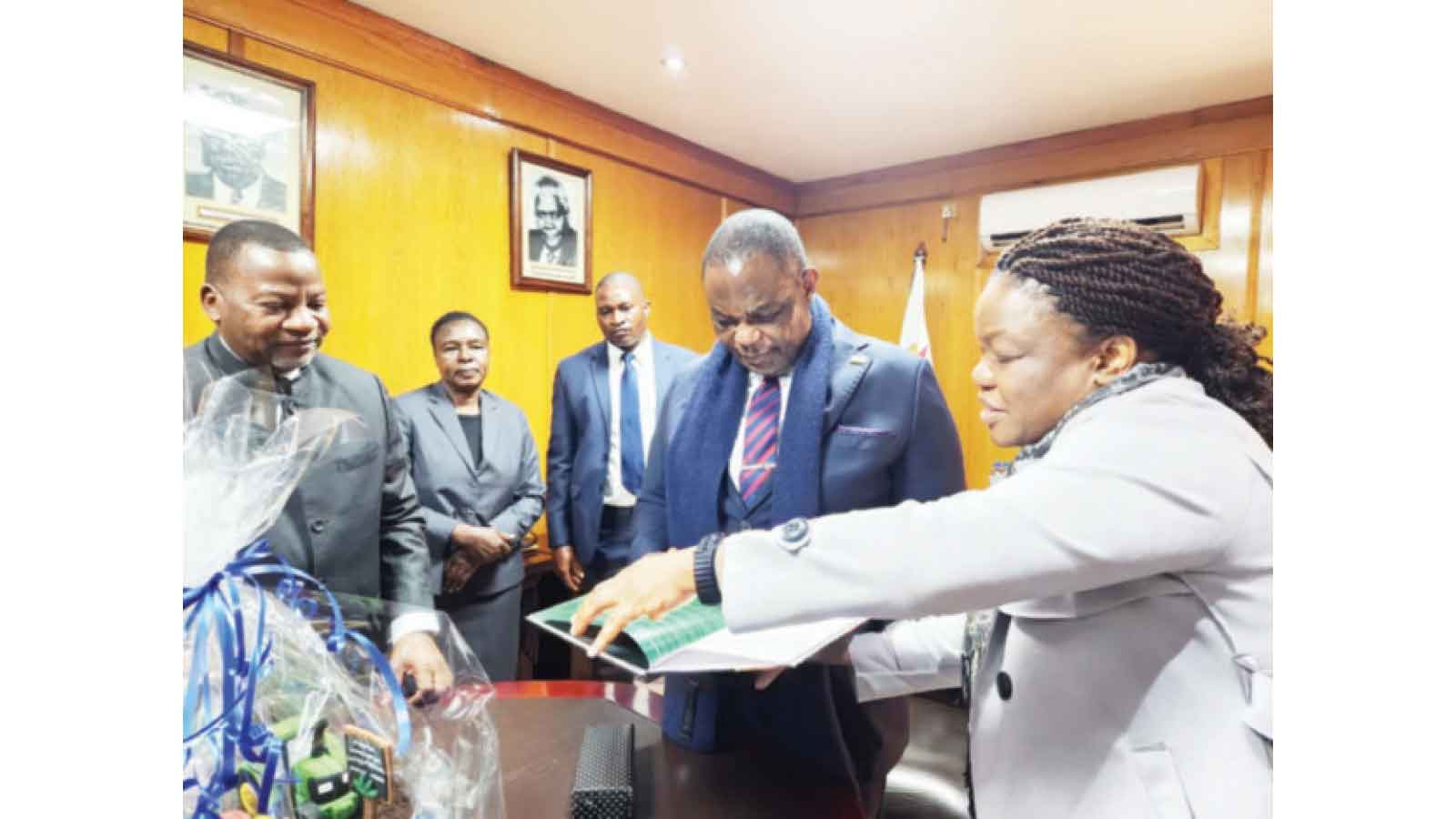
Source: VP Chiwenga turns 70 years – herald Vice President Dr Constantino Chiwenga marvels at a picture book prepared by his office to mark his 70th birthday. The book captures key moments. Permanent Secretary in his office Mrs Marcia Nyanda (right) takes him through, while chief of staff, Major-General Grey Mashava (left) and personal assistant […]

The post VP Chiwenga turns 70 years  appeared first on Zimbabwe Situation.
Source: VP Chiwenga turns 70 years – herald

Mukudzei Chingwere-Senior Reporter

VICE President Dr Constantino Chiwenga has expressed gratitude to staff in his office for taking him down memory lane with a pictorial book that traces his personal life and contribution to Zimbabwe. 

The Vice President turned 70 yesterday and his staff presented him with a book capturing his life from boyhood, as a freedom fighter, a military officer and in civilian service. 

In appreciation, the VP said it was such a timely reminder of where the nation is coming from as a people and individuals and also a compass of collective obligations in building an economically prosperous nation. 

“I want to, first and foremost, express my heartfelt joy for this wonderful remembrance that you have done,” said the VP to his staff.

“This has thrown me back many years to reflect, never mind about the history, but about how, together with my colleagues at various levels, we have travelled in our beautiful country until it got liberated. 

“There were founding fathers, those who fought the First Chimurenga and after the First Chimurenga, those who again started to motivate people for the Second Chimurenga.

“I don’t know how you managed to get this history of my grandfather, Sekuru Guvheya Chiwenga; his father fought in the first Chimurenga,” he said.

The VP narrated how his great-grandfather partook in the First Chimurenga, particularly in battles that sought to deter the settlers’ incursion into modern-day Marondera.

He also narrated how his grandfather, Guvheya Chiwenga, would later immerse himself in nationalist politics, which saw him becoming one of seven pioneer inmates at the notorious Gonakudzingwa detention camp alongside revered nationalist Dr Joshua Nkomo.

While the forebears played their part, VP Chiwenga said the battle is still on, albeit in a different dimension of economic development towards a prosperous economy that serves its people.

“The short pictorial collage you have captured shows the journey that I have travelled, along with loving and supporting people at every point.

“That’s what has moved me that much. It is a legacy that we will leave for future generations to come,” said VP Chiwenga.

The post VP Chiwenga turns 70 years  appeared first on Zimbabwe Situation.

Women lead rural economic revival in Bubi-Lupane

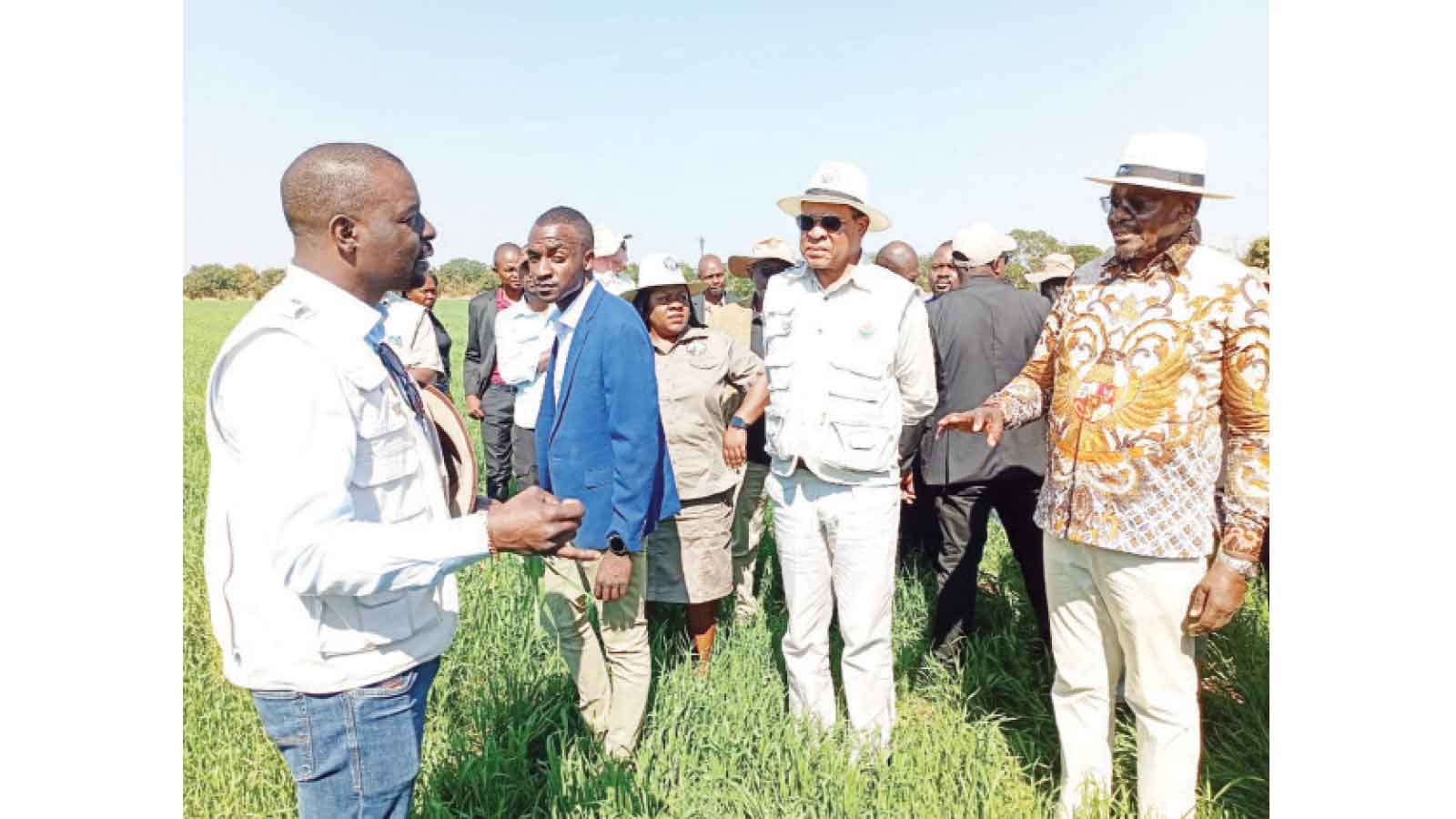
Source: Women lead rural economic revival in Bubi-Lupane – herald Vice President Kembo Mohadi (right) listens to ARDA chief executive Mr Tinotenda Mhiko (left), while Agriculture, Mechanisation and Water Resources Development Minister Dr Anxious Masuka (centre) looks on during a tour of the Bubi-Lupane Irrigation Scheme yesterday. Raymond Jaravaza WHAT was once barren land in […]

The post Women lead rural economic revival in Bubi-Lupane appeared first on Zimbabwe Situation.

Source: Women lead rural economic revival in Bubi-Lupane – herald

Raymond Jaravaza

WHAT was once barren land in drought-prone Lupane has become a thriving economic hub where more than 90 communal farmers — most of them women — are earning incomes, creating sustainable livelihoods and driving rural industrialisation through year-round crop production under the Bubi-Lupane Irrigation Scheme.

The 200-hectare irrigation scheme, commissioned by President Mnangagwa in 2021 after the revival of a decades-old project, is demonstrating how irrigation can serve as the foundation of rural industrialisation by creating employment, improving household incomes, strengthening food security and laying the groundwork for agro-based industries in line with the Second Republic’s Vision 2030 development agenda.

Among the 90 plot holders are 52 women and 38 men, who have been increasingly contributing to the country’s strategic cereal reserves over the past four years. Working in partnership with the Agricultural and Rural Development Authority (ARDA), they have successfully shifted from subsistence to commercial farming, a transformation that has improved livelihoods and restored hope in the semi-arid district.

To safeguard the gains being realised by farmers, Government has assured winter wheat producers that essential services such as electricity and water will not be disconnected because of outstanding bills before the crop is harvested.

The reassurance was given by Vice President Kembo Mohadi during an address yesterday to villagers and farmers at the Bubi-Lupane Irrigation Scheme in Matabeleland North Province.

Vice President Mohadi said he had been assured by officials from ZESA and Zimbabwe National Water Authority (ZINWA) that power and water supply will not be cut off due to unpaid debts.

“Water and electricity supply will not be cut off before your wheat is harvested as we cannot allow a situation where farmers lose their entire crops because it was not irrigated,” he said.

“We have agreed with ZESA and ZINWA to come up with flexible payment plans so that farmers can pay their debts after harvesting.

“Government is happy with the success of the Bubi-Lupane Irrigation Scheme, one of the pioneer projects that were revived by the Second Republic under the leadership of President Mnangagwa,” said Vice President Mohadi.

He said that before he made his way to the irrigation scheme, he passed by the Bubi-Lupane Dam, where irrigation water is drawn from.

VP Mohadi said villagers should channel their grievances and challenges through the Minister of State for Matabeleland North Provincial Affairs and Devolution, Richard Moyo.

“Minister Moyo is the eyes and ears of the President here in Matabeleland North Province. So, when you have issues you feel the Government must address, utilise his offices,” he said.

“As your leaders, we cannot know everything that needs our attention. Through his office, Government will take appropriate action to solve the challenges that we might be facing as villagers of Lupane.”

The event was also attended by Minister of Agriculture, Mechanisation and Water Resources Development Dr Anxious Masuka, Agricultural and Rural Development Authority chief executive (ARDA) Mr Tinotenda Mhiko, senior Government officials and local traditional leadership.

Scheme chairperson, Mrs Sinikiwe Moyo (53), said they expect an average yield of four tonnes per hectare.

“We managed to plant 116 hectares of winter wheat and are optimistic about harvesting four tonnes per hectare. This is an all-year-round project where we also grow maize, butternut and sugar beans,” she said. The scheme sources its water from the Bubi-Lupane Dam, although breakdowns of pumping infrastructure remain a concern.

“Whenever a major feeder pipe bursts, we have to call in the Zimbabwe National Water Authority (ZINWA) to repair it. That slows us down, but we push on,” added Mrs Moyo. ARDA chief executive, Mr Mhiko said a steady supply of electricity was critical to thriving winter wheat.

“Winter wheat must be irrigated consistently and we would like to thank ZESA for ensuring a steady supply of electricity across the country, a situation that benefits winter wheat farmers,” he said.

The post Women lead rural economic revival in Bubi-Lupane appeared first on Zimbabwe Situation.

Cells revolutionary party’s core foundation

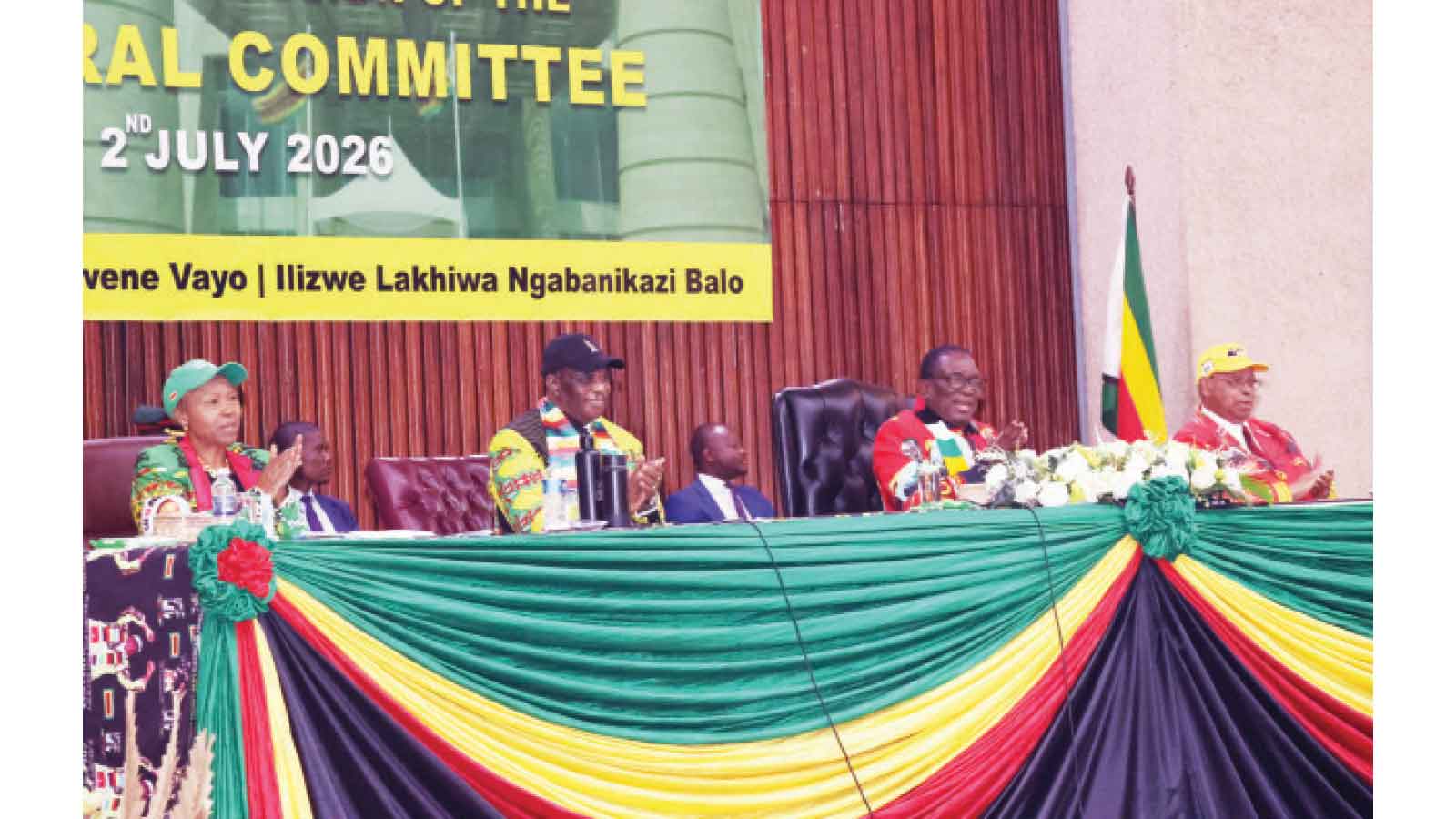
Source: Cells revolutionary party’s core foundation – herald Zanu PF First Secretary and President, Cde Mnangagwa, national chairman Cde Oppah Muchinguri‑Kashiri (left) and secretary-general Cde Jacob Mudenda (right) join fellow Central Committee members in singing a happy birthday song for Vice President Cde Constantino Chiwenga (second from left), who turned 70 during the 131st Ordinary […]

The post Cells revolutionary party’s core foundation appeared first on Zimbabwe Situation.

Source: Cells revolutionary party’s core foundation – herald

Joseph Madzimure-Zimpapers Political Hub

ZANU PF Cells constitute the party’s core foundation and the revolutionary party’s strength and endurance depend on this organ, President Mnangagwa has said.

The President, who is the party’s First Secretary, made the remarks yesterday while addressing the 131st Ordinary Session of the Central Committee in Harare.

He said the Cell and Village meetings are crucial, as they are the level at which the people’s development needs are first identified.

“Zanu PF remains the home of the People’s Revolution. Comrades, the strength and durability of any building or infrastructure lie in a strong foundation.

“In ZANU PF, our foundation is the Cell/Village structure. I commend the Central Committee and Party as a whole for the successful Cell/Village verification programme during the recent National Cell Day. This was a mammoth task, which ensured that our membership database is accurate and our structures are genuine,” said President Mnangagwa.

“If the Cell/Village structure is robust, the Party remains invincible and unstoppable,” President Mnangagwa said.

He said the objective of holding Cell/Village meetings was to have members that are alive to the guiding principles of the party.

“Our overall goal, therefore, is not just to have names on the registers, but to have an ideologically grounded membership, which is always guided by the provisions of our Party Constitution. Tose tinosungirwa kuziva nekutevedza gwara remusangano,” President Mnangagwa said.

He called for discipline and loyalty among party cadres.

“Discipline, integrity and loyalty to the Party and patriotism to our country should be anchored and promoted at cell level. This is the hallmark of ZANU PF.

“In line with our principle of leaving no one and no place behind and participatory governance, the Cell/Village Level should also become centres for deliberations on economic empowerment matters at the grassroots level as well as the promotion of upright living, preservation of our culture and value systems,” said President Mnangagwa.

He called for unity among party members, saying collective party interests should take precedence over individual preferences.

“There is no room for divisions, regionalism, tribalism and narrow ambitions that override the collective interest of the Party. We are one body, from the Cells to the Presidium, bound by the Party Constitution and collective decisions of the Party. We must all toe the correct line of the revolution,” President Mnangagwa said.

He said the Central Committee carried the weighty responsibility of millions of people who have entrusted it to guide the party.

“The Central Committee gathers, not out of tradition or mere routine. We are cognisant that we carry the weighty responsibility and have been entrusted by the millions of Party members to guide the Party forward in line with our sacred Party Motto, ‘Unity, Peace and Development,” President Mnangagwa said.

“Equally, the Central Committee is alive to the fact that the Great Zimbabwe Monument on the ZANU PF Emblem represents the obligation we have to our great motherland, Zimbabwe. We have the duty bestowed on us by history, the Party Constitution as well as our collective choices to advance the national interest and people’s aspirations for socio-economic development and prosperity.”

He said the party stood ready to defend and protect the country’s sovereignty.

“We shall never drop the baton. Under the Second Republic, our colossal revolutionary mass Party, ZANU PF and indeed Zimbabwe, are in safe hands. It is in this spirit, therefore, that the Agenda of today’s (yesterday’s) meeting will be deliberated, fully aware of a rapidly transforming national socio-economic and political landscape,” the President said.

He said yesterday’s session marked the half-year march where the 11 Chairpersons of the Standing Committee of the Central Committee would present their reports.

“I commend all members for your inputs into the respective Standing Committees. This approach will go a long way towards strengthening innovative policy generation, as well as the methodical monitoring and oversight role by the Central Committee and the Party as a whole.

“Where we have succeeded, let us celebrate and purposefully replicate for the collective good of our people. Where we have faced challenges, let us honestly introspect and make timely and appropriate interventions.”

Turning to Zimbabwe’s recent election to the United Nations Security Council as a non-permanent member, President Mnangagwa said Harare will push the voice of the Global South.

“We take pride that Zimbabwe has been elected as a non-permanent member of the United Nations Security Council for the 2027-2028 term. This signals the world’s growing confidence in the leadership of our ZANU PF-led Government’s commitment to multilateralism, global peace, and security,” he said.

“As we take a seat at this prestigious international forum, we shall carry the voice of the Global South, advocating a fairer and more inclusive international system, where the sovereignty of all nations, multilateralism and the rules-based order are respected”.

The Central Committee also took time to celebrate Vice President Dr Constantino Chiwenga’s birthday.

He turned 70 yesterday.

The post Cells revolutionary party’s core foundation appeared first on Zimbabwe Situation.