CAB3 clears Parliament, heads to Mnangagwa for assent 

Source: CAB3 clears Parliament, heads to Mnangagwa for assent -Newsday Zimbabwe HARARE, Jun. 30 (NewsDay Live) — Zimbabwe’s controversial Constitution of Zimbabwe Amendment Bill (No. 3) cleared its final parliamentary hurdle Tuesday after the National Assembly approved Senate amendments during an extraordinary sitting convened by President Emmerson Mnangagwa. The National Assembly adopted the Senate amendments […]

The post CAB3 clears Parliament, heads to Mnangagwa for assent  appeared first on Zimbabwe Situation.

Source: CAB3 clears Parliament, heads to Mnangagwa for assent -Newsday Zimbabwe

HARARE, Jun. 30 (NewsDay Live) — Zimbabwe’s controversial Constitution of Zimbabwe Amendment Bill (No. 3) cleared its final parliamentary hurdle Tuesday after the National Assembly approved Senate amendments during an extraordinary sitting convened by President Emmerson Mnangagwa.

The National Assembly adopted the Senate amendments by 226 votes, with 41 opposition Citizens Coalition for Change legislators voting against, paving the way for the bill to be transmitted to Mnangagwa for assent.

The bill has triggered fierce political and legal debate over its proposed changes to Zimbabwe’s constitutional framework.

Among its key provisions, the legislation extends the term of the current Parliament and local authorities by two years to 2030. It also increases the term of office for future presidents, Parliament and local authorities from five years to seven years.

The bill further proposes changing the process of filling a vacancy in the Office of the President by transferring the power to elect a successor from the electorate to a joint sitting of the National Assembly and Senate.

The legislation initially passed the National Assembly on June 18 with 216 votes, aided by 34 legislators aligned to self-styled Citizens Coalition for Change secretary-general Sengezo Tshabangu. The Senate later approved it by 75 votes to four before returning it to the lower house to consider procedural amendments.

Tuesday’s sitting was attended by Chikomba West MP and ICT Minister Tatenda Mavetera and Makoni West MP and Skills Audit Minister Jenfan Muswere, who were among 14 Zanu PF legislators absent during the initial National Assembly vote. Their attendance followed a directive from Zanu PF ordering all its legislators to be present for the decisive sitting.

Speaker of the National Assembly Jacob Mudenda presided over the proceedings.

Justice Minister Ziyambi Ziyambi said the Senate amendments were largely procedural, including provisions requiring the first sitting of a newly elected Parliament to be held within 14 days of the declaration of election results on a date fixed by the Clerk of Parliament through a Government Gazette. The amendments also provide that the clerk will preside over both Houses until the Speaker of the National Assembly is elected.

Despite Parliament’s approval, the bill could still face legal challenges.

Constitutional lawyers argue that amendments affecting Section 328(7) of the Constitution cannot take effect through presidential assent alone. They contend that the proposed changes require approval by Zimbabwean voters in a national referendum conducted by the Zimbabwe Electoral Commission before they can become law.

The bill has become one of the most contentious constitutional proposals since the adoption of Zimbabwe’s 2013 Constitution, with critics accusing the government of attempting to prolong political terms without a fresh electoral mandate. Supporters argue the amendments are necessary to improve governance and align electoral processes.

The post CAB3 clears Parliament, heads to Mnangagwa for assent  appeared first on Zimbabwe Situation.

Tungwarara donates 50 buses to repatriate stranded Manicaland citizens

Source: Tungwarara donates 50 buses to repatriate stranded Manicaland citizens –Newsday Zimbabwe PRESIDENT Emmerson Mnangagwa’s special adviser, Paul Tempter Tungwarara, has donated 50 buses to ferry Manicaland citizens stranded at Beitbridge Border Post while returning from South Africa. Tungwarara announced the development at a Mutare hotel after meetings with central committee members and Zanu PF’s […]

The post Tungwarara donates 50 buses to repatriate stranded Manicaland citizens appeared first on Zimbabwe Situation.

Source: Tungwarara donates 50 buses to repatriate stranded Manicaland citizens –Newsday Zimbabwe

PRESIDENT Emmerson Mnangagwa’s special adviser, Paul Tempter Tungwarara, has donated 50 buses to ferry Manicaland citizens stranded at Beitbridge Border Post while returning from South Africa.

Tungwarara announced the development at a Mutare hotel after meetings with central committee members and Zanu PF’s Manicaland District Coordinating Committee.

He revealed that returnees would also receive free meals, with many in dire conditions.

Transport mogul and fellow central committee member Esau Mupfumi will provide the fleet, while Tungwarara finances the programme.

The repatriation is being done in phases, with 200 people from the province already identified at the border.

Beneficiaries must carry identity cards confirming residence in any of Manicaland’s eight districts.

The process begins today.

“We have Manicaland returnees stranded at the border,” Tungwarara said.

“We met as leadership and resolved to deploy buses from the Women’s League, Youth League and main wing to rescue them and take them to their districts free of charge. We need to rescue our people because they are in danger of their lives.”

“We have given Comrade Esau Mupfumi the green light to deploy up to 50 buses, starting Tuesday,” he added.

Mupfumi confirmed readiness: “As I speak, the buses are ready. We are arranging fuel logistics. Manicaland returnees should not worry—we are sending buses immediately. Some had already dispersed because they were unaware of this programme.”

Mupfumi added that five additional buses would be deployed through Young Women 4ED to assist cross-border members.

Zanu PF Manicaland chairman Tawanda “Tsola” Mukodza welcomed the gesture. “This initiative demonstrates party unity and responsiveness and will restore hope to families awaiting their loved ones’ return. These are our people, our children—they cannot be stranded at the border without dignity and support.”

The post Tungwarara donates 50 buses to repatriate stranded Manicaland citizens appeared first on Zimbabwe Situation.

Zanu PF top chef faces axe over CAB 3 criticism 

Source: Zanu PF top chef faces axe over CAB 3 criticism -Newsday Zimbabwe THE ruling Zanu PF party leadership in Manicaland province has recommended the suspension of Nyanga central committee member Moses Gutu on allegations of indiscipline, among other charges. The decision was adopted during a provincial executive committee meeting held at Mutare Teachers’ College […]

The post Zanu PF top chef faces axe over CAB 3 criticism  appeared first on Zimbabwe Situation.

Source: Zanu PF top chef faces axe over CAB 3 criticism -Newsday Zimbabwe

THE ruling Zanu PF party leadership in Manicaland province has recommended the suspension of Nyanga central committee member Moses Gutu on allegations of indiscipline, among other charges.

The decision was adopted during a provincial executive committee meeting held at Mutare Teachers’ College yesterday.

Provincial commissar Albert Nyakuedzwa confirmed the recommendation and was expected to forward the recommendation to the national commissariat for further action.

It is understood that Gutu has been touring the province, publicly criticising and denouncing Constitution Amendment No. 3 Bill (CAB 3) in contrary to the party’s position.

Gutu’s videos denouncing CAB 3 have since gone viral on social media, prompting the provincial executive council recommending suspension pending a disciplinary hearing.

This is not the first time Gutu has faced party censure, having been disciplined between 2015 and 2016.

Zanu PF Manicaland chairman Tawanda Mukodza confirmed the development to NewsDay yesterday.

“It is true that we recommended the suspension of central committee member Moses Gutu,” he said.

Zanu PF opponents of CAB 3 — including Vice-President Constantino Chiwenga and retired military commanders  have strongly resisted the legislation, which proposes extending presidential and parliamentary terms and bypassing direct presidential elections.

Dissenting factions view the Bill as a manoeuvre to extend President Emmerson Mnangagwa’s tenure past his two-term limit, thereby altering succession plans. Critics argue that extending leadership terms and removing the direct public election of the President  allowing legislators to elect the Head of State instead — violates the democratic will of the people.

Opponents and legal experts maintain that any changes to presidential term limits cannot lawfully benefit the incumbent or bypass the electorate without a formal national referendum, as required by the Constitution.

Dissenters have reportedly held covert meetings and whisper campaigns to derail the Bill, prompting warnings of political retribution and purging from Mnangagwa loyalists.

Despite this internal resistance and pushback from the political opposition, the Bill passed through both parliamentary Houses and currently awaits the President’s assent to become law.

The post Zanu PF top chef faces axe over CAB 3 criticism  appeared first on Zimbabwe Situation.

Till operator dodges jail, fraud convictions overturned 

Source: Till operator dodges jail, fraud convictions overturned –Newsday Zimbabwe A FORMER till operator convicted of defrauding her employer has escaped an effective prison sentence after the High Court overturned two of her three fraud convictions. Magret Chagwiza had been convicted and jailed after a contested trial on three counts of fraud as the State […]

The post Till operator dodges jail, fraud convictions overturned  appeared first on Zimbabwe Situation.

Source: Till operator dodges jail, fraud convictions overturned –Newsday Zimbabwe

A FORMER till operator convicted of defrauding her employer has escaped an effective prison sentence after the High Court overturned two of her three fraud convictions.

Magret Chagwiza had been convicted and jailed after a contested trial on three counts of fraud as the State accused her of processing transactions as successful despite point-of-sale (POS) payments having been declined before generating invoices that enabled customers to collect goods.

However, High Court judges Justice Philda Muzofa and Catherine Bachi-Mzawazi upheld Chagwiza’s conviction on one count of fraud, but substituted her 36-month effective prison term with a wholly suspended sentence on condition she does not commit another offence involving dishonesty and performs community service.

The judges found the evidence overwhelming on the third count, describing it as a case of the appellant being caught with her hand in the cookie jar.

According to the judges, the appellant served a customer and she indicated that the transaction was successful.

However, when her supervisor asked for the receipt, he found that the payment was declined, but an invoice for goods had already been generated by the appellant.

The court noted that although the receipt bearing the word declined was never produced as an exhibit, the evidence established that no payment had been made.

“The ‘declined’ receipt was not produced, but it was not disputed that the transaction was not honoured. Simbarashe (supervisor) blocked the release of goods,” the court heard.

“To err on the side of caution, he even sent the security guard with the customer to verify with CBZ if the transaction was honoured. It was not.”

However, the High Court found that the first two fraud convictions, which were based on an internal audit, could not stand because the State failed to eliminate reasonable doubt over the company’s banking records.

“The concessions by the auditor raises a doubt on whether enough was done to locate the transactions. During cross-examination, the auditor conceded that the report had four transactions, yet only three were reported.

“There was no further evidence to discredit the whole audit report, particularly as regards the three transactions forming the basis of the charges.

“The audit report exposed massive fraud by employees at the complainant company. Throughout the cross-examination of State witnesses, the defence bemoaned why the appellant was singled out among other employees.”

The court concluded: “The document was critical to establish the precise branch/account the appellant’s POS machine remitted the money.

“In the absence of evidence of where the money was supposed to be remitted, the State case remained inconclusive.

“With that doubt, the matter should be resolved in the appellant’s favour.”

On sentence, the judges held that imprisonment was inappropriate given Chagwiza’s circumstances.

“There was potential prejudice of US$1 451, which means the employer did not suffer actual prejudice,” the court said.

While acknowledging that Chagwiza had breached the trust placed in her as an employee and that there was evidence of premeditation, the court said these factors had to be weighed against mitigating circumstances.

“The appellant was a female first offender who had a young pregnancy at the time,” the judges said.

“Female offenders are usually spared the rigorous custodial sentences unless there are highly aggravating circumstances.

“A rehabilitative sentence must be imposed in this case, instead of a retributive one.”

The post Till operator dodges jail, fraud convictions overturned  appeared first on Zimbabwe Situation.

Thrown away like slaves: Zim migrants in SA face rising forced labour fears

Source: Thrown away like slaves: Zim migrants in SA face rising forced labour fears –Newsday Zimbabwe FOR years, South Africa has represented survival for thousands of Zimbabweans fleeing economic collapse, unemployment and political uncertainty back home. But for many migrants, the dream of dignity and opportunity is increasingly being replaced by fear, exploitation and conditions […]

The post Thrown away like slaves: Zim migrants in SA face rising forced labour fears appeared first on Zimbabwe Situation.

Source: Thrown away like slaves: Zim migrants in SA face rising forced labour fears –Newsday Zimbabwe
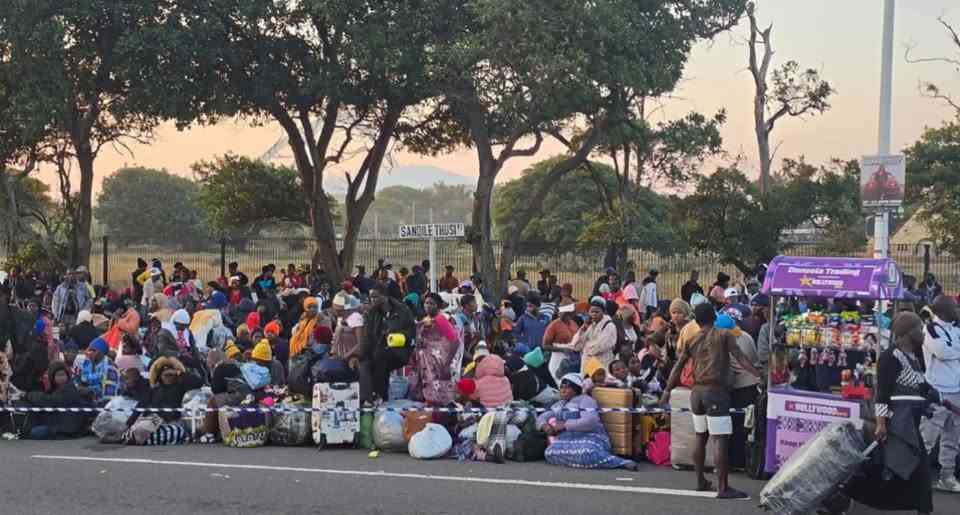
FOR years, South Africa has represented survival for thousands of Zimbabweans fleeing economic collapse, unemployment and political uncertainty back home.

But for many migrants, the dream of dignity and opportunity is increasingly being replaced by fear, exploitation and conditions that activists say resemble modern-day slavery.

As uncertainty continues over the future of the Zimbabwe Exemption Permit, migrant workers say they are being threatened with dismissal, intimidation and economic ruin by employers who are taking advantage of confusion surrounding immigration documentation.

At the centre of the growing storm is a warning from Africa Diaspora Forum executive director and Zimbabwe Community in South Africa leader Ngqabutho Mabhena, who says some employers are weaponising migrants’ vulnerability to strip them of labour rights and protections.

“We cannot allow a situation where we bring back slavery, where people are summarily dismissed on the spot without anything,” Mabhena said in a widely circulated address.

“You cannot then be treated like a slave.”

The Zimbabwe Exemption Permit remains legally valid until May 29, 2027, following a landmark Pretoria High Court ruling that halted attempts to terminate the programme.

Yet despite those legal protections, many Zimbabwean workers say employers are demanding new documentation within impossibly short deadlines or threatening immediate dismissal.

For migrants already living on the edge of survival, the consequences are devastating.

On farms across Limpopo, in restaurants in Johannesburg, on construction sites in Gauteng and in private homes in affluent suburbs, foreign workers often occupy some of the most insecure jobs in the economy.

Many are underpaid, denied formal contracts or forced to endure abusive working conditions because they fear deportation or unemployment more than exploitation itself.

Labour activists warn that the current climate of uncertainty is creating fertile ground for forced labour practices to flourish.

Some workers reportedly receive ultimatums to “fix” their documentation within days, despite employers knowing that immigration processes can take months or even years.

“They know fully well that in the two weeks they are giving you, you are not going to produce a permit, and then they simply fire you,” Mabhena said.

Human rights groups say such practices mirror patterns commonly associated with modern-day slavery, where vulnerable workers become trapped through fear, economic dependency and the constant threat of removal.

Undocumented migrants, or those with uncertain immigration status, rarely report abuse.

Many avoid labour offices, police stations or courts because they fear arrest, detention or xenophobic harassment.

That silence has allowed exploitation to thrive quietly beneath South Africa’s formal economy.

Employers accused of exploiting migrant labour often rely on the desperation of workers willing to accept almost any conditions simply to survive.

In some sectors, migrants reportedly work excessive hours without overtime pay, receive wages below the legal minimum, or are dismissed without notice, compensation or benefits.

Mabhena argued that employers who knowingly hired undocumented workers cannot suddenly claim innocence when immigration tensions escalate.

“While it is illegal in terms of immigration laws and labour laws to employ a person who is not documented, you cannot allow a situation where employers avoid penalties by throwing workers away like they are nothing,” he said.

“So the two of us violated the law.”

Analysts say Zimbabweans have become particularly vulnerable because they form one of the largest migrant communities in South Africa while also facing growing anti-immigrant sentiment.

Sporadic xenophobic violence and anti-foreigner protests in recent months have intensified fear among migrant communities.

Several African governments, including those of Zimbabwe, Malawi, Mozambique, Ghana and Nigeria, have reportedly begun contingency planning for citizens fearing unrest linked to planned anti-immigrant demonstrations.

For many migrants, the fear is no longer limited to deportation.

It is hunger.

It is homelessness.

It is becoming disposable labour in an economy that depends heavily on foreign workers while politically rejecting them.

Rights campaigners say this contradiction lies at the heart of the crisis.

Migrants remain essential to sectors such as agriculture, hospitality, domestic work and construction, yet many continue to exist outside meaningful labour protection.

Without secure documentation, workers become easy targets for intimidation.

Without legal certainty, exploitation becomes normalised.

Without protection, dismissal becomes a weapon.

Mabhena urged Zimbabwean migrants not to surrender their labour rights despite mounting pressure.

“They must dismiss you with benefits. They must pay you what is due to you,” he said.

He also called on employers to seek proper clarification from South Africa’s Department of Home Affairs rather than using fear and uncertainty to purge migrant workers.

The South African Department of Home Affairs has since launched a court-ordered stakeholder consultation process on the future of both the Zimbabwe Exemption Permit and Lesotho Exemption Permit programmes.

But for many Zimbabweans living hand-to-mouth in South Africa, policy discussions taking place in conference rooms offer little comfort.

Their reality is immediate.

A missed salary means unpaid rent.

A dismissal means hunger.

And amid growing uncertainty, activists warn that exploitation is steadily hardening into a new form of slavery hidden behind immigration politics and economic desperation.

Concerns over modern slavery, forced labour and unfair labour practices have also been reinforced by findings from South Africa’s Department of Employment and Labour and Parliament.

The Southern African Clothing and Textile Workers’ Union (SACTWU) declared sweatshop conditions in Newcastle, KwaZulu-Natal, a national crisis after a joint inspection by the Department of Employment and Labour and Parliament uncovered widespread labour and immigration violations in factories linked to major retailers.

The findings emerged during SACTWU’s national bargaining conference held in Cape Town recently, where more than 400 delegates representing workers across 21 sectors resolved to intensify the fight for living wages and decent working conditions.

According to the union, a joint inspection blitz conducted on February 5, 2026, in the Amajuba District exposed “extreme exploitation, unsafe workplaces and slave-like practices” in factories supplying some of South Africa’s biggest retail chains, including Mr Price, Pick n Pay, Ackermans, Pepkor and Jet.

The inspections, overseen by South Africa’s Parliamentary Portfolio Committee on Employment and Labour, reportedly found factories operating in violation of labour laws, occupational health and safety regulations, and immigration requirements.

SACTWU general secretary Bonita Loubser confirmed that many workers employed in the factories were undocumented migrants, making them particularly vulnerable to exploitation.

The union said it would pursue legal action through the courts and bargaining councils to compel compliance with national labour laws and improve working conditions.

Delegates at the conference emphasised the importance of collective bargaining in defending workers against exploitation and poverty wages.

“We are workers by day, family members at home and community members by night,” one delegate told the gathering, highlighting the social and economic pressures facing workers in the clothing and textile sector.

The conference, held under the theme Unity, Jobs, Growth and Service to Members, brought together workers from sectors including clothing, footwear, tanning, laundry, farming and agro-processing.

SACTWU, formed in 1989, says it represents more than 100 000 workers.

Congress of South African Trade Unions president Zingiswa Losi addressed delegates and stressed the importance of organised labour in protecting workers’ rights.

“Trade unions organise workers, defend rights and transform society,” Losi said.

She urged unions to recruit more young workers and shop stewards to strengthen the labour movement amid growing economic challenges and changing labour patterns.

The conference further called for stronger protections for local industries under the African Continental Free Trade Area and other trade agreements, while urging government to fully implement the Retail-Clothing, Footwear, Textile and Leather Masterplan to safeguard jobs and combat the influx of cheap imports.

The revelations have intensified scrutiny of labour conditions within South Africa’s clothing and textile supply chains, particularly in factories employing undocumented migrant labour under poor working conditions.

The post Thrown away like slaves: Zim migrants in SA face rising forced labour fears appeared first on Zimbabwe Situation.