Solar, biogas projects to curb deforestation 

Source: Solar, biogas projects to curb deforestation -Newsday Zimbabwe COMMUNITIES should embrace clean energy technologies and transition from firewood to renewable energy is critical to protecting Zimbabwe’s forests, improving rural livelihoods and ensuring sustainable development, Energy and Power Development minister July Moyo has said. Speaking during the commissioning of the Tshitulipasi 120kW solar mini-grid and […]

The post Solar, biogas projects to curb deforestation  appeared first on Zimbabwe Situation.

Source: Solar, biogas projects to curb deforestation -Newsday Zimbabwe

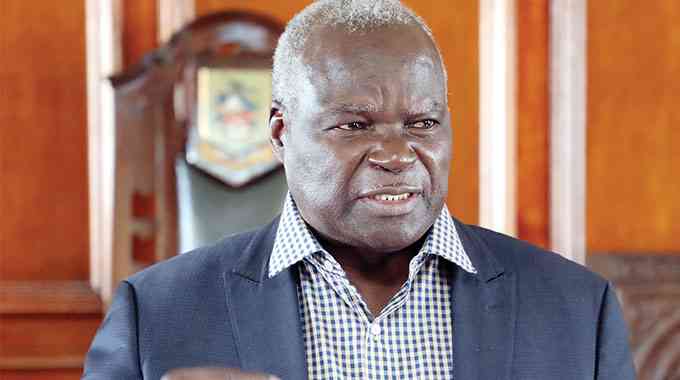
COMMUNITIES should embrace clean energy technologies and transition from firewood to renewable energy is critical to protecting Zimbabwe’s forests, improving rural livelihoods and ensuring sustainable development, Energy and Power Development minister July Moyo has said.

Speaking during the commissioning of the Tshitulipasi 120kW solar mini-grid and 25 biogas digesters in Beitbridge recently, Moyo said clean energy solutions provide practical alternatives to firewood, helping conserve the environment while improving the quality of life in rural communities.

He warned that continued indiscriminate cutting down of trees, particularly Mopane trees, was threatening the environment and the survival of the region’s prized Mopane worms.

“We should preserve our trees which give us these nice things which we call amacimbi,” Moyo said.

He said biogas technology offers households an affordable and sustainable source of cooking energy.

“So that you do not have to look for firewood, so that you preserve the trees,” he said, urging communities to work towards installing biogas systems in every homestead.

Moyo also encouraged schools to adopt biogas technology, saying teachers would no longer have to spend valuable time collecting firewood and could instead focus on improving learners’ academic performance.

He encouraged families with at least eight cattle to participate in the Rural Electrification Agency’s biogas programme, explaining that qualifying households could partner with the agency to install biogas digesters.

Moyo called on government ministries to support the expansion of biogas technology by training young people to construct digesters, mobilising women’s groups and educating schoolchildren on the benefits of clean cooking energy.

Meanwhile, Matabeleland South Provincial Affairs and Devolution minister Albert Nguluve welcomed the government’s investment in renewable energy, saying it was transforming lives in rural communities, while offering a lasting solution to deforestation.

“We, the people of Matabeleland South province, appreciate the efforts being made by the government through the Rural Electrification Agency to transform, empower and uplift the standard of living in our rural communities through the provision of modern energy,” he said.

Nguluve said before independence, electricity and other forms of modern energy were virtually unheard of in rural areas, forcing communities to rely entirely on firewood for cooking, while businesses depended on paraffin-powered refrigerators that limited their growth.

He expressed concern over the rapid loss of forests across the province.

“Today, our forests are disappearing at an alarming rate. Every day, I see between 10 and 20 scotch carts transporting freshly cut trees,” he said.

“This project is, therefore, a welcome development for our community because it provides a sustainable alternative to firewood.”

Nguluve appealed for the expansion of similar projects to other rural communities and growth points in line with President Emmerson Mnangagwa’s policy of leaving no one and no place behind.

“Once alternative energy is widely available, authorities will be in a stronger position to enforce laws against indiscriminate tree cutting, as people will no longer have the excuse that they have no other source of energy,” he said.

The commissioning of the Tshitulipasi solar mini-grid and 25 biogas digesters is part of ongoing government efforts to expand access to modern energy in rural communities through the Rural Electrification Agency, reducing dependence on traditional biomass fuels while promoting environmental conservation and rural economic development.
The post Solar, biogas projects to curb deforestation  appeared first on Zimbabwe Situation.
Govt positions dams as drivers of rural economic transformation 

Source: Govt positions dams as drivers of rural economic transformation -Newsday Zimbabwe THE commissioning of the Wanezi Dam, Irrigation Scheme and Piped Water System in drought-prone Insiza district marks a shift in Zimbabwe’s approach to water infrastructure, with government insisting that dams must become engines of rural economic transformation rather than remain reservoirs for water […]

The post Govt positions dams as drivers of rural economic transformation  appeared first on Zimbabwe Situation.
Source: Govt positions dams as drivers of rural economic transformation -Newsday Zimbabwe

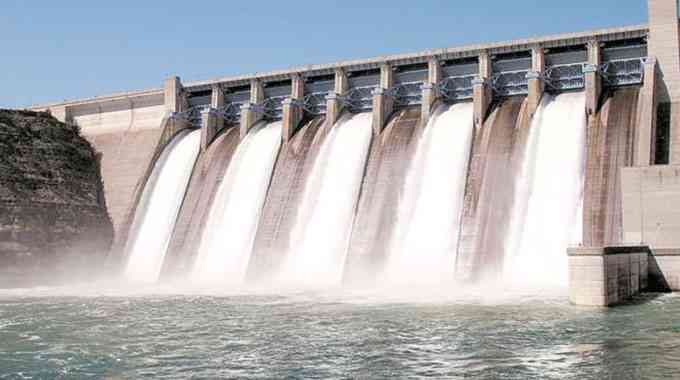
THE commissioning of the Wanezi Dam, Irrigation Scheme and Piped Water System in drought-prone Insiza district marks a shift in Zimbabwe’s approach to water infrastructure, with government insisting that dams must become engines of rural economic transformation rather than remain reservoirs for water storage.

Speaking during the official commissioning of the project recently, Agriculture, Mechanisation and Water Resources Development minister Anxious Masuka said the multi-million-dollar investment represented a practical demonstration of President Emmerson Mnangagwa’s vision of turning dams into centres of agricultural production, employment creation and community development.

“The dam must not be the end, but the means to transform rural livelihoods,” Masuka said.

The project, implemented under the Climate Adaptation Water and Energy Programme, was funded by the United Kingdom’s Foreign, Commonwealth and Development Office (FCDO) through the United Nations Development Programme (UNDP).

It combines water infrastructure, irrigation, renewable energy and climate adaptation interventions aimed at strengthening food security and livelihoods in one of Zimbabwe’s most drought-affected districts.

Destroyed by Cyclone Dineo in 2017, Masuka said the rehabilitation of Wanezi Dam came after government sought development partners to restore the critical infrastructure.

“When Wanezi Dam was breached by Cyclone Dineo, government looked for partners to redevelop the dam. We are pleased that UK Aid and UNDP came on board,” he said.

Beyond restoring the dam, the project has created a 30-hectare centre-pivot irrigation scheme benefiting 76 households, a seven-hectare drip irrigation scheme at Wanezi Secondary School, solar-powered piped water systems, a water treatment plant, 11 boreholes and an automatic weather station.

Masuka said the infrastructure would support year-round agricultural production, fisheries and provide potable water to more than 700 households, helping communities build resilience against increasingly frequent droughts.

The project reflects government’s broader irrigation development strategy, which seeks to reduce dependence on rain-fed agriculture as climate change continues to disrupt seasonal rainfall patterns.

UNDP resident representative in Zimbabwe, Ayodele Odusola, warned that climate projections point to a warmer and drier future for Zimbabwe, making investments such as Wanezi increasingly important.

“Climate change projections clearly show a warmer and drier future for Zimbabwe, with an increased likelihood of heat waves, greater rainfall variability and longer dry spells,” he said.

He said the country’s agriculture remained highly exposed because much of its production depended on rainfall.

“With the majority of the sector remaining rain-fed, it is highly vulnerable to climate-related disasters, with long-lasting effects on livelihoods, food and nutrition security, and the economy.”

According to UNDP, the irrigation scheme is already in its first production cycle, with 36 hectares planted under maize, sugar beans and chilli.

The current season is expected to produce about 119 tonnes of crops, generating projected sales of approximately US$65 600 and a gross margin of around US$27 000.

Odusola said market linkages had already been secured for farmers, including chilli export contracts to Germany and the United States, while beneficiaries had also received financial support, farming equipment and insurance cover to strengthen productivity and protect infrastructure.

Representing the British ambassador, head of strategy and engagement at the British Embassy, King Lartey, said the project demonstrated the importance of international partnerships in addressing the growing impacts of climate change.

“The project stands as a testament to what can be achieved when commitment, expertise and shared purpose come together,” he said.

Lartey said the rehabilitation had not only restored the dam but strengthened it to withstand future climate pressures.

Environment, Climate and Wildlife secretary Simon Masanga said climate change remained one of Zimbabwe’s biggest development challenges, pointing to extreme weather events such as Cyclone Dineo, which damaged Wanezi Dam, as evidence of the need to strengthen climate adaptation and long-term resilience.

The Wanezi project forms part of wider efforts by the government and development partners to improve water security, expand irrigation and build climate-resilient rural economies in vulnerable districts, as Zimbabwe seeks to transform dams from passive water reservoirs into productive assets that drive food security, incomes and sustainable rural development.

The post Govt positions dams as drivers of rural economic transformation  appeared first on Zimbabwe Situation.

Zanu PF’s constitutional changes: Implications for Zim’s democracy 

Source: Zanu PF’s constitutional changes: Implications for Zim’s democracy –Newsday Zimbabwe Emmerson Mnangagwa being sworn in as Zimbabwe’s President in Harare on September 4, 2023. The way the government of Zimbabwe went about the amendment of the constitution was clearly an infringement on the principles of democratic change of government, says the writer. IT was […]

The post Zanu PF’s constitutional changes: Implications for Zim’s democracy  appeared first on Zimbabwe Situation.

Source: Zanu PF’s constitutional changes: Implications for Zim’s democracy –Newsday Zimbabwe

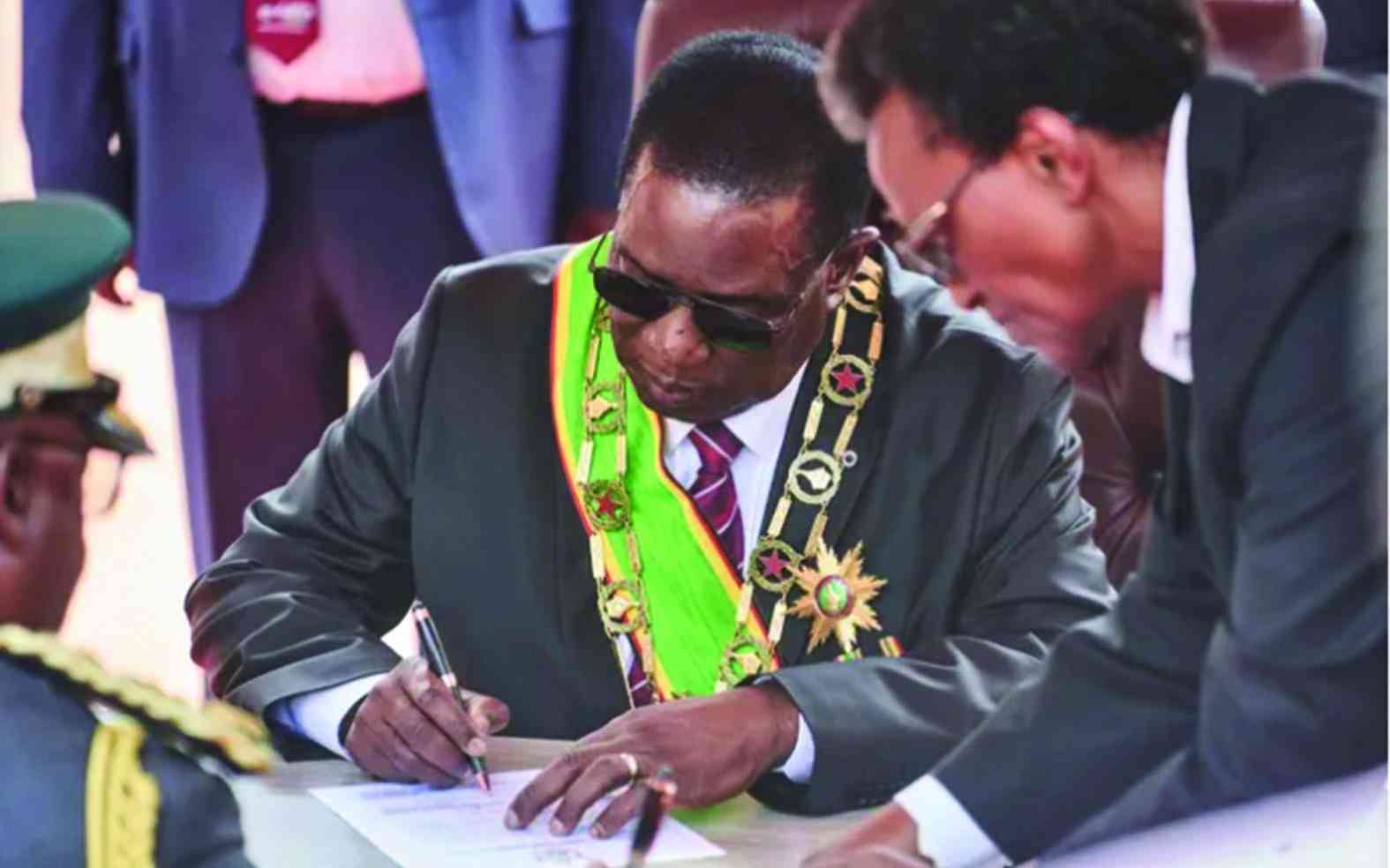
Emmerson Mnangagwa being sworn in as Zimbabwe’s President in Harare on September 4, 2023. The way the government of Zimbabwe went about the amendment of the constitution was clearly an infringement on the principles of democratic change of government, says the writer.

IT was during Zimbabwe’s ruling Zanu PF party’s annual conference in October 2024 that the intention to amend the country’s Constitution to pave the way for the extension of the presidential term from five years to seven years was first officially adopted by the party through the so-called conference resolution number 1.

The former liberation movement unanimously resolved that “the President and first secretary of Zanu PF Party, His Excellency, Cde. Dr E. D. Mnangagwa’s term of office as President of the Republic of Zimbabwe and first secretary of Zanu PF be extended beyond 2028 to 2030.

The party and government should, therefore, set in motion the necessary amendments to the national Constitution to give effect to this resolution.”

This was followed by a spirited campaign by President Emmerson Mnangagwa’s most ardent supporters to sell the resolution to the public and push the Zanu PF-led government to formally kickstart the process of amending the Constitution.

The argument was that the President needed more time to complete the national development projects his administration had started.

However, the Vice-President, Retired General Constantine Chiwenga’s conspicuous lack of endorsement of the constitutional amendment betrayed divisions within the ruling party over the 2024 conference resolution.

When the Bill to implement Zanu PF’s resolution was finally gazetted by the government as the Constitutional Amendment No 3 Bill of 2026 (CAB3), it outlined a raft of provisions amending various sections of the Constitution with far-reaching impact.

Among the amendment provisions are the transfer of responsibility for registering voters and compiling and maintaining the voters’ roll from the Zimbabwe Electoral Commission (Zec) to the Registrar-General.

Secondly, the Bill repealed section 92 of the Constitution to introduce a new method of electing the president.

It scraps the direct election of the president by voters, replacing it with the parliamentary method, where the president is elected by parliament in a joint sitting of the National Assembly and the Senate and must receive an absolute majority to win.

Thus, the amendment effectively switches Zimbabwe from a presidential to a parliamentary electoral system.

The two most controversial provisions amend sections 95 and 143 of the Constitution to extend the length of a presidential and parliamentary term, respectively, from the current five years to seven years.

This means that the current president and parliamentarians will continue their stay in office until 2030, instead of 2028.

These provisions effectively postpone the 2028 elections to 2030.

Other significant provisions include the expansion of the Senate from the current 80 members to 90 members, with the additional 10 being appointed by the President and the creation of the Zimbabwe Electoral Delimitation Commission, which will be responsible for the demarcation of parliamentary constituencies.

This function was previously exercised by the Zec.

It is important to note that public debate on the amendments was stifled by the government.

Individuals who came out to oppose the amendments were subjected to harassment by State agents.

For example, renowned academic and prominent government critic, Ibbo Mandaza, had his offices in Harare petrol-bombed in October 2025.

This was just before his office was meant to host prominent politicians, including Tendai Biti and Job Sikhala, in a news conference where they intended to announce a coalition to campaign against the proposed constitutional amendment.

Further, the government strenuously resisted calls for the CAB3 to go through a public referendum, arguing that a referendum was not a prerequisite for the amendment.

This was, quite rightly, widely interpreted as an attempt to evade democratic accountability.

After three months of the public consultation process, the Bill was submitted to Parliament for debate and vote.

On June 18, Zimbabwe’s National Assembly voted 216-42 in favour of the Bill and the Senate also overwhelmingly voted 75-5 in favour of the amendments on June 24.

This essentially means that the Bill has been passed and is awaiting the assent of its major beneficiary, Mnangagwa, before the amendments become effective.

Although the Bill can still be challenged in the courts of law, it is unlikely that the Zimbabwean Judiciary will act in any manner that undermines the ruling party.

As such, what is happening in Zimbabwe is a sad travesty of democracy.

The actions taken by the government constitute a violation of Article 23(5) of the 2007 African Charter on Democracy, Elections and Governance, which states that “any amendment or revision of the constitution or legal instruments, which is an infringement on the principles of democratic change of government” constitutes an unconstitutional change of government, which should invite sanctions from the African Union (AU).

The way the government of Zimbabwe went about the amendment of the Constitution was clearly an infringement on the principles of democratic change of government.

However, the AU has long overlooked dubious constitutional amendments that have happened in some of its member states, including Uganda, Djibouti, Togo and Rwanda, aimed at maintaining the incumbents in power.

Hence, it is unlikely that the continental body will hold Zimbabwe accountable for the flawed constitutional amendment process.

Without any effective pushback, this will soon become the norm on the continent, which will reverse the democratic gains that have been made thus far.

This development may also have far-reaching implications for Zimbabwean politics going forward.

This is because the constitutional amendment is reportedly being used as a succession battle tactic by Mnangagwa’s faction within Zanu PF against Chiwenga’s faction.

Chiwenga would have been the natural successor to Mnangagwa, who is serving his second and final term.

However, Mnangagwa’s faction is not convinced they will benefit from his presidency, hence they would prefer a different candidate.

A lot will now depend on the extent of Chiwenga’s influence both within the party and, most importantly, within the military, which will determine his faction’s response to this apparent setback.

Dr Sizo Nkala is a senior research fellow at the University of Johannesburg Centre for Africa-China Studies

The post Zanu PF’s constitutional changes: Implications for Zim’s democracy  appeared first on Zimbabwe Situation.

Silencing the Critics Within Zanu PF: The Secret Bloodbath Inside the Ruling Party

Harare – A palpable tension grips the corridors of power within Zimbabwe’s ruling Zanu PF party, as reports emerge of a clandestine purge targeting dissenting voices. At the heart of this unfolding drama is the controversial Constitution Amendmen…

Harare – A palpable tension grips the corridors of power within Zimbabwe’s ruling Zanu PF party, as reports emerge of a clandestine purge targeting dissenting voices. At the heart of this unfolding drama is the controversial Constitution Amendment Bill No. 3 (CAB3), a legislative initiative that has ignited a fierce, albeit hushed, internal struggle. The […]

The post Silencing the Critics Within Zanu PF: The Secret Bloodbath Inside the Ruling Party first appeared on My Zimbabwe News.

Ford rehires human engineers after AI fails to match quality checks

Ford says it has hired back some human engineers after AI failed to match their skills and experience. In a bid to reap the benefits of the tech, which developers claim can cut costs and boost productivity, the US carmaker adopted it across some parts of its operations including for quality checks. But, according to […]

The post Ford rehires human engineers after AI fails to match quality checks appeared first on The Zimbabwe Mail.

Ford says it has hired back some human engineers after AI failed to match their skills and experience.

In a bid to reap the benefits of the tech, which developers claim can cut costs and boost productivity, the US carmaker adopted it across some parts of its operations including for quality checks.

But, according to Bloomberg, external, its executives said the firm has rehired more than 300 “veteran” quality inspectors in recent years to make up for the pitfalls of automated systems.

“Artificial intelligence is a fantastic tool, but it’s only as good as the information you use to train it,” Charles Poon, vice president of vehicle hardware engineering, told reporters.

“Over prior years, we didn’t pay as much attention as we should have to the experience of our most knowledgeable engineers that have been with us through many product cycles,” he said.

The US automaker is among many to have seized on the buzz around AI, particularly amid Wall Street fervour about the tech’s potential to increase margins.

“AI will leave a lot of white collar people behind,” Ford boss Jim Farley said in an interview with author Walter Isaacson last June.

In an October earnings call, external, chief operating officer Kumar Galhotra said the firm was “deploying AI across the entire industrial system”.

This included rolling out 900 AI-powered cameras in its plants “to detect quality issues at the source and help us mitigate supply disruptions”, Galhotra told investors.

But Poon told reporters on Wednesday the firm’s AI-driven checks had failed to live up to expectations.

“Mistakenly, we thought that by just introducing artificial intelligence and ingesting the design requirements that we had, that would produce a high-quality product,” he said.

A Ford truck on a production line, passing through inspection checks, at a plant in Ohio. A female worker wearing a high-vis jacket looks on.
Image source,Bloomberg via Getty Images
Poon reportedly pointed to automated tools lacking the training and expertise of veteran technicians – many of whom he said had left the company before their knowledge could be used to improve its tech.

He said these human workers had since been reintroduced to train up its systems, as well as mentor younger workers.

“We recognised that for us to enhance some of our automation and machine learning and artificial intelligence tools we needed to ensure that they were trained by the most experienced individuals,” he said, per Bloomberg.

Ford’s admission of its AI failings came as it lauded its return to the top of an index used as an industry benchmark to measure vehicle quality.

It said it was the number one mainstream automaker in the US JD Power Initial Quality Study – a ranking it has not held since 2010.

In a press release, external marking the news, the company said “reaching best-in-class quality required a significant talent refresh”.

This involved replacing senior leaders across engineering, supply chain and manufacturing, it said, as well as hiring the roughly 300 veteran engineers “who carry the hard-earned wisdom of decades of design”.

Source: BBC

The post Ford rehires human engineers after AI fails to match quality checks appeared first on The Zimbabwe Mail.