Echoes of Mugabe: What Zimbabwe’s extension of presidential term limits means for President Mnangagwa 

By any measure, Zimbabwe has entered one of the most consequential political moments since the fall of former Source: Echoes of Mugabe: What Zimbabwe’s extension of presidential term limits means for President Mnangagwa – People Daily Chairperson of SADC Emmerson Dambudzo Mnangagwa. PHOTO/https://www.facebook.com/presidentmnangagwa By any measure, Zimbabwe has entered one of the most consequential political […]

The post Echoes of Mugabe: What Zimbabwe’s extension of presidential term limits means for President Mnangagwa  appeared first on Zimbabwe Situation.

By any measure, Zimbabwe has entered one of the most consequential political moments since the fall of former
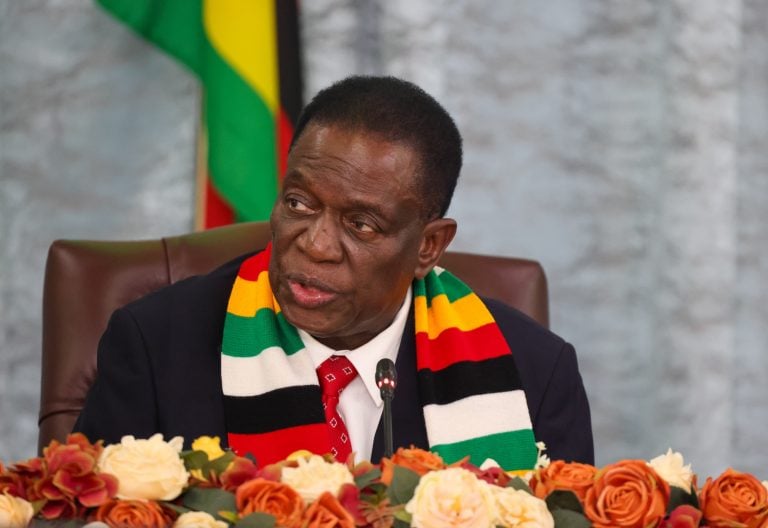
Source: Echoes of Mugabe: What Zimbabwe’s extension of presidential term limits means for President Mnangagwa – People Daily

Echoes of Mugabe: What Zimbabwe’s extension of presidential term limits means for President Mnangagwa
Chairperson of SADC Emmerson Dambudzo Mnangagwa. PHOTO/https://www.facebook.com/presidentmnangagwa

By any measure, Zimbabwe has entered one of the most consequential political moments since the fall of former President Robert Mugabe in 2017.

Nearly a decade after presenting himself as the leader who would usher in a new democratic era, President Emmerson Mnangagwa now finds himself at the centre of a constitutional change that critics say mirrors the very political culture Zimbabweans believed they had left behind.

This week, Zimbabwe’s National Assembly approved a controversial constitutional amendment that would extend presidential terms from five to seven years and postpone elections scheduled for 2028 until 2030. The proposal passed with the required two-thirds majority and is expected to sail through the Senate, where the ruling ZANU-PF party enjoys overwhelming control.

For many Zimbabweans, the development has triggered a sense of déjà vu.

The Mugabe comparison

When Mnangagwa assumed power following the military-backed removal of Mugabe in 2017, he marketed himself as a reformer. He promised economic revival, democratic reforms, international re-engagement, and a break from decades of authoritarian politics.

Those promises generated optimism both inside and outside Zimbabwe.

Yet nearly nine years later, the country appears to be confronting a familiar pattern: constitutional engineering designed to keep an incumbent leader in power longer than originally envisaged.

The symbolism is difficult to miss.

Mugabe spent decades altering political institutions to consolidate power. Today, Mnangagwa, once Mugabe’s loyal lieutenant, is facing accusations of pursuing a similar path.
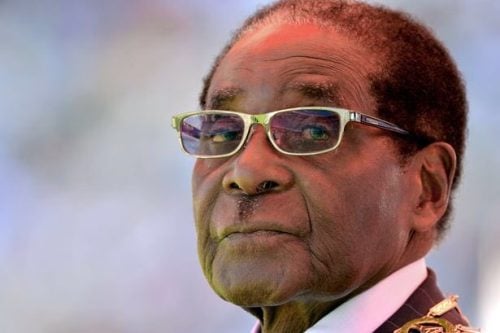
The late former President of Zimbabwe, Robert Mugabe.PHOTO/@DeptCommsZW/X

The irony is particularly striking given that the 2013 Constitution was specifically designed to prevent the concentration of power that characterised the Mugabe era.

A fundamental shift in democracy

The proposed changes are not merely about adding two years to Mnangagwa’s tenure.

Perhaps more significantly, the amendments would replace direct presidential elections with a system in which lawmakers elect the president. Critics argue that such a move fundamentally alters the relationship between citizens and the presidency.

In practical terms, it would mean Zimbabweans no longer directly choose their head of state.

Instead, Parliament, dominated by ZANU-PF, would effectively control presidential succession.
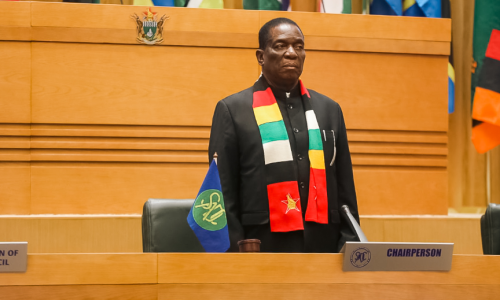
SADC chairperson and Zimbabwe President Emmerson Mnangagwa during the summit on Friday, January 31, 2025. PHOTO/edmnangagwa/X
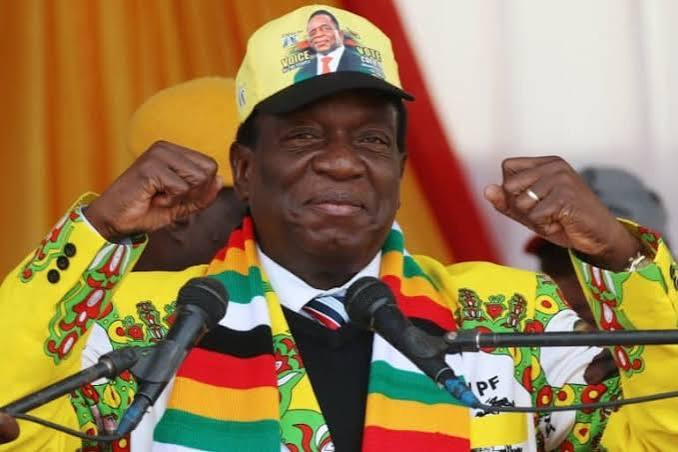
Zimbabwe President Emmerson Mnangagwa during a past event.PHOTO/edmnangagwa/X

Supporters argue the reforms will promote stability, reduce election-related tensions, and allow long-term economic planning.

Critics see something else entirely: the institutionalisation of one-party dominance.

Troubling African trend

Zimbabwe’s developments are not occurring in isolation.

Across parts of Africa, constitutional amendments have increasingly become tools for extending political power. The continent has witnessed multiple leaders alter term limits, extend mandates, or redesign electoral systems in ways that favour incumbents.

The result is often the same.

Constitutions cease to function as restraints on power and instead become instruments through which power is preserved.

Zimbabwe risks joining that list more visibly than ever before.

Since taking office, Mnangagwa has overseen periods of severe inflation, currency instability, investor uncertainty and persistent debt challenges, despite occasional signs of stabilisation.

The central question therefore remains unanswered:

Is Zimbabwe extending a presidency because reforms require more time, or because political elites wish to avoid the uncertainty of competitive elections?

That distinction matters.

What happens next?

The Senate is expected to consider the legislation soon, and given ZANU-PF’s parliamentary dominance, passage appears likely.

If enacted, the amendments could reshape Zimbabwean politics for years to come.

But the bigger issue extends beyond Mnangagwa himself.

The debate is ultimately about whether constitutions should serve citizens or incumbents.

History shows that democratic institutions are often weakened gradually rather than suddenly. A term extension here, an electoral adjustment there, and eventually the rules cease to constrain power altogether.

The post Echoes of Mugabe: What Zimbabwe’s extension of presidential term limits means for President Mnangagwa  appeared first on Zimbabwe Situation.
Mugabe’s strongman faces a coup of his own in Zimbabwe

Source: Mugabe’s strongman faces a coup of his own in Zimbabwe –Newsday Zimbabwe When President Emmerson Mnangagwa came to power in the 2017 coup that toppled Robert Mugabe, celebrations on the streets of Harare were matched by relief in chancelleries from London to Beijing. The man known as “The Crocodile” may have had a terrifying […]

The post Mugabe’s strongman faces a coup of his own in Zimbabwe appeared first on Zimbabwe Situation.

Source: Mugabe’s strongman faces a coup of his own in Zimbabwe –Newsday Zimbabwe

When President Emmerson Mnangagwa came to power in the 2017 coup that toppled Robert Mugabe, celebrations on the streets of Harare were matched by relief in chancelleries from London to Beijing.

The man known as “The Crocodile” may have had a terrifying past, but he was seen as a pragmatist.

Mnangagwa’s efforts to re-engage with the West have comprehensively failed, however.

Living up to his moniker more often than not, the Zimbabwean president, 83, has spent the past eight years consolidating his power with ruthless efficiency and is now seeking to extend it, plotting a constitutional overhaul that could theoretically keep him in office until he is 101.

The proposal has caused such disquiet – even among elements of the military hierarchy that swept him to power – that some are now openly suggesting he could suffer the same fate as Mugabe.

Those warnings are emanating from within the ruling establishment itself. A dissident security faction has emerged within the Zanu PF ruling party, led by Air Vice-Mshl Henry Muchena, a retired senior air force officer.

Its largely anonymous members – retired generals, civil servants and self-styled veterans of the liberation war – have submitted a petition demanding a referendum on proposals to extend the president’s rule beyond 2028, when he was set to stand down.

Air Vice-Mshl Muchena, using language strikingly similar to that deployed against Mugabe, insists he remains loyal – but to the Zimbabwean people rather than their president.

Keep Reading

He also issued an ominous warning should Mnangagwa refuse demands for a referendum on the proposed reforms.

“The electorate is watching,” he told The Telegraph. “History is watching. Every Zimbabwean will remember those who chose personal enrichment over constitutional duty. We warn: do not betray the people.”

Given the rarity – and danger – of criticism from within the regime, Mr Mnangagwa has been forced twice in recent weeks into crisis talks with Muchena.

“Regrettably, the two meetings failed to produce any results,” Muchena told The Telegraph, saying the president had treated his concerns with “contempt”.

The showdown carries clear echoes of the coup that ousted Mugabe in November 2017.

The generals behind it insisted they were not carrying out a coup at all, but defending the constitution and purging the “corrupt elite” surrounding the former president.

Muchena’s group has likewise directed criticism at a trio of influential tycoons around the president, accusing them of bankrolling attempts to prolong his rule, with MPs allegedly receiving cash payouts and luxury vehicles in exchange for their support, claims dismissed by Zanu-PF leaders as “factional malice”.

Others on the fringes of the movement are more explicit still.

Jealousy Mawarire, an activist with close ties to Mugabe loyalists who fled Zimbabwe after the coup and who now advises Muchena’s group, said: “We have seen this kind of intransigence before from a sitting president whose colleagues are warning him against being captured by people whose chief interest is to loot the national coffers.

“So, there is a strong possibility that history repeats itself. If it does, President Mnangagwa will have no one to blame but himself.”

On Thursday, the lower house of Zimbabwe’s pliant Parliament overwhelmingly adopted a reform bill, known in Zimbabwe as CAB3, that would initially extend Mnangagwa’s second – and supposedly final – term to 2030.

The bill now moves to the upper house of parliament, where it is also expected to sail through as Mnangagwa’s governing Zanu PF party controls it.

His opponents fear the two-year extension would merely be the first step. The new provisions would replace direct presidential elections with a parliamentary vote, leaving Mnangagwa’s political future in the hands of MPs who have a track record of doing his bidding.

The reforms would also extend presidential and parliamentary terms from five to seven years.

Elsewhere in Africa, leaders have argued that constitutional changes automatically reset presidential term limits. Some Zimbabweans, therefore, suspect that Mnangagwa is seeking not merely another two years in office, but an additional 16.

Given that the president is 83, many see echoes of Mugabe’s ambition to remain in power “until God says ‘come, join the other angels’”.

Given the ruthlessness with which Mnangagwa has consolidated power in recent years, the greatest threat to his ambitions is likely to come from inside the ruling establishment.

Zanu-PF, which has governed uninterrupted since independence from Britain in 1980, only scraped a narrow victory in the 2023 election after a poll that international observers said was marred by intimidation and widespread irregularities.

However, the party now commands an effective two-thirds majority – enough to rewrite the constitution – after an obscure political operative, Sengezo Tshabangu, seized control of the main opposition party with judicial backing.

Tshabangu expelled MPs who resisted his authority and replaced them with loyalists after a series of controversial by-elections in which genuine opposition figures were barred from standing.

Efforts by veteran opposition leader Tendai Biti to forge a coalition capable of resisting CAB3 have made little impression. He said he and others had been beaten, arrested and stripped of their businesses, while rallies had been ruthlessly suppressed. Speaking by telephone from Harare, Mr Biti insisted the struggle would continue.

“The bill is a coup against the people and constitution of Zimbabwe,” he said. “It will push our country to the precipice of a violent implosion.”

Yet it is not only the democratic opposition that has been weakened.  Mnangagwa – who insists CAB3 is a necessary structural reform to counter populism and ethnic division – has also moved against the once powerful coterie surrounding Grace Mugabe, the former president’s widow and would-be successor.

Saviour Kasukuwere, Zanu-PF’s once-feared political commissar and de facto leader of the G40 faction, denounced the president from exile in South Africa. “Mnangagwa has started down a very dangerous road,” he said. “This could lead to very tragic consequences if he is not careful.”

Yet  Kasukuwere cuts a lonely figure these days.

Grace Mugabe – whom  Mnangagwa once accused of lacing his ice cream with poison – has largely retreated into seclusion amid reports that she has cut a deal with the president to preserve her wealth and shield her from extradition to South Africa.

Meanwhile, Jonathan Moyo, long regarded as the intellectual architect of the G40 faction, has defected to   Mnangagwa’s camp, emerging as one of CAB3’s most vocal defenders.

Despite presenting himself as a defender of constitutional order, Muchena – who had never previously spoken out – is not widely regarded as a democrat.

Analysts suspect he is acting as the operational face of Constantino Chiwenga, the country’s vice-president.

Chiwenga is widely believed to harbour a grudge. As chief of the armed forces in 2017, he was seen as the principal instigator of the coup against Mugabe.

But analysts say he was unable to take power directly, both to preserve the fiction that the intervention was not a coup and to avoid Zimbabwe’s exclusion from the African Union and regional bodies.

Instead, he became vice-president, reportedly on the understanding that he would eventually succeed Mnangagwa – a prospect that now appears increasingly remote, turning Chiwenga into an ardent constitutionalist.

Over the past eight years, the president has steadily weakened his deputy by dismantling the military network behind the 2017 coup, retiring senior officers or dispatching them to distant embassies.

He has also sidelined members of Chiwenga’s family, while promoting his own relatives.

A final showdown between president and deputy therefore looms. Whether Chiwenga still commands meaningful support within the armed forces – or is relying on a handful of retired officers willing to fight on his behalf – remains unclear.

For now, however, he is avoiding direct confrontation, preferring instead to deliver sermons in church about Hezekiah, the Old Testament king who persuaded God to extend his life by 15 years only to bring disaster upon Judah.

There is a significant difference, however, between prophesying downfall and engineering it.

For the moment, the Crocodile is still smiling. – Telegraph

The post Mugabe’s strongman faces a coup of his own in Zimbabwe appeared first on Zimbabwe Situation.
We can’t blame colonialism for injustices that existed long before Rhodes arrived in Africa

Source: We can’t blame colonialism for injustices that existed long before Rhodes arrived in Africa Only the truth will set us free. Tendai Ruben Mbofana The narrative that Africa’s current socio-economic paralysis and deep-seated inequalities are merely the residual scars of European colonial conquest has become a convenient, comforting myth. If you value my social […]

The post We can’t blame colonialism for injustices that existed long before Rhodes arrived in Africa appeared first on Zimbabwe Situation.
Source: We can’t blame colonialism for injustices that existed long before Rhodes arrived in Africa

Only the truth will set us free.

Tendai Ruben Mbofana

The narrative that Africa’s current socio-economic paralysis and deep-seated inequalities are merely the residual scars of European colonial conquest has become a convenient, comforting myth.

If you value my social justice advocacy and writing, please consider a financial contribution to keep it going. Contact me on WhatsApp: +263 715 667 700 or Email: mbofana.tendairuben73@gmail.com

It is a shield used by contemporary ruling elites to deflect accountability, and a crutch for a society reluctant to confront its own historical flaws.

For decades, the prevailing discourse in Zimbabwe and across the continent has conditioned us to believe that before the standard of the British South Africa Company was raised, or before the Berlin Conference carved up the land, our societies existed in a state of unblemished harmony, egalitarianism, and communal bliss.

This romanticized view of history is not only factually inaccurate, but it also actively cripples our ability to solve the governance crises of today.

To truly understand the suffering of the ordinary citizenry, both during the colonial era and in our current post-independence reality, we must have the courage to expose a painful truth: the structural subjugation, economic exploitation, and political marginalization of the masses were firmly entrenched long before the first white settler set foot on our soil.

To claim that colonialism introduced inequality to Zimbabwe is to completely erase the complex, highly stratified realities of our pre-colonial empires.

The magnificent drystone walls of Great Zimbabwe, Khami, and Danamombe stand today as monuments to incredible architectural and engineering genius, but they also serve as stark, undeniable evidence of an entrenched class system.

The ruling elites and the royal dynasties lived in absolute luxury atop these hills, surrounded by immense wealth measured in thousands of cattle and imported treasures like Chinese porcelain and Indian glass beads.

Meanwhile, the ordinary peasantry—the forgotten backbone of these empires—toiled in the valleys below, living in mud-and-thatch huts and bearing the heavy burden of sustaining the aristocracy.

This was not a system of shared wealth.

It was a well-oiled machine of economic extraction where the common people were forced to pay heavy tribute in the form of grain, livestock, gold, and ivory just to secure the favor of the monarch.

Failure to comply did not result in a gentle reprimand; it meant the brutal confiscation of assets, destruction of livelihoods, or physical elimination.

The subjugation of the ordinary person by those in power is an indigenous tradition, not an imported western concept.

Even the horrors of the slave trade were fueled by powerful African kingdoms enslaving their own continental peers for profit.

When the white man arrived on the coast, he did not invent captivity; he merely took advantage of, and commercialized, an exploitative system that we had already created.

Furthermore, the romantic concept of pre-colonial peace ignores the brutal nature of state-building, military expansion, and inter-ethnic conflict that characterized our past.

The transition from the Mutapa Empire to the Rozvi State, and the later 19th-century migration of the Ndebele under Mzilikazi, were defined by military conquest, displacement, and systemic raiding.

The Ndebele state operated on a highly centralized, militarized regimental system where cattle and grain were routinely seized from surrounding Shona communities through violent raids.

Entire populations were subjugated and forced into lower social tiers within the kingdom, creating a multi-tiered society where one’s ethnic background and proximity to military power determined their worth and security.

When European colonizers arrived, they did not invent the concept of divide-and-rule, nor did they introduce the concept of using brute force to dominate a population.

They merely hijacked, modernized, and intensified oppressive tools that were already scattered across the political landscape.

Treating colonialism as the sole origin of all human suffering in Africa is a dangerous form of historical amnesia.

When we pretend that our ancestors knew no injustice until 1890, we create a false baseline for what independence should look like.

We trick ourselves into believing that simply removing the foreign oppressor would automatically result in justice, fairness, and equality.

By refusing to acknowledge that tyranny and exploitation are home-grown human flaws rather than uniquely European traits, we have allowed our post-independence leaders to inherit the very same oppressive thrones of both the colonial governors and the pre-colonial kings.

Today, ordinary Zimbabweans look at their leaders and see the exact same patterns of behavior that burdened their ancestors centuries ago.

We see a tiny, predatory ruling class hoarding national resources, flaunting immense wealth, and living in gated fortresses, while the masses are told to endure poverty as a badge of patriotic resilience.

When citizens complain about poor governance, collapsing infrastructure, or human rights abuses, the state immediately points an accusing finger at the ghost of colonialism, using the trauma of the past to sanitize the corruption of the present.

It is time to end this lazy, regressive habit of making excuses for our own failures.

The stagnation of our nation today is not the fault of Cecil John Rhodes; it is the fault of a contemporary leadership that chooses to mimic the worst traits of both our colonial and pre-colonial oppressors.

We cannot build a prosperous, democratic future on a foundation of historical lies.

Exposing the pre-colonial roots of inequality is not an act of betrayal; it is an act of liberation.

It forces us to realize that the struggle for true human dignity is not a racial war against foreign invaders, but a perpetual battle against the abuse of power by whoever holds it.

Until we stop using colonialism as an all-purpose alibi for bad governance, we will remain trapped in a cycle of suffering, forever ruled by elites who use the pain of yesterday to justify the injustices of today.

As much as it is paramount to look back into our history to understand the present, the ultimate question remains: how far back are we truly prepared to look?

If we only look back far enough to find a foreign scapegoat, then we are not seeking historical truth—we are merely seeking an excuse.

The post We can’t blame colonialism for injustices that existed long before Rhodes arrived in Africa appeared first on Zimbabwe Situation.

CAB 3 coup proofing clause divides MPs 

Source: CAB 3 coup proofing clause divides MPs -Newsday Zimbabwe THE atmosphere in the National Assembly on the night of June 17 felt more like a high-stakes legal thriller than a routine legislative session. As the clock neared midnight, lawmakers were locked in a fierce linguistic war over clause 16 (now clause 20) of the […]

The post CAB 3 coup proofing clause divides MPs  appeared first on Zimbabwe Situation.

Source: CAB 3 coup proofing clause divides MPs -Newsday Zimbabwe

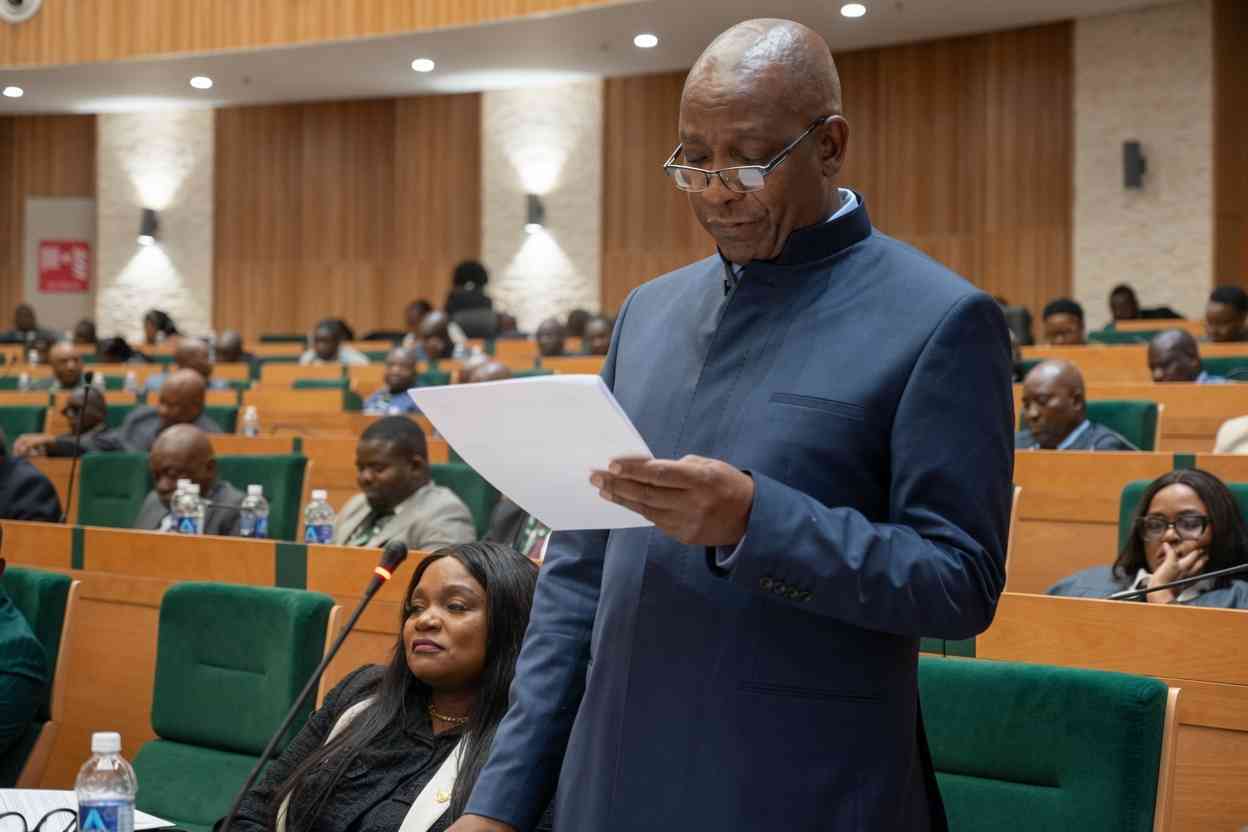
THE atmosphere in the National Assembly on the night of June 17 felt more like a high-stakes legal thriller than a routine legislative session.

As the clock neared midnight, lawmakers were locked in a fierce linguistic war over clause 16 (now clause 20) of the Constitution Amendment (No 3) Bill.

At its heart was a fundamental question that has haunted Zimbabwe for years: Should the military be an independent “guardian” of the State or merely a follower of Executive orders?

The original text of the Bill sought to repeal section 212 of the Constitution, which requires the Zimbabwe Defence Forces to “uphold the Constitution”.

The government initially proposed replacing this with a requirement that the military simply “act in accordance with” the law.

Opposition MPs immediately flagged this as a dangerous retreat.

Citizens Coalition for Change (CCC) MP for Bulawayo North Minenhle Gumede argued that “uphold” carried far heavier weight than mere compliance.

“The current term… imposes a positive constitutional duty,” she argued.

“Parliament should prefer stronger constitutional language rather than a weaker language.”

Dzivarasekwa MP Edwin Mushoriwa (CCC) echoed similar sentiments, defining “uphold” as the proactive duty to “defend, protect and preserve” the supreme law.

The debate was inseparable from the legacy of the 2017 military intervention known as Operation Restore Legacy that led to the toppling of long-time ruler Robert Mugabe, who was replaced by President Emmerson Mnangagwa.

Hatcliffe MP Agency Gumbo (CCC) reminded the House that the High Court previously ruled that Operation Restore Legacy was legal precisely because the military was fulfilling its duty to “uphold the Constitution” from being usurped by “criminals around the President”.

“The court recognised that the military… have a right and obligation to play the role of guardian of the said Constitution,” Gumbo said.

He said the government by trying to delete this word, had made a calculated attempt at “coup-proofing” the presidency.

Justice, Legal and Parliamentary Affairs minister Ziyambi Ziyambi dismissed the fears as “slogans”.

He argued that the current wording created “textual ambiguity”.

Attorney-General Virginia Mabhiza buttressed this, stating bluntly that “the phrase ‘upholding the Constitution’ is unnecessary and it is part of the legal scrubbing that we remove it”.

Ziyambi maintained that the goal was to ensure that “no reading of our supreme law can place any institution above it or beside it with a parallel mandate of its own”.

Zanu PF’s Energy Mutodi provided the most candid justification.

Mutodi argued that in a new system where Parliament — not the people — elects the President, the military must be barred from acting as an independent judge.

“This clause specifically is supposed to remove the guardianship role, the guardianship loophole,” he declared.

“If Parliament and the Executive disagree, who does the military uphold?”

In a dramatic twist just before the House resumed at 10:45pm, Ziyambi was in a surprising U-turn.

Sensing the depth of the opposition’s resistance, he withdrew the plan to delete “uphold” and offered a compromise.

The new version of clause 20 restores the duty to “uphold the Constitution”, but adds a crucial legal leash.

The mandate now reads that the function of the defence forces is to protect Zimbabwe and uphold the Constitution, but this is now “subject to sections 207 and 208”.

Ziyambi explained the move by pointing to section 207(2), which explicitly states that “the security forces are subject to the authority of this Constitution, the President and Cabinet”.

By tethering the word “uphold” to these sections, the government has legally ensured that the barracks can only protect the law while remaining under the total command of the Executive.

For critical observers, this “victory” for the opposition — keeping the word “uphold” — is more symbolic than practical.

By making the duty to protect the state “subject to” the authority of the President and Cabinet, the “power of the sword” has been firmly returned to its scabbard.

As the House adjourned at 11:31pm, the legal reality was clear: the era of the military as an independent “guardian” is being legislated out of existence.

Under CAB 3, the barracks are being effectively “tamed”, and the President will hold both the handle and the key to the country’s security apparatus.

Last year, Mnangagwa’s loyalists led by Ziyambi accused Vice-President Constantino Chiwenga of attempting to “undermine a constitutionally-elected government” and “incite despondency” after the former army commander tabled a damning dossier before the Zanu PF politburo.

In the dossier, Chiwenga accused Mnangagwa of presiding over “corruption, State capture and betrayal” of the ideals of the coup against Mugabe.

At the time, Ziyambi accused the VP of advocating for the “unlawful removal of a constitutionally-elected President”.

CAB 3 is seen as an instrument being used by Mnangagwa’s loyalists to remove Chiwenga from the succession equation and weaken the ability of the military to stage a coup.

The post CAB 3 coup proofing clause divides MPs  appeared first on Zimbabwe Situation.

MPs demand law overhaul as elderly ‘left to suffer’ 

Source: MPs demand law overhaul as elderly ‘left to suffer’ -Newsday Zimbabwe A PARLIAMENTARY committee has made an urgent call for legal and policy reforms to improve the welfare of the country’s senior citizens, pensioners and retired professionals, warning that existing laws are fragmented and inadequate. The joint portfolio committee on public service, labour and […]

The post MPs demand law overhaul as elderly ‘left to suffer’  appeared first on Zimbabwe Situation.

Source: MPs demand law overhaul as elderly ‘left to suffer’ -Newsday Zimbabwe

A PARLIAMENTARY committee has made an urgent call for legal and policy reforms to improve the welfare of the country’s senior citizens, pensioners and retired professionals, warning that existing laws are fragmented and inadequate.

The joint portfolio committee on public service, labour and social welfare alongside the thematic committee on human rights, made the recommendations following a petition by the Power of Touch Institution.


The petitioners urged legislators to review laws catering for the welfare of older persons and facilitate the enactment of a comprehensive Senior Citizens, Pensioners and Retired Professionals Act.

According to the committee’s report, many elderly Zimbabweans continue to face widespread hardship, including poverty, inadequate income security, poor access to healthcare and weak institutional protection.

The petitioners described a grim reality of elderly citizens suffering in silence.

“There is widespread hardship among older persons in Zimbabwe, manifesting in poverty, inadequate income security, constrained access to health services, loss of dignity at public service points and weak institutional protection,” the report read.


The committee acknowledged that while several laws and policies address issues affecting older persons, they remain incomplete and scattered across different statutes.

It noted that the definition of “older person” itself remains contested and requires careful policy consideration, including differentiation between senior citizens, pensioners and retired professionals where appropriate.

Keep Reading

The committee highlighted that the country’s social protection measures are neither universal nor sufficient to meet the scale of vulnerability described by the petitioners.


Inflation, currency instability and rising healthcare costs continue to erode whatever assistance is available, leaving many elderly citizens trapped in a cycle of poverty.

On healthcare, the committee identified a significant gap among legal entitlement, policy aspiration and the lived reality of older persons.

“Even where a scheme exists, inadequate awareness, limited fiscal support, administrative bottlenecks and pressures within public health institutions can undermine effective access,” it said.

The report raised concern about the poor treatment of older persons at public service points, where many are subjected to indignity and neglect.

In response to the findings, the committee made several key recommendations.

It urged the Public Service, Labour and Social Welfare ministry to expedite the review of the Older Persons Act and related legislation by December 2026.

Treasury has been called upon to increase funding for the Older Persons Fund and other social protection programmes in the 2027 national budget.

The post MPs demand law overhaul as elderly ‘left to suffer’  appeared first on Zimbabwe Situation.