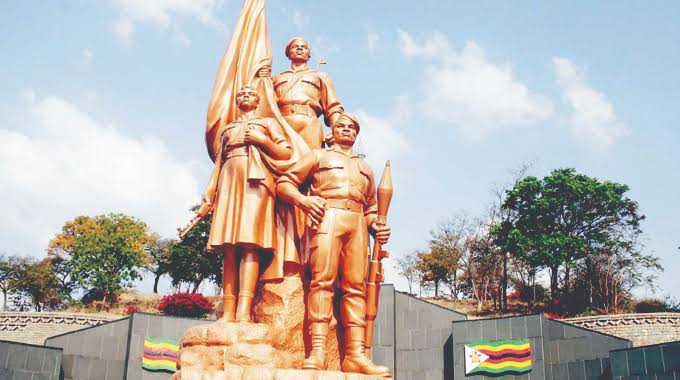
MPs demand law overhaul as elderly ‘left to suffer’ 

Source: MPs demand law overhaul as elderly ‘left to suffer’ -Newsday Zimbabwe A PARLIAMENTARY committee has made an urgent call for legal and policy reforms to improve the welfare of the country’s senior citizens, pensioners and retired professionals, warning that existing laws are fragmented and inadequate. The joint portfolio committee on public service, labour and […]

The post MPs demand law overhaul as elderly ‘left to suffer’  appeared first on Zimbabwe Situation.

Source: MPs demand law overhaul as elderly ‘left to suffer’ -Newsday Zimbabwe

A PARLIAMENTARY committee has made an urgent call for legal and policy reforms to improve the welfare of the country’s senior citizens, pensioners and retired professionals, warning that existing laws are fragmented and inadequate.

The joint portfolio committee on public service, labour and social welfare alongside the thematic committee on human rights, made the recommendations following a petition by the Power of Touch Institution.


The petitioners urged legislators to review laws catering for the welfare of older persons and facilitate the enactment of a comprehensive Senior Citizens, Pensioners and Retired Professionals Act.

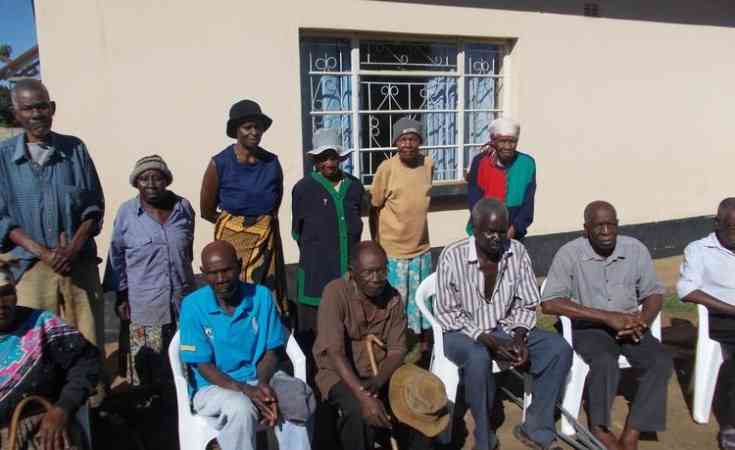
According to the committee’s report, many elderly Zimbabweans continue to face widespread hardship, including poverty, inadequate income security, poor access to healthcare and weak institutional protection.

The petitioners described a grim reality of elderly citizens suffering in silence.

“There is widespread hardship among older persons in Zimbabwe, manifesting in poverty, inadequate income security, constrained access to health services, loss of dignity at public service points and weak institutional protection,” the report read.


The committee acknowledged that while several laws and policies address issues affecting older persons, they remain incomplete and scattered across different statutes.

It noted that the definition of “older person” itself remains contested and requires careful policy consideration, including differentiation between senior citizens, pensioners and retired professionals where appropriate.

Keep Reading

The committee highlighted that the country’s social protection measures are neither universal nor sufficient to meet the scale of vulnerability described by the petitioners.


Inflation, currency instability and rising healthcare costs continue to erode whatever assistance is available, leaving many elderly citizens trapped in a cycle of poverty.

On healthcare, the committee identified a significant gap among legal entitlement, policy aspiration and the lived reality of older persons.

“Even where a scheme exists, inadequate awareness, limited fiscal support, administrative bottlenecks and pressures within public health institutions can undermine effective access,” it said.

The report raised concern about the poor treatment of older persons at public service points, where many are subjected to indignity and neglect.

In response to the findings, the committee made several key recommendations.

It urged the Public Service, Labour and Social Welfare ministry to expedite the review of the Older Persons Act and related legislation by December 2026.

Treasury has been called upon to increase funding for the Older Persons Fund and other social protection programmes in the 2027 national budget.

The post MPs demand law overhaul as elderly ‘left to suffer’  appeared first on Zimbabwe Situation.

US$1,66bn irrigation drive to anchor dam-based industrialisation

Source: US$1,66bn irrigation drive to anchor dam-based industrialisation – herald Anxious Masuka Nqobile Bhebhe  Zimpapers Business Hub AGRICULTURAL stakeholders have welcomed the recently announced Government programme that seeks to leverage the country’s water infrastructure for irrigation. The programme has the potential to transform Zimbabwe’s rural economy by reducing dependence on rainfall and creating new agricultural […]

The post US$1,66bn irrigation drive to anchor dam-based industrialisation appeared first on Zimbabwe Situation.

Source: US$1,66bn irrigation drive to anchor dam-based industrialisation – herald
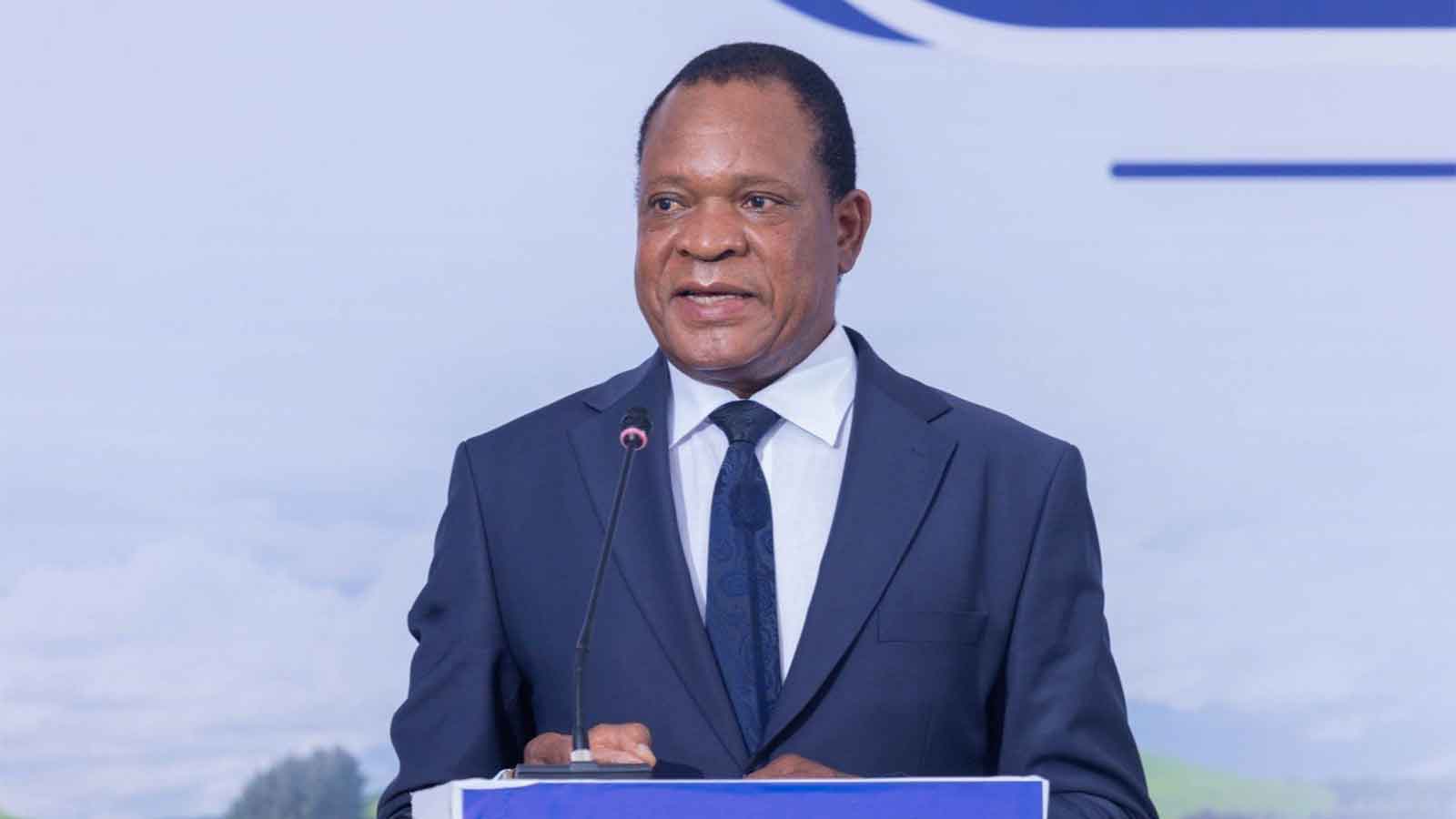
Nqobile Bhebhe 

Zimpapers Business Hub

AGRICULTURAL stakeholders have welcomed the recently announced Government programme that seeks to leverage the country’s water infrastructure for irrigation.

The programme has the potential to transform Zimbabwe’s rural economy by reducing dependence on rainfall and creating new agricultural value chains.

The initiative forms part of the broader “A dam is an economy” strategy, which seeks to harness Zimbabwe’s extensive water infrastructure to drive sustainable economic growth.

To fully realise its irrigation ambitions, the country requires an estimated US$1,66 billion to develop the remaining 237 227 hectares (ha) needed to attain the national target of 496 000ha under irrigation by 2030.

Mr Ntobeko Gumede, a farmer from Mtshabezi, Matabeleland South, where one of the earmarked dams is located, said the initiative would significantly strengthen the country’s food production systems.

“The expansion of irrigation infrastructure is critical in an era of climate change,” he said. “By developing productive economic zones around dams, the Government is creating conditions for year-round farming, increased productivity and greater participation by farmers in value-added agriculture.”

He said the programme could unlock investment opportunities across the agriculture sector.

“Reliable water supplies are often the missing link in agricultural investment,” he said. “If implemented effectively, these dam-based economic zones can attract capital into irrigation, agro-processing and export-oriented production while creating jobs in rural communities.

“Access to irrigation changes everything for communal and small-scale farmers. It improves productivity, strengthens food security and allows farmers to diversify into higher-value crops.

“The integration of irrigation with processing and marketing facilities will further improve incomes for rural households.”

Experts say the initiative reflects a shift from traditional infrastructure development towards integrated economic planning.

Mr Busani Malaba, a business strategist with ConsultWorld Enterprise, said the model was designed to maximise the economic value of water infrastructure.

“The Integrated Provincial Special Economic Zones (IP-SEZs) model is expected to unlock the full economic value of water infrastructure by creating production and industrial clusters around dams,” he said.

“Rather than focusing solely on irrigation, the model seeks to integrate agriculture, agro-processing, fisheries, tourism, mining, renewable energy generation and logistics into a single economic ecosystem.

“This approach is designed to maximise investment returns, create synergies between sectors and stimulate sustainable rural development.”

Agronomist Ms Rudo Makoni said the initiative could become a catalyst for investment and value addition in rural areas.

“By providing investors with ready access to water, land and supporting infrastructure, the dam-based special economic zones are expected to encourage the establishment of agro-processing plants, cold storage facilities, fish-processing ventures and renewable energy projects,” she said.

“This will help move rural communities from primary production to value addition and beneficiation, in line with the country’s industrialisation agenda.

“The integrated model is also expected to generate significant employment opportunities, while improving livelihoods in surrounding communities.

“Increased irrigation development will boost agricultural output and climate resilience, while the growth of tourism EZs, fisheries and agro-industries will create new income streams for local populations.”

For decades, the conversation around Zimbabwe’s dams has largely centred on water storage and irrigation. Today, that narrative is changing, as the Government moves to reposition the country’s water infrastructure as a catalyst for rural industrialisation, investment attraction and economic transformation.

From the vast Tugwi-Mukosi Dam in Masvingo to strategically located water bodies across the country’s rural provinces, dams are being earmarked to become SEZs capable of supporting agriculture, agro-processing, fisheries, tourism, renewable energy generation and other productive sectors.

The ambitious initiative aims to bring 78 159ha under irrigation while creating integrated economic ecosystems designed to unlock investment, generate employment and stimulate sustainable growth in rural communities.

Anchored in President Mnangagwa’s vision that “every dam must become an economy”, the programme will see dams evolve beyond their traditional role as water reservoirs to become integrated economic hubs supporting agriculture, agro-processing, fisheries, tourism, mining, renewable energy generation, potable water supply and logistics.

The strategy comes at a time when Zimbabwe is intensifying efforts to build climate resilience, enhance food security and achieve upper middle-income economy status by 2030.

According to a Government concept paper, an inter-ministerial and inter-agency technical task force has already been activated to oversee implementation, governance, monitoring and evaluation of the programme.

The task force draws membership from key institutions, including the Ministries of Agriculture, Mechanisation and Water Resources Development; Lands and Rural Development; Finance, Economic Development and Investment Promotion; Local Government and Public Works; and Energy and Power Development.

In a statement, Agriculture, Mechanisation and Water Resources Minister Dr Anxious Masuka said the Government was accelerating irrigation development and rural transformation through irrigation expansion.

“The President has directed that every dam must become an economy,” he said.

“The concept recognises that a dam must exist as an epicentre and driver of heightened agricultural production, new investment, expanded employment creation and a source of prosperity. It is in this context that the President hosted the ‘Accelerated Irrigation Development Conference’ in Harare on July 4, 2024.”

Zimbabwe has already recorded significant progress in irrigation development, increasing irrigated land from 171 000ha in 2020 to 258 773ha by May 2026 — representing a 51 percent increase, the fastest growth since independence.

The authorities acknowledge that considerable work remains to achieve the 2030 target.

The country will need to develop an average of 47 500ha annually over the next four years to reach the desired irrigation coverage.

The Government believes the dam-centred SEZ model, supported by climate-smart agriculture and improved agro-ecological planning, will play a critical role in closing the gap.

Under the framework, each rural province has identified five priority dams with substantial irrigation potential.

Masvingo province accounts for the largest proposed irrigation area at 38 433ha, anchored by Tugwi-Mukosi Dam, which alone has the potential to irrigate 20 600ha.

Mashonaland Central has identified projects covering 10 970ha, while Mashonaland West is targeting 8 322ha.

Manicaland has earmarked dams with a combined irrigation potential of 7 087ha, while Midlands province has identified projects covering 4 915ha.

Matabeleland North has a potential of 3 420ha, Matabeleland South 3 983ha, while Mashonaland East has identified opportunities covering 1 029ha.

The Government plans to undertake provincial investment road shows beginning July to showcase opportunities around the identified dams and attract private sector participation.

The post US$1,66bn irrigation drive to anchor dam-based industrialisation appeared first on Zimbabwe Situation.

Kombi inferno: DNA confirms identities of seven children 

Source: Kombi inferno: DNA confirms identities of seven children – herald Gweru district development coordinator Mr Tarisai Mudadigwa confirmed yesterday that all the necessary forensic processes had been completed. “The DNA and post-mortem results for the seven children who died in last week’s inferno (a fortnight ago) have now been finalised, confirming the identities of […]

The post Kombi inferno: DNA confirms identities of seven children  appeared first on Zimbabwe Situation.

Source: Kombi inferno: DNA confirms identities of seven children – herald

Patrick Chitumba-Midlands Bureau

FAMILIES of the seven children who recently perished in a horrific commuter omnibus fire in Gweru can now begin the painful process of laying their loved ones to rest after DNA and post-mortem results confirmed their identities.

The results, which were released yesterday, bring closure to grieving parents and relatives who have spent days waiting for scientific confirmation of the identities of the young victims, whose bodies were burnt beyond recognition in the inferno.

President Mnangagwa declared the tragedy a State of Disaster, underlining the magnitude of a calamity that has left the Midlands province and the nation in mourning.

Gweru district development coordinator Mr Tarisai Mudadigwa confirmed yesterday that all the necessary forensic processes had been completed.

“The DNA and post-mortem results for the seven children who died in last week’s inferno (a fortnight ago) have now been finalised, confirming the identities of all the victims and clearing the way for burial arrangements to begin tomorrow (today),” he said.  “The remains are now ready for collection and families are expected to start receiving their loved ones in preparation for the burial ceremonies scheduled across various parts of the district.”

To ease the burden on bereaved families, the Government has established a one-stop centre to facilitate the processing of burial orders and coordinate logistical arrangements associated with the funerals.

Mr Mudadigwa said the initiative was aimed at ensuring families receive timely assistance as they navigate one of the most difficult moments of their lives.

The tragic accident occurred on June 10, when a commuter omnibus transporting learners from Matongo Primary School, Senga Primary School, Stanley Primary School and Wendy’s ECD Centre caught fire after a container of fuel being carried in the vehicle ignited. The blaze quickly engulfed the vehicle, trapping some of the children inside. At the time of the accident, there were 32 learners on board. Twenty-five survived, most sustaining minor injuries, and are currently receiving psychosocial support.

Seven young learners, however, succumbed to severe burns sustained during the inferno. They are Alisha Loyo, a Grade One learner at Matongo Primary School; Peter Tambo, an ECD A learner at Matongo Primary School; Maengamhuru Thabo, a Grade One learner at Matongo Primary School; Kith Makarange, an ECD A learner at Matongo Primary School; Anotida Mawere, a Grade Two learner at Matongo Primary School; Faith Jangara, an ECD B learner at Senga Primary School; and Junior Albert Muchenamakumbo, an ECD B learner at Senga Primary School.

The tragedy has elicited an outpouring of grief and solidarity from across the country.

On Wednesday last week, First Lady Dr Auxillia Mnangagwa joined hundreds of mourners at a funeral ceremony held at the Gweru Sports Club, where she comforted bereaved families and paid tribute to the children. The First Lady, who always stands with communities in times of grief and need, comforted the bereaved families, offering words of encouragement during their time of sorrow. In a show of solidarity, she also led bereaved families and mourners in song and dance in tribute to the seven learners.

Mr Mudadigwa said Government’s support would not end with the burials, as families would continue to require emotional and psychological assistance.

“We will continue to offer our support to the grieving families after the burials, as they will require counselling and continuous support,” he said.

Mr Mudadigwa said a funeral service provider had been engaged to provide coffins and other logistical support to ensure the children receive dignified burials.

Meanwhile, the driver and conductor of the commuter omnibus remain in custody in connection with the tragedy.

Malcolm Elvis Cook (22) and Trinity Mudhenge (18) appeared before Gweru magistrate Ms Dione Chiroyi facing charges of culpable homicide. The two were remanded in custody up to June 23.

The post Kombi inferno: DNA confirms identities of seven children  appeared first on Zimbabwe Situation.

Harare man who promoted himself to Deputy Chief Justice gets two years behind bars

Source: Harare man who promoted himself to Deputy Chief Justice gets two years behind bars – herald Martin Rashai’s ambitious but brief stint as Zimbabwe’s second most senior judge has now ended with a two-year prison sentence after he was convicted of impersonating a peace officer. FOR reasons best known to himself, a 23-year-old Harare […]

The post Harare man who promoted himself to Deputy Chief Justice gets two years behind bars appeared first on Zimbabwe Situation.

Source: Harare man who promoted himself to Deputy Chief Justice gets two years behind bars – herald

FOR reasons best known to himself, a 23-year-old Harare man apparently looked at the country’s judicial hierarchy and decided that becoming Deputy Chief Justice Paddington Garwe was a perfectly reasonable career move.

Martin Rashai’s ambitious but brief stint as Zimbabwe’s second most senior judge has now ended with a two-year prison sentence after he was convicted of impersonating a peace officer.

Rashai’s downfall began when he allegedly used a mobile number registered in his own name to masquerade as Deputy Chief Justice Garwe and start quizzing Judicial Service Commission (JSC) human resources officials about recruitment interviews and vacant posts.

On May 5 this year, JSC deputy head of human resources Tafadzwa Sekeni and human resources officer Abigail Ziti received WhatsApp messages from a number identifying its owner as the Deputy Chief Justice.

The “Deputy Chief Justice” wanted to know when interviews for information technology (IT) officer positions would be conducted and also showed a surprising interest in a transport officer vacancy at the Kwekwe Magistrates’ Court.

Now, judges are known for many things, but personally chasing up junior staff vacancies through WhatsApp messages is not usually one of them. The unusual inquiries immediately raised eyebrows. The officials reportedly found it odd that a Constitutional Court judge would be so invested in the fate of an IT officer recruitment exercise and a transport officer post.

Undeterred, the mystery jurist continued the conversation. Seeking to verify who she was dealing with, Ms Ziti asked where he was stationed. The response came back: the Constitutional Court. Believing she was communicating with the Deputy Chief Justice, she provided some of the information requested.

But the cracks soon began to show.

When Ms Ziti attempted to call the number, it could not be reached. A subsequent WhatsApp call also went unanswered, with the sender insisting that all communication remain via text message. Still suspicious, she asked directly whether she was indeed chatting with Deputy Chief Justice Garwe.

The answer was an emphatic yes.

Further checks, however, revealed that no discussions about the vacancies had taken place and that the number being used did not match any of the Deputy Chief Justice’s official contact details on JSC records.

By May 7, it emerged that Mr Sekeni had also been contacted through the same number.

Internal inquiries quickly established that somebody, somewhere, had apparently decided to promote himself from ordinary job seeker to Deputy Chief Justice without first consulting the Constitution. The matter was reported to JSC Deputy Secretary Dr Kumbirai Katsande before being handed over to the police.

Investigators from CID Harare later discovered that Rashai had previously applied for employment with the JSC. Police obtained a warrant compelling NetOne to release subscriber information linked to the number allegedly used in the scheme. The records confirmed the number belonged to Rashai himself.

Detectives then tracked him down in Hurungwe and arrested him.

Armed with his contact details and residential information, detectives tracked him down in Hurungwe and arrested him.

And so ended a remarkable judicial career that lasted only a few WhatsApp messages, generated no judgements, created no legal precedents and culminated in a two-year prison sentence.

The post Harare man who promoted himself to Deputy Chief Justice gets two years behind bars appeared first on Zimbabwe Situation.

NEW: Major facelift for heroes’ acres ahead of August commemorations

Source: NEW: Major facelift for heroes’ acres ahead of August commemorations – herald Sunday Mail Reporter AT least 52 graves have been rehabilitated at the Harare Provincial Heroes Acre ahead of the Heroes Day commemorations in August, with more expected to be attended to in the coming weeks. Friends of Veterans of the Liberation Struggle […]

The post NEW: Major facelift for heroes’ acres ahead of August commemorations appeared first on Zimbabwe Situation.

Source: NEW: Major facelift for heroes’ acres ahead of August commemorations – herald

Sunday Mail Reporter
AT least 52 graves have been rehabilitated at the Harare Provincial Heroes Acre ahead of the Heroes Day commemorations in August, with more expected to be attended to in the coming weeks.
Friends of Veterans of the Liberation Struggle (FOVLS), an affiliate of the ruling ZANU PF party, is carrying out the work, which also includes plans to upgrade the Tomb of the Unknown Soldier and install a quarter guard for parade at the shrine.
The rehabilitation of liberation war heroes’ burial sites will be replicated at all provincial heroes’ acres across the country.
Speaking after inspecting the rehabilitation of some graves at Harare Provincial Heroes Acre this week, ZANU PF Secretary for War Veterans Cde Douglas Mahiya commended FOVLS for the work.
He called on patriotic Zimbabweans and the corporate world to support the organisation’s efforts, saying they go a long way in preserving the memory of the liberation struggle through the maintenance and beautification of resting places of liberation heroes.
“Let me speak about our vision for this burial site,” he said.
“There is a lot of work that needs to be done. We need to erect tombstones; there is need to erect the Tomb of the Unknown Soldier, we need to lay a lawn.
“But this should not be done on this shrine only; we want it to be replicated at all provincial centres where our heroes are buried. This means we need more help and we appeal to those who can come in to assist so that we get to all parts of the country.”
Cde Mahiya said by working on heroes’ burial sites, FOVLS was playing a key role in educating the public about virtues of the liberation struggle and its centrality to the country’s independence.
He also commended organisations such as Geo Pomona, Fumati Engineers, Mounting Investments and Victory Chanters International for consistently partnering with FOVLS in its programmes.
FOVLS chairperson Cde Wellington Charuka saluted Cde Mahiya for leading from the front by actively supporting the organisation’s work.
“We would like to thank Cde Mahiya for supporting this work, which we believe is important to preserve the legacy of our hard-fought liberation struggle,” he said.
“We are playing our part, and we hope through this work people, especially the young generation, will learn a lot about not only the liberation struggle, but also those who are buried at these shrines and the sacrifices they made to liberate the country.”
FOVLS Harare province chairperson and national spokesperson Cde Takemore Mazuruse said the organisation’s work was sacrosanct because it recognises the importance of liberation heroes, both living and departed, who played a significant role in liberating the country and laying the foundations of the nation.
Cde Mazuruse saluted the country’s leaders and war veterans for giving FOVLS the nod to honour the country’s heroes.
“We are grateful for the gesture of support we are receiving from everyone,” he said.
“As FOVLS, we want to thank Cde Mahiya, including the entire Harare Province War Veterans League led by their chairman Cde John Guta, as well as the party structures in Harare province, especially Warren Park and Highfield district, for their full participation.”
FOVLS is engaging partners and key stakeholders to mobilise additional resources towards the national initiative of rehabilitating, cleaning and landscaping heroes’ resting places while educating the public, particularly the younger generation, about the country’s liberation war history.
The organisation is registered as a private voluntary organisation and has been operating since 2022 with the full support of ZANU PF, the Ministry of War Veterans Affairs and the National Museums and Monuments of Zimbabwe, which oversees national shrines and monuments across the country.

The post NEW: Major facelift for heroes’ acres ahead of August commemorations appeared first on Zimbabwe Situation.