Tourism sector bets on domestic travel for recovery, growth

Source: Tourism sector bets on domestic travel for recovery, growth – herald Dr George Manyaya Michael Tome Business Reporter ZIMBABWE’S tourism sector is positioning domestic travel as a critical driver of recovery and long-term growth. The sector’s latest performance targets point to a positive outlook, with tourism receipts expected to rise to US$1,36 billion from […]

The post Tourism sector bets on domestic travel for recovery, growth appeared first on Zimbabwe Situation.

Source: Tourism sector bets on domestic travel for recovery, growth – herald

Michael Tome

Business Reporter

ZIMBABWE’S tourism sector is positioning domestic travel as a critical driver of recovery and long-term growth.

The sector’s latest performance targets point to a positive outlook, with tourism receipts expected to rise to US$1,36 billion from US$1,3 billion recorded in the previous year.

In the first quarter of 2026, domestic tourism strengthened, with trips rising to an estimated 2,62 million from 1,94 million, indicating improved local market participation.

Domestic tourism remains at the centre of the growth strategy, with the Government seeking to reduce the sector’s dependence on international arrivals, while building a stronger and more resilient local market.

Trips by domestic tourists are projected to increase to 15,7 million from 15,5 million recorded in the previous year. This reflects efforts to encourage Zimbabweans to explore local destinations and increase spending within the domestic tourism value chain.

International tourist arrivals are also expected to rise to 1,87 million from 1,78 million in the previous period, supported by destination marketing initiatives, improved tourism infrastructure and efforts to attract higher-value travellers.

The Zimbabwe Tourism Authority (ZTA) said strengthening domestic tourism remains a key priority as the country seeks to create a sustainable tourism ecosystem that benefits businesses and communities across the country.

Speaking on the sidelines of the ZTA annual general meeting last week, the authority’s chief executive officer, Dr George Manyaya, said although significant progress had been made in promoting local travel, more work was required to encourage Zimbabweans to fully appreciate and experience their own country.

He said the tourism sector had shifted its strategy by placing domestic travellers at the centre of growth, noting that a strong local tourism base would provide greater resilience against external shocks affecting global travel.

“Strengthening domestic tourism is central to building a resilient and sustainable tourism sector,” he said. “Increased local travel will drive revenue growth, support businesses across the value chain and create new opportunities for investment.

“As such, the ZTA has put measures in place to improve affordability, which is helping more Zimbabweans to participate in the tourism economy.

“Domestic tourism is fast becoming a key pillar of Zimbabwe’s tourism growth strategy, driving local spending, supporting businesses and strengthening the sector’s resilience.

“The industry is positioning itself for sustainable long-term growth by encouraging more Zimbabweans to explore local destinations, while we improve affordability and investment conditions.”

To support growth in local tourism, the ZTA has implemented measures aimed at improving affordability and easing the cost of doing business within the sector.

As it stands, the ZTA has reduced levies and fees for restaurants to US$150, a move aimed at creating a more enabling operating environment and allowing more Zimbabweans to access tourism services at affordable rates.

The strategy has also been supported by improved connectivity and infrastructure development, including initiatives to enhance air access and unlock tourism potential in destinations such as Manicaland province.

According to the ZTA, these initiatives are meant to improve accessibility and encourage longer stays by locals on vacation, increase domestic travel expenditure and expose more Zimbabweans to the country’s resorts, heritage sites and tourism attractions.

As part of efforts to reignite interest in local travel, the ZTA, in collaboration with the Ministry of Tourism and Hospitality, also launched the heritage campaign “Nhaka Yedu, Ilifa Lethu”, which seeks to encourage citizens to celebrate, preserve and promote Zimbabwe’s cultures, languages, arts and stories.

Ministry of Tourism and Hospitality Industry Permanent Secretary Dr Takaruza Munyanyiwa said growth in domestic tourism could create a multiplier effect across several sectors, including the hospitality, transport, retail and creative industries. “Growth in domestic tourism has the potential to generate a significant multiplier effect across the economy by stimulating demand in key supporting sectors, including hospitality, transport, retail and the creative industries,” he said.

He added that increased local travel would contribute to business growth, job creation and broader economic activity as more Zimbabweans spend within the local tourism ecosystem.

ZTA chairperson Mr Farai Chiimba said domestic tourism remained a critical pillar for sustainable sector growth, particularly amid uncertainties affecting international travel markets. “Our heritage is our greatest asset. We can only truly excel when we embrace and celebrate who we are as a people. This is key to unlocking our full potential,” said Mr Chiimba.

Beyond domestic travel, tourism investment is also expected to record modest growth. Projected investment value is expected to increase to US$196 million in 2026 from US$194 million in the previous year. In the first quarter of 2026, tourism investments registered a significant increase, jumping to US$67,8 million from US$12,6 million during the same period last year, representing a 438 percent increase.

In terms of arrivals in the first quarter, international tourist arrivals increased by 11 percent to 384 515 from 347 555 in 2025, while tourism receipts grew by 14 percent to US$251 million, up from US$221 million.

Arrivals from African markets also increased by 9 percent to 287 062 visitors from 263 687 recorded in the prior-year period.

The tourism sector continues to attract attention as one of Zimbabwe’s strategic economic industries, with Government and private sector players focusing on expanding accommodation capacity, improving infrastructure, enhancing connectivity and strengthening destination marketing.

The projected growth targets come as Zimbabwe positions tourism as a key contributor to economic development, foreign currency generation and employment creation.

Increased participation by local travellers will boost revenues for tourism operators and deepen appreciation of Zimbabwe’s cultural richness and natural assets.

The post Tourism sector bets on domestic travel for recovery, growth appeared first on Zimbabwe Situation.

Understanding the factors that influence dog behaviour

Dogs play an important role in households and communities across Zimbabwe and South Africa. News stories involving dogs often attract public attention and can raise questions about what influences canine behaviour. While individual incidents vary great…

Dogs play an important role in households and communities across Zimbabwe and South Africa. News stories involving dogs often attract public attention and can raise questions about what influences canine behaviour. While individual incidents vary greatly and should always be assessed on their own circumstances, animal welfare experts agree that dog behaviour is shaped by […]

The post Understanding the factors that influence dog behaviour first appeared on My Zimbabwe News.

Farmers plant highest-ever wheat hectarage, as record target is within reach

Source: Farmers plant highest-ever wheat hectarage, as record target is within reach – herald Permanent Secretary in the Ministry of Agriculture, Mechanisation and Water Resources Development Professor Obert Jiri said the country had moved into a new phase where priority was maximising output from every hectare planted. “The good news is that we have surpassed […]

The post Farmers plant highest-ever wheat hectarage, as record target is within reach appeared first on Zimbabwe Situation.

Source: Farmers plant highest-ever wheat hectarage, as record target is within reach – herald

Theseus Shambare

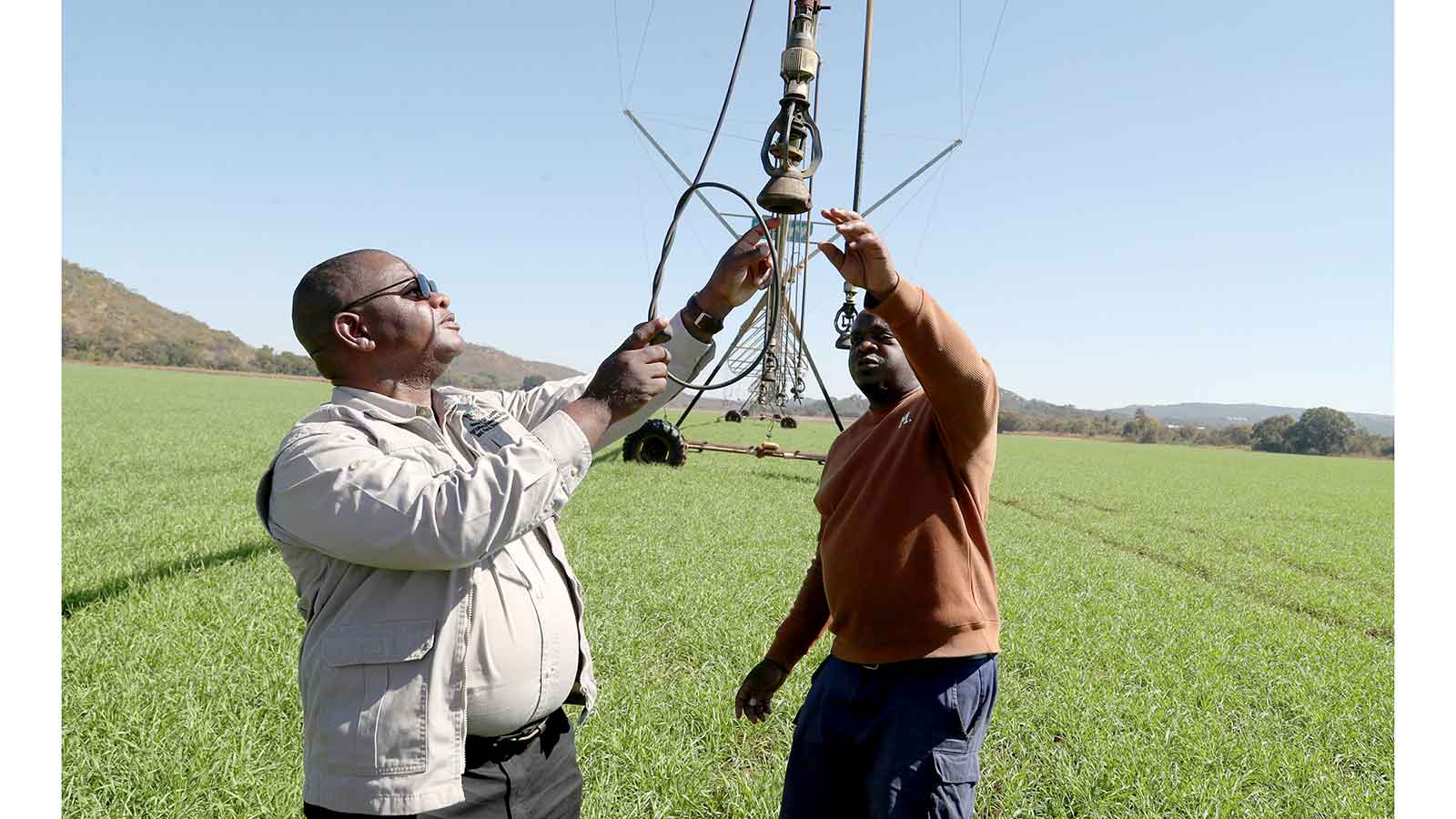
FARMERS planted the highest-ever hectarage of wheat at 126 394 hectares (ha) — 6 000ha more than the target — raising prospects the harvest might surpass this year’s projected haul of 662 500 tonnes.

The milestone is likely to reduce Zimbabwe’s wheat import bill, strengthen food security, preserve foreign currency and safeguard vulnerable communities against hunger ahead of a potentially difficult El Niño-plagued 2026/2027 summer cropping season.

The country produced a record 640 195 tonnes of the cash crop last year.

The continued increase in wheat production has provided a critical buffer for consumers, with Zimbabwe maintaining consistent bread supplies and avoiding major price shocks despite recent rising fuel costs, international supply disruptions and uncertainty caused by conflicts, including those in the Middle East and Eastern Europe.

The Government has now shifted its focus from expanding hectarage to improving yields through good agronomic practices. Achieving wheat self-sufficiency marks a major turnaround for a country that previously relied heavily on imported wheat to meet domestic demand.

Zimbabwe spent about US$131 million on wheat imports in 2023, while cumulative wheat imports between 2021 and 2024 reached US$446 million.

Although the country achieved a record domestic harvest of 640 195 tonnes last year, Zimbabwe still imported US$146,6 million worth of wheat during the first nine months of the year to meet demand for high-grade commercial hard wheat required for blending by millers.

However, the authorities say continued growth in local production will progressively reduce this dependence while strengthening resilience against global disruptions.

Maximising output

Permanent Secretary in the Ministry of Agriculture, Mechanisation and Water Resources Development Professor Obert Jiri said the country had moved into a new phase where priority was maximising output from every hectare planted.

“The good news is that we have surpassed the target already, way past the 125 000ha,” he said.

“At least 126 394ha have been put under winter wheat production, thanks to the President for ensuring we accelerate irrigation development, bearing in mind the climatic shocks.

“Now we are focusing on agronomic interventions to ensure we get the best yield — hardening, fertilising regimes, weed and pest control, irrigation application.”

Prof Jiri said wheat has become central to national resilience.

“Food security is not only about producing more food but ensuring that our systems can withstand shocks and continue supplying people, especially vulnerable communities,” he said.

Increased local production also helps reduce exposure to volatility in international markets.

“Every tonne produced locally strengthens our food systems and reduces pressure on foreign currency resources,” Prof Jiri said.

Zimbabwe’s wheat sector has recorded successive milestones since 2022, when farmers broke a 56-year-old production record, harvesting more than 375 000 tonnes from about 78 063ha and achieving national self-sufficiency for the first time.

Production increased to 467 905 tonnes in 2023, before rising to 518 502 tonnes in 2024 and reaching the record 640 195 tonnes last year.

The country is now targeting 662 500 tonnes against annual wheat consumption estimated at under 400 000 tonnes, creating the possibility of building strategic reserves.

Agricultural and Rural Development Advisory Services (ARDAS) chief director Mrs Medlinah Magwenzi said the expansion of wheat production reflects a broader shift in Zimbabwe’s food security strategy, with the crop now playing a central role in cushioning the country against supply disruptions.

Surpassing the 2026 planting target demonstrates growing confidence among farmers and the effectiveness of coordinated support systems, including input provision, technical guidance and improved planning, she added.

“Wheat has moved beyond being a seasonal crop for flour and bakery products. It has become an important component of our national food security architecture,” said Mrs Magwenzi.

She added that strengthening domestic wheat production is critical in ensuring consistent availability of basic food commodities, particularly during periods of climate uncertainty and global market instability.

The continued growth of wheat production comes as countries navigate rising production costs, climate pressures, energy market volatility and disruptions linked to geopolitical tensions, reinforcing the importance of strong domestic food systems.

Analysts say local production capacity has become increasingly important as countries seek to reduce vulnerability to external shocks.

Beyond wheat, the Government is also promoting traditional grains such as sorghum and millets, which are better suited to dry regions and provide additional protection against climate variability.

The Grain Marketing Board has introduced a grain swap programme allowing households and farmers to exchange traditional grains for maize, or maize for traditional grains, supporting dietary diversification and strengthening national grain security.

As wheat fields expand and production records continue to be broken, the crop has become more than a commodity.

It is now part of Zimbabwe’s broader strategy to protect consumers, reduce import dependence and ensure that no vulnerable household is left exposed during future food shocks.

The post Farmers plant highest-ever wheat hectarage, as record target is within reach appeared first on Zimbabwe Situation.

Councils ordered to scale up service delivery . . . Eight minimum standards set as baseline for service delivery

Source: Councils ordered to scale up service delivery . . . Eight minimum standards set as baseline for service delivery – herald This comes as President Mnangagwa launched the Citizens Engagement and Scoring Platform on Thursday, which will see residents rate local authorities in terms of service delivery in eight service categories — water; sanitation; […]

The post Councils ordered to scale up service delivery . . . Eight minimum standards set as baseline for service delivery appeared first on Zimbabwe Situation.

Source: Councils ordered to scale up service delivery . . . Eight minimum standards set as baseline for service delivery – herald

Remember Deketeke-Municipal Correspondent

THE Government is insisting on measurable service delivery outcomes from councils, which are now expected to play a more central role in the country’s development agenda, Local Government and Public Works Permanent Secretary Dr John Basera has said.

This comes as President Mnangagwa launched the Citizens Engagement and Scoring Platform on Thursday, which will see residents rate local authorities in terms of service delivery in eight service categories — water; sanitation; solid waste management; roads and pothole management; corporate governance; health and environment; housing; and social amenities.

In his address at the 2025 Local Authorities Performance Evaluation Feedback Session last week, Dr Basera said the Government was transitioning from the first phase of local governance reforms, known as “Call to Action 1: No compromise to service delivery”, to a more demanding second phase dubbed “Call to Action 2: Scale up for impact — Creating Vision 2030 service delivery”.

The new phase places emphasis on tangible service delivery outcomes and positions local authorities as critical drivers of the National Development Strategy 2 (NDS2) and attainment of Vision 2030.

“We are transitioning from setting up administrative structures to enforcing aggressive high-impact service outcomes,” he said.

According to Dr Basera, the first phase of local governance reforms focused on addressing structural, administrative and planning deficiencies that had hindered local authorities for years.

The Government directed councils to prepare master plans, update valuation rolls, implement enterprise resource planning (ERP) systems and strengthen governance mechanisms to improve revenue collection, accountability and long-term planning.

All 92 local authorities have since drafted and submitted master plans, of which 75 have already been approved by Local Government and Public Works Minister Daniel Garwe.

Similarly, they have also submitted valuation rolls, with 78 having already received ministerial approval.

Every local authority now has a functional ERP system, although implementation levels vary.

Revenue collection efficiency across local authorities has improved from 52 percent to 65 percent, while efforts to reduce non-revenue water losses are beginning to yield results.

The 14-point road map

At the centre of “Call to Action 2” is a comprehensive 14-point programme developed during a ministerial strategic retreat in Nyanga recently.

The first priority is the accelerated implementation of minimum service delivery standards established through Statutory Instrument (SI) 170 of 2025 and reinforced by SI 69 of 2026.

The standards cover eight key service delivery areas — water production and distribution; wastewater management; environmental stewardship; public health; public safety; road maintenance; urban renewal; and governance.

The Government expects every local authority to meet these minimum standards as the baseline for service delivery.

The second priority is the establishment of a Local Government Institute to strengthen professional capacity, leadership development and institutional effectiveness within councils.

Third is the introduction of a rewards and sanctions framework that will assess local authorities based on performance.

Dr Basera indicated that councils that perform well will receive incentives, while underperforming authorities will face penalties.

The framework is expected to be operationalised through ministerial directives.

This follows concerns raised by President Mnangagwa during recent performance evaluations, where local authorities were identified as one of the weakest links in the implementation of Government programmes.

Another major pillar of the new programme is the alignment of council budgets with service delivery priorities.

The Government is insisting on strict adherence to the 70:30 expenditure policy, which requires councils to allocate at least 70 percent of their revenues towards service delivery and infrastructure development.

The policy seeks to reverse situations where councils spend large portions of their budgets on administration while neglecting critical services.

The ministry has also imposed restrictions on unnecessary workshops, travel and non-essential expenditure.

The Government, Dr Basera said, had observed instances where councils struggled to procure water treatment chemicals while continuing to spend money on workshops, travel and vehicle purchases.

Under the new approach, resources must be directed towards projects that directly improve citizens’ lives.

The road map also prioritises strengthening municipal police systems.

The Government believes improved municipal policing will enhance order, improve compliance with council by-laws and create additional revenue streams through enforcement mechanisms.

Citizen engagement has also emerged as a key pillar of the reforms.

The Government wants local authorities to improve communication with residents and ensure citizens play an active role in governance and service delivery oversight.

The initiative complements broader Government efforts to strengthen participatory governance and accountability.

Formalising settlements

One of the most ambitious aspects of “Call to Action 2” is the regularisation and formalisation of informal settlements.

Local authorities have been tasked with leading the process under the “end beneficiary principle”, which aims to bring unplanned settlements into formal municipal systems through the provision of roads, water, sewer infrastructure and legal recognition.

The Government believes the initiative will improve living conditions while expanding council’s revenue base.

Dr Basera said formalisation would enable local authorities to collect rates and service charges from previously unregulated settlements, generating additional resources for service delivery.

The strategy reflects the Government’s view that sustainable service delivery depends on strong revenue collection systems.

The road map also seeks to strengthen resource mobilisation through innovative financing mechanisms.

The Government is encouraging councils to explore municipal bonds and other financing instruments to fund infrastructure development.

Local authorities are also being urged to maintain audited financial statements to improve their creditworthiness and attract investment.

Councils that lack audited accounts, Dr Basera added, struggle to access funding because financial institutions view them as high-risk borrowers.

By improving financial management and accountability, councils can unlock new sources of capital for development projects.

Perhaps the most transformative element of “Call to Action 2” is the Government’s push for greater private sector involvement in municipal services.

Dr Basera cited Harare’s waste management model as an example of successful private sector participation.

The city introduced private contractors to support refuse collection and solid waste management, resulting in significant improvements.

The Government now wants the model replicated across all urban local authorities.

Similarly, the partnership between the City of Harare and Helcraw Water in water production and distribution is being viewed as an ideal model.

According to Dr Basera, water production in Harare has increased substantially under the arrangement, with the Government targeting even higher output levels in the coming months.

The strategy reflects a broader policy shift towards public-private partnerships as a means of accelerating service delivery and infrastructure development.

For the Government, “Call to Action 2” represents a decisive push towards achieving Vision 2030 through improved local governance and service delivery.

Dr Basera made it clear that councils now have the tools, systems and frameworks required to succeed and that the focus has shifted from planning to performance.

“Stage 2 leaves no room for excuses. The tools have been provided; master plans are ready and revenue collection systems are in place. Now we demand results on the ground. We demand impact on the ground,” he said.

The post Councils ordered to scale up service delivery . . . Eight minimum standards set as baseline for service delivery appeared first on Zimbabwe Situation.

Councils ordered to scale up service delivery . . . Eight minimum standards set as baseline for service delivery

Source: Councils ordered to scale up service delivery . . . Eight minimum standards set as baseline for service delivery – herald This comes as President Mnangagwa launched the Citizens Engagement and Scoring Platform on Thursday, which will see residents rate local authorities in terms of service delivery in eight service categories — water; sanitation; […]

The post Councils ordered to scale up service delivery . . . Eight minimum standards set as baseline for service delivery appeared first on Zimbabwe Situation.

Source: Councils ordered to scale up service delivery . . . Eight minimum standards set as baseline for service delivery – herald

Remember Deketeke-Municipal Correspondent

THE Government is insisting on measurable service delivery outcomes from councils, which are now expected to play a more central role in the country’s development agenda, Local Government and Public Works Permanent Secretary Dr John Basera has said.

This comes as President Mnangagwa launched the Citizens Engagement and Scoring Platform on Thursday, which will see residents rate local authorities in terms of service delivery in eight service categories — water; sanitation; solid waste management; roads and pothole management; corporate governance; health and environment; housing; and social amenities.

In his address at the 2025 Local Authorities Performance Evaluation Feedback Session last week, Dr Basera said the Government was transitioning from the first phase of local governance reforms, known as “Call to Action 1: No compromise to service delivery”, to a more demanding second phase dubbed “Call to Action 2: Scale up for impact — Creating Vision 2030 service delivery”.

The new phase places emphasis on tangible service delivery outcomes and positions local authorities as critical drivers of the National Development Strategy 2 (NDS2) and attainment of Vision 2030.

“We are transitioning from setting up administrative structures to enforcing aggressive high-impact service outcomes,” he said.

According to Dr Basera, the first phase of local governance reforms focused on addressing structural, administrative and planning deficiencies that had hindered local authorities for years.

The Government directed councils to prepare master plans, update valuation rolls, implement enterprise resource planning (ERP) systems and strengthen governance mechanisms to improve revenue collection, accountability and long-term planning.

All 92 local authorities have since drafted and submitted master plans, of which 75 have already been approved by Local Government and Public Works Minister Daniel Garwe.

Similarly, they have also submitted valuation rolls, with 78 having already received ministerial approval.

Every local authority now has a functional ERP system, although implementation levels vary.

Revenue collection efficiency across local authorities has improved from 52 percent to 65 percent, while efforts to reduce non-revenue water losses are beginning to yield results.

The 14-point road map

At the centre of “Call to Action 2” is a comprehensive 14-point programme developed during a ministerial strategic retreat in Nyanga recently.

The first priority is the accelerated implementation of minimum service delivery standards established through Statutory Instrument (SI) 170 of 2025 and reinforced by SI 69 of 2026.

The standards cover eight key service delivery areas — water production and distribution; wastewater management; environmental stewardship; public health; public safety; road maintenance; urban renewal; and governance.

The Government expects every local authority to meet these minimum standards as the baseline for service delivery.

The second priority is the establishment of a Local Government Institute to strengthen professional capacity, leadership development and institutional effectiveness within councils.

Third is the introduction of a rewards and sanctions framework that will assess local authorities based on performance.

Dr Basera indicated that councils that perform well will receive incentives, while underperforming authorities will face penalties.

The framework is expected to be operationalised through ministerial directives.

This follows concerns raised by President Mnangagwa during recent performance evaluations, where local authorities were identified as one of the weakest links in the implementation of Government programmes.

Another major pillar of the new programme is the alignment of council budgets with service delivery priorities.

The Government is insisting on strict adherence to the 70:30 expenditure policy, which requires councils to allocate at least 70 percent of their revenues towards service delivery and infrastructure development.

The policy seeks to reverse situations where councils spend large portions of their budgets on administration while neglecting critical services.

The ministry has also imposed restrictions on unnecessary workshops, travel and non-essential expenditure.

The Government, Dr Basera said, had observed instances where councils struggled to procure water treatment chemicals while continuing to spend money on workshops, travel and vehicle purchases.

Under the new approach, resources must be directed towards projects that directly improve citizens’ lives.

The road map also prioritises strengthening municipal police systems.

The Government believes improved municipal policing will enhance order, improve compliance with council by-laws and create additional revenue streams through enforcement mechanisms.

Citizen engagement has also emerged as a key pillar of the reforms.

The Government wants local authorities to improve communication with residents and ensure citizens play an active role in governance and service delivery oversight.

The initiative complements broader Government efforts to strengthen participatory governance and accountability.

Formalising settlements

One of the most ambitious aspects of “Call to Action 2” is the regularisation and formalisation of informal settlements.

Local authorities have been tasked with leading the process under the “end beneficiary principle”, which aims to bring unplanned settlements into formal municipal systems through the provision of roads, water, sewer infrastructure and legal recognition.

The Government believes the initiative will improve living conditions while expanding council’s revenue base.

Dr Basera said formalisation would enable local authorities to collect rates and service charges from previously unregulated settlements, generating additional resources for service delivery.

The strategy reflects the Government’s view that sustainable service delivery depends on strong revenue collection systems.

The road map also seeks to strengthen resource mobilisation through innovative financing mechanisms.

The Government is encouraging councils to explore municipal bonds and other financing instruments to fund infrastructure development.

Local authorities are also being urged to maintain audited financial statements to improve their creditworthiness and attract investment.

Councils that lack audited accounts, Dr Basera added, struggle to access funding because financial institutions view them as high-risk borrowers.

By improving financial management and accountability, councils can unlock new sources of capital for development projects.

Perhaps the most transformative element of “Call to Action 2” is the Government’s push for greater private sector involvement in municipal services.

Dr Basera cited Harare’s waste management model as an example of successful private sector participation.

The city introduced private contractors to support refuse collection and solid waste management, resulting in significant improvements.

The Government now wants the model replicated across all urban local authorities.

Similarly, the partnership between the City of Harare and Helcraw Water in water production and distribution is being viewed as an ideal model.

According to Dr Basera, water production in Harare has increased substantially under the arrangement, with the Government targeting even higher output levels in the coming months.

The strategy reflects a broader policy shift towards public-private partnerships as a means of accelerating service delivery and infrastructure development.

For the Government, “Call to Action 2” represents a decisive push towards achieving Vision 2030 through improved local governance and service delivery.

Dr Basera made it clear that councils now have the tools, systems and frameworks required to succeed and that the focus has shifted from planning to performance.

“Stage 2 leaves no room for excuses. The tools have been provided; master plans are ready and revenue collection systems are in place. Now we demand results on the ground. We demand impact on the ground,” he said.

The post Councils ordered to scale up service delivery . . . Eight minimum standards set as baseline for service delivery appeared first on Zimbabwe Situation.