Councils ordered to scale up service delivery . . . Eight minimum standards set as baseline for service delivery

Source: Councils ordered to scale up service delivery . . . Eight minimum standards set as baseline for service delivery – herald This comes as President Mnangagwa launched the Citizens Engagement and Scoring Platform on Thursday, which will see residents rate local authorities in terms of service delivery in eight service categories — water; sanitation; […]

The post Councils ordered to scale up service delivery . . . Eight minimum standards set as baseline for service delivery appeared first on Zimbabwe Situation.

Source: Councils ordered to scale up service delivery . . . Eight minimum standards set as baseline for service delivery – herald

Remember Deketeke-Municipal Correspondent

THE Government is insisting on measurable service delivery outcomes from councils, which are now expected to play a more central role in the country’s development agenda, Local Government and Public Works Permanent Secretary Dr John Basera has said.

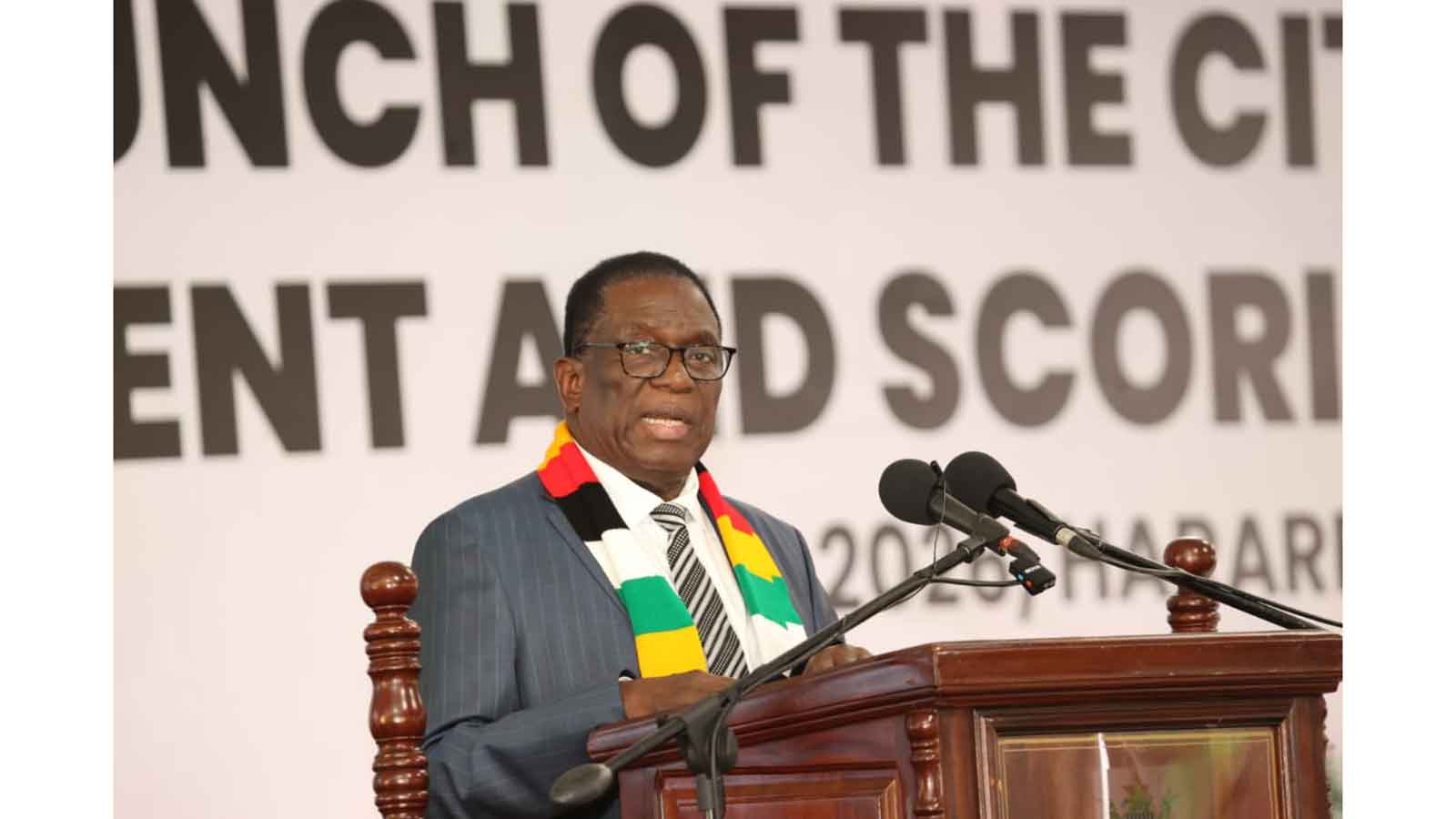
This comes as President Mnangagwa launched the Citizens Engagement and Scoring Platform on Thursday, which will see residents rate local authorities in terms of service delivery in eight service categories — water; sanitation; solid waste management; roads and pothole management; corporate governance; health and environment; housing; and social amenities.

In his address at the 2025 Local Authorities Performance Evaluation Feedback Session last week, Dr Basera said the Government was transitioning from the first phase of local governance reforms, known as “Call to Action 1: No compromise to service delivery”, to a more demanding second phase dubbed “Call to Action 2: Scale up for impact — Creating Vision 2030 service delivery”.

The new phase places emphasis on tangible service delivery outcomes and positions local authorities as critical drivers of the National Development Strategy 2 (NDS2) and attainment of Vision 2030.

“We are transitioning from setting up administrative structures to enforcing aggressive high-impact service outcomes,” he said.

According to Dr Basera, the first phase of local governance reforms focused on addressing structural, administrative and planning deficiencies that had hindered local authorities for years.

The Government directed councils to prepare master plans, update valuation rolls, implement enterprise resource planning (ERP) systems and strengthen governance mechanisms to improve revenue collection, accountability and long-term planning.

All 92 local authorities have since drafted and submitted master plans, of which 75 have already been approved by Local Government and Public Works Minister Daniel Garwe.

Similarly, they have also submitted valuation rolls, with 78 having already received ministerial approval.

Every local authority now has a functional ERP system, although implementation levels vary.

Revenue collection efficiency across local authorities has improved from 52 percent to 65 percent, while efforts to reduce non-revenue water losses are beginning to yield results.

The 14-point road map

At the centre of “Call to Action 2” is a comprehensive 14-point programme developed during a ministerial strategic retreat in Nyanga recently.

The first priority is the accelerated implementation of minimum service delivery standards established through Statutory Instrument (SI) 170 of 2025 and reinforced by SI 69 of 2026.

The standards cover eight key service delivery areas — water production and distribution; wastewater management; environmental stewardship; public health; public safety; road maintenance; urban renewal; and governance.

The Government expects every local authority to meet these minimum standards as the baseline for service delivery.

The second priority is the establishment of a Local Government Institute to strengthen professional capacity, leadership development and institutional effectiveness within councils.

Third is the introduction of a rewards and sanctions framework that will assess local authorities based on performance.

Dr Basera indicated that councils that perform well will receive incentives, while underperforming authorities will face penalties.

The framework is expected to be operationalised through ministerial directives.

This follows concerns raised by President Mnangagwa during recent performance evaluations, where local authorities were identified as one of the weakest links in the implementation of Government programmes.

Another major pillar of the new programme is the alignment of council budgets with service delivery priorities.

The Government is insisting on strict adherence to the 70:30 expenditure policy, which requires councils to allocate at least 70 percent of their revenues towards service delivery and infrastructure development.

The policy seeks to reverse situations where councils spend large portions of their budgets on administration while neglecting critical services.

The ministry has also imposed restrictions on unnecessary workshops, travel and non-essential expenditure.

The Government, Dr Basera said, had observed instances where councils struggled to procure water treatment chemicals while continuing to spend money on workshops, travel and vehicle purchases.

Under the new approach, resources must be directed towards projects that directly improve citizens’ lives.

The road map also prioritises strengthening municipal police systems.

The Government believes improved municipal policing will enhance order, improve compliance with council by-laws and create additional revenue streams through enforcement mechanisms.

Citizen engagement has also emerged as a key pillar of the reforms.

The Government wants local authorities to improve communication with residents and ensure citizens play an active role in governance and service delivery oversight.

The initiative complements broader Government efforts to strengthen participatory governance and accountability.

Formalising settlements

One of the most ambitious aspects of “Call to Action 2” is the regularisation and formalisation of informal settlements.

Local authorities have been tasked with leading the process under the “end beneficiary principle”, which aims to bring unplanned settlements into formal municipal systems through the provision of roads, water, sewer infrastructure and legal recognition.

The Government believes the initiative will improve living conditions while expanding council’s revenue base.

Dr Basera said formalisation would enable local authorities to collect rates and service charges from previously unregulated settlements, generating additional resources for service delivery.

The strategy reflects the Government’s view that sustainable service delivery depends on strong revenue collection systems.

The road map also seeks to strengthen resource mobilisation through innovative financing mechanisms.

The Government is encouraging councils to explore municipal bonds and other financing instruments to fund infrastructure development.

Local authorities are also being urged to maintain audited financial statements to improve their creditworthiness and attract investment.

Councils that lack audited accounts, Dr Basera added, struggle to access funding because financial institutions view them as high-risk borrowers.

By improving financial management and accountability, councils can unlock new sources of capital for development projects.

Perhaps the most transformative element of “Call to Action 2” is the Government’s push for greater private sector involvement in municipal services.

Dr Basera cited Harare’s waste management model as an example of successful private sector participation.

The city introduced private contractors to support refuse collection and solid waste management, resulting in significant improvements.

The Government now wants the model replicated across all urban local authorities.

Similarly, the partnership between the City of Harare and Helcraw Water in water production and distribution is being viewed as an ideal model.

According to Dr Basera, water production in Harare has increased substantially under the arrangement, with the Government targeting even higher output levels in the coming months.

The strategy reflects a broader policy shift towards public-private partnerships as a means of accelerating service delivery and infrastructure development.

For the Government, “Call to Action 2” represents a decisive push towards achieving Vision 2030 through improved local governance and service delivery.

Dr Basera made it clear that councils now have the tools, systems and frameworks required to succeed and that the focus has shifted from planning to performance.

“Stage 2 leaves no room for excuses. The tools have been provided; master plans are ready and revenue collection systems are in place. Now we demand results on the ground. We demand impact on the ground,” he said.

The post Councils ordered to scale up service delivery . . . Eight minimum standards set as baseline for service delivery appeared first on Zimbabwe Situation.
Key revisions made as Constitutional Amendment Bill 3 heads to Senate

Source: Key revisions made as Constitutional Amendment Bill 3 heads to Senate – herald Justice, Legal and Parliamentary Affairs Minister Ziyambi Ziyambi accepted the proposal from Bulawayo North legislator Minenhle Gumede. “Honourable chair, I listened carefully to Honourable Gumede’s contribution. I agree with ‘after consultation with Parliament’, but I want the number, 10, to be […]

The post Key revisions made as Constitutional Amendment Bill 3 heads to Senate appeared first on Zimbabwe Situation.

Source: Key revisions made as Constitutional Amendment Bill 3 heads to Senate – herald

Farirai Machivenyika-Senior Reporter

PARLIAMENT wants to be consulted before the appointment of an additional 10 senators envisaged by the Constitution of Zimbabwe Amendment Bill (No. 3) (CAB3), while the Zimbabwe Gender Commission (ZGC) will be retained, among revisions that were made during last week’s debate in the National Assembly.

CAB3 was passed overwhelmingly after securing 216 votes in the National Assembly, comfortably surpassing the 187 votes required for a two-thirds majority.

Forty-two legislators voted against the Bill. The outcome reflected significant cross-party support, with at least 35 opposition MPs joining ZANU PF legislators in backing the amendments.

One of the most significant changes was the reversal of a proposal to abolish the ZGC and merge its functions with the Zimbabwe Human Rights Commission.

The move followed sustained lobbying by legislators, who argued that the commission should remain an independent constitutional body dedicated to promoting gender equality and women’s rights.

A provision in the Bill relating to the appointment of senators was also amended. Under the revised clause, the President will appoint 10 senators on the basis of professional skills and competencies, but only after consultation with Parliament.

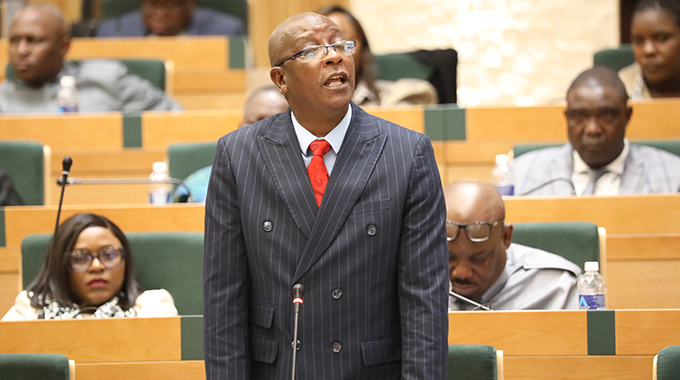
Justice, Legal and Parliamentary Affairs Minister Ziyambi Ziyambi accepted the proposal from Bulawayo North legislator Minenhle Gumede.

“Honourable chair, I listened carefully to Honourable Gumede’s contribution. I agree with ‘after consultation with Parliament’, but I want the number, 10, to be there.

“So, I think her proposal makes sense and I propose that Clause 8(e) be amended to read that ‘10 (senators) appointed by the President chosen for their professional skills and other competencies after consultation with Parliament’, “ he said.

However, Minister Ziyambi rejected proposals that the appointed senators should not have voting rights.

“We cannot say these are non-voting because these are not Executive appointments to ministries. These are MPs to execute their duties within Parliament; the same as what proportional representation MPs and youth quota do.

“They are full MPs with full voting rights, bringing in whatever expectations the President would have identified as necessary for the proper legislative function of both Houses.”

Another amendment corrected a provision that would have required a designated judge to preside over the election of a President in Parliament, with that responsibility remaining with the Zimbabwe Electoral Commission.

“Honourable chair, I am proposing to maintain Clause 3 as it is a typo that happened when we sent the Bill to the printers on sub clause 5, so that it just reads, ‘the Zimbabwe Electoral Commission shall preside over the election and the procedure’ and remove any designated judge.  That is what I am proposing,” said Minister Ziyambi.

The Bill was also amended to provide for the establishment of the office of President of the Supreme Court.

“I am proposing the insertion of a new Clause after 13. This is basically to clean up issues to do with our Judiciary.

“We have a Judge President and the proposal is that we must also have the President of the Supreme Court and other judges of the Supreme Court,” Minister Ziyambi said.

Further judicial reforms include allowing suitably qualified legal practitioners, and not only retired judges, to serve as acting judges, as is being done in South Africa.

Changes were also made to the proposed Zimbabwe Delimitation Commission, whose board will now include a demographer, a cartographer and a representative of the Chiefs Council.

The House further approved amendments extending the population census cycle from 10 years to 14 years.

Lawmakers also retained “upholding the Constitution” as one of the functions of the defence forces after the Government accepted proposals from opposition legislators to restore the provision.

“Functions of the defence forces and then we start by saying, subject to Sections 207 and 208, the function of the defence forces is to protect Zimbabwe, its people, its national security, interests, its territorial integrity and to uphold the Constitution.

“You know, Chapter 11 is about security forces, and Section 207 lists them and what they are supposed to do. In Section 207(2), it says that the security forces are subject to the authority of this Constitution, the President and Cabinet, and are subject to parliamentary oversight.

“It is a stand-alone section that was not speaking to the other two. So, what I am proposing is that in doing the upholding function which we all do, we take an oath here in Parliament to uphold the Constitution, that must be done subject to this section, which is the general section of the security sector and Section 208 on conduct of the security sector,” said Minister Ziyambi.

The Bill was also amended to align the tenure of the National and Provincial Assemblies of Chiefs with the proposed extension of the electoral cycle from five to seven years.

CAB3 will be heading to the Senate for debate this week.

The post Key revisions made as Constitutional Amendment Bill 3 heads to Senate appeared first on Zimbabwe Situation.

Key revisions made as Constitutional Amendment Bill 3 heads to Senate

Source: Key revisions made as Constitutional Amendment Bill 3 heads to Senate – herald Justice, Legal and Parliamentary Affairs Minister Ziyambi Ziyambi accepted the proposal from Bulawayo North legislator Minenhle Gumede. “Honourable chair, I listened carefully to Honourable Gumede’s contribution. I agree with ‘after consultation with Parliament’, but I want the number, 10, to be […]

The post Key revisions made as Constitutional Amendment Bill 3 heads to Senate appeared first on Zimbabwe Situation.

Source: Key revisions made as Constitutional Amendment Bill 3 heads to Senate – herald

Farirai Machivenyika-Senior Reporter

PARLIAMENT wants to be consulted before the appointment of an additional 10 senators envisaged by the Constitution of Zimbabwe Amendment Bill (No. 3) (CAB3), while the Zimbabwe Gender Commission (ZGC) will be retained, among revisions that were made during last week’s debate in the National Assembly.

CAB3 was passed overwhelmingly after securing 216 votes in the National Assembly, comfortably surpassing the 187 votes required for a two-thirds majority.

Forty-two legislators voted against the Bill. The outcome reflected significant cross-party support, with at least 35 opposition MPs joining ZANU PF legislators in backing the amendments.

One of the most significant changes was the reversal of a proposal to abolish the ZGC and merge its functions with the Zimbabwe Human Rights Commission.

The move followed sustained lobbying by legislators, who argued that the commission should remain an independent constitutional body dedicated to promoting gender equality and women’s rights.

A provision in the Bill relating to the appointment of senators was also amended. Under the revised clause, the President will appoint 10 senators on the basis of professional skills and competencies, but only after consultation with Parliament.

Justice, Legal and Parliamentary Affairs Minister Ziyambi Ziyambi accepted the proposal from Bulawayo North legislator Minenhle Gumede.

“Honourable chair, I listened carefully to Honourable Gumede’s contribution. I agree with ‘after consultation with Parliament’, but I want the number, 10, to be there.

“So, I think her proposal makes sense and I propose that Clause 8(e) be amended to read that ‘10 (senators) appointed by the President chosen for their professional skills and other competencies after consultation with Parliament’, “ he said.

However, Minister Ziyambi rejected proposals that the appointed senators should not have voting rights.

“We cannot say these are non-voting because these are not Executive appointments to ministries. These are MPs to execute their duties within Parliament; the same as what proportional representation MPs and youth quota do.

“They are full MPs with full voting rights, bringing in whatever expectations the President would have identified as necessary for the proper legislative function of both Houses.”

Another amendment corrected a provision that would have required a designated judge to preside over the election of a President in Parliament, with that responsibility remaining with the Zimbabwe Electoral Commission.

“Honourable chair, I am proposing to maintain Clause 3 as it is a typo that happened when we sent the Bill to the printers on sub clause 5, so that it just reads, ‘the Zimbabwe Electoral Commission shall preside over the election and the procedure’ and remove any designated judge.  That is what I am proposing,” said Minister Ziyambi.

The Bill was also amended to provide for the establishment of the office of President of the Supreme Court.

“I am proposing the insertion of a new Clause after 13. This is basically to clean up issues to do with our Judiciary.

“We have a Judge President and the proposal is that we must also have the President of the Supreme Court and other judges of the Supreme Court,” Minister Ziyambi said.

Further judicial reforms include allowing suitably qualified legal practitioners, and not only retired judges, to serve as acting judges, as is being done in South Africa.

Changes were also made to the proposed Zimbabwe Delimitation Commission, whose board will now include a demographer, a cartographer and a representative of the Chiefs Council.

The House further approved amendments extending the population census cycle from 10 years to 14 years.

Lawmakers also retained “upholding the Constitution” as one of the functions of the defence forces after the Government accepted proposals from opposition legislators to restore the provision.

“Functions of the defence forces and then we start by saying, subject to Sections 207 and 208, the function of the defence forces is to protect Zimbabwe, its people, its national security, interests, its territorial integrity and to uphold the Constitution.

“You know, Chapter 11 is about security forces, and Section 207 lists them and what they are supposed to do. In Section 207(2), it says that the security forces are subject to the authority of this Constitution, the President and Cabinet, and are subject to parliamentary oversight.

“It is a stand-alone section that was not speaking to the other two. So, what I am proposing is that in doing the upholding function which we all do, we take an oath here in Parliament to uphold the Constitution, that must be done subject to this section, which is the general section of the security sector and Section 208 on conduct of the security sector,” said Minister Ziyambi.

The Bill was also amended to align the tenure of the National and Provincial Assemblies of Chiefs with the proposed extension of the electoral cycle from five to seven years.

CAB3 will be heading to the Senate for debate this week.

The post Key revisions made as Constitutional Amendment Bill 3 heads to Senate appeared first on Zimbabwe Situation.

Zanu-PF sweeps Tsholotsho RDC by-election

Source: Zanu-PF sweeps Tsholotsho RDC by-election – herald Gibson Mhaka in Tsholotsho ZANU-PF has maintained its dominance in Tsholotsho Rural District Council (RDC) after winning all three wards contested in Saturday’s by-elections, defeating independent and opposition candidates in convincing fashion. The ruling party secured victories in Wards 1, 10 and 21, with its candidates emerging […]

The post Zanu-PF sweeps Tsholotsho RDC by-election appeared first on Zimbabwe Situation.

Source: Zanu-PF sweeps Tsholotsho RDC by-election – herald

Gibson Mhaka in Tsholotsho

ZANU-PF has maintained its dominance in Tsholotsho Rural District Council (RDC) after winning all three wards contested in Saturday’s by-elections, defeating independent and opposition candidates in convincing fashion.

The ruling party secured victories in Wards 1, 10 and 21, with its candidates emerging victorious in polls characterised by moderate voter turnout.

In Ward 10, election officer Tito Sialuya declared Zanu-PF candidate Cde Simbisai Ndlovu duly elected councillor after she garnered 802 votes.

Cde Ndlovu comfortably defeated ZAPU candidate Mr Mchlukanisi Washington Ncube, who polled 183 votes, while independent candidate Mr Thando Siziba received 67 votes.

The ward recorded a voter turnout of 37,7 percent.

Ward 21 also went to Zanu-PF after election officer Thembelihle Khumalo announced Cde Phillip Mvundla as the winner.

Cde Mvundla secured 512 votes against independent candidate Mr Marx Sibanda’s 236 votes.

The voter turnout in the ward stood at 41,1 percent.

In Ward 1, election officer Doli Hlabangana declared Cde Lindiwe Mkwananzi the winner after she obtained 471 votes.

Her challenger, independent candidate Mr Solani Mlilo, garnered 251 votes.

The ward recorded the highest turnout among the three wards at 45,4 percent.

The results underline Zanu-PF’s continued strong support base in Tsholotsho District, with the party retaining control of the contested seats despite challenges from independent candidates and the opposition.

The outcome reflects voter confidence in the ruling party’s development agenda and local leadership structures.

The by-elections were conducted peacefully, with election officials overseeing the voting and counting processes in accordance with electoral regulations.

The post Zanu-PF sweeps Tsholotsho RDC by-election appeared first on Zimbabwe Situation.

Matemadanda dies

Source: Matemadanda dies – The Standard HARARE, June 21 (NewsDay Live) – ZIMBABWE’s ambassador to Mozambique and Eswatini, Victor Matemadanda, has died. Information Secretary Ndabaningi Mangwana confirmed Matemadanda’s death this Sunday morning. “Ambassador Victor Matemadanda passed away last night. This is a deeply saddening loss,” Mangwana said in a statement, without disclosing circumstances leading to […]

The post Matemadanda dies appeared first on Zimbabwe Situation.

Source: Matemadanda dies – The Standard

HARARE, June 21 (NewsDay Live) – ZIMBABWE’s ambassador to Mozambique and Eswatini, Victor Matemadanda, has died.

Information Secretary Ndabaningi Mangwana confirmed Matemadanda’s death this Sunday morning.

“Ambassador Victor Matemadanda passed away last night. This is a deeply saddening loss,” Mangwana said in a statement, without disclosing circumstances leading to his death.Earlier, there were unconfirmed reports that he had been poisoned.

Before his diplomatic posting to Mozambique and the Kingdom of Eswatini, Matemadanda had served as national chairperson of the Zimbabwe National Liberation War Veterans Association.

The post Matemadanda dies appeared first on Zimbabwe Situation.