Farmers surpass wheat planting record

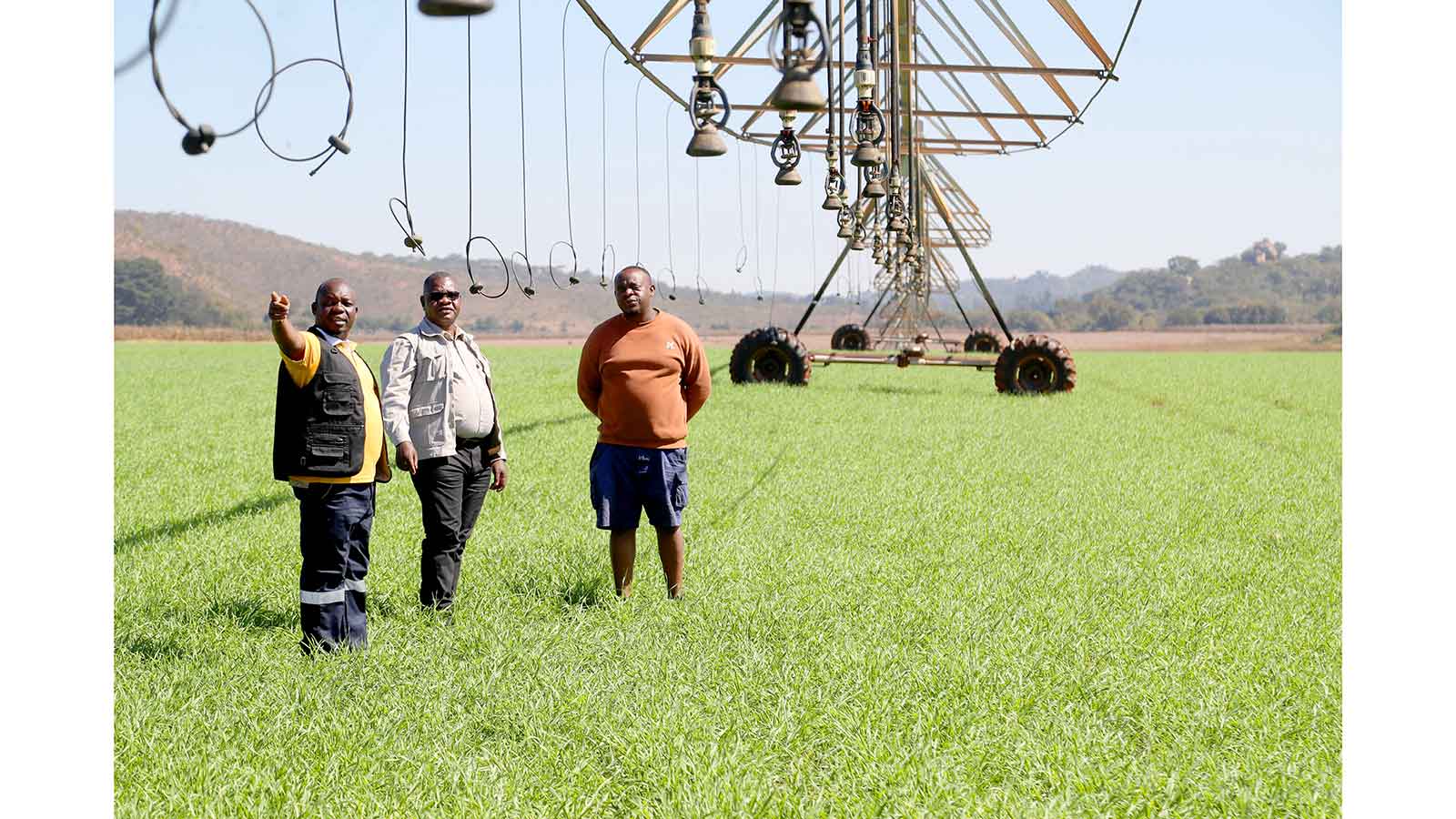
Source: Farmers surpass wheat planting record – herald Agriculture, Mechanisation and Water Resources Development Permanent Secretary Professor Obert Jiri (centre) being shown a thriving winter wheat crop by Provincial Agricultural deputy director Ranganai Makona, while farm representative Mr Uno Chikomo (right) looks on at the announcement of the closure of the winter wheat planting window […]

The post Farmers surpass wheat planting record appeared first on Zimbabwe Situation.

Source: Farmers surpass wheat planting record – herald
Theseus Mauruki Shambare

FARMERS have surpassed last season’s winter wheat planting record, with more than 123 000 hectares already established as of June 14, putting the country on course to achieve its 125 000-hectare target as the winter planting cut-off date arrives today.

Traditionally, the winter wheat planting deadline falls on May 31 to allow crops sufficient time to establish under optimal winter conditions ahead of harvesting.

However, due to prolonged wet conditions that delayed the summer harvest and slowed land preparation, the Ministry of Agriculture, Mechanisation and Water Resources Development extended the deadline to June 15 to provide farmers with additional time to reach the national target of 125 000 hectares.

In an interview, Permanent Secretary Professor Obert Jiri said the extension, combined with strong coordination among key stakeholders, had enabled the country to maintain planting momentum and surpass last season’s performance.

He made the remarks while touring winter wheat fields in Goromonzi yesterday to assess farmers’ performance ahead of the official closing of the winter wheat planting window.

He visited Springs Farm owned by Mr Joseph Macheka, where 60 hectares of wheat have been established under a fully functional centre pivot irrigation system.

“We have surpassed what we achieved last season. Last season we ended on 122 000 hectares. This year already, by the 14th of June, we had surpassed 123 000 hectares,” said Prof Jiri.

“We anticipated that by today (yesterday), the 15th of June, we would be able to hit our 125 000 target, which is very much within reach.”

Prof Jiri said more than 128 000 hectares had been registered by farmers, indicating their intention to plant wheat, reflecting strong confidence in the winter wheat programme despite prevailing input and global supply challenges.

Farmers had continued to demonstrate resilience and commitment, supported by coordinated efforts from key utilities and partners.

Added Prof Jiri: “We would want to emphasise that it is through the resilience of our farmers and through the cooperation of our partners, Zesa, Zinwa and other stakeholders who contributed to this wheat strategy, that this has been achieved.”

He said farmers continued to invest in wheat production despite challenges linked to fertiliser availability and global disruptions.

Zimbabwe’s grain security position remained stable, Prof Jiri said, supported by strong Strategic Grain Reserve stocks, which continue to cushion the country against supply shocks.

He also said concerns over possible increases in bread and mealie-meal prices were unfounded, given current national reserves.

Deliveries to the Grain Marketing Board are also ahead of last year, signalling a stronger harvest season and improved national production outlook.

“These figures were taken before the close of the planting day, with mop-up planting still ongoing in some areas as farmers were finalising establishment under irrigation,” said Prof Jiri.

“We are confident that these final mop-up efforts today (Monday) will meet or even surpass, the 125 000-hectare national target once all submissions have been fully captured and verified. The final figures will be released in due course as comprehensive collation and verification of winter wheat hectarage is completed.”

The post Farmers surpass wheat planting record appeared first on Zimbabwe Situation.
Zim eyes US$1bn in manufactured exports by 2030

Source: Zim eyes US$1bn in manufactured exports by 2030 – herald In an interview, Permanent Secretary in the Ministry of Industry and Commerce Ambassador Tadeous Chifamba said Government’s strategy was to transform Zimbabwe from a commodity-exporting economy into a competitive manufacturing and export hub. Oliver Kazunga-Senior Reporter ZIMBABWE has set an ambitious target to almost […]

The post Zim eyes US$1bn in manufactured exports by 2030 appeared first on Zimbabwe Situation.

Source: Zim eyes US$1bn in manufactured exports by 2030 – herald

Oliver Kazunga-Senior Reporter

ZIMBABWE has set an ambitious target to almost double the value of manufactured exports to US$1 billion by 2030 as the Government intensifies efforts to accelerate industrialisation, value addition and foreign currency generation.

Data from ZimTrade indicates that manufactured exports in 2025 stood at US$584,8 million, comprising iron and steel, tobacco, clothing and textile products, and industrial chemicals, among others.

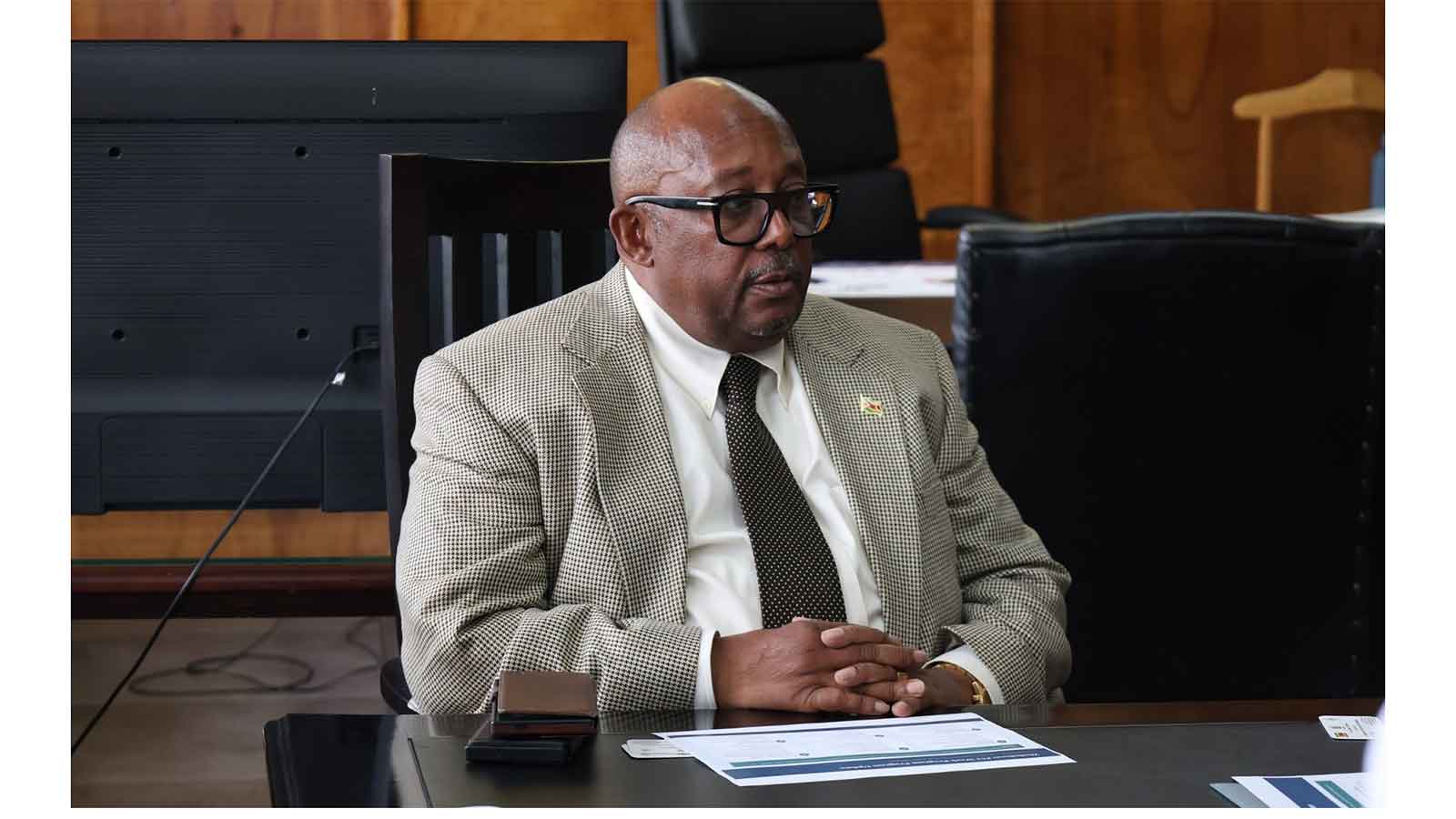
In an interview, Permanent Secretary in the Ministry of Industry and Commerce Ambassador Tadeous Chifamba said Government’s strategy was to transform Zimbabwe from a commodity-exporting economy into a competitive manufacturing and export hub.

“Our target is bold, but in time it will be reached.

“We expect to scale up manufactured exports to achieve the benchmark contribution of at least US$1 billion annually by 2030,” said Amb Chifamba.

The export drive forms part of broader efforts to achieve the goals of Vision 2030 and the National Development Strategy 2 (NDS2), while positioning local industry to take advantage of opportunities presented by the African Continental Free Trade Area (AfCFTA).

Recently, in his address to industrialists, exporters and policymakers during an export development breakfast meeting in Harare, Amb Chifamba said the Government was pursuing an aggressive industrialisation programme anchored on value addition and beneficiation.

The target represents an increase from the current level of manufactured exports and comes as authorities seek to reduce the country’s dependence on primary commodity exports.

He said Zimbabwe’s long-term competitiveness would depend on its ability to move up the value chain and increase production of finished goods.

“To achieve this, we cannot remain an economy that predominantly exports raw materials.

“We must fundamentally transition from a commodity-based economy into a high-value, innovation and knowledge-driven economy powered by intense industrial investment,” said Amb Chifamba.

The Government is targeting a manufacturing sector contribution of at least 25 percent to Gross Domestic Product under Vision 2030 and NDS2, compared to the current 16 percent.

To achieve this, the Ministry of Industry and Commerce is preparing to roll out the Zimbabwe National Industrial Development Policy 2 (ZNIDP 2), which prioritises increased manufacturing output, higher capacity utilisation and stronger export performance.

Amb Chifamba said the country was also implementing measures to address concerns raised by industry, including high production costs, ageing industrial equipment, intermittent utility supplies and logistical inefficiencies.

“Let me assure you, the Government of Zimbabwe will actively execute a second strategy to shift our position from a potential infant market to a highly competitive exporting powerhouse.”

The Government is also promoting value addition across strategic sectors such as iron and steel, leather, sugar and agro-processing while discouraging the export of raw and semi-processed products.

“The Ministry is heading a massive structural shift built upon value-addition and energy sharing, moving production systems away from primary raw extraction and up the value-added inputs of this sector.

“We are consolidating key sectors such as leather, sugar and iron and steel. Moving forward, we would like to discourage raw and semi-processed goods,” said Amb Chifamba.

He said success would require strong collaboration between Government and the private sector, investment in productive infrastructure, compliance with international standards and a sustained focus on export competitiveness.

In her remarks, the Confederation of Zimbabwe Industries (CZI) chief executive officer Ms Sekai Kuvarika said the country should progress from building competitiveness to upgrading industry and eventually becoming a dominant exporter in selected sectors.

“Our industrialisation strategy is built around three stages: improving competitiveness, upgrading industry and achieving leadership in selected export markets.

“To succeed, we need stronger collaboration between Government and the private sector to turn proposals into practical results.

“We have seen similar approaches delivering positive outcomes in South Africa. That is why we are calling for a more focused PPP that will help implement concrete strategies and achieve the results we seek,” she said.

Traditionally, Zimbabwe’s export earnings have been dominated by primary commodities such as minerals and agricultural products, exposing the economy to fluctuations in global commodity prices.

Through policies promoting beneficiation, industrial upgrading and participation in the AfCFTA, the Government aims to strengthen local manufacturing, create jobs, increase foreign currency earnings and improve the country’s competitiveness in regional and international markets.

The post Zim eyes US$1bn in manufactured exports by 2030 appeared first on Zimbabwe Situation.

SADC transport, ICTs ministers set to meet

Source: SADC transport, ICTs ministers set to meet – herald South Africa’s Minister of Transport Barbara Creecy will preside over the meeting in her capacity as Chairperson of the Sadc Committee of Ministers for Transport, ICT, Information and Meteorology. Wallace Ruzvidzo-Herald Reporter ZIMBABWE will host the Sadc meeting of ministers responsible for Transport, Information and […]

The post SADC transport, ICTs ministers set to meet appeared first on Zimbabwe Situation.
Source: SADC transport, ICTs ministers set to meet – herald

Wallace Ruzvidzo-Herald Reporter

ZIMBABWE will host the Sadc meeting of ministers responsible for Transport, Information and Communication Technologies and Meteorology next week, the regional bloc has announced.

In a communiqué yesterday, Sadc said the meeting will be hosted through the Ministry of Transport and Infrastructural Development, the Ministry of Information Communication Technology, Postal and Courier Services, and the Ministry of Environment, Climate and Wildlife from June 22 to 26 in Bulawayo.

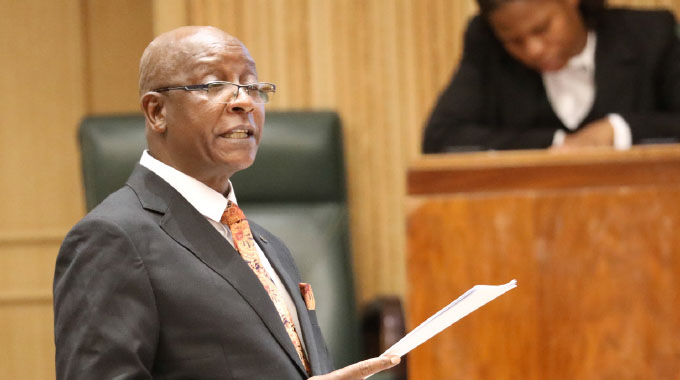
South Africa’s Minister of Transport Barbara Creecy will preside over the meeting in her capacity as Chairperson of the Sadc Committee of Ministers for Transport, ICT, Information and Meteorology.

“This high-level engagement will bring together ministers and senior policymakers from Sadc member States to deliberate on strategic priorities aimed at strengthening regional infrastructure, enhancing connectivity and promoting sustainable development across the region,” reads the communiqué.

These engagements are designed to facilitate coordinated policy dialogue, strengthen regional cooperation and advance harmonised programmes in transport, communications, ICT, meteorology and information services.

The meeting will focus on key priorities, including enhancing regional transport corridors and infrastructure development, promoting digital transformation and ICT integration, strengthening climate resilience and meteorological services, and advancing innovation, including the use of Artificial Intelligence (AI) in infrastructure development.

SADC said the convening of the meeting reflects the regional bloc’s ongoing commitment to regional integration, achieved through coordinated infrastructure development and harmonised policy implementation among member States.

“The convening of this cluster meeting underscores SADC’s continued commitment to regional integration through coordinated infrastructure development and policy alignment among member States,” said the regional bloc.

The outcomes of the meeting are expected to contribute to improved efficiency in regional systems, enhanced trade facilitation and strengthened resilience to climate and economic challenges.

The cluster meeting of Ministers Responsible for Transport, Information and Communication Technologies (ICT), Information and Meteorology will be preceded by the joint meeting of Sadc Senior officials responsible for Transport, ICT, Information and Meteorology from June 22 to 24.

Thereafter, a High-Level Ministerial Roundtable Dialogue on liberalised skies and AI-enabled climate resilient infrastructure to accelerate regional integration and sustainable development in Sadc will be convened on June 25.

Meanwhile, the Sadc Monitoring, Control and Surveillance Coordination Centre (MCSCC) in Katembe has been inaugurated and handed over to Sadc by Mozambican President Daniel Chapo.

It was handed over to Sadc Executive Secretary Mr Elias Magosi at the 3rd Growing Blue (Crescendo Azul) Conference in Maputo, Mozambique.

The conference brought together policymakers, experts, development partners and private-sector stakeholders to explore how marine resources can drive economic growth, create jobs, strengthen food security and enhance climate resilience while protecting aquatic ecosystems.

The post SADC transport, ICTs ministers set to meet appeared first on Zimbabwe Situation.

Treasury begins consultations for budget review, 2027 strategy

Source: Treasury begins consultations for budget review, 2027 strategy – herald Nqobile Bhebhe Zimpapers Business Hub The Ministry of Finance, Economic Development and Investment Promotion has started stakeholder consultations to gather input towards the crafting of the 2026 Mid-Term Budget and Economic Review and the 2027 Budget Strategy Paper (BSP). The Treasury has invited businesses, […]

The post Treasury begins consultations for budget review, 2027 strategy appeared first on Zimbabwe Situation.

Source: Treasury begins consultations for budget review, 2027 strategy – herald

Nqobile Bhebhe

Zimpapers Business Hub

The Ministry of Finance, Economic Development and Investment Promotion has started stakeholder consultations to gather input towards the crafting of the 2026 Mid-Term Budget and Economic Review and the 2027 Budget Strategy Paper (BSP).

The Treasury has invited businesses, labour groups, development partners, civil society organisations and members of the public to submit their proposals and recommendations.

The consultation comes as the Treasury assesses economic performance during the first half of 2026 and begins shaping policy priorities for the 2027 National Budget.

The ministry said that contributions from key stakeholders would help shape policy interventions and expenditure priorities for the remainder of the year and beyond.

“The Ministry of Finance, Economic Development and Investment Promotion is inviting all stakeholders to submit inputs into the 2026 Mid-Term Budget and Economic Review and the 2027 Budget Strategy Paper.

“The 2026 Mid-Term Budget and Economic Review assesses economic performance and budget implementation during the first half of the year and identifies priorities for the remainder of 2026,” said the ministry.

The Mid-Term Budget Review is expected to evaluate progress on the 2026 National Budget, assess the performance of key economic sectors and identify measures required to address emerging challenges and accelerate growth during the second half of the year.

The review comes against the backdrop of gains in macroeconomic management, with authorities maintaining a disciplined fiscal stance and strengthening coordination between fiscal and monetary policies.

Finance, Economic Development and Investment Promotion Minister Professor Mthuli Ncube presented a ZiG290 billion (approximately US$9.5 billion) 2026 National Budget in November last year against planned revenue of ZiG288 billion (about US$9.4 billion).  The budget sought to anchor macroeconomic stability and support economic growth as the country transitions into the National Development Strategy 2 period.

The budget emphasises fiscal discipline and aligns with economic reforms and development goals.

Economic analysts say the policy framework implemented under the 2026 National Budget so far has reinforced economic stability through inflation containment, improved foreign currency availability and greater exchange rate predictability.

The budget also prioritised productive sectors of the economy, infrastructure development, social service delivery and investment promotion, in line with the Government’s objective of achieving sustainable economic transformation under Vision 2030.

Key focus areas of the 2026 National Budget include enhancing domestic revenue mobilisation, supporting agriculture and food security, promoting industrialisation and value addition, improving energy generation, expanding transport and logistics infrastructure, strengthening social protection programmes and attracting both domestic and foreign investment.

The Government has also continued implementing reforms aimed at improving the ease of doing business, enhancing public financial management systems and fostering private sector-led growth.

The Treasury said the Budget Strategy Paper would play a critical role in laying the groundwork for the 2027 National Budget.

“The Budget Strategy Paper, or BSP, is a foundational document that guides the preparation of 2027 National Budgets.

“It outlines a proposed revenue mobiliSation strategy, highlights proposed key expenditure priorities and provides a platform for public consultation.

“Importantly, the BSP sets the stage for informed public debate on national policy and development priorities,” said the ministry.

The BSP is expected to provide a medium-term outlook for the economy while outlining the Government’s strategic priorities, fiscal framework and policy direction for the coming year.

Economists have noted that stakeholder participation is increasingly becoming an important component of the budget formulation process, enabling the Government to capture views from various sectors and ensure that fiscal policies respond to prevailing economic realities.

Business organisations are expected to make submissions on taxation, industrial competitiveness, infrastructure financing, access to capital and measures to stimulate production, while labour groups are likely to focus on employment creation, wages and social protection issues.

Agriculture, mining, tourism and manufacturing stakeholders are also expected to provide recommendations on sector-specific interventions required to unlock growth and improve productivity.

The consultative process is in line with the government’s commitment to inclusive budgeting and evidence-based policymaking, which seeks to ensure that national budgets reflect the aspirations and priorities of citizens and economic actors.

The mid-term budget, economic review and 2027 Budget Strategy Paper will provide an important platform for refining policy measures that support growth, job creation and economic development.

Stakeholder submissions will help the Treasury to come up with responsive policies that strengthen economic performance while advancing national development objectives.

Economic analyst Ms Alice Chikonzi said consultations demonstrate the Government’s commitment to inclusive policy formulation and fiscal transparency.

“The consultation process is critical because it allows stakeholders to contribute to the formulation of national economic policies.

“Budgets affect every sector of the economy, so businesses, labour, industry bodies and ordinary citizens must participate in shaping the priorities that will guide resource allocation.”

She noted that broad-based consultations help improve the quality of policy decisions by incorporating diverse perspectives and experiences from different sectors of the economy.

“Such engagements enhance transparency and accountability in public finance management. When stakeholders are consulted, they develop a better understanding of Government priorities and the rationale behind policy choices, which ultimately strengthens confidence in the budget process,” she said.

Business strategist with ConsultWorld Enterprise, Mr Busani Malaba, said he expected the Treasury to ensure that contributions from the private sector, economists and civil society are fully considered during the budget formulation process.

“We expect the consultation process to be broad-based and inclusive, with stakeholders given adequate opportunity to present their recommendations. Such engagement improves policy predictability and promotes ownership of national development programmes by all economic players,” he said.

“Labour organisations are expected to focus on wages, employment creation and social protection measures, while civil society groups are likely to advocate for increased spending on health, education and community development programmes.”

The post Treasury begins consultations for budget review, 2027 strategy appeared first on Zimbabwe Situation.

Parly resumes CAB3 debates

Source: Parly resumes CAB3 debates – herald Minister Ziyambi Ziyambi Farirai Machivenyika-Senior Reporter DEBATE on the Constitution of Zimbabwe Amendment Bill (No. 3) resumes in the National Assembly today, with the House expected to conclude the Second Reading stage this week. The Bill has already attracted contributions from more than 110 legislators, a record feat, […]

The post Parly resumes CAB3 debates appeared first on Zimbabwe Situation.

Source: Parly resumes CAB3 debates – herald

Farirai Machivenyika-Senior Reporter

DEBATE on the Constitution of Zimbabwe Amendment Bill (No. 3) resumes in the National Assembly today, with the House expected to conclude the Second Reading stage this week.

The Bill has already attracted contributions from more than 110 legislators, a record feat, with more MPs expected to contribute as debate draws to a close.

Last Friday, Justice, Legal and Parliamentary Affairs Minister Ziyambi Ziyambi said he was likely to respond to issues raised by legislators this week.

“We are still happy to have a couple more MPs, those that are willing to debate again,” he said.

“So, on Tuesday (today), we allow those that want to debate, but once we feel that all the MPs that are willing to debate have debated, I would then give my responding speech, addressing issues that were raised by Honourable members, and that will pave the way for us now to move to the committee stage of the Bill.”

During the Committee Stage, legislators will consider the Bill clause by clause and may propose amendments where necessary.

The Minister may either accept or reject any proposed amendments.

The majority of MPs who have contributed to the debate, including some from the opposition CCC, have spoken in support of the Bill.

Once the Committee Stage is completed, the Bill will proceed to the Third Reading before being transmitted to the Senate for consideration.

The post Parly resumes CAB3 debates appeared first on Zimbabwe Situation.