RBZ mops up liquidity with new ZiG Bills

Source: RBZ mops up liquidity with new ZiG Bills   -Newsday Zimbabwe The Reserve Bank of Zimbabwe (RBZ) has launched a new round of Zimbabwe Gold (ZiG)-denominated Term Deposit Facility Bills aimed at absorbing excess liquidity from the market, stabilising the exchange rate and strengthening confidence in the country’s currency. In a statement on Saturday, the central bank […]

The post RBZ mops up liquidity with new ZiG Bills appeared first on Zimbabwe Situation.

Source: RBZ mops up liquidity with new ZiG Bills   -Newsday Zimbabwe

The Reserve Bank of Zimbabwe (RBZ) has launched a new round of Zimbabwe Gold (ZiG)-denominated Term Deposit Facility Bills aimed at absorbing excess liquidity from the market, stabilising the exchange rate and strengthening confidence in the country’s currency.

In a statement on Saturday, the central bank announced the introduction of 30, 60 and 90-day ZiG Denominated Term Deposit Facility Bills (ZiGDTDF), carrying annual interest rates of 8 percent, 9 percent and 11 percent respectively.

“The Reserve Bank of Zimbabwe (RBZ) has introduced a new round of 30, 60 and 90-day ZiG Denominated Term Deposit Facility Bills (ZiGDTDF), offering interest rates of 8%, 9% and 11% per annum, respectively,” the RBZ said.

The central bank said the investment instruments will be available to a broad range of market participants, including banks, corporates and individual investors.

“The instruments are available to banks, corporates and individuals and form part of the central bank’s efforts to manage liquidity, stabilize the exchange rate and strengthen confidence in the Zimbabwe Gold (ZiG) currency,” the RBZ said.

According to the central bank, the measure is intended to reduce the amount of ZiG circulating in the economy by encouraging investors to lock away funds for short periods in exchange for guaranteed returns.

“The move comes amid concerns over growing liquidity in the financial system and follows several months in which Zimbabwe recorded a negative trade balance, increasing demand for foreign currency to pay for imports.

By encouraging investors to lock away ZiG funds for short periods, the RBZ aims to reduce excess money circulating in the economy and limit pressure on the exchange rate,”RBZ added

The introduction of the new bills represents the latest in a series of monetary policy interventions designed to support exchange rate stability and preserve the value of the local currency.

“This is the latest in a series of liquidity-management measures employed by the central bank,” the RBZ said.

The bank noted that previous interventions included the launch of the Mosi-oa-Tunya Gold Coins in 2022, Gold-Backed Digital Tokens in 2023 and other deposit instruments aimed at mopping up excess liquidity.

“Similar interventions included the launch of Mosi-oa-Tunya Gold Coins in 2022, Gold-Backed Digital Tokens in 2023, and various deposit instruments designed to absorb excess liquidity and support monetary stability,” the RBZ said.

The post RBZ mops up liquidity with new ZiG Bills appeared first on Zimbabwe Situation.

700 new buses to revamp urban transport network

Source: 700 new buses to revamp urban transport network – herald Trust Freddy-Herald Correspondent AT least 200 public service buses are en-route to Zimbabwe, with 500 more under manufacture, in a Government-backed plan to improve public transport and rid urban ranks of illegal touting cartels  and pirate taxes. The Zimbabwe Passenger Transport Organisation confirmed the rollout […]

The post 700 new buses to revamp urban transport network appeared first on Zimbabwe Situation.

Source: 700 new buses to revamp urban transport network – herald

Trust Freddy-Herald Correspondent

AT least 200 public service buses are en-route to Zimbabwe, with 500 more under manufacture, in a Government-backed plan to improve public transport and rid urban ranks of illegal touting cartels  and pirate taxes.

The Zimbabwe Passenger Transport Organisation confirmed the rollout yesterday after a meeting with its members in Harare, saying uniform branding and centralised route management will end the disorder that allows touts to extort operators and harass passengers.

The private sector-led intervention, which operates as a pilot project to revitalise urban transit, is being rolled out in partnership with local authorities to cushion commuters from high fares driven by rising global fuel prices.

ZPTO, which already commands an active fleet of over 3 000 buses, said while intercity and rural transport networks remained stable, urban centres — particularly Harare — were reeling from severe capacity deficits.

This comes as some unscrupulous operators have capitalised on the shortage, charging up to US$3 for a single trip to Chitungwiza and US$2 to Budiriro.

Speaking on the development, ZPTO Chairman Dr Samson Nhanhanga confirmed that the transport body was finalising logistics for urban mass transportation.

“The first batch of 200 buses has departed China. We expect them very soon, and we have also 500 buses which are still under production,” Dr Nhanhanga said.

“Since the past period, we have concentrated on intercity buses and rural buses, and there is now a big shortage of transport in urban centres, especially Harare, Bulawayo, Mutare and Masvingo.”

Dr Nhanhanga said uniform colour branding and centralised route management would break the backbone of illegal touting cartels that currently hold ranks hostage.

“Currently, we are struggling with touts who charge us 10 percent and do not pay tax because there is no order,” Dr Nhanhanga said. “You will find two buses going the same route loading at the same time. But if we begin to operate as one, there will be no need for touts, and we will collaborate with both police and municipal officers.”

The massive private capital injection has been heavily incentivised by central government intervention.

Finance, Economic Development and Investment Promotion Minister Professor Mthuli Ncube recently suspended import duty on public service buses, backdated to January 1, 2026.

The fiscal relief, gazetted under Statutory Instrument 74 of 2026 [Customs and Excise Act (Suspension) (Amendment) Regulations, 2026 (No. 286)], was structured to cushion commuters against rising fare costs caused by the US-Israel-Iran geopolitical conflict, which has driven up global oil prices.

The policy not only reduces capital expenditure for operators looking to modernise their fleets, but also balances the immediate importation of high-capacity vehicles with long-term support for the local motor assembly industry.

This also coincides with a push by the Harare City Council to modernise its municipal transport system.

Informing councillors at the 1947th Ordinary Council meeting at Town House, Harare Mayor Councillor Jacob Mafume said the city must move swiftly to accommodate the incoming fleet.

Clr Mafume said the initiative leaned heavily on modern transit systems observed at the recent World Forum held in Azerbaijan.

“They have a beautiful bus transport system, and we want to adopt that transport system. We met some people who have bought 200 buses,” Clr Mafume said.

“Before the buses arrive, we need to finish negotiations. Let’s expedite this bus issue. We need to roll out public transport in a big way in Harare.”

He acknowledged that the local authority had previously drawn criticism for failing to provide viable public transport options.

“These are private actors who have decided to buy buses. We probably need more, but we need to give them a bankable plan to proceed,” the mayor said.

The post 700 new buses to revamp urban transport network appeared first on Zimbabwe Situation.
Shava orders foreign study clearance, Treasury talks over tertiary education funding

Source: Shava orders foreign study clearance, Treasury talks over tertiary education funding –Newsday Zimbabwe Higher and Tertiary Education Minister Frederick Shava has ordered the introduction of a mandatory pre-departure clearance system for Zimbabwean students enrolling at foreign universities. He also directed the Tertiary Education Service Council (TESC) to urgently engage Treasury over funding constraints, as […]

The post Shava orders foreign study clearance, Treasury talks over tertiary education funding appeared first on Zimbabwe Situation.

Source: Shava orders foreign study clearance, Treasury talks over tertiary education funding –Newsday Zimbabwe

Higher and Tertiary Education Minister Frederick Shava has ordered the introduction of a mandatory pre-departure clearance system for Zimbabwean students enrolling at foreign universities.

He also directed the Tertiary Education Service Council (TESC) to urgently engage Treasury over funding constraints, as government moves to tighten oversight of the tertiary education sector.

During separate visits to the Zimbabwe Council for Higher Education (ZIMCHE) and TESC on Monday, Shava outlined measures aimed at strengthening regulation, governance and institutional capacity.

At ZIMCHE, Shava said students seeking to study abroad should first obtain clearance to avoid enrolling at institutions whose qualifications may not be recognised in Zimbabwe.

“Implement pre-departure clearance for students enrolling in foreign universities to prevent wastage of time and resources on programmes that may not be recognised upon completion,” he said.

The directive follows warnings by ZIMCHE chief executive officer Professor Kuzvinetsa Peter Dzvimbo over Zimbabweans losing money to unaccredited institutions. An estimated 15,000 to 20,000 Zimbabwean students are studying abroad.

Shava also ordered ZIMCHE to relocate from offices at the University of Zimbabwe, saying a regulator should not operate from premises belonging to one of the institutions it oversees.

“Expedite rehabilitation of ZIMCHE offices at 21 J.M. Nkomo Street in Hatfield to establish independence from the University of Zimbabwe and avoid potential conflicts of interest as the regulator,” he said

The minister was told ZIMCHE faces staff shortages, inadequate equipment, limited office space and poor remuneration, challenges he said could undermine its effectiveness.

He directed the council to accelerate digitisation of foreign qualification verification systems and lead the development of an artificial intelligence policy for higher education in line with Zimbabwe’s National AI Strategy 2026-2030.

Shava also ordered a review of the implementation of Heritage-Based Education 5.0 and the Minimum Bodies of Knowledge framework.

At TESC, the minister raised concern over the council’s exclusion from the national budget Blue Book, saying the issue threatens its long-term viability.

“The issue of limited funding, including the absence of TESC in the Blue Book, must be urgently addressed. Engagement with Treasury should be prioritised to secure sustainable funding and institutional stability,” he said.

Established in 2021, TESC manages lecturers and support staff at teachers’ colleges and polytechnics following their transfer from the Public Service Commission.

Shava also called for the harmonisation of TESC’s reporting structures, rollout of digital human resources systems and urgent finalisation of a competitive conditions-of-service framework to improve staff retention.

While acknowledging progress made by the council in establishing governance and accountability systems, he said TESC must evolve into a strategic driver of the government’s Education 5.0 agenda.

“The success of Education 5.0 hinges on the ability of institutions to produce goods and services of value to the nation,” Shava said. “TESC must therefore play a stronger role in ensuring institutions are adequately capacitated, both in terms of infrastructure and human resources, to deliver on innovation and industrialisation.”

The minister said strengthening both ZIMCHE and TESC was critical to improving quality assurance, workforce development and the overall competitiveness of Zimbabwe’s tertiary education sector.

The post Shava orders foreign study clearance, Treasury talks over tertiary education funding appeared first on Zimbabwe Situation.

Man in trouble for impersonating Deputy Chief Justice Garwe 

Source: Man in trouble for impersonating Deputy Chief Justice Garwe -Newsday Zimbabwe A 23-YEAR-OLD Harare man has appeared in court on allegations of impersonating Deputy Chief Justice Paddington Garwe in a bid to obtain information about upcoming Judicial Service Commission (JSC) interviews for IT officers. The suspect, Martin Rashai, appeared before Harare magistrate Artwell Sanyatwe […]

The post Man in trouble for impersonating Deputy Chief Justice Garwe  appeared first on Zimbabwe Situation.

Source: Man in trouble for impersonating Deputy Chief Justice Garwe -Newsday Zimbabwe

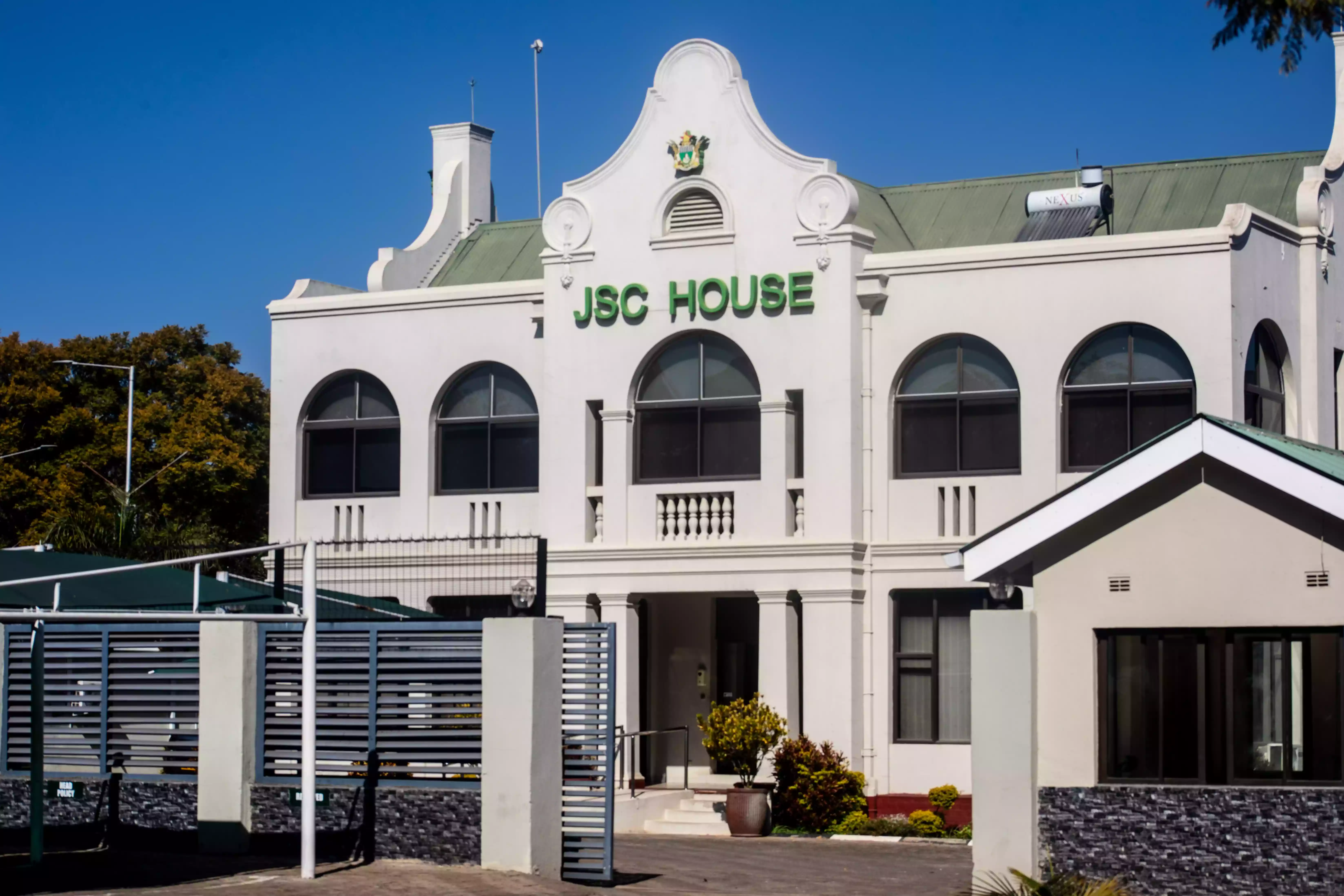
A 23-YEAR-OLD Harare man has appeared in court on allegations of impersonating Deputy Chief Justice Paddington Garwe in a bid to obtain information about upcoming Judicial Service Commission (JSC) interviews for IT officers.

The suspect, Martin Rashai, appeared before Harare magistrate Artwell Sanyatwe on Saturday facing a charge of impersonating a public officer.

He was remanded in custody to today for bail application.

The complainant is the Judicial Service Commission of Zimbabwe.

It is the State’s case that on May 5, the deputy head of human resources at JSC, Sekeni Tafadzwa and human resources officer Abigail Ziti received a WhatsApp message from Rashai, who was using mobile number +263714000834.

The accused allegedly identified himself as Deputy Chief Justice Garwe and requested confirmation of the date for IT officer interviews.

He is further alleged to have inquired about a transport officer position at the Kwekwe Magistrates’ Court.

The inquiries raised suspicion among the officials, as it was unusual for a Constitutional Court judge to directly follow up on junior vacancies and communicate without going through the relevant departmental structures.

Keep Reading

The officials reportedly informed him that they were not certain about the interview schedule.

Ziti then asked where he was stationed and he allegedly said he was based at the Constitutional Court. Based on that information, she assumed he was, indeed, the Deputy Chief Justice and shared the requested information.

Ziti later attempted to call the number, but it was unreachable. A WhatsApp call went unanswered, although he allegedly responded via text requesting that she sends messages instead.

She then asked him to confirm whether he was, indeed, Deputy Chief Justice Garwe and he allegedly said he was.

Ziti subsequently contacted the Superior Court’s human resources department to verify whether they had engaged with anyone regarding the vacancies, and was told they had not.

On May 6, she checked Deputy Chief Justice Garwe’s official contact details in the human resources system and personnel file and discovered that the number used to contact her did not match any official records.

On May 7, Ziti reported the matter to Sekeni, who said he had also been contacted by the same number. An internal investigation was launched, which reportedly revealed that Rashai had impersonated the Deputy Chief Justice.

On May 8, Ziti escalated the matter to the deputy secretary, one Katsande, leading to a formal report and subsequent police action.

Detectives launched investigations and discovered that Rashai had previously applied for a vacancy at JSC, using his personal details, which assisted in tracing him.

He was later arrested in the Hurungwe area.

Police obtained a warrant of search and seizure requesting NetOne Zimbabwe to provide CID Harare with full subscriber details and call history for the number used in the alleged offence.

NetOne reportedly confirmed that the line was registered in Rashai’s name.

The post Man in trouble for impersonating Deputy Chief Justice Garwe  appeared first on Zimbabwe Situation.

Harare council in the spotlight after three fall into port pit and die 

Source: Harare council in the spotlight after three fall into port pit and die -Newsday Zimbabwe HARARE, Jun. 8 (NewsDay Live) — Three people died after falling into an unguarded sewer pit left open by City of Harare workers carrying out repairs in Budiriro 3, triggering outrage from residents and raising the prospect of legal […]

The post Harare council in the spotlight after three fall into port pit and die  appeared first on Zimbabwe Situation.

Source: Harare council in the spotlight after three fall into port pit and die -Newsday Zimbabwe

HARARE, Jun. 8 (NewsDay Live) — Three people died after falling into an unguarded sewer pit left open by City of Harare workers carrying out repairs in Budiriro 3, triggering outrage from residents and raising the prospect of legal action against the local authority.

The deaths, confirmed Monday by the Combined Harare Residents Association (CHRA), have sparked calls for criminal accountability against council officials responsible for the excavation.

CHRA described the tragedy as a preventable loss of life caused by negligence, a view echoed by Harare Mayor Jacob Mafume, who reportedly blamed the responsible council department for the incident.

“This loss of lives is quite regrettable in the sense that it could have been avoided,” CHRA said in a statement, calling for disciplinary action against those responsible and compensation for the affected families.

The tragedy is likely to expose the City of Harare to compensation claims from bereaved families, possible investigations by oversight bodies and heightened political pressure over its handling of public infrastructure and safety standards.

The City of Harare had not issued a statement on the incident by the time of publication.

CHRA said the Budiriro deaths were symptomatic of broader failures within the local authority, citing numerous unattended excavations across the capital that continue to endanger residents.

“It reflects the rot within the City of Harare, where open pits that pose a danger to lives have become the order of the day,” the association said.

The residents’ body said it would engage the Zimbabwe Human Rights Commission to investigate what it described as a recurring pattern of council negligence that has resulted in deaths and injuries.

The association said accountability should extend beyond internal disciplinary measures and include an examination of whether council officials responsible for the works could face civil or criminal liability.

CHRA also urged residents and affected families to report hazardous infrastructure and open excavations, saying it would intensify efforts to pressure the council into addressing public safety concerns.

The incident is expected to deepen scrutiny of Harare’s service delivery failures at a time when the council is already facing criticism over deteriorating roads, water shortages, sewer bursts and waste management challenges. The deaths are likely to intensify demands for greater accountability from city officials and elected councillors charged with safeguarding public welfare.

The post Harare council in the spotlight after three fall into port pit and die  appeared first on Zimbabwe Situation.