Zimbabweans facing harrowing slavery in Qatar as Mnangagwa regime turns a blind eye

Source: Zimbabweans facing harrowing slavery in Qatar as Mnangagwa regime turns a blind eye The hypocrisy is staggering. Tendai Ruben Mbofana Qatar boasts an elected seat on the United Nations Human Rights Council for the 2025 to 2027 term. If you value my social justice advocacy and writing, please consider a financial contribution to keep […]

The post Zimbabweans facing harrowing slavery in Qatar as Mnangagwa regime turns a blind eye appeared first on Zimbabwe Situation.

Source: Zimbabweans facing harrowing slavery in Qatar as Mnangagwa regime turns a blind eye

The hypocrisy is staggering.

Tendai Ruben Mbofana

Qatar boasts an elected seat on the United Nations Human Rights Council for the 2025 to 2027 term.

If you value my social justice advocacy and writing, please consider a financial contribution to keep it going. Contact me on WhatsApp: +263 715 667 700 or Email: mbofana.tendairuben73@gmail.com

This position carries an explicit, legally binding obligation to uphold and safeguard the highest global standards of human dignity.

Yet, beneath the polished veneer of Doha’s glittering skyscrapers and its hollow public relations campaigns about labor reform lies a dark, state-sanctioned reality.

For thousands of vulnerable African migrant workers, particularly Zimbabwean domestic workers, Qatar operates not as a land of economic opportunity, but as a predatory trap of modern-day slavery.

A devastating press release sent to me by the Human Rights Association (HRA) has pulled back the curtain on this institutionalized hypocrisy, documenting the horrific treatment of Zimbabwean women who were lured by predatory recruitment agencies, stripped of their documents, and subjected to unpunished abuse.

Their stories are a visceral reminder that the notorious kafala system—a sponsorship framework that binds a worker’s legal status entirely to their employer—remains alive, well, and deeply vicious in the domestic sphere.

Consider the case of Chiedza, a 27-year-old woman from Harare who traveled to Doha on the promise of a salary that could rescue her family from economic hardship back home.

Upon arrival, her passport was immediately confiscated by her employer.

For six months, Chiedza was subjected to unlawful confinement, forced to work from before dawn until past midnight, seven days a week, with absolutely no right to rest under the pretext that she owed a fictional recruitment debt.

After half a year of relentless labor, she received no wages.

When she desperately sought help from the Zimbabwean embassy, she was met with bureaucratic cowardice, told that diplomatic options were limited without the abusive employer’s cooperation.

Then there is Tinashe, a 32-year-old from Bulawayo, who faced severe physical violence inside a Qatari household.

When she attempted to escape the blows, she was threatened with immediate arrest and deportation as a runaway criminal.

While a civil society organization eventually managed to extract her from the country, Tinashe was forced to flee Qatar with no legal recourse, stripped of her stolen wages, and denied any semblance of justice.

She returned to Zimbabwe with nothing but the physical and psychological scars of state-sanctioned exploitation.

These accounts are not isolated incidents of rogue employers behaving badly.

They are the predictable, structural outcomes of a Qatari legal architecture designed to leave domestic workers completely defenseless.

Qatar explicitly excludes domestic workers from the protections of its national Labour Law.

This deliberate legislative blackout creates a dangerous vacuum of accountability, effectively granting employers total ownership over foreign women.

It is a legal environment that allows employers to extract up to 100 hours of work per week without a single day of rest, as extensively documented by Amnesty International.

Worse still, Qatar is actively moving to reverse the minimal labor reforms it previously trumpeted to the international community.

In 2024, the country’s Shura Council proposed reinstating the draconian requirement that forces migrant workers to secure their employer’s explicit permission before exiting the country.

This is a direct, unvetted attempt to solidify the chains of captivity, ensuring that an abused worker cannot even flee the country without the consent of her abuser.

The sheer hypocrisy of the Qatari state is entirely indefensible.

A nation cannot credibly sit on the UN Human Rights Council while maintaining a domestic legal framework that treats African women as disposable commodities.

The HRA and its Chairman, Saad Kassis-Mohamed, have rightly pointed out that Qatar’s continued exclusion of domestic workers from basic labor protections is completely incompatible with its international human rights mandates.

Doha has mastered the art of cosmetic diplomacy, announcing superficial kafala reforms to appease Western critics while leaving the most vulnerable workers entirely exposed to wage theft, physical assault, and forced confinement.

This crisis also demands a harsh, uncompromising mirror be held up to the Zimbabwean government and its diplomatic missions abroad.

It is an absolute travesty when a Zimbabwean citizen turns to her own embassy for protection against modern slavery, only to be told that the state is powerless against an abusive foreign employer.

Our foreign missions must stop acting as passive observers to the trafficking and exploitation of our people.

​The Harare regime must stop hiding behind its nonsensical “friend to all and enemy to none” foreign policy doctrine—a cowardly stance that consistently sacrifices the safety of our people on the altar of diplomatic etiquette.

We see this same spineless abdication of duty in South Africa, where the government remains morbidly obsessed with preserving “cordial relations” with foreign capitals while its own citizens are subjected to relentless abuse and brutality abroad.

The protection of Zimbabwean lives abroad must be a non-negotiable foreign policy directive, not a bureaucratic afterthought.

The global community must demand immediate, systemic structural change from Qatar.

The Gulf nation must completely dismantle the kafala system in practice, not just on paper, and bring all domestic workers fully within the comprehensive scope of its national labor laws.

Furthermore, Qatari authorities must criminally prosecute, jail, and heavily fine employers who perpetrate wage theft, unlawful confinement, and physical violence.

Until Doha treats the abuse of African migrant workers as the heinous crime it is, its international human rights credentials are an absolute farce, and its seat on the UN Human Rights Council remains a profound stain on global justice.

The post Zimbabweans facing harrowing slavery in Qatar as Mnangagwa regime turns a blind eye appeared first on Zimbabwe Situation.

Machacha’s flimsy attempt to defend CAB3 actually exposes the sinister motives behind the unpopular bill

Source: Machacha’s flimsy attempt to defend CAB3 actually exposes the sinister motives behind the unpopular bill Silence masks deceptiveness; statements expose it. Tendai Ruben Mbofana The proposed Constitutional Amendment (No. 3) Bill, or CAB3, has ignited a profound political and legal crisis, exposing deep fractures within Zimbabwe’s ruling establishment. If you value my social justice […]

The post Machacha’s flimsy attempt to defend CAB3 actually exposes the sinister motives behind the unpopular bill appeared first on Zimbabwe Situation.

Source: Machacha’s flimsy attempt to defend CAB3 actually exposes the sinister motives behind the unpopular bill

Silence masks deceptiveness; statements expose it.

Tendai Ruben Mbofana

The proposed Constitutional Amendment (No. 3) Bill, or CAB3, has ignited a profound political and legal crisis, exposing deep fractures within Zimbabwe’s ruling establishment.

If you value my social justice advocacy and writing, please consider a financial contribution to keep it going. Contact me on WhatsApp: +263 715 667 700 or Email: mbofana.tendairuben73@gmail.com

When retired senior military figures, led by Air Marshal Henry Muchena, broke ranks to warn that the bill risks destabilizing the nation by dismantling the direct presidential popular vote, it signaled an unprecedented systemic anxiety.

The subsequent public response by ZANU PF National Political Commissar Munyaradzi Machacha sought to minimize these warnings, offering a dual defense rooted in regional precedent and semantic legal technicalities.

However, a critical examination of Machacha’s arguments reveals a profound misalignment with both the material reality of regional governance and the foundational spirit of Zimbabwe’s supreme law.

Machacha’s initial defense leans heavily on regional equivalence, pointing to South Africa, Botswana, and Angola to argue that an indirect presidential election via parliament is a standard democratic model.

This comparison is a false equivalence that ignores the structural mechanics of those states.

In South Africa, the parliamentary election of the president is anchored by a highly empowered, independent judiciary and a system of proportional representation that forces robust internal party accountability and coalition-building.

To understand why Machacha’s comparison is fraudulent, one must understand how this system actually works.

Unlike Zimbabwe, where the country is carved into individual constituencies and whoever gets the most votes in a specific district wins that seat while all other votes are thrown away, South Africa has no constituency boundaries.

Instead, the entire nation votes for parties, and the seats in parliament are shared out strictly according to the percentage of the total national vote each party receives.

For the ordinary voter, the math is simple and fair: if a party wins 60% of the total national vote, they are given exactly 60% of the seats in parliament.

If a smaller opposition party wins just 5% of the national vote, they get 5% of the seats.

Every single vote counts directly toward the final makeup of parliament, meaning a ruling party cannot manipulate boundaries or use violence in a few strategic districts to engineer an artificial majority.

Zimbabweans know all too well that under our current constituency system, a party can easily capture a two-thirds majority in parliament by winning narrow victories in gerrymandered rural districts, even if the vast majority of the population across the country actually voted against them.

South Africa’s system completely eliminates this distortion, ensuring that the parliament choosing the president genuinely mirrors the precise political will of the entire population.

Botswana’s model operates within an unbroken, decades-long tradition of institutional stability and strict adherence to the rule of law.

Conversely, Angola’s closed-list system has historically centralized immense executive power, drawing widespread criticism for eroding direct accountability.

To suggest that Zimbabwe can seamlessly adopt an indirect election model without possessing the identical, deeply entrenched institutional checks and balances found in neighboring capitals is a dangerous oversimplification.

It strips the model of its safeguarding context, risking the total centralization of executive power under the guise of regional alignment.

Beyond this flawed regional comparison, the core of Machacha’s defense rests on an even more fragile premise regarding the extension of the current presidential term.

In responding to the retired officers, Machacha explicitly stated that the bill does not confer an additional term on the president, but rather proposes an extension of the existing electoral cycle by two years.

He argues that this prolongation does not technically amount to a third presidential term.

This is semantic gymnastics of the highest order, attempting to construct a distinction without a material difference.

To the ordinary Zimbabwean voter, the label attached to the extension is irrelevant.

Whether framed as an elongated cycle or lengthening of the term, the physical reality remains identical: an incumbent administration remains in power beyond the strict five-year mandate originally granted by the electorate.

Let us be clear: the debate around CAB3 has never been about a third term.

Machacha’s admission that the bill elongates the current cycle runs directly into an insurmountable constitutional wall: Section 328(7) of the Zimbabwean Constitution.

This specific clause explicitly dictates that any constitutional amendment that extends the length of time a person can hold office cannot benefit the individual who held that office at any time before the amendment was passed.

By openly admitting that CAB3 is meant to add two years to the electoral cycle, Machacha has exposed the deceit.

He is publicly confessing that this bill changes the exact timeline the President was elected to serve from five to seven years.

Under the clear, unambiguous wording of Section 328(7), the sitting president legally cannot be the beneficiary of those additional two years.

To bypass this restriction, the government would have to amend Section 328 itself.

Because Section 328 is an entrenched clause, it cannot simply be changed by a whipped majority in parliament; it strictly requires a national referendum, putting the ultimate power directly back into the hands of the voters.

When senior political figures attempt to use semantic technicalities to alter the agreed-upon rules of political transition mid-stream, they create a volatile legal gray zone.

The warnings from the retired military faction were not “mischievous,” but rather a rational calculation of the structural friction that occurs when the direct popular mandate of a commander-in-chief is tampered with.

Ultimately, Machacha’s defense fails because it treats the constitution as a series of isolated words to be manipulated, rather than a cohesive framework designed to protect the sovereign will of the people.

Demanding a direct vote and adhering to strict, unyielding term limits are not optional design features of Zimbabwe’s democracy; they are the very pillars holding the state together.

The post Machacha’s flimsy attempt to defend CAB3 actually exposes the sinister motives behind the unpopular bill appeared first on Zimbabwe Situation.
BILL WATCH: Committee Meetings This Week

Source: BILL WATCH: Committee Meetings This Week PARLIAMENTARY COMMITTEES SERIES 8/2026 Six open Committee meetings are scheduled for next week, as indicated below.  In addition, the Thematic Committee on Peace and Security will be continuing its fact-finding visits to renewable energy projects.  The committee’s itinerary is also set out below. “Open”, in the context of […]

The post BILL WATCH: Committee Meetings This Week appeared first on Zimbabwe Situation.

Source: BILL WATCH: Committee Meetings This Week

PARLIAMENTARY COMMITTEES SERIES 8/2026

Six open Committee meetings are scheduled for next week, as indicated below.  In addition, the Thematic Committee on Peace and Security will be continuing its fact-finding visits to renewable energy projects.  The committee’s itinerary is also set out below.

“Open”, in the context of committee meetings, means that members of the public can attend them, but as observers only.  Members of the public wishing to attend meetings in the New Parliament Building will need to produce their IDs to gain entry to the building.

Parliament’s schedule of all the committee meetings next week, open and closed, can be accessed on the Veritas website [link].

Monday 8th June at 10 a.m.

Portfolio Committee on Defence, Home Affairs, Security Services and War Veterans Affairs

Oral evidence from the Ministry of Home Affairs and Cultural Heritage, the Commissioner-General of Police and Xicolokolo Lobby Group on a petition regarding private firearms ownership, licensing, registration and enforcement

Venue:  Committee Room 2, first floor, New Parliament Building

Monday 8th June at 10 a.m.

Portfolio Committee on ICT, Postal and Courier Services

Oral evidence from the Ministry of ICT, Postal and Courier Services on issues arising from the Ministry’s 2025 third and fourth quarter Budget Performance Reports.

Venue:  Committee Room 3, first floor, New Parliament Building

Monday 8th June at 2 p.m.

Portfolio Committee on Youth Empowerment, Development and Vocational Training

Oral evidence from the Ministry of Youth Empowerment, Development and Vocational Training on issues arising from the Ministry’s 2025 fourth quarter Budget Performance Report.

Venue:  Committee Room 7, second floor, New Parliament Building

Monday 8th June at 2 p.m.

Portfolio Committee on Women Affairs, Community and SMEs Development

Oral evidence from the Ministry of Women Affairs, Community and SMEs Development on issues arising from the Ministry’s 2025 third and fourth quarter Budget Performance Reports

Venue:  Committee Room 8, second floor, New Parliament Building

Tuesday 9th June at 10 a.m.

Portfolio Committee on Energy and Power Development

Oral evidence from the Ministry of Local Government and Public Works on an inquiry into the allocation of service station stands in residential areas

Venue:  Committee Room 10, second floor, New Parliament Building

Thursday 11th June at 10 a.m.

Joint Portfolio Committee on Sport, Recreation, Arts and Culture, and Thematic Committee on Culture and Heritage

Oral evidence from the Ministry of Home Affairs and Cultural Heritage on government policies, programmes and institutional mechanisms aimed at preserving Zimbabwe’s cultural heritage and promoting national unity and cultural diversity

Venue:  Committee Room 11, third floor, New Parliament Building

Visits to Renewable Energy Projects

Team A

Kariba, Monday 8th June

Activity:       Meeting with Zimbabwe Power Company (ZPC)

Time:   12:30 p.m.

Activity:       Tour of Kariba South Hydro Power Station

Time:   1:30 p.m.

Team B

Seke, Tuesday 9th June

Activity:       Meeting with IPP and Partners

Time:   11 a.m.

Activity:       Tour of Harava Solar Plant

Time:   12 p.m.

Veritas makes every effort to ensure reliable information, but cannot take legal responsibility for information supplied.

The post BILL WATCH: Committee Meetings This Week appeared first on Zimbabwe Situation.

Nurse registration services set for decentralisation

Source: Nurse registration services set for decentralisation – herald Rumbidzayi Zinyuke Senior Health Reporter Thousands of nurses could soon be spared costly and time-consuming trips to Harare under plans to decentralise registration services and bring critical regulatory processes closer to healthcare workers across the country. The initiative is expected to make it easier for nurses […]

The post Nurse registration services set for decentralisation appeared first on Zimbabwe Situation.

Source: Nurse registration services set for decentralisation – herald

Rumbidzayi Zinyuke

Senior Health Reporter

Thousands of nurses could soon be spared costly and time-consuming trips to Harare under plans to decentralise registration services and bring critical regulatory processes closer to healthcare workers across the country.

The initiative is expected to make it easier for nurses to register, renew practising certificates and access other professional services without travelling long distances to the capital, particularly from districts such as Binga, Beitbridge and Victoria Falls.

Speaking on the sidelines of the commemoration of the International Day of the Midwife at United Bulawayo Hospitals recently, Deputy Minister of Health and Child Care Sleiman Kwidini said the move is in line with President Mnangagwa’s vision of ensuring that no place and no one is left behind in accessing public services.

He said the current system places an unnecessary burden on nurses and other healthcare professionals from distant provinces who must travel to Harare after completing their training or whenever they need regulatory services.

“We have seen nurses and other practitioners travelling all the way to Harare to do their registrations and other activities. But this is not in line with the President’s mantra that no place and no one should be left behind,” said Deputy Minister Kwidini.

“Can you imagine someone travelling from Beitbridge, Victoria Falls or Binga just to register? This is the time to devolve services.”

He said authorities had resolved to establish registration offices in the southern region to ensure services currently available only in Harare become accessible to health workers closer to where they live and work.

“They should come down to the southern region and set up offices so that all the services being given in Harare are also found in the southern region. Everyone is equal and should be able to access services. Our nurses and professionals will be happy with that,” he said.

Newly qualified nurses are required to register with the Nurses Council of Zimbabwe before they can practise professionally.

The registration process, which includes verification of qualifications, issuance of practising certificates and updates to professional records, remains largely centralised in Harare.

As a result, many nurses from Matabeleland North, Matabeleland South, the Midlands and other distant provinces incur significant transport and accommodation costs in order to complete mandatory professional requirements.

Health sector stakeholders have long advocated for the decentralisation of regulatory services, arguing that the current arrangement disadvantages healthcare workers in remote areas and creates barriers to professional practice.

The proposed reforms are expected to reduce travel expenses, shorten waiting times and improve access to essential services for nurses across the country.

Authorities also believe decentralisation will help speed up the deployment of newly qualified nurses to health institutions by reducing delays associated with registration and certification processes.

The move forms part of broader devolution and decentralisation reforms aimed at bringing public services closer to communities and addressing disparities in access between urban and rural areas.

Within the health sector, decentralisation has become a key pillar of efforts to strengthen service delivery, improve working conditions for healthcare professionals and enhance operational efficiency.

Zimbabwe continues to rely heavily on nurses as the backbone of its healthcare system, particularly in rural and hard-to-reach communities where they often serve as the first point of contact for patients seeking medical care.

In recent years, efforts to strengthen the health workforce have included increased training, recruitment and retention of nurses, midwives and other healthcare professionals, alongside measures to improve conditions of service and expand opportunities for professional development.

Officials believe decentralising nurse registration services will complement these initiatives by removing administrative obstacles that can delay the entry of newly qualified nurses into the workforce and hinder the career progression of those already in practice.

The post Nurse registration services set for decentralisation appeared first on Zimbabwe Situation.

EMA urges miners to strengthen environmental stewardship 

Source: EMA urges miners to strengthen environmental stewardship – herald Victor Maphosa Mashonaland East Bureau The Environmental Management Agency (EMA) has called on mining companies to strengthen environmental stewardship and fully comply with regulations designed to protect communities, workers and natural resources. This comes as EMA has intensified compliance inspections in mines across Mashonaland East […]

The post EMA urges miners to strengthen environmental stewardship  appeared first on Zimbabwe Situation.

Source: EMA urges miners to strengthen environmental stewardship – herald

Victor Maphosa

Mashonaland East Bureau

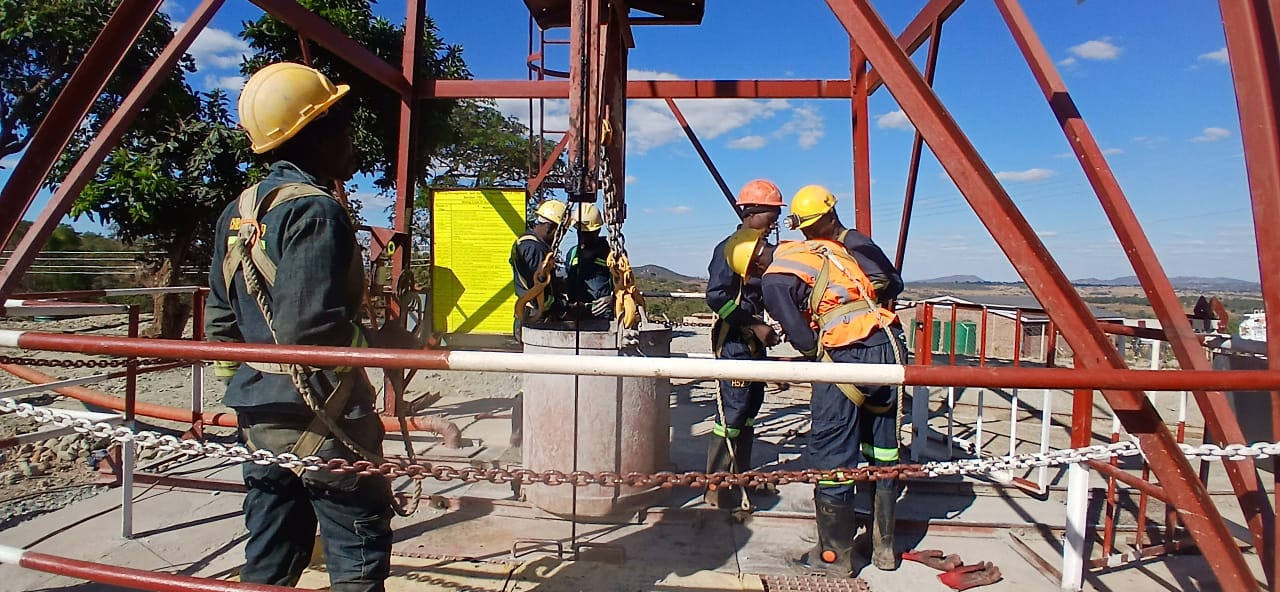
The Environmental Management Agency (EMA) has called on mining companies to strengthen environmental stewardship and fully comply with regulations designed to protect communities, workers and natural resources.

This comes as EMA has intensified compliance inspections in mines across Mashonaland East and Mashonaland Central Provinces to promote sustainable mining practices and improve safety standards.

Speaking during a tour of mining operations in Goromonzi District this week, EMA Mashonaland East Education and Publicity Officer Mr Astas Mabwe said it is encouraging to note that many mining companies are improving their environmental management systems.

“As EMA, we conducted a compliance blitz covering Mashonaland Central and Mashonaland East during the last two weeks of May. The exercise showed that while most miners are complying with environmental regulations, some still need to improve,” he said.

He said EMA’s mandate is not only to enforce environmental regulations but also to support sustainable development and promote a safe and healthy environment.

Mr Mabwe said environmental compliance and adherence to operational standards are critical in preventing accidents and reducing health risks in mining communities.

“It is unfortunate that we recently lost a life in a mining accident. This is why we continue urging miners to comply with regulations and maintain operations that meet required standards. Compliance helps prevent accidents, protects workers and minimises environmental hazards.”

He also encouraged prospective investors in the mining sector to follow all legal and environmental procedures before commencing operations.

The inspections form part of EMA’s ongoing efforts to promote responsible mining practices, environmental conservation and occupational safety as the mining sector continues to play a key role in Zimbabwe’s economic development.

The post EMA urges miners to strengthen environmental stewardship  appeared first on Zimbabwe Situation.