Auditors warn of RioZim material uncertainty risk

Source: Auditors warn of RioZim material uncertainty risk – herald Business Reporter RioZim Limited is teetering on the brink of structural collapse, with auditors dropping a bombshell report that raises “material uncertainty” over the company’s ability to survive as a going concern. Auditors believe the company’s survival prospects now hinge on a successful fundraiser, which […]

The post Auditors warn of RioZim material uncertainty risk appeared first on Zimbabwe Situation.

Source: Auditors warn of RioZim material uncertainty risk – herald

Business Reporter

RioZim Limited is teetering on the brink of structural collapse, with auditors dropping a bombshell report that raises “material uncertainty” over the company’s ability to survive as a going concern.

Auditors believe the company’s survival prospects now hinge on a successful fundraiser, which has already faced some hiccups amid a spirited legal push from workers and shareholders for a recuperative process.

The audited financial statements by Forvis Mazars (Zimbabwe) for the year ended December 31, 2025 — belatedly published on June 1, 2026 — provide a fresh exposé of RioZim’s severe operational distress. The audit findings vindicate the actions of one minority shareholder and workers who have vigorously pursued corporate rescue for one of Zimbabwe’s most diversified mining houses.

Listed on the Zimbabwe Stock Exchange (ZSE), RioZim Limited operates a highly diversified asset portfolio across Zimbabwe, spanning gold, diamonds and base metals.

Its core precious metal operations centre on three major gold mines — Cam & Motor, Renco and Dalny — and a 22 percent stake in Murowa Diamonds. The group also wholly owns the Empress Nickel Refinery.

According to the independent audit report, RioZim’s financial position has deteriorated dramatically.

The group plunged into a loss of ZiG739,1 million in 2025, widening its deficit from a loss of ZiG628,5 million in 2024. In equivalent terms, the company’s full-year net losses spiked to US$29,5 million in 2025 as its gold production plummeted by 80 percent, crashing to just 84kg compared to 428kg a year earlier.

Current liabilities outpaced current assets by about ZiG2,93 billion, up from ZiG2,49 billion in 2024.

The group’s total liabilities have overtaken total assets by ZiG1,56 billion, nearly doubling the ZiG838,4 million deficit in 2024.

Historical losses have ballooned to ZiG1,67 billion, up from ZiG944,5 million.

The auditors delivered a warning on the group’s core accounting assumptions.

“As stated in Note 33.9 (of the financial statement), these conditions, along with other matters as set forth in the note, indicate that a material uncertainty exists that may cast significant doubt on the group and the company’s ability to continue as a going concern,” says the report.

“Nevertheless, the financial statements . . . have been prepared on a going concern basis, the validity of which is highly dependent on the company’s ability to obtain sufficient funding to support its operations.”

The auditors took the extraordinary step of warning that if emergency funding fails to materialise, the company may be forced to abandon the going concern assumption and prepare future statements on a “liquidation basis”, requiring a massive reclassification and markdown of assets.

“Should the going concern basis for the preparation of financial statements no longer be appropriate, adjustments would have to be made in the financial statements relating to the amounts and classification of assets and liabilities.

“No adjustments have been made to these financial statements.”

The report comes right in the middle of an intense legal battle over the control of the company.

A few weeks ago, a minority shareholder filed a fresh court application to force RioZim into involuntary corporate rescue proceedings — a statutory mechanism designed to strip power from management and hand over control to an independent practitioner to restructure the distressed business.

This marked the second time in less than a year that RioZim has had to fend off corporate rescue.

The previous bid launched by the Zimbabwe Diamond and Allied Minerals Workers union (ZDAMWU) exposed a massive debt burden and US$5,6 million in unpaid worker wages.

While RioZim management successfully fought off the ZDAMWU bid in both the High Court and the Supreme Court, the latest lawsuit has placed RioZim’s balance sheet credibility under renewed scrutiny.

Management had dismissed the worker’s claims as “bare and unsubstantiated”, but the auditors’ report portrays an equally perilous situation. The report has also triggered separate corporate governance alarms.

Published well beyond the statutory 90-day post-year-end limit mandated by the ZSE listing requirements, RioZim offered no explanation or clear publication trail in its accompanying notes — a move financial analysts say misleads the investing public. Worse, the financial statements omitted that the company has material uncertainty related to a going concern.

Beyond the immediate threat of insolvency, the audit flagged several critical audit matters in which management’s accounting practices are under scrutiny, under International Financial Reporting Standards.

Foremost among these are the highly subjective impairment assessments of property, plant and equipment, as well as the assumptions used to value the company’s exploration, evaluation and development assets, which amount to about ZiG344,2 million.

The auditors signalled in their report that these valuations may fail to meet rigorous international standards. The company is also fighting an uphill battle in the courts, with the audit report disclosing that RioZim is facing aggressive litigation from multiple parties.

Despite turnaround strategies pushed by RioZim’s directors, including a recent production contract with Chinese firm FeiFan Mining at its Renco Mine, market experts note that the company is effectively on “life support”.

Missing out on 2025’s historic gold price rally due to idle, flooded pits at its Cam & Motor Mine, the situation has left RioZim completely exposed to its multi-billion ZiG debt pile.

A recent RioZim extraordinary general meeting passed all the resolutions, including the disposal of core diamond assets to settle a US$60,8 million debt owed to related party RZM Murowa. Under the approved terms, RioZim will relinquish its entire 22 percent shareholding in RZM Murowa for US$23,8 million and sell four diamond mining claims currently utilised by RZM Murowa for US$4,6 million.

The disposals, totalling US$28,4 million, will be executed against a full waiver of the multi-million-dollar loan facility provided by RZM Murowa.

The shareholders also approved the sale of several key mining claims to unrelated third parties to raise much-needed liquidity.

These are Mtandahwe (copper and tungsten mine) for a minimum price of US$3 million and One Step (gold mine) for US$1 million, with a price adjustment clause. The consideration could increase if proven in-situ reserves exceed 400kg of gold, though the buyer retains an exit option if resources are found to be unsuitable.

The company successfully secured authorisation for a future loan facility not exceeding US$35 million. The debt is to be secured against company assets of equivalent value, with the specific terms left to the discretion of the directors.

The post Auditors warn of RioZim material uncertainty risk appeared first on Zimbabwe Situation.
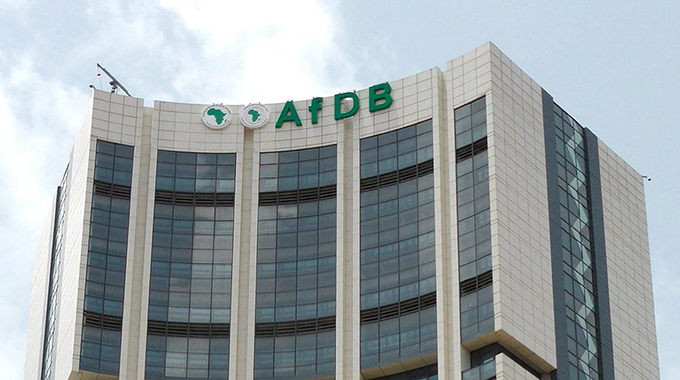
AfDB pushes for new African financial system

Source: AfDB pushes for new African financial system – herald Tapiwanashe Mangwiro AFRICA has been advised to rethink how it finances development as traditional aid flows become increasingly uncertain and global geopolitical tensions reshape capital allocation. The recommendation appears in the African Development Bank (AfDB)’s “African Economic Outlook 2026” report. In the report, released amid […]

The post AfDB pushes for new African financial system appeared first on Zimbabwe Situation.

Source: AfDB pushes for new African financial system – herald

Tapiwanashe Mangwiro

AFRICA has been advised to rethink how it finances development as traditional aid flows become increasingly uncertain and global geopolitical tensions reshape capital allocation.

The recommendation appears in the African Development Bank (AfDB)’s “African Economic Outlook 2026” report.

In the report, released amid growing concerns over shrinking development assistance and rising debt-servicing costs across Africa, AfDB argues that the continent must build a more autonomous financial system capable of mobilising its own resources rather than relying heavily on external funding.

The warning comes as many governments, including Zimbabwe, face mounting infrastructure requirements, limited fiscal space and increasing competition for international capital.

“Rising geopolitical tensions could reduce official development assistance flows to Africa, heightening near-term risks to overall external financing,” said AfDB in the report.

The AfDB estimates that Africa’s annual development financing gap now stands at approximately US$1,3 trillion.

The institution argues that the continent possesses sufficient financial resources to close much of that gap if inefficiencies in mobilisation and allocation are addressed.

“Africa’s challenge is not only to close financing gaps, but also to transform financing systems to mobilise capital at scale, deploy it efficiently and strengthen financial agency,” the AfDB said.

Central to that ambition is the New African Financial Architecture for Development launched by the AfDB earlier this year.

The initiative seeks to deepen African capital markets, improve domestic resource mobilisation and reduce dependence on external financing sources that have become increasingly volatile.

The AfDB said Africa’s financial ecosystem already manages more than US$4 trillion in assets, but much of that capital remains fragmented and disconnected from productive investment opportunities.

“Shallow and fragmented markets limit the mobilisation of domestic savings and their allocation to productive investment,” the bank said.

For Zimbabwe, where access to international finance remains constrained and development priorities continue to outpace available public resources, the recommendations carry particular significance.

Industrialist Dr Nxaba Ndiweni said the report correctly identifies one of Africa’s longstanding structural weaknesses: the inability to convert domestic savings into industrial capital.

“The continent has spent decades discussing financing gaps while overlooking the resources that already exist within African economies,” he said.

“In Zimbabwe, pension funds, insurance companies, mining revenues and diaspora capital represent significant pools of finance. The challenge has always been creating credible institutions capable of converting those resources into long-term productive investment.”

Dr Ndiweni argued that industrialisation would remain elusive unless African countries deliberately build financial systems that support manufacturing, infrastructure and value addition.

“Foreign capital will always play an important role, but sustainable industrial development requires domestic ownership of the financing process,” he said.

“Countries that rely excessively on external funding inevitably become vulnerable to changes in global political and economic priorities.”

His comments echo AfDB’s conclusion that Africa must strengthen its own financial sovereignty to achieve durable economic transformation. Economist Gladys Shumbambiri-Mutsopotsi said the report should be viewed as a wake-up call for governments that continue to rely heavily on external support.

“What the AfDB is effectively saying is that the era of predictable aid flows is ending,” she said. “The development model that many African countries became accustomed to over the past several decades is becoming increasingly difficult to sustain.”

Ms Shumbambiri-Mutsopotsi said this places renewed emphasis on tax administration, revenue mobilisation and public financial management.

“The report identifies significant leakages in tax systems across the continent. Those are resources that governments can no longer afford to lose,” she said.

Ms Shumbambiri-Mutsopotsi said, for Zimbabwe, improvements in revenue mobilisation could prove more important than seeking additional borrowing.

Investment analyst Mrs Rudo Mashiringwane believes the report’s most significant message concerns the quality of institutions rather than the quantity of available capital.

“The report demonstrates that Africa’s financing challenge is increasingly institutional rather than financial,” she said.

“There is capital available.

“The issue is whether investors have confidence in the systems responsible for allocating it.”

Mrs Mashiringwane noted that investors are paying close attention to continental initiatives such as the African Financing Stability Mechanism, the African Monetary Institute and the proposed Africa Credit Rating Agency.

“The objective is to create a financial ecosystem that is more responsive to African realities and less vulnerable to decisions made outside the continent,” she said.

Mrs Mashiringwane further said countries able to demonstrate policy consistency, transparency and sound governance would be best positioned to benefit from the emerging financial architecture.

The post AfDB pushes for new African financial system appeared first on Zimbabwe Situation.

Govt investigates spike in infections, fatalities

Source: Govt investigates spike in infections, fatalities – herald Trust Freddy-Zimpapers Correspondent THE Government has launched a nationwide research to establish factors driving the recent sharp increase in malaria cases in some parts of the country, as health authorities grapple with a near four-fold increase in infections and a five-fold rise in deaths compared to […]

The post Govt investigates spike in infections, fatalities appeared first on Zimbabwe Situation.

Source: Govt investigates spike in infections, fatalities – herald

Trust Freddy-Zimpapers Correspondent

THE Government has launched a nationwide research to establish factors driving the recent sharp increase in malaria cases in some parts of the country, as health authorities grapple with a near four-fold increase in infections and a five-fold rise in deaths compared to the same period last year.

The investigations come as the country has recorded more than 65 000 malaria cases and 174 deaths by mid-April 2026, raising concerns that gains made towards malaria elimination could be reversed if the underlying causes are not urgently identified and addressed.

In an interview with The Sunday Mail, Health and Child Care Minister Dr Douglas Mombeshora said the upsurge was not unique to Zimbabwe but was being experienced across the region, including in districts that had previously been on course to eliminate the disease.

“The outbreaks of malaria are not peculiar to Zimbabwe alone; even in the region, there is an upsurge of malaria,” said Dr Mombeshora.

“Even in districts where we thought we were eliminating malaria, we are seeing cases increasing.”

The Government, he said, was conducting further research to determine whether the resurgence was linked to premature relaxation of elimination strategies, insecticide resistance or other emerging factors.

“We are not yet very sure, because we need to do more research and find out exactly why. There are various issues that we are looking at: Is it because we had relaxed and some of our elimination strategies were stopped early where we thought we had really eliminated before eliminating the vector? We have to look at that,” he said.

“We are also looking at resistance, to say are we getting resistance to the chemicals that we are using for vector control?”

Official data shows that Zimbabwe recorded more than 65 000 malaria cases and 174 deaths by mid-April this year, compared to approximately 17 000 cases and 34 deaths during the same period in 2025.

In response to the outbreak, the Government has intensified surveillance, expanded the distribution of insecticide-treated mosquito nets and increased indoor residual spraying programmes in affected communities.

“But what we have done in response is really to increase our surveillance, our distribution of insecticide-treated mosquito nets and also the inside spray in the houses, so we are increasing our efforts to control the malaria outbreak,” said Dr Mombeshora.

The authorities have also stepped up awareness campaigns through village health workers, traditional leaders and community structures to encourage the proper use of prevention measures.

“We are also conducting awareness campaigns in villages through our village health workers, also through the communities and community leaders like the chiefs, traditional leaders, so that people are more aware and we also want to insist on the proper use of our nets and proper use of our prevention materials,” he said.

The post Govt investigates spike in infections, fatalities appeared first on Zimbabwe Situation.

A mugger’s grand robbery plan ends with broken leg, 10-year jail term

Source: A mugger’s grand robbery plan ends with broken leg, 10-year jail term – herald SOME criminals spend months plotting the perfect robbery. They imagine themselves walking away with expensive mobile phones and perhaps enough money to retire from their life of crime. Then there is Sandile Ngwenya. The 33-year-old Gwanda man has earned himself […]

The post A mugger’s grand robbery plan ends with broken leg, 10-year jail term appeared first on Zimbabwe Situation.

Source: A mugger’s grand robbery plan ends with broken leg, 10-year jail term – herald

SOME criminals spend months plotting the perfect robbery.

They imagine themselves walking away with expensive mobile phones and perhaps enough money to retire from their life of crime.

Then there is Sandile Ngwenya.

The 33-year-old Gwanda man has earned himself a place in the Hall of Criminal Infamy after what was supposed to be an armed robbery ended with a broken leg, head injuries, public humiliation and a 10-year prison sentence.

Ngwenya’s troubles began on the night of October 26 last year when he allegedly convinced himself that terrorising two unsuspecting residents in Mafuyana, Maphisa, would lead to instant riches.

Armed with an AK-SA ARMS AK20 9mm pistol and dressed in a black balaclava worthy of a low-budget action movie, the would-be robber positioned himself near the victims’ home and waited for them to return from the Mbeba Business Centre.

Around 10pm, the two men, aged 29 and 32, arrived home unaware that an expectant criminal was lurking in the shadows.

As they approached the back door, Ngwenya sprang into action, pointing the pistol at them and demanding cash and mobile phones before ordering them into the house.

Perhaps imagining himself as the star of a crime thriller, Ngwenya appeared convinced that the victims would obediently hand over their belongings and allow him to disappear into the night. Unfortunately for him, real life had other plans. One victim quietly slipped away to the other side of the house.

Instead of taking whatever he could get and fleeing, Ngwenya decided to go looking for him. It was at this point that his robbery script began to unravel. The remaining victim seized the opportunity and grabbed Ngwenya’s hand.

A fierce struggle followed, with the robber resorting to striking the victim on the forehead with the butt of the pistol. But matters soon became even worse. The second victim returned to assist his colleague. In desperation, Ngwenya turned the firearm on him and fired a shot, wounding him on the forehead.

The gunshot attracted neighbours, who rushed to the scene and joined the unfolding drama. What happened next transformed the armed robber into the chief casualty of his own crime. Instead of escaping with cash and phones, Ngwenya found himself overpowered by residents.

By the time the dust settled, he had sustained a broken right leg and head injuries.

The police arrived to find the failed criminal adventure in tatters.

Officers recovered the pistol, a magazine loaded with five live rounds, a black wallet containing a solitary US$1, a bus ticket and a Samsung Galaxy A03 cellphone.

Following his conviction on two counts of armed robbery, the Gwanda Magistrates’ Court handed Ngwenya an effective 10-year prison sentence.

For a man who set out looking for cash and valuables, it was arguably one of the worst investment decisions in recent criminal history.

The post A mugger’s grand robbery plan ends with broken leg, 10-year jail term appeared first on Zimbabwe Situation.

Private sector key to unlocking benefits from China’s zero-tariff initiative 

Source: Private sector key to unlocking benefits from China’s zero-tariff initiative – herald Nqobile Bhebhe, Zimpapers Senior Writer THE Competition and Tariff Commission (CTC) says Zimbabwe’s private sector, particularly small and medium enterprises (SMEs), will play a critical role in determining the extent to which the country benefits from China’s zero-tariff initiative, which offers duty-free […]

The post Private sector key to unlocking benefits from China’s zero-tariff initiative  appeared first on Zimbabwe Situation.

Source: Private sector key to unlocking benefits from China’s zero-tariff initiative – herald

Nqobile Bhebhe, Zimpapers Senior Writer

THE Competition and Tariff Commission (CTC) says Zimbabwe’s private sector, particularly small and medium enterprises (SMEs), will play a critical role in determining the extent to which the country benefits from China’s zero-tariff initiative, which offers duty-free access to one of the world’s largest consumer markets.

China’s decision to grant zero-tariff treatment to imports from 53 African countries, including Zimbabwe, took effect on 1 May and is expected to remain in place for an initial two-year period under the China-Africa Economic Partnership for Shared Development.

The zero-tariff policy presents a rare opportunity for China and Africa to upgrade trade, remove barriers and foster more open markets.

It will also help Africa revitalise industrialisation, unlock agricultural potential, and modernise and standardise agricultural production and agri-processing.

With zero tariffs in place, Africa, Zimbabwe included, is poised to attract Chinese investment and expand production capacity in mining — a sector that has long been a global supplier of critical minerals such as copper, cobalt and lithium to drive the growth of local manufacturing industries.

In an analysis titled “Unlocking the Chinese Market: Opportunities for Zimbabwe under China’s Zero-Tariff Initiative,” the CTC said the arrangement presents a rare opportunity for Zimbabwe to accelerate industrialisation, diversify exports and increase participation in global value chains.

“The recent decision by the Government of China to grant zero-tariff treatment to imports from 53 African countries, effective 1 May 2026, marks a significant development in global trade and presents a strategic opportunity for Zimbabwe’s export sector,” said the commission.

“By allowing qualifying products to enter the Chinese market duty-free, the initiative opens access to one of the largest and most dynamic consumer markets in the world.”

The commission noted that the initiative aligns closely with Zimbabwe’s economic development agenda, which prioritises value addition, industrialisation, export diversification and private sector-led growth.

China is already one of Zimbabwe’s most important trading partners and export destinations.
According to the CTC, Zimbabwe exported goods worth US$1,29 billion to China in 2024, with exports largely consisting of tobacco, mineral ores, lithium-related products and selected agricultural commodities.

However, the commission said the country’s export basket remains heavily concentrated in primary commodities, noting the need for greater value addition.

“Despite this performance, Zimbabwe’s export basket remains heavily concentrated in primary commodities. The zero-tariff initiative therefore offers an opportunity not only to increase export volumes but also to diversify and upgrade the country’s export structure,” said the CTC.

With China’s population exceeding 1,4 billion people, the commission believes Zimbabwe can significantly expand exports of processed and value-added products.

“The zero-tariff arrangement creates significant prospects for Zimbabwe to transition from commodity exports toward higher-value products. Key areas of opportunity include agro-processing, leather products, steel products and value-added mineral exports.”

The commission said Zimbabwe could move beyond exporting raw hides to producing finished leather products such as footwear, while the textile industry could shift from raw cotton exports to garment manufacturing.

Similarly, developments in the lithium sector provide opportunities for local beneficiation and processing before export.

“This shift is critical in addressing long-standing structural challenges where the economy exports raw materials while importing finished goods. Greater value addition will enhance domestic industrial capacity, increase foreign currency earnings, and support employment creation,” said the commission.

However, the CTC warned that tariff-free access alone would not guarantee export success.
It said Zimbabwean exporters would still need to comply with Chinese requirements relating to product standards, sanitary and phytosanitary measures, certification, packaging and quality assurance.

“While the elimination of tariffs improves market access, it does not automatically guarantee export success. Non-tariff measures remain a key determinant of competitiveness in the Chinese market,” said the commission.

“Zimbabwean exporters must meet stringent requirements relating to product standards, sanitary and phytosanitary measures, certification, packaging and quality assurance.”

The commission said Chinese consumers and regulators place significant emphasis on quality, consistency and reliability of supply, investing in modern production systems and certification processes essential.

To maximise benefits from the initiative, the CTC called for coordinated action between Government, regulators and industry.

It stressed the need to strengthen testing and certification infrastructure, improve standards compliance and ensure adherence to rules of origin required by Chinese authorities.

“Failure to comply with rules of origin may undermine the practical utilisation of the zero-tariff arrangement,” the commission warned.

The CTC said the private sector would ultimately determine the extent to which Zimbabwe capitalises on the opportunity.

“Concurrently, the private sector will play a central role in determining the extent to which Zimbabwe benefits from this initiative. Firms must proactively identify export opportunities, adapt products to meet market requirements and establish relationships with buyers and distributors in China.

“Small and medium enterprises, in particular, require targeted support to overcome constraints related to financing, production scale and compliance with standards. Strengthening export readiness across firms is therefore essential.”

Economists say the initiative could help Zimbabwe broaden its export base, boost manufacturing activity and increase foreign currency earnings if local firms seize the opportunity to move up the value chain.

The CTC said that China’s zero-tariff initiative should be viewed as more than a trade concession, describing it as “a strategic platform for economic transformation” capable of driving export growth, industrialisation and long-term economic resilience.

The commission said realising these gains would depend on Zimbabwe’s ability to build competitive industries, meet international standards and support exporters in securing and sustaining access to the Chinese market.

The post Private sector key to unlocking benefits from China’s zero-tariff initiative  appeared first on Zimbabwe Situation.