US eyes stronger trade, investment ties with Zim

Source: US eyes stronger trade, investment ties with Zim – herald Ivan Zhakata Herald Correspondent THE United States has reaffirmed its commitment to strengthening economic relations with Zimbabwe. Speaking during celebrations to mark the 250th anniversary of American independence in Harare yesterday, US Ambassador to Zimbabwe, Pamela Tremont, called for increased trade, investment and business […]

The post US eyes stronger trade, investment ties with Zim appeared first on Zimbabwe Situation.

Source: US eyes stronger trade, investment ties with Zim – herald

Ivan Zhakata

Herald Correspondent

THE United States has reaffirmed its commitment to strengthening economic relations with Zimbabwe.

Speaking during celebrations to mark the 250th anniversary of American independence in Harare yesterday, US Ambassador to Zimbabwe, Pamela Tremont, called for increased trade, investment and business partnerships between the two countries.

Ambassador Tremont said there was potential to expand economic cooperation for the benefit of both nations. The commemorations, held under the theme of an American county fair, brought together senior Government officials, diplomats, captains of industry, civil society representatives, academics and alumni of US exchange programmes.

Ambassador Tremont said the US was keen to see stronger commercial engagement with Zimbabwe through increased investment and expanded market access.

“Both our countries value innovation and entrepreneurship,” she said.  “We want to see American companies investing here. We want to see Zimbabwean companies accessing American markets and global supply chains. We want both our peoples to benefit from stronger economic ties.”

Her remarks come as Zimbabwe continues to pursue policies aimed at attracting foreign direct investment and expanding exports under the Second Republic’s economic development agenda.

Ambassador Tremont said the anniversary celebrations were also an opportunity to reflect on the enduring values upon which the United States was founded and the importance of building partnerships for the future.

“In 1776, our founders gathered in Philadelphia. They were mostly farmers, merchants and everyday people who believed in something bigger than themselves,” she said.

“They believed in an idea — that ordinary people could govern themselves, that freedom and opportunity should belong to everyone.”

Ambassador Tremont said people-to-people relations between Zimbabwe and the United States were important and educational, cultural and professional exchanges have played a key role in strengthening ties between the two nations.

She said the county fair theme reflected values of hard work, neighbourliness, self-reliance and community spirit, which were also evident in Zimbabwean society.

“A tradition for over 200 years, they are where community values shine — hard work, neighbourliness, self-reliance and community spirit,” Ambassador Tremont said.

“These are the values I see every day in Zimbabwe. I think the term ubuntu describes the county fair vibe perfectly.”

Speaking at the same event, acting Minister of Foreign Affairs and International Trade Dr Anxious Masuka commended the continued engagement between Zimbabwe and the United States and called for deeper collaboration to promote investment, trade and economic growth.

He said enhanced cooperation would help unlock new opportunities and contribute to shared prosperity for the peoples of both countries.

The celebrations formed part of a year-long global programme marking the 250th anniversary of American independence, with similar events being held at US missions around the world.

The Harare reception was supported by American companies and brands operating in Zimbabwe, underscoring growing commercial links between the two countries and the role of the private sector in strengthening bilateral relations.

The post US eyes stronger trade, investment ties with Zim appeared first on Zimbabwe Situation.


Sadc urged to speedily ratify legal instruments

Source: Sadc urged to speedily ratify legal instruments – herald Ivan Zhakata in VICTORIA FALLS SOUTHERN African Development Community member States have been encouraged to accelerate the ratification and implementation of regional legal instruments to strengthen regional integration, improve governance and ensure that decisions taken by the bloc deliver tangible benefits to citizens. The call […]

The post Sadc urged to speedily ratify legal instruments appeared first on Zimbabwe Situation.
Source: Sadc urged to speedily ratify legal instruments – herald

Ivan Zhakata in VICTORIA FALLS

SOUTHERN African Development Community member States have been encouraged to accelerate the ratification and implementation of regional legal instruments to strengthen regional integration, improve governance and ensure that decisions taken by the bloc deliver tangible benefits to citizens.

The call was made by South Africa’s Minister of Justice and Constitutional Development, Minister Mmamoloko Kubayi, who chairs the Committee of Ministers of Justice and Attorneys-General of SADC.

She was speaking at the close of the SADC Meeting of Ministers of Justice and Attorneys General in Victoria Falls yesterday.

The meeting brought together ministers, attorneys-general, senior legal officials and technical experts from across the region to deliberate on legal and institutional matters central to SADC’s regional integration agenda.

Said Minister Kubayi: “I am pleased to note that the committee has successfully considered and adopted all the agenda items before it.  “In this regard, we have provided legal guidance and recommendations on several important issues.

“These are critical to the advancement of the sub-regional integration agenda.”

Among the key matters considered were the draft agreement amending Article 33 of the SADC Treaty, the draft agreement establishing the SADC Tourism UniVisa and the draft charter establishing a regional pharmaceuticals and food procurement framework.

Minister Kubayi said the instruments would contribute significantly to strengthening regional cooperation, facilitating economic growth, enhancing public health systems and promoting the movement of people and services within the region.

The ministers also reviewed progress towards the re-operationalisation of the SADC Tribunal, with member States reaffirming their commitment to ongoing national consultations on the matter.

“We took stock of progress regarding the re-operationalisation of the SADC Tribunal and reaffirmed our collective commitment to continue national consultations aimed at advancing this important process,” Minister Kubayi said.

The meeting further considered issues relating to the SADC Administrative Tribunal and reviewed the status of signature, ratification and implementation of protocols and other legal instruments adopted by the regional bloc.

Minister Kubayi said member States needed to expedite ratification processes to ensure that regional commitments were translated into meaningful outcomes for citizens.

“The successful adoption of all agenda items reflects the spirit of cooperation, mutual respect and shared purpose that continues to characterise the work of this Community,” she said.

Minister Kubayi commended senior legal officials for the preparatory work undertaken ahead of the meeting and expressed appreciation to the SADC Secretariat for facilitating the deliberations.

She also thanked the Government and people of Zimbabwe for hosting the meeting and extending warm hospitality to delegates.

As South Africa prepares to assume the SADC Chairmanship in August this year, member States reaffirmed their commitment to strengthening legal cooperation and advancing the bloc’s vision of a peaceful, inclusive, industrialised and prosperous region.

The meeting ended with renewed calls for the harmonisation of legal frameworks and the speedy implementation of regional protocols to accelerate SADC’s integration agenda.

The post Sadc urged to speedily ratify legal instruments appeared first on Zimbabwe Situation.

Opposition MPs back CAB3 

Source: Opposition MPs back CAB3 – herald Farirai Machivenyika and Nyore Madzianike SEVERAL opposition party legislators yesterday threw their weight behind the Constitutional Amendment Bill No. 3 (CAB3) during debate in the National Assembly, adding momentum to deliberations on the proposed legislation. The debate saw members from across the political divide contributing to discussions on […]

The post Opposition MPs back CAB3  appeared first on Zimbabwe Situation.

Source: Opposition MPs back CAB3 – herald

Farirai Machivenyika and Nyore Madzianike

SEVERAL opposition party legislators yesterday threw their weight behind the Constitutional Amendment Bill No. 3 (CAB3) during debate in the National Assembly, adding momentum to deliberations on the proposed legislation.

The debate saw members from across the political divide contributing to discussions on the Bill, with some opposition MPs expressing support for its provisions.

They outlined their perspectives on its potential impact on governance and public administration.

Contributors to the debate focused on the objectives of the Bill and its implications for the country’s constitutional framework.

Legislators highlighted issues relating to continuity in public institutions, efficient administration and the need to align governance processes with national development priorities.

CCC proportional representation legislator for Manicaland, Ms Samantha Mureyani, supported the Bill, particularly the proposal for the President to be elected by Parliament.

“Electing our President through Parliament is a noble thing and it’s done by our neighbours, South Africa and Botswana,” said Ms Mureyani.

“It reduces election costs and fosters harmony between the executive and the legislature.”

Hwange West MP Mr Vusumuzi Moyo (CCC) weighed in, saying the country had experienced disputed elections on several occasions since Independence.

He also said the return of the voter registration mandate to the Registrar General’s Office would make it easier for prospective voters to register.

“For example, in Hwange West, ZEC (the Zimbabwe Electoral Commission) would only come during the election period and this would end up being difficult for prospective voters to register on time.

“So, the transfer of the registration of voters to the Registrar General’s office would make it easier for citizens to register, as the RG already has infrastructure and personnel across the country.”

Harare proportional representation legislator Ms Juliana Makuvire (CCC) said her constituency is in favour of Parliament electing the President.

“The people who elected me in Harare said they were in support of Parliament electing the President and were also in favour of extending the electoral cycle from five to seven years to reduce electoral toxicity and give more time to implement development projects,” she said.

The support from some opposition members marked a notable development in the ongoing parliamentary proceedings, reflecting areas of convergence despite broader political differences among parties represented in the House.

On Thursday, Buhera Central legislator Cde Samson Mutema (Zanu-PF) said amending the Constitution was in tandem with responding to the demands of changing times.

“Amendments are therefore inevitable in light of the above as we work towards reforming, reinforcing, strengthening, clarifying, aligning, and/or harmonising certain provisions and prescriptions of existing statutes in their text,” he said.

“CAB3 is doing exactly that. The road that we are walking is not new with respect to how a President is elected.

“At the advent of our independence, Parliament elected both the President and the Prime Minister.

Constitutional Amendment 7 of 1987 had the effect of introducing a direct election.”

Zaka South legislator Cde Clemence Chiduwa also supported the proposed amendment that would allow the President to be elected by Parliament.

He said the voting model promotes stability, accountability and mature democratic governance.

“Democracy is not measured only by a national contest; democracy is measured by whether the system produces legitimate leadership, strong institutions and effective governments.

“The people elect members of Parliament to represent their will, make laws, approve budgets and hold the Executive to account.

“If Parliament carries the people’s mandate in all these critical matters, then it also has the democratic legitimacy to elect the President on behalf of the nation.

“This is not a denial of democracy; it is representative democracy in action,” he said.

Debate on CAB3 remained active throughout the sitting, with members presenting arguments both for and against various aspects of the proposed amendments.

The exchanges centred on constitutional, administrative and developmental considerations, with lawmakers examining the merits of the Bill within the context of national interests.

Parliament is expected to continue deliberating on the proposed amendments as legislators further scrutinise the Bill before it proceeds to the next stages of the legislative process.

The post Opposition MPs back CAB3  appeared first on Zimbabwe Situation.

Govt urges stronger science-based health systems

Source: Govt urges stronger science-based health systems – herald Trust Freddy Herald Correspondent Researchers, health practitioners and communities have been encouraged by Government to support science and evidence-based solutions. Speaking at the World Health Day commemorations at the University of Zimbabwe yesterday, Health and Child Care Minister Dr Douglas Mombeshora said this year’s theme, “Together […]

The post Govt urges stronger science-based health systems appeared first on Zimbabwe Situation.

Source: Govt urges stronger science-based health systems – herald

Trust Freddy

Herald Correspondent

Researchers, health practitioners and communities have been encouraged by Government to support science and evidence-based solutions.

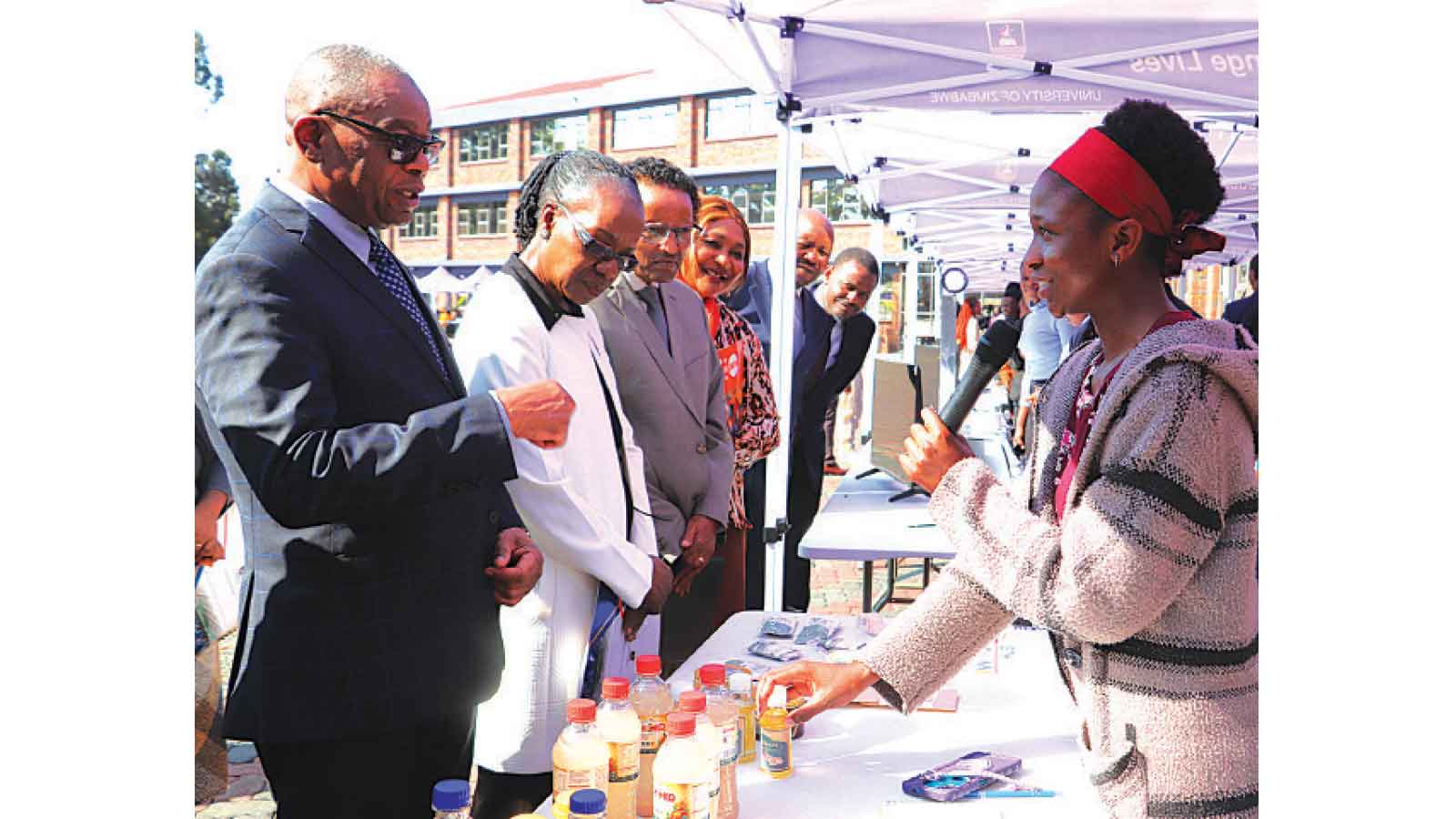
Speaking at the World Health Day commemorations at the University of Zimbabwe yesterday, Health and Child Care Minister Dr Douglas Mombeshora said this year’s theme, “Together for Health: Stand with Science”, served as a reminder that strong health systems are anchored on research, collaboration and public trust.

“Science, evidence and collaboration are the foundations of strong and resilient health systems,” he said.

“For scientific knowledge to make a difference, it must be embraced by governments, trusted by communities, and translated into policies and actions that improve lives.”

Dr Mombeshora said science has driven major public health gains globally, from vaccines that have wiped out deadly diseases such as Covid-19 to analyses and treatments that have saved millions of lives.

“Throughout history, science has transformed the landscape of public health. Vaccines have eliminated deadly diseases, modern diagnostics have enabled early detection, and innovative treatments have saved millions of lives.

“Scientific research has guided our responses to outbreaks, improved maternal and child health, and strengthened health systems worldwide.”

Dr Mombeshora also unveiled a five-point national health strategy aimed at strengthening evidence-based policymaking in the health sector.

The strategy focuses on increasing funding for local health research, enforcing evidence-based decision-making, and strengthening collaboration with academic and research institutions.

The policy shift is aimed at addressing key vulnerabilities in the health system, including communicable and non-communicable diseases, antimicrobial resistance and climate-related health emergencies.

Emphasising the One Health approach, Dr Mombeshora said human, animal and environmental health are interconnected and require coordinated action.

“Science thrives where collaboration exists. Governments, researchers, health workers and communities must work hand in hand to transform knowledge into action. By standing with science, we ensure that our health systems remain resilient, our policies remain informed, and our people remain protected.”

The commemorations were attended by senior Government officials and health sector stakeholders, including Public Health Advisor to the President and Cabinet Dr Agnes Mahomva, WHO Country Representative Dr Desta Tiruneh, Health and Child Care Permanent Secretary Dr Aspect Maunganidze, and officials from the Health Service Commission.

Dr Tiruneh spoke about the importance of collaboration in strengthening health systems.

“This is particularly important as we embrace the ‘One Health’ approach, recognising that human health is closely linked to the health of animals, plants and the environment.

“We are not living in isolation. The challenges we face today increasingly transcend sectors and borders, requiring coordinated and multi-disciplinary solutions.” University of Zimbabwe Pro-Vice Chancellor Professor Attwell Mamvuto said they are aligning their programmes with national health priorities.

“The University of Zimbabwe continues to position itself as a key contributor to national and regional health priorities.

“Through more than 400 academic programmes, including biomedical sciences, public health and pharmaceutical sciences, the University is advancing research-driven solutions,” Prof Mamvuto said.

He added that UZ has introduced biomedical engineering to build local capacity in medical equipment design and manufacture, as well as a drug discovery programme aimed at leveraging Zimbabwe’s biodiversity for locally produced medicines.

The post Govt urges stronger science-based health systems appeared first on Zimbabwe Situation.

Mpilo’s cancer care revolution begins

Source: Mpilo’s cancer care revolution begins – herald Sikhumbuzo Moyo FOR thousands of Zimbabwean families, a cancer diagnosis has often brought more than the fear of illness. It has meant long journeys in search of treatment, prolonged waiting periods, emotional strain and, in some cases, the crushing financial burden of seeking specialised care outside the […]

The post Mpilo’s cancer care revolution begins appeared first on Zimbabwe Situation.

Source: Mpilo’s cancer care revolution begins – herald

Sikhumbuzo Moyo

FOR thousands of Zimbabwean families, a cancer diagnosis has often brought more than the fear of illness.

It has meant long journeys in search of treatment, prolonged waiting periods, emotional strain and, in some cases, the crushing financial burden of seeking specialised care outside the country.

This week, however, hope arrived in Zimbabwe in the form of two massive 22-tonne machines that could dramatically change that reality. Zimbabwe’s fight against cancer received a major boost with the arrival of two state-of-the-art high-energy Linear Accelerators (LINACs), advanced radiotherapy machines set to transform oncology care and significantly improve access to specialised cancer treatment across the country.

The two TrueBeam LINACs, among the most advanced radiotherapy systems currently available globally, arrived in the country this week and will be installed at Mpilo Central Hospital in Bulawayo and Parirenyatwa Group of Hospitals in Harare.

Beyond the impressive technology and engineering behind the equipment lies a more profound story — one of renewed hope for cancer patients, restored confidence in local healthcare and a significant milestone in Mpilo Central Hospital’s journey to reclaim its position as a leading referral and specialist health institution for southern Zimbabwe and beyond.

The equipment, supplied through select Healthcare Pvt Ltd in partnership with Siemens Healthineers and Varian Medical Systems, represents a major milestone in Government’s ongoing efforts to modernise Zimbabwe’s healthcare infrastructure and strengthen cancer management services.

In a statement ahead of the arrival of the equipment in Bulawayo yesterday, the Ministry of Health and Child Care said the machines will substantially increase the country’s cancer treatment capacity, improve access to specialised oncology services and reduce the need for patients to seek costly treatment outside Zimbabwe.

LINACs are advanced radiotherapy machines that use high-energy radiation beams to precisely target and destroy cancerous tumours while minimising damage to surrounding healthy tissue, making them a critical component of modern cancer treatment. “The arrival of the equipment will substantially increase Zimbabwe’s cancer treatment capacity, reduce the need for patients to seek expensive treatment outside the country and support the Government’s drive towards accessible, world-class oncology services,” said the Ministry.

For Mpilo Central Hospital, the development marks more than the acquisition of new equipment. It signals the revival of a health institution that has for decades served as a critical referral centre for patients from Matabeleland North, Matabeleland South, Midlands and neighbouring countries.

Speaking during the offloading of the equipment in Bulawayo yesterday, select Healthcare managing director Mr Biggie Magarira described the development as a game-changer for the country’s healthcare sector.

“We are really excited that we are bringing new, innovative systems to treat cancer in the southern part of the country. We are also excited to partner Government in enhancing health for all in Zimbabwe,” he said.

Mr Magarira said the TrueBeam system is among the latest cancer treatment technologies available on the global market and is equipped with cutting-edge features that will improve treatment precision and patient outcomes.

One of its key innovations is the ability to image patients during treatment, reducing dependence on separate CT scanning procedures while enhancing accuracy in radiotherapy delivery.

The machines also feature advanced remote connectivity technology that enables engineers and specialists to monitor system performance in real time and provide technical support from different locations, ensuring maximum uptime and efficiency.

Mr Magarira said the procurement process took nearly six months from manufacturing to final delivery due to the sophistication of the equipment.

“This came by air because we wanted things to happen quickly. We could not wait for sea freight given the delays being experienced globally. The entire 44 tonnes of equipment arrived within three days, demonstrating our commitment to ensuring the project moves forward without delay,” he said.

He added that select Healthcare has assembled a team of highly qualified engineers who will oversee installation, maintenance and technical support under a comprehensive warranty and service agreement designed to guarantee uninterrupted operations.

Installation of the first machine at Mpilo Central Hospital is expected to begin by the end of this month, while preparations are underway for the installation of the second unit at Parirenyatwa Group of Hospitals.

Mpilo acting chief medical officer Professor Solwayo Ngwenya said the machines are not only important for the hospital but for patients as well.

He expressed his gratitude to the Government for the bold step towards restoration of the health facility’s radiotherapy centre to world standard.

“The machines will help in restoring Mpilo Hospital’s old image of being the centre of care in the southern half of the country and part of Southern Africa. This institution has always been a big centre for medical care,” he said.

“The development is a lifesaver, a God-sent, and I can’t imagine the number of lives that will be saved as a result of this.

“Overall for the hospital, this comes at a time when we have renovations of the hospital under the Government’s renovations and upgrading of healthcare facilities, a brain child of President Mnangagwa so the outlook of the hospital going forward will be a modern health facility,” Prof Ngwenya added.

His remarks capture what the arrival of the machines means not only for Mpilo but also for thousands of patients who depend on public health institutions for specialised treatment.

For many families across southern Zimbabwe, the equipment symbolises a future where advanced cancer care is increasingly accessible within the country’s borders.

The arrival of the advanced LINACs comes as Government continues investing heavily in health infrastructure, medical equipment and specialist services as part of broader efforts to improve healthcare delivery and achieve universal access to quality health services.

As cranes carefully lowered the massive machines onto hospital grounds, the moment represented more than a logistical achievement.

It marked the beginning of a new chapter in Zimbabwe’s fight against cancer and a major step towards restoring Mpilo Central Hospital’s status as a centre of medical excellence.

The development is expected to strengthen Zimbabwe’s cancer management capacity, improve treatment outcomes and offer renewed hope to thousands of cancer patients who have often faced long waiting periods or the financial burden of seeking treatment abroad.

The post Mpilo’s cancer care revolution begins appeared first on Zimbabwe Situation.