Beyond GDP: Rethinking Economic Development in Zimbabwe for a New Era of Shared Prosperity

Zimbabwe’s economic debate has long been framed around a single, dominant question: how to grow the economy. For decades, policymakers have measured progress through traditional indicators, GDP growth rates, export volumes, and fiscal balances, often assuming that improvements in these metrics would naturally translate into better livelihoods for ordinary citizens. Yet lived realities across the […]

The post Beyond GDP: Rethinking Economic Development in Zimbabwe for a New Era of Shared Prosperity appeared first on The Zimbabwe Mail.

Zimbabwe’s economic debate has long been framed around a single, dominant question: how to grow the economy. For decades, policymakers have measured progress through traditional indicators, GDP growth rates, export volumes, and fiscal balances, often assuming that improvements in these metrics would naturally translate into better livelihoods for ordinary citizens. Yet lived realities across the country tell a different story. Growth, where it has occurred, has not consistently delivered jobs, reduced inequality, or expanded opportunity at scale.

By Brighton Musonza

This disconnect is not uniquely Zimbabwean. It reflects a broader global shift in how development is understood. Increasingly, countries are recognising that economic expansion alone is insufficient. What matters is the quality, inclusiveness, and sustainability of that growth. In this context, Zimbabwe stands at a critical juncture: it can either continue pursuing outdated models or embrace a more integrated approach that simultaneously drives growth and improves the well-being of its people.

The Limits of Traditional Growth Models

The assumption that GDP growth automatically improves living standards has weakened across both developed and developing economies. Even in advanced economies such as the United Kingdom, the U.S. or India, productivity gains have not always translated into broad-based prosperity, with inequality widening and real wage growth stagnating for large segments of the population.

For Zimbabwe, the challenge is even more pronounced. Economic volatility, currency instability, and structural inefficiencies have meant that, when achieved, growth often remains shallow and uneven. Large segments of the population continue to operate within the informal economy, where productivity is low, and access to finance, technology, and markets is limited.

The implication is clear: Zimbabwe cannot afford to wait for growth to “trickle down.” It must design policies that deliberately link economic expansion with job creation, skills development, and social mobility from the outset.

Redefining Progress in the Zimbabwean Context

A more effective development model begins with redefining what success looks like. Rather than focusing narrowly on output, Zimbabwe must incorporate broader indicators such as employment quality, regional economic balance, access to services, and environmental sustainability.

There are instructive global examples. New Zealand has pioneered a well-being-based budgeting framework that integrates social outcomes into fiscal planning. While Zimbabwe’s fiscal space is more constrained, the principle remains relevant: public spending should be evaluated not only by how much it grows the economy, but by how effectively it improves lives.

Locally, this would mean prioritising investments that expand opportunities such as rural electrification, irrigation systems, and digital infrastructure, rather than focusing exclusively on large-scale, capital-intensive projects with limited employment impact.

Innovation as a Catalyst for Inclusive Growth

Innovation is often framed as a luxury for advanced economies, but in reality, it is a necessity for countries seeking to accelerate development. Nations that have successfully transformed their economies, such as Vietnam, have done so by building ecosystems that support entrepreneurship, technology adoption, and skills development.

Zimbabwe possesses many of the raw ingredients required for such a transformation: a relatively educated population, a strong diaspora network, and growing digital penetration. What is missing is a coordinated strategy that aligns these assets into a coherent innovation ecosystem.

The establishment of technology hubs, support for start-ups, and the reduction of bureaucratic barriers could unlock significant economic potential. However, innovation must be inclusive. It should not be confined to urban elites but extended to sectors such as agriculture, where the majority of Zimbabweans derive their livelihoods.

Financial Inclusion and the Informal Economy

One of the most significant constraints on Zimbabwe’s development is financial exclusion. A large proportion of the population operates outside formal banking systems, limiting their ability to save, invest, and grow businesses.

Across Africa, digital financial solutions have demonstrated transformative potential. Kenya’s M-Pesa revolutionised mobile payments, enabling millions to participate in the formal economy. Zimbabwe has seen similar, though less stable, developments through mobile money platforms.

Expanding financial inclusion requires more than technology. It demands regulatory stability, trust in financial institutions, and products tailored to the realities of low-income and informal workers. By integrating informal enterprises into formal financial systems, Zimbabwe can unlock productivity gains and broaden its tax base without imposing punitive measures.

Public-Private Partnerships and Investment Attraction

No country develops in isolation. Foreign direct investment remains a critical driver of industrialisation, technology transfer, and job creation. However, global competition for investment has intensified, with countries needing to offer clear and differentiated value propositions.

African examples offer valuable lessons. Rwanda has successfully positioned itself as an investment destination through streamlined regulatory processes and targeted initiatives such as investment accelerators. These programmes not only attract capital but also ensure that investments align with national development priorities.

Zimbabwe, by contrast, has often struggled with policy inconsistency and bureaucratic complexity. To compete effectively, it must simplify investment procedures, ensure policy predictability, and actively promote sectors where it holds a comparative advantage, such as mining beneficiation, agro-processing, and renewable energy.

Building a Resilient Workforce

Economic transformation is ultimately about people. As automation and digital technologies reshape labour markets, the nature of work is changing. Jobs that once required routine skills are disappearing, while demand for technical and adaptive skills is rising.

Zimbabwe’s education system must evolve accordingly. Beyond formal qualifications, there is a need for continuous learning, vocational training, and skills aligned with industry needs. Countries such as Malaysia have invested in future-oriented training programmes that bridge the gap between education and employment.

For Zimbabwe, this means strengthening technical colleges, fostering partnerships between industry and academia, and creating pathways for young people to transition into productive employment. It also means recognising and supporting informal skills, which remain a significant part of the economy.

Infrastructure and Access as Foundations of Growth

Access to markets, information, and services remains a fundamental determinant of economic participation. Without reliable electricity, transport networks, and internet connectivity, even the most innovative enterprises cannot scale.

Zimbabwe’s infrastructure deficits are well documented, yet they also represent opportunities for transformative investment. Expanding broadband connectivity, for example, could integrate rural communities into the digital economy, enabling new forms of entrepreneurship and service delivery.

Public-private partnerships will be essential in this regard. Governments alone lack the resources to finance large-scale infrastructure development, but with the right frameworks, private capital can be mobilised effectively.

Learning from Global Productivity Challenges

The experience of the United Kingdom offers a cautionary tale. Despite being a highly developed economy, the UK has struggled with declining productivity growth, driven in part by underinvestment, weak innovation diffusion, and a growing divide between high-performing firms and laggards.

Zimbabwe faces a similar, albeit more acute, challenge. A small number of firms operate relatively efficiently, while a large “tail” of low-productivity enterprises drags down overall economic performance. Addressing this imbalance requires policies that encourage innovation while also supporting the diffusion of best practices across the broader economy.

This is not about protecting inefficient businesses but about enabling transition, helping firms adopt new technologies, access finance, and integrate into larger value chains.

Toward a New Development Paradigm

What emerges from this analysis is the need for a fundamentally different approach to economic development—one that is deliberate, integrated, and people-centred. Growth must be pursued not as an end in itself, but as a means to expand opportunity and improve well-being.

This requires coordination across multiple policy areas: industrial strategy, education, infrastructure, finance, and governance. It also requires a shift in mindset, from short-term fixes to long-term transformation.

Zimbabwe’s future will not be determined solely by external factors such as commodity prices or global economic conditions. It will depend on the choices made domestically, how resources are allocated, how institutions function, and how opportunities are created and distributed.

Conclusion: From Growth to Opportunity

Zimbabwe does not need to choose between economic growth and social progress. The two are not competing objectives but mutually reinforcing goals. By designing policies that link productivity, innovation, and inclusion, the country can build an economy that is both dynamic and equitable.

The path forward is neither simple nor guaranteed. It demands political will, institutional reform, and sustained investment. But the alternative, continuing with outdated models that deliver growth without opportunity, is no longer viable.

In an era of global disruption and technological change, Zimbabwe has a chance to redefine its development trajectory. The question is whether it will seize that opportunity and build an economy that works not just for a few, but for all.

The post Beyond GDP: Rethinking Economic Development in Zimbabwe for a New Era of Shared Prosperity appeared first on The Zimbabwe Mail.

Reimagining Zimbabwe’s Industrial Future: Digitisation, Sustainability and the Rise of the Smart Factory

Zimbabwe’s manufacturing sector stands at a defining crossroads. Once the industrial heartbeat of Southern Africa, the country’s production base has, over the past two decades, endured structural decline driven by currency instability, infrastructure deficits, and shifting global value chains. Yet, within this crisis lies an opportunity, one shaped by the global transition toward digitised, sustainable, […]

The post Reimagining Zimbabwe’s Industrial Future: Digitisation, Sustainability and the Rise of the Smart Factory appeared first on The Zimbabwe Mail.

Zimbabwe’s manufacturing sector stands at a defining crossroads. Once the industrial heartbeat of Southern Africa, the country’s production base has, over the past two decades, endured structural decline driven by currency instability, infrastructure deficits, and shifting global value chains. Yet, within this crisis lies an opportunity, one shaped by the global transition toward digitised, sustainable, and intelligent manufacturing systems.

By Brighton Musonza

Across the world, the concept of the “factory of the future” is no longer theoretical. It is being built in real time, powered by automation, data analytics, artificial intelligence, and environmentally conscious production models. For Zimbabwe, the question is no longer whether to adopt these changes, but how to adapt them to local realities in a way that rebuilds industrial competitiveness while addressing long-standing economic constraints.

The End of Traditional Manufacturing Models

The global manufacturing landscape has undergone a profound transformation. Technologies associated with Industry 4.0, including robotics, the Internet of Things, and predictive analytics, have disrupted conventional production systems. These innovations are redefining efficiency, reducing waste, and enabling real-time decision-making across supply chains.

For Zimbabwe, where much of the industrial infrastructure dates back to the post-independence era, the challenge is particularly acute. Many factories operate with outdated machinery, limited automation, and fragmented supply networks. The result is high production costs, inconsistent quality, and reduced competitiveness against imports from countries with more advanced manufacturing ecosystems.

Yet, this lag also presents a strategic advantage. Zimbabwe has the potential to leapfrog intermediate stages of industrial development by adopting modern, digitised systems from the outset; much like how mobile technology bypassed fixed-line infrastructure across Africa.

What Should Zimbabwe Manufacture?

At the heart of any manufacturing strategy lies a fundamental question: what products should be prioritised? Zimbabwe’s comparative advantage remains anchored in its natural resource base, agriculture, minerals, and, increasingly, lithium for the global energy transition.

However, exporting raw materials has historically limited value creation. The future lies in beneficiation and value addition. Lithium, for example, should not leave the country as unprocessed ore but as battery-grade material or even components for electric vehicle supply chains. Similarly, agricultural outputs such as tobacco and maize must be integrated into agro-processing industries that generate higher margins and employment.

This shift requires aligning industrial policy with global demand trends. As the world pivots toward green technologies and sustainable consumption, Zimbabwe must position itself within these emerging markets rather than remain tethered to low-value exports.

Where Should Production Be Located?

Geography remains a critical determinant of industrial success. Decisions about factory locations must consider access to raw materials, transport infrastructure, energy reliability, and regional markets.

Zimbabwe’s central location within Southern Africa offers a strategic advantage. It is well-positioned to serve regional markets under frameworks such as the African Continental Free Trade Area, which aims to create a single African market. However, logistical inefficiencies, particularly in rail and road networks, continue to undermine this potential.

Industrial zones must therefore be reimagined. Rather than isolated factories, Zimbabwe needs integrated manufacturing hubs supported by reliable power, digital connectivity, and efficient transport corridors. The revival of industrial areas in cities like Bulawayo and Harare should be guided by modern principles of clustering, where suppliers, manufacturers, and distributors operate within interconnected ecosystems.

How Should Zimbabwe Manufacture?

Perhaps the most complex question concerns the methods of production themselves. The factory of the future is not merely automated; it is intelligent, adaptive, and sustainable.

For Zimbabwe, this means embracing lean manufacturing principles while gradually integrating advanced technologies. Automation does not necessarily imply mass job losses. Instead, it shifts labour demand toward higher-skilled roles in engineering, data analysis, and systems management. This transition underscores the importance of investing in technical education and vocational training.

Equally important is sustainability. Global markets are increasingly demanding environmentally responsible production processes. Energy efficiency, waste reduction, and carbon footprint management are no longer optional; they are prerequisites for market access. Zimbabwe’s abundant solar potential offers an opportunity to power manufacturing through renewable energy, reducing both costs and environmental impact.

The Role of Data and Decision-Making

Modern manufacturing is driven by data. From predictive maintenance of machinery to real-time supply chain optimisation, information has become as valuable as raw materials.

Zimbabwean firms, however, often lack access to robust data systems and analytical capabilities. Bridging this gap requires investment in digital infrastructure and partnerships with technology providers. It also demands a cultural shift within organisations, from reactive management to data-driven decision-making.

Global firms increasingly rely on performance benchmarking tools to assess competitiveness, identify inefficiencies, and implement targeted improvements. For Zimbabwean manufacturers, adopting similar approaches could unlock significant productivity gains without necessarily requiring large capital investments.

Financing Industrial Transformation

One of the most persistent barriers to manufacturing revival in Zimbabwe is access to capital. Modernising factories, adopting new technologies, and building resilient supply chains require substantial investment.

This is where policy coherence becomes critical. The government must create an enabling environment that attracts both domestic and foreign investment. Stable macroeconomic conditions, clear industrial policies, and incentives for value addition are essential.

At the same time, innovative financing models, such as public-private partnerships and development finance, can play a catalytic role. International institutions are increasingly willing to fund green and sustainable industrial projects, particularly in emerging markets.

Building Resilient Supply Chains

The COVID-19 pandemic and subsequent global disruptions like the on-going Iran-Isreal-US war in the Middle East have exposed the fragility of international supply chains. For Zimbabwe, this has reinforced the importance of localising production where feasible while maintaining strategic connections to global markets.

Resilient supply chains are not about isolation but about balance. They require diversification of suppliers, investment in logistics, and the integration of digital tracking systems that enhance transparency and responsiveness.

A New Industrial Ethos

Ultimately, the transformation of Zimbabwe’s manufacturing sector is not solely a technological challenge; it is a philosophical one. It requires a shift from short-term survival strategies to long-term value creation. It demands leadership that is willing to embrace innovation, tolerate calculated risks, and prioritise continuous improvement.

The factory of the future is not defined by machines alone. It is defined by systems, skills, and a mindset that recognises manufacturing as a dynamic, evolving process rather than a static function.

Conclusion: From Decline to Renewal

Zimbabwe’s industrial story is often told as one of decline. But that narrative is incomplete. The global shift toward digitised and sustainable manufacturing presents a rare opportunity to rewrite that story.

By strategically deciding what to produce, where to locate production, and how to manufacture using modern technologies, Zimbabwe can rebuild its industrial base in a way that is both competitive and sustainable. The journey will not be easy, nor will it be quick. But with the right mix of policy, investment, and innovation, the country can transform its factories into engines of economic renewal.

In a world where manufacturing is being redefined, Zimbabwe does not need to catch up, it needs to leap forward.

The post Reimagining Zimbabwe’s Industrial Future: Digitisation, Sustainability and the Rise of the Smart Factory appeared first on The Zimbabwe Mail.

R. Kelly Says Family and Friends Have Not Visited Him During Year in Prison

Disgraced R&B singer R. Kelly has revealed that he has gone nearly a year without receiving a single visit from family members or close friends while serving his prison sentence. According to statements attributed to the singer, even his daughters have not come to see him during this period, a situation he described as emotionally […]

The post R. Kelly Says Family and Friends Have Not Visited Him During Year in Prison appeared first on The Zimbabwe Mail.

Disgraced R&B singer R. Kelly has revealed that he has gone nearly a year without receiving a single visit from family members or close friends while serving his prison sentence.

According to statements attributed to the singer, even his daughters have not come to see him during this period, a situation he described as emotionally distressing. Kelly, once one of the most influential figures in contemporary R&B, reportedly said that the absence of visits has forced him to confront a harsh reality about the fragility of personal relationships.

Sources close to the matter indicate that the singer reflected on the support he once extended to those around him, including a longtime friend to whom he allegedly gave $1 million to establish a business. Despite these past acts of generosity, Kelly claims none of those individuals have visited or maintained contact during his incarceration.

The singer is said to have broken down in tears while discussing his current circumstances, admitting that the isolation has taken a toll on his mental and emotional wellbeing. However, he added that he remains committed to staying strong, relying heavily on prayer and personal reflection as he navigates life behind bars.

Kelly is currently serving a lengthy prison sentence following multiple convictions related to racketeering and sex trafficking, marking a dramatic fall from grace for the Grammy Award-winning artist who once dominated global music charts.

Legal analysts note that high-profile inmates often experience strained personal relationships, particularly in cases involving serious criminal convictions that attract widespread public scrutiny. In Kelly’s case, the nature of the charges and the extensive media coverage may have contributed to the apparent distancing by those once closest to him.

While it remains unclear whether circumstances may change in the future, Kelly reportedly expressed hope that he will eventually rebuild aspects of his personal life upon release.

The situation underscores a broader reality often observed in both public and private life: loyalty and support can diminish under pressure, especially when reputational and legal challenges arise.

The post R. Kelly Says Family and Friends Have Not Visited Him During Year in Prison appeared first on The Zimbabwe Mail.

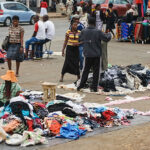
Goodbye Second-Hand Clothes and Mupedzanhamo: The Real Reason Why Government has BANNED MABHERO

HARARE – For decades, the rhythmic thud of heavy bales hitting the dusty ground at Mupedzanhamo Flea Market in Mbare was the heartbeat of Zimbabwe’s informal economy. These bales, known locally as “mabhero,” carried more than just discarded…

HARARE – For decades, the rhythmic thud of heavy bales hitting the dusty ground at Mupedzanhamo Flea Market in Mbare was the heartbeat of Zimbabwe’s informal economy. These bales, known locally as “mabhero,” carried more than just discarded garments from the West; they carried the hopes of millions of families who could not afford the […]

The post Goodbye Second-Hand Clothes and Mupedzanhamo: The Real Reason Why Government has BANNED MABHERO first appeared on My Zimbabwe News.

‘Men in Dark Glasses’ Strike Again? Where is Gift Konjana? Is he Still Alive? and Why is the State Afraid of Him?

The political landscape of Zimbabwe is currently dominated by a single, haunting question that refuses to be silenced: Is Gift Konjana alive? The veteran politician, a man whose name has become synonymous with the dogged pursuit of electoral justice in…

The political landscape of Zimbabwe is currently dominated by a single, haunting question that refuses to be silenced: Is Gift Konjana alive? The veteran politician, a man whose name has become synonymous with the dogged pursuit of electoral justice in Chegutu West, has reportedly “quit politics” and resigned his hard-won council seat. While official statements […]

The post ‘Men in Dark Glasses’ Strike Again? Where is Gift Konjana? Is he Still Alive? and Why is the State Afraid of Him? first appeared on My Zimbabwe News.