UK Supreme Court Ruling Weakens Zimbabwe’s Sovereign Immunity Defence in Major Arbitration Case

LONDON – In a landmark ruling with far-reaching implications for Zimbabwe, the UK Supreme Court has confirmed that sovereign immunity cannot be used as a defence against the enforcement of international arbitration awards under the ICSID Convention. The judgment, delivered on 4 March 2026 in the consolidated case of Kingdom of Spain v Infrastructure Services […]

The post UK Supreme Court Ruling Weakens Zimbabwe’s Sovereign Immunity Defence in Major Arbitration Case appeared first on The Zimbabwe Mail.
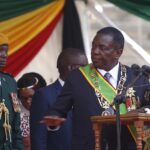
LONDON – In a landmark ruling with far-reaching implications for Zimbabwe, the UK Supreme Court has confirmed that sovereign immunity cannot be used as a defence against the enforcement of international arbitration awards under the ICSID Convention.

The judgment, delivered on 4 March 2026 in the consolidated case of Kingdom of Spain v Infrastructure Services Luxembourg S.À.R.L.; Republic of Zimbabwe v Border Timbers Ltd [2026] UKSC 9, marks a significant legal setback for both Spain and Zimbabwe, which had sought to block enforcement of arbitration awards in the United Kingdom.

At the centre of the dispute was whether sovereign states could rely on immunity under the State Immunity Act 1978 to resist enforcement of awards issued by the World Bank-backed arbitration system. Zimbabwe had argued that, as a sovereign nation, it was protected from the jurisdiction of UK courts.

However, the Supreme Court unanimously rejected this argument, ruling that by signing the ICSID Convention, Zimbabwe had effectively waived its right to claim sovereign immunity in matters relating to the recognition and enforcement of such awards.

The court held that Article 54 of the Convention imposes a clear obligation on member states to recognise and enforce arbitration awards as if they were final judgments of domestic courts. This, the judges said, amounts to an “unequivocal” submission to the jurisdiction of courts in other member states, including the UK.

Legal experts say the ruling provides clarity and strengthens the enforceability of international arbitration awards, particularly for investors seeking to recover damages from states.

“This decision removes a major legal barrier,” one analyst said. “States can no longer hide behind sovereign immunity to avoid recognising arbitration awards under ICSID.”

The case involving Zimbabwe stems from a long-running dispute with Border Timbers over investments, with the company seeking to enforce an arbitral award in the UK.

While the ruling clears the way for recognition and enforcement proceedings, the court made an important distinction: sovereign immunity may still apply when it comes to the seizure of state assets. In other words, although an award can now be recognised in UK courts, enforcing payment against Zimbabwean state property remains subject to additional legal hurdles.

The decision is expected to have wide implications for Zimbabwe and other countries that are signatories to the ICSID Convention, reinforcing the binding nature of international arbitration and limiting the scope for states to challenge enforcement in foreign courts.

For Zimbabwe, the ruling underscores the legal and financial risks associated with international investment disputes, at a time when the country is seeking to attract foreign capital and rebuild investor confidence.

The post UK Supreme Court Ruling Weakens Zimbabwe’s Sovereign Immunity Defence in Major Arbitration Case appeared first on The Zimbabwe Mail.

Brent crude briefly tops $119 per barrel before pulling back, and stocks sink worldwide

NEW YORK — Oil prices shot up again Thursday because of the war with Iran, tightening their grip on the global economy and sending stock markets worldwide sharply lower. Brent crude, the international standard, briefly rose above $119 per barrel in the morning before pulling back to $112.70, which is still a 5% rise from […]

The post Brent crude briefly tops $119 per barrel before pulling back, and stocks sink worldwide appeared first on The Zimbabwe Mail.

NEW YORK — Oil prices shot up again Thursday because of the war with Iran, tightening their grip on the global economy and sending stock markets worldwide sharply lower.

Brent crude, the international standard, briefly rose above $119 per barrel in the morning before pulling back to $112.70, which is still a 5% rise from the prior day. A barrel of benchmark U.S. crude added 1.4% to $96.78 after Iran intensified its attacks on oil and gas facilities around the Persian Gulf in response to an Israeli attack on an important Iranian natural gas field.

The attacks added to fears that fighting may knock out production of oil and gas in the gulf for a long time, which would mean high prices could last a while and cause inflation to rip higher around the world.

Stock indexes dropped 3.4% in Japan, 2.7% in South Korea, 2.6% in Germany and 2.6% in the United Kingdom. On Wall Street, where trading began after Brent crude’s price pared some of its big gain and where companies are less reliant on oil from the Gulf, the losses were a bit more modest.

The S&P 500 fell 0.9% to deepen its drop for the week so far, which is on track to be its fourth straight losing week. The Dow Jones Industrial Average was down 331 points, or 0.7%, as of 9:35 a.m. Eastern time, and the Nasdaq composite was 1.3% lower.

President Donald Trump and countries around the world have made moves to stem the spike in oil prices, but they’re mostly short-term fixes when markets want to see less risk for Gulf oil fields and a clearance of the Strait of Hormuz off Iran’s coast, where a fifth of the world’s oil typically sails.

Worries are so high about oil prices that traders are now even betting on a slim chance that the Federal Reserve may have to hike interest rates this year. It’s a dramatic turnaround from just a month ago, when traders were betting heavily that the Fed would cut rates multiple times this year.

Cuts to rates would give the economy and prices for investments a boost, and they’re something Trump has angrily been calling for, but they would risk worsening inflation. The Fed on Wednesday decided to hold off on cutting interest rates at its latest meeting, and traders found comments from Chair Jerome Powell discouraging about the possibility for cuts in 2026.

Now, traders are betting on a 10% chance the Fed could hike its main interest rate by the end of the year and a nearly 84% chance that it will at least hold steady, according to data from CME Group. Just a month ago, those same traders were betting on a 74% probability of two or more cuts.

That drove Treasury yields higher, and the two-year Treasury yield touched its highest level since the summer. It rose to 3.85% from 3.76% late Wednesday.

The more widely followed 10-year Treasury yield rose to 4.28% from 4.26% late Wednesday and just 3.97% before the war with Iran started. Earlier in the day, the Bank of Japan, the European Central Bank and the Bank of England held their own interest rates steady.

Besides the threat of higher inflation, a couple solid reports on the U.S. economy also helped to lift yields. One said fewer U.S. workers applied for unemployment benefits last week, when economists were expecting a slight rise. Another said growth for manufacturing in the mid-Atlantic area unexpectedly accelerated.

Besides sending rates for mortgages and other kinds of loans upward, higher Treasury yields also grind down on prices for all kinds of investments, from stocks to crypto to gold.

Gold tumbled 6.9% to $4,557.40 per ounce. Silver fell even more, dropping 12.6%.

On Wall Street, Micron Technology fell 7.5% and helped lead the market lower even though it reported a blowout quarter of much higher profit and revenue than analysts expected.

The post Brent crude briefly tops $119 per barrel before pulling back, and stocks sink worldwide appeared first on The Zimbabwe Mail.

Simon Rudland takes on ZBC over claims of bankrolling coup plot

HARARE – Lawyers for Zimbabwean billionaire Simon Rudland have issued an urgent demand to the Zimbabwe Broadcasting Corporation to retract a “defamatory” article accusing him of financing violent protests aimed at overthrowing President Emmerson Mnangagwa’s government. The ZBC was given two days to retract the article under threat of legal action. Rudland’s lawyer Norman Chimuka […]

The post Simon Rudland takes on ZBC over claims of bankrolling coup plot appeared first on The Zimbabwe Mail.

HARARE – Lawyers for Zimbabwean billionaire Simon Rudland have issued an urgent demand to the Zimbabwe Broadcasting Corporation to retract a “defamatory” article accusing him of financing violent protests aimed at overthrowing President Emmerson Mnangagwa’s government.

The ZBC was given two days to retract the article under threat of legal action.

Rudland’s lawyer Norman Chimuka of Chimuka Mafunga Commercial Attorneys wrote to ZBC CEO Sugar Chagonda on Tuesday demanding “a full, unconditional, and unreserved withdrawal” of the article along with “an expression of regret” over the statements made about Rudland.

The ZBC article, published on March 10 and titled “Kasukuwere, Mambondiyani plot violent protest using Biti’s forum, ZINASU and bloggers as fronts,” alleged that Rudland was “the major sponsor of these machinations” and had “wired substantial amounts of money to bankroll the demonstrations, with more expected from his foreign networks.”

The article named Rudland alongside self-exiled former cabinet minister Saviour Kasukuwere and activist Danmore Mambondiyani, accusing the three of attempting to “orchestrate violent mass protests aimed at effecting unconstitutional regime change.” This would be achieved, the article claimed, through supporting the Constitutional Defenders Forum, a new organisation led by former finance minister Tendai Biti which is resisting moves to extend President Emmerson Mnangagwa’s term by two years.

Rudland’s lawyers said the statements were understood by any reasonable reader to mean that Rudland was “financing plans to violently and unconstitutionally overthrow an elected government,” amounting to an imputation of treason. The lawyers said ZBC published the article “without contacting our client for verification as required by professional and responsible journalism.”

“The article falsely imputes treasonous actions to our client while relying on and hiding behind unverified sources,” the letter states.

The lawyers warned that if ZBC fails to retract the article, Rudland will seek an injunction and damages “without further notice.”

Born in Harare in 1971, Rudland is one of Zimbabwe’s wealthiest businessmen, with a portfolio valued at more than US$1 billion spanning tobacco, mining, construction, logistics, agriculture and manufacturing across the region.

He co-founded Gold Leaf Tobacco Corporation (GLTC) with business partner Yakub Mahomed, building it into one of Southern Africa’s largest cigarette manufacturers and distributors under the Rudland & George (RG) brand.

His Cut Rag Processors (CRP) factory – a US$120 million facility in Harare’s Aspindale industrial area fitted with German and Italian technology – is designed to transform Zimbabwe’s raw tobacco into value-added cut rag for export to Asian and regional markets. 

Rudland co-founded Pioneer Transport in 1995 alongside his brother Hamish, a logistics company that later expanded into Pioneer Corporation Africa (PCA) through acquisitions including Unifreight, owners of Swift Transport, Bulwark and Clan. 

He owns farms, mines in Zimbabwe and the Democratic Republic of Congo, a logistics company and a bus company.  His companies employ more than 10,000 people across the region. 

The Rudland brothers have also been active investors on the Zimbabwe Stock Exchange, acquiring stakes in the financial and reinsurance group Zimre through their investment vehicle Day River Corporation and in agricultural company CFI Holdings.

In 2019, Rudland survived an assassination attempt when he was shot three times outside the Fair Trade Independent Tobacco Association offices in Johannesburg. No-one was ever charged.

Sources familiar with the latest matter say the campaign against Rudland may have been triggered after individuals allegedly aligned with Zanu PF attempted to solicit financial support from him. When he reportedly declined, the online campaign followed. 

Rudland has denied the latest accusations outright. His lawyers say the allegations “falsely and maliciously accuse him of sponsoring a sedition and insurrection against an elected government.”

ZBC had not responded to a request for comment at the time of publication. – ZimLive

The post Simon Rudland takes on ZBC over claims of bankrolling coup plot appeared first on The Zimbabwe Mail.

Charamba Weighs In on Fuel Price Hike, Warns of Fiscal Trade-Offs

HARARE – Presidential spokesperson George Charamba has defended Zimbabwe’s latest fuel price adjustment, describing it as both “shocking and understandable” in light of global economic pressures, while cautioning against simplistic calls to reduce fuel taxes. Reacting to the recent increase announced by the Zimbabwe Energy Regulatory Authority (ZERA), Charamba acknowledged the immediate impact on citizens, […]

The post Charamba Weighs In on Fuel Price Hike, Warns of Fiscal Trade-Offs appeared first on The Zimbabwe Mail.

HARARE – Presidential spokesperson George Charamba has defended Zimbabwe’s latest fuel price adjustment, describing it as both “shocking and understandable” in light of global economic pressures, while cautioning against simplistic calls to reduce fuel taxes.

Reacting to the recent increase announced by the Zimbabwe Energy Regulatory Authority (ZERA), Charamba acknowledged the immediate impact on citizens, noting that higher fuel prices inevitably drive inflation in an economy where wages have largely remained static.

“Fuel is the most inflationary commodity,” Charamba said, explaining that increases at the pump quickly cascade through transport costs and the broader economy.

However, he emphasised that the adjustment must be viewed within the context of global developments, particularly escalating tensions in the Middle East involving the United States, Israel and Iran, which have disrupted energy markets worldwide.

“The necessity of the adjustment is not in dispute,” he said. “It arises from an external shock against which Zimbabwe has very little control.”

Charamba noted that public frustration is understandable, particularly given the heavy tax component embedded in Zimbabwe’s fuel pricing structure. These levies, he said, affect all citizens and contribute to pump prices that are higher than those in some neighbouring countries.

The presidential spokesperson warned, however, that reducing fuel-based taxes would have significant consequences for government revenue and service delivery.

“Any relief granted through lower fuel taxes must be weighed against the State’s obligation to provide public goods,” Charamba said. “What the citizen saves at the pump may be lost through reduced access to essential services such as healthcare.”

He pointed to recent Cabinet measures to cut or reduce various fees in an effort to ease the cost of doing business, noting that such steps, while necessary, have already narrowed the government’s revenue base.

“This creates a difficult balancing act,” Charamba said, adding that the government must maintain its ability to fund key sectors, particularly as efforts are underway to revitalise the country’s health system.

Looking beyond the immediate crisis, Charamba called for greater focus on long-term solutions to reduce Zimbabwe’s vulnerability to external shocks.

He highlighted the need to accelerate strategic projects such as the Muzarabani gas initiative, invest in alternative energy sources, and promote a transition to electric vehicles, alongside better utilisation of the country’s coal resources.

“The real challenge is structural,” he said. “Our economy remains overly exposed to external developments. Addressing that vulnerability must be our priority.”

Charamba urged policymakers and the public alike to maintain a broader perspective, stressing that while short-term measures may provide relief, sustainable economic resilience will depend on deeper structural reforms.

The post Charamba Weighs In on Fuel Price Hike, Warns of Fiscal Trade-Offs appeared first on The Zimbabwe Mail.

“Shake the Baobab, Face the CONSEQUENCES”: Generals Threaten Mnangagwa’s Regime Over Power Grab, Hinting at Potential Military Intervention

HARARE – In the high-stakes theatre of Zimbabwean politics, the baobab tree has long stood as a silent witness to the rise and fall of regimes. Known for its massive girth and deep-rooted resilience, it is the ultimate symbol of endurance. Yet, w…

HARARE – In the high-stakes theatre of Zimbabwean politics, the baobab tree has long stood as a silent witness to the rise and fall of regimes. Known for its massive girth and deep-rooted resilience, it is the ultimate symbol of endurance. Yet, when a powerful group of retired army generals and senior civil servants recently […]

The post “Shake the Baobab, Face the CONSEQUENCES”: Generals Threaten Mnangagwa’s Regime Over Power Grab, Hinting at Potential Military Intervention first appeared on My Zimbabwe News.