Source: Inside Zanu PF rush to force a Mnangagwa ‘third term’ –Newsday Zimbabwe
AS the sun set over the gleaming, Chinese-built Parliament building in Mt Hampden on Tuesday, the air inside the Senate was thick with urgency.
This was no ordinary day of work as the government had suspended its own rules to ensure the session ran deep into the night, all to push through the Constitution of Zimbabwe Amendment Bill No. 3, commonly referred to as CAB3.
For an ordinary Zimbabwean, what happened inside those walls was a masterclass in how a small group of people can rewrite the rules of a whole country while claiming they are doing it “for the people”.
If you had walked into the gallery that day, you would have noticed a strange and very clear pattern.
It was as if every Zanu PF senator and every traditional chief had spent the morning practicing the same song.
One after another, they rose to praise the Bill using the exact same language.
They talked about “stability”, they talked about “Vision 2030”, and they all argued that the current five-year term is simply too short to build roads and dams.
The traditional chiefs, who the Constitution says should stay out of politics, were the loudest members of this choir.
Chief Matsiwo from Mashonaland Central set a controversial tone when he called Justice minister Ziyambi Ziyambi, who is now the face of CAB3, an “angel” for bringing the Bill to the House.
He argued that elections were actually a curse that brings “poverty” and stops development.
Chief Chinyanga followed closely behind, declaring that President Emmerson Mnangagwa’s “Vision 2030 is unstoppable” and asking if big projects could ever be finished if politicians were always busy campaigning.
Chief Chitanga summed up the mood of the traditional leaders by stating bluntly: “We support this Bill, all of us as chiefs.”
The Zanu PF senators were just as bold in their support for extending the President’s reach.
Former Industry and Commerce minister Mike Bimha told the House that Zimbabwe should stop trying to follow “Western-type democracy” and instead look at countries like China or Russia to see how to develop.
Perhaps the most direct endorsement of Mnangagwa staying in power through this “backdoor” came from Women’s Affairs minister Monica Mutsvangwa.
She used a simple village proverb to explain why the rules should be changed: “If it is not broken, do not fix it. Let him have more time driving this country to where it should be.”
To explain how they could legally extend the President’s time without technically breaking the two-term limit, Ziyambi used a clever story about a farm.
He told the senators to think of the Presidency as a “field” and the time in office as a “growing season”.
He argued that if you lengthen a season from five months to seven, you are just giving the “crop” more time to grow, not giving the “steward” a new term.
It was a piece of legal storytelling designed to make a massive change to the law sound as simple as a farmer’s calendar.
However, not everyone was singing from the government’s hymn book.
Senator Sithabisiwe Moyo from the Citizens Coalition for Change (CCC) and representing Matabeleland South stood up and gave a chilling warning, calling the entire Bill a “co-ordinated scheme” to remove accountability and consolidate power.
She looked her colleagues in the eye and told them: “That is how democracies die, not in a single moment, but through incremental extensions of power without accountability.”
She pointed out the “defiance” in the Bill, where the government is essentially saying that even though the Constitution says incumbents shouldn’t benefit from term extensions, they will do it anyway.
Another voice of dissent came from Senator Sessel Zvidzai (CCC), an engineer, who reminded the politicians that they don’t own the Constitution.
He argued that the document belongs to the people walking the valleys and mountains of places like Zaka and Muroyi, not just to those sitting in “lofty offices”.
He warned that by refusing to hold a national referendum (a public vote), the government was failing its “democratic obligation” to the sovereign citizens of Zimbabwe.
As the clocks ticked toward 8:42pm and the Senate finally adjourned, the “flowing story” of the day was one of two different Zimbabwes.
One side, made up of the ruling elite and traditional chiefs, was celebrating a ‘milestone” they say will bring development.
The other side was warning that the very foundation of the country’s democracy was being dismantled in the dark of night.
For the ordinary reader, the takeaway was simple: the “growing season” for those in power is getting longer, and the power of your individual vote is being moved from the ballot box into the hands of the politicians in Parliament.
Senate is expected to vote on CAB3 this week before the Bill is sent to Mnangagwa for his signature.
The National Assembly last week passed the Bill after Zanu PF received support from CCC MPs aligned to self-imposed interim secretary-general Sengezo Tshabangu to reach the two-thirds majority threshold.
Zanu PF-aligned businesspeople have been openly dishing out cash and cars to legislators to influence the vote.
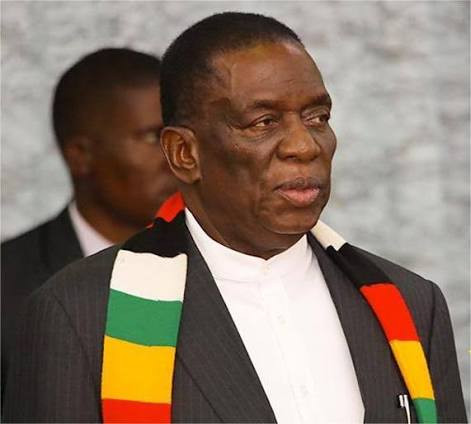
Mnangagwa, who came to power after the 2017 coup against Robert Mugabe, initially insisted that he would not stay in power beyond the constitutionally guaranteed two terms, but appears to have changed tune.
His loyalists want him to stay in power until 2030 in what is seen as a ploy to stop Vice-President Constantino Chiwenga from succeeding the 83-year-old ruler.
The post Inside Zanu PF rush to force a Mnangagwa ‘third term’ appeared first on Zimbabwe Situation.