HARARE — The planned closure of Premier Foods’ fruit-canning operation in South Africa, coupled with increased production in Harare, is emerging as an important signal of the changing economics of agro-processing in the region and the recovery of Zimbabwe’s agricultural value chain.
Premier Foods is moving to close its Fruit Products Western Cape (FPWC) plant in Tulbagh, a facility valued at about US$60 million, after the company concluded that the operation is no longer economically sustainable in its current form.
At the same time, the group is increasing production in Zimbabwe, creating a striking contrast between a mature, export-dependent processing operation in South Africa facing global market pressures and an agro-processing base in Zimbabwe benefiting from improving domestic agricultural production.
The development is particularly significant because Zimbabwe’s agricultural recovery is beginning to extend beyond the farm gate. After years in which weak agricultural output constrained food manufacturing, the return of stronger crop production is rebuilding the raw-material base required by mills, canneries, food manufacturers, breweries, stock-feed producers and other agro-industrial businesses.
That makes the Premier development more than a corporate restructuring story. It offers an insight into the changing economics of food production in Southern Africa.
A US$60 million plant under pressure
The Tulbagh facility, acquired by Rhodes Food Group from Del Monte Fruits South Africa in 2010, processes peaches, apricots, pears and other deciduous fruits into canned products, fruit purees and related processed foods. RFG’s own description of the operation shows that the factory has historically been predominantly export-oriented.
Premier Foods, following its acquisition of Rhodes Food Group, has initiated a Section 189 consultation process with employees over the proposed closure.
The company has attributed the decision to declining global demand, pricing pressure, rising input costs and the impact of US tariffs on South African exports. Around 90% of the plant’s canned-fruit output is exported, leaving the facility particularly exposed to changes in international demand and trade conditions.
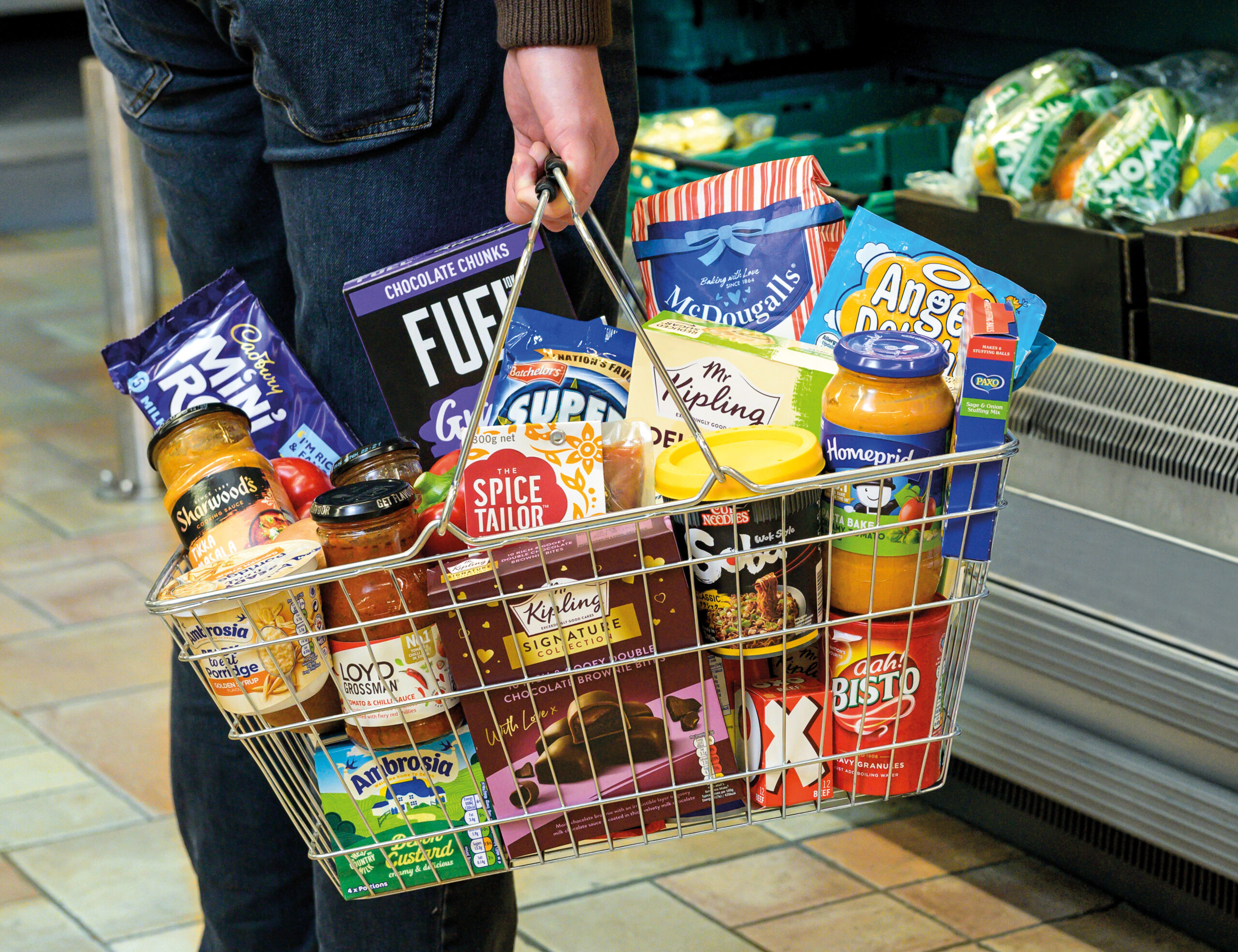
The closure threatens approximately 3,000 permanent and seasonal jobs, while organised labour has warned that the wider agricultural value chain could be far more severely affected.
The Canning Fruit Producers’ Association estimates that the plant processes between 55,000 and 60,000 tonnes of fruit annually, purchases approximately US$18 million of fruit from producers and supports exports worth between roughly US$60 million and US$72 million a year, using recent exchange rates. Those figures demonstrate that a processing factory is not simply a building employing factory workers; it is the industrial anchor around which an entire agricultural ecosystem develops.
The Zimbabwe contrast
The reported increase in production in Harare provides the more interesting economic story for Zimbabwe.
Zimbabwe’s agricultural sector is recovering from the severe production shocks associated with drought and weak investment, and the improvement is now becoming visible in the wider food economy.
Government data show that by July 1, 2026, Zimbabwe had harvested almost 1.96 million hectares of maize, producing about 2.68 million tonnes, while sorghum production had reached approximately 338,785 tonnes and soybean production about 119,067 tonnes.
More importantly for agro-business, formally marketed crops had reached 260,444 tonnes, compared with 148,134 tonnes at the same point in 2025 — an increase of 76%.
This is the number that matters to food manufacturers.
Agriculture does not become an industrial sector merely because farmers produce more crops. The economic transformation occurs when that production begins moving through commercial channels into processing plants.
A farmer growing maize creates agricultural output. A miller turning maize into meal creates manufacturing output. A food company packaging that meal creates additional value. A logistics company transporting it creates another layer of economic activity. A retailer selling the finished product adds another.
The recovery of agriculture therefore has a much larger multiplier effect when domestic processing capacity is available.
Zimbabwe’s agro-industrial base is beginning to reconnect with agriculture
This is where the Premier development becomes particularly revealing.
For years, Zimbabwe’s food-processing industry operated with a structural problem: industrial capacity existed, but the agricultural supply base was frequently too weak, too unreliable or too expensive to support that capacity competitively.
The result was an unusual economic contradiction. Zimbabwe had factories capable of producing food, but manufacturers increasingly depended on imported agricultural raw materials or imported finished products.
A stronger agricultural season changes that equation.
When farmers produce more maize, wheat, soybeans, fruits, vegetables, tobacco and livestock products, processors obtain a larger and more predictable domestic raw-material base.
That improves factory utilisation. Higher factory utilisation improves the economics of capital investment because machinery can be operated closer to capacity. Higher utilisation can then reduce unit costs, making domestic products more competitive against imports.
This is how an agricultural recovery eventually becomes an agro-industrial recovery.
The evidence is already appearing across the economy
The improvement is not confined to grain.
Zimbabwe’s tobacco sector has also recorded strong production volumes. By July 1, 2026, tobacco sales had reached 346.2 million kilogrammes, while exports had reached 112 million kilogrammes worth US$683 million.
Wheat production is also expanding. Farmers planted approximately 133,048 hectares of wheat, exceeding the original 125,000-hectare target by 6%.
The African Development Bank has separately reported that its emergency food-production programme helped more than 188,000 farming households, while supporting climate-smart agriculture across 153,000 hectares and contributing to record wheat yields averaging five tonnes per hectare.
These developments matter to business because agriculture supplies the inputs for an entire manufacturing chain.
More wheat means more milling. More maize means more meal and stock feed. More soybeans mean more oil extraction and animal-feed production.
More fruit means more opportunities for canning, juicing, drying and pulping. More livestock means greater utilisation of abattoirs, cold chains, leather processing and meat manufacturing.
The agricultural recovery is therefore creating the raw-material conditions for a much broader industrial recovery.
Why Harare becomes increasingly important
Harare sits at the centre of this emerging agro-industrial network.
The city retains a significant concentration of food manufacturers, packaging companies, distributors, wholesalers, banks, logistics operators and industrial suppliers.
A manufacturer operating from Harare can access agricultural production from Mashonaland, Manicaland, Masvingo and other farming regions while also accessing Zimbabwe’s largest consumer market and the country’s principal financial and distribution infrastructure.
That creates economies of scale that are difficult for isolated rural processing facilities to replicate.
The more agricultural output Zimbabwe generates, the stronger the economic case becomes for manufacturers to increase capacity around these existing industrial centres.
This is particularly important for companies producing goods that have a relatively high value-to-weight ratio or require sophisticated packaging, quality control and distribution.
The economics of processing locally
The real opportunity for Zimbabwe is not simply to produce more food. It is to capture more of the value created by that food.
Consider a hypothetical tonne of peaches.
If Zimbabwe exports the fruit in raw form, the farmer receives the agricultural value while the processing, packaging, branding, distribution and retail margins are captured elsewhere.
If the same fruit is canned locally, Zimbabwe creates demand for cans, sugar, packaging, electricity, engineering services, transport, warehousing and labour.
If the product is branded and exported, the country captures still more value. The economic chain becomes significantly longer.
That is why agro-processing has such importance for a country like Zimbabwe. It sits at the intersection between agriculture and manufacturing.
The objective should not simply be to replace imported canned fruit with locally produced canned fruit. The bigger opportunity is to build an integrated food-processing industry capable of supplying Zimbabwe and exporting into neighbouring markets.
South Africa’s problem is also Zimbabwe’s opportunity
The Tulbagh closure demonstrates another side of the equation.
A factory can be technologically advanced and still become uncompetitive if the economics of its supply chain deteriorate.
The South African operation is heavily exposed to international markets because most of its output is exported. Global oversupply, weak demand, tariffs, currency movements, energy costs, packaging costs and international logistics can therefore have a disproportionate effect on profitability.
Zimbabwe’s emerging opportunity is somewhat different.
A larger proportion of the country’s agricultural recovery is creating a growing domestic market alongside regional export opportunities.
The combination of a recovering agricultural base, a large domestic consumer market and a relatively underdeveloped agro-processing industry means that Zimbabwe has significant room for capacity expansion.
The country’s challenge is therefore not necessarily a lack of market opportunity. It is the ability to convert agricultural output into commercially viable industrial production.
The return of agricultural demand to the factory floor
The strongest indication that Zimbabwe’s agricultural recovery is becoming an industrial story will be found not in farm statistics but in factory utilisation.
Food-processing companies need consistent supplies.
When agricultural production collapses, factories operate below capacity. Machinery becomes underutilised. Fixed costs are spread across fewer units. Working capital becomes more expensive, and companies become reluctant to invest.
When agricultural production recovers, the economics reverse.
More raw materials enter factories. Production runs become longer. Machinery utilisation rises. Inventory becomes easier to manage. Procurement becomes more predictable. Unit costs decline. Margins improve.
Companies then have an incentive to invest in additional processing capacity.
This is the industrial multiplier that Zimbabwe has been missing.
Capital investment is beginning to follow agricultural recovery
There are already broader indications of a manufacturing investment cycle developing in Zimbabwe.
The World Bank expects Zimbabwe’s economy to maintain growth in 2026 following the strong agricultural-led rebound in 2025, while the IMF says growth has remained strong into 2026, supported by the recovery in agriculture and mining. The IMF projects real GDP growth of about 5% in 2026.
The significance of this forecast is not merely the headline GDP number.
Agriculture has strong linkages with manufacturing.
When agricultural output rises, businesses supplying farmers also benefit. Fertiliser companies, seed companies, equipment suppliers, transport operators and financial institutions experience higher demand.
The next stage is processing.
That is where companies such as food manufacturers, millers, beverage producers, dairy processors and edible-oil manufacturers begin to expand.
Zimbabwe therefore needs to ensure that the agricultural recovery is not allowed to remain primarily a primary-production story.
The post-harvest problem remains
There is, however, a major obstacle.
Zimbabwe can produce more agricultural commodities and still fail to capture their full economic value if it lacks sufficient post-harvest infrastructure.
The Food and Agriculture Organisation has warned that Zimbabwe’s agricultural output is improving but that significant value is being lost because of inadequate storage, cold-chain infrastructure and processing capacity. The FAO and government established a national Post-Harvest and Agro-Processing Technical Working Group in 2026 specifically to address these weaknesses.
This is precisely why the Premier development matters.
The industrial opportunity lies in creating enough processing capacity to absorb agricultural production before it deteriorates or is sold at depressed prices.
A farmer needs a market. A processor provides that market. A processor needs reliable agricultural supply. The farmer provides that supply.
That creates a mutually reinforcing economic relationship.
Zimbabwe needs to think beyond food security
For decades, agricultural policy in Zimbabwe has often been framed primarily around food security. That is necessary but incomplete.
The bigger economic question is whether Zimbabwe can turn agriculture into an industrial platform. Food security asks whether the country can feed itself.
Agro-industrial policy asks whether the country can produce, process, package, brand and export food profitably. The second objective has much greater implications for GDP, employment, taxation and foreign-exchange earnings. Zimbabwe’s agricultural recovery creates an opportunity to build that second economy.
The country can become not merely a producer of maize, wheat, tobacco, fruit and livestock but a regional supplier of processed food products.
That would place agriculture much closer to the centre of Zimbabwe’s industrialisation strategy.
The Premier development is a warning and an opportunity
There is an important irony in the Tulbagh story.
South Africa is losing an established fruit-processing operation because the economics of its export model have deteriorated, while Zimbabwe is trying to rebuild an agro-processing industry around a recovering domestic agricultural base.
The two developments should not be interpreted as evidence that Zimbabwe has suddenly become more competitive than South Africa across the board. The economics of the two operations are different, and Premier has specifically cited structural pressures in the international canned-fruit market.
But the contrast is useful.
It demonstrates that food-processing investment follows economics rather than geography.
Capital will move towards the location where companies can obtain reliable raw materials, operate plants efficiently, access markets and earn acceptable returns.
Zimbabwe’s agricultural recovery is improving one of those variables — the availability of domestic agricultural inputs — and the country now needs to improve the rest.
Electricity remains the critical constraint
The biggest threat to this emerging agro-industrial recovery is electricity.
A processor cannot run a canning line, cold-storage facility, milling plant or packaging operation without reliable power. Zimbabwe therefore needs to treat electricity as agricultural infrastructure.
A farmer can produce a crop, but without a functioning cold chain, the value can disappear. A processor can install modern machinery, but without electricity the machinery becomes stranded capital.
A food exporter can win an international contract, but without predictable production and refrigeration, the contract cannot be fulfilled.
The industrialisation of agriculture therefore requires simultaneous investment in energy, water, roads, railways, cold storage and telecommunications.
The currency question also matters
The improving monetary environment is another important part of the story.
Zimbabwe’s inflation has fallen dramatically, with the latest annual ZiG inflation rate at 3.2% in July 2026. The IMF says the combination of tight monetary conditions and relative exchange-rate stability has helped maintain low inflation.
For agricultural businesses, currency stability matters because farming and food processing involve long production cycles.
A farmer plants before harvesting. A processor buys raw materials before selling finished goods. A manufacturer imports machinery before generating the revenue needed to pay for it.
Greater price and exchange-rate stability makes those investment decisions easier. It also makes it possible for banks to price agricultural and industrial loans more realistically.
This is one reason monetary stabilisation could become an important foundation for Zimbabwe’s next agricultural investment cycle.
From farm recovery to agro-business recovery. The Premier Foods development therefore captures a much larger economic transition.
Zimbabwe’s agriculture is recovering, but the more important question is what the country does with that recovery.
If higher agricultural output simply results in more raw commodities being sold, the economic benefit will remain limited.
If it feeds into milling, canning, dairy processing, oil extraction, stock-feed manufacturing, beverage production, packaging and food exports, the multiplier becomes much larger.
That is the distinction between an agricultural recovery and an agro-business recovery. The former increases production. The latter increases production, processing, employment, industrial capacity, tax revenues and export earnings simultaneously.
Zimbabwe now has an opportunity to make that transition.
The next industrial cycle could begin with agriculture
The country has spent years talking about reindustrialisation through mining, steel and manufacturing.
Agriculture may ultimately provide one of the quickest routes back into industrialisation because the raw materials are produced domestically and the market is immediate.
A recovering agricultural sector can support thousands of businesses without waiting for a large foreign investor to construct a completely new industrial ecosystem.
What is required is investment in processing.
That means food factories, cold-storage facilities, packaging plants, warehouses, logistics networks and modern distribution systems.
It also means creating financing mechanisms that allow companies to purchase machinery and farmers to invest in production without carrying prohibitive currency and interest-rate risks.
Harare’s opportunity
The reported increase in Premier’s production in Harare should therefore be viewed against this wider background.
Harare can become the industrial processing centre for a much larger agricultural economy if the city reconnects its manufacturing base with Zimbabwe’s farming regions.
The opportunity is to create an integrated system in which farmers supply processors, processors supply retailers, manufacturers supply packaging and machinery, banks finance working capital and investment, logistics companies move products and exporters connect Zimbabwean food brands to regional markets.
That is a much more powerful economic model than an economy that exports raw agricultural commodities and imports finished food.
Zimbabwe’s agricultural recovery is becoming an industrial story
The significance of Premier Foods’ Zimbabwean expansion ultimately lies in what it says about the direction of capital.
Capital follows productive opportunity.
When agricultural output was weak, agro-processing investment became difficult to justify.
When agricultural production recovers, processing capacity becomes more valuable.
And when processing capacity expands, farmers gain more reliable markets, creating incentives for still more agricultural production.
That creates a virtuous cycle.
Zimbabwe’s latest crop figures suggest that cycle is beginning to form. The 76% increase in formally marketed crops by July provides evidence that more agricultural production is entering commercial channels, while rising tobacco exports, record wheat planting and stronger cereal production point towards a broader recovery.
The real economic opportunity now is to ensure that the next dollar earned from agriculture is not simply earned at the farm gate.
It should be earned again in the factory. And again in packaging. And again in logistics. And again in branding. And again in regional exports.
That is how Zimbabwe can turn an agricultural recovery into an industrial recovery.
The proposed increase in Premier Foods’ production in Harare is therefore significant not simply because a company is expanding. It is significant because it illustrates the economic logic Zimbabwe needs to pursue: more agricultural production feeding more domestic processing, more processing creating more manufacturing, and more manufacturing generating higher-value exports.
After years in which Zimbabwe’s agricultural economy was constrained by drought, currency instability and weak investment, the emergence of stronger agricultural output is beginning to change the economics of the food industry.
The challenge now is to build enough industrial capacity around that recovery to ensure that Zimbabwe does not merely grow more food.
It must also make more money from the food it grows.
The post Premier Foods’ South Africa Closure Highlights Zimbabwe’s Emerging Agro-Processing Recovery appeared first on The Zimbabwe Mail.